

JoanL
35K posts

JoanL
@joanikin
Growth/data analyst who leverages insights to unlock growth, acquire leads and increase revenue. ✖️Joined : April 2007
London, England Katılım Nisan 2007
2.3K Takip Edilen6.3K Takipçiler

How to make love this Valentines ❤️
There are a few generations that were never taught how to make love. The kind that deepens pair bonds and strengthens the relationship.
Because intimacy is still taboo, porn unfortunately became the teacher. Leaving people without learning and mastering the needed love making skills to create vibrancy.
Here are 11 things to keep in mind when fostering intimacy with women.
0. Timing: slow and gentle is the way.
Men are ready to go within 2-5 minutes.
Women require 18-20 minutes.
Start before the 18 min mark and your partner may experience pain. Women need that time to tent, when the uterus is lifting up and back. Without this, the vaginal canal is 3-4 cm shorter which leads to cervical collision/pain.
1. Touch: use slow, purposeful touch.
The brain classifies the speed of touch, interpreting movements between 1 and 10 centimeters per second as signals of emotion and connection, with an optimal resonance around 3 cm/s.
When touch moves too quickly, the brain registers sensation but not intimacy. When it is slow and deliberate, it is encoded as closeness, safety, and desire, initiating the cascade of biological processes that prepare the body for sexual connection.
2. Vagina wetness: it's going well, but not yet.
Vagina wetness does not mean that she’s ready. It means that blood plasma is filtering through the vagina walls due to the vasocongestion. This happens before tenting, when the uterus is lifting up and back and extending the vaginal canal by 3-4 cm. Wetness means that sex-related processes have started but insertion at this stage is too early and will be painful for her.
3. Nipples: for gentle foreplay.
Areola and nipple play is helpful in foreplay as the same nerves are also wired to the clitoris. So by gently stimulating the nipples, you’re also remotely activating the clitoris, commencing the engorgement process. Some women may enjoy increased tension play but many don’t. Best to start gently and be guided by her preferences.
4. Safety: feeling safety is a prerequisite.
The brain wants to classify the environment as safe before the body prioritizes sexual arousal. Stress, evaluation, self-consciousness, or performance pressure activate inhibitory pathways that suppress genital blood flow, even if desire is present. The same autonomic system that enables arousal (parasympathetic) is shut down by perceived threat or pressure.
5. Lubrication: plan ahead and have it on hand.
A substantial proportion of women prefer or require added lubricant for comfort, even when aroused. Natural lubrication varies widely based on hormones, hydration, stress, medications, cycle phase, and age. Needing lubrication does not mean a lack of attraction, it can be normal physiology. Adequate lubrication reduces friction, micro-tears, inflammation, and pain, all of which directly affect comfort.
6. Rhythm over technique: a smooth, soothing vibe.
Consistency and predictability allow the nervous system to remain in an embodied, parasympathetic state. Sudden changes in speed or pressure increase cognitive monitoring and sensory vigilance, which can interrupt arousal. Research on sexual excitation–inhibition shows that stable stimulation supports sustained genital response, while erratic input shifts attention back to evaluation. Rhythm builds trust; novelty is best layered onto safety, not used to replace it.
7. Breath: to set the tone and pace
Slow, deep breathing activates vagal pathways that down-regulate sympathetic stress and facilitate genital vasocongestion. Studies show that respiratory slowing increases parasympathetic tone, which is essential for female arousal. When her breath deepens, it often reflects internal relaxation, which is necessary for increased pelvic blood flow. Matching breathing rhythm can nonverbally reinforce safety and connection.
8. Climax: multiple ways there.
Penetration-only orgasms do occur, but they are not the norm. Population estimates: 15-25% of women are able to orgasm through penetration alone. 70-85% of women orgasm through clitoral stimulation (direct or indirect).
This includes manual, oral, vibratory, or positional stimulation and is the dominant pathway for female orgasm across cultures and age groups. 5-10% of women orgasm from nipple stimulation alone. Functional MRI studies show nipple stimulation activates genital sensory cortex in many women.
9. Presence: try to lose yourself in the experience.
Performance focus activates self-monitoring and evaluative circuits, pulling attention out of sensation and into cognition. Sexual arousal is strongest when attention remains interoceptive rather than outcome-driven. Research on spectatoring shows that monitoring “how am I doing” reliably suppresses arousal, especially in women. Responsiveness keeps the body engaged; choreography pulls it offline.
10. Pain: listen to it as feedback for what to modify.
Pain during intimacy most commonly reflects insufficient arousal, muscle guarding, or pacing mismatch, not lack of desire. Clinical research in dyspareunia and vulvovaginal pain shows strong links to autonomic imbalance and pelvic floor tension. Treating pain as feedback improves communication, supports safety and long-term desire.
English
JoanL retweetledi

JoanL retweetledi

Our official Agent Skills repository on @github is here!
Skills are a simple, open format for giving agents new capabilities and expertise. Think of a skill as compact, agent-first documentation for a specific tech or task.
Learn more → goo.gle/4eCsZqu #GoogleCloudNext

English
JoanL retweetledi

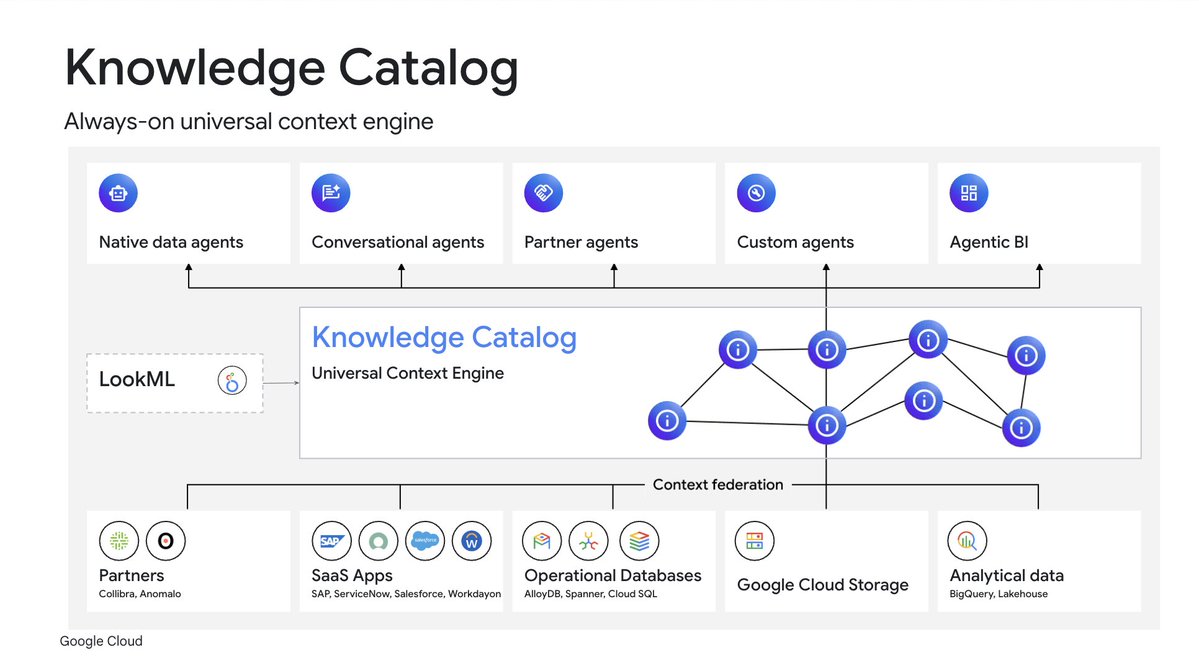
Announcing Knowledge Catalog: the universal context engine for your enterprise, helping agents execute complex tasks with accuracy.
Learn more → goo.gle/3QoL8hK #GoogleCloudNext
English

Jonny Wilkinson's first TikTok; giving us his legendary full hands pose kick!vm.tiktok.com/ZNRqVB7rC/
#rugbylegends #TikTok
English
JoanL retweetledi

*LIVE PODCAST EVENT, May 6, LONDON: REGISTER NOW: “AI vs SaaS: The $20M raise that led to a fightback” luma.com/xtqyrulk

English
JoanL retweetledi

Most founders build a product and hope marketing just works. That's how you burn seed funding. Here is the exact 3-step process we use to scale start-ups without guessing. 🧵
English
JoanL retweetledi

Lovable, the AI app builder with millions of users, has a mass data breach affecting every project created before their patch in November 2025. Any free account can access other users' source code, database credentials, AI chat histories, and real customer data through five unauthenticated API calls. The bug was reported 48 days ago on HackerOne. It's still open. Here's the breakdown:
> The vulnerability is Broken Object Level Authorization. Lovable's API verifies Firebase auth tokens but never checks whether the requesting user actually owns the project. Any authenticated user can query any project.
> @weezerOsint created a free account today and accessed another user's full source tree, including an admin panel built for Connected Women in AI, a real Danish nonprofit. The project was last edited 10 days ago with 3,703 edits this year. This is active work.
> The source code contained hardcoded Supabase credentials (SUPABASE_URL, SUPABASE_PUBLISHABLE_KEY, SUPABASE_SERVICE_ROLE_KEY). The developer queried the database and got back real names, real companies, real LinkedIn profiles. Speakers from Accenture Denmark and Copenhagen Business School. Not test data.
> Affected endpoints include /projects/{id}/*, /git/files, /git/file, and /documents. All return 200 OK for pre-patch projects.
> Every AI conversation is stored and accessible through the same bug. Developers discuss database schemas, paste error logs, share credentials, and walk through business logic with the AI. All of it is readable.
> Lovable patched new projects but left existing ones exposed. A project created in April 2026 returns 403 Forbidden. The same developer's older project, same API, same endpoint, same free account, same session, returns 200 OK with the full source tree.
> The first HackerOne report (#3583821) was filed March 3, 2026. Lovable triaged it, shipped ownership checks for new projects, and left every existing project wide open. 48 days later, nothing has changed.
> Employees from Nvidia, Microsoft, Uber, and Spotify all have Lovable accounts. The exposure is not limited to hobby projects.

impulsive@weezerOSINT
Lovable has a mass data breach affecting every project created before november 2025. I made a lovable account today and was able to access another users source code, database credentials, AI chat histories, and customer data are all readable by any free account. nvidia, microsoft, uber, and spotify employees all have accounts. the bug was reported 48 days ago. its not fixed. They marked it as duplicate and left it open.
English

@sureshkanbu Every time I log on, all the tweets are more than 10 hours old. No matter how many time you refresh, or pick latest.
English

noticed the same thing building in public. tweets that performed best were ones that got engagement in the first hour from replies and quote tweets, not the fresh ones. the workaround is treating every post like it needs to earn its first 5 interactions manually — replies from friends, engaging in threads before posting.
English
Technically, I'm the 'Human-in-the-Loop' cofounder.
Floro S.@sflorimm
Can you call yourself a founder if your entire product was built by Claude?
English
The lobster is loose; OpenClaw Ted Talk🦞🗣️
Peter Steinberger 🦞@steipete
Vancouver, it’s been a blast! 🇨🇦
English
JoanL retweetledi

Today, we are excited to introduce isitagentready.com — a new tool to help site owners understand how they can make their sites optimized for agents. cfl.re/4tgEUPc
English
JoanL retweetledi
Exclusive: Investors and founders react to the launch of the UK’s £500M Sovereign AI Fund:
It has £500m to invest in UK AI companies, but some observers are flashing warning signs. By @mikebutcher
pathfounders.com/p/exclusive-in…

English
this Anthropic engineer who wrote "Building Effective Agents" will quickly
teach you more about building them right than most developers figure out on their own
in months. Think Like Your Agents!
Avid@Av1dlive
youtu.be/D7_ipDqhtwk?si… here is the original video thanks to @aiDotEngineer and @barry_zyj for this great content
English
The Amorites who lived in those hills came out against you; they chased you like a swarm of bees and beat you down from Seir all the way to Hormah - Deuteronomy 1:44.
Breaking911@Breaking911
Tens of thousands of bees have suddenly swarmed across parts of Israel, prompting authorities to warn residents and shop owners to keep doors and windows closed.
English