John Mauldin

6.6K posts

John Mauldin banner
John Mauldin

John Mauldin

@JohnFMauldin

Multiple best-selling author, pioneering online commentator. ~1 million readers turn to Mauldin for his view on market and history. 8 Kids. Luckily wed to Shane

Dorado Beach East, Puerto Rico Katılım Eylül 2010
1K Takip Edilen53.5K Takipçiler
Sabitlenmiş Tweet
John Mauldin
John Mauldin@JohnFMauldin·
Readers know my passion for longevity. There is now a therapy for aging issues like inflammation, muscle loss and reverses Alzheimer’s and dementia. See this powerful documentary and then read the serious in-depth research. shorturl.at/FDiH7 DM questions about the business
English
17
13
78
47.2K
John Mauldin
John Mauldin@JohnFMauldin·
Not sure who you are, but I ALWAYS say it is likely 2030 or later. It takes a LOOONNNGG time for an economy the size of the US to have a debt issue. Superdebt cycles always end ugly. Finally, now, even in Japan.
Leviatano@mi_prisco

@ianlopuch @JohnFMauldin @mauldinecon @EdDAgostino I'm in the market since 15 years and I've kept hearing this reset bullshit from Mauldin at least once a year. Do you think he will be right one day? How can his fallacious forecasts be of any help for an investor?

English
1
0
13
5.7K
John Mauldin
John Mauldin@JohnFMauldin·
Can someone tell me why a virus that is not transferable by humans, only rodents, is a “Breaking news”? Otherwise known as clickbait? We are conditioned to worry about viruses and BNO editors know that and we make them money. Shameless.
English
4
0
23
6.4K
John Mauldin retweetledi
Stephen Moore
Stephen Moore@StephenMoore·
The biggest wealth transfer in American history isn’t happening on Wall Street. It’s happening on U-Hauls. Over $2 trillion in income fled high-tax blue states for low-tax red states in just 11 years. And blue states’ solution? Raise taxes again.
Stephen Moore tweet media
English
733
5.1K
16.4K
1.6M
John Mauldin
John Mauldin@JohnFMauldin·
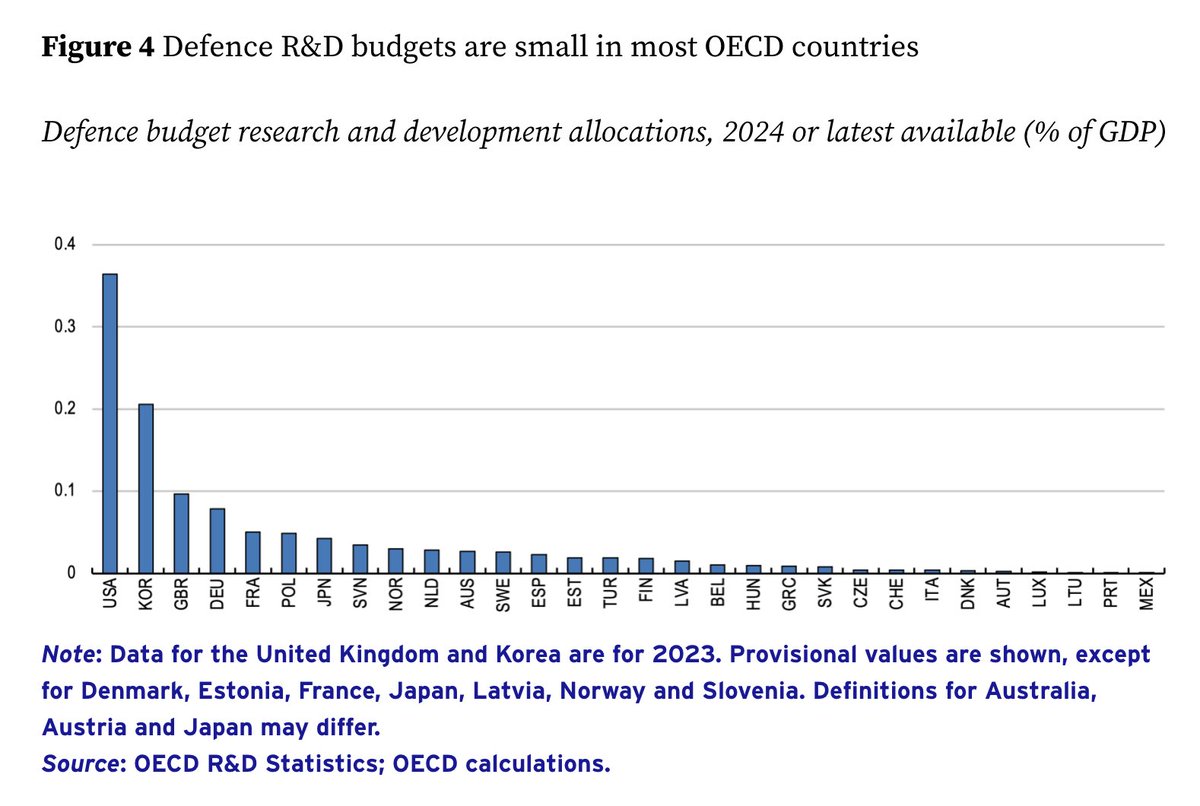
If you ask why the US dominates so many areas of high-tech weaponry in the West, the scale of defense R&D gives you an answer
John Mauldin tweet media
English
3
4
11
2.4K
John Mauldin
John Mauldin@JohnFMauldin·
This. Senator Warren has the blood of Spirit Airlines on her hands. Instead of being part of JetBlue, she and Biden/Buttigieg killed that merger. And now your tickets prices area already rising.
Yogi@Houseofyogi

Spirit Airlines died tonight at the hands of the socialist crusader, Elizabeth Warren She must be so proud to add another casket to her achievements. Tonight at 3am, Spirit turns off the lights. 14,000 jobs gone. 30+ smaller airports lose service. JetBlue offered $3.8 BILLION in cash to buy Spirit in 2022. Shareholders, flight attendants union, literally everyone voted yes. The combined company would have held 9% of the US market against a Big 4 that already owned 80%. For anyone who understands numbers: 9% isn’t a monopoly against 80%. Warren said no. She wrote letters. She pressured Buttigieg. Biden’s DOJ sued. A federal judge killed the deal in January 2024. Her argument: the merger would cost consumers $1 billion a year. Now look at her collateral damage she dusts under the rug. 510 pilots gone in the months after. 1,800 flight attendants furloughed in December. 14,000 jobs in 2023. 7,500 last week. Zero tonight. And that’s just the people in Spirit uniforms. Catering goes. Fuel guys go. Baggage crews, gate agents, airport coffee shops, hotels and rental cars in 70 cities Spirit flew to. Every airline job carries 3 more on its back. 40,000 people out of work because of one woman’s moronic crusade against the market. And the math ain’t mathing. Spirit abandoned 90 routes during the death spiral. Fares on those routes are up 14% on average. Oakland to Newark: $135 to $288. Fort Myers to San Juan: $92 to $219. Kansas City to Newark up 66%. That’s reality. Not some BS number from a “study.” So @SenWarren tell me how this saves the consumer money? Cheap carriers in a market drop fares 21% across the board. Southwest did this in the 90s and saved Americans $68 BILLION over 20 years. Warren killed it. That’s what moronic politicians led by socialism do. Then with her own blind arrogance, she tweeted Spirit’s collapse is “a Biden win for flyers.” A win. 14,000 people are reading termination letters tonight. And she’s taking credit. This is socialism in 2026. A senator who’s never made payroll thinks she knows how to run a market better than the people who own and work in the company. She saved you a billion on imaginary paper. She cost you ten times that in real life. She didn’t protect consumers from anything. 14,000+ will go from working to welfare. She will make sure to blame billionaires, hardworking tax payers, AI, capitalism and whatever monster they will make up tomorrow hiding under your bed. Higher taxes. Fewer jobs. More expensive everything. She called it a win. I hope you enjoy winning.

English
9
11
40
4.7K
John Mauldin
John Mauldin@JohnFMauldin·
This is a great summary of a very solid book by Gladwell. It should make you think. Yes, you can pick issues here and there, but the core point remains. Worth the read,
Jaynit@jaynitx

In the 1920s, a Stanford psychologist tracked genius children for 50 years. Malcolm Gladwell breaks down what he discovered: Rich families → successful. Poor families → failures. Not average. Failures. Genius-level IQs that produced nothing. He spent 60 minutes at Microsoft explaining why we're wrong about success: The psychologist was named Terman. He gave IQ tests to 250,000 California schoolchildren. He identified the top 0.1%. Kids with IQs of 140 and above. His hypothesis: these children would become the leaders of academia, industry, and politics. He tracked them. And tracked them. For decades. The results split into three groups. The top 15% achieved real prominence. The middle group had average, moderately successful professional lives. And the bottom group? By any measure, failures. The difference wasn't personality. Wasn't habits. Wasn't work ethic. It was simple: the successful geniuses came from wealthy households. The failures came from poor families. Poverty is such a powerful constraint that it can reduce a one-in-a-billion brain to a lifetime of worse than mediocrity. There's a concept called "capitalization rate." It asks a simple question: what percentage of people who are capable of doing something actually end up doing that thing? In inner city Memphis, only 1 in 6 kids with athletic scholarships actually go to college. If our capitalization rate for sports in the inner city is 16%, imagine how low it must be for everything else. Here's something stranger. Gladwell read the birth dates of the 2007 Czech Junior Hockey Team: January 3rd. January 3rd. January 12th. February 8th. February 10th. February 17th. February 20th. February 24th. March 5th. March 10th. March 26th... 11 of the 20 players were born in January, February, or March. This isn't unique to the Czechs. Every elite hockey team in the world shows the same pattern. Every elite soccer team too. Why? The eligibility cutoff for youth leagues is January 1st. When you're 10 years old, a kid born in January has 10 months of maturity on a kid born in October. That's 3 or 4 inches of height. The difference between clumsy and coordinated. So we look at a group of 10 year olds, pick the "best" ones, give them special coaching, extra practice, more games. We think we're identifying talent. We're just identifying the oldest. Then we give the oldest more opportunities, and 10 years later they really are the best. Self-fulfilling prophecy. The capitalization rate for hockey talent born in the second half of the year? Close to zero. We're leaving half of all potential hockey players on the table because of an arbitrary date on a calendar. Kids born in the youngest cohort of their school class are 11% less likely to go to college. 11% of human potential squandered because we organize elementary school without reference to biological maturity. Now here's the part about math. Asian kids dramatically outperform Western kids in mathematics. The gap is enormous and consistent across decades of testing. Some people say it's genetic. It's not. It's attitudinal. When Asian kids face a math problem, they believe effort will solve it. When Western kids face a math problem, they believe the answer depends on innate ability they either have or don't. Here's the proof. The international math tests include a 120-question survey. It asks about study habits, parental support, attitudes. It's so long most kids don't finish it. A researcher named Erling Boe decided to rank countries by what percentage of survey questions their kids completed. Then he compared it to the ranking of countries by math performance. The correlation was 0.98. In the history of social science, there has never been a correlation that high. If you want to know how good a country is at math, you don't need to ask any math questions. Just make kids sit down and focus on a task for an extended period of time. If they can do it, they're good at math. Why do Asian cultures have this attitude? Gladwell's theory: rice farming. His European ancestors in medieval England worked about 1,000 hours a year. Dawn to noon, five days a week. Winters off. Lots of holidays. A peasant in South China or Japan in the same period worked 3,000 hours a year. Rice farming isn't just harder than wheat farming. It's a completely different relationship with work. There's a Chinese proverb: "A man who works dawn to dusk 360 days a year will not go hungry." His English ancestors would have said: "A man who works 175 days a year, dawn to 11, may or may not be hungry." If your culture does that for a thousand years, it becomes part of your makeup. When your kids sit down to face a calculus problem, that legacy of persistence translates perfectly. Now consider distance running. In Kenya, there are roughly a million schoolboys between 10 and 17 running 10 to 12 miles a day. In the United States, that number is probably 5,000. Our capitalization rate for distance running is less than 1%. Kenya's is probably 95%. The difference isn't genetic. The difference is what the culture values and where it spends its attention. Here's the most fascinating finding. 30% of American entrepreneurs have been diagnosed with a profound learning disability. Richard Branson is dyslexic. Charles Schwab is dyslexic. John Chambers can barely read his own email. This isn't coincidence. Their entrepreneurialism is a direct function of their disability. How do you succeed if you can't read or write from early childhood? You learn to delegate. You become a great oral communicator. You become a problem solver because your entire life is one big problem. You learn to lead. 80% of dyslexic entrepreneurs were captain of a high school sports team. Versus 30% of non-dyslexic entrepreneurs. By the time they enter the real world, they've spent their whole life practicing the four skills at the core of entrepreneurial success: delegation, oral communication, problem solving, and leadership. Ask them what role dyslexia played in their success and they don't say it was an obstacle. They say it's the reason they succeeded. A disadvantage that became an advantage. Here's what Gladwell wants you to understand: When we see differences in success, our default explanation is differences in ability. We forget how much poverty, stupidity, and attitude constrain what people can become. We refuse to admit that our own arbitrary rules are leaving talent on the table. We cling to naive beliefs that our meritocracies are fair. The capitalization argument is liberating. It says you don't look at a struggling group and conclude they're incapable. It says problems that look genetic or innate are often just failures of exploitation. It says we can make a profound difference in how well people turn out. If we choose to pay attention. This 60 minute Microsoft talk will teach you more about success than every self-help book you've ever read combined. Bookmark this & give it an hour today, no matter what.

English
3
8
77
48.7K
John Mauldin retweetledi
Shanaka Anslem Perera ⚡
Shanaka Anslem Perera ⚡@shanaka86·
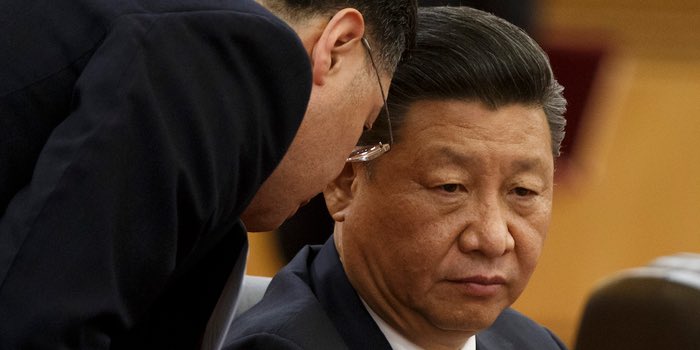
While China was busy shipping missile chemicals to Iran and collecting yuan tolls at Hormuz, someone was inside its most sensitive supercomputer stealing everything. CNN reports that a hacker group calling itself FlamingChina breached the China National Supercomputing Center in Tianjin and exfiltrated up to 10 petabytes of classified defence data. The samples posted on dark web forums include bomb and missile designs, animated explosion simulations, structural integrity tests, renderings of the J-20 stealth fighter, sixth-generation aircraft concepts, nuclear submarine schematics, hypersonic weapons systems, and target analyses for American assets including HIMARS launchers and carrier strike groups. Ten petabytes. For context, the entire printed collection of the US Library of Congress is approximately 10 terabytes. This breach is one thousand times that volume. It is being sold for cryptocurrency on Breach Forums. Cybersecurity experts who reviewed the previews told CNN the data appears genuine, matching known output patterns from the NSCC Tianjin facility, which serves over 6,000 clients including defence agencies and aviation firms across China. The timing is extraordinary. Trump posted a 50 percent tariff threat on any country supplying military weapons to Iran hours before CNN published this story. Five Chinese vessels shipped sodium perchlorate to Iran from Gaolan Port in the past six weeks, enough propellant precursor for hundreds of ballistic missiles. China’s ghost fleet continues operating through the IRGC’s yuan toll booth at Hormuz. And now the supercomputer that designed the weapons China is helping Iran reconstitute has been gutted by hackers selling its contents for the same cryptocurrency that Iran charges for strait passage. The irony is architectural. China built a parallel financial system using yuan and crypto to bypass the dollar at Hormuz. A hacker group is now using crypto to bypass Chinese state security and sell Beijing’s most classified military designs to anyone with a wallet address. The same technology that enables sanction evasion enables espionage monetisation. The blockchain does not distinguish between a toll payment and a weapons leak. It processes both. For Xi, this is a catastrophe arriving at the worst possible moment. Bessent’s mid-May Beijing summit was already going to be difficult. Trump holds the waiver on 140 million barrels of Chinese-bound Iranian crude. The 50 percent tariff threat targets China’s arms pipeline. The IDF just destroyed 100 Hezbollah targets using F-35I aircraft with Israeli software upgrades the Pentagon approved today. And now the classified designs for China’s most advanced military systems, the systems that justify the rare earth monopoly and the South China Sea posture and the Taiwan coercion campaign, are available for purchase on a dark web forum for less than the price of a single Hormuz transit. If the data is genuine, every adversary and ally of China can now reverse-engineer the capabilities Beijing spent decades and hundreds of billions developing. The J-20’s stealth profile. The hypersonic glide vehicle’s trajectory calculations. The nuclear submarine’s acoustic signature. The sixth-generation fighter’s sensor architecture. All of it, priced in crypto, available now. China wanted to build a post-dollar world. A hacker group just demonstrated what that world looks like when the technology works in both directions. open.substack.com/pub/shanakaans…
Shanaka Anslem Perera ⚡ tweet media
English
649
6.5K
18.9K
1.9M
John Mauldin retweetledi
David Harsanyi
David Harsanyi@davidharsanyi·
Other than losing their entire navy, air force, a few strata of political leadership, top military minds, over 1,000 senior IRGC and Basij commanders, air defense and radar sites, numerous scientists, ballistic missile stockpiles and most launchers, drone and missile factories, proxies, etc.. Iran has the upper hand.
English
366
1.3K
6.9K
252.5K
John Mauldin retweetledi
Danny Knowles
Danny Knowles@_DannyKnowles·
LYN ALDEN: "Let's say you have a $500 billion hole that shows up in private credit. That's three months of US deficit spending. You can snap your fingers and make that problem go away. We live in a fiat world. But when you have molecules that just can't get to where they have to go at that scale… the Fed can't print oil." @LynAldenContact
English
49
136
1.5K
333K
John Mauldin
John Mauldin@JohnFMauldin·
A very contrarian and unpopular post and indeed food for thought.
James E. Thorne@DrJStrategy

Food for thought. Trump, Hormuz and the End of the Free Ride For half a century, Western strategists have known that the Strait of Hormuz is the acute point where energy, sea power and political will intersect. That knowledge is not in dispute. What is new in this war with Iran is that the United States, under Donald Trump, has chosen not to rush to “solve” the problem. In Hegelian terms, he is refusing an easy synthesis in order to force the underlying contradiction to the surface. The old thesis was simple: the US guarantees open sea lanes in the Gulf, and everyone else structures their economies and politics around that free insurance. Europe and the UK embraced ambitious green policies, ran down hard‑power capabilities and lectured Washington on multilateral virtue, secure in the assumption that American carriers would always appear off Hormuz. The political class behaved as if the American security guarantee were a law of nature, not a contingent choice. Their conduct today is closer to Chamberlain than Churchill: temporising, issuing statements, hoping the storm will pass without a fundamental reordering of their responsibilities. Trump’s antithesis is to withhold the automatic guarantee at the moment of maximum stress. Militarily, the US can break Iran’s residual ability to contest the Strait; that is not the binding constraint. The point is to delay that act. By allowing a closure or semi‑closure to bite, Trump ensures that the immediate pain is concentrated in exactly the jurisdictions that have most conspicuously free‑ridden on US power: the EU and the UK. Their industries, consumers and energy‑transition assumptions are exposed. In that context, his reported blunt message to European and British leaders, you need the oil out of the Strait more than we do; why don’t you go and take it? Is not a throwaway line. It is the verbalisation of the antithesis. It openly reverses the traditional presumption that America will carry the burden while its allies emote from the sidelines. In this dialectic, the prize is not simply the reopening of a chokepoint. The prize is a reordered system in which the United States effectively arbitrages and controls the global flow of oil. A world in which US‑aligned production in the Americas plus a discretionary capability to secure,or not secure, Hormuz places Washington at the centre of the hydrocarbon chessboard. For that strategic end, a rapid restoration of the old status quo would be counterproductive. A quick, surgical “fix” of Hormuz would short‑circuit the dialectic. If Trump rapidly crushed Iran’s remaining coastal capabilities, swept the mines and escorted tankers back through the Strait, Europe and the UK would heave a sigh of relief and return to business as usual: underfunded militaries, maximalist green posturing and performative disdain for US power, all underwritten by that same power. The contradiction between their dependence and their posture would remain latent. By declining to supply the synthesis on demand, and by explicitly telling London and Brussels to “go and take it” themselves, Trump forces a reckoning. European and British leaders must confront the fact that their energy systems, their industrial bases and their geopolitical sermons all rest on an American hard‑power foundation they neither finance nor politically respect. The longer the contradiction is allowed to unfold, the stronger the eventual synthesis can be: a new order in which access to secure flows, Hormuz, Venezuela and beyond, is explicitly conditional on real contributions, not assumed as a right. In that sense, the delay in “taking” the Strait, and the challenge issued to US allies to do it themselves, is not indecision. It is the negative moment Hegel insisted was necessary for history to move. Only by withholding the old guarantee, and by saying so out loud to those who depended on it, can Trump hope to end the free ride.


English
13
6
69
31.7K
John Mauldin retweetledi
Marc Andreessen 🇺🇸
Almost everything you think you know about the history of technology and capitalism was warped by communist/luddite propaganda of the era. That's happening this time too.
English
504
926
10.4K
437.7K
John Mauldin
John Mauldin@JohnFMauldin·
This letter is getting a lot of attention.thanks tony.
The Sagami Letter | Tony Sagami@anthonysagami

✅ ✅ This week's column from John Mauldin is one of the most interesting and possibly most profitable article you will ever read. Do yourself a favor and READ IT !!!! h/t @JohnFMauldin "It felt like I was meeting with the future Thomas Edison’s, Tesla’s, Musk, Sergie Brin, and Alex Karp. The media is focused on Artificial Intelligence and robotics. There is so much more going on. What I want to write about today is a summary of what I’ve seen." mauldineconomics.com/frontlinethoug…

English
0
0
11
11.3K
John Mauldin
John Mauldin@JohnFMauldin·
I think Marc Andreesen @pmarca is one of the most fascinating thinkers anywhere.
Big Brain AI@realBigBrainAI

Marc Andreessen says raw intelligence might be the worst qualification for leadership — and it changes everything about how we should think about AI. "If the leader is more than one standard deviation of IQ away from the followers, it's a real problem." Andreessen points to the US military, one of the earliest and most rigorous adopters of IQ testing, as the source of this insight. They slot people into specialties and leadership roles based on IQ scores. And over the years, they kept seeing the same pattern. A leader who is significantly less intelligent than their people struggles to model how those people think. That part is intuitive. But the reverse turns out to be equally true. "It's actually very hard for very smart people to model the internal thought processes of even moderately smart people." A leader who is two standard deviations above the norm of the organisation they're running also loses theory of mind, that ability to hold an accurate model of what's happening inside someone else's head. The gap is too wide in both directions. Andreessen then takes this to its logical conclusion: "If you had a person or a machine that had a thousand IQ or something like it, its understanding of reality would be so alien to the people or the things that it was managing that it wouldn't even be able to connect in any sort of realistic way." An AI that vastly outthinks every human in the room isn't positioned to lead those humans. It's positioned to be completely incomprehensible to them. Leadership has never really been an intelligence problem. It's a connection problem. And no amount of raw intelligence closes that gap — past a certain point, it only widens it. The world will not be run by the smartest thing in the room for a long time. Maybe ever.

English
2
3
11
8.3K