John Wang

543 posts

John Wang

John Wang

@johnjianwang

Co-founder of Assembled (https://t.co/l1UUlgdIc4)
San Francisco, CA Katılım Şubat 2013
370 Takip Edilen330 Takipçiler
John Wang
John Wang@johnjianwang·
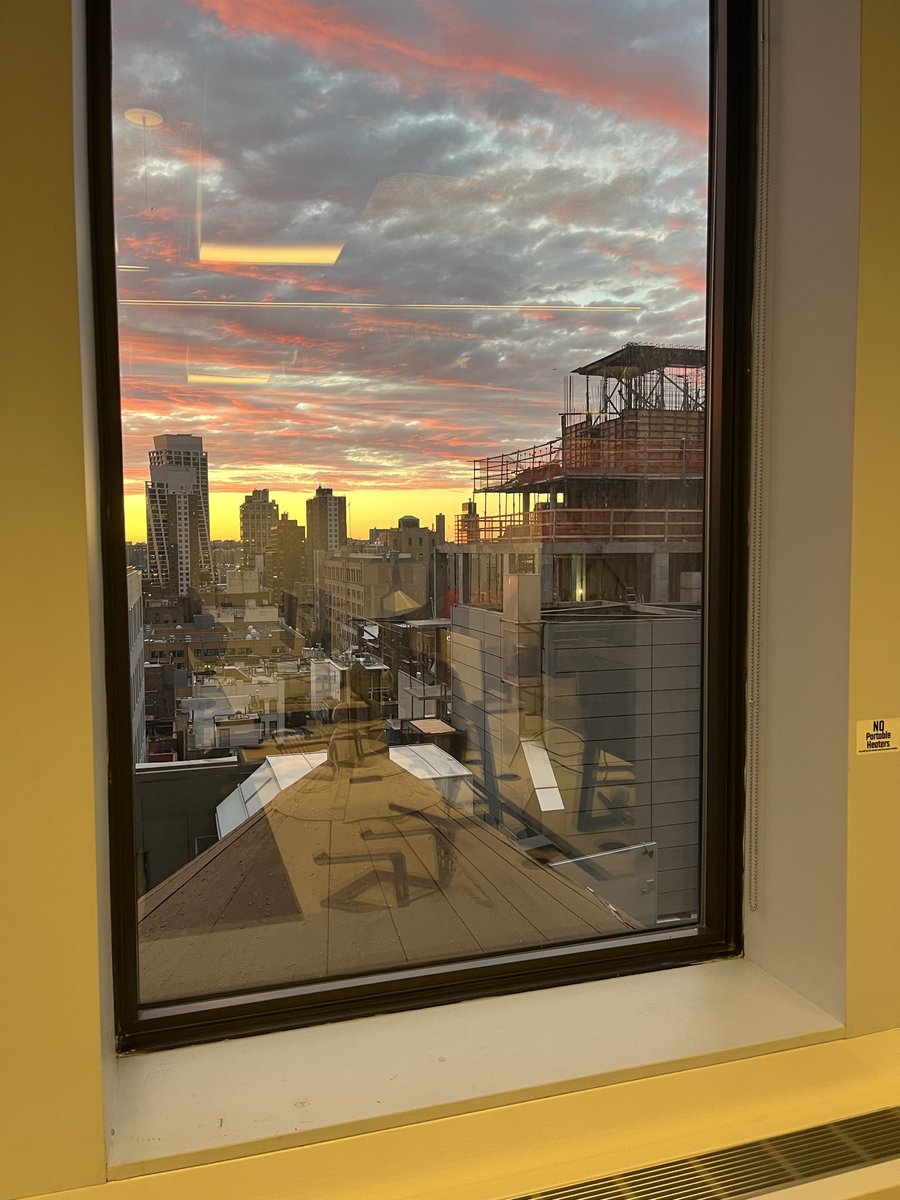
In New York this week and thought this was quite symbolic: everyone’s building, the sky is beautiful, but it’s always changing. Got to see the construction workers next door and our own team make a bunch of progress towards the future
John Wang tweet media
English
0
0
0
41
John Wang
John Wang@johnjianwang·
IDEs aren’t dead. People are going to realize that the industry will go into a big cycle of focusing on CLIs and the power of them, until eventually you want a better user interface to manage them (whether you’re writing real code or just sending them prompts)
English
0
0
1
140
John Wang
John Wang@johnjianwang·
@swyx Kind of love @simonw (I think??) just absolutely crushing code here
English
0
0
1
629
John Wang
John Wang@johnjianwang·
@simonw We only have a few folks using it at our office (and it's usually for our Voice AI teams and quite soft/respectful). Out of curiosity, do you use voice input for coding agents? I've generally still found typing to be a faster way to communicate thoughts
English
0
0
0
40
Simon Willison
Simon Willison@simonw·
... or maybe - considering sales offices and call centers have operated like this for decades - us programmers just need to get a bit less sensitive about it!
English
17
0
32
7.8K
John Wang
John Wang@johnjianwang·
The waymo commute is amazing: your own music, a ostensibly very safe ride, and you can tether / work on laptop without being judged
English
0
0
0
152
John Wang retweetledi
Thinking Machines
Thinking Machines@thinkymachines·
Today Thinking Machines Lab is launching our research blog, Connectionism. Our first blog post is “Defeating Nondeterminism in LLM Inference” We believe that science is better when shared. Connectionism will cover topics as varied as our research is: from kernel numerics to prompt engineering. Here we share what we are working on and connect with the research community frequently and openly. The name Connectionism is a throwback to an earlier era of AI; it was the name of the subfield in the 1980s that studied neural networks and their similarity to biological brains. thinkingmachines.ai/blog/defeating…
Thinking Machines tweet media
English
230
1.3K
7.6K
3.4M
John Wang
John Wang@johnjianwang·
Overheard at Gophercon: "For a variety of reasons, Go is one of the best languages for automated code generation by LLMs" - David Soria Parra (Anthropic, co-creator of MCP)
English
0
0
2
291
John Wang
John Wang@johnjianwang·
The summer SF sunsets are beautiful. PS This video taken straight out of our SF office. So come join us if you love sunsets and EDM ❤️
English
0
0
2
125
John Wang
John Wang@johnjianwang·
Pretty hyped for GPT5 tomorrow!
English
0
0
0
160
John Wang
John Wang@johnjianwang·
Overheard at the office: “I’m going to start tracking the correlation between interview performance and how big their cursor pane is. I honestly think it’s strongly correlated.”
English
0
0
0
133
John Wang
John Wang@johnjianwang·
This is super exciting -- and particularly impressive that this was achieved without any tool use!
Alexander Wei@alexwei_

1/N I’m excited to share that our latest @OpenAI experimental reasoning LLM has achieved a longstanding grand challenge in AI: gold medal-level performance on the world’s most prestigious math competition—the International Math Olympiad (IMO).

English
0
0
1
169
John Wang
John Wang@johnjianwang·
@calvinfo Very insightful! And crazy that you all launched codex with 8 engineers!!
English
1
0
1
152
Calvin French-Owen
Calvin French-Owen@calvinfo·
As they say, some personal news– I just left @OpenAI after launching Codex. Extremely grateful to everyone there who I got the chance to work with and learn from. Still figuring out what's next, but there's a lot left to build out there.
Calvin French-Owen tweet mediaCalvin French-Owen tweet media
English
64
17
1.1K
199.4K
John Wang
John Wang@johnjianwang·
Excited to be speaking at Gophercon in August! I'll be talking about how we use Go to scale up our use of LLMs at Assembled. If you’re curious how Go holds up in production AI, or just want to argue about it over coffee, come find me!
John Wang tweet media
English
1
0
2
109
John Wang
John Wang@johnjianwang·
Kicking off codex jobs on your phone while you’re traveling feels like the future. Small tasks are done pretty seamlessly you don’t need to spin up a whole development environment on your laptop
English
1
0
2
127
John Wang retweetledi
Greg Brockman
Greg Brockman@gdb·
2025 is the year of agents.
English
353
612
6.2K
1M
John Wang
John Wang@johnjianwang·
Whatever your take on China is, it’s interesting to see some top researchers taking up residence there (though hard to tell if it’s a real trend) amp.scmp.com/news/china/sci…
English
0
0
0
117
Victor Pontis
Victor Pontis@VictorPontis·
How Luma Works I think Luma is relatively atypical in how we work. It certainly doesn’t feel weird to me, but when I hear about other companies, it’s clear that we do a few things differently. The Team Today we have 6 full-time people working on Luma — 3 engineers and 3 designers. That includes the co-founders, me and Danqing (@danliu). Given that we have such a small team and a relatively large surface area (API, web, iOS, Android, event pages, emails, SMS, graphics, etc, etc), each person works on a large variety of things. Each designer creates product and graphic designs and each engineer codes on multiple platforms. We’ve been lucky enough to be able to grow without spending time on marketing or sales. Luma has grown pretty much entirely organically via word of mouth. So everyone on the team is focused on building and improving the product. In addition to the full-time team, we also have support from a few contractors who work on design, engineering, and customer support. Remote vs In-Person Danqing and I started Luma during COVID in early 2020 so when we built the team, it was remote-first out of necessity. That remote-first culture continues today. Danqing and I are in NYC and while we meet up a few times a week, the rest of the team is spread out across countries and timezones. We mostly work async and don’t spend much time chatting — so we’ve had success building a global team. Luma is a work-first company. We don’t have a Slack channel where we are sharing memes or what we did over the weekend (we don’t even use Slack). Everyone on the team cares about their craft and when we talk, we talk about work. That being said, I hope we can build a larger contingent in NYC and get an office in the next year. Communication and Tools We do most of our communication in the context of work product. For engineers, that means talking in GitHub and Linear. For designers, that’s Figma, Campsite, and Linear. We find that it’s much easier to discuss something that’s in progress. We also use Luma chat to fill in the gaps. We built Luma chat a few years ago for event guests and we’ve been using it internally ever since. It’s not as fully featured as Slack — but that means it’s also much less distracting and confusing than Slack. Meetings We have two recurring meetings: - Design Sync - We do this meeting every day in the morning East Coast time. Designers share their latest designs and we all give feedback. Designers are encouraged to post their work to Campsite or Linear ahead of the meeting. This can be anywhere from 15 minutes to 1.5 hours. - All Hands - We have a weekly All Hands on Monday at noon. Everyone should join this, but some people can’t join due to timezones or other commitments. We review numbers, what we shipped last week, and the plan for the upcoming week. And we take a photo! This meeting is usually under 15 minutes. That’s it. We don’t do much in addition to this. If you need to talk to someone, you can send them a Zoom link over chat, but this is pretty rare. We also do very few customer calls. Our customers are always writing to us via email and Luma chat. Danqing and I do some calls with customers — but it’s not a daily thing. Personally I find calls tiring and most calls are pretty inefficient. So I like having few meetings. Work/Life Balance I think work/life balance isn’t a coherent concept. I never think about my work/life balance — instead I think about if I’m motivated by my work, if I’m spending enough time with friends, and if I’m happy and healthy. That being said — people often ask about work/life balance. So I’ll try to give some context. I work pretty much every day (>99%). Danqing also does. But most of the team takes most weekends off and schedules vacations. We want to build a team that cares about their craft, is invested in the future of the company, and cares about building something great in the long-term. Luma doesn’t satisfy the social need for anyone on the team, that’s what friends and family are for. Luma gives people an outlet to do their best work and to be pushed to learn and improve every day. The Future We’ve kept the Luma team small as we’ve scaled from nothing to a few million users. We want to keep growing the team, but we will continue to do so in a slow, deliberate manner. Personally, I’ve seen too many founders shift from doing productive work to putting out fires and managing politics. It doesn’t seem fun and it looks horribly inefficient. In order to keep the team small, we’ve had to make a conscious decision to not do certain things. We spend most of our time building the product and thus don’t have bandwidth for live demos, sales calls, or partnerships. I’m sure these would help us grow, but everything comes with a tradeoff. When I wake up in the morning to start working, it still feels the same as it did when we started 4 years ago. I sit in front of my computer and try to build something great.
Victor Pontis tweet mediaVictor Pontis tweet mediaVictor Pontis tweet media
English
45
12
512
67.7K
John Wang retweetledi
Assembled
Assembled@assembledhq·
When the Assembled team encountered limitations with Retrieval Augmented Generation in their issue resolution engine, they sought a better solution. Learn how they used Reciprocal Rank Fusion and hybrid search to significantly improve search precision. assembled.com/blog/better-ra…
English
0
3
5
655
John Wang
John Wang@johnjianwang·
We learned a lot while building this new AI product: - Use AI in specific places to reduce hallucinations - Most efficiencies are achievable without AI, but AI unlocks the last 20% to true automation - The transition from AI pilots to production requires reporting & control
English
0
0
1
118