John Reed Stark

4.7K posts

John Reed Stark banner
John Reed Stark

John Reed Stark

@JohnReedStark

President, John Reed Stark Consulting LLC | Senior Lecturing Fellow, Duke University School of Law | Former Chief, SEC Office of Internet Enforcement

Bethesda, Maryland Katılım Eylül 2010
303 Takip Edilen30.5K Takipçiler
Sabitlenmiş Tweet
John Reed Stark
John Reed Stark@JohnReedStark·
My late grandfather was a patriot's patriot but don't take my word for it. A treasure trove of his letters home, found in a dusty old shoebox, not only offer a unique/unfiltered glimpse into WWII army life, but they also bestow 6 essential career lessons. linkedin.com/pulse/six-care…
John Reed Stark tweet media
English
130
16
168
284.8K
John Reed Stark
John Reed Stark@JohnReedStark·
My best guess, just an opinion, is that the SEC is actively investigating while the DOJ, if not investigating in parallel, is getting briefings from the SEC as needed on the SEC’s progress. Typically, the SEC will stand down once the FBI/DOJ get serious about investigating but in the early days of a situation like this one, the SEC and DOJ can be acting in parallel independently with some coordination and the SEC can provide to the FBI/DOJ every single text, email, document they collect together with transcripts and notes relating to any SEC witness interview or SEC testimonial proceeding. To me, this situation seems like exactly the kind of matter that Chairman Paul Atkins wants the SEC to investigate and the exact type of matter that garners FBI/DOJ attention. Along these lines, I would not be surprised if the SEC and/or DOJ are not working with the whistleblower directly.
English
1
0
2
79
John Reed Stark
John Reed Stark@JohnReedStark·
This is a harbinger. To me, the Delve senior executives in this video seem creepily programmed and their representations raise far more questions than answers. In my opinion, the SEC enforcement division is likely actively investigating the situation, and perhaps DOJ is investigating as well. Oh, one more note, the offer of help from Elizabeth Holmes (if it’s real) is not helping their credibility or cause.
Karun Kaushik@karunkaushik_

There’s been a lot of allegations against Delve. But we haven’t been able to share our side of the story until today due to ongoing cybersecurity and forensics investigations. Maintaining customer trust is central to everything we do. That said, we grew too fast and fell short of our own standard. To our customers, we deeply apologize for the inconveniences caused. We take these allegations seriously and have made changes: a new auditor network, free re-audits and pentests for all customers, enhanced transparency in audit communications, and more. However, we also want to set the record straight on the anonymous attacks. The evidence we have points to a targeted cyberattack from a malicious actor, not a “whistleblower.” We believe the attacker purchased Delve under false pretenses, exfiltrated internal company data, and used it to launch a coordinated smear campaign. The posts rely on a mix of fabricated claims, cherry-picked screenshots, and stolen data taken out of context. See the link in the comments for more details. Delve was built to modernize compliance. We are not going anywhere and are committed to building what's next.

English
1
0
8
3.2K
John Reed Stark
John Reed Stark@JohnReedStark·
This is a terrific analysis and powerful recommendation for investing in what I view as one of the better AI tools in the world (alongside Grok and ChatGPT). So I asked Anthropic (Claude.ai) their opinion -- here is Claude's response (anybody care to ask Grok?): This is an interesting piece on the disclosure challenges around investing in private companies through public company stakes. Let me share my perspective on the claims and the broader thesis. What the post gets right: The core argument about disclosure opacity is legitimate. Under accounting rules, companies must regularly update the reported value of their private investments to reflect changes in market price per share, through "mark-to-market" adjustments — but they often don't have to disclose exact ownership percentages or break out specific investments from their broader portfolio of non-marketable securities. This genuinely does create challenges for investors trying to calculate exposure. The Google 14% figure is accurate — it was previously public knowledge that Google had pumped billions into the company, but its ownership stake was only revealed through legal filings in an antitrust case. Where the numbers need updating: The $350 billion IPO figure is actually close to Anthropic's current private market valuation, not a hypothetical. On December 31, 2025, it was confirmed that Anthropic had signed a term sheet for a $10 billion funding round at a $350 billion valuation. Wikipedia This followed the September 2025 Series F that valued Anthropic at $183 billion. On Amazon's stake, there's useful reverse-engineering from earnings reports: Amazon's Q3 profit included a $9.5 billion pretax gain tied to the rising valuation of its Anthropic investment GeekWire when the valuation nearly tripled to $183B, which is how analysts derive that ~7.8% estimate. But you're right — it's imprecise because you need to know prior carrying values. My take: The frustration about disclosure is understandable, though there are legitimate reasons companies don't break out every minority investment. That said, the post slightly overstates the investment thesis — even if you could perfectly calculate Amazon's and Google's Anthropic exposure, it would represent a relatively small percentage of those companies' overall value. Amazon's market cap is roughly $2.4 trillion, so even a $25-30 billion Anthropic stake is around 1% of the company. I'm not in a position to recommend whether this approach to "investing in Anthropic" makes sense, John — that depends on your broader portfolio goals and risk tolerance. But the analytical points about disclosure are well-taken, and it's the kind of granular accounting critique you'd appreciate from someone like Matt Levine.
Materiality Check@materialitychck

🚨Materiality Check: The challenges of investing in Anthropic/Claude @AnthropicAI and @claudeai have been making headlines for their new models that feature advanced co-work abilities. You as an investor may be asking: How can I get exposure to this great company, even though they are private? Two massive public companies have significant stakes in Anthropic: $GOOGL and $AMZN. The problem, though, is accounting rules allow for these companies to omit disclosure of both their ownership percentage in Anthropic, and the exact carrying value of the investment on their balance sheet. This makes it impossible for investors to know both the piece of Anthropic that they would get in a potential investment, and how much value each of the companies stands to gain upon an expected $350 billion IPO. Amazon owns anywhere from 7.8% to 19% of Anthropic depending on how much they have been diluted and how much gain they have already recognized (this is how investors are forced to calculate ownership percentage). That's anywhere from $27-67 billion -- a massive range. We know that Google owns 14% of Anthropic, but not because they mention it in any financial reports. Instead, because it was revealed in the legal filings of an antitrust case. Still, per our last post on Google, they only listed roughly $38 billion in non-marketable securities in last year's annual report, and have not disclosed exactly how much gain they have recognized on each of their investments. This makes it very hard to know how much of Anthropic's rise is priced in, which might be important for investors who are specifically looking to get a piece of the Anthropic pie. At IPO, Google's investment would be worth an estimated $49 billion. This is information that investor's should have easy access to -- forcing them to make complex calculations and guesswork is absurd. These investments are material and they should be treated as such!

English
1
2
5
3K
John Reed Stark
John Reed Stark@JohnReedStark·
Would buying Google stock make sense as a play on SpaceX, Anthropic and Waymo? Are Google’s investment holdings already baked into the stock price even though Google’s investment holdings are not specifically referenced in Google’s SEC filings (which is seemingly permitted under SEC regulations and is consistent with Generally Accepted Accounting Principles)? In other words, Google, with a mere forward PE ratio of 29.33 and with great products and great management , seems poised to experience future investment windfalls of epic proportions. Are investors missing the fact that Google might be the next great stock of the decade? We already own some Google, is it a good time to buy more? (Not investment advice; not any sort of investment professional; just an old SEC guy who likes talking stocks every once in a while.)
Materiality Check@materialitychck

You can't undervalue $GOOGL's amazing ability as a venture capital fund. SpaceX, Anthropic, Waymo, and this list goes on... shows incredible management, decision-making, and feel for the future. I just hope we get to see some of these gains itemized in the financial statements!

English
0
2
5
2.1K
John Reed Stark
John Reed Stark@JohnReedStark·
@materialitychck This is possibly a hidden windfall for anyone who invests in Google. Crazy that the stock price might not have this fully priced in because of accounting rules. Google’s $900 million stake will be worth $112 billion. For context, Google’s latest annual income was $98 billion!
English
0
0
5
315
Materiality Check
Materiality Check@materialitychck·
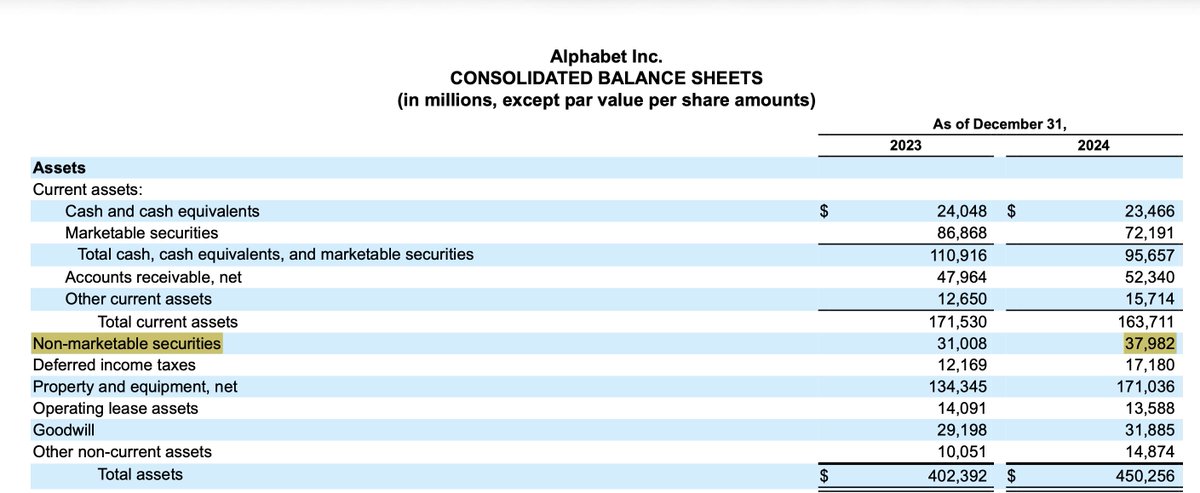
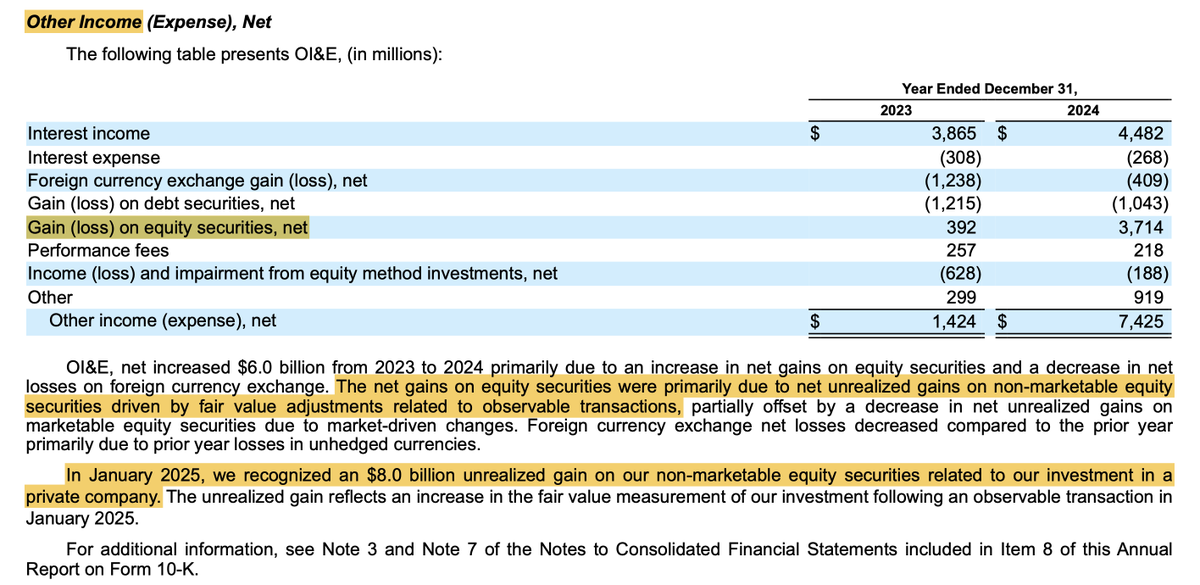
🚨Materiality Check: $GOOGL's investment in SpaceX! SpaceX is set to IPO this year, and it could be at a valuation of up to $1.5 trillion. In 2015, $GOOGL invested $900 million for ~7.5% of SpaceX - that would be worth $111 billion at IPO. $GOOGL did not mention SpaceX once in their most recent 10-K. The investment would presumably be included in $GOOGL's non-marketable securities account on their balance sheet, but the entire account totaled just over $37 billion in 2024, and $GOOGL does not specifically disclose what other private investments are in this account. Unrealized gains related to SpaceX would likely be classified under "other income" on the income statement. $GOOGL recognized a ~$3.7 billion unrealized gain on investments in 2024. How will we see these account balances change both when $GOOGL reports 2025 earnings on February 4th, and after SpaceX goes public? $GOOGL's net income in 2024 was just over $100 billion, so this is certainly material!
Materiality Check tweet mediaMateriality Check tweet media
English
1
0
3
304
John Reed Stark
John Reed Stark@JohnReedStark·
My pal Bret Padres composed a what-if video (a new history) for me. Turns out my anti-crypto vibe was all a dream and I was pro-crypto all along. Fare the well cryptoverse, this is my swan song. Reverting back to my roots of tech/cyber/AI. Peace out bros. youtube.com/watch?v=EqXV1j…
YouTube video
YouTube
English
3
1
7
3.6K
Sopranos World
Sopranos World@SopranosWorld·
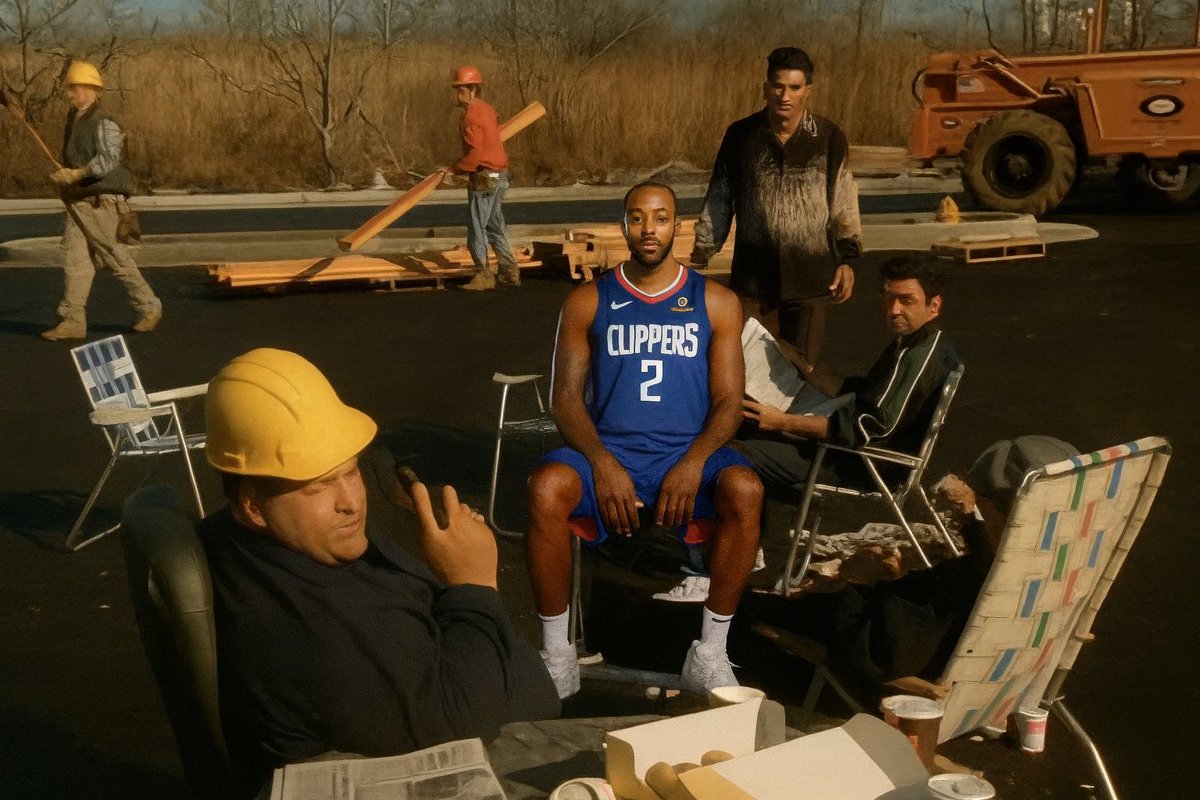
Kawhi and Steve Ballmer showing Pablo Torre all the trees they planted
Sopranos World tweet media
English
115
2.3K
31.2K
1.7M
Pablo Torre Finds Out
Pablo Torre Finds Out@pablofindsout·
Exclusive: Kawhi Leonard signed a $28M endorsement deal for a "no-show job" with a fraudulent tree-planting company funded by $50M from Clippers owner Steve Ballmer, according to documents obtained by @PabloTorre. "It was to circumvent the salary cap," an inside source says.
English
1.3K
4.6K
32.6K
31.1M
John Reed Stark
John Reed Stark@JohnReedStark·
Say it ain’t so Kawhi.
John Reed Stark tweet media
English
1
0
2
2.1K
NBACentral
NBACentral@TheDunkCentral·
BREAKING: Kawhi Leonard allegedly signed a $28M “no-show job” endorsement deal with a fraudulent tree-planting company secretly funded by $50M from Clippers owner Steve Ballmer, per @PabloTorre Sources say it was all “to circumvent the salary cap.”😳
English
869
2.2K
28.3K
5.2M
Legion Hoops
Legion Hoops@LegionHoops·
BREAKING: Sports investigator Pablo Torre drops a bombshell report: Kawhi Leonard reportedly signed a $28M endorsement with a fraudulent tree-planting company, funded by Clippers owner Steve Ballmer "to circumvent the salary cap rules". Shocking development.
Legion Hoops tweet media
English
1.5K
3.4K
54.3K
13.4M
Greg Finberg
Greg Finberg@GregFinberg·
Anthony Gill, who was waived by the team in late June, returns to the Wizards on a one-year deal, as @MikeAScotto reports. Most likely for the veteran minimum. This brings Washington to 16 standard NBA contracts and brings Gill, a respected veteran leader, back into the fold.
Michael Scotto@MikeAScotto

Just In: The Washington Wizards have agreed to a one-year deal with Anthony Gill, league sources told @hoopshype. Gill has spent the past five seasons with the Wizards.

English
25
13
133
22.4K
John Reed Stark
John Reed Stark@JohnReedStark·
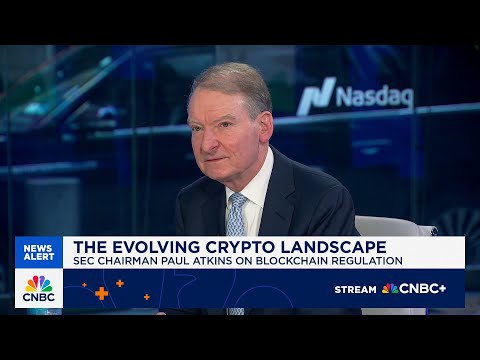
SEC Chair Atkins Announces “Project Crypto, Boldly Proclaiming That: "Despite What the SEC Has Said In the Past, Most Crypto Assets Are Not Securities." This begs the question: Can a US federal agency unilaterally render conduct to be lawful, which federal statutes and the courts have already resoundingly decreed to be unlawful? (Asking for a friend . . . ) youtu.be/vdsEXp2UjOA?si…
YouTube video
YouTube
John Reed Stark tweet media
English
8
1
24
2.2K
TDB Law
TDB Law@TDBLaw·
Exactly this. It isn't that anyone at the SEC thinks meme coin scams are awesome. But the SEC can't do anything about an asset that it considers to be something other than a security. There are other parts of govt that can (DOJ, State AGs), and our law firm (founded by two former fed prosecutors) is pursuing meme coin scams too.
English
1
0
3
74
John Reed Stark
John Reed Stark@JohnReedStark·
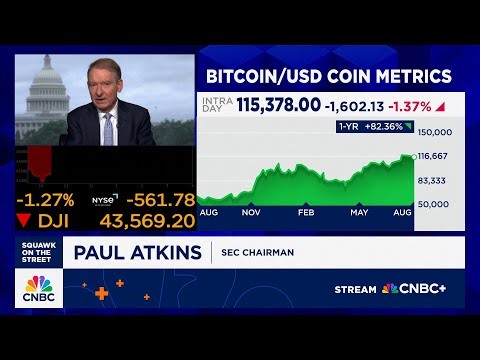
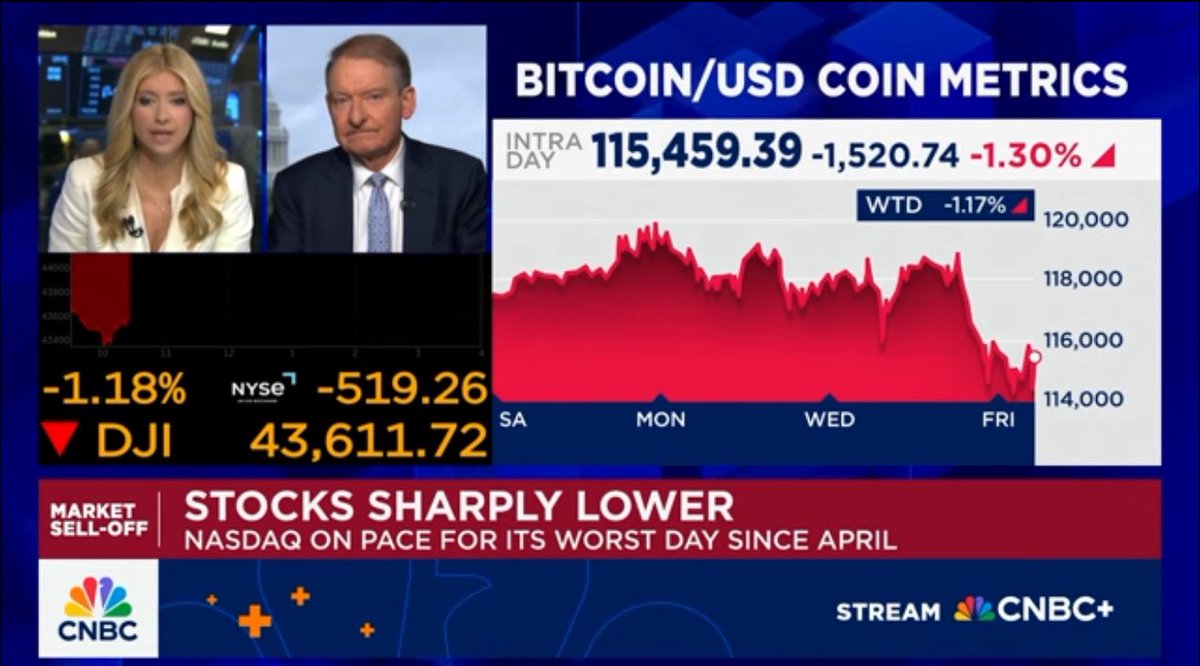
SEC and Policing Meme Coins — A Disturbingly Schizophrenic Approach This morning on Squawk Box, Andrew Ross Sorkin specifically asked SEC Chair Paul Atkins about policing meme coins, like the satirical “Sorkin” Meme Coin, which (incredibly and absurdly) apparently reached a market cap of over $200M. Chair Atkins answered that the SEC would always act to protect investors. But how can the SEC protect meme coin investors when the SEC has explicitly stated that meme coins are not securities and caveat emptor applies. N.B. also that the SEC’s take on meme coins is actually the SEC’s current take regarding all digital assets i.e that digital assets are not securities, so the SEC has no jurisdiction over digital assets. How can the SEC protect crypto-investors if the offering of crypto, sales of crypto, transacting of crypto and fraudulent promoting or transferring of crypto, does not involve a security? The Stark reality is that the SEC cannot protect investors in meme coins or any other so-called digital assets, because the SEC has decided, despite an avalanche of case law to the contrary, that digital assets are not securities. You can’t have your cake and eat it too SEC —either you are protecting crypto investors or you are not protecting crypto investors — and all evidence points to the latter. Watch for yourself at: youtu.be/bnXGWBa7u2k?si…
YouTube video
YouTube
John Reed Stark tweet media
English
5
9
29
11K
Stefan Vänersand
Stefan Vänersand@stefanvanersand·
@JohnReedStark @The_DTCC Respectfully, I rather take my view straight from the horse’s mouth. Don’t you find it a bit rich to dismiss an actual statement from the CTO of @The_DTCC as ”aspirational blather”? 🥴
English
1
0
0
40
John Reed Stark
John Reed Stark@JohnReedStark·
Kudos to SEC Commissioner Hester Peirce for an Uncharacteristically Anti-Crypto Proclamation (Not Surprising Though, You May Recall That it Took Nixon to Go to China) Yesterday, in an extraordinary and unprecedented “Statement,” the famed “Crypto Mom” Peirce makes it clear that new models for trading securities via so-called "tokenization" must still register with the SEC. sec.gov/newsroom/speec… Wow. A few very quick points: An SEC Commissioner “Statement” — What is That? What does it actually mean when an SEC Commissioner publishes a “statement” on the SEC website. On the one hand, not much at all (see e.g. the many other previous statements from countless SEC Commissioners of both political parties expressing a dissent or opposing opinion to an SEC rule or regulation). But on the other hand, given that Commissioner Peirce is a member of the ruling party of SEC Commissioners, my bet is that she cleared her Statement with SEC Chair Paul Atkins — so her Statement likely represents the majority opinion of all three Republican-nominated SEC Commissioners. Commissioner Peirce Just Made History. For the head of the SEC’s Crypto Task Force to take such an anti-crypto position sua sponte (i.e. acting unsolicited, on her own initiative and at her own peril) is a remarkable event in and of itself. Kudos to Commissioner Peirce for an extremely courageous, thoughtful and meaningful act. Blockchain is Not “Powerful” Nor is Blockchain “Innovation.” I wish Commissioner Peirce had not referred to blockchain as “powerful.” It’s not. Blockchain hype is all smoke and mirrors. It remains utterly nauseating (and comical) that the SEC continues to justify crypto-projects under the auspices of the “innovation of blockchain.” Blockchain remains, and will forever be, remarkably unremarkable -- a useless, shoddy, inefficient database scheme, which is not remotely close to becoming any sort of technological panacea. Moreover, no matter where the arena, blockchain enthusiasts can never: •Articulate one feature of blockchain that, since blockchain’s inception long ago, has been proven to provide a unique benefit to anyone; •Provide one example of a real world problem that blockchain has solved, which couldn’t have been solved equally well using traditional database technology; or •Explain how blockchain will somehow revolutionize finance (without making broad, sweeping, unproven, untested, undocumented aspirational generalizations). Moreover, that blockchain projects are always a bust is probably why the greatest technology firms in the world — Oracle, Microsoft, Amazon, Google and Apple — have devoted little, if any, resources to blockchain/tokenization development. In fact, just listen to all of their earnings calls (I did) – there is no mention at all of blockchain. Better yet, take a look at Oracle, Amazon, Microsoft, Google, and Apple's most recent Forms 10-K (the annual, audited report that U.S. public companies must file with the U.S. Securities and Exchange Commission) and the Management, Discussion and Analysis Sections in each. There is radio silence when it comes to blockchain — not even a mention of the word “blockchain.” A New Hope. Commissioner Peirce’s Statement reminds me that despite the SEC’s wholesale demolition of its crypto enforcement program, the SEC might not have completely lost its way. This gives me hope — for the first time in a while. And despite our crypto-differences, I have always respected, appreciated and admired Commissioner Peirce. I knew Hester way back when she was a proud and brilliant legal assistant to then-Commissioner Paul Atkins — and, as a life long Republican and libertarian, I was 100% aligned with everything Hester fought for back in those days. But now I am even more impressed with Commissioner Peirce and even more of a fan. We might disagree on crypto generally but the Stark reality is that Hester Peirce is a dedicated public servant and a bad-a$$. And the Stark reality abides.
John Reed Stark tweet media
English
12
35
81
23.7K