JP

24K posts

JP banner
JP

JP

@jpride

before every decision, you can choose to be a dick, or not be a dick. try not to be a dick. Likes = bookmarks.


Broomfield, CO Katılım Ocak 2009
419 Takip Edilen421 Takipçiler
JP
JP@jpride·
@travismillerx13 How much does he weigh? Honest question to attempt to correlate to other athletes.
English
0
0
0
92
Travis Miller
Travis Miller@travismillerx13·
Shot put Olympic champ 🇺🇸Ryan Crouser's daily calorie expenditure: 7,200: high training day 5,000: low training day
English
1
7
57
6.4K
Thomas Mangan
Thomas Mangan@TheRockyGallery·
Sunrise this morning from Cub Lake. Who could blame me for taking advantage of all the new snow that has fallen over Rocky Mountain National Park this past week and covered the peaks with lots of late season snow?.
Thomas Mangan tweet media
English
3
9
80
821
JP retweetledi
Gregg Carlstrom
Gregg Carlstrom@glcarlstrom·
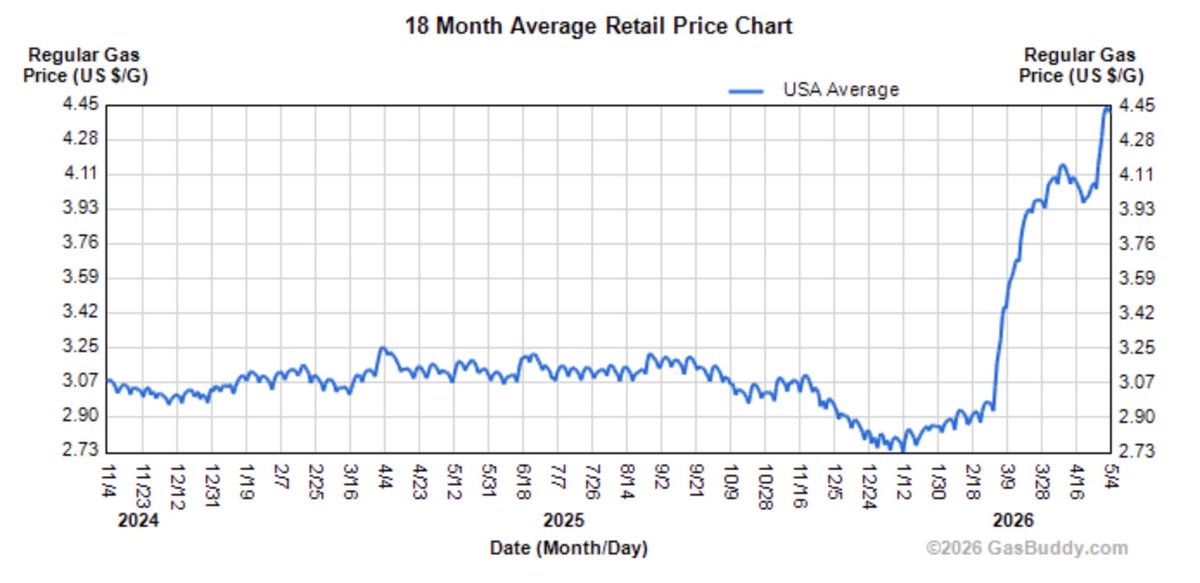
"As of Friday, American consumers had paid an extra $35bn in petrol and diesel costs since the war began, according to Brown University's Watson School of Public Affairs. That equates to about $268 per household or about the cost of a week's groceries." ft.com/content/145ecc…
English
7
72
144
19.9K
JP
JP@jpride·
@Rockies when was the last time a Rockies pitcher tagged someone out?
English
0
0
0
14
JP
JP@jpride·
@TheMushArtist @nuggets Wait he’s got like 27 and one of the only guys with a positive +/-
English
0
0
0
15
JP retweetledi
Denver Nuggets
Denver Nuggets@nuggets·
Back in the W column
Denver Nuggets tweet media
English
29
110
1.2K
31.8K
Travis Neve
Travis Neve@CardsByTravis·
I need the freeze frame of Christian Braun pointing at McDaniels as he’s hanging in the rim after putting him on a poster😂
English
2
0
0
236
JP retweetledi
Steve Magness
Steve Magness@stevemagness·
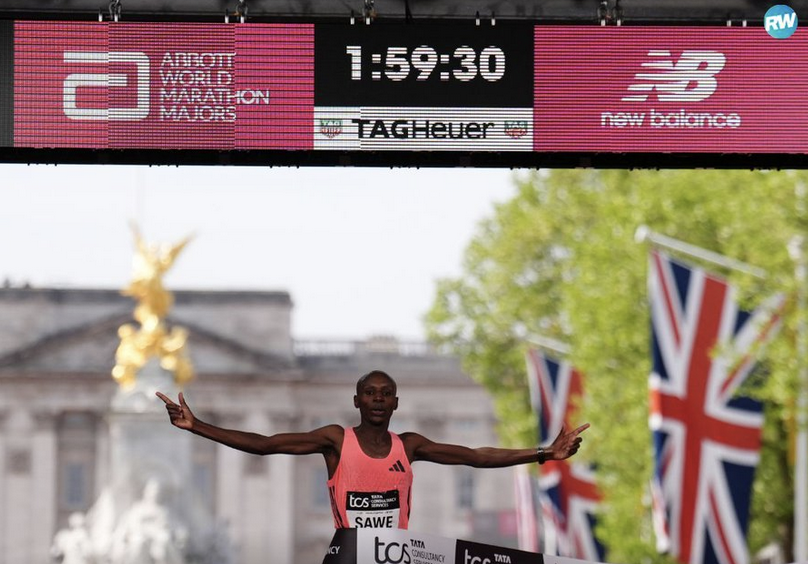
What in the world did we just see! The 2 hour marathon barrier has been broken. Three guys went under the old world record... Sabastian Sawe just ran 1:59:30 with crazy negative splits, closing the last half in 59:01....faster than the American Record in the half. One of the most mind blowing performances we've seen. How did we get here? Every breakthrough is a mixture of belief and progress. It takes folks daring to see what's possible, surrounding themselves with a quality team and doing the work to give themselves a shot. You've got to bet on yourself in a big way. When asked whether he believed he could run a sub-2-hour marathon before the race, Sawe answered with one word: "Yes." Let's get the obvious out of the way. Performance enhancing drugs are the legitimate question mark to every breakthrough. So Sawe did as much as he could about taking that off the table. He and his team asked to be tested all the time. His sponsor put up 50K to the Athlete Integrity Unit. The tests are run independently, no advance notice. Over a 2 month stretch, he went through 25 drug tests. There's always a doubt. There has to be given what we know. Hopefully there's transparency in the results. But hats off to Sawe for addressing it: "I want to prove that I am clean when I set foot at the start line." But how'd we actually get here where two guys went sub 2 in the same race? 1. Shoe tech We've had a revolution in shoe technology that boosts running economy. For years shoe companies said their shoe would make you faster and was mostly marketing. Until 2016, when it actually did. Initial research showed a 3-4% saving in economy, while subsequent work has shown it's highly variable. Now, it's a matching game. Find the perfect shoe for your form and you can get a big boost. Normally, it takes years of lots of miles and strength training to boost economy. But now we get that instant boost that not only helps boost performance but often leaves us feeling less beat up in the later stages of the marathon. So we get a little bit less hitting of the wall... 2. The fuel For a long time, fueling was limited by biology. You can only take in and process so much. Then in the 2000s, researchers found if we mixed sugars, we can boost intake because they're processed differently. Then recently, Maurten found if you use a hydrxogel, you boost utilization without GI distress anymore. We've gone from pushing 60g/hr to 120g/hr in a few decades. Again...less bonking. 3. Depth A few decades ago, you spent your career racing on the track and then once your speed started to fade a bit you went to the marathon. Now, many skip right to the marathon. That's where the money is. And with the economy boost from the shoes, you can make that jump quickly. More depth of talent means more competitors in their prime pushing barriers. 4. Belief Even with the shoes and tech, a few years ago sub 2 hours seemed a long way off, until Kipchoge pushed that barrier in a series of time trials. Yes, they weren't official races and had contrived pacing. But it absolutely shifted everyone's thinking on what is possible. A generation of runners saw Kipchoge go for it. Our prediction of what is possible changed. It's mind blowing how far we've come in such a short time. What once seemed decades away, just got smashed twice in the same race. Hats off to Sawe, especially for addressing the scourge of doping and showing folks what is possible with a lot of hard work, some crazy belief, and some fortuitous advances.
Steve Magness tweet media
English
42
265
1.9K
351.8K
John Goldman ☀️
John Goldman ☀️@JohnGoldman·
Elite marathoner Holly Archer had her fuelling put under the microscope: 60 vs 90 vs 120g carbs/hour on 2hr marathon‑pace runs in the lab. The dose–response results are wild and for race‑day strategy. Tag Tim Noakes lol scienceinsport.com/sports-nutriti…
English
8
6
149
90.8K
Tim Noakes
Tim Noakes@ProfTimNoakes·
This observation made me ask another: Is the belief that one must ingest 90-120g carbohydrate/hour during racing and training a uniquely Western/North American/European idea? If it is so important, what do the elite Kenyan runners do when they run their long training runs in places like Iten and Eldoret. In his book goodreads.com/book/show/1314… Adharanand Finn describes a final 38km training run in Iten for athletes preparing for the international marathon racing season. He noted that the athletes started after an overnight fast without breakfast and were provided with drinks every 5km or so. Only after the run did they drink sugar-loaded tea. I asked Grok what were they likely drinking during the 38km training run. Here is her answer: "Primarily water (often ad libitum or sparingly during runs), with milky sugary tea (chai) as a key recovery/hydration drink afterward; Gatorade or similar commercial sugary sports drinks are rare or nonexistent in traditional training. "Elite Kenyan runners in high-altitude training hubs like Iten and Eldoret (the Rift Valley) follow simple, traditional hydration practices focused on water and tea rather than engineered sports drinks. Scientific studies and observations from training camps confirm this: "During long training runs: They typically drink little or nothing while running, or just small sips of plain water if needed. Previous research notes that elite Kenyan endurance runners 'did not consume liquids before or during training' in many cases, or did so infrequently and modestly. Long runs (often 20-40 km or more) are frequently done fasted or with minimal intake, relying on their high-carb diet for fuel. They train in groups on dirt roads with no aid stations, so carrying bottles isn't the norm—some may have small water bottles available at camps, but it's not Gatorade-style drinks". My note: Typically the athletes are accompanied on these runs by coaches who follow in a car and provide drinks every 5km or so. Also sports drinks are expensive and perhaps hard to come by in rural Kenya although Coca-Cola is likely more widely available. So if these athletes wanted a sugar-laden drink during training, Coca-Cola would suffice. Thus it looks like the "Kenyan secret" is definitely not because they ingest 90-120g carbohydrate per hour during their long distance training runs. And if they are not doing it in training, it's highly improbable that they are doing it in racing - according to the advice that one does not do something in racing that has not been tested in training. (Also because of the need for what Westerners call "gut training" (ie minimise the adverse gastrointestinal consequences of repeated ingestion of high carbohydrate drinks whilst racing). This raised many other additional interesting questions. For example, when eating a high carbohydrate diet (unquestionably true), why do elite Kenyan marathon runners do their long training runs in a fasted state with minimal carbohydrate ingestion? What are the rates of fat oxidation that they reach in marathon races run this way? Etc Etc. So it seems that the advice to "do as the Kenyans do" is not adhered to when it comes to (minimal) carbohydrate ingestion during exercise and training and starting long runs in a fasted state. @PhilipPrins11 @AKoutnik @PaulBLaursen @DrPhilMaffetone @sweatscience @theplews1 @Brady_H @MountainRoche @LoreofRunning1
Tim Noakes@ProfTimNoakes

I watched Kenya's John Korir for as much of this race as he was featured on the television screen. I didn't see him obviously ingesting 120g carbohydrate per hour (ie taking a 20g gel every 10 minutes) or drinking 250 ml of a 12% carbohydrate solution every 15 minutes - or some combination of both. And the same for the female Kenyan winner, Sharon Lokedi. According to the theory that you can only run at world class marathon pace if you ingest carbohydrate at such high rates, especially once the muscle glycogen stores are depleted, these two athletes should have progressively increased their energy intakes in the last 45-60 minutes of the race. But it seemed to me that they did the exact opposite - once they started racing and drawing away from their opponents, they seemed to show a lesser interest in drinking and more interest in focusing on running as fast as they could. Which they did. Despite their apparent lack of interest in 120g carbohydrate per hour, they sped up progressively. Perhaps I'm wrong. But it would be interesting to see some real data. @PhilipPrins11 @AKoutnik @PaulBLaursen @theplews1 @sweatscience @Brady_H @LoreofRunning1


English
21
6
59
140.4K
Dante
Dante@dante_longoria_·
MLB-best LA Dodgers take on the Colorado Rockies in the series finale at Coors Field with first pitch scheduled for 7:40 CST. After dropping the past two games, the Dodgers look to salvage a series split. Updates and more 🧵:
English
27
0
0
189
JP retweetledi
Melanie D'Arrigo
Melanie D'Arrigo@DarrigoMelanie·
Trump gutted the SEC division that investigates insider trading and market manipulation. … and then people with insider knowledge start making a whole lot of money off of Trump’s market manipulation. It’s not a coincidence. It’s corruption.
Megyn Kelly@megynkelly

This must be investigated @SECGov

English
101
3K
8.2K
110.1K
Sanal Kumar
Sanal Kumar@sanalkumar777·
@RyanHoliday It’s Not Only what you KNOW, but also What you Do with What you KNOW…
English
1
0
0
52
Ryan Holiday
Ryan Holiday@RyanHoliday·
When you study history, you get the sense that this is who we are and what we've always done.
English
34
31
268
17.4K
JP retweetledi
Denver Nuggets
Denver Nuggets@nuggets·
Count ‘em: WWWWWWWWWWWW
Denver Nuggets tweet media
English
19
142
1.5K
26.3K
JP retweetledi
Patrick Saunders
Patrick Saunders@psaundersdp·
Confirming that the #Rockies announced crowd of 16,301 Monday night was the lowest in franchise history (non-COVID seasons). @MaseDenver was the first to report that.
English
10
19
146
47.3K
JP retweetledi
Jake Coyne
Jake Coyne@TheStatSquatch·
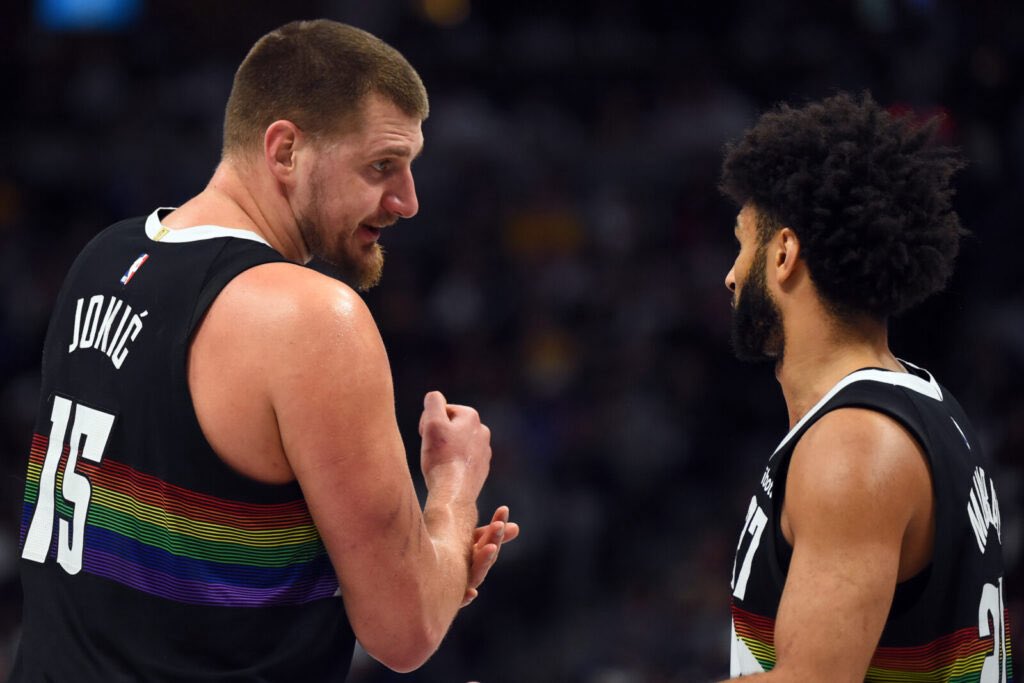
Nikola Jokic and Jamal Murray are the first teammates in NBA history to put up 1500+ points and 500+ assists in the same season. Murray (1787 PTS, 501 AST) reached the assist mark tonight to join Jokic (1647 PTS, 640 AST).
Jake Coyne tweet media
English
6
199
1.3K
38.4K