John Perry

200 posts

John Perry

John Perry

@jrbperry

Human geneticist - University of Cambridge and Insmed

Cambridge, UK Katılım Ocak 2012
263 Takip Edilen602 Takipçiler
John Perry retweetledi
Yajie Zhao, 赵亚杰
Yajie Zhao, 赵亚杰@ZhaoDylan·
2024 was a year to remember—I became an independent group leader at Changping Laboratory. The journey wasn’t easy, but I’m excited for the challenges ahead. Huge thanks to my amazing mentors, @jrbperry and Ken, for their unconditional support, even after I left the group.
Yajie Zhao, 赵亚杰 tweet media
English
2
1
20
1.1K
John Perry
John Perry@jrbperry·
1 week left to apply to join our statistical genetics team at the @IMS_MRL. Junior or senior scientist opportunities available. Please get in touch if you'd like to discuss further jobs.cam.ac.uk/job/47078/
English
0
7
8
3.6K
John Perry retweetledi
Eugene Gardner
Eugene Gardner@DrGeneUK·
A new Senior Stat Gen role is now available in the @Insmed human genetics team. Apply now! For this and other roles across multiple experience levels, see: linkedin.com/feed/update/ur…
English
0
3
4
1K
John Perry
John Perry@jrbperry·
Check out these senior data science positions (data manager, stat gen and single cell) if you’re keen to join the @IMS_MRL in Cambridge to help drive forward our science in an exciting and multidisciplinary environment. Happy to chat with anyone interested. Deadline 2nd Aug!
Giles Yeo@GilesYeo

We @IMS_MRL @Cambridge_Uni are looking to significantly expand our computational science capabilities in metabolism & are recruiting 3 senior bioinformaticians. Please contact me for more info. Deadline Aug 2. Please share widely nature.com/naturecareers/…

English
0
10
13
3.8K
John Perry retweetledi
Giles Yeo
Giles Yeo@GilesYeo·
We @IMS_MRL @Cambridge_Uni are looking to significantly expand our computational science capabilities in metabolism & are recruiting 3 senior bioinformaticians. Please contact me for more info. Deadline Aug 2. Please share widely nature.com/naturecareers/…
English
0
32
26
9.6K
John Perry
John Perry@jrbperry·
@ZhaoDylan Exciting times! We are all excited for you and looking forward to future collaborations 🎉
English
0
0
2
120
Yajie Zhao, 赵亚杰
Yajie Zhao, 赵亚杰@ZhaoDylan·
Thrilled to take my new role at Changping Laboratory in Beijing. A hard but exciting transition from a postdoc to a group leader. Many thanks for everyone's support and help during these years. Looking forward to collaboration with you in the future.
Yajie Zhao, 赵亚杰 tweet mediaYajie Zhao, 赵亚杰 tweet mediaYajie Zhao, 赵亚杰 tweet media
English
4
1
53
3.5K
John Perry retweetledi
David Adams
David Adams@David_J_Adams·
Well done to Andrew Waters from the lab for delivering our study on saturation editing of BAP1. nature.com/articles/s4158…
English
9
20
76
7.6K
John Perry
John Perry@jrbperry·
Thanks for the nice summary of our work @doctorveera
Veera Rajagopal @doctorveera

A comprehensive GWAS (800k women) and ExWAS (200k women) of age at menarche, dissecting the genetic architecture of puberty timing across the entire allele frequency spectrum. Kentistou, Kaisinger et al. Nat Gen nature.com/articles/s4158… I wrote about this work last year when it was preprinted (x.com/doctorveera/st…). It's great to see in the final published form. In this paper, you can find examples for - common variants (PGS) x rare variants interaction (ZNF483) - statistical and functional gene x gene interaction (MC3R x GPR83) And population-level insights on known, presumed Mendelian genes. UK Biobank is the one-stop shop to find healthy carriers of your favorite Mendelian disease genes. @aikat33 @jrbperry Kentistou, Kaisinger et al. Nat Gen nature.com/articles/s4158…

English
0
1
8
3.7K
John Perry retweetledi
Eugene Gardner
Eugene Gardner@DrGeneUK·
I’m #hiring a new Asst. Princ. Sci. in the growing Human Genetics team @Insmed, UK! We're looking for somebody with extensive experience in statistical genetics and use of advanced genetics / NGS methods for target ID 🎯. Feel free to DM or email me with any questions!
English
0
6
4
1.8K
Vijay Sankaran
Vijay Sankaran@bloodgenes·
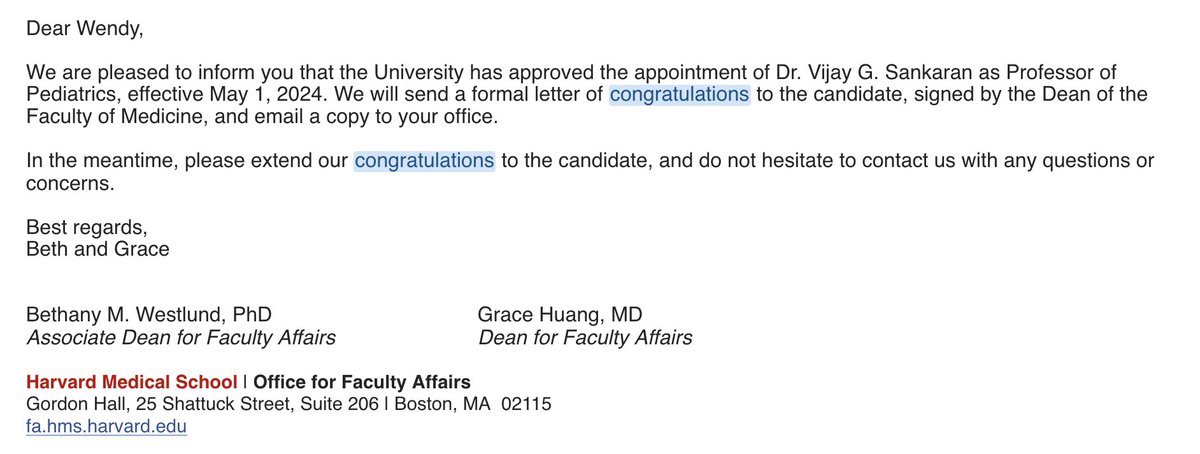
20 years ago I was finishing my first year at @harvardmed... Never did I imagine I would be here today. Grateful to all the incredible lab members past and present, amazing mentors, remarkable colleagues, and others who have made this possible! 🙏 for all those who wrote letters!
Vijay Sankaran tweet media
English
125
11
677
57.1K
Veera Rajagopal 
Veera Rajagopal @doctorveera·
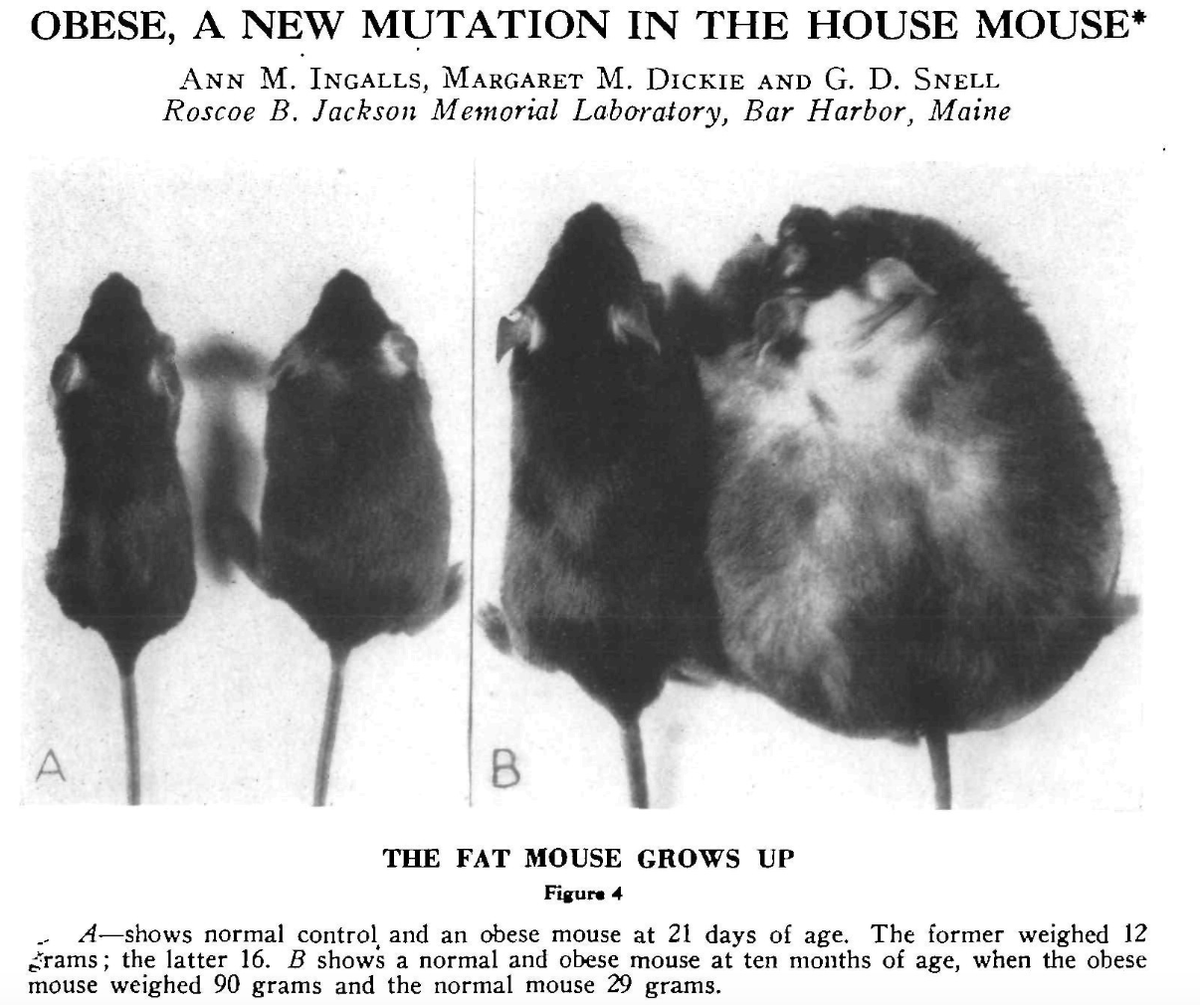
In a new paper in @NatureGenet, scientists from MRC Epidemiology Unity, University of Cambridge, report a new obesity gene--BSN (nature.com/articles/s4158…). Loss of function mutation in BSN causes an extreme form of obesity that is reminiscent of the weight gain associated with mutations in Mendelian genes like LEP, LEPR, POMC, MC4R etc. The authors find that individuals with haploinsufficiency of BSN are even more obese than those with haploinsufficiency of dominant obesity genes like MC4R. This is not the first exome-wide association analysis (ExWAS) of BMI in the UK Biobank. An early ExWAS of BMI by scientists from Regeneron in a much larger sample apparently missed reporting this gene (science.org/doi/10.1126/sc…). It is not surprising, given that there are some uncertainties in the way we aggregate rare variants across a gene to study their collective effects on a phenotype. It seems that Zhao et al.'s bucket of BSN pLOF carriers had 65 carriers, yielding a P value of 2e-8 whereas Akbari et al.'s bucket of BSN pLOF carriers had slightly different numbers of carriers (I am guessing more), yielding a P value that was less significant. You'll appreciate the inherent instability of P values from rare variant aggregate analysis, when you look at an earlier report by scientists from the Columbia University, who also independently identified the association of BSN with obesity in the UK Biobank in a much smaller sample size (nature.com/articles/s4152…). Zhu et al. analyzed only 1/3 of the UK Biobank cohort and so, likely found a lot fewer carriers than Zhao et al. or Akbari et al., yet they landed in a much stronger P value of 3.6e-12. It's likely that their bucket contained individuals carrying more severe, high penetrant, BSN pLOFs than the other two buckets, perhaps simply by luck. It is clear that BSN association with obesity is a real one, and it beautifully replicates in independent cohorts (Mexican Americans from MCPS and Pakistanis from PGR), but it's interesting that how variant filtering criteria influences the gene discovery. While many are pondering over the question of why initial analysis of UK Biobank exomes did not find BSN, I am pondering over the question of why we did not know long ago about this gene, which clearly has a such a profound impact on BMI. It's really an interesting thing to think about. The BSN discovery is made through a "hypothesis-free" approach, that is, you are searching through the entire genome (exome, in this case) blindfold and discovering genes whose biological links to obesity we know nothing about. After the discovery, we try to make sense of how loss of this gene cause obesity, slowly realizing the role of new biological pathway(s) involved in obesity. This is in striking contrast to the classic hypothesis-driven approach. Some of the greatest discoveries in the field of obesity genetics (made by some of the senior scientists from the current paper) were made in the 1990s via hypothesis-driven approach. Mice genetics were instrumental behind those hypotheses that resulted in the world of knowledge of obesity biology that we consume today. And you'll be pleasantly surprised to find that how much serendipity played a role in the early mouse genetics discoveries that later inspired human genetics discoveries. "In the summer of 1949 some very plump young mice were found in V stock" reads a 1949 paper in the Journal of Heredity published by Jackson Laboratory scientists. That was the first report of a naturally occurring obesity-causing mutation in mice, and appropriately named "ob". (Agouti yellow obese mice were known even before that, probably in the early 1900s, but the spontaneous mutation underlying Agouti mice was not found until the 1990s). Later in the 1990s, genetic advancements led to the cloning of ob gene in mice and its homologue in human leading to the discovery of leptin hormone secreted by the adipose tissue and eventually, to the discovery of leptin receptor in brain hypothalamic neurons that regulate the appetite. Once the biology was out in the open, it was just a matter of time before scientists got their hands on the first human counterparts of ob/ob and db/db mice (caused by leptin receptor mutation). All they had to was keep their eyes open and be ready to act immediately when the opportunity presents itself in the form of obese humans seeking medical attention. Fate would have it, the first fruit of obesity genes in humans fell in mid 1990s on the hands of Stephen O'Rahilly, a physician scientist at the University of Cambridge, shaping his influential career in the endocrinology and metabolism for the next decades (nature.com/articles/43185). Studying two severely obese children from a consanguineous family, Stephen and his team discovered the very first genetic cause of obesity in humans--congenital leptin deficiency--toppling the first domino of many that followed immediately in the late 1990s. - Discovery of first leptin receptor homozygous mutation in humans by French scientists in 1998 by sequencing the LEPR gene in a morbidly obese child from a consanguineous family (nature.com/articles/32911). - Discovery of the first POMC homozygous mutation by German scientists in 1998 by sequencing two patients with obesity, adrenal insufficiency and red hair pigmentation (nature.com/articles/ng069…). - Discovery of the first MC4R mutations by two independent teams--one from University of Cambridge (nature.com/articles/ng109…) and the other from Institut Pasteur de Lille, Paris (nature.com/articles/ng109…). The contrast between the MC4R discovery and the recent discoveries of GPR75 and BSN is what inspired me to sit and type this post. Yeo, Farooqi et al. studied 63 severely obese children and specifically looked for mutations in MC4R that might explain their high BMI, finding a heterozygous frameshift mutation in one. Vaisse et al. studied 43 morbidly obese individuals and specifically looked for mutations in MC4R and found a heterozygous frameshift mutation in one. In contrast, in the hypothesis-free approach, Zhao et al., after scanning the whole exomes of more than half a million individuals, captured 65 carriers of heterozygous loss of function mutations in BSN with extreme obesity. This makes me think if not for the understanding of leptin and melanocortin pathways in appetite regulation, it would have taken many more years for scientists to discover LEP, LEPR, POMC and MC4R mutations in a hypothesis-free manner. The BSN discovery probably opens a new biological pathway that plays an important role in human appetite regulation, a pathway that is also linked to neurodegeneration. BSN encodes a neuronal scaffolding protein critical for presynaptic cytoskeletal organization. The gene was first cloned in 1998 almost at the same time as other classic obesity genes. However, it was discovered in the context of neurodegeneration (sciencedirect.com/science/articl…). Studying the gene expressions in the brains of patients with multiple system atrophy, Japanese scientists stumbled upon a novel transcript leading to the cloning of BSN gene (which was called ZNF231 initially). Should this discovery had happened based on the brains of obese humans, BSN's link with obesity would have been discovered in the 1990s. It's fascinating to think how profoundly influential were prior knowledge and hypotheses on the timeline of human genetic discoveries. Congrats to @ZhaoDylan, @jrbperry, @GilesYeo, @StephenORahilly and many others involved in this beautiful work.
Veera Rajagopal  tweet mediaVeera Rajagopal  tweet mediaVeera Rajagopal  tweet media
English
4
52
247
72K
John Perry
John Perry@jrbperry·
@timfrayling @StephenORahilly I'll send a cheque in the post Tim! It doesn't feel so long ago I was sat in your office for the first time hearing about what a GWAS was...
English
0
0
3
166