
Sabitlenmiş Tweet
Drew
8.1K posts

Drew
@js4drew
Applied AI/ML Engineer | Freelancer | prev: Accenture , Sandia Labs, Berkeley | Building Tim: https://t.co/rF54wp3Nk2
Katılım Haziran 2024
414 Takip Edilen434 Takipçiler

yesterday, i turned 35. when i turned 34, i decided to set some ambitious goals for myself: reach true financial freedom, fix my cardiac metrics, publish a book, have a receipt for an engagement ring, and ship a big product.
i affectionately called these my [whale] goals for wealth, health, authorship, love, and entrepreneurship. i shared intention with a few friends last year and said i'd publish the results no matter what.
here's how it went:
English

@shawmakesmagic I'm doing this exact thing right now... literally word for word lol
English

Honestly just get off twitter and find literally any company struggling with AI, offer to work for free to automate something for them, then take half of what you save them per year
Do this 10x and you will be ultra rich
Daniel Ost@DanielOstX
@shawmakesmagic in a few years we'll learn about vibecoder millionaires who built automation for big companies that still haven't figured out AI
English

I've been posting less here because it looks like I just landed a massive project with serious investor backing and I think this could be the event of the year
Wasn't expecting this at all, a week ago I felt completely hopeless
English

So many people with traditional corporate or finance careers dream about these seemingly impossible lives of “being their own boss” while also being geographically free, being able to just “get up and go” whenever…
Business ownership scares most of them because they’re so used to the romanticization of innovation… that they need a business “idea”.. some brilliant thing. Or they need to buy some SMB and go into debt doing so.
You don’t need an “idea.”
Very rarely do folks internalize that the very nature of their current employment already proves the value of their skills and experience… that if their employer is willing to pay them, say, $200K for whatever it is they’re doing… then why wouldn’t 5 smaller companies pay them $40K or $3-4/m for some part-time narrower-scope version of that same thing? Maybe it’s a smaller business that doesn’t have the budget for FT. Or maybe it’s a founder who hates the hassle of managing unproductive W2s.
Boom… now you have XYZ Consulting making the same amount you were before... but with a 5x stability boost because you’ve spread job-loss risk across five clients instead of just “one client.” And now you can write-off a ton.
You can also more easily ratchet down your work-life at a time of your choosing.
For example… let’s say you want to work 40% less for some stretch… you can reduce your scope or even cut the relationship entirely with two clients. Now attempt to work 40% less at your W2.. think they’ll just pay you 40% less? No, of course not. That’s not how it works. You’ll be fired. They need someone at 100% and will pay for that.
But you can also ratchet up. You now have a diversified portfolio of clients that can refer you. You can build a compelling website, case studies, position yourself as conflict-free and independent, build a brand around yourself, etc.
The typical response is then… “OK sure, buddy, now tell me how to get those five clients.”
The answer is… you sell yourself. This is all that matters in life and business. Actually being competent in what you do is table stakes, because if you’re not then you won’t be able to sell yourself sustainably over time.
I often challenge high-performing people in corp/fin roles… if you’re so great at selling your firm and doing XYZ… then why don’t you go prove your true worth and true skill by selling yourself and testing the true value of your skills and experience on the open market… free of brand affiliations or entrenched systems of institutional preference from which you’ve benefitted?
They don’t because they are afraid. Every other reason given is a coping mechanism… prestige, stability, predictability, friends at work, “I really enjoy it here”…
So challenge #1 is overcoming fear as a concept before thinking about your business. Each of those reasons mask some insecurity or fear. A desire for prestige is signal for lack of personal confidence or an underdeveloped identity. Stability is signal for fear of not being able to provide. And so on.
Fear carries some evolutionary rationale… but it’s nevertheless important that people admit that’s what it is. Literally say it out loud. “I am afraid.”
Most of my network these days is made up of self-employed parents living in Europe. Almost nobody is creating some ground breaking app or technology or service. Yet every time we catch up they give me a hit parade of cool stuff they just did … just got back from Spain with wife and kids… just got back from two months in Australia with the kids… just did a 100 mile hike in Brazil… just pushed his clients to a partner and is just chilling for two years and wants to write a novel…
They’re always “on” and it’s stressful in its own kind of way. But these people are mostly doing the same things they used to do as W2s in their 20-30s.
They’re just wired for independence and think the trade-offs of this kind of work-life are obviously 100x better than letting “one client” make a margin on your time and effort.
English

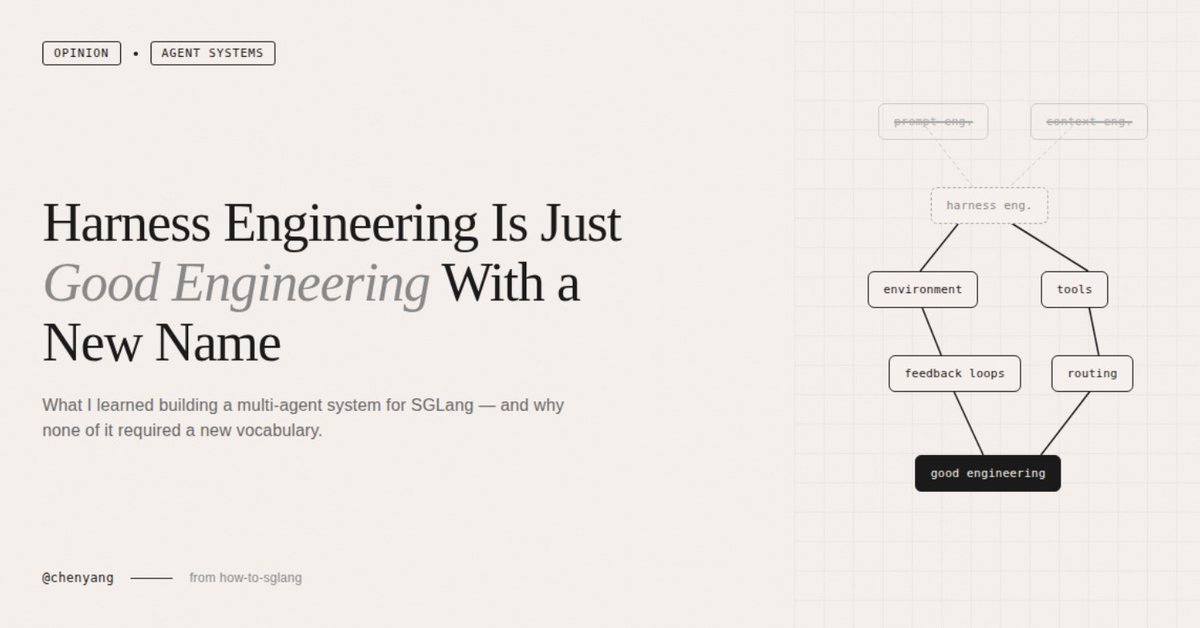
Today I read a lengthy piece on Harness Engineering — tens of thousands of words, almost certainly AI-written. My first reaction wasn't "wow, what a powerful concept." It was "do these people have any ideas beyond coining new terms for old ones?"
I've always been annoyed by this pattern in the AI world — the constant reinvention of existing concepts. From prompt engineering to context engineering, now to harness engineering. Every few months someone coins a new term, writes a 10,000-word essay, sprinkles in a few big-company case studies, and the whole community starts buzzing. But if you actually look at the content, it's the same thing every time:
Design the environment your model runs in — what information it receives, what tools it can use, how errors get intercepted, how memory is managed across sessions. This has existed since the day ChatGPT launched. It doesn't become a new discipline just because someone — for whatever reason — decided to give it a new name.
That said, complaints aside, the research and case studies cited in the article do have value — especially since they overlap heavily with what I've been building with how-to-sglang. So let me use this as an opportunity to talk about the mistakes I've actually made.
Some background first. The most common requests in the SGLang community are How-to Questions — how to deploy DeepSeek-V3 on 8 GPUs, what to do when the gateway can't reach the worker address, whether the gap between GLM-5 INT4 and official FP8 is significant. These questions span an extremely wide technical surface, and as the community grows faster and faster, we increasingly can't keep up with replies. So I started building a multi-agent system to answer them automatically.
The first idea was, of course, the most naive one — build a single omniscient Agent, stuff all of SGLang's docs, code, and cookbooks into it, and let it answer everything.
That didn't work.
You don't need harness engineering theory to explain why — the context window isn't RAM. The more you stuff into it, the more the model's attention scatters and the worse the answers get. An Agent trying to simultaneously understand quantization, PD disaggregation, diffusion serving, and hardware compatibility ends up understanding none of them deeply.
The design we eventually landed on is a multi-layered sub-domain expert architecture. SGLang's documentation already has natural functional boundaries — advanced features, platforms, supported models — with cookbooks organized by model. We turned each sub-domain into an independent expert agent, with an Expert Debating Manager responsible for receiving questions, decomposing them into sub-questions, consulting the Expert Routing Table to activate the right agents, solving in parallel, then synthesizing answers.
Looking back, this design maps almost perfectly onto the patterns the harness engineering community advocates. But when I was building it, I had no idea these patterns had names. And I didn't need to.
1. Progressive disclosure — we didn't dump all documentation into any single agent. Each domain expert loads only its own domain knowledge, and the Manager decides who to activate based on the question type. My gut feeling is that this design yielded far more improvement than swapping in a stronger model ever did. You don't need to know this is called "progressive disclosure" to make this decision. You just need to have tried the "stuff everything in" approach once and watched it fail.
2. Repository as source of truth — the entire workflow lives in the how-to-sglang repo. All expert agents draw their knowledge from markdown files inside the repo, with no dependency on external documents or verbal agreements. Early on, we had the urge to write one massive sglang-maintain.md covering everything. We quickly learned that doesn't work. OpenAI's Codex team made the same mistake — they tried a single oversized AGENTS.md and watched it rot in predictable ways. You don't need to have read their blog to step on this landmine yourself. It's the classic software engineering problem of "monolithic docs always go stale," except in an agent context the consequences are worse — stale documentation doesn't just go unread, it actively misleads the agent.
3. Structured routing — the Expert Routing Table explicitly maps question types to agents. A question about GLM-5 INT4 activates both the Cookbook Domain Expert and the Quantization Domain Expert simultaneously. The Manager doesn't guess; it follows a structured index. The harness engineering crowd calls this "mechanized constraints." I call it normal engineering.
I'm not saying the ideas behind harness engineering are bad. The cited research is solid, the ACI concept from SWE-agent is genuinely worth knowing, and Anthropic's dual-agent architecture (initializer agent + coding agent) is valuable reference material for anyone doing long-horizon tasks. What I find tiresome is the constant coining of new terms — packaging established engineering common sense as a new discipline, then manufacturing anxiety around "you're behind if you don't know this word."
Prompt engineering, context engineering, harness engineering — they're different facets of the same thing. Next month someone will probably coin scaffold engineering or orchestration engineering, write another lengthy essay citing the same SWE-agent paper, and the community will start another cycle of amplification.
What I actually learned from how-to-sglang can be stated without any new vocabulary:
Information fed to agents should be minimal and precise, not maximal. Complex systems should be split into specialized sub-modules, not built as omniscient agents. All knowledge must live in the repo — verbal agreements don't exist. Routing and constraints must be structural, not left to the agent's judgment. Feedback loops should be as tight as possible — we currently use a logging system to record the full reasoning chain of every query, and we've started using Codex for LLM-as-a-judge verification, but we're still far from ideal.
None of this is new. In traditional software engineering, these are called separation of concerns, single responsibility principle, docs-as-code, and shift-left constraints. We're just applying them to LLM work environments now, and some people feel that warrants a new name.
I don't know how many more new terms this field will produce. But I do know that, at least today, we've never achieved a qualitative leap on how-to-sglang by swapping in a stronger model. What actually drove breakthroughs was always improvements at the environment level — more precise knowledge partitioning, better routing logic, tighter feedback loops. Whether you call it harness engineering, context engineering, or nothing at all, it's just good engineering practice. Nothing more, nothing less.
There is one question I genuinely haven't figured out: if model capabilities keep scaling exponentially, will there come a day when models are strong enough to build their own environments? I had this exact confusion when observing OpenClaw — it went from 400K lines to a million in a single month, driven entirely by AI itself. Who built that project's environment? A human, or the AI? And if it was the AI, how many of the design principles we're discussing today will be completely irrelevant in two years?
I don't know. But at least today, across every instance of real practice I can observe, this is still human work — and the most valuable kind.
English


Everyone who sprinted their whole lives gets to the very end and wishes they had walked more. The only thing that matters is time
Mikli@CryptoMikli
Threadguy says it’s time to sprint: “There’s potentially a changing of the global world order. You should neglect everyone right now” “All these trader guys on Twitter are saying ‘don’t stress yourself out, take some time to touch grass, spend some time with your family’" "There's times to walk and there's times to sprint"
English

Nah I've been in deep talks about putting ai classes in public schools and underprivileged environments... google, nvidia , Claude, x , meta holler at me let's change the world real quick! Give ai to the "hungry watch the incredible happen!
BuccoCapital Bloke@buccocapital
"Your job won't be taken by AI, it will be taken by Meek Mill using AI" - Jensen Huang
English
@joshpuckett @Duderichy wife and i have been inseparable since we met 8 years ago
we went sledding this day :)

English

@Duderichy Told my wife I was gonna marry her within a week of meeting. Did the opposite of whatever garbage advice that child is spewing.
That was about 16 happy years ago (pic from a wedding this weekend).

English

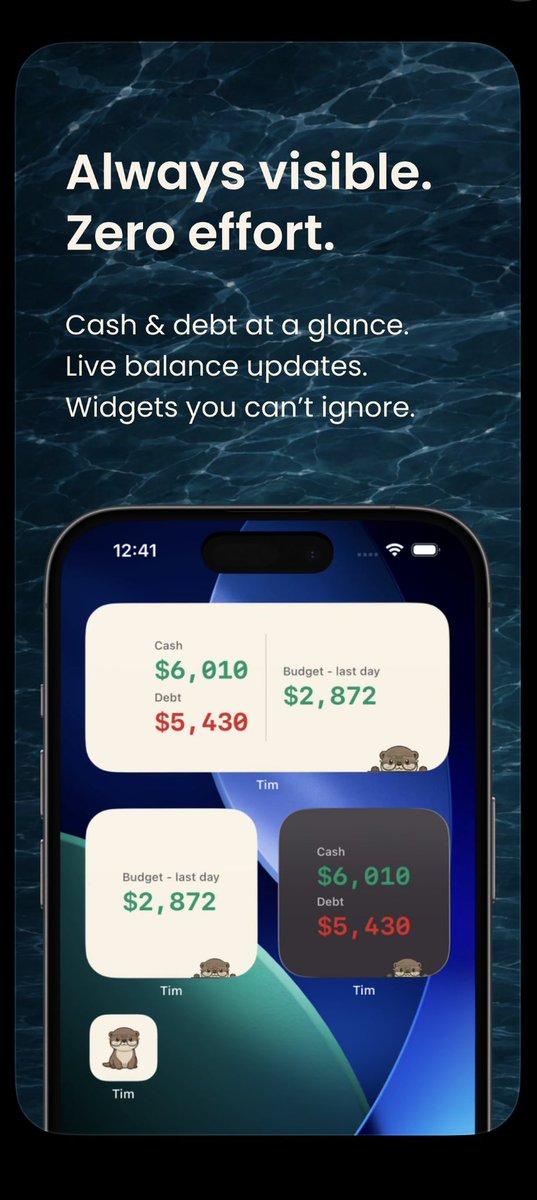
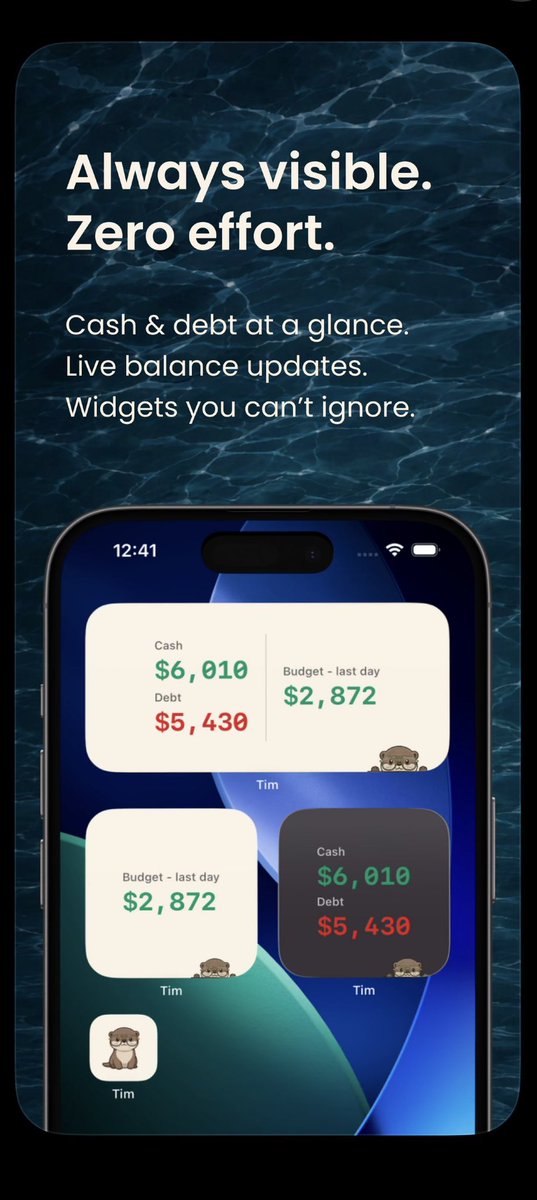
@verohecko @kelin_online idk if this is strange but i built the most simple budgeting tool as my first app!
his names tim :)
apps.apple.com/us/app/tim-tim…
English

Underrated!
Do you have a strange new thing? Can I help you with it? Looking for product / design feedback? Someone who can see the potential in something nascent? LMK!
Dalton Caldwell@daltonc
Don’t forget to support people trying strange new things. They won’t forget that you did.
English

It’s the hardest thing I’ve done and it’s the single thing that exposes if you actually have the knowledge of your subject or if it’s just passive understanding.
But don’t give up! You’re reinforcing the muscles needed an it gets easier with time.
Aunty Teda@imoteda
Incase you’ve wondered, this is why I don’t make content. This is me trying to film a short educative video and you can literally see how excited I started out and how stressed I got when I gave up. Packed the hair, fake smile. Content creators are truly doing the lord’s work!
English

I never buy return tickets, I just leave for Bali usually and then see where the road takes me. Can be 2 months, 6 months or more!
peach@33b345
English

I will die on this hill, but please use a single branch at a time, have cc and codex verify each others changes, keep an agents talk file, and be a serious TPM
shadcn@shadcn
git worktree is a great feature for people smarter than me
English

@yacinelearning did the same but with a geophysics class
ended up being my favorite class in college
English

fun experiment I ran in college was taking computer science class without the pre-requisites and figure my way out
🐟Phishie - CEO OF 🧬BAXTEK/🧪HELL'S⚗️STEM🧫SQUAD@phishiebaxtek
@yacinelearning If it's too hard you will remember nothing, or if anything you will remember the struggle but not the conclusion. It's better to study first to make it less hard.
English

Another great life hack is to stop sharing - whatever opportunities you have, you just don't share them not even to your closest allies
This way the universe knows you are capable of handling success and it brings more your way, it's like you "earn" it in a way
English