Juan Sebastian Arias

1.3K posts

Juan Sebastian Arias banner
Juan Sebastian Arias

Juan Sebastian Arias

@jsarias1979

100% Slurpee

Medellín Katılım Haziran 2010
3.5K Takip Edilen355 Takipçiler
Juan Sebastian Arias retweetledi

Dr. Julie Gurner
Dr. Julie Gurner@drgurner·
"Until death, all defeat is psychological." - Marcus Aurelius Refuse everything that would lead most people to give up. Refuse it. Rise from the dead 1000 times. Commit to never stay down & never give up. Everything you want is on the other side of struggle.
English
160
2.8K
14.7K
2.1M
Juan Sebastian Arias retweetledi
Carolina Restrepo Cañavera
Carolina Restrepo Cañavera@carorestrepocan·
Nunca me gustó Abelardo Por Juan Esteban Cock Vélez Y sin embargo, voy a votar por él en primera vuelta. Empiezo por ahí porque sé cómo suena. Suena a contradicción, a oportunismo, o peor: a que cedí. No es ninguna de las tres. Es el resultado de varias semanas de análisis, de muchas conversaciones, de preguntas internas sin respuesta e incluso algunos desvelos. Y porque además les debo a quienes me leen, amigos, familia, personas que valoro, gente con la que he discutido de política por estos días, la honestidad de contarles cómo llegué hasta acá. Abelardo de la Espriella no me generaba confianza como persona. Y digamos las cosas como son: infortunadamente en la honestidad de casi ningún político creo. Cuando cerraron las consultas, mentalmente le había dado mi voto a Paloma Valencia. Su trayectoria política pesaba. Pensé, con la frialdad de quien hace cálculo electoral: tener maquinaria detrás puede ser estratégico para ganarle a Cepeda. Y ese, en el fondo, es el verdadero punto de partida de mi voto para el próximo 31 de mayo. Porque mi decisión no empieza por quién quiero que llegue, sino por quién no puede llegar. Llevo varios meses invertidos en esto. Horas de análisis, conversaciones con personas expertas, intercambios con cercanos a las campañas de Abelardo y de Paloma, debates con amigos a los que admiro por su visión de país. He leído las encuestas que vale la pena leer y he descartado las que no. No estoy hablando desde la pasión de un seguidor, estoy hablando desde el desgaste de alguien que se tomó el asunto en serio. Y en el camino pasó algo que no esperaba: Abelardo me empezó a conquistar. Su apuesta por la seguridad del Estado y por una mano firme contra los grupos criminales no es accesoria. Es, en mi lectura, el primer renglón que cualquier presidente nuevo va a tener que ajustar si queremos recuperar la confianza interna y la credibilidad externa. La salud, la economía hecha trizas por este gobierno, la educación, sin duda también es prioritario. Pero sin seguridad, lo demás no se sostiene. Un país que no puede garantizar el orden no atrae inversión, no retiene talento, no permite futuro. Aun así, las dudas seguían. Hasta que llegó José Manuel Restrepo como fórmula vicepresidencial. Se lo dije a él mismo en una nota que le envié: "Le sumaste a la campaña de Abelardo lo que me hacía falta: confianza". Y se lo dije porque era exactamente eso. José Manuel representa el conocimiento técnico, la trayectoria pública y privada con resultados excepcionales (su último gran logro: llevar a la EIA al primer lugar en el ranking de las mejores universidades de Colombia, superando a Los Andes). Él es la seriedad institucional que la fórmula necesitaba, el ser humano que me hacía falta. Un detalle que muchos pasarían por alto pero que a mí juicio dice mucho sobre cómo va a operar él en el gobierno: le envié esa nota directamente por WhatsApp, gracias a que un buen amigo en común me dio su contacto, y sin él saber quién soy yo, no se tomó ni una hora en responderme. Esa es la clase de ejecutivo que va a tener un rol clave en una eventual administración. Quedaba una pregunta que me dolía hacerme: ¿un tipo que solo ha administrado sus empresas - criticadas o no, en lo cual no me quiero detener – podría liderar nuestro País? La respuesta llegó cuando me di cuenta de que me había estado formulando mal la pregunta. Pocos candidatos llegan a la presidencia con experiencia presidencial, la mayoría llega con experiencia pública previa, sí, pero el salto al Ejecutivo nacional siempre es un salto. Lo que define el éxito de un gobierno no es únicamente la biografía del presidente: es la calidad del equipo que arma. Y aquí es donde el argumento se cierra. Si Abelardo eligió a José Manuel Restrepo como su fórmula, alguien que no necesitaba esa campaña, que tenía mucho que perder y poco que ganar, me imagino el calibre del gabinete que va a convocar. Sigue….⬇️
Español
93
572
1.5K
43.9K
Juan Sebastian Arias retweetledi
Paris-Roubaix Hauts-de-France
Paris-Roubaix Hauts-de-France@parisroubaix·
🗣️ Wout van Aert: ''It means everything to me. It’s been a goal since 2018, when I first came here and lost my teammate Michael Goolaerts. Ever since then, my goal has been to come back here and point to the sky.'' 🗣️ Wout van Aert : « Ça représente tout pour moi. C’est un objectif depuis 2018, quand je suis venu ici pour la première fois et que j’ai perdu mon coéquipier Michael Goolaerts. Depuis, mon objectif est de revenir ici et de lever le doigt vers le ciel. » #ParisRoubaix
English
7
197
2.5K
88.7K
Juan Sebastian Arias retweetledi
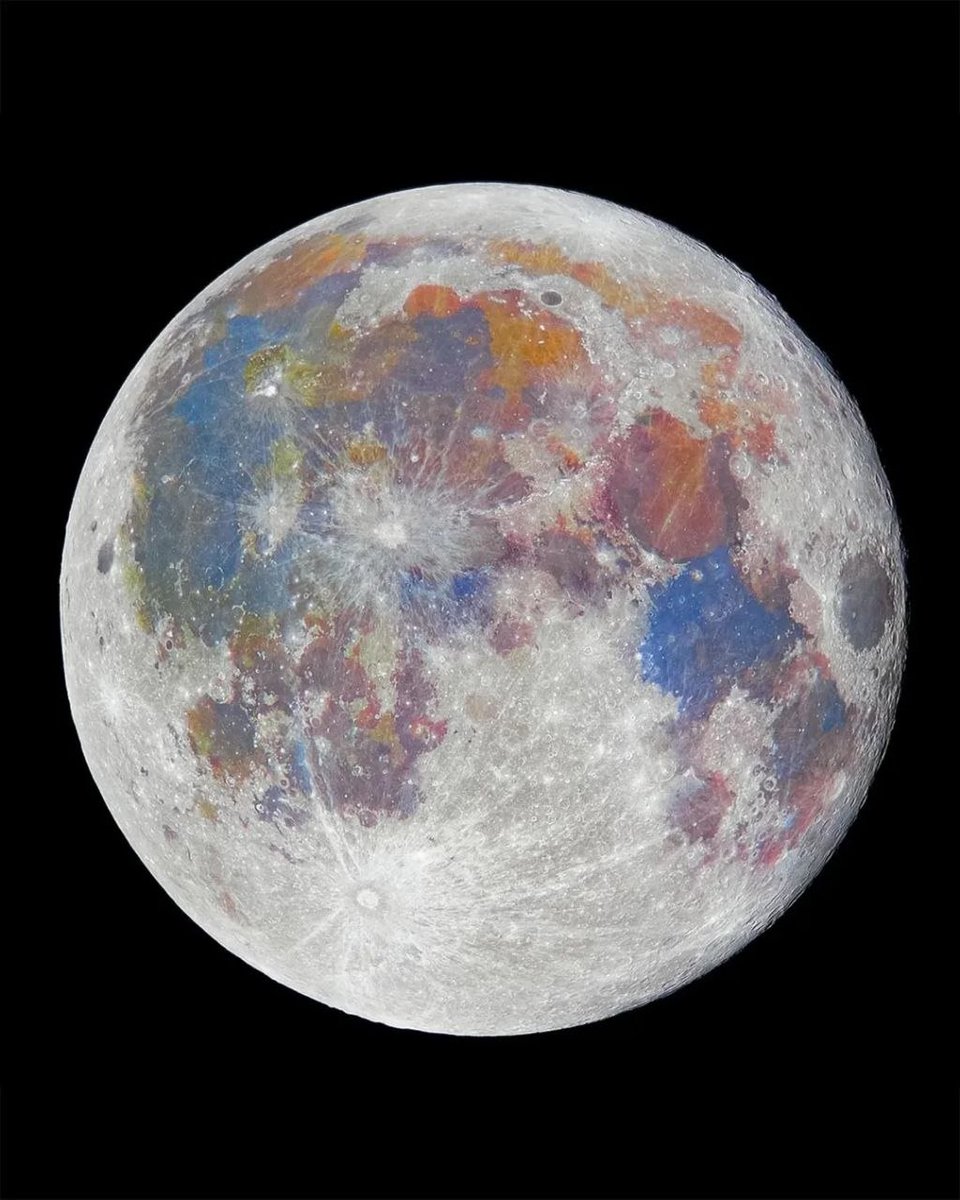
Moon
Moon@moondailys·
Moon tweet media
ZXX
943
79.7K
436.4K
11.6M
Juan Sebastian Arias retweetledi
Physics & Astronomy Zone
Physics & Astronomy Zone@zone_astronomy·
The highest quality video of the moon was just released… this is so beautiful.
English
5.2K
65K
332.3K
11.3M
Juan Sebastian Arias retweetledi
Benonwine
Benonwine@benonwine·
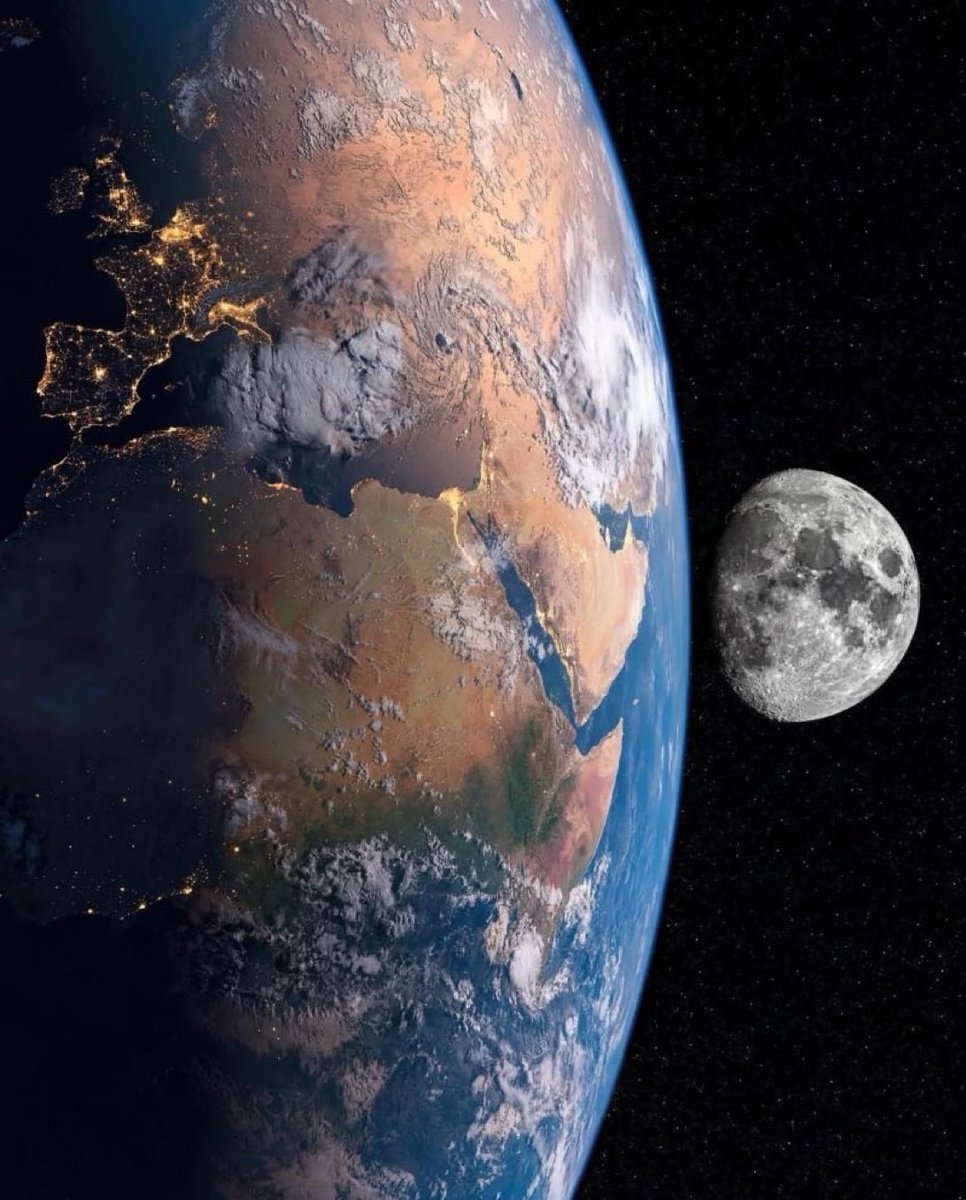
New picture of Earth from the Artemis II.
Benonwine tweet media
English
292
830
8.4K
258K
Juan Sebastian Arias retweetledi
NASA
NASA@NASA·
We see our home planet as a whole, lit up in spectacular blues and browns. A green aurora even lights up the atmosphere. That's us, together, watching as our astronauts make their journey to the Moon.
NASA tweet media
English
4.7K
66K
312.5K
77.2M
Juan Sebastian Arias retweetledi
Benny Johnson
Benny Johnson@bennyjohnson·
Artemis II will lift off tomorrow, fly around the moon and return safely back to earth. It starts with the six engines producing 8.8 million pounds of thrust and ends with a splashdown off the coast of California and a ship recovering the astronauts and capsule. Here’s an animation of many of the dynamic and exciting steps that happen in between!
English
232
1.3K
5.3K
230.4K
Juan Sebastian Arias retweetledi
NASA Artemis
NASA Artemis@NASAArtemis·
Our Artemis II crew will be going around the Moon, but they'll always find their way back home 🌎 During this complex journey, the four astronauts will travel ~685,000 miles on a trajectory around the Moon and back to Earth. See their daily agenda: go.nasa.gov/4bw1ddt
English
339
2.3K
11.9K
1.2M
Juan Sebastian Arias retweetledi
Elon Musk
Elon Musk@elonmusk·
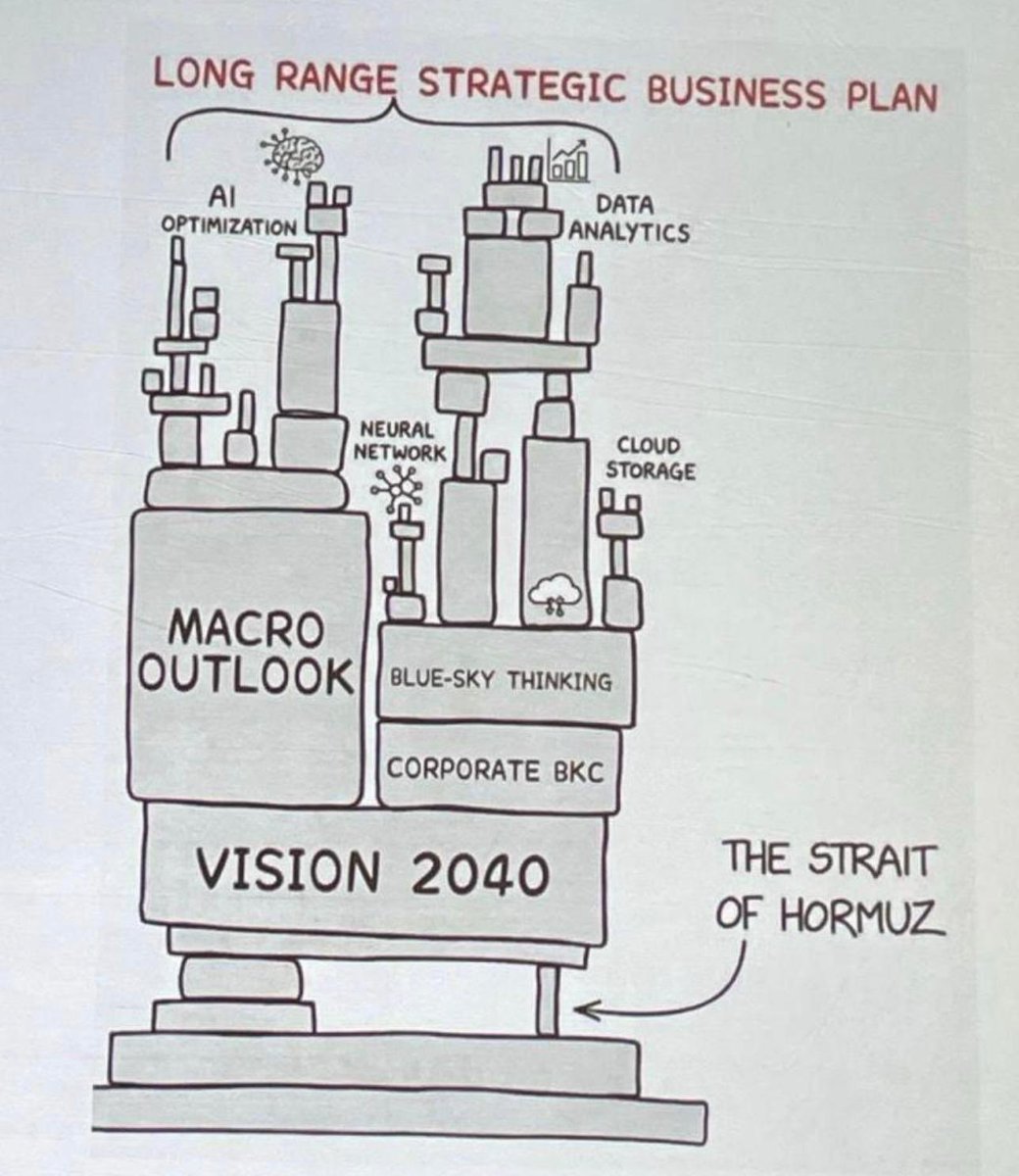
Elon Musk tweet media
ZXX
7.9K
30.7K
283.7K
28.4M
Juan Sebastian Arias retweetledi
Niporwifi ©
Niporwifi ©@niporwifi·
Las imágenes de Tadej Pogačar en la Strade Bianche son absolutamente de cine.
Español
9
191
1.3K
52.3K
Juan Sebastian Arias retweetledi
The Curious Tales
The Curious Tales@thecurioustales·
🚨 DISCOVERY ALERT: Researchers discovered the most accurate image of an atom. No camera captured this. No lens focused light onto a sensor and produced this image. Every single line radiating outward from that center is a reconstructed mathematical trajectory — the computed path of a subatomic particle reverse-engineered from thousands of sensor hits inside a cylindrical detector the size of a six-story building. This is a collision event from the ATLAS detector at CERN's Large Hadron Collider. Two protons, accelerated to 99.9999991% the speed of light in opposite directions, were allowed to meet at the center of that image. What you're seeing is the wreckage — hundreds of particles spraying outward in every direction, each track a fragment of the violence that occurs when matter is pushed past the boundary of its own coherence. The reason this qualifies as the most accurate image of an atom is precisely because it was never taken — it was solved. Every imaging technique before this era was fundamentally limited by the same problem: you need something smaller than the thing you're trying to see in order to see it. Optical microscopes hit a wall at the wavelength of visible light — roughly 400 nanometers. An atom is 0.1 nanometers. Light literally cannot resolve it. Electron microscopes pushed further, using electrons instead of photons, and produced those haunting lattice images of atomic arrangements on crystal surfaces. Scanning tunneling microscopes mapped electron density by measuring quantum tunneling currents across a needle tip one atom wide. All of those techniques show you the neighborhood of an atom. The electron cloud. The surface probability distribution. The shape of where electrons are likely to be found. None of them showed you what an atom does when you crack it open. The Bohr model most people carry in their heads — a miniature solar system with a dense nucleus at the center and electrons orbiting in clean circular shells — was known to be wrong by 1926. Electrons don't orbit. They occupy probability clouds, smeared across space in mathematical distributions called orbitals, existing in superposition across their entire allowed region until an interaction forces them to manifest at a specific location. The nucleus sits at the center, impossibly dense, containing 99.97% of the atom's mass in a space roughly 100,000 times smaller than the atom itself. If the atom were scaled to the size of a major sports stadium, the nucleus would be a marble sitting at the center of the pitch. The electrons would be specks of dust orbiting somewhere in the upper tiers. Everything in between — the vast interior of the stadium — would be completely empty. The solidity of the chair you're sitting on, the floor beneath your feet, the device in your hand — none of it is solid in any meaningful physical sense. It is electric force fields and quantum exclusion principles maintaining their geometry so aggressively that macroscopic objects cannot pass through each other. Matter repels matter not because it is packed tight, but because the electromagnetic fields and the Pauli exclusion principle — which forbids two fermions from occupying the same quantum state — create an effective rigidity that our nervous systems interpret as hardness. You have never touched anything in your life. Your fingertips have never made contact with any surface. They've been repelled at a distance of a few angstroms by electron clouds pushing back. But even that picture stops at the atom's edge. The real frontier is what lives inside the nucleus itself — and that's where this image becomes extraordinary. Those protons that collided in the center of this image were not simple objects. For a century after Rutherford discovered the nucleus, physicists treated protons and neutrons as fundamental particles. Elementary. Indivisible. The lowest level. Quantum chromodynamics — the theory of the strong nuclear force developed through the 1960s and 70s — dismantled that assumption completely. Protons are made of quarks. Three of them, bound together by a field so powerful that it actually increases in strength as you try to pull quarks apart, unlike gravity or electromagnetism which weaken with distance. The strong force is the only fundamental force in nature that operates this way. Pull two quarks apart far enough and the energy you're pouring into the gap spontaneously converts into mass — producing new quark-antiquark pairs rather than ever allowing the original quarks to separate freely. Quarks have never been observed in isolation. They can only exist in bound states. The moment you try to free one, the universe manufactures new quarks to replace it. What this means is that a proton at rest is not really three quarks sitting in a bag. It's a seething, dynamic object — a constant churning of gluons mediating the strong force between quarks, virtual quark-antiquark pairs flickering in and out of existence in the quantum foam, the entire structure holding itself together through interactions so rapid and complex that they occur at timescales of 10⁻²⁴ seconds. The tracks exploding outward in this image are the evidence of all of that released simultaneously. When two protons collide at near-light speed, the quarks and gluons inside them interact directly — and the energy of that collision materializes as new particles: pions, kaons, muons, photons, and occasionally far rarer things like Higgs bosons or top quarks, particles that exist for fractions of a femtosecond before decaying into cascades of lighter particles that the detector then captures. Each colored line in this image is a different particle species. The curvature of each track — shaped by the superconducting magnets surrounding the detector — encodes the particle's momentum and charge. The length of each track encodes how far it traveled before decaying. Every single line is simultaneously a particle's biography and a window into what existed inside the nucleus for a sliver of time too short to have a name in human language. Generations of scientists built their understanding of atomic structure through inference — measuring deflection angles, studying spectral lines, analyzing scattering patterns — because the thing they were studying could never be directly observed. The atom held its secrets inside a scale that human instruments couldn't reach. What CERN built is an instrument that doesn't observe the atom passively. It obliterates it and reads the explosion. The most accurate image of an atom looks nothing like an atom at all. It looks like a supernova captured in a single frame — a moment of total structural dissolution from which we reconstruct, mathematically, what was there before we destroyed it. The deepest truth about matter is that we understand it best at the exact moment it ceases to exist.
The Curious Tales@thecurioustales

🚨 This is the most accurate image of an atom

English
2
91
529
44K
Juan Sebastian Arias retweetledi
Massimo
Massimo@Rainmaker1973·
The largest and sharpest image ever taken of the Andromeda galaxy — otherwise known as M31. It is the biggest Hubble image ever released and shows over 100 million stars, thousands of star clusters in a section of the galaxy’s disc stretching across over 40 000 light-years.
English
356
2.2K
10.7K
528.3K
Juan Sebastian Arias retweetledi
Philosophy Of Physics
Philosophy Of Physics@PhilosophyOfPhy·
The light we see "above" a black hole is actually coming from the far side of the disc.
English
36
442
2.6K
163.2K
Juan Sebastian Arias retweetledi
Bitcoin Teddy
Bitcoin Teddy@Bitcoin_Teddy·
“If I put $100 in Bitcoin in 2010 I’d have $2.8B now.” No. If you bought $100 of Bitcoin in 2010 and watched it go to: $1k → $100k → $1.7M and did nothing Then watched $1.7M go to $170k and still did nothing Then watched $170k go to $110M and still did nothing Then watched $110M wither to $18M and still did nothing Then watched $18M surge to $390M and still did nothing Then watched $390M deteriorate to $85M Then watched $85M climb to $1.6B and still did nothing Then watched $1.6B shrink to $390M and still did nothing Then watched $390M surge to $2.8B and then for some reason finally decided to do something… Then yes, $100 in 2010 would be worth $2.8B today.
English
254
521
8.4K
1.3M
Juan Sebastian Arias retweetledi
Netcompany INEOS
Netcompany INEOS@NetcompanyINEOS·
Another year in the Colombian colours! 🇨🇴🇨🇴🇨🇴🇨🇴 The warrior never gives up 💪💪💪💪💪
Netcompany INEOS tweet media
English
19
189
1.9K
60.7K