

Andres Ocampo
11.1K posts

🚨With Iran almost surrendering, Trump could pivot to 2 countries.
Cuba and next Colombia.
The goal is a Fortress America with allies and enemies being put on notice saying: you’re either with the US or in our way.
Look how Europe is facing the economic chopping block. 📉
Then he could go for Greenland...
English
@mondra723 La guerra contra las drogas está perdida, Richard Nixon le declaró la guerra a las drogas en 1974, y acá estamos, mayor consumo, mayor producción.
Español

Colombia y las drogas: por qué es una problemática tan compleja?
1. El Estado Actual: Una "Tormenta Perfecta"
En 2026 no compiten las sustancias, sino que hay una expansión masiva y simultánea.
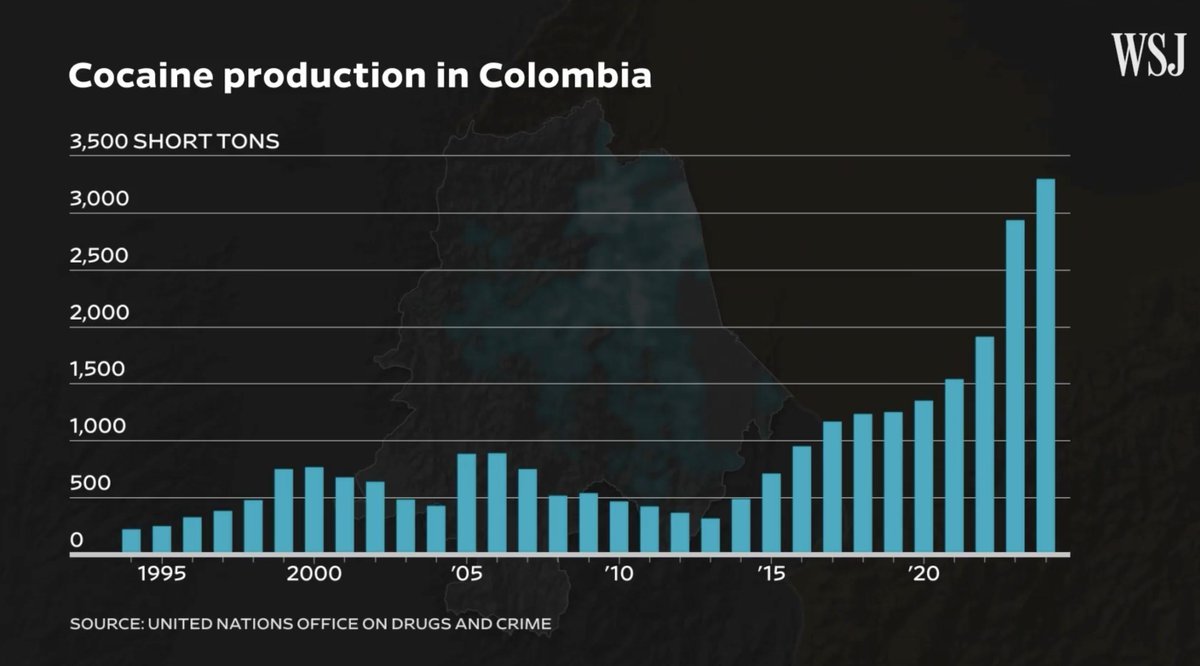
La Cocaína no está muriendo: Al contrario, vive su mayor auge histórico. La producción global en Colombia ha alcanzado niveles récord (más de 3,700 toneladas anuales), impulsada por mejoras en la productividad química y mayor rendimiento de los cultivos.
Saturación de Sintéticos: El fentanilo y las metanfetaminas dominan el mercado de EE. UU. por su bajo costo de producción, pero ahora se están "mezclando" con la cocaína para crear nuevos nichos de consumo.
Nuevas Fronteras: Mientras EE. UU. está saturado, el consumo está explotando en Europa (ya es el mercado más rentable), África y Asia, donde la demanda apenas comienza a despertar.
2. Lo que se Proyecta: La "Mexicanización" del Negocio
El narcotráfico está migrando hacia un modelo de Integración Total:
Unificación en México: Los carteles mexicanos (Sinaloa y CJNG) ya no quieren ser solo transportadores. Están intentando cultivar coca en México y trasladar los laboratorios de refinamiento a su territorio para controlar toda la cadena, desde la semilla hasta la nariz del consumidor en EE. UU.
Migración de la Producción: Ante la presión, el cultivo de coca ya está goteando hacia Centroamérica (Honduras y Guatemala). Si la presión aumenta, el negocio se moverá donde el Estado sea más débil o la geografía más difícil.
El "Amazon" de las Drogas: Se proyecta un mercado cada vez más digital y fragmentado, usando criptoactivos y envíos pequeños por correo, lo que hace la interdicción tradicional casi imposible.
3. El Escenario para Colombia: ¿Qué puede pasar?
Si un gobierno como el de Abelardo de la Espriella implementa un modelo de "mano dura" tipo Bukele o la estrategia de Pinochet (que mandó indirectamente todo el narcotráfico a Colombia), los efectos podrían ser:
Efecto Cucaracha: Una persecución militar extrema en Colombia forzaría a los compradores (carteles mexicanos) a acelerar la mudanza de la producción a otros países (México, Ecuador, Venezuela o Centroamérica). Colombia dejaría de ser el centro productor, pero a un costo de conflicto interno muy alto.
Violencia de Transición: La desarticulación de grandes estructuras bajo un modelo de megacárceles suele generar "atomización" (muchos grupos pequeños y más violentos peleando por lo que queda), similar a lo que pasó tras la caída de los grandes carteles de los 90.
Bonanza por Demanda Global: Si Asia y África alcanzan niveles de consumo occidentales, la presión económica sobre Colombia será brutal. El precio de la cocaína subiría tanto que los grupos ilegales tendrían recursos infinitos para corromper instituciones o resistir militarmente.
Riesgo de Sustitución: el campesino cocalero se quedaría sin sustento dejando a regiones enteras de Colombia en la quiebra absoluta y sin control estatal.
Conclusión
Colombia está en una encrucijada: o logra desmantelar el negocio mediante una presión militar sin precedentes que fuerce la salida del mercado del país (asumiendo el costo social), o se enfrenta a una nueva era de narcotráfico donde el país sirve de "despensa" para un mercado global (Asia/África) que apenas está descubriendo el producto.
Qué se viene para la república platanera? Qué país le va a tocar a las siguientes generaciones?
Los leo abajo

Español



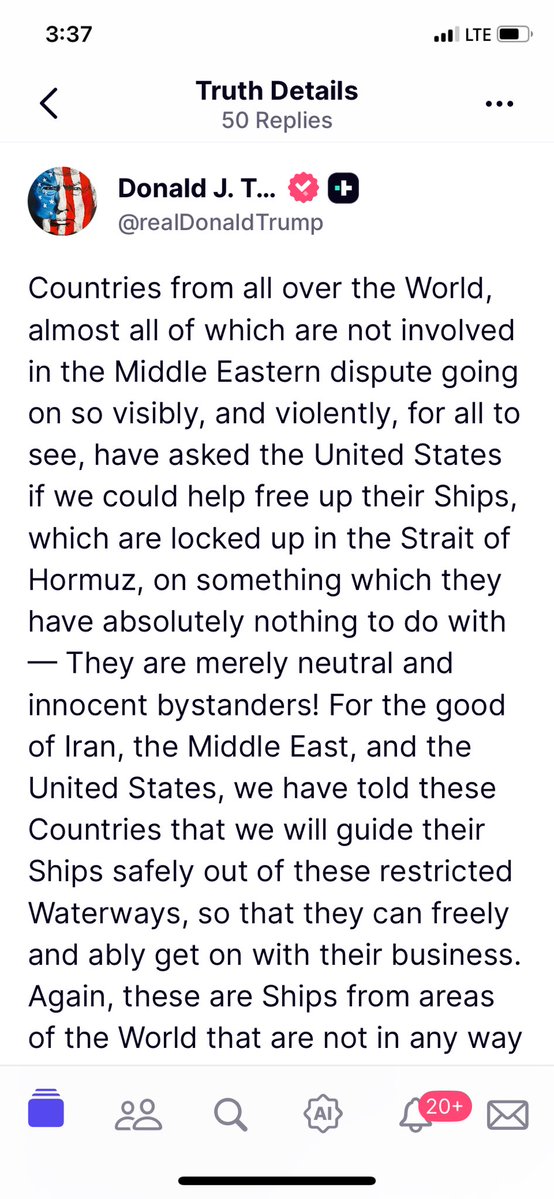
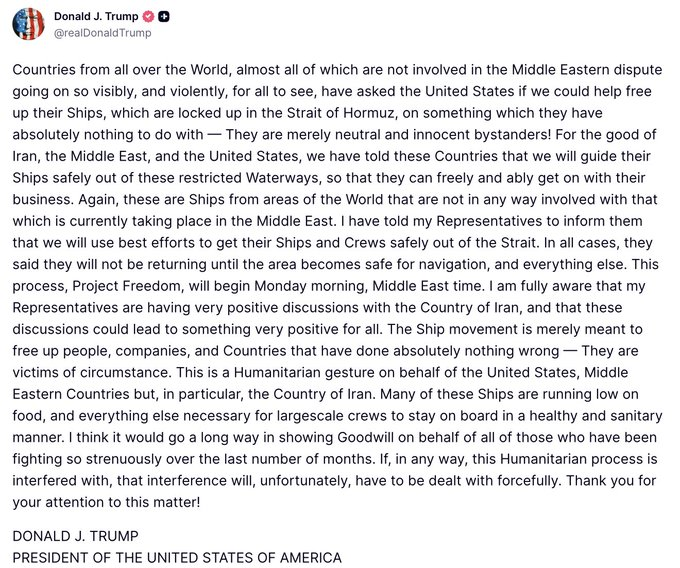
Trump just announced, US will escort ships out of Hormuz in defiance of Iran’s threats.
This tactic is called “salami slicing” and shifts the initiative to Iran to sink the ships and US escorts.
The big question: Will the civilian tankers take the risk?
English
@bundeskanzler Es ist beschämend, dass der Anführer des Landes, das ich bewundere, trotz der Demütigungen darauf besteht, ein Lakai der Vereinigten Staaten zu bleiben.
Deutsch

The United States is and will remain Germany‘s most important partner in the North Atlantic Alliance. We share a common goal: Iran must not be allowed to acquire nuclear weapons.
English
@yarbatman Unfortunately, Robin is completely blinded by US propaganda.
English

Robin, you are looking at the wrong exchange rate—Iran’s economy doesn’t run on the free market rate—and you also have the politics of Iran’s currency markets backwards. Iranian policymakers have consistently favoured exporters over importers have repeatedly allowed sharp devaluations of the central exchange rate to encourage hard currency revenues to flow back into the country. This happened most recently in December. Ironically, capital flight in Iran is suppressed by sanctions—the government doesn’t impose significant controls for this reason.
The free market exchange rate is mainly a signal of dismal economic sentiments among ordinary Iranians. The economy has adjusted in ways that allow the government and firms to push the costs of sanctions and trade disruptions onto ordinary people. The free market exchange rate has been sliding for 8 whole years and yet the coercion hasn’t worked. You should be asking why that is the case before claiming that the blockade is some masterstroke policy.
Robin Brooks@robin_j_brooks
An underappreciated channel of how the US blockade works is to cause panic and capital flight in Iran. That's why the Rial is falling sharply. A country like Iran sees its currency as a status symbol, so they'll have resisted this until it got impossible. robinjbrooks.substack.com/p/what-a-succe…
English
@nachomdeo Ya el WSJ dijo que no iba a haber escolta, solo una "guía", de nuevo Trump miente para mantener el precio bajo del petróleo.
Español

Trump anunció una operación para evacuar con escolta Armada a los buques mercantes varados en la parte interna del estrecho de Ormuz. A partir de mañana buscará atravesar el bloqueo iraní con apoyo militar naval y aérea en una maniobra a la que denominó operación Libertad
Español
@will_pulido Por eso esta mañana un portacontenedores fue atacado, tentaron las intenciones de Irán.
Español

Unsere leFlaSys mit Ozelot werden uns noch eine ganze Weile erhalten bleiben. Die kleinen praktischen Flugabwehrsysteme sind sehr effektiv und per Hubschrauber verlegbar. Alle leFlaSys kommen wieder zurück zum Heer.

Deutsch
@finxard @JohanSMunozM Es una pena que su activismo lo nuble de esa manera, estamos hablando de Colombia, pero igual responde con bastante soberbia, y eso que yo le estoy respondiendo con respeto.
Español

@ju_188 @JohanSMunozM Cómo va a ser lo mismo un 30% a un 21% de Brasil o un 8% de Chile?
Si el crecimiento continua al 30%, qué nos espera?
Es una pena que su capacidad de análisis no dé para más.
Español
Petro disparó la masa monetaria un 30% con el incremento histórico del salario mínimo y un gasto fiscal descontrolado. El BanRep intenta frenar el incendio subiendo las tasas, pero es imposible 👇
Otavio (Tavi) Costa@TaviCosta
Argentina is the only country where money supply is contracting at a double-digit rate. Meanwhile, the rest of the world continues to expand credit with little to no monetary discipline. None of us own enough hard assets. tavicosta.substack.com/p/macro-update
Español
@finxard @JohanSMunozM Pero el punto es el mismo por todos los angeles del cielo, la masa de M2 creció con todos los gobiernos, es una pena que sitios financieros se vuelvan activistas políticos.
Español
@JohanSMunozM @ju_188 Ahí se ve perfectamente la aceleración después de la pandemia. Gracias por confirmar 🤗
Español
@DrEliDavid Siga con esa tontería: x.com/KobeissiLetter…
The Kobeissi Letter@KobeissiLetter
US wheat prices are surging: US wheat futures prices jumped +4.1% on Tuesday, to ~$6.58 per bushel, the highest since June 2024. Prices have risen +30% since the start of the year, driven by persistent drought across the US Plains farming region and soaring fertilizer costs. Only 30% of the US wheat crop is currently rated good or excellent by the USDA, while the proportion rated poor or very poor continues to rise. Wheat plants are also maturing too early due to drought stress, with 34% already forming grain heads versus the 5-year average of 21%, a sign the harvest could be significantly smaller than usual. Meanwhile, US farmers are set to plant the least wheat since records began in 1919, as high costs for fertilizer, seeds, and equipment have made the crop increasingly difficult to grow profitably. Food inflation pressures are set to accelerate.
Español

The ongoing naval blockade:
🇮🇷 Iran's economy nears collapse
—> America wins
🇨🇳 China's economy suffers
—> America wins
🇪🇺 Europe's economy suffers
—> America punishes them for their betrayal —> America wins
🇺🇸 America becomes the largest oil exporter in the world
—> America wins
Hedgeye@Hedgeye
🇺🇸 U.S. oil exports hit a record 6.4 million barrels per day
English
@robin_j_brooks @RKelanic You omit that Iran signed an agreement in good faith in 2016 and it was Trump who violated the agreement.
English

@RKelanic What's your alternative to a blockade if you want to bring Iran to the negotiating table in good faith?
English

With its ill-conceived Iran blockade, the Trump administration has forgotten a major lesson of the Cold War: spontaneous market adjustment beats central planning every time.
There’s something very Soviet in Trump’s assumptions that economic activity is static and manageable.
Trump’s plan:
Blockade ➡️ Iran can’t export ➡️ Iran shuts in oil ➡️ cartoonish “explosion” ➡️Iran gives up.
Every arrow is a place where the market can and will adapt to find creative solutions, albeit helped along by Iran’s policies, which could amplify — or dampen — adjustment depending how competent Iran’s bureaucrats are.
But the number one rule of public policy is that people and markets always strategically adapt — always — to get around policy levers.
In that sense, Trump’s model isn’t strategic in a game-theoretic sense because it doesn’t account for Iran’s likely attempts to compensate.
English
@mondra723 Lo mismo dijeron con Petro, y acá estamos, ni el país se volvió comunista, ni la economía se desplomó, si bien el tipo ha sido un desastre como gobernante, los que pintaban un horizonte apocalíptico no pasó.
Español
@ju_188 Mi credibilidad la tengo vendida al mercado de acciones en Colombia. Si sale como yo pienso me la compras muy bien si no pierdo dinero.
Es lo único que me importa
Español
Póngase a pensar si ud estaría en la casa a las 10am en semana, le abriría a una encuestador y además, le diría toda su verdad política en un municipio amenazado por grupos armados
Mondra723 - Contra el Ruido@mondra723
Encuesta Invamer Colombia Opina #21, presenta una victoria aplastante de Iván Cepeda (44.7% en primera vuelta y gana todos los escenarios de segunda vuelta). Pero, los titulares ignoran problemas graves en la metodología que sesgan los resultados a favor de Cepeda: Tasa de no respuesta del 72.5%: De cada 4 puertas tocadas, 3 personas se negaron. El sample final (3.800 encuestados) no es representativo: son personas dispuestas a recibir a un extraño en su casa para una entrevista larga y política. Esto excluye sistemáticamente a profesionales urbanos, hombres de 30-40 años, gente con preocupaciones de privacidad y quienes desconfían de los medios que financian la encuesta. Precisamente los segmentos donde Paloma Valencia y Abelardo de la Espriella rinden mejor. Sesgo demográfico claro (página de ficha técnica): 26.3% tienen 55 años o más. 51.4% estratos 1 y 2. 30% amas de casa, jubilados y desempleados. 22.4% zona rural. Este perfil coincide exactamente con el voto de Cepeda. Los jóvenes profesionales urbanos (base natural de Paloma y del voto anti-establishment de Abelardo) son “invisibles” para este método de encuesta puerta a puerta. Problema territorial: La encuesta incluye municipios con fuerte presencia de disidencias FARC y ELN (Litoral del San Juan, Tumaco, Saravena, Puerto Guzmán, Uribe, Cáceres, etc.), que históricamente presionan electoralmente a favor del petrismo. La propia encuesta reporta que el 58.1% de los encuestados dice que hay presencia de grupos armados. Invamer reemplazó 14 municipios por “problemas de orden público”, justamente donde la oposición es más fuerte. El sesgo de coerción queda incorporado en los números de Cepeda. Conclusión: las 60 páginas completas cuentan una historia diferente (y similar a la de Polymarket) a los los cross-tabs que publican los medios
Español


While the surviving IRGC Leaders are trapped like drowning rats in a sewage pipe, Iran’s creaking oil industry is starting to shut in production thanks to the U.S. BLOCKADE.
Pumping will soon collapse.
GASOLINE SHORTAGES IN IRAN NEXT!
Treasury Secretary Scott Bessent@SecScottBessent
Doing business with sanctioned Iranian airlines risks exposure to U.S. sanctions. Foreign governments should take all actions necessary to ensure that companies in their jurisdictions do not provide services to those aircraft, including the provision of jet fuel, catering, landing fees or maintenance. Under Economic Fury, the @USTreasury will impose maximum pressure on Iran and will not hesitate to act against any third parties that facilitate or conduct business with Iranian entities. wsj.com/livecoverage/i…
English
@najam_ali "Entre más grande la mentira, más gente la cree", Adolfo Hitler.
Español

So let me get this straight.
If 50+ days of Hormuz closure blocking Gulf oil hasn’t magically destroyed UAE or Qatar’s oilfields, then suddenly the same physics applies only to Iran?
Drop Site@DropSiteNews
🚨 President Trump has issued a new ultimatum on Iran, telling Fox News Iran has just 3 days before its oil pipelines naturally “explode from within.” He claimed the backup of oil created as a result of the U.S. naval blockade will cause catastrophic mechanical stress that will lead to spontaneous explosions "in the earth" and within the transport lines if the flow is not restored. Energy analysts and engineers generally disagree. Pipelines have safety valves and sensors designed to shut down pumping long before pressure reaches explosive levels. If oil cannot move, operators typically stop production at the source. Some analysts believe Iran has 2-3 months of inland storage before it will need to drastically cut production.
English
@shanaka86 ¿Por qué omite la parte en que el mismo portal habla que hay cuatro millones de barriles que desaparecieron?
Español

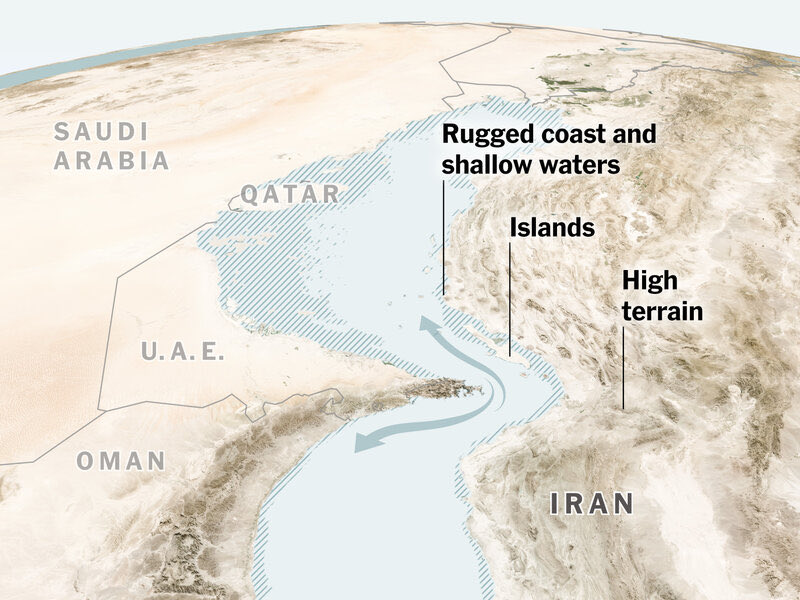
BREAKING: Iran has offered Washington a deal through Pakistani mediators to reopen the Strait of Hormuz and end the war while postponing all talks on its nuclear program to a later stage. Axios reported the proposal late yesterday. Trump’s national security team is reviewing it in the Situation Room today.
The headlines are reading this as Iranian sequencing. War end first, sanctions relief, blockade lift, then nuclear later.
The structural reading is the opposite. The proposal is not a negotiating posture. It is a confession of physical constraint that the storage math has already settled.
On April 26, TankerTrackers published satellite-based open-source intelligence reporting approximately one point zero five billion dollars of Iranian crude forced back to Kharg by US Navy interdictions, with a separate three hundred eighty million dollars seized by the US Coast Guard in the Indian Ocean and diverted toward the United States. CENTCOM’s running tally of redirected vessels rose to thirty-eight on April 27. At Brent prices near one hundred seven dollars per barrel, the implied volume returned and seized sits between thirteen and fourteen million barrels.
Kharg’s onshore spare capacity at blockade start was approximately thirteen million barrels. The returned cargoes alone exceed it. Iran’s continued loading of four point six million barrels at terminals on April 24, plus an estimated four million additional barrels exfiltrating dark across the blockade line per TankerTrackers, does not reset the math. It accelerates it. Production runs at three point zero six million barrels per day per OPEC. Refining and domestic demand absorb a fraction. The remainder accumulates with nowhere left to go.
NASHA, the thirty-year-old VLCC towed to Kharg as emergency floating storage, was supposed to buy forty-eight hours of buffer. NASHA arrives this week into a system that no longer has the buffer to extend.
The reservoir physics now move from theoretical to imminent. Kpler’s April 26 analysis of the Asmari and Bangestan formations notes natural decline rates of four to twelve percent annually without pressure support, fracture-dependent productivity, and the explicit warning that “reservoir performance can deteriorate quickly and, in some cases, irreversibly” once pressure support is disrupted. Vaughn Cordle’s same-day mechanics breakdown on Substack describes the cascade: pressure collapse first, water and gas coning through fracture networks, then matrix compaction permanently reducing permeability around the wellbore. Rystad estimates three hundred thousand to five hundred thousand barrels per day of permanent capacity loss.
Iranian field permeability does not recover. The fractures that built the regime’s revenue base accelerate its destruction once the pressure equilibrium fails.
This is the trade structure inside the Axios proposal.
The IRGC is asking to surrender what its physics no longer permits it to defend, the Hormuz blockade leverage, in exchange for the only thing that can save the reservoirs, an end to forced shut-ins. Nuclear deferral is the price tag attached. Sequencing is the fig leaf. The blockade has won the argument the talks have not yet started.
President Trump cancelled the Witkoff and Kushner delegation to Islamabad on April 25 citing the Iranian position. He is reviewing the proposal in the Situation Room today while explicitly maintaining the naval blockade. He is reading the same gauges Tehran is reading. He is letting them fill.
The blockade does not need to break Iran.
The blockade is letting Iran’s reservoirs do that.
open.substack.com/pub/shanakaans…
English

Japan Receives Request for Decommissioned Destroyer After Export Rules Eased.

English