cazala

1.6K posts

cazala banner
cazala

cazala

@juancazala

javascript sexmachine

0,0 Katılım Mart 2014
1.1K Takip Edilen1.3K Takipçiler
Sabitlenmiş Tweet
cazala
cazala@juancazala·
Finally wrapped up this personal project: cazala@party v0.1.1 👉 caza.la/party I've been playing last past months with WebGPU, building a particle system and physics engine that is modular so I can reuse it and extend it. This first release comes with several forces and render modules (boid-like behaviors, elastic collisions, hydrodynamics (SPH), physarum-inspired networks, and more) On the homepage a few different configurations run automatically, so you can get a sense of what it can do just by watching for a bit. Or if you are on desktop you can go into the playground, and interact with everything in realtime.
English
5
4
25
2.1K
cazala
cazala@juancazala·
le fix
cazala tweet media
English
0
0
0
23
cazala
cazala@juancazala·
F
cazala tweet media
1
0
0
71
cazala
cazala@juancazala·
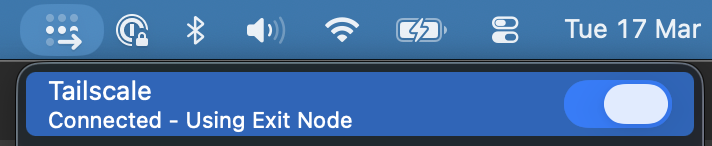
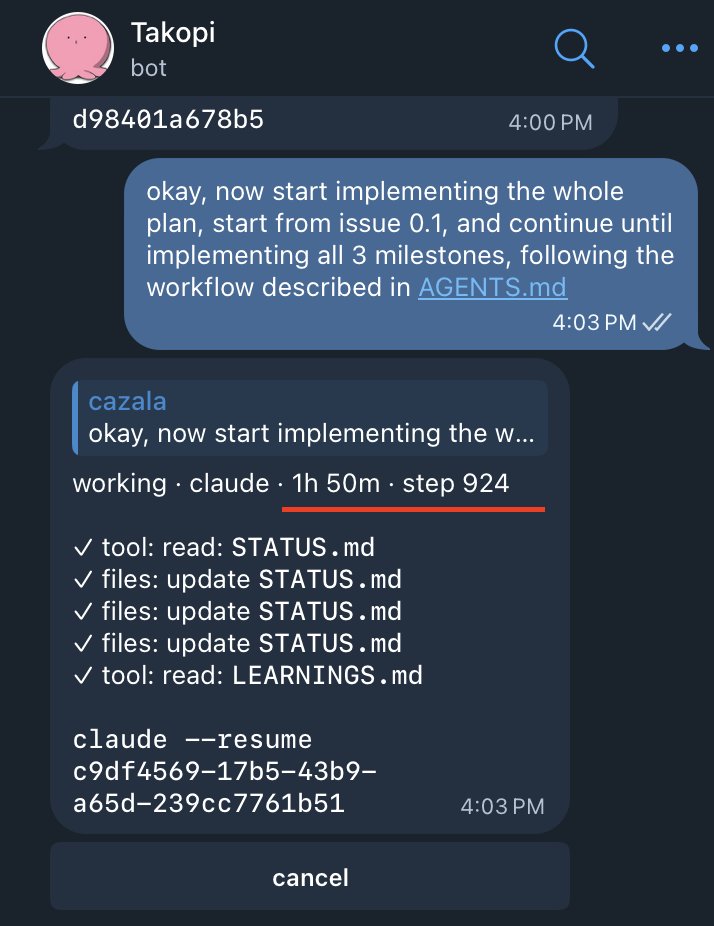
takopi is cooking @banteg
cazala tweet media
English
0
1
11
3.2K
cazala
cazala@juancazala·
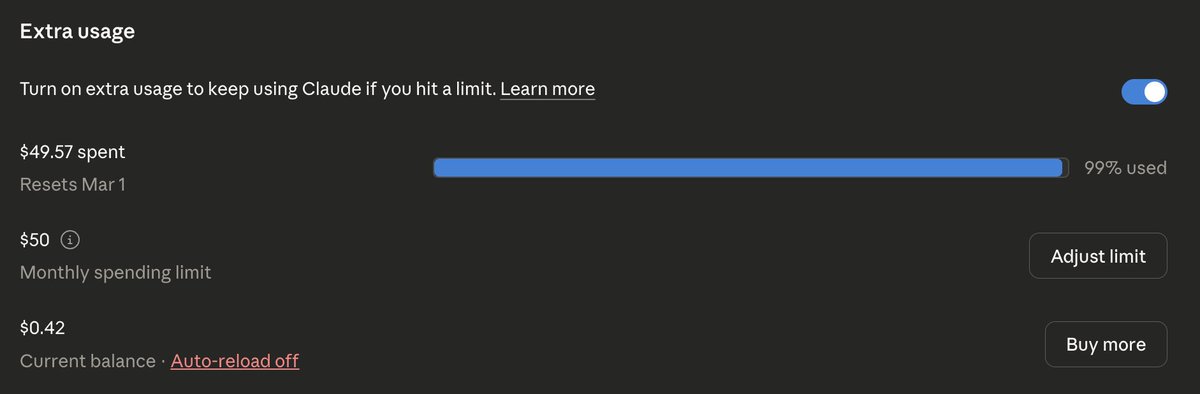
yay anthropic airdropped me $50 in credits 🤑 two hours later I burnt them all 🫠
cazala tweet media
English
1
0
3
151
cazala
cazala@juancazala·
well yes i undertand that they are not restricted to them, but at least on Curve, after the yb pools themselves, the 4 pegkeepers pools are the largest crvusd pools on tvl by far, and the only ones where crvusd is tied to a liquid token, except maybe for tricrv and tricryptollama, but those arent that large.
English
0
0
0
26
cazala
cazala@juancazala·
@newmichwill @ilivinskiy @yieldbasis @CurveFinance okay, and when they are arbed back to balance, that should help the peg right? because arb bots need to source crvusd to inject into the pool from somewhere, and that’s probably from the pegkeeper pools?
English
1
0
0
42
Michael Egorov
Michael Egorov@newmichwill·
@juancazala @ilivinskiy @yieldbasis @CurveFinance YB pools have concentrated liquidity which means that they can at times go out of balance. When they do - that's when the pressure on the peg is. That happens during very fast moves of the price (either way), however moves up absorb crvusd from the market, not release
English
1
0
1
101
cazala
cazala@juancazala·
yes i know that’s one of the levers to push the peg up, and currently rates are high. what i mean is that the peg currently is being pushed down strongly, and it’s being attributed to YB pools rebalancing. But when i try to understand how the rebalancing of the yb pools push the prg down i dont see it. It seems that the mechanism should push crvusd up, not down.
English
1
0
0
64
cazala
cazala@juancazala·
not trying to fud or anything, it’s a genuine question i dont yet grasp. i get that the EMA oracle lags so it’s not instant, but still once it’s arb’d shouldn’t it push the peg up instead of down? i’ve been checking what arb bots are doing and they are buying crvud on the pegkeepers to rebalance the yb pools, yet pegkeepers are full of crvusd and little usdc/t, i dont see where the pressure is coming from.
English
1
0
0
48
cazala
cazala@juancazala·
okay, that makes sense. im still trying to wrap my head around why is the btc dump pushing the peg down tho. when the pool rebalances, doesnt the arbs have to bring crvusd into the pool? they do burn LP to get the btc+crvusd, take the btc and put crvusd in, so that is a sell. but they have to source the crvusd from somewhere, and if it’s a flashloan they have to sell the btc for crvusd to pay it back, no? where does the sell pressure on the pegkeeper pools come from?
cazala tweet media
English
3
0
1
173
Michael Egorov
Michael Egorov@newmichwill·
Requiring crvUSD removes crvUSD from the market. If you remove too much - pegkeeper pools start filling. It does required SOME amount in pegkeeper pools, but it helps the peg more than just pegkeeper pools themselves. Ideal is when you have a combination (e.g. YB for crvUSD pools, HybridVaults for scrvUSD and maybe other crvUSD vaults)
English
1
0
1
459
cazala
cazala@juancazala·
it's sick how long codex can run non-stop and with very decent results
cazala tweet media
English
0
0
5
158
cazala
cazala@juancazala·
You can use the core library programmatically github.com/cazala/party/b… If you open the playground on caza.la/party on the top bar there's a Demo button that will show you several different configurations (they are applied to the playground itself, so you can see how each module is configured to accomplish each effect). Using the playground you can tweak until you have an effect you like and Save the session, and from the Load page you can also export it as a JSON file, and then load it programmatically. If you want a simple real world example, I have my personal website caza.la which has a public repo github.com/cazala/caza.la
English
0
0
0
18
Wiesorium
Wiesorium@Wiesorium·
@juancazala you got tutorials or examples to try? and how to export?
English
1
0
1
20
cazala
cazala@juancazala·
Finally wrapped up this personal project: cazala@party v0.1.1 👉 caza.la/party I've been playing last past months with WebGPU, building a particle system and physics engine that is modular so I can reuse it and extend it. This first release comes with several forces and render modules (boid-like behaviors, elastic collisions, hydrodynamics (SPH), physarum-inspired networks, and more) On the homepage a few different configurations run automatically, so you can get a sense of what it can do just by watching for a bit. Or if you are on desktop you can go into the playground, and interact with everything in realtime.
English
5
4
25
2.1K
Loïc Sharma
Loïc Sharma@LoicSharma·
@jezell @webgl_webgpu @juancazala This is a bit out of my wheelhouse. It looks like the simulation uses compute shaders? AFAIK compute shaders aren’t on the roadmap, but I imagine you can do this kind of effect using native code + textures or platform views.
English
2
0
0
165
santi
santi@santisiri·
alguno probó hacer algo con ralph?
Aakash Gupta@aakashgupta

Ralph may be the most important thing to learn in AI right now. Someone used this technique to deliver an entire contract that would have cost $50,000 to outsource. Total API costs: $297. At a Y Combinator hackathon, teams shipped 6 working repositories overnight using the same approach. Geoffrey Huntley, who invented this, built an entire programming language over 3 months while barely touching his keyboard. Ralph is a bash loop that runs an AI coding agent repeatedly until a task is done. That’s it. While you sleep, while you eat dinner, while you do anything else, the loop keeps going. It picks up a task, builds it, checks if it works, saves the progress, picks the next task. When you wake up, features are finished. Why this works when normal AI coding fails: most people open Cursor or Claude with a vague idea and no structure. 45 minutes later they’re fixing the same bug for the third time. The AI forgot what they were building. The context got polluted. They’re frustrated and nothing shipped. The problem is task size. One feature has 20 pieces. The AI tries to hold all of them at once. It can’t. It hallucinates. It contradicts itself. You end up babysitting. Ralph fixes this by breaking work into pieces small enough that the AI finishes each one before it forgets what it’s doing. Each loop iteration starts fresh. Clean context. No accumulated confusion. Memory persists through git commits, a progress file, and a task list. The AI reads what happened last time, learns from mistakes, picks the next task. The workflow: Step 1: Describe what you want in plain language. Talk for 2-3 minutes. “I want users to filter tasks by priority. High, medium, low. A dropdown with all three options plus ‘all’. Selecting one filters the list immediately.” Then tell the AI to convert your rambling into a formal requirements list. Step 2: Break requirements into atomic tasks with binary success criteria. Good: “Add a priority column that defaults to medium.” Bad: “Make it work well.” The AI needs to know when it’s done without asking you. Pass or fail. Yes or no. Step 3: Run the loop. Ralph grabs a task, builds it, runs tests, commits if it passes, moves to the next one. You set a limit (10 rounds, 14 rounds, 20 rounds). It runs until everything passes or hits your limit. The math is brutal. A typical Ralph run: 10 iterations, roughly $30 in API costs. A senior developer costs $400-600 per day fully loaded. If Ralph gets you 90% there and you spend an hour on cleanup, you just converted an 8-hour workday into 1 hour plus $30. That’s $500+ of labor arbitrage per feature. Compound that across a month of building. Ralph can replace the majority of outsourcing for greenfield projects. The technique is “deterministically bad in an undeterministic world,” meaning when it fails, it fails predictably. You tune it like a guitar. When Ralph screws up a specific way, you add a guardrail to the prompt. The failures become instructions. The real shift is in role. You stop being the person who writes code. You become the person who writes requirements, defines acceptance criteria, and reviews output. Product designer, not engineer. “Software development as a profession is effectively dead. Software engineering is more alive than ever.” The people who understand systems, architecture, requirements, and quality will thrive. The people whose value was typing code faster are already obsolete. The gap forming right now: builders who know Ralph are shipping 5-10x more than everyone around them. Nobody understands how. The technique is free and open source. The barrier is just knowing it exists and spending 30 minutes to understand the pattern. Three months from now this will be in every YouTube tutorial and paid course. The window is right now, while most developers are still prompting Claude one function at a time and wondering why AI “doesn’t work for them.” github.com/snark-tank/ral…

Español
9
2
12
14.1K
cazala
cazala@juancazala·
I took a page from your book @ZoldenGames and implemented pic/flip, and indeed it's waay more satisfying, simpler and faster 🌊 quick comparsion in the video
Zolden@ZoldenGames

@juancazala Yes, sph is more compressible, so it forms fluid with pressure gradient, and particles on top are like sand or a gas. Doesn't look as satisfying as pic/flip. Also pic/flip is faster and easier in implementation.

English
0
0
4
225