Juanchi.

3.3K posts

Juanchi.

Juanchi.

@juanchi_TIC

Abogado amante de la Tecnología la Historia y la Política.

Katılım Şubat 2010
5.4K Takip Edilen1.8K Takipçiler
Juanchi.
Juanchi.@juanchi_TIC·
👇🏼
Óscar Leonardo Ríos@oscar_leonard

¡Cuidado con lo que le dices o le preguntas a la Inteligencias Artificial! Un juzgado federal en Nueva York acaba de dictar sentencia en el caso "United States vs. Heppner" en el que, desde mi perspectiva, acaba de generar un precedente judicial peligroso sobre Inteligencia Artificial. 1. Contexto del asunto. El señor Bradley Heppner se encontraba sujeto a una investigación penal federal. Decidió utilizar la IA "Claude" para redactar estrategias de defensa, analizar su situación legal y compartirle dicha información generada a su abogado. Pensó que como sería información que utilizaría su abogado, la misma estaría protegida. 2. La decisión judicial. Este asunto presentó una cuestión jurídica novedosa en el derecho estadounidense (y también para cualquier otro país, como México): ¿La información que genera una persona sujeta a investgación criminal a través de una IA pública está protegidas por las doctrinas conocidas como "privilegio entre cliente/abogado" y "producto de trabajo" (work product)? El juez Rakoff determinó que no. Los argumentos, en esencia, son: - La IA no es un abogado. Las comunicaciones generadas entre la IA y el acusado Heppner no son comunicaciones entre cliente/abogado. - La información generada por la IA no es confidencial, ya que los usuarios, al consentir los acuerdos de confidencialidad de Claude (política de privacidad) y compartir datos con terceros, se pierde la calidad de información "privada". - La trampa de la doctrina del "Work Product". El argumento de defensa de Heppner fue que dicha información generada se trataba de "material de trabajo" para el juicio. Sin embargo, el juez Rakoff consideró infundado tal argumento, pues, a su consideración, las preguntas e información obtenida por Heppner no fue generada bajo la dirección y supervisión de su abogado. El juez determinó que si el abogado lo hubiere hecho como parte de estrategia de litigio, tal vez la decisión judicial adoptada hubiese sido distinta. 3. Efectos de la sentencia. Heppner tuvo que entregar a la autoridad investigadora la información que Claude le generó. 4. Moraleja. Este precedente genera ciertas reglas en las que, estimo, hay que poner atención: * Si estás sujeto a investigación no consultes a la IA sin supervisión de tu abogado porque puede ser utilizada en tu contra. La IA puede ser lista, pero no es tu confidente legal. * Tal vez obliga a los abogados a revisar y rehacer acuerdos de confidencialidad, contratos de servicios legales con clientes y modificar sus programas de cumplimiento normativo en relación con la IA como instrumento de apoyo en el trabajo cotidiano jurídico. El mensaje final del juez Rakoff es relevante, al señalar, en esencia que el uso de la IA no debe apartarse de principios legales, como aquellos que rigen el privilegio entre "cliente/abogado" y la doctrina del "work product". Aquí la sentencia por si la quieren consultar: storage.courtlistener.com/recap/gov.usco…

ART
0
0
0
26
Juanchi. retweetledi
Mark Carney
Mark Carney@MarkJCarney·
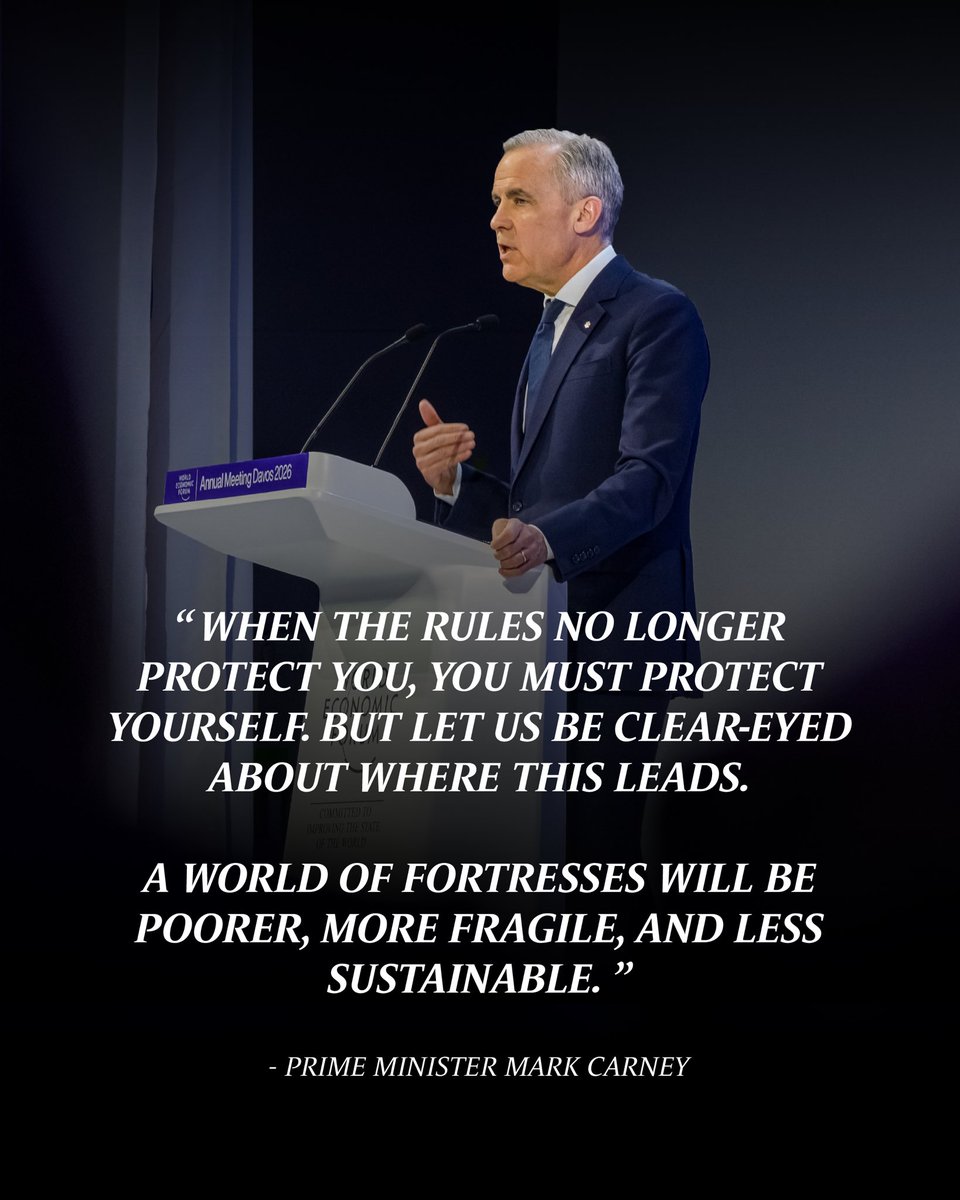
We can build walls or we can be more ambitious — and build something better, stronger, and more just.
Mark Carney tweet media
English
2.2K
4.1K
23.3K
578.3K
Scholarship for PhD
Scholarship for PhD@ScholarshipfPhd·
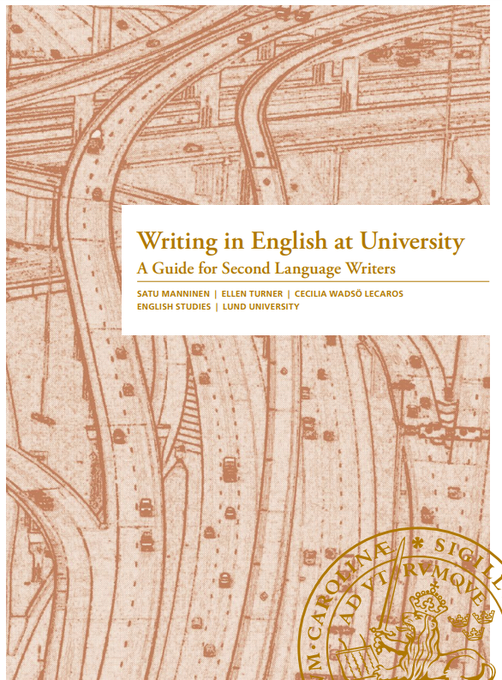
Want to improve your academic writing? 🖋️✨ I’m giving away 'Writing in English at University: A Guide for Second Language Writers' by Lund University—for FREE! 🎁 This book is a GAME-CHANGER for second-language writers! 🌟 Type "English" in the comments, and I’ll DM you the details. Let’s ace your writing! 💌📚"
Scholarship for PhD tweet media
English
378
110
593
457.8K
Juanchi.
Juanchi.@juanchi_TIC·
Perú: Se aprueba el Reglamento de la Ley que promueve el uso de la Inteligencia Artificial 🌍🤖 🔎 Revisa el Reglamento en gob.pe/l/7133522 #TransformaciónDigital
Español
0
0
0
11
Juanchi.
Juanchi.@juanchi_TIC·
IA Law: South Karea👇🏽
Luiza Jarovsky, PhD@LuizaJarovsky

🚨 BREAKING: South Korea is the world's SECOND country to enact a comprehensive AI law - and it's heavily inspired by the EU AI Act! Is the Brussels effect already happening? [HINT: YES] Here's what you need to know: ➡️ South Korea's AI law is called "Basic Law on AI Development and Trust-Based Establishment" and it was approved today by its national parliament with 260 votes in favor, 1 against, and 3 abstentions. ➡️ These are some of the main characteristics of the new law, according to the official summary: → It defines AI, high-impact AI, generative AI, AI ethics, and AI business operators (Article 2); → AI business operators who provide products or services using high-impact AI or generative AI must notify users of such fact in advance, and when providing generative AI or products or services using such, must indicate the fact that the results were generated by generative AI, and when providing virtual results that are difficult to distinguish from reality using an AI system, must notify or indicate such fact so that users can clearly see it (Article 31). → AI business operators must implement matters such as risk identification, assessment, and mitigation to ensure the safety of AI systems where the cumulative computational amount used for learning exceeds the standard prescribed by Presidential Decree (Article 32). → AI business operators must implement measures to ensure safety and reliability when providing high-impact AI or products or services utilizing such systems (Article 34). → If the Minister of Science and ICT discovers or suspects a violation of the law, he or she may request the AI business operator to submit materials or have his or her public officials conduct the necessary investigation, and if he or she determines that a violation has occurred, he or she may order necessary measures to stop or correct the violation (Article 40). ➡️ Among the main similarities with the EU AI Act, I would highlight: → The risk-based approach (with stricter obligations for high-risk/high-impact AI systems); → Focus on ethical guidelines/trustworthy AI; → Protection of fundamental rights; → Transparency obligations (e.g., in the context of deepfakes, anthropomorphism, similar to Article 50 of the EU AI Act); → Provisions on standardization; → The establishment of oversight bodies and procedures. ➡️ My take: yes, the Brussels effect is, in fact, happening. We should expect more countries to follow suit in 2025. 👉 AI regulation will be absolutely 🔥 in 2025. NEVER MISS my insights: join 43,300+ readers who subscribe to my AI newsletter (link below).

HT
1
0
2
138
Juanchi.
Juanchi.@juanchi_TIC·
AI: 👇🏽
Andrew Ng@AndrewYNg

Writing software, especially prototypes, is becoming cheaper. This will lead to increased demand for people who can decide what to build. AI Product Management has a bright future! Software is often written by teams that comprise Product Managers (PMs), who decide what to build (such as what features to implement for what users) and Software Developers, who write the code to build the product. Economics shows that when two goods are complements — such as cars (with internal-combustion engines) and gasoline — falling prices in one leads to higher demand for the other. For example, as cars became cheaper, more people bought them, which led to increased demand for gas. Something similar will happen in software. Given a clear specification for what to build, AI is making the building itself much faster and cheaper. This will significantly increase demand for people who can come up with clear specs for valuable things to build. This is why I’m excited about the future of Product Management, the discipline of developing and managing software products. I’m especially excited about the future of AI Product Management, the discipline of developing and managing AI software products. Many companies have an Engineer:PM ratio of, say, 6:1. (The ratio varies widely by company and industry, and anywhere from 4:1 to 10:1 is typical.) As coding becomes more efficient, teams will need more product management work (as well as design work) as a fraction of the total workforce. Perhaps engineers will step in to do some of this work, but if it remains the purview of specialized Product Managers, then the demand for these roles will grow. This change in the composition of software development teams is not yet moving forward at full speed. One major force slowing this shift, particularly in AI Product Management, is that Software Engineers, being technical, are understanding and embracing AI much faster than Product Managers. Even today, most companies have difficulty finding people who know how to develop products and also understand AI, and I expect this shortage to grow. Further, AI Product Management requires a different set of skills than traditional software Product Management. It requires: - Technical proficiency in AI. PMs need to understand what products might be technically feasible to build. They also need to understand the lifecycle of AI projects, such as data collection, building, then monitoring, and maintenance of AI models. - Iterative development. Because AI development is much more iterative than traditional software and requires more course corrections along the way, PMs need be able to manage such a process. - Data proficiency. AI products often learn from data, and they can be designed to generate richer forms of data than traditional software. - Skill in managing ambiguity. Because AI’s performance is hard to predict in advance, PMs need to be comfortable with this and have tactics to manage it. - Ongoing learning. AI technology is advancing rapidly. PMs, like everyone else who aims to make best use of the technology, need to keep up with the latest technology advances, product ideas, and how they fit into users’ lives. Finally, AI Product Managers will need to know how to ensure that AI is implemented responsibly (for example, when we need to implement guardrails to prevent bad outcomes), and also be skilled at gathering feedback fast to keep projects moving. Increasingly, I also expect strong product managers to be able to build prototypes for themselves. The demand for good AI Product Managers will be huge. In addition to growing AI Product Management as a discipline, perhaps some engineers will also end up doing more product management work. The variety of valuable things we can build is nearly unlimited. What a great time to build! [Original text: deeplearning.ai/the-batch/issu… ]

0
0
1
67
Scholarship for PhD
Scholarship for PhD@ScholarshipfPhd·
Want to improve your academic writing? 🖋️✨ I’m giving away 'Writing in English at University: A Guide for Second Language Writers' by Lund University—for FREE! 🎁 This book is a GAME-CHANGER for second-language writers! 🌟 Type "English" in the comments, and I’ll DM you the details. Let’s ace your writing! 💌📚"
Scholarship for PhD tweet media
English
1.6K
354
1.9K
253.6K
Scholarship for PhD
Scholarship for PhD@ScholarshipfPhd·
I have some great research books to help you start your academic career! 📚 These books will guide you in writing papers and doing research. Drop a "YES" in the comments, and I'll send the link to you via DM! 💬
Scholarship for PhD tweet media
English
759
172
963
120.6K
Juanchi.
Juanchi.@juanchi_TIC·
Antitrust Lawsuit Brought Against Academic Publishers for Peer Review and Submission Restrictions news.justia.com/?p=12749
English
0
0
0
44