
Jubilant Data Studio retweetledi
Jubilant Data Studio
107 posts

Jubilant Data Studio
@jubilant_studio
Transforming raw data into powerful insights 🚀. Deciphering data analytics for campaigns 🌟, bold strategies 💡 & tangible impact 🌍
Katılım Aralık 2025
64 Takip Edilen65 Takipçiler

Jubilant Data Studio retweetledi
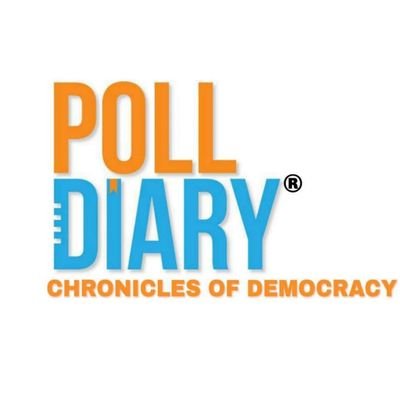
WEST BENGAL ASSEMBLY ELECTIONS 2026 EXIT POLL (294 SEATS)
#WestBengalElection2026
#WestBengalPolls
#ExitPolls
English
Jubilant Data Studio retweetledi

🚨 West Bengal's Demographic Shift & Mamata Banerjee’s Open-Door Policy
➡️ Nearly 1 in 3 seats in West Bengal is now shaped by demographics.
With 294 Assembly seats, nearly 100 have over 30% Muslim population, making voter concentration as decisive as political campaigns.
At the center of is the open-door approach toward illegal Bangladeshi immigration under Mamata Banerjee, and its long-term electoral impact.
↪️ THE LONG-TERM DEMOGRAPHIC SHIFT
Post-Partition, West Bengal’s demographic balance looked very different:
• Hindus: ~78.45%
• Muslims: ~12%
By 2011:
• Hindus: ~70.54%
• Muslims: ~27.01%
➡️ Insight:
This is not a short-term fluctuation, it is a multi-decade demographic shift, with clear regional concentration patterns.
↪️ WHERE THE SHIFT IS MOST VISIBLE
The change is not uniform, it is sharply concentrated in border and specific districts:
• Murshidabad: 67% → rising trend
• Malda: 51% → increasing share
• Uttar Dinajpur: 50% → upward movement
• North 24 Parganas: 25% → 30% range
• Nadia: 26% → 30% range
➡️ Pattern:
A continuous belt of demographic consolidation is emerging along key districts.
↪️ THE 30% THRESHOLD EFFECT
Why does the “30% population” mark matter?
Because in first-past-the-post systems:
• 30–35% cohesive voting bloc
• + fragmented opposition
➡️ Can decisively swing outcomes
This is how 100 constituencies become politically sensitive zones.
↪️ CONSOLIDATION: THE REAL FORCE MULTIPLIER
Demographics alone don’t win elections - voting behaviour does.
• High community consolidation amplifies impact
• Fragmented counter-voting reduces resistance
➡️ Result:
A numerically smaller but cohesive bloc can outperform a larger but divided electorate.
↪️ BORDER DISTRICT DYNAMICS
Many high-impact districts share one common feature:
• Proximity to the India–Bangladesh border
This introduces additional layers:
• Migration debates
• Documentation and voter rolls
• Political narratives around identity and security
➡️ Outcome:
Demography becomes not just electoral - but strategic and political.
↪️ POPULATION GROWTH: THE DEBATE
Population change in Bengal is influenced by multiple factors:
• Fertility rate differences (now converging nationally)
• Internal migration
• Cross-border movement (a politically contested issue)
➡️ Key point:
While illegal immigration is a major political claim, its scale and impact remain heavily debated and not conclusively quantified in public data.
↪️ SOCIAL INFRASTRUCTURE & POLITICS
There has also been a rise in:
• Religious and community institutions
• Education networks within specific communities
➡️ Interpretation varies:
• Some see cultural assertion
• Others see political mobilisation
But electorally, these networks often act as:
• Information channels
• Community coordination systems
↪️ ELECTORAL IMPLICATION
What does this mean for 2026?
• 41 seats: clear demographic majority impact
• 47–54 seats: high decisiveness
• 100 seats: swing potential due to 30%+ population
➡️ Translation:
A structured electoral advantage in clustered regions
↪️ THE STRATEGIC REALITY
Winning Bengal now requires:
• Breaking consolidation in high-density zones
OR
• Overcompensating in the remaining 190+ seats
➡️ This raises the electoral threshold significantly.
↪️ THE LARGER SHIFT
This is no longer just about one election cycle.
West Bengal is witnessing:
• Demographic clustering
• Electoral consolidation
• Region-specific political behaviour
➡️ Together, they form a long-term structural electoral pattern
↪️ THE VERDICT
Here’s what the data supports:
• 100 seats with 30%+ Muslim population
• Strong regional concentration in border districts
• Consolidation amplifying electoral impact
• Demography increasingly shaping political strategy
The 2026 West Bengal elections won’t be won by campaigns, they’ll be dictated by demography, territorial consolidation, and bloc voting power.

English
Jubilant Data Studio retweetledi

Across 26 Phase 1 seats where the TMC holds a slight edge over the BJP, turnout rose sharply compared to 2021. However, SIR-related deletions accounted for more than half the increase in only 8 of these seats. The surge is largely driven by real voter mobilisation.

English
Jubilant Data Studio retweetledi
Phase 1 voting in West Bengal will be held tomorrow on 152 seats across Jangal Mahal and other regions. BJP saw massive support here in 2019, while TMC fought back strongly in 2021 and 2024. Once a Naxal hotspot, Jangal Mahal could prove decisive in forming the next government.

English
Jubilant Data Studio retweetledi

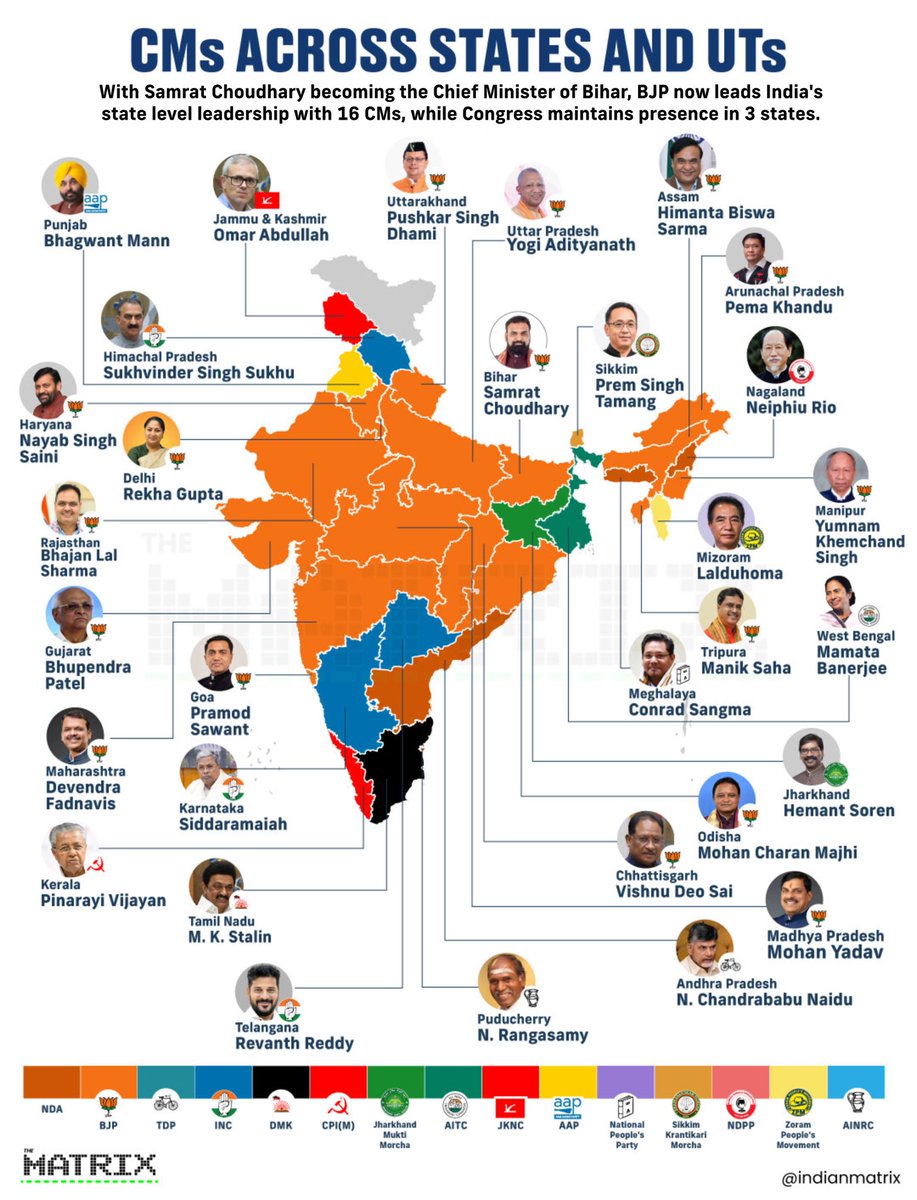
Samrat Choudhary's appointment as the new Chief Minister of Bihar marks a pivotal shift in the state's political landscape.
With this change, Nitish Kumar, who has dominated Bihar's governance for nearly two decades, steps into the Rajya Sabha, signaling the end of an era at the state level.
Choudhary's rise to leadership brings fresh perspectives and a new governance style aimed at addressing the evolving needs of Bihar. As we update our map of India’s Chief Ministers, it’s clear that the leadership dynamic is shifting, reflecting the ongoing evolution of our democracy.
This transition is a powerful reminder that in politics, change is essential for progress. It ensures that governance adapts to a changing society, driving us forward into the future.
English
Jubilant Data Studio retweetledi
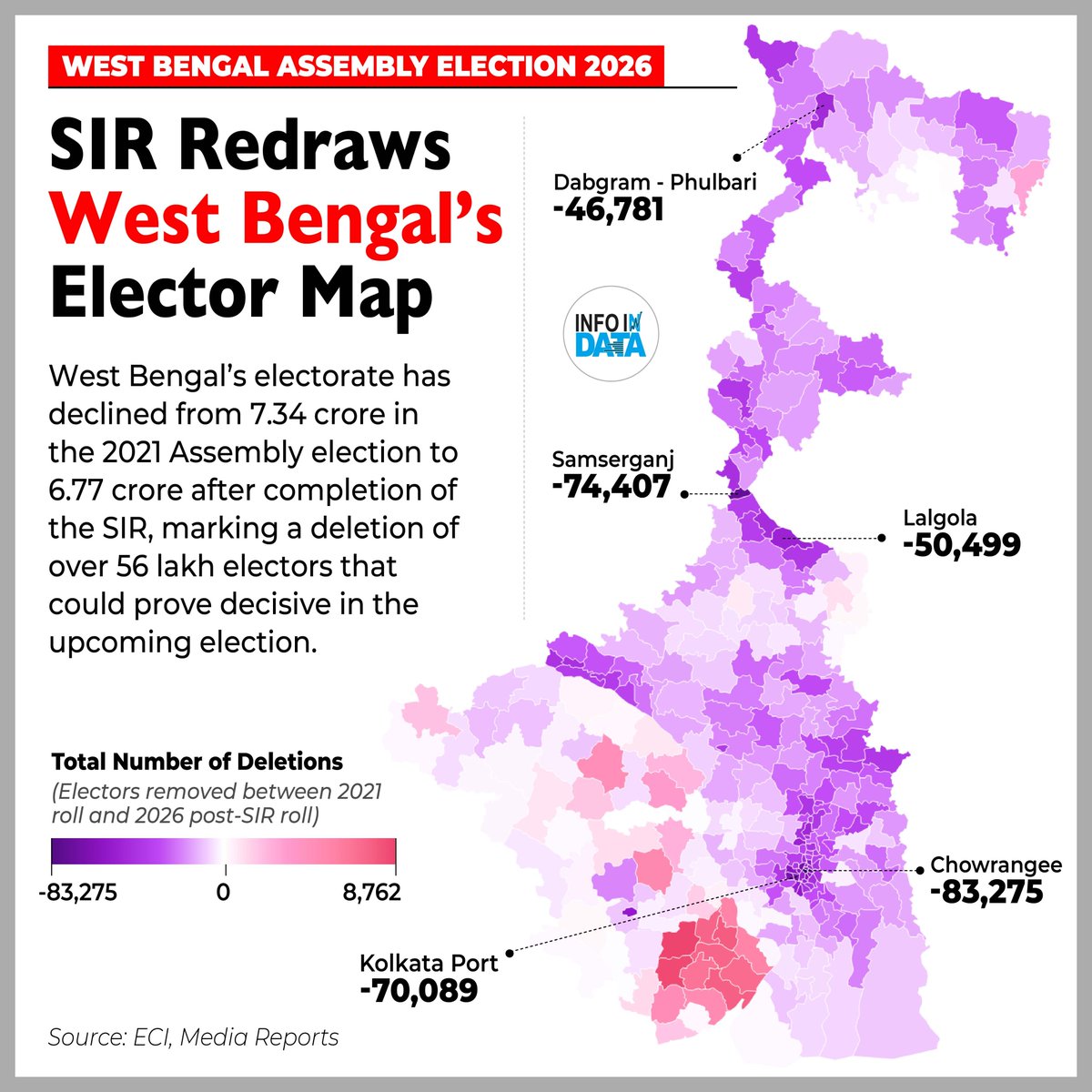
SIR has led to more than 56 lakh deletions in the final electoral rolls of West Bengal compared to the 2021 Assembly election. The removal of fake and ineligible electors at this scale could decisively reshape the state’s electoral arithmetic ahead of the 2026 polls.
English
Jubilant Data Studio retweetledi

Jubilant Data Studio retweetledi

#ChaiStops with @padmajajoshi | Ahead of #WestBengalElections, what are the key factors that matter? Watch Senior journalist Snehasis Sur, @SreyashiDey, @BabaManoranjan and @manogyaloiwal discuss
English
Jubilant Data Studio retweetledi
#TheBuckStopsHere with @padmajajoshi | A journey across West Bengal reveals what voters truly want. From development dreams to governance concerns, hear real voices shaping the battle between TMC and BJP.
#ElectionsWithNDTV #BengalElections
English
Jubilant Data Studio retweetledi

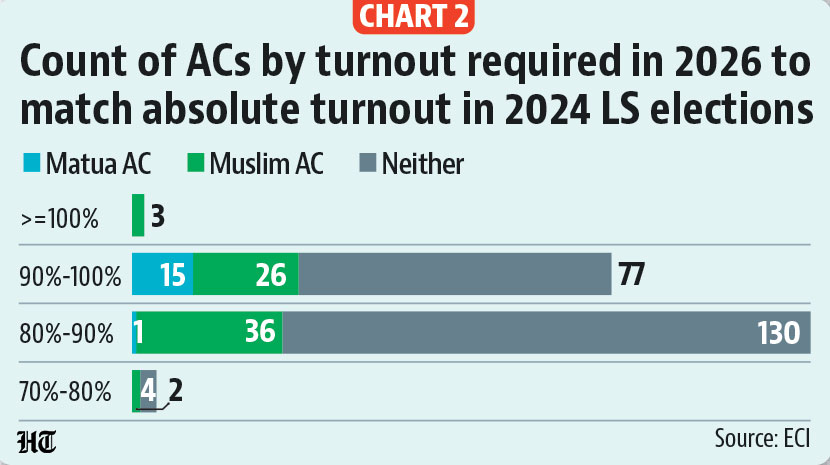
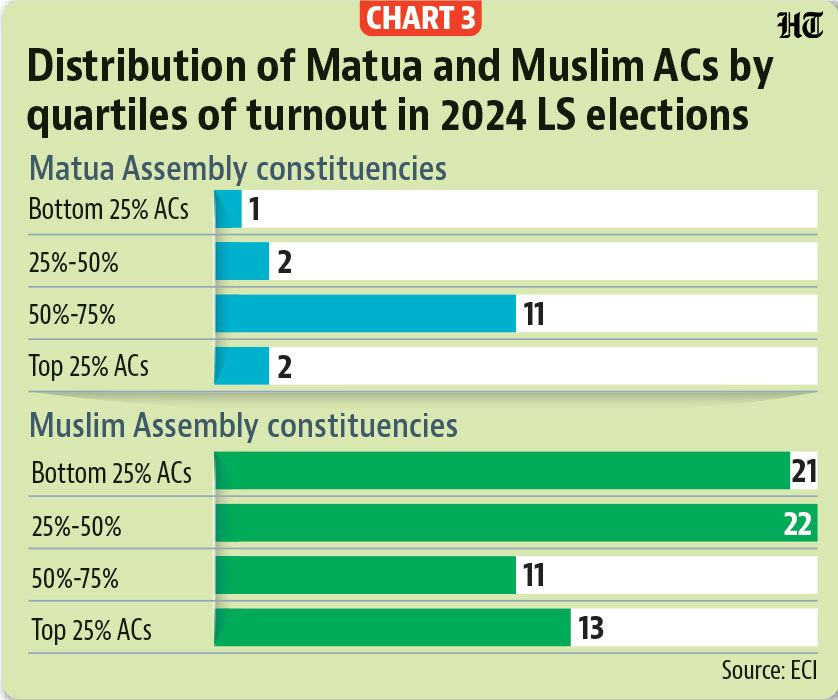
Has SIR altered West Bengal’s electoral map ahead of assembly elections?
@naalmot ✍️ @Roshanjnu
Know more: hindustantimes.com/india-news/has…

English
मुंबई महापालिकेतील स्थायी, शिक्षण, बेस्ट, सुधार समितीच्या सदस्यांची नावे जाहीर

MR
Jubilant Data Studio retweetledi

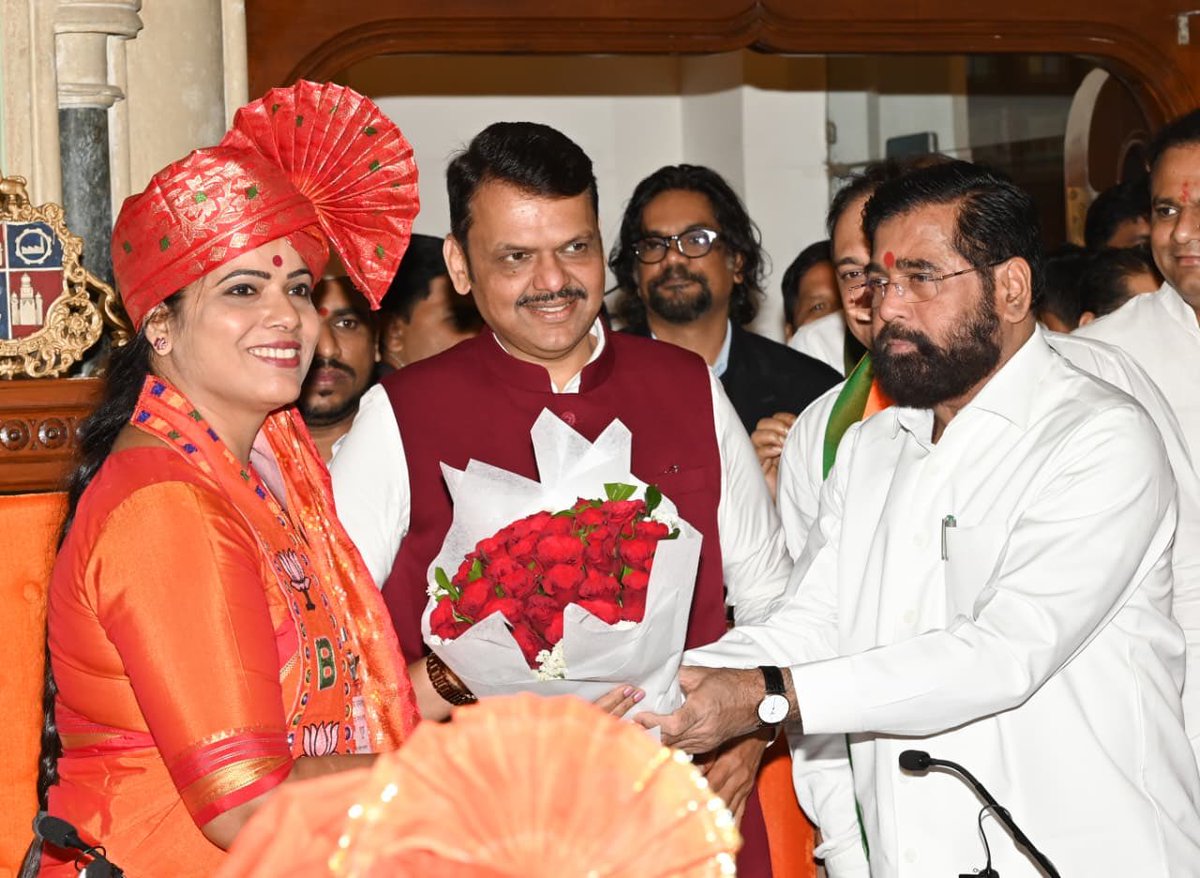
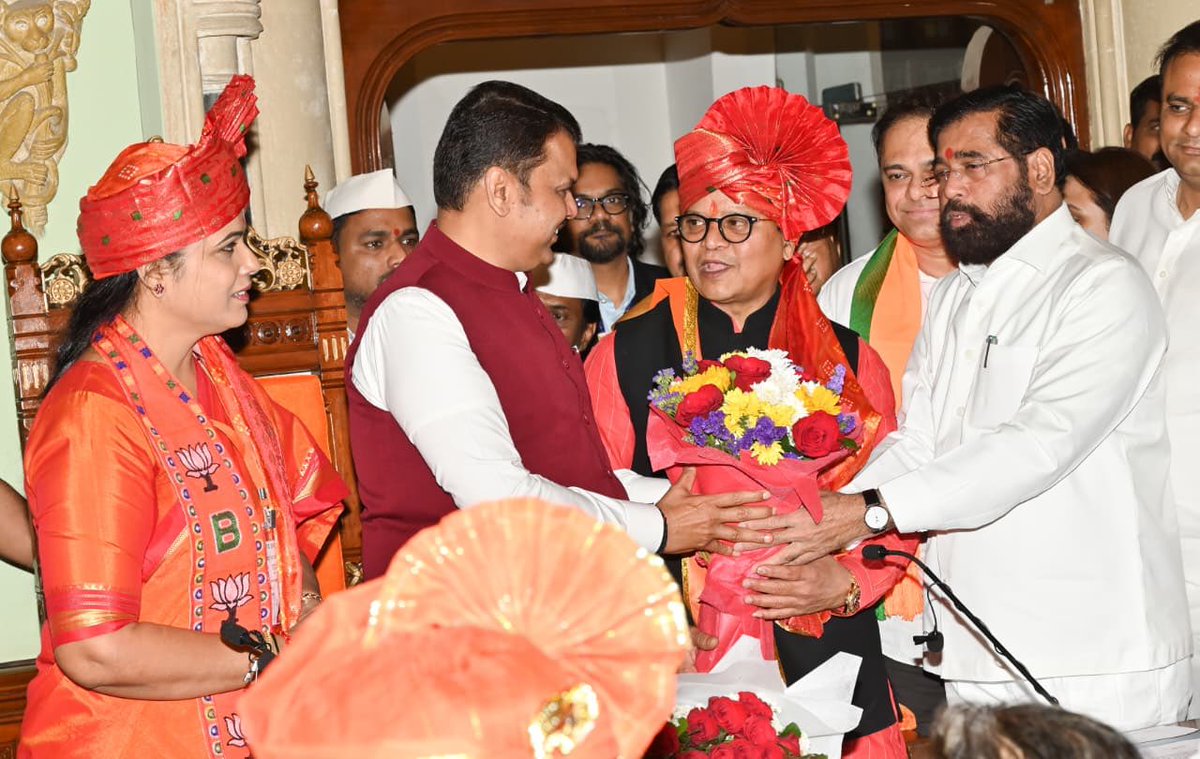
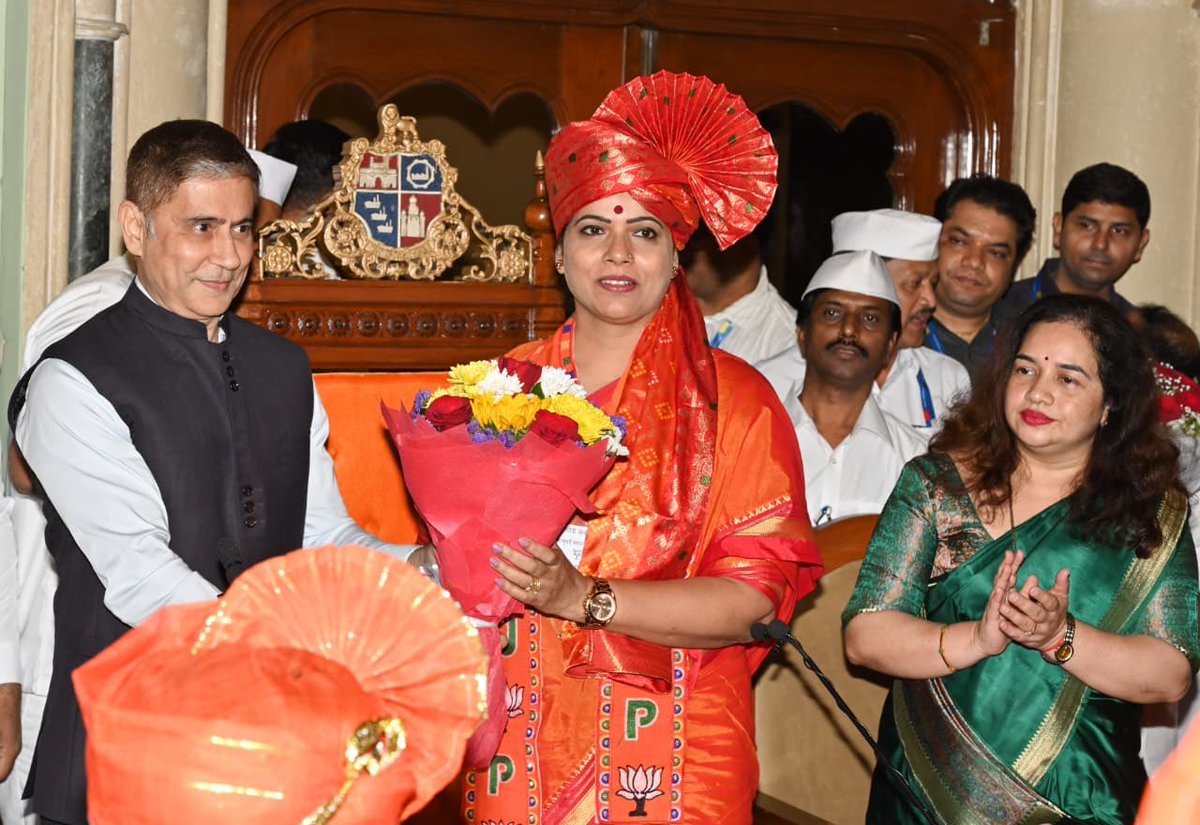
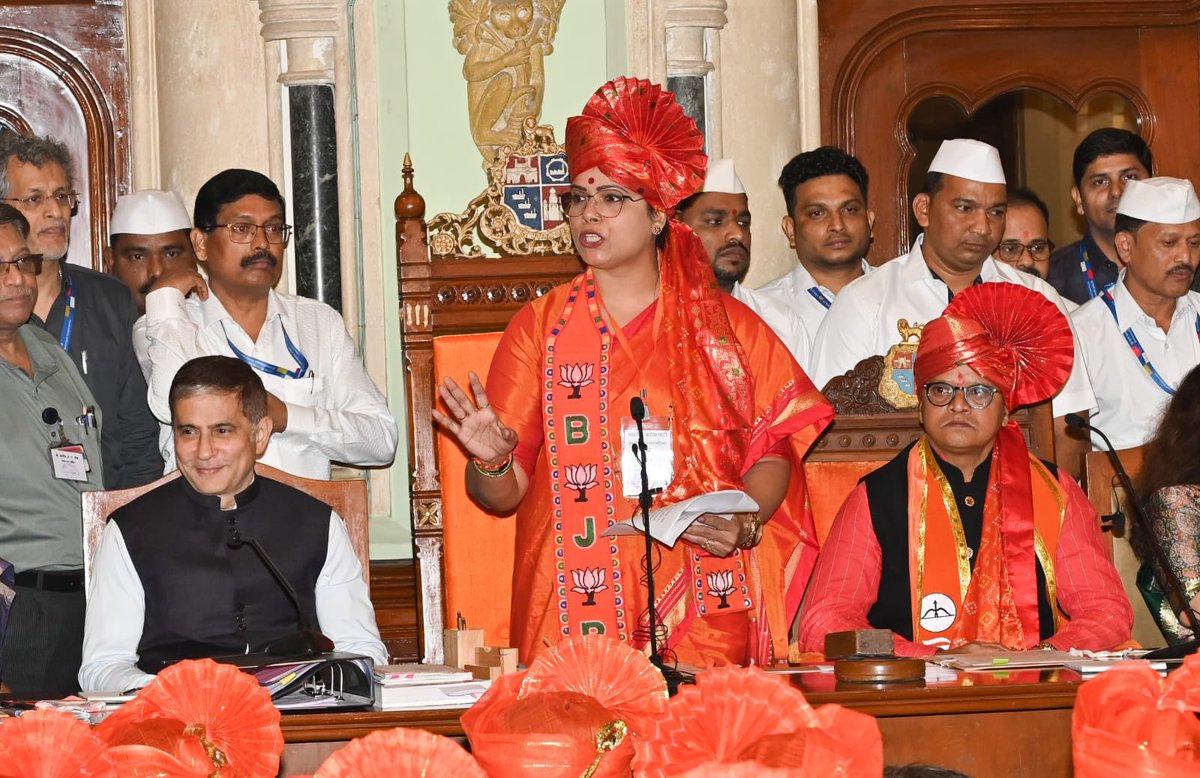
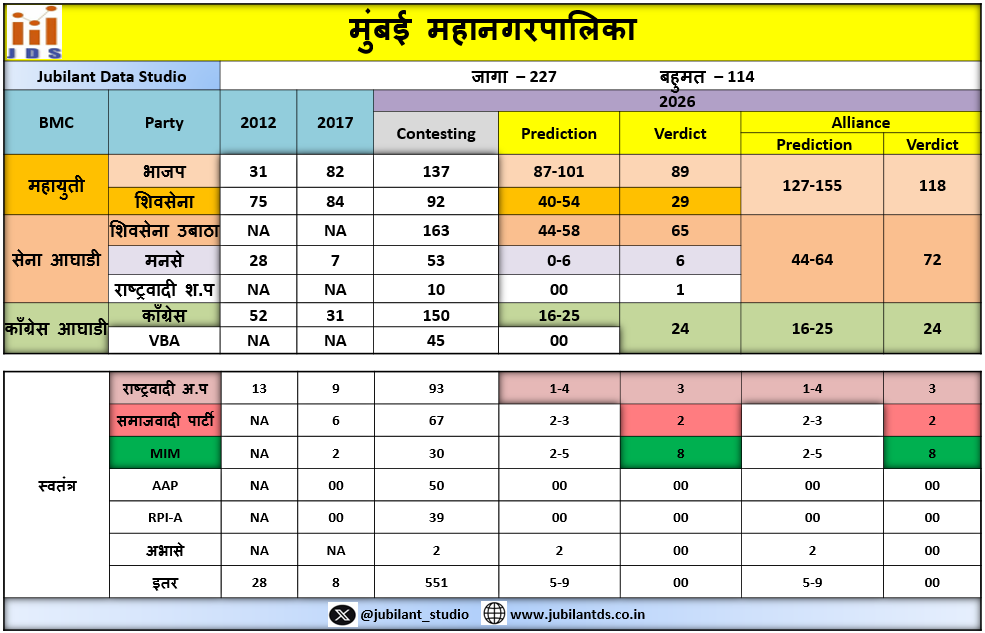
BJP’s Ritu Tawde took over from the administrator which was in place in the absence of an elected house since 2022. The previous term of corporators ended in March 2022. The civic elections were held only on Jan 15,2026 keeping BMC under the administrators rule for almost four years. In the 227 civic house, the BJP party had won 89 seats, UBT Shiv Sena won 65 seats making it the second largest political party in the BMC house. The Eknath Shinde led Shiv Sena won 29 corporator seats while the Congress won 24 seats, MIM 8 seats, MNS 6 and Samajwadi won 2, while the two factions of the NCP won 4 seats .
English
Jubilant Data Studio retweetledi

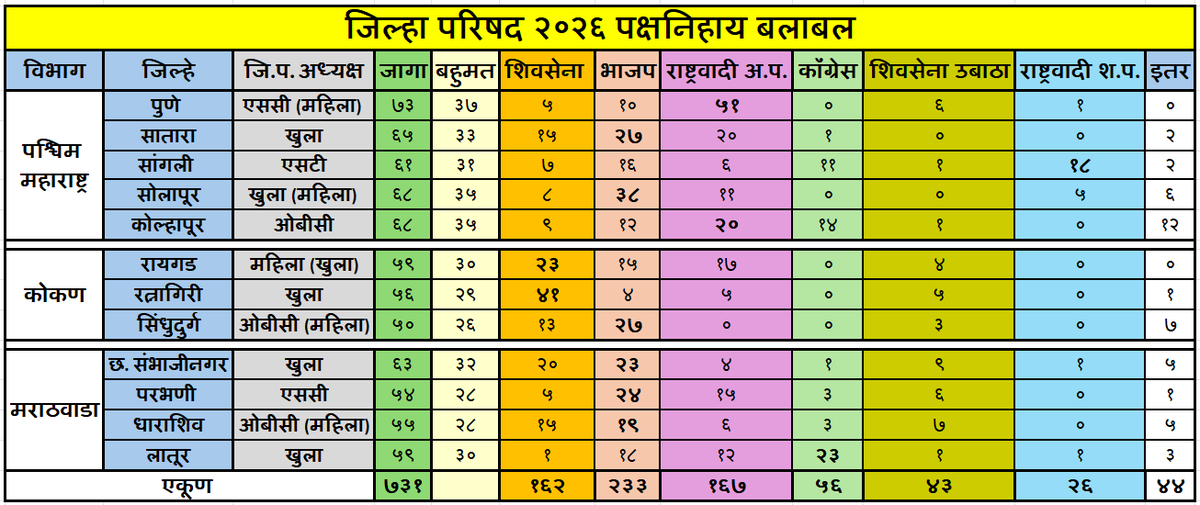
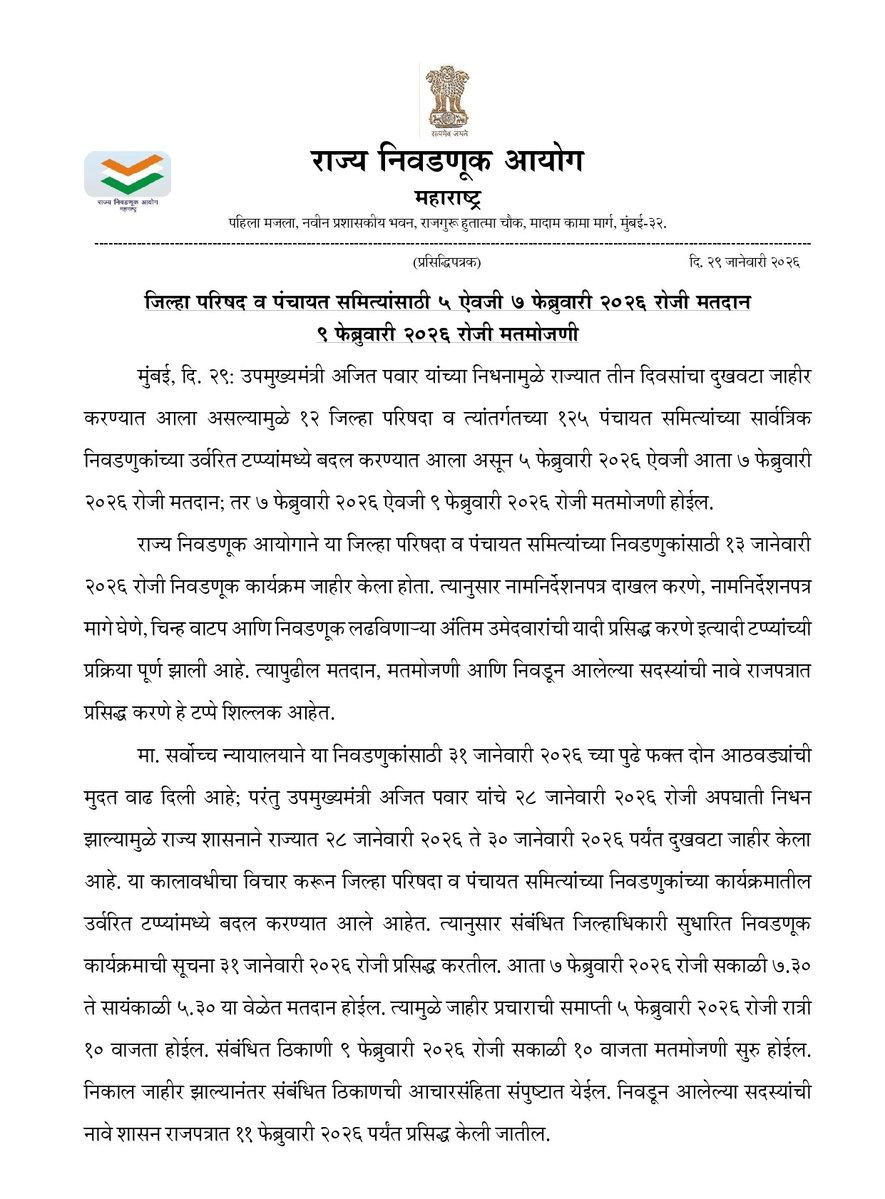
राज्यातील १२ जिल्हा परिषदा व त्यांतर्गतच्या १२५ पंचायत समित्यांच्या सार्वत्रिक निवडणुकांच्या उर्वरित टप्प्यांमध्ये बदल करण्यात आला असून ५ फेब्रुवारी २०२६ ऐवजी आता ७ फेब्रुवारी २०२६ रोजी मतदान; तर ७ फेब्रुवारी २०२६ ऐवजी ९ फेब्रुवारी २०२६ रोजी मतमोजणी होणार आहे.
#जिल्हा_परिषद_पंचायतसमिती_निवडणुका
#राज्य_निवडणूक_आयोग
#StateElectionCommission
MR
महाराष्ट्रातील २९ महानगरपालिकेतील महापौरपदांसाठी आरक्षण सोडत जाहीर

MR
Jubilant Data Studio retweetledi
जिल्हा परिषदेच्या जागांचा तपशील
पंचायत समित्यांच्या जागांचा तपशील
#जिल्हा_परिषद
#पंचायतसमिती
#निवडणूक
#निवडणूक_आयोग
#राज्य_निवडणूक_आयोग
#महाराष्ट्र_राज्य
#StateElectionCommission
#SEC_Maharashtra

MR
Jubilant Data Studio retweetledi

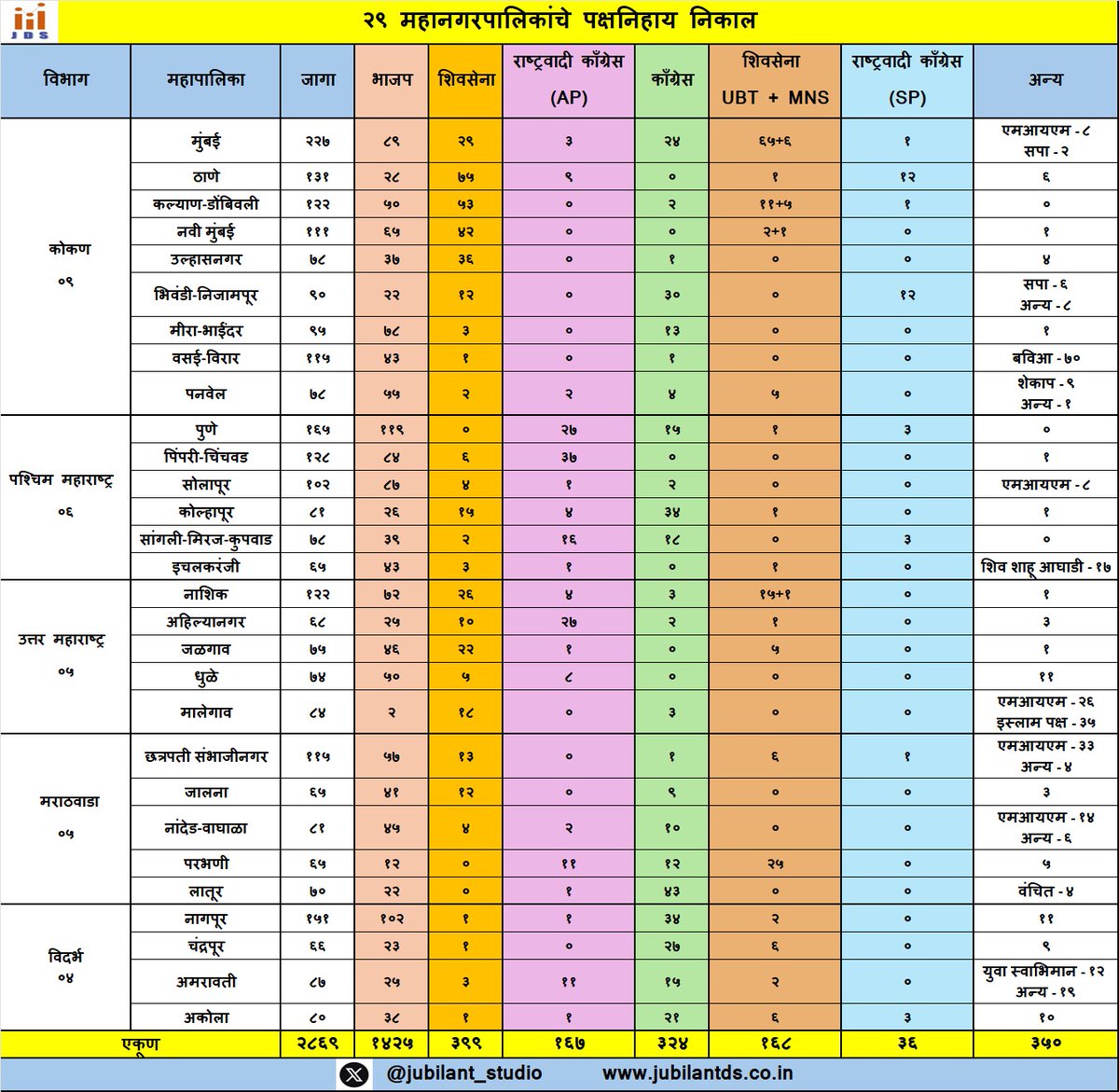
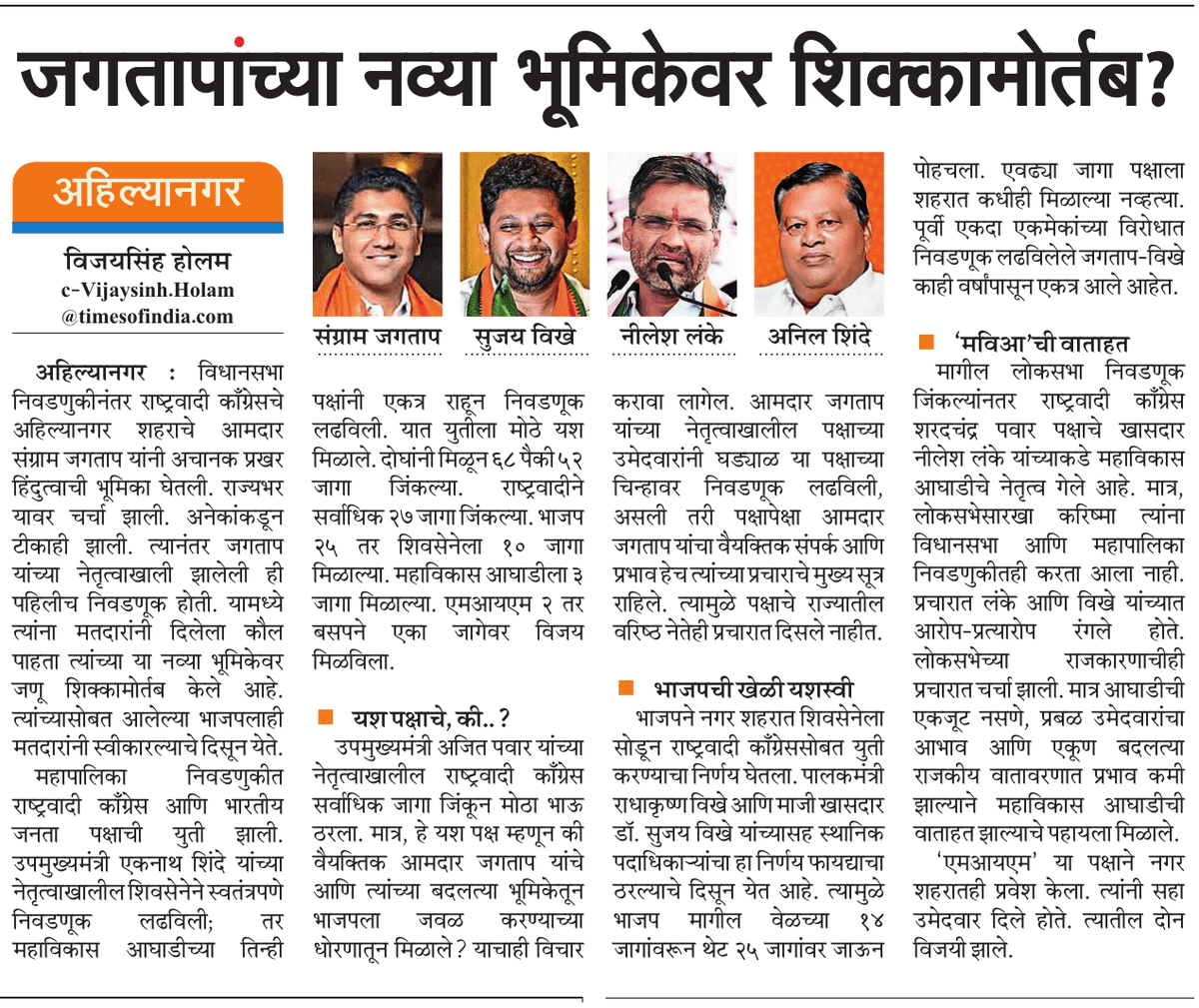
अहिल्यानगरचे आमदार संग्राम जगताप यांची नवी भूमिका मतदारांनी स्वीकारली का? ही एकमेव महापलिका राष्ट्रवादी काँग्रेसला मिळाली, यात पक्षाचे यश किती?
MR
Breaking all records, JDS delivered 90% prediction accuracy in the Brihanmumbai Municipal Corporation (BMC) elections. Reaffirming its position as a benchmark in political forecasting.
See the comparison: Predictions vs Actual Verdict →
#MuncipalCorporationElection #Maharashtra
English