
Juhi Mohan

5.2K posts

Juhi Mohan banner
Juhi Mohan

Juhi Mohan

@juhimohan

Part of the Ostrich Generation but not really one, I just might be time travelling from the past

India Katılım Kasım 2009
712 Takip Edilen685 Takipçiler
Juhi Mohan retweetledi
Sann
Sann@san_x_m·
His name was Bipin Agarwal. He lived in Motihari, East Champaran, Bihar. He was not a politician. He was not a lawyer. He was a citizen who had been filing Right to Information applications since 2009 to expose illegal encroachment of government land and corruption in the Public Distribution System. On February 16 2020 around 200 men came to his house. They broke the main door. They dragged his wife onto the road. His father and Bipin were not home at the time. The children were in school. Bipin filed an FIR. No action was taken. He applied for police protection. It was not given. On September 24 2021 at around 10:30 in the morning Bipin left a primary health centre on his motorcycle. Two men on a motorcycle pulled alongside him on the main road. They took out pistols and fired. He received four bullets. Passersby lifted him from the road and took him to hospital. He died on the way. The main accused was not arrested. His 14 year old son Rohit watched his father’s killers move freely in the same town. He went to the police repeatedly. In December 2021 he observed a day long fast demanding action. He wrote a handwritten petition to the police saying there was no hope of justice. On March 24 2022 Rohit went to the office of the Superintendent of Police in East Champaran. He was turned away. He returned home. He climbed a nearby building. He doused himself with kerosene. He set himself alight and jumped. He died on March 27 2022. He was 14 years old. He died asking for justice for his father. The main accused in Bipin Agarwal’s murder has still not been arrested. Since 2006 the Commonwealth Human Rights Initiative has documented more than 99 RTI activists killed in India. The Whistle Blowers Protection Bill has been stalled in Parliament since 2015. Follow for stories India deserves to remember.
Sann tweet media
English
71
1.4K
2K
29.7K
Juhi Mohan retweetledi
Firstpost
Firstpost@firstpost·
Polycystic ovary syndrome (PCOS) has been renamed. Why this change matters 🧵
English
2
10
112
27.8K
Juhi Mohan retweetledi
Sann
Sann@san_x_m·
Her name was Subhadra Kumari Chauhan. She was born on August 16 1904 in Nihalpur village, Allahabad. At nine years old she wrote her first poem. It was published in a national magazine. At 16 she married and moved to Jabalpur. At 18 she was pregnant and leading protesters through the streets of Nagpur holding the Indian flag. She was arrested. She became the first woman satyagrahi to be sent to jail in India. She delivered her first daughter Sudha safely at home after her release. Then went back to the streets. In 1942 the British came for her again. Her husband had already been arrested. She had five children. The youngest was a toddler with a cleft palate who could barely speak. She prepared her eldest daughter to look after the younger ones. Left food for them. Then walked to prison carrying her sick youngest child in her arms. Inside jail she gave up her own food to prisoners facing harsher punishment. She was released months later with a life threatening condition and underwent immediate surgery. She later described all of this with humor. She said the garlands placed around her neck on the way to jail were so many that she made a pillow of them in her prison cell. They reminded her of the flowers on her wedding night. Between arrests, pregnancies, court dates and protests she wrote 88 poems and 46 short stories. Her most famous poem was Jhansi Ki Rani. The one every Indian child has read in school. Khoob ladi mardaani woh toh Jhansi wali Rani thi. She wrote it about a queen. She lived it herself. On February 15 1948 she died in a car accident near Seoni, Madhya Pradesh, while returning from a legislative assembly session in Nagpur. She was 43 years old. A mother of five. A poet. A prisoner. A freedom fighter. Today is Mother’s Day. Most Indians know her poem. Almost none know her name. Follow for stories India deserves to remember.
Sann tweet media
English
150
1.6K
4.3K
86K
Juhi Mohan retweetledi
Tanushree Pandey
Tanushree Pandey@TanushreePande·
I can’t watch this video without crying. Government ke aage haath jodne se ab shayad kuch hone waala nahi hai ... let’s first help those who genuinely need it. Do your magic, Twitter humans. Let’s help her. Can someone please help me find her personal details and DM me? I’m also checking with reporters on the ground 🙏
Aanvi Singh ( HINDU )@madanmo95322469

In Chhatrapati Sambhajinagar, a disabled woman watched her small pottery shop get crushed during an anti-encroachment drive. Her livelihood… shattered with every broken pot. 💔

English
84
1.3K
3.1K
153.3K
Juhi Mohan retweetledi
Sann
Sann@san_x_m·
Her name was Ruchika Girhotra. She was 14 years old. A tennis player from Panchkula, Haryana. On August 12 1990, she went to meet S.P.S. Rathore at his office. He was the Inspector General of Police and head of the Haryana Lawn Tennis Association. He had promised her father he would arrange special coaching for her. When her friend stepped out of the room, he molested her. Her family filed a complaint three days later. Rathore had her expelled from school. Her father was suspended from his bank job on false charges. Six cases were filed against her brother Ashu. The family's house was forcibly sold. They fled to the outskirts of Shimla and took up earth filling work to survive. On December 28 1993, days after Ashu was paraded in handcuffs through their neighbourhood, Ruchika consumed poison. She died the next day. She was 17. Rathore threw a party that night. He then refused to release her body to her father unless he signed blank papers. Those papers were later used to forge documents accepting a false autopsy report. Despite a police inquiry recommending an FIR against him, Rathore kept getting promoted. He became the Director General of Police of Haryana in 1999. The case went through 40 adjournments and more than 400 hearings over 19 years. In December 2009 a court convicted him of molestation. He was sentenced to six months' imprisonment and fined Rs 1,000. The sentence was later enhanced to 18 months. The Supreme Court upheld his conviction in 2016 but reduced it to the time already served. He walked free. The judge who tried to add abetment to suicide charges against him was forced into premature retirement. The judge who dismissed those charges was a neighbour of Ruchika's family involved in a property dispute with them. S.P.S. Rathore was later invited as a VIP guest to a Republic Day event in Panchkula. Ruchika Girhotra was 14 when he molested. She was 17 when she died. Follow for stories India deserves to remember.
Sann tweet media
English
281
3.3K
7.7K
321.4K
Juhi Mohan retweetledi
Malay Krishna
Malay Krishna@Malay4Product·
Let me explain what just happened today because it deserves so much recognition. GalaxEye is a Bengaluru startup founded in 2021 by IIT Madras engineers. Today they launched Mission Drishti on a SpaceX Falcon 9. It is India's largest privately built satellite at 190 kg. And it carries a technology that no commercial satellite has ever carried before. Normal satellites take photos of the Earth using optical cameras. Like your phone camera, but from 500 km up. The problem is obvious. Clouds. Night. Fog. Smoke. If any of these are in the way, the photo is useless. India has monsoon cover for 4 months a year. That is 4 months where optical satellites are partially or fully blind over large parts of the country. The alternative is SAR. Synthetic Aperture Radar. Instead of taking photos with light, it sends radar waves down and reads what bounces back. Radar goes through clouds, through darkness, through smoke. A SAR satellite can image a flooded village at 2 AM during a cyclone when no optical satellite can see anything. The problem with SAR is that the images look nothing like photos. They look like grainy black-and-white radar maps. A military analyst or a trained geospatial engineer can read them. A farmer, a disaster response team, or a city planner cannot. Until today, if you wanted both optical and SAR data for the same location, you needed two different satellites, passing over at different times, at different angles. Then someone had to manually align and fuse the two datasets. Expensive, slow, and the data never perfectly matched because the satellites saw the same spot minutes or hours apart. GalaxEye put both sensors on one satellite. Optical and SAR, fused into what they call OptoSAR. Three times more information than a single sensor. Processed onboard by an NVIDIA AI chip at 1.8 metre resolution. Now in practice, during the next cyclone hitting Odisha, one satellite pass gives you a clear image of which villages are flooded, which roads are cut, and which buildings are standing. Day or night. Cloud or clear. In near real-time. For defence, it means you can monitor a border area 24/7 regardless of weather. For agriculture, it means tracking crop health across an entire monsoon season without a single cloud gap. For infrastructure, it means monitoring construction progress on highways and bridges without waiting for a clear day. GalaxEye tested their SAR tech on ISRO's POEM orbital platform. The satellite was tested at ISRO facilities. IN-SPACe provided regulatory clearance. NSIL, ISRO's commercial arm, will distribute the imagery globally. And it launched on SpaceX because ISRO's PSLV doesn't have the right orbit slot for this mission. Yes, four IIT Madras graduates built a world-first satellite in 4 years in Bengaluru. Take a bow!
Tejasvi Surya@Tejasvi_Surya

A Bengaluru startup just did something no one in the world has ever done, put a satellite in orbit that sees through clouds, through the night, with optical sensor and SAR fused into one. Many many congratulations to the @Galaxeye team on the launch of Mission Drishti! This is exactly why PM Sri @narendramodi opened up the space sector, so young Indians could build an audacious future for the nation.

English
117
2.4K
10.1K
509.8K
Juhi Mohan retweetledi
Jon Erlichman
Jon Erlichman@JonErlichman·
BASIC launched on this day in 1964.
Jon Erlichman tweet media
English
528
2K
9.1K
433.9K
Juhi Mohan retweetledi
soosoorandom
soosoorandom@sluvity_____·
i highly recommend for women and girls to be intellectually curious and difficult to shame.
English
45
11.2K
60.3K
633.7K
Juhi Mohan retweetledi
Parimal
Parimal@Fintech03·
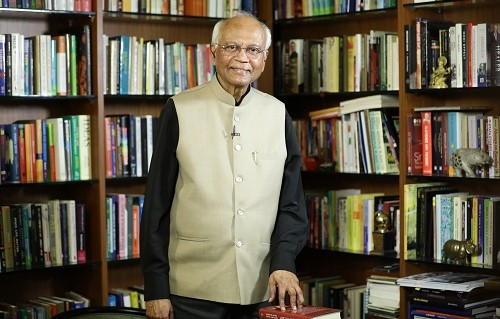
In the 1990s, India was facing a Biological Colonization. If Dr. R.A. Mashelkar had not stepped in, we might have ended up paying a royalty to a US corporation every time we used turmeric on a wound/exported Basmati rice. In 1997, a Texas-based company called RiceTec was granted a patent by the USPTO (US Patent & Trademark Office) for Basmati Rice lines & grains. They claimed they had invented a superior strain of rice. Mashelkar realized that if this patent stood, Indian farmers would be barred from selling their own rice under the name Basmati in the US. It was a theft of Geographical Intellectual Property. He did not just shout Injustice. He assembled a team to find Genetic Fingerprints. They proved that the new rice was actually derived from Indian germplasm that had existed for centuries. The USPTO was forced to strike down the majority of the claims. 2 researchers at the University of Mississippi were granted a patent for the use of turmeric in healing wounds. To a Western patent officer, this was a novel invention. To an Indian, it was something their grandmother did every day. Mashelkar produced an ancient Sanskrit text as Prior Art. The USPTO demanded a translation. He provided evidence from the Journal of the Indian Medical Association dating back to 1953 + ancient Ayurvedic texts. This was the 1st time in history that a patent granted to a US entity was successfully challenged & revoked based on the Traditional Knowledge of a developing country. Mashelkar also realized that India could not fight 10000 legal battles every yr. He needed a Scalable Solution. Patent officers in the West were not malicious; they were just Data Blind. They could not read Sanskrit/Tamil/Persian. If a discovery was not in an English journal, it did not exist in their system. He hired 100s of experts (Ayurveda practitioners, IT engineers, & Patent lawyers). They took 500000+ formulations & converted them into a digitized Shloka to Code format. The data was rendered in English, French, German, Japanese, & Spanish. Today, India has signed agreements with the USPTO, the European Patent Office, & others. Before an officer grants a patent, they run a TKDL Scan. If the herb/method is in the library, the patent is rejected instantly.
Parimal tweet media
English
171
2.7K
6.5K
141.9K
Juhi Mohan retweetledi
Sann
Sann@san_x_m·
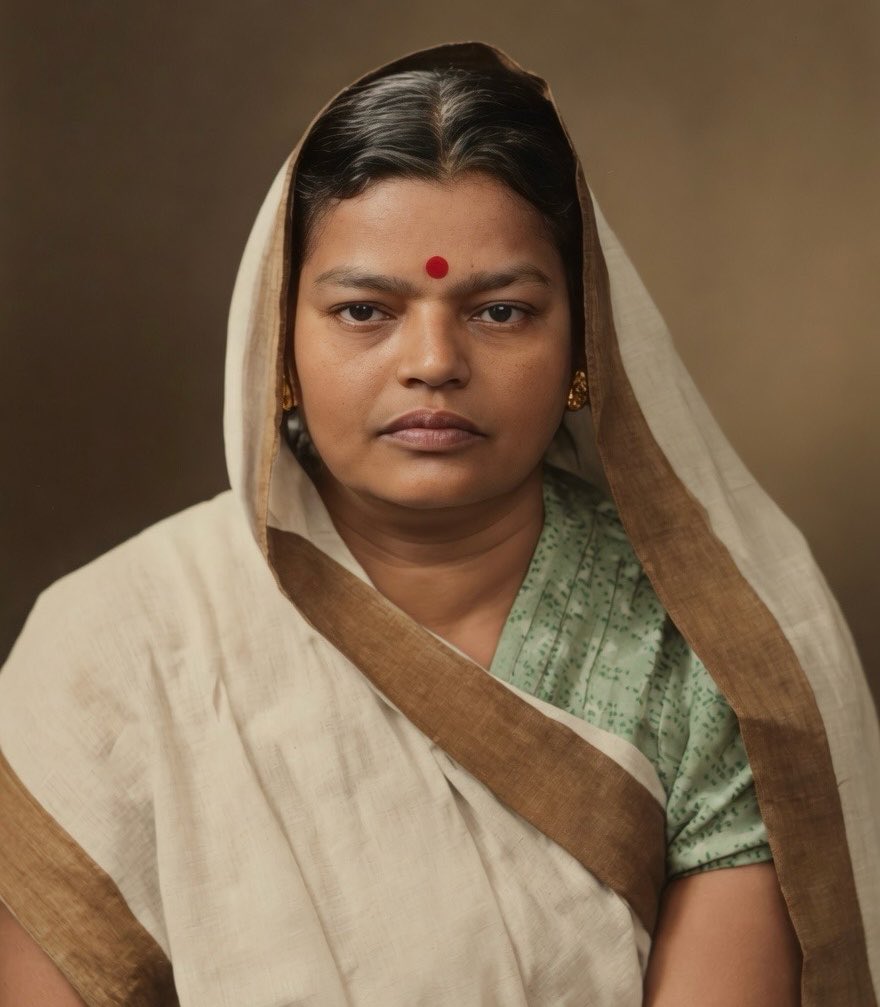
His name was Sushil Gulati. In 2000 he saw a police officer molesting his neighbour’s wife in Rajouri Garden Delhi. He intervened. He stopped it. The officer was suspended. Three months later a woman appeared near a Delhi hospital claiming she had been gang raped in a moving car. She named Sushil Gulati. It was a complete fabrication. The suspended officer had planned the whole thing with a lawyer and a sub inspector. They paid a woman to lie. They planted fake DNA evidence. They put blood in Gulati’s car. Gulati was arrested. Beaten in police custody. Tortured. The Crime Branch took over. The woman confessed. DNA cleared Gulati. He was discharged in 2001. But the case against the conspirators dragged 26 years. Gulati attended court over 20 times waiting to testify. Every time the defence asked for an adjournment. He died in 2014 still waiting. On April 4 2026 the Delhi High Court finally upheld conviction of the lawyer and the sub inspector. The judge wrote this. Sushil Gulati never got justice during his lifetime. His family received only Rs 3 lakh as compensation. He stopped a crime. The system destroyed him for it. (The Image is AI generated for reference only)
Sann tweet media
English
552
5K
12.9K
541.5K
Juhi Mohan
Juhi Mohan@juhimohan·
@jofmat Exactly! Yet they have such lofty values on paper.
English
0
0
1
8
Juhi Mohan
Juhi Mohan@juhimohan·
I wonder if #HR really protects employees? Once while working in the social sector I reported an incident to the HR director and her response was, "well much more than this happens in corporate".
English
1
0
1
28
Juhi Mohan retweetledi
Ihtesham Ali
Ihtesham Ali@ihtesham2005·
A Soviet psychologist walked into a café in 1927 and watched a waiter do something impossible. He remembered every open order at every table. Perfectly. Without notes. Without effort. Then a table paid their bill. She asked him to repeat the order. He couldn't remember a single item. She spent the next two years figuring out why. What she found is now the operating system underneath every platform fighting for your attention. Her name was Bluma Zeigarnik, and she was a graduate student at the time, sitting with her professor Kurt Lewin, watching the waiters work the room. What caught her attention was something so ordinary that it had been happening in restaurants for centuries without anyone asking why. The waiters could remember every open order with perfect accuracy. Table four wanted the schnitzel with no sauce. Table seven had changed their wine twice. Table twelve owed for three coffees and a dessert. Every detail, held without effort, without notes, without any visible system at all. But the moment a table paid their bill, the information vanished. Completely. Lewin tested it on the spot. He called a waiter back minutes after a table had settled up and asked him to recite the order. The waiter could not do it. Not partially. Not approximately. The information was simply gone. Zeigarnik went back to her lab and spent the next two years turning that observation into one of the most replicated findings in the history of psychology. Here is what she proved, and why it changes how you think about attention, memory, and almost every piece of media you have ever consumed. She gave participants a series of tasks. Some tasks they were allowed to finish. Others were interrupted before completion. Then she tested recall across both groups. The unfinished tasks were remembered at nearly twice the rate of the completed ones. Not slightly better. Nearly twice. The brain was holding the incomplete work in a state of active tension, returning to it, keeping it warm, refusing to file it away. The finished tasks were closed, archived, released. The unfinished ones were still running. She called it the resumption goal. When the brain commits to a task and cannot complete it, it opens a file that stays open until resolution arrives. That open file consumes a portion of your cognitive bandwidth whether you are thinking about it consciously or not. It surfaces in idle moments. It pulls at the edge of your attention during other work. It is the thing you find yourself thinking about in the shower when you were not trying to think about anything at all. This is not a flaw in human cognition. It is a feature. The brain evolved to finish things. An open loop is a signal that something important is unresolved. Keeping that signal active increases the probability that you will return to it and complete it. In an environment where most tasks had real survival stakes, this was an extraordinarily useful mechanism. In the modern world, it is the most exploited vulnerability in human attention. Netflix did not invent the cliffhanger. But it industrialized it in a way no medium before it ever had. When a show ends on an unresolved question, it does not just create curiosity. It opens a file in your brain that stays active until the next episode closes it. The autoplay countdown that begins at 15 seconds is not a convenience feature. It is a precise calculation about how long the average person can tolerate an open loop before the discomfort of not knowing overrides every other intention they had for the evening. One more episode is not a choice. It is your brain doing exactly what it was designed to do: return to what is unfinished. The writers who built Lost, Breaking Bad, and Succession understood this intuitively without ever reading a psychology paper. Every episode ended on an open question. Every season finale answered three things and opened five more. The entire architecture of prestige television is a Zeigarnik machine running at industrial scale. But television is not where this gets dangerous. Every notification on your phone is an open loop. Every unread email is an open loop. Every task you wrote on a list and have not yet crossed off is an open loop. Each one is consuming a small but real portion of your available attention, pulling fractionally at your focus, degrading your capacity to be fully present in whatever you are actually doing right now. TikTok's algorithm does not just serve you content you like. It serves you content that ends one loop and immediately opens another, keeping the resumption system permanently activated so the cost of stopping always feels higher than the cost of continuing. The research on this accumulation effect is striking. Psychologists studying cognitive load have found that unfinished tasks do not sit passively in memory. They actively interrupt. They surface at the wrong moments. They are the reason you are reading something and suddenly remember an email you forgot to send. The brain is not malfunctioning. It is running its resumption system exactly as designed. It is just running it across forty open loops simultaneously, in an environment that generates new ones faster than any human nervous system was built to process. The most important practical implication Zeigarnik's research produced is one that most people use backwards. David Allen built his entire Getting Things Done system on the insight that the only way to close a cognitive open loop is to either complete the task or make a trusted commitment to complete it later. Writing something down in a system you actually trust has the same effect on the brain as finishing it. The file closes. The bandwidth is released. This is why writing a task down feels like relief even before you have done anything about it. You have not solved the problem. You have simply told your brain that the loop is registered and will be returned to, which is enough for the resumption system to stand down. The inverse is equally true and far more destructive. Every task that lives only in your head, unwritten and unscheduled, is an open loop burning cognitive resources around the clock. The mental cost is not proportional to the size of the task. A tiny nagging obligation consumes the same active tension as a major project. Your brain does not discriminate by importance. It discriminates by completion. Zeigarnik published her findings in 1927. The paper sat in academic literature for decades before anyone outside psychology paid attention to it. Then television got good. Then the smartphone arrived. Then the entire attention economy was engineered, largely by people who understood intuitively what she had proven scientifically: an open loop is the most powerful hook available to anyone who wants to hold human attention. Netflix knew it. Instagram knew it. Every designer who ever made a notification badge red instead of grey knew it. The café in Vienna is long gone. The mechanism she discovered there is now the operating system underneath every platform fighting for your time. Every "to be continued." Every unread notification. Every thread that ends with "part 2 tomorrow." All of it is the same waiter, the same unpaid bill, the same brain refusing to let go of what it has not yet finished. Zeigarnik noticed it over coffee in 1927. A century later, it is the most valuable insight in the history of media. And nobody taught it to you in school.
Ihtesham Ali tweet media
English
233
2.5K
8.8K
864.6K
Juhi Mohan retweetledi
marie🇬🇲 🇸🇳
marie🇬🇲 🇸🇳@astou_jolie·
You either have to be a bitch or get auto immune disease. That’s real talk.
English
133
5.3K
24.2K
813.6K
Juhi Mohan retweetledi
Mind Essentials
Mind Essentials@Mind_Essentials·
Mind Essentials tweet media
ZXX
23
635
5K
69.4K
Juhi Mohan retweetledi
𝗠𝘂𝗵𝗲𝗲 ♛
𝗠𝘂𝗵𝗲𝗲 ♛@muheediva01·
FUN FACT: People who can’t communicate think everything is an argument. And people who lack accountability think everything is an attack.
English
151
12K
41.8K
727.3K
Shiv Aroor
Shiv Aroor@ShivAroor·
Never heard of any other ink brands growing up.
Shiv Aroor tweet media
English
481
115
2.1K
98.2K
Juhi Mohan retweetledi
Dr. Aarathi Bellary
Dr. Aarathi Bellary@Coffeehudigi·
Today, I saw a 44 year old lady wheel chair bound, multiple health conditions polio paralysed her long ago. Her sole care giver is her 80 year old father. He also takes care of his 2 other adult children with muscular dystrophies. I cant say how I felt, when the old man took out file after file and explained everything to me, while reassuring the daughter so lovingly. I wasnt prepared to see this. Another spectrum of geriatrics I wasnt ready to see yet. Caring for special child to adulthood isnt even something we talk about. #MedTwitter #opdstories
English
78
475
2.8K
88.4K
Juhi Mohan retweetledi
Sann
Sann@san_x_m·
His name was Manjunath Shanmugam. He was an IIM Lucknow graduate. He got a job with Indian Oil Corporation as a sales officer. His territory was Uttar Pradesh. He found that petrol pump dealers were adulterating fuel and cheating customers. He reported it. He sealed the pumps. On November 19 2005 a petrol pump owner shot him dead outside his office. He was 27 years old. The killers were convicted. Sentenced to life imprisonment. His parents did not get compensation for 15 years. His college created the Manjunath Shanmugam Trust in his name to fight corruption. Some men die because they refused to look the other way. India forgets them too quickly.
Sann tweet media
English
704
13.9K
48.8K
942.9K
Juhi Mohan retweetledi
Dr. Lemma
Dr. Lemma@DoctorLemma·
In 2003, a German film crew followed a nomadic family in Mongolia's Gobi Desert. The film, The Story of the Weeping Camel, was nominated for an Oscar. A mother camel had rejected her newborn after a brutal two-day labour. Without her milk, the calf would die. The family knew one option. They sent their two young sons on a journey across the desert to find a musician who could perform a ritual called Hoos, a chanting ceremony passed down for centuries specifically for this moment. The musician came. The ritual was performed. The mother camel wept real tears and turned to her calf for the first time. The film crew had gone to document a way of life. They had no idea they would capture that. UNESCO added the Hoos ritual to its Intangible Cultural Heritage list in 2015, alongside flamenco, the Mediterranean diet, and the art of Neapolitan pizza making.
English
537
12.1K
69.1K
2.5M