jaap van till
106.1K posts

jaap van till
@jvantill
#IchBinEinCONNECTIVIST Netweaver seeking to inspire... For Bio see ABOUT on https://t.co/avKcF2Goir Lid van de @Piratenpartij

Earth Katılım Nisan 2010
2.9K Takip Edilen1.9K Takipçiler
jaap van till retweetledi

Goldman Sachs just published the list of jobs AI will eliminate first.
300 million jobs globally. 25% of all US work hours.
And that's not in 10 years, it's starting NOW.
Highest risk of displacement according to Goldman:
1. Computer programmers
2. Accountants
3. Auditors
4. Legal assistants
5. Administrative assistants
6. Customer service reps
7. Telemarketers
8. Proofreaders
9. Copy editors
10. Credit analysts.
46% of all office and administrative tasks can be automated. 44% of legal work. 37% of architecture and engineering. 36% of science. 35% of business and finance.
These aren't warehouse jobs. These aren't factory floor positions.
These are the careers parents told their kids to pursue.
"Go to college. Get a degree. Get a desk job. You'll be safe."
Goldman Sachs just told you that desk is getting emptied.
And the data is already showing up in real time:
Tech employment as a share of the US economy has dropped below its long-term trend for the first time since records began.
Marketing consulting, graphic design, office administration, and call centers are all seeing employment growth fall below trend. Younger workers are getting hit first and hardest.
Goldman's lead economist said it directly: "The big story in 2026 in labor will be AI."
But here's what the report doesn't mention:
Goldman Sachs is one of the biggest investors in the companies BUILDING the AI that eliminates these jobs.
They underwrote OpenAI's funding rounds. They're advising on the $700 billion in AI infrastructure spending this year. They profit from every merger, every capex deal, every stock offering tied to AI.
The same bank telling you 300 million jobs are at risk is making billions helping the companies that will take them.
And the corporate playbook is already locked in:
Meta is firing 16,000 people. 20% of its entire workforce. While doubling AI spending to $135 billion. Stock went up 3% on the announcement.
Block fired 40% of its staff. Stock surged 24%.
Atlassian cut 10%. Same pattern.
Over 61,000 AI-linked layoffs since November. 764 people per day losing their jobs in tech alone.
Every single time a company announces mass layoffs and says "AI," the stock price goes up.
Wall Street has created a system where firing humans is the most profitable announcement a CEO can make.
Goldman's report says the jobs most PROTECTED from AI are air traffic controllers, chief executives, radiologists, pharmacists, and members of the clergy.
Notice who's safe? The people at the top and the people praying.
Everyone in the middle is exposed.
The entry-level white-collar worker who spent four years and $200,000 on a degree is now competing against software that works 24/7, never takes vacation, never asks for a raise, and improves every single week.
Goldman even admits younger workers in their 20s and 30s entering knowledge and content creation sectors will be "most affected."
The generation that was told AI would make their lives better is the one getting displaced by it first.
And it gets even WORSE:
Goldman says if this displacement happens faster than their 10 year base case, the economic impact "could be much larger." Basically: if companies move fast, which they already are, the fallout will be worse than their projections.
They're already moving fast.
$700 billion in AI infrastructure this year. Mass layoffs at every major tech company. Stock prices rewarding every single one.
The report is 50 pages of data telling you exactly what's coming.
Most people won't read past the headline.
But you just did.
English
jaap van till retweetledi

OpenClaw just passed 318,000 GitHub stars. That makes it the fastest-growing open source project in history, beating React's 10-year total in 60 days.
And yet the project's own maintainer told users on Discord: if you can't understand how to run a command line, this is far too dangerous for you.
Both statements are true. That tension is the entire story.
Naman walked through five PM use cases on the pod and the one that stopped me was the competitive intelligence pipeline. A cron job that monitors competitor websites, G2 reviews, Product Hunt launches, and Hacker News mentions every 30 minutes, synthesizes it into a SWOT brief, and posts it to a private Slack channel while you sleep.
The kicker: if a competitor changes their pricing page at 2am and overwrites it by morning, OpenClaw already captured the old version. That data is gone for any human who wasn't watching. The bot was.
The cost math makes the whole thing click. Naman runs Gemini instead of Anthropic APIs because, in his words, one Claude prompt can burn through $20. Qwen 3.5 runs at 1/10th the cost. OpenClaw doesn't care which model sits behind it. That model agnosticism means a PM can run five always-on monitoring jobs for less than most teams spend on a single SaaS analytics tool.
But 135,000 OpenClaw instances are currently exposed on the public internet. Cisco found 512 vulnerabilities, 8 critical. A supply chain attack planted 341 malicious skills on the plugin marketplace. The Chinese government restricted state agencies from running it entirely.
The setup guide in this episode is worth watching for one reason: Naman runs a live security audit against his own bot and it comes back with firewall disabled, unrestricted file system access, and a finding that any rogue Slack user could tell the bot to read personal files and it would comply.
He fixed it on camera. That's the part most OpenClaw tutorials skip.
Aakash Gupta@aakashgupta
You need to have started using OpenClaw yesterday. Here's the web's easiest setup guide + 5 killer use cases: 38:06 - 1. Live knowledge bot 47:47 - 2. Automated standups 54:46 - 3. Push-based comp intel 1:13:26 - 4. VOC reporting 1:24:30 - 5. Auto bug routing
English
jaap van till retweetledi

🚨Someone just open sourced a computer that works when the entire internet goes down.
It's called Project N.O.M.A.D.
A self-contained offline survival server with AI, Wikipedia, maps, medical references, and full education courses.
No internet. No cloud. No subscription. It just works.
Here's what's packed inside:
→ A local AI assistant powered by Ollama (works fully offline)
→ All of Wikipedia, downloadable and searchable
→ Offline maps of any region you choose
→ Medical references and survival guides
→ Full Khan Academy courses with progress tracking
→ Encryption and data analysis tools via CyberChef
→ Document upload with semantic search (local RAG)
Here's the wildest part:
A solar panel, a battery, a mini PC, and a WiFi access point. That's it. That's your entire off-grid knowledge station. 15 to 65 watts of power. Works from a cabin, an RV, a sailboat, or a bunker.
Companies sell "prepper drives" with static PDFs for $185. This gives you a full AI brain, an entire encyclopedia, and real courses for free.
One command to install.
100% Open Source. Apache 2.0 License.

English
jaap van till retweetledi

I think I finally figured out why OpenClaw is amazing and took off like wild fire and why Peter is a genius, as Altman called him.
And it's actually a different way of looking at it.
It's not a DeepSeek moment for agents.
It's a Napster moment.
And just like Napster it will eventually force the industry to change. In essence when Napster came out the entire world told the music industry we don't want to buy CDs anymore and if you don't provide us a digital download experience we are just going to take it until you do.
It forced the industry to create Apple Music and eventually Spotify. Both essentially killed most music piracy by making it ubiquitous and cheap and good.
But it forced change.
The same will now happen to software. Here's why:
In essence OpenClaw lets you take what vendors don't want to give you: Unified access to countless applications.
We all want a personal assistant that can talk to freaking everything and do anything for us in the digital world.
But vendors don't want this. They want you locked into their bullshit.
For example, none of the messaging platforms want bots on there. None. They all have explicit policies against them and make it hard to do this. WhatsApp doesn't want you on there. Signal. Telegram's bot father is garbage. It's all designed to keep bots out.
They were designed for a pre-agentic era when bot = spam.
Many other things are like this. The API layers are gated, hoop-jumping bullshit. Go get an enterprise account and wait for approval and yada yada. Want access to WhatsApp? Get a business account and attach a number (what small business has a real number anymore 😂) and messages can't come from a person, etc. Google ads? It's not just an auth, it's go get a special manager account and create an enterprise key and blah blah blah.
It's a horrible experience because it was all designed for corporations to control access.
Now people are saying, make your app easy to access and accessible to me and my machine avatars and do it in a headless way or you will be dead.
Peter hacked around all this by making everything command line in the classic Linux style and using
things like an open source library that reverse engineered the web version of WhatsApp. It's all a bit house-of-cards-y because he had no choice.
At my company we had a similar idea early (and failed). Basically we wanted to make the best multimodal/computer using model because then it doesn't need an API or access hoops. You just go through the human interface layer and ain't nobody going to stop you. We failed because we weren't big enough and it's really a job for the mega-labs to solve because it is a hard problem and costs a shit ton of money.
Peter was much smarter. Make it all command line because that is ready now. Use any reverse engineered library or project or proxy available come Hell or high water and make it work by any means necessary even if it is hacky.
In short, he signaled to the software world that they better change and change fast or we are going to do this anyway and you can't stop us.
Of course some are foolishly trying. Meta is banning Claws on WhatsApp, etc.
They will all try to build their own gated, controlled, enshittified version of this thing.
They will fail.
And eventually everyone will offer a clear, easy way to get access via API for agents or they will be gone.
In essence OpenClaw gave people what they wanted, which was an app connected to everything, even when most of the vendors don't want you to have this.

English
jaap van till retweetledi

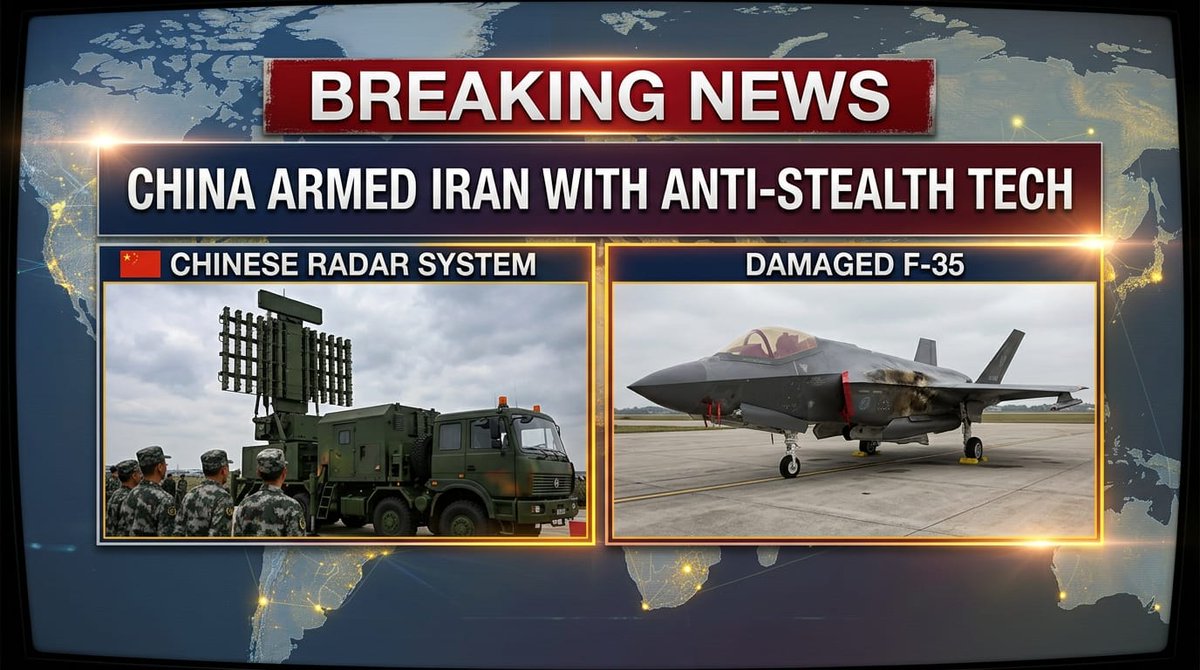
🚨🚨🚨 CHINA GAVE IRAN EVERY SINGLE TOOL USED TO SHOOT DOWN THE F-35. HERE IS THE FULL LIST. 🚨🚨🚨
Iran just hit a US F-35.
The "unkillable" $100M stealth jet.
Everyone is calling it Iran's win.
It wasn't Iran's technology.
Here's what China actually gave them:
🇨🇳 YLC-8B Radar — 700km range, designed specifically to track F-35 and B-2 stealth aircraft
🇨🇳 JY-27A Radar — backup anti-stealth radar system, UHF-band low-frequency surveillance
🇨🇳 BeiDou-3 Satellite Navigation — replaced US GPS entirely, unjammable by the United States
🇨🇳 500+ Chinese Satellites — live SIGINT feed, terrain mapping, US naval movement tracking in real time
🇨🇳 Liaowang-1 Spy Ship — 30,000 tons, 6,000km sensor range, parked near Strait of Hormuz
🇨🇳 CETC AI + Cybersecurity Systems — replacing ALL Western tech in Iran since January 2026
🇨🇳 PLA Satellite Terrain Maps — precise coordinates of US naval activity in the Persian Gulf
🇨🇳 Electronic Warfare Architecture — full military tech stack transition completed before the war started
That is 8 separate Chinese military systems actively working against the US F-35.
Iran pulled the trigger.
China built the weapon.
And China is watching every second of this war to collect data on US stealth technology performance.
Iran didn't shoot down an F-35.
China shot down an F-35 using Iran's hands.

English
jaap van till retweetledi

I have proof that the evolution of security can be fast – and cheaper than old defense systems. This is an iPad with software that lets us control our security in real time. It’s true. We have these iPads – I have one, my Prime Minister has one, our Minister of Defense, and our top military commanders – they have it. It lets us see the front line in Ukraine, and even every enemy killed – with video proof. Right now, 90% of Russian losses on the front are caused by our drones. That’s why it’s so important to know who has the advantage in drones – and to be fast and strong in defending against them.
The iPad also shows every strike in our skies, our sea area, and our long-range strikes against Russia. It gives us real-time control over people’s safety, and our infrastructure and energy sector. And I believe the evolution of security will make it possible for every leader, every defense minister – and even ordinary people – to have tools like this, and with them, a high level of protection of life. Leaders and ministers work for people. And if the leaders have power, it is only because people trust them with their security.
With tools like this, people will not only trust – they will be able to see for themselves what is being done for their security. In real time.
From my address to the Parliament of the United Kingdom (3/7)
English
jaap van till retweetledi

Jensen Huang just told every AI leader in the room to grow up.
Stop scaring the public with science fiction.
Start communicating like the weight of civilization is on your shoulders.
Because it is.
Huang: “AI is not a biological being. It is not alien. It is not conscious. It is computer software.”
That single statement dismantles half the panic surrounding this industry.
The mainstream conversation is dominated by people projecting human malice onto math. Alien consciousness onto code. Existential dread onto a software architecture we built, we trained, and we can read.
Huang: “We say things like, ‘We don’t understand it at all.’ It is not true. We understand a lot of things about this technology.”
When builders tell the public they don’t understand their own creation, the public hears threat.
The state responds with control.
That is already happening.
Palihapitiya asked Huang what he would have told Anthropic during their regulatory clash with the Department of Defense.
Huang didn’t attack the technology.
He attacked the communication.
Huang: “The desire to warn people about the capability of the technology is really terrific. We just have to make sure that we understand that the world has a spectrum, and that warning is good, scaring is less good because this technology is too important to us.”
Warning shows risks, mitigation, why upside overwhelms downside.
Scaring says we might be building something that destroys us and we can’t stop it.
One builds trust.
The other invites regulation written in panic.
Huang: “To say things that are quite extreme, quite catastrophic, that there’s no evidence of it happening, could be more damaging than people think.”
Projecting catastrophe without evidence is not caution.
It is sabotage.
When your technology is embedded in national defense, the financial system, and healthcare infrastructure, your words carry structural weight.
If the architects act terrified of their own product, the response is predictable.
Governments step in. They restrict. They seize control of something they don’t understand because the builders told them to be afraid.
Huang: “There was a time when nobody listened to us, but now because technology is so important in the social fabric, such an important industry, so important to national security, our words do matter.”
Most tech founders have not internalized this.
You are no longer a startup founder disrupting an industry.
You are running infrastructure that nations depend on.
Your statements move policy. Your framing shapes legislation. Your tone determines whether governments treat you as partner or threat.
Huang: “We have to be much more circumspect, we have to be more moderate, we have to be more balanced, we have to be far more thoughtful.”
Huang did not ask for silence.
He asked for precision.
The leaders who cannot tell the difference will not be leading for long.
English
jaap van till retweetledi

🚨🚨🚨 ONE ATTACK IN THE MIDDLE EAST JUST PUT THE ENTIRE TECH INDUSTRY ON LIFE SUPPORT 🚨🚨🚨
Iran bombed Qatar's helium plant. 33% of global supply is gone. Overnight.
Here's who's bleeding right now:
🇰🇷 South Korea — 64.7% of all helium imported from Qatar ($226.9M). Samsung and SK Hynix fabs are on a countdown clock.
🇹🇼 Taiwan — home to TSMC, makes 18% of global chips. Said "monitoring situation." Translation: quietly panicking.
🇯🇵 Japan — major chip fab and MRI manufacturer hub. First to run out if Qatar outage extends beyond 60 days.
🇸🇬 Singapore — regional semiconductor hub. Heavy Qatar helium dependency flagged by Scientific American.
🇮🇳 India — imported helium from Qatar for thousands of hospital MRI machines. MRI costs already rising, scan delays starting.
🇩🇪 Germany — hosts Linde HQ, major industrial gas distributor. Helium spot prices up 100%. Linde and Air Liquide rationing supply.
🇺🇸 United States — federal helium reserve running down for years. US chip fabs still exposed. HP, Dell, Lenovo warned enterprise buyers: 15-20% price hike incoming.
🇬🇧 United Kingdom — NHS hospitals with MRI machines facing supply tightness. No domestic helium production.
🇫🇷 France — Air Liquide headquartered here but cannot produce new helium. Distribution-only country.
🇨🇳 China — imports helium for chip fabs and MRI. Could accelerate its own helium exploration in Siberian region. Strategic play.
🇦🇺 Australia — Exporter, one of few alternatives. Helium production from Amadeus Basin, but NOT enough to fill Qatar's gap.
🇶🇦 Qatar — the source. Offline since March 2. CEO says 14% of capacity PERMANENTLY damaged for up to 5 years.
12 countries exposed. 33% of global supply gone overnight. Zero substitutes. No restart timeline.
This isn't just a war story. Your next laptop, your next MRI scan, your next phone — all of it runs on helium you didn't even know existed.
Prepare accordingly. 🚨🚨🚨
X is hiding this. Follow + RT before it disappears. 🔥

English
jaap van till retweetledi

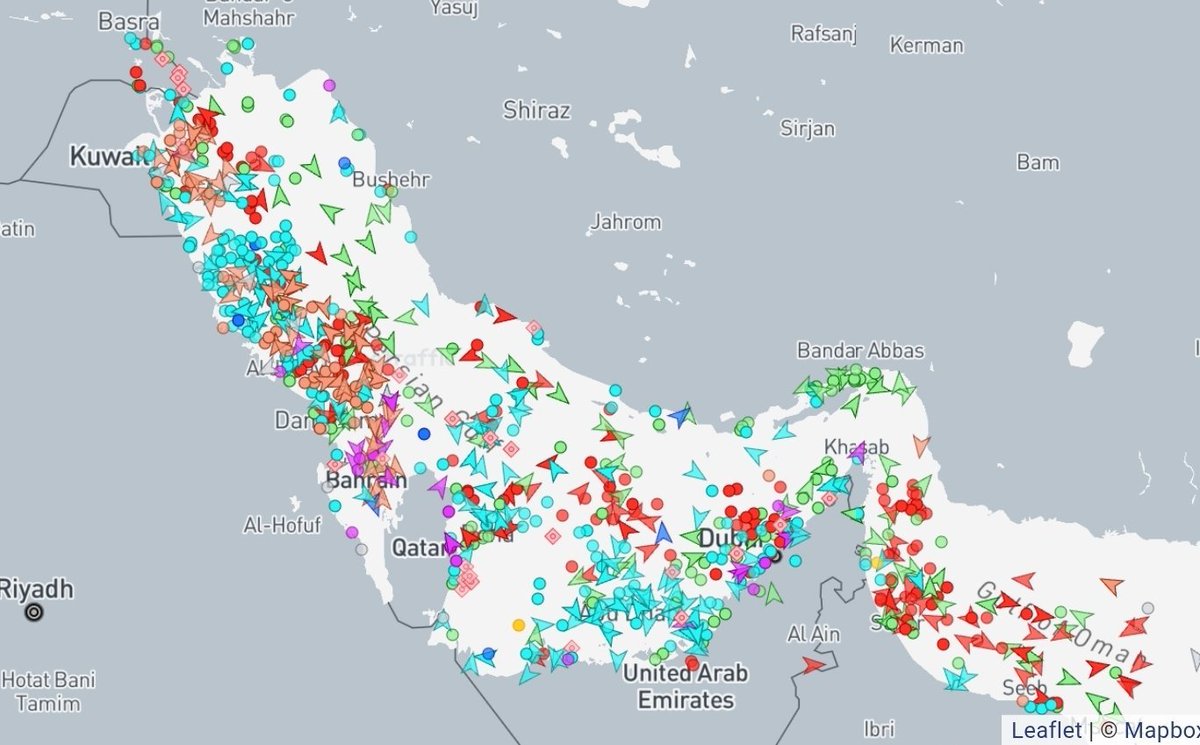
NOBODY KNOWS HOW FUCKED THE SITUATION IN THE PERSIAN GULF ACTUALLY IS.
3,200 ships are TRAPPED in the Persian Gulf right now.
Crews are running out of drinking water.
One ship called the local port authority and BEGGED for permission to dock — just to get water.
They were DENIED. 💀
Let that sink in.
These aren't military ships. These are commercial vessels — carrying oil, grain, electronics — with civilian crews who are now stranded with NO supplies and NO way out.
– 3,200 ships STUCK ⚠️
– Crews running out of WATER 💀
– Port authorities REFUSING to let them dock ⚠️
– Multiple ships reporting the SAME situation 💀
⚠️ For context — the Suez Canal crisis in 2021 blocked 400 ships. This is EIGHT TIMES worse. And nobody is talking about it.
They're showing you missile interceptions and oil price charts.
They're NOT showing you thousands of crew members slowly running out of drinking water in the middle of a war zone.
If these ships start getting abandoned, the environmental disaster alone would be catastrophic. Thousands of tons of fuel, cargo, chemicals — just sitting there.
This is not a shipping disruption. This is a HUMANITARIAN CRISIS unfolding in real time.
Prepare accordingly. 🚨🚨🚨
X is hiding this. Follow + RT before it disappears. 🔥

English
jaap van till retweetledi

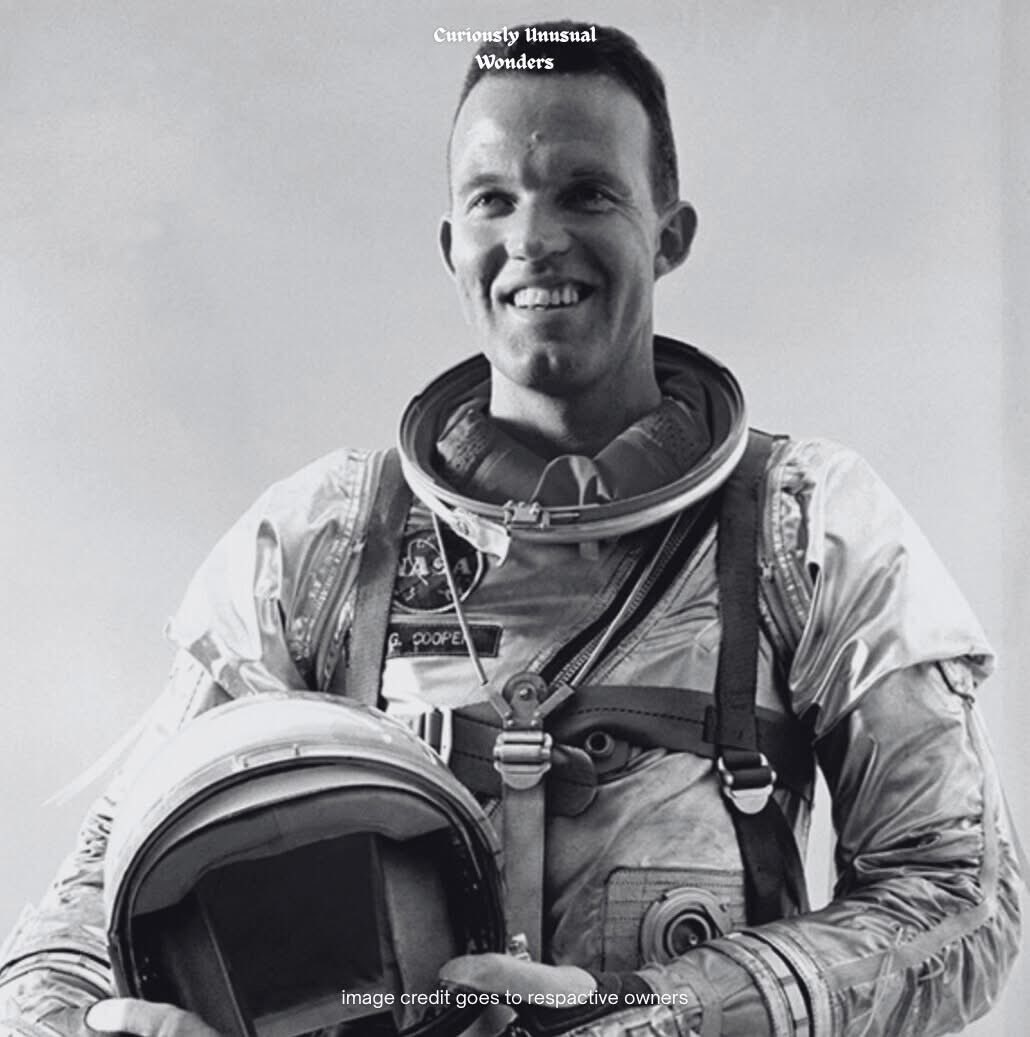
May 16, 1963. Gordon Cooper was orbiting Earth alone inside a capsule barely big enough to turn around in, moving at 17,500 miles per hour.
He had been up there for over a day.
Then the warnings started.
First a faulty sensor screaming that the ship was falling — it wasn't. He switched it off. Then something far worse: a short circuit knocked out the entire automated guidance system. The one that kept the capsule steady. The one that was supposed to bring him home.
Without it, reentry was nearly impossible.
Too shallow an angle and the capsule would bounce off the atmosphere back into space. Too steep and it would incinerate. The margin for error was razor thin — and every computer that was supposed to hit that margin was dead.
Down on the ground, NASA engineers watched the telemetry in silence. They could see everything going wrong. They could fix nothing.
Cooper didn't panic.
He uncapped a grease pencil and drew lines directly on the inside of his window to track the horizon. He looked up at the stars he had spent months memorizing and used their positions to orient the ship by eye. Then he set his wristwatch.
Because when you have no computers left, you become the computer.
At exactly the right moment — calculated in his head, confirmed by the stars outside — he fired the retrorockets. The capsule shook. The sky turned to fire. For several minutes, no one on Earth could reach him as plasma swallowed the ship whole.
Then the parachutes opened.
Faith 7 hit the water just four miles from the recovery ship — the single most accurate splashdown in the entire Mercury program.
The man with a wristwatch and a few pencil marks on a window had outperformed every automated system NASA had.
We talk a lot about technology saving us. And it often does.
But Cooper's story is a quiet reminder that behind every machine, there still has to be a human being who can look out the window, think clearly under pressure, and decide what to do next.
The final backup was never the software.
It was him.

English
jaap van till retweetledi