

Josh Chen
211 posts
Josh Chen
@jwaynechen
Playing with AI before it plays with us. Founded @basisprotocol, early team @Merantix @Opal_Sec
New York, NY Katılım Şubat 2014
629 Takip Edilen348 Takipçiler
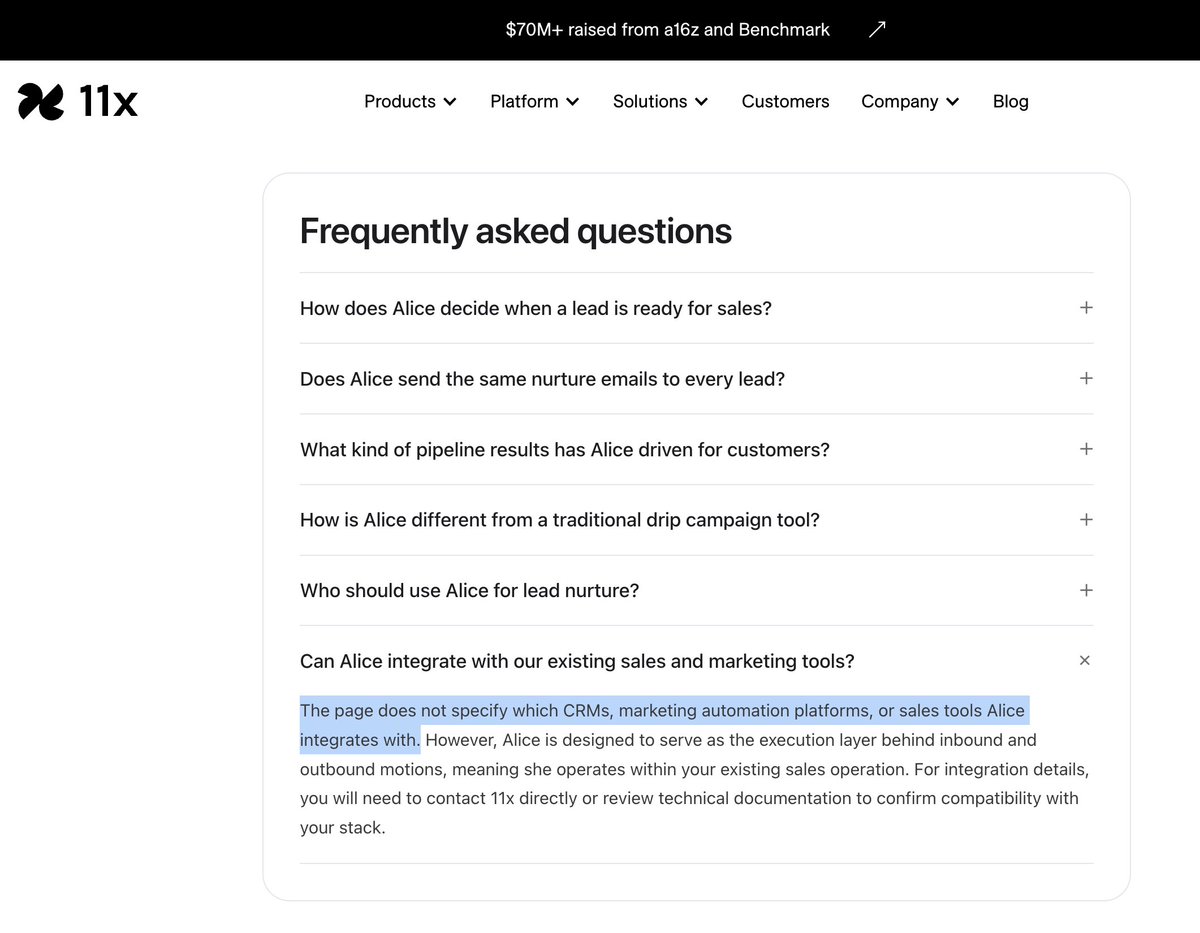

@maxkolysh Actually BART is notoriously bad lol reddit.com/r/bayarea/comm…
English

someone should do this comparison for every major US transit system.
i bet BART isn't even the worst
Peter Kazanjy@Kazanjy
Reminder that BART has 73x higher per-trip staffing costs than the Tokyo subway because it's not actually a transit system but instead is a grift.
English

Josh Chen retweetledi

Also, at the time of posting this (16 hours after his)
His post only has 6.1k views and 126 likes
The original stories about his arrest got millions of views
It is so much easier to destroy a reputation than to build one
@nadertheory never gave up even when it was hard 🫡


English
In all my years of crypto I've never seen the SEC dismiss a case like this **with prejudice**. Congratulations @nadertheory and I'm excited for your road ahead.
nader.deso@nadertheory
Big news! Last Friday the SEC officially dismissed its enforcement action against me and against DeSo. This was the last legal issue I had to deal with and I am now completely and totally free to innovate and build again, unhobbled for the first time in years. Three important points: 1) This dismissal was NOT a settlement. It was "without costs or fees" to me or anyone involved (extremely rare) because there was no wrongdoing and no actual aggrieved parties. 2) This dismissal was "with prejudice" (also rare). This means they can't bring any related action back against me or DeSo in the future. 3) In the SEC's own words, it was based on "a reassessment of the evidentiary record," meaning the actual facts regarding my innocence were heavily scrutinized and drove the decision. Simply put: The government made a mistake in bringing this case in the first place. The government accused me of misleading an investor who I knew I had a great relationship with, as in they backed me two separate times and I literally had breakfast with them at their house not long prior to the charge. As a result, soon after the charge I found out that not only were they not upset with me, but they wanted the government to go away as badly as I did. As I understand it, the government compelled the investor to do an interview and then took their neutral testimony and represented it as adversarial. It was an alleged fraud with no actual misrepresentation nor any actual aggrieved parties. My lawyers said they'd never seen anything like this, and I think it speaks to how dogmatically anti-crypto the prior administration's SEC was. In the coming days and weeks, I will be hopping on some podcasts to tell the whole story, and boy is there a story to tell. Stay tuned, and if you know anyone who'd like to have me on as a guest please reach out. I'm also excited to start sharing more about what my team has been working on soon. We haven't been twiddling our thumbs. For now, though, I just want to explain why DeSo is so important to me. DeSo is still the only platform on the internet where you can post content directly to a blockchain without fear of censorship, and where you can monetize your content directly with crypto (including stablecoins). It's really quite shocking how in 2026 we not only have virtually no viable alternative for this clearly-important category, but also other important efforts are actually shutting down. The world needs more people working on decentralizing social media, not less. I'm excited to finally be able to share our vision directly again, and to start bringing more people who care about freedom and censorship into our community. What we have built with DeSo is something people take for granted until they really need it, but hopefully we can convince them sooner than that. Lastly I want to say how grateful I am to everyone around me. My family, my friends, my backers, and everyone in the DeSo community. For me, this experience showed me just how trusting, loyal and caring everyone around me really is, and reaffirmed my belief that always trying to do the right thing really does pay off. We're just getting started.
English

🇨🇳 Expanding access for Chinese merchants across Asia & Latin America:
Honored to welcome LianLian, a publicly traded 𝐜𝐫𝐨𝐬𝐬-𝐛𝐨𝐫𝐝𝐞𝐫 𝐩𝐚𝐲𝐦𝐞𝐧𝐭𝐬 𝐥𝐞𝐚𝐝𝐞𝐫 𝐢𝐧 𝐀𝐬𝐢𝐚, to the @withcaliza network.
🚆 Caliza will enable stablecoin-powered payouts to 🇭🇰 and collections from LATAM — bringing faster, compliant USD rails to LianLian’s merchants. 🌏💵

English
Josh Chen retweetledi

If you support rent control, and walked into this building, you might change your position.
This is the worst rent roll I’ve ever seen and it’s not even close.


English

Sora 2 API + n8n is genuinely insane 🤯
This AI system creates unlimited UGC videos using n8n + the new Sora 2 API.
Fully automated.
Zero watermarks.
HD quality.
Game changer for e-commerce brands & creative agencies scaling content production.
Most teams spend $10k+/month on influencer content...
But now with the Sora 2 API:
Drop a single product photo → generate 50+ HD videos with zero watermarks → own full commercial rights → pay a few bucks per video.
Here's the workflow:
→ Drop product image into n8n form
→ Write your creative brief + choose video length
→ Sora 2 API generates HD UGC content automatically
→ Creates unboxings, demos, lifestyle clips & product showcases
→ Videos delivered instantly with ZERO watermarks
100% built in n8n.
Production-ready quality.
Want the complete n8n workflow?
> Comment "SORA"
> Like this post
And I'll send it over (must be following so I can DM)
English
Exciting new service for coin projects
coinwatch@coinwatchdotco
Today we’re announcing Coinwatch Track - a new way for crypto projects to see what their market makers are doing in real-time, using their API keys.
English
@coinwatchdotco This is incredible. I've heard great things about this product. Exciting to see it launch! Congrats @tubergen
English

Josh Chen retweetledi

@Omissionist @BillAckman This assumes the managers of the city-run grocery store actually care to work as hard as the owners of the privately-run grocery store.
It's about incentives. Sure, the DMV has an obligation to serve the public interest, but nobody there actually has the incentive to.
English

Let me clarify, Bill, since this seems to be escaping you:
Public ownership entails an obligation to serve the public interest.
Private ownership entails an obligation to maximise shareholder returns.
These objectives are not aligned, and increasingly, they are in direct conflict. Pretending otherwise is either dishonest or ignorant.
Which are you?
English
When has the government proven to be a better operator of any business at lower cost than the private sector?
Imagine if every NYC supermarket were run like the Motor Vehicle Bureau.
That’s the city we would have under Zohran’s leadership.
Thomas Sowell Quotes@ThomasSowell
Zohran Mamdani announces he'll launch government-run supermarkets in NYC if elected mayor.
English
@tubergen So MM dumps their 2% FDV worth of borrowed tokens at launch, then (assuming coin price drops) repays the loan by exercising the call, pocketing (2% of FDV) * (launch price - strike price)?
You have any data on whether coins that accepted these deals underperformed others? 😄
English
I've gotta tip my hat to the MM who pioneered this years ago. It's hugely profitable for the MM and the pitch somehow works time and time again.
It's not even crime. Not even a promise of number go up.
Just pure s-tier extraction.
But founders - now you know.
English
One of the all-time worst market maker deal structures is back from the dead
The same old characters are back in the MM game, and they're pushing the same old deals on founders who weren't around the first time
Don't want to get swindled? Read on 👇
English

Openfund is getting critical upgrades that will make trading easier than ever.
1) Real-time infrastructure, via our web-sockets integration, is now live on Openfund. This makes Openfund on-par with UX you’d see on centralized CLOBs. The infrastructure upgrades that enhance these real-time components will also apply to all other DeSo apps that use GraphQL and State-Syncer, so expect to see significant performance improvements on Focus as well.
2) The Openfund Wallet has been upgraded to support multiple quote currencies like DESO, USD & FOCUS, including the ability to cash-out from $FOCUS directly via Openfund. We also included a Stake $DESO button so that more new users entering DeSo can learn about the benefits of staking their DeSo and earning 20% yield.
3) SOL-USDC support for both cash-in and cash-out, which we added recently, is growing at record levels. This proved to be a critical upgrade as it allows users to onramp into DeSo pretty much for free (network fees on average are less than $0.001).
4) UX upgrades we’ve added include the holders table on the trade page so you don’t have to click through between Focus & Openfund. We also added hover cards to view more details about users, similar to Focus. It’s a small detail, but note that we are the only social orderbook in existence where you can see exactly who is making a trade. Imagine looking at Coinbase and knowing who’s buying or dumping your token!
5) TWAP backend has been thoroughly tested and is now ready for frontend implementation. TWAPs will provide traders with a robust set of features that allow for more precise and secure trading. It’s difficult to understate how significant of an upgrade this is. Traders will soon be able to set a flexible schedule for placing bid or ask orders, executed through derived keys, with a number of configuration options like enabling slippage protection and the ability to safeguard against unfavorable trade executions with price limits.
6) Market making incentives are being planned. We’re working on coming up with a program to incentivize more third party liquidity. As a reminder, our Python SDK makes this much easier to do now programmatically. Also, thought I’d give a little shoutout to @consensusFuture who has done nearly ~$8m in trading volume!
English
legendary
nader.deso@nadertheory
Openfund is getting critical upgrades that will make trading easier than ever. 1) Real-time infrastructure, via our web-sockets integration, is now live on Openfund. This makes Openfund on-par with UX you’d see on centralized CLOBs. The infrastructure upgrades that enhance these real-time components will also apply to all other DeSo apps that use GraphQL and State-Syncer, so expect to see significant performance improvements on Focus as well. 2) The Openfund Wallet has been upgraded to support multiple quote currencies like DESO, USD & FOCUS, including the ability to cash-out from $FOCUS directly via Openfund. We also included a Stake $DESO button so that more new users entering DeSo can learn about the benefits of staking their DeSo and earning 20% yield. 3) SOL-USDC support for both cash-in and cash-out, which we added recently, is growing at record levels. This proved to be a critical upgrade as it allows users to onramp into DeSo pretty much for free (network fees on average are less than $0.001). 4) UX upgrades we’ve added include the holders table on the trade page so you don’t have to click through between Focus & Openfund. We also added hover cards to view more details about users, similar to Focus. It’s a small detail, but note that we are the only social orderbook in existence where you can see exactly who is making a trade. Imagine looking at Coinbase and knowing who’s buying or dumping your token! 5) TWAP backend has been thoroughly tested and is now ready for frontend implementation. TWAPs will provide traders with a robust set of features that allow for more precise and secure trading. It’s difficult to understate how significant of an upgrade this is. Traders will soon be able to set a flexible schedule for placing bid or ask orders, executed through derived keys, with a number of configuration options like enabling slippage protection and the ability to safeguard against unfavorable trade executions with price limits. 6) Market making incentives are being planned. We’re working on coming up with a program to incentivize more third party liquidity. As a reminder, our Python SDK makes this much easier to do now programmatically. Also, thought I’d give a little shoutout to @consensusFuture who has done nearly ~$8m in trading volume!
Indonesia