seaweed
1.6K posts

seaweed
@jwool18
Suckmyballs DAO fastest burger flipper in the metaverse
TX Katılım Nisan 2017
122 Takip Edilen179 Takipçiler
seaweed retweetledi
seaweed retweetledi
seaweed retweetledi

Stream fired up
Music for few mins to let everyone join
Link will be in the comments
Piv○t@Pivot922
AMA in about an hour or so Join VC in discord or ask questions in comment section on YT
English

@Paultheking_ @Moonbl0x loco is jewish bro you think hes gonna hand out money
English
seaweed retweetledi

Orderflow Made Simple
This video breaks down flow into four repeatable concepts I have traded for years now
Really happy with how this turned out, I think you'll learn a lot
If you want more of this, drop a like and tell me in the comments
youtu.be/cuvVwhBsTh8

YouTube
English
seaweed retweetledi

Tradingview Orderflow Guide
For years our options for flow on TV were pretty weak but things have come a long way now
Lets cover a few useful flow tools
These are the essentials
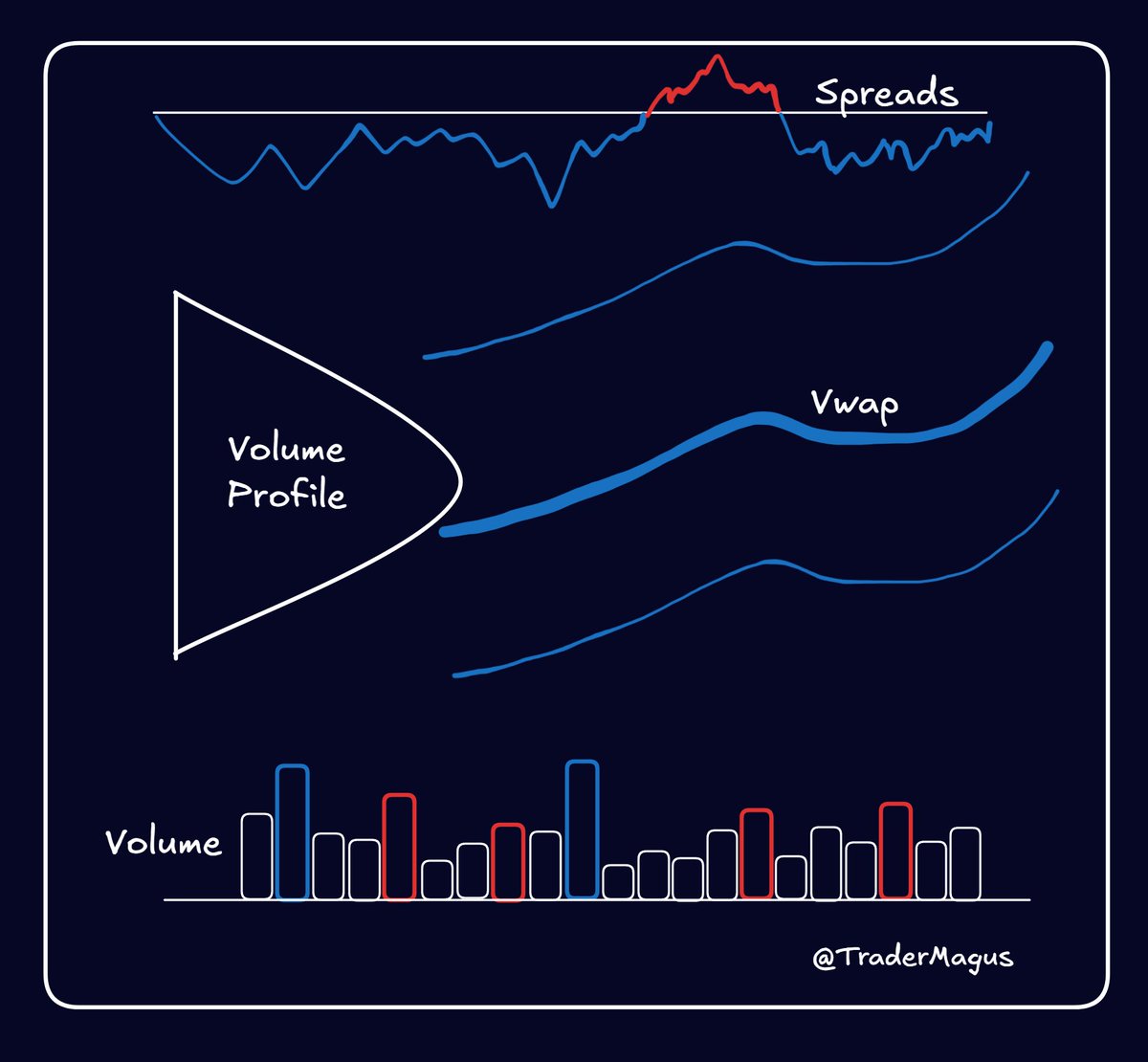
Volume Profile & Vwap: These tell me how to bet and where
Volume: Tells me who's in control & when momentum is shifting
Spreads: Tell me who's buying and who's selling
Here's my template I use everyday
1. Volume - The bedrock of flow
Relative Volume(Rvol) - Good intro tool for the noobs
Delta - Has its use-cases but still needs standard volume in confluence
Buy/Sell - My personal fav, gives most detail
CVD - TV version is terrible don't use
2. Volume Profile - The OG flow tool
Time - Daily, Weekly etc; Called "PVP" on tradingview
Fixed Range - Manually drawn profiles for ranges
Visible Range - Profile for visible price data on screen
3. Vwap - My "I cant live without tool"
Time - Daily, Weekly etc; Default vwap
Rolling - Vwap without set start time(smoother version of vwap)
Anchored - Vwap with controlled starting point; Nuanced version
4. Open Interest - How to see when others are making mistakes
5. Spreads - Comparing price of different BTC markets. On ltf can give context clues as to who's buy/selling and who's in control
How to get these indicators for yourself?
Easy.
Go to the indicator search bar and type the names in. Most of these are default now adays
How do you use them?
Go through my threads and Youtube, don't be lazy
Press like I've got big things in the works for you


English

@HyperLcrgs @hlnames @d0tHYPE @HyperliquidX i like .hl more, .hype is too long with certain names doesnt look as clean
English

Tough choice—should I stick with "hyperlcrgs.hl" by @hlnames or switch to "0xlcrgs.hype" by @d0tHYPE for my primary @HyperliquidX domain and X handle?
Comment below with your thoughts—which one resonates more?

English

@Tradermayne And what is the reason for it to shoot up like that ? Mm don’t just do that for no reason
English

Liquidity grab, brother we are at ATH, that was bear asshole getting blown out
DNA Events@_DNAEvents
@Tradermayne In other words a liquidity grab
English
seaweed retweetledi

seaweed retweetledi

Market Selloff Dynamics + Bottoming
The goal of this write up is to give you a bit of insight on how I spot HTF pivot points in markets. We want to understand the psychology behind risk unwinding and use that to our advantage to potentially spot bottoms.
1. Low Conviction Sells First
- When uncertainty hits, sellers dump what they least desire i.e., lower conviction coins will top first and bleed early.
- Think about it logically. If you're in a pinch and needed cash irl, you're not going to sell your prized possessions, you're gunna sell the crap you never use.
- Likewise, traders will sell what they’re least emotionally invested in to build cash when uncertain or want to decrease risk.
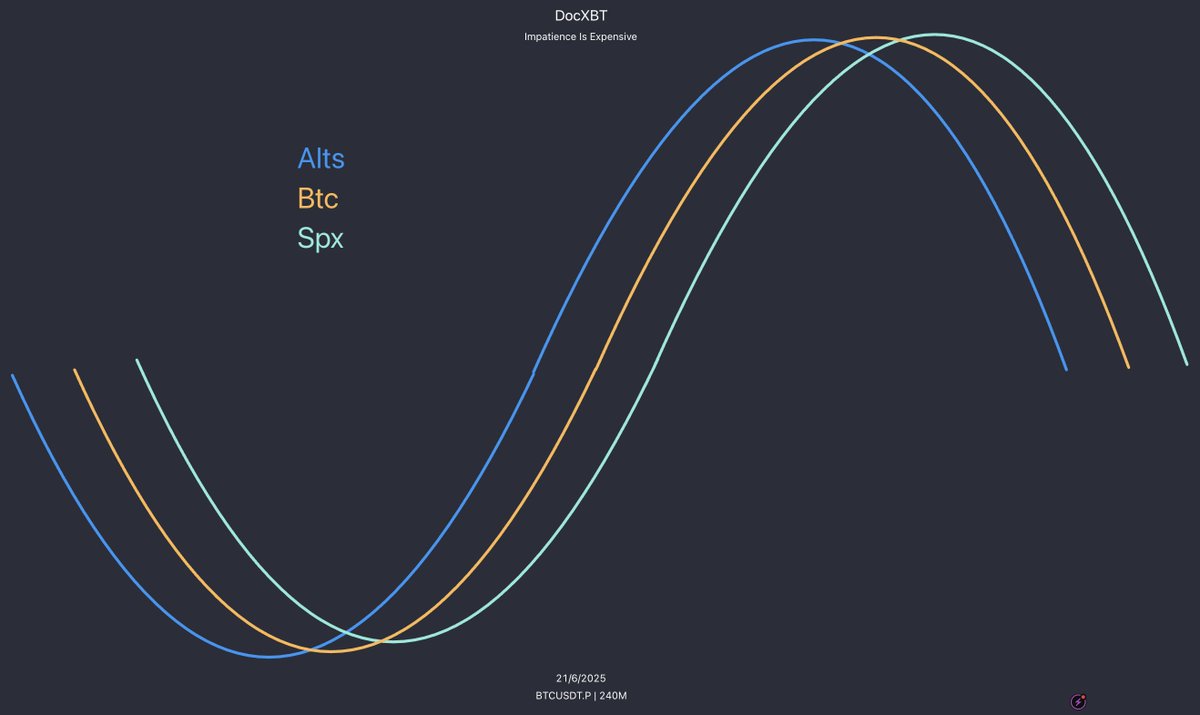
- It’s not a coincidence that this has happened every HTF top this cycle. Alts don't rally after, they rally during. They also top weeks before BTC even shows an ounce of weakness.
- It’s an early warning. Smart traders de-risk before the crowd even knows what's happening.
2. Risk vs. Quality
- Let's go back to the earlier metaphor. People will hold onto their quality prized possessions for as long as they possibly can. It's not until they're desperate that they will part with them.
- The most desirable coins, more often than not, will attempt to hold their gains for as long as possible. This is why BTC always looks fine and you see dozens of "Why is everyone panicking, BTC looks great" tweets weeks before sell offs.
In selloffs:
a) Junk sells early
b) Quality sells late
c) Everything sells eventually
Watch the order of events. It’s a map of stress flow.
3. Reflexivity Kicks In
- Early weakness causes more weakness.
- Once a whale starts to unload into exhausted demand they begin to induce weakness. Classic signs of distribution, absorption, exhaustion, trend loss etc.
- A character shift in a risk asset will make the first order of experienced traders reassess.
- "I didn't sell top, but the character of the trend has shifted. Time to reduce exposure/close"
- “If this is nuking, what else am I exposed to?”
Suddenly:
Rebalancing triggers more selling
This is reflexivity.
A feedback loop of diminishing risk appetite.
4. Volatility: The Dance
Before many big selloffs in BTC, markets go quiet. Volatility drops. Trends become ranges. Complacency peaks.
Then, boom.
Let's talk a bit about balance and imbalance.
- Balance is achieved once the market begins to agree on what's expensive and what's cheap. It's a dance. Equilibrium.
- Equilibrium is calm. What's known is known. Speculation diminishes. Volatility compresses.
- The dance continues until one party gets bored, tired or wants to go to the bar to get another drink. i.e. buyers or sellers get exhausted; changes to supply/demand.
- Equilibrium is damaged- and once it breaks: Imbalance.
- Price displaces violently. Value becomes unclear; volatility explodes. The market craves balance and will actively seek it.
- Price often returns to areas where recent balance was formed- hvn, orderblock, composite value etc.
- This is where you get the sharpest bounces.
"First test, best test"
- Subsequent tests will provide diminishing reactions. Things become structural. Price accepts its new home. Volatility compresses. Balance is found once again.
5. The Flow of a Selloff & Spotting Bottoms
Capitulation isn’t the beginning of the end; it’s the end of the middle.
a) Alts vs. Bitcoin
- This cycle alts often do the bulk of their selling before BTC capitulates.
- Recent example: Fartcoin sold off 88% from its top before the late February BTC capitulation. Since this is true, we can begin to use it as an edge when looking for exhaustion (bottoming)
- The strongest alts will begin to show relative strength (exhaustion) earlier as BTC is still being hyper-volatile and looking for new balance.
- In order words, look for good alts to begin to achieve balance as BTC is in the later stages of imbalance.
As participants, our goal is to spot these divergences:
“Has momentum shifted?”
“Is volatility compressing?”
"Is the velocity of selling diminishing?"
“Is it holding while BTC makes new lows?”
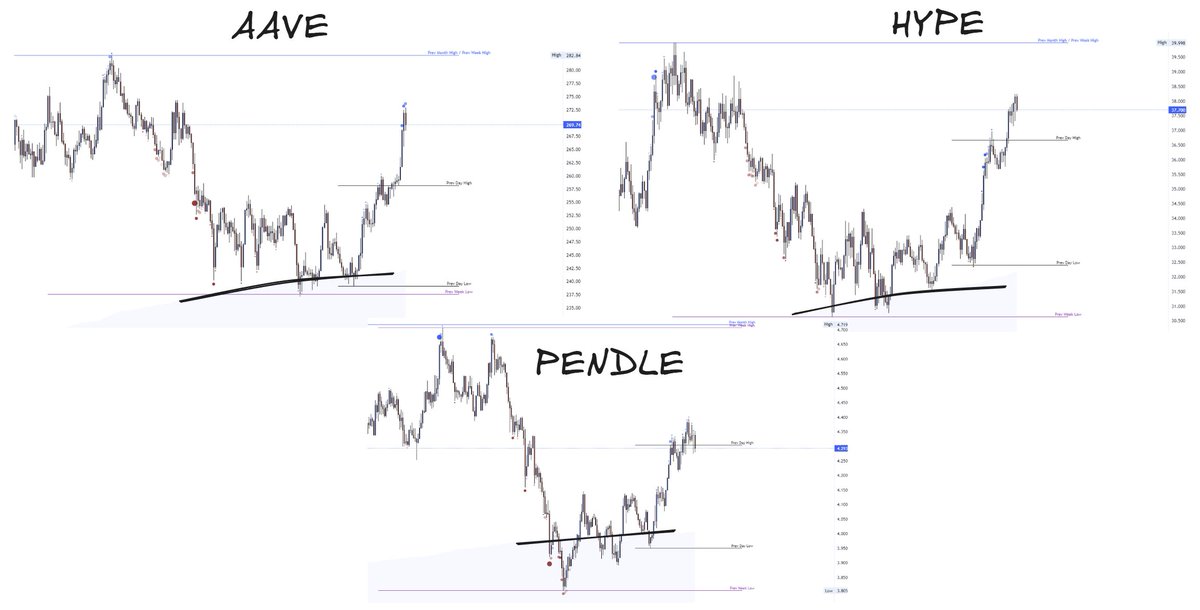
Signs of bottoming in Q2:
- Momentum loss (Fartcoin)
- SFP/Deviation (Hype/Sui)
- Higher lows vs BTC’s lower lows (Pepe)
In short: alts front-load their pain, then decrease in velocity as BTC bottoms.
Remember this how we spot "good" alts.
The weak stay weak.
The strong start whispering before the market speaks.
b) Bitcoin vs. SPX
Now a little exercise for you all
Combine all the concepts in this thread and maybe the following begins to make sense:
Summer '23: BTC topped before SPX, bottomed earlier
Summer '24: BTC topped before SPX, absorbed the macro related SPX crash at range low
So far in '25: BTC topped before SPX, absorbed a 20% SPX crash at range low
TL;DR
Bottoms are a process, not a moment.
Alts First
Bitcoin Next
SPX Last
Watch for the structure, not just the sentiment.

English