Chris Tsako@FenoHS
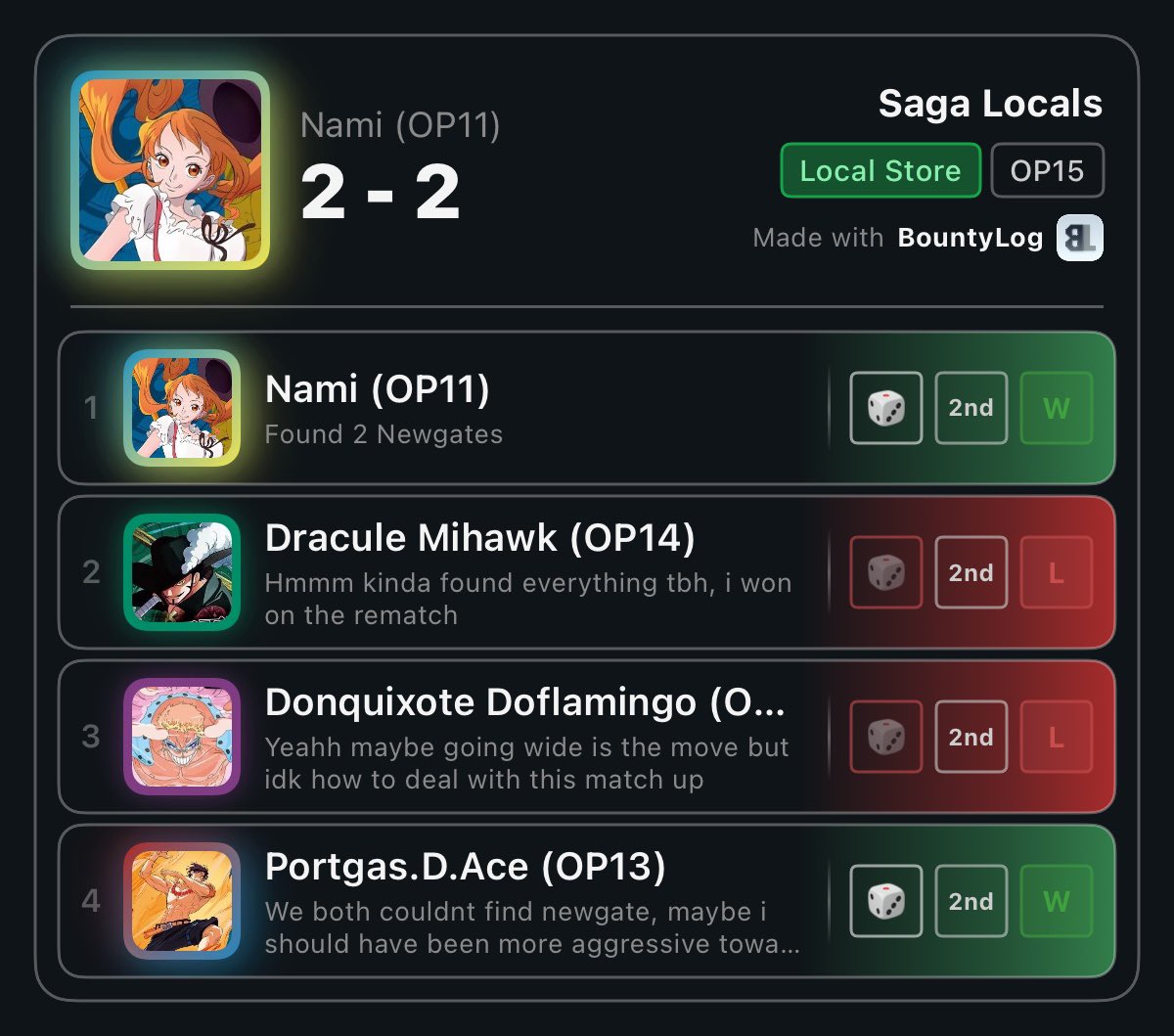
One Piece TCG has a lot of what I call “banana peel” situations 🍌 (example in one of my games bellow)
You create spots where you throw your opponent a banana peel.
They can try to navigate it... but if they slip, they fall massively behind.
Usually these happen when there are too many attacks, too many punish lines, or too many possible follow-ups to realistically cover everything.
A really common mistake I used to make a lot was overcommitting resources trying to protect a character in these spots.
More experienced players are usually better at recognizing when they’re being baited into a losing sequence.
I’ve gotten much better at spotting these situations over time, so I wanted to put the concept out there and help more people recognize them too.
Here’s the sequence that forced my opponent into a “banana peel” spot:
• Kitten (-1k) on Kalgara
• Mamaragan → rest Kalgara
• Leader ability → 4 DON on Ohm
• 6k Ohm into 4k Kalgara → takes life
• 1 DON on second Ohm → 3k into 3k Kalgara → counters 1k
• 5k Leader into 3k Kalgara → takes life
• El Thor on Kalgara + buff Pudding → takes last life
• 3k Pudding into 3k Kalgara → counters 1k
• Lightning Dragon freeze Kalgara
At the end of all this, he was at 0 life, gave me an insane amount of value trying to defend a 3k body, and still didn’t manage to save it anyway because of Lightning Dragon freeze.
I threw him a banana peel… and he slipped on it 🍌
Be careful not falling for these spots. A lot of the time defending looks correct in the moment, but the sequencing is already heavily against you.
(He conceded next turn after realizing how bad of a spot he ended up)
I feel like people talk a lot about common mistakes in OPTCG, but I don’t see this concept discussed enough.
A lot of games are decided by recognizing when a spot is actually defendable… and when you’re just being baited into slipping on a banana peel 🍌