kate egert
8.7K posts

kate egert retweetledi

Five people were shot and injured at an Iowa City pedestrian mall near the University of Iowa campus overnight, police said Sunday. Three students from the university were among the injured, according to school officials.
No arrests have been made and the investigation is ongoing. Police have released photos of the five “persons of interest associated with this shooting.” cbsnews.com/news/universit…
English
kate egert retweetledi

HAWK ALERT: ICPD seeking public assistance to help identify persons of interest: content.govdelivery.com/accounts/IAIOW…


English
kate egert retweetledi

Difference Between SpaceX and NASA
NASA and SpaceX are both going to the Moon.
But they are building completely different machines to get there.
Here is the difference, explained simply.
NASA builds like a government.
Slow. Expensive. Extremely safe. Every single part is tested, certified, reviewed, and reviewed again.
Their rocket, the SLS, costs $4 billion per launch. It cannot be reused. Once it fires, it is gone forever.
Their capsule, Orion, seats four astronauts and was designed with decades of engineering tradition behind it.
It is the most powerful rocket America has ever built. It is also the most expensive way to get to space that currently exists.
NASA’s approach is: we cannot afford to fail, so we will take all the time we need.
SpaceX builds like a startup.
Fast. Cheap. Fail, learn, rebuild, try again.
Their rocket, Starship, is the biggest rocket ever built by any human civilisation. It is designed to land back on its launch pad, be refuelled, and fly again within hours.
One Starship launch costs a fraction of what NASA spends on SLS and the plan is to launch it dozens of times just to refuel itself in orbit before heading to the Moon.
SpaceX’s approach is: move fast, break things, fix them in public, and make it cheaper every time.
How They Work Together
NASA is not competing with SpaceX. They hired SpaceX.
The plan for landing on the Moon works like this. NASA’s SLS rocket launches astronauts in the Orion capsule toward the Moon.
Meanwhile SpaceX launches Starship separately, fuels it up using 14 tanker flights in orbit, and parks it near the Moon waiting.
The astronauts transfer from Orion into Starship. Starship takes them down to the lunar surface. They spend about a week on the Moon. Then Starship brings them back up to Orion, and they fly home.
They are two completely different vehicles with two completely different companies but they all have one mission.
In conclusion,
NASA style: one perfect rocket, one shot, do not fail.
SpaceX style: launch many times, fuel in orbit, land the rocket back, fly it again tomorrow.
NASA is the architect. SpaceX is the contractor who figured out a cheaper way to lay the bricks.
Neither can finish this mission without the other.
That is what modern space exploration actually looks like.


English
kate egert retweetledi

Can we all agree that in a world of influencers, Z-listers, TikToks, badly acted ads, brand collabs, people filming themselves crying…the Artemis livestream of 4 middle-aged scientists doing their jobs is genuinely the best most authentic content of the century? Thanks @NASA🌚

English
kate egert retweetledi

Artemis II may have splashed down, but our photos and videos from the mission are still rolling in! Keep an eye on the latest: nasa.gov/artemis-ii-mul…


English
kate egert retweetledi

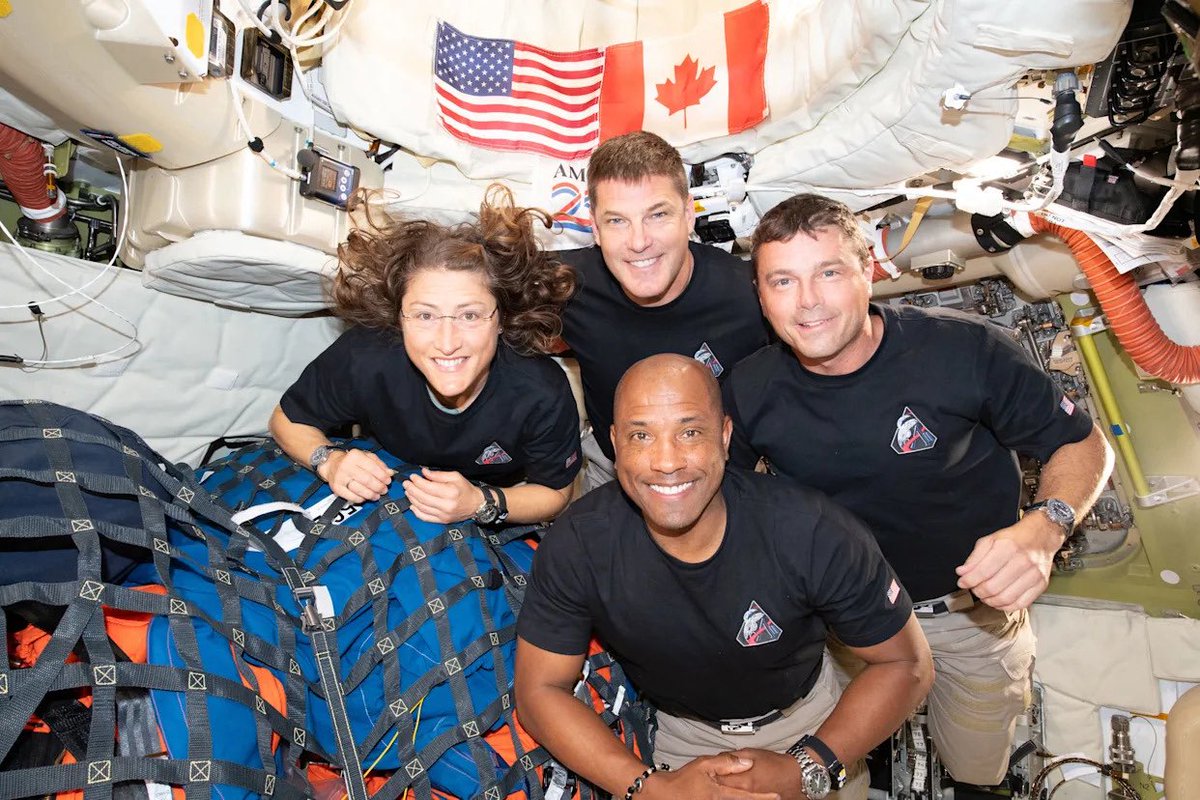
All four crew members, NASA astronaut Reid Wiseman, Artemis II commander, NASA astronaut Victor Glover, Artemis II pilot, NASA astronaut Christina Koch, Artemis II mission specialist, and Canadian Space Agency (CSA) astronaut Jeremy Hansen, Artemis II mission specialist have now exited the crew module and are now in the inflatable “front porch.”

English
kate egert retweetledi

Whoa!! 🤯
Chris Williams@Astro_ChrisW
Our crew on the @Space_Station caught a glimpse of the @NASAArtemis II crew as they re-entered the atmosphere from their journey to the Moon! We first saw a bright light and a trail as the service module burned up. We didn’t see the Orion capsule itself as it re-entered, but we saw the wispy trail it left behind in the upper atmosphere. Overjoyed that our friends are safely back on Earth after their awe-inspiring mission!
English
kate egert retweetledi