
Sabitlenmiş Tweet
kalibwani
11.9K posts

kalibwani retweetledi

We asked Earl Sweatshirt about “real hip-hop” fans who expect artists like him and MIKE to always approach music in a very traditional way.
@earlxsweat said he thinks these “real hip-hop” conversations are “amusing at best,” pointing out the importance for the spirit of hip-hop to "keep finding itself in different places."
English
kalibwani retweetledi

kalibwani retweetledi

kalibwani retweetledi

Another introspective hot chune coming through from @kalanzi_ . My repeat button is officially broken from the number of replays I made yesterday!
#GoodMusicFriday

English
kalibwani retweetledi

Around 2015, when the World Bank was encouraging the Ministry to establish a Metropolitan Area Transport Authority (MATA) as part of the broader BRT agenda, I attended a World Bank workshop in Addis Ababa with a colleague who has since left the Ministry. One statement from the facilitators has stayed with me ever since: “You cannot engineer yourself out of traffic congestion.”
He explained that building more roads, widening highways, or constructing flyovers cannot, on their own, solve congestion. Congestion is not simply a road‑capacity problem. It is fundamentally a behavioural, economic, land‑use, and road‑management problem. Engineering interventions treat the symptoms, not the underlying causes.
He highlighted several issues that illustrate this point:
Induced or Latent Demand: Whenever road capacity is increased, more people choose to drive because the road initially feels faster. Over time, the new lanes fill up and congestion returns. This pattern is well‑documented globally. He gave the example of Seoul, South Korea — a city I had visited in 2007 and seen the phenomenon firsthand.
Kampala’s Radial Network: Kampala’s road network funnels traffic from Entebbe, Masaka, Jinja, Hoima, and Gayaza into a very small CBD core. Even with flyovers, all these streams still converge at the same point. A flyover may remove conflict at one junction, but it does not reduce the volume entering the city.
Land‑use Patterns: Most jobs, services, and government offices are concentrated in the CBD. This creates strong tidal flows: everyone enters the city in the morning and leaves in the evening. Flyovers cannot change the distribution of demand. Kampala continues to grow inward rather than outward, intensifying pressure on the same limited space.
The Geometry Problem: In dense cities, the real bottleneck is rarely the roads themselves. It is the intersections, off‑ramps, and city streets. You can build a 12‑lane highway/road but if all those vehicles must eventually exit onto a 2‑lane urban road with traffic lights, you have simply created a faster way to reach a stationary queue.
Weak Last‑mile Connectivity: Even when trunk roads are improved, the feeder roads in suburbs such as Ntinda, Najjera, Kisaasi, Makindye, Nansana, and Kireka remain narrow, unpaved, or poorly managed. Congestion simply shifts from the improved section to the next choke point.
Other Systemic Factors: Land‑use planning, enforcement, public transport quality, roadside activity, and general road management all influence congestion. Without addressing these, engineering solutions alone cannot deliver lasting relief.
Summary
The lesson from that workshop from the Kampala’s live in or work in is clear: you cannot build your way out of congestion. Sustainable mobility requires a combination of engineering, planning, enforcement, behavioural change, and institutional reform.
ADDING LANES TO FIX TRAFFIC CONGESTATION IS AKIN TO LOOSENING YOUR BELT TO CURE OBESITY. IT ADRESSES THE SYMPTOM (TIGHTNESS) WITHOUT FIXING THE CAUSE.
Andy Kristian Agaba@andykristian
The mother of all traffics happening in Kyanja this morning. AVOID Kisasi—Kyanja road. Not sure of the cause. Man, this city needs roads! @mkainerugaba
English

kalibwani retweetledi

It appears Ibrahim Traore and the Alliance of Sahel States have been studying Mwalimu Julius Nyerere
English
kalibwani retweetledi


kalibwani retweetledi

🚨 NEW EPISODE🚨
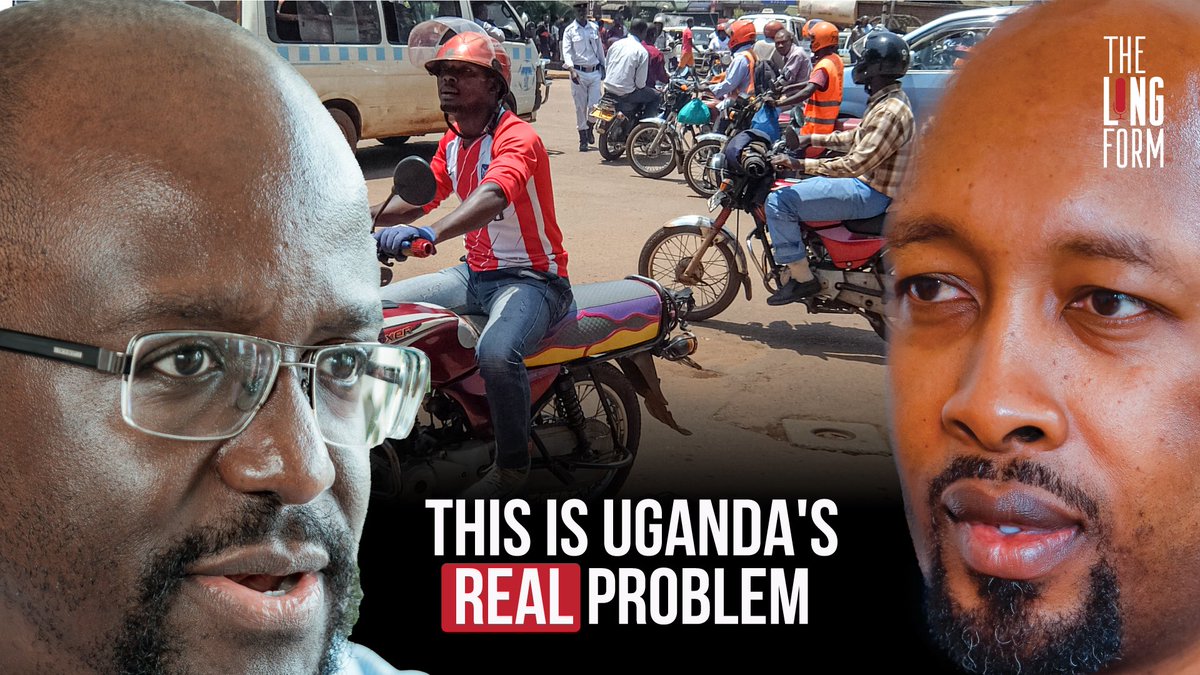
This week on The Long Form, David Mpanga @dfkm1970, lawyer and author of ‘The Politics of Common Sense’, joins us to unpack why he believes that Uganda doesn’t suffer from a poverty problem but a COMMON SENSE PROBLEM.
We Discuss:
🚦 Traffic Jams, Corruption & Instability: What’s Really Behind It All
🗳️ Uganda 2026: Will Common-Sense Leadership Emerge?
🏰 Buganda vs The Modern State
🔁 Why African Societies Keep Making The Same Mistakes
🇷🇼🇺🇬 Rwanda & Uganda: Two Nations, Two Leadership Mindsets
WATCH: youtu.be/hOzyxSIrLZE
YouTube
English

kalibwani retweetledi


This how them African niggas in Maryland be acting
Based Dom NiggaButt/Acc@based_d0m
CIA in shambles rn 😭
English
kalibwani retweetledi

YouTube
Filipino