Kada NGBALE

25K posts

Kada NGBALE banner
Kada NGBALE

Kada NGBALE

@kdngbale

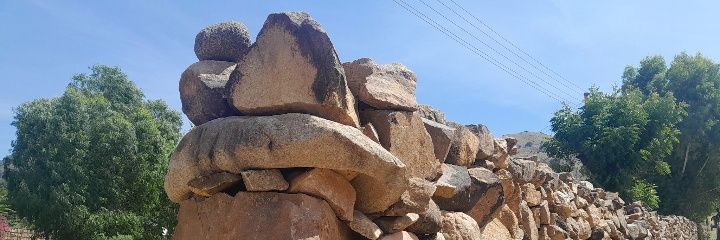
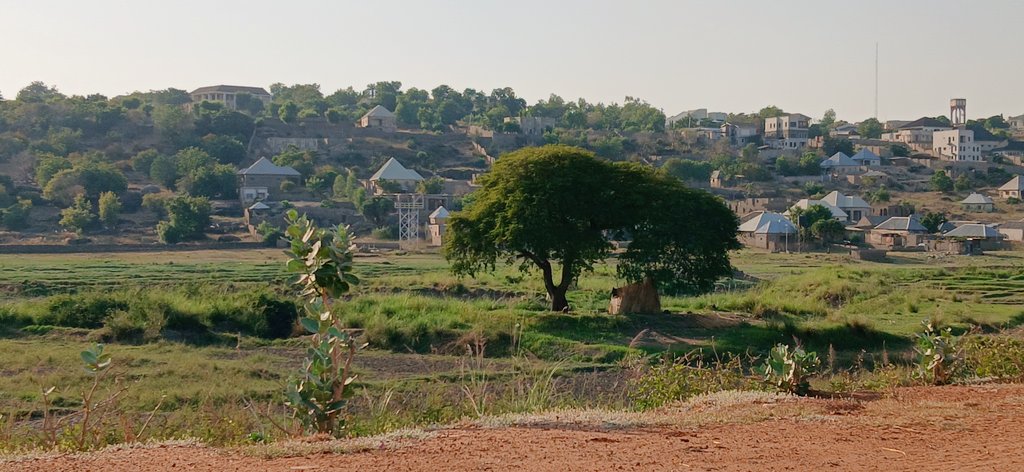
Factivist. The picture on my header is the gateway to my pinned tweet... on a journey of faith with My Crown Jewel @BenjaminCynth14

Nigeria Katılım Kasım 2013
815 Takip Edilen1.2K Takipçiler
Sabitlenmiş Tweet
Kada NGBALE
Kada NGBALE@kdngbale·
Have you ever heard of the Sukur Cultural Landscape? "The Sukur Cultural Landscape is a settlement whose existence dates back to #Neolithic times and which has, for centuries, remained an independent kingdom and centre of iron production and distribution." #History
English
4
10
34
0
Kada NGBALE
Kada NGBALE@kdngbale·
@BigBrain0327333 @asemota Thankfully we no mention name na soundtrack to the di movie we create. If it gets anyone to dance, they might want to change their mind about going to the cinema.
English
0
0
0
21
No gaslighting 👁️
No gaslighting 👁️@BigBrain0327333·
@kdngbale @asemota Una don use description naked the man finish🤣. Should have let the suspense Epa created to remain. You guys will write movies into the soundtracks and non of us will want to go to the cinema.
English
1
0
0
25
Osaretin Victor Asemota
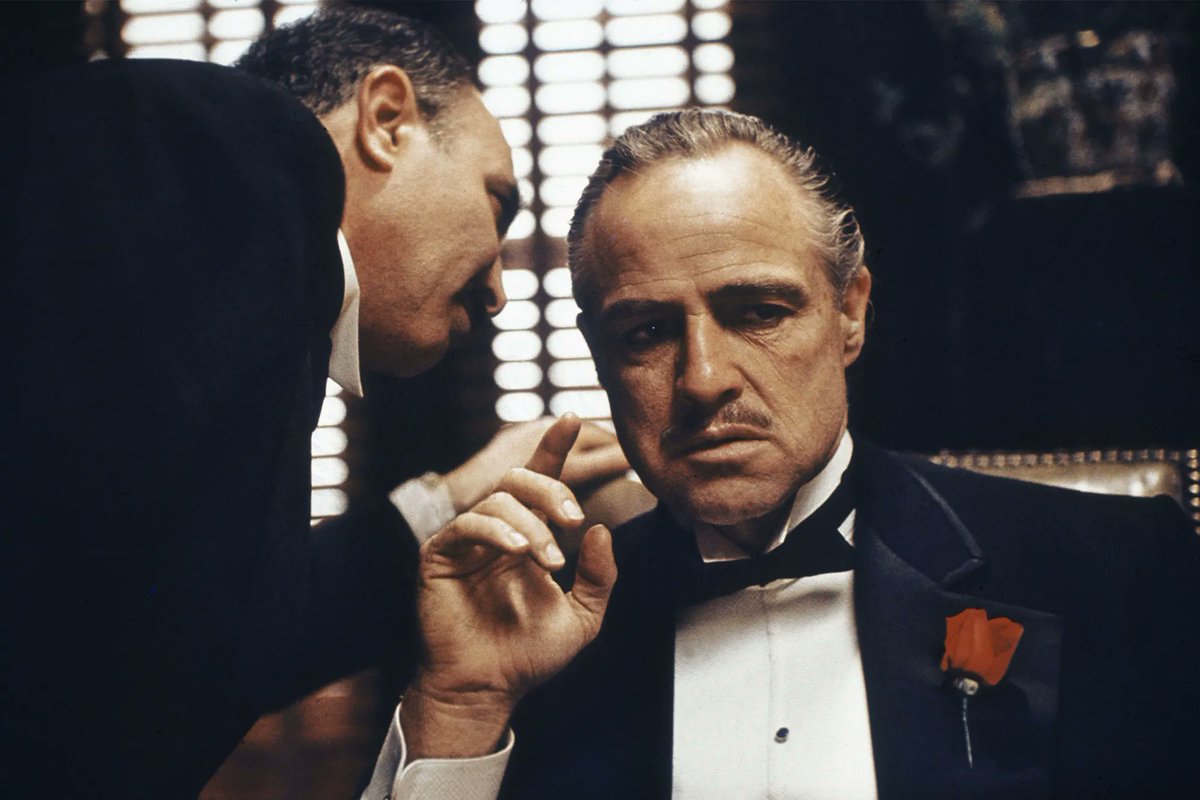
How and why do you "Godfather" in Nigerian politics? Because the night is dark and full of terrors. You know the forces of darkness by name, and they respect you, but you still set up power as a buffer against chaos. I lived opposite a famous Nigerian politician for a decade, and I saw that he was just an ordinary man with the extraordinary gifts of courage, foresight, and persuasion. He wasn't always the monster people outside thought he was, but he had the capacity to unleash mayhem on those who deserved it. A gang of robbers came to our street once to rob all night, but they avoided his house as he calmly stood outside with his bodyguards armed with assault rifles. I can't forget a time when assassins came for him, and he got them to turn themselves in to the police from mere conversation. People thought it was an urban legend, but he simply persuaded them by disarming them with simplicity, courage, and fearlessness. That is what people feared and respected about him. He used to be a police officer, and he knew many things about criminals. He was not afraid of them at all. He was the criminal whisperer and could tame troubled souls. His greatest contradiction and most admirable trait was that he warned all those he loved and knew were not criminals to avoid Nigerian politics. Sometimes I think back and realize that he knew how fucked up things were at the bottom and operated at the very top to try to fix things. He reminded me a lot of the Vito Corleone character in "The Godfather," played by Marlon Brando. Vito did not want "the game" for Michael and wanted him to become a respectable politician. On the other hand, he groomed Santino for it. Our neighborhood Godfather had his political proteges who were worse than Luca Brasi and Santino put together. A lot of the stability and growth we had during a particular era in Nigeria was due to people like him and the bridges he built over time with favors. He was also generous to a fault and never stingy. He wasn't the President and never wanted to be. He was the person who pulled strings behind the scenes. The puppet master and the maestro. None of the current wannabes can come close to him. The Abuja incident, where someone was insulting a man in uniform, made me squirm so badly. These people confuse brute force with raw power. It never ends well.
Osaretin Victor Asemota tweet media
English
13
25
107
7.4K
Kada NGBALE retweetledi
Goodreads
Goodreads@goodreads·
Here are ONE HUNDRED AND FORTY FOUR (144!) books about books. You're welcome! 😉 Discover the full list! goodreads.com/blog/show/3090…
English
6
11
86
14.5K
Kada NGBALE retweetledi
marqix ☆
marqix ☆@fwmarqix·
I lived in Japan for a year. Most of my experiences were exhausting in ways I’d rather not get into, but this one still makes me laugh. I was on the train in Osaka, minding my own business, when I noticed a group of school kids a few seats down. They were whispering, glancing at me, then whispering again. They kept passing a folded piece of paper between them as if they were planning something top secret. I watched this go on for two stops. Finally, one of the kids was pushed forward by the others. He walked over to me slowly, like he was approaching a wild animal that might bite. He stopped right in front of me, bowed politely, and held out the folded paper with both hands. I opened it. Inside was a handwritten note in careful English: “Hello. We think you are a very cool person. We are practicing our English. We hope this note is correct. Please give us a score.” At the bottom, they had drawn a literal grading box, out of ten. I looked up. Seven pairs of eyes were staring at me as if their entire semester depended on my response. I pulled out a pen, wrote “10/10” in the box, and added a note: “Perfect English. Well done.” The boy carried it back to the group. They read it together… and absolutely lost their minds. High-fives, jumping, and one kid even pumped his fist in the air. Their teacher, who had been pretending not to watch from the end of the car, was biting her lip, trying hard not to smile. I rode the rest of the journey grinning to myself. That’s the Japan I always remember.
English
779
8.2K
120.7K
3.2M
Kada NGBALE retweetledi
Africanofilter
Africanofilter@africanofilter·
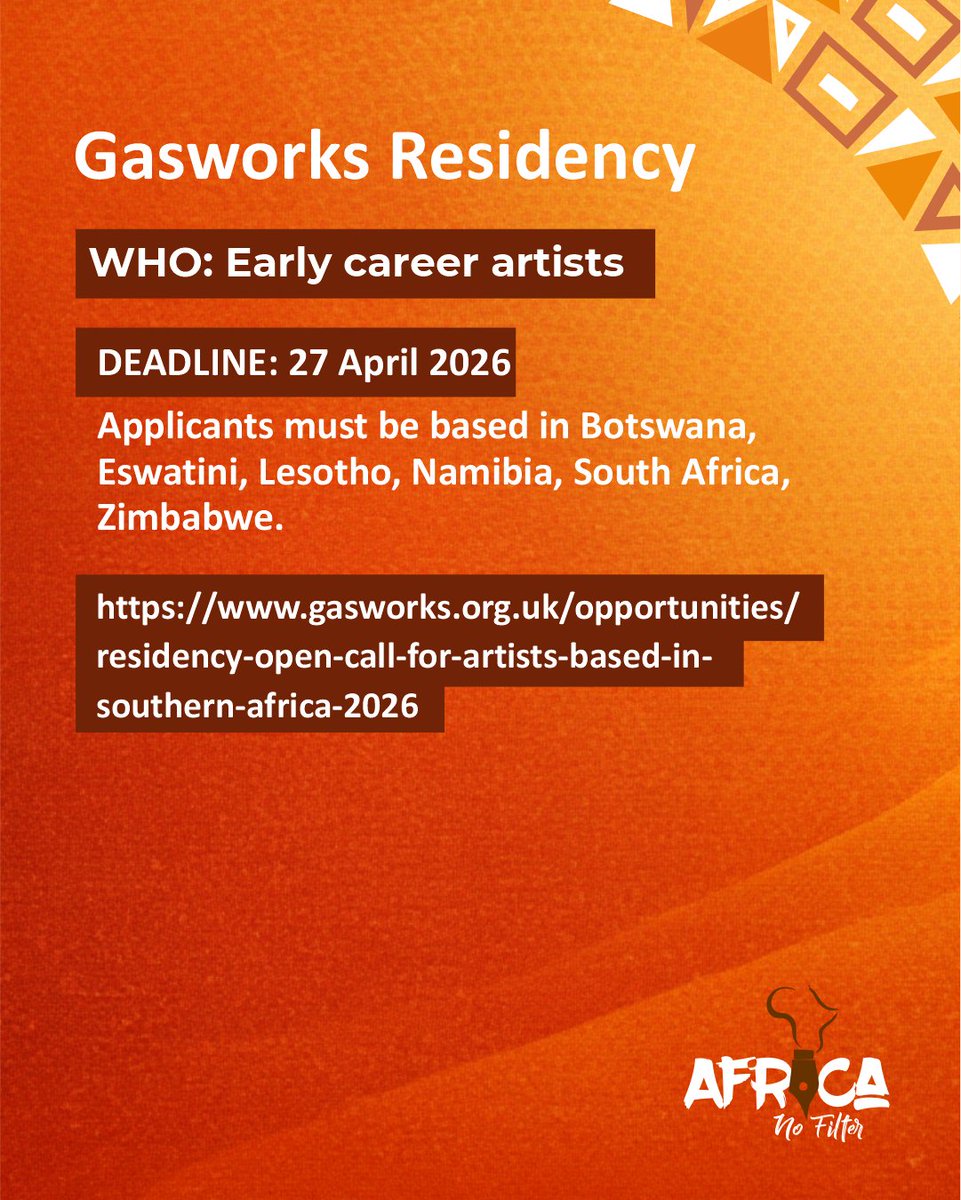
This week’s funding opportunities for African storytellers and creative. Tag someone who should apply Journalists, content creators & influencers can apply for the Foundational Learning Journalism Initiative: 👉🏾Be based in Kenya, Senegal or South Africa 👉🏾Experience covering education, social policy or development Deadline: 3 May. 🔗: icfj.org/our-work/call-… Early career artists in Botswana, Eswatini, Lesotho, Namibia, South Africa, Zimbabwe can apply for the Gasworks Residency: 👉🏾 Spans 11 weeks in London 👉🏾 Comes with funding, administrative, pastoral, and curatorial support Deadline: 27 April 🔗: gasworks.org.uk/opportunities/… Journalists and media professionals can apply for the MTN Pan-African Media Innovation Programme: 👉🏾Spans 12 weeks 👉🏾online academic modules. 👉🏾Newsroom immersion, industry masterclasses, study visits, and peer engagement Deadline: 30 April 🔗:mtn.com/media-innovati…
Africanofilter tweet mediaAfricanofilter tweet mediaAfricanofilter tweet media
English
1
4
3
849
Kada NGBALE retweetledi
Freyy
Freyy@Freyy_is·
Viola Davis has spoken about how ignoring her creative calling affected her mental health. it highlights something important: when you consistently deny a core part of yourself, it doesn’t just disappear quietly.
English
24
4.5K
23.1K
325.1K
Kada NGBALE
Kada NGBALE@kdngbale·
Returning home, I just saw a young man on my street sitting on his prayer mat with his love interest seated by his car door gisting; he threw caution to the wind, thinking it's a quiet street. Watching him scramble to safety got me thinking: what happened to sitting in the car?
English
0
0
0
73
Kada NGBALE retweetledi
K. Creek
K. Creek@sgrstk·
We turned life into content and now we wonder why nobody seems content.
English
1
13
44
1.7K
Kada NGBALE retweetledi
Harry Kane
Harry Kane@HKane·
🏆
ART
3.3K
16.7K
238.2K
4.3M
Kada NGBALE retweetledi
c
c@rainhacaty·
the way my phones blowing up you’d think i’m the one on the pitch
English
21
1.4K
7.8K
211.4K
Kada NGBALE retweetledi
-valar morghulis-
-valar morghulis-@eldivine·
City plays 4-2-4 when they want to overwhelm your defenses so that with rebounds the ball is still likely to end up with a city player in your box. The only way to stop that is by having 5 midfielders who fall low on defense giving you numerical advantage. But move two of them into a 4-3-3 attack to retain your offensive capacity. It's tactically hard but with discipline it's doable. Arteta has several players that can pull it off. It's he himself that doesn't have the ability to do it. Towards the ending he fell back into his familiar game of run down the Channels and sling it in. Pressure reveals who you are. Winners win, ugly or pretty it doesn't matter.
-valar morghulis-@eldivine

City keeps getting to our back 4. I'm sorry but Arteta is playing a dicey game, and not even maximally in front. We're playing well but it's gonna take a toll.

English
1
1
1
1.7K
Kada NGBALE
Kada NGBALE@kdngbale·
@saratu Seven is that perfect number but ain't no way he staying if we don't win it.
English
0
0
0
63
S.
S.@saratu·
I’m not sure how Arteta stays in the summer if we don’t win the title this year.
English
3
2
2
1.5K
Kada NGBALE
Kada NGBALE@kdngbale·
Dear @m8arteta, A scary man can never win. Fools might disagree, but I'd rather stay sucker free. #MCIARS
English
0
0
0
91
Kada NGBALE
Kada NGBALE@kdngbale·
Rayan Cherki is not a player you give an inch of space because without he still finds a way to thrive. I really had a good feeling the lads will contain him in this game considering what a threat he was in the Carabao Cup. Enough of his willy-nilly play making. We must win this!
English
0
0
0
61
Kada NGBALE retweetledi
Patrick Anum
Patrick Anum@patrickanum·
Gimba Kakanda rewrites history, and his piece is filled with half-truths. Leaning heavily on simply Nupe examples, i.e., the Etsu Nupe and Lapai to argue that identity is fluid and selectable is historically inaccurate. What happened in places like Nupe, Ilorin, and parts of Hausaland after the Fulani Jihad was not a gentle blending of identities. It was political conquest followed by elite assimilation. Fulani ruling families became entrenched as emirs, and over generations, some adopted local languages and identities for legitimacy. That is not the same thing as saying identity is freely chosen. In many parts of the Middle Belt, similar processes did not produce the same outcome. And that difference matters. Groups like the Bwatiye, Tiv, Berom, Jukun, Atyap, Eggon, Idoma, etc., resisted incorporation into emirate systems precisely because they understood that what was being offered was not “fluid identity,” but absorption into a political order. So using Nupe elites as a universal template is insulting to those of us who are well versed in history. This piece frames “Hausa-Fulani” as a kind of optional, even hypocritical, identity fusion. But historically, it has not just been cultural; it has always been political. So the term “Hausa-Fulani” is less about pretending two groups are one, and more about describing a historically fused political bloc post jihad that has had enduring administrative and electoral consequences. Gimba treats it like a casual identity label, ignoring the political aspects and who benefits from that fusion. The weakest part of the argument is drawing on a false equivalence between Nupe-Fulani and Hausa-Fulani, because they do not scale the same way. Even when Nupe came under Fulani influence, the integration remained territorial, not civilizational. Also, the Nupe population is smaller than the Hausa population, and there was no absorption at the same scale. So to say what applies to Nupe elites should apply everywhere ignores scale, history, and political consequence. But I made an observation: Gimba romanticizes “fluid identity” and ignores the conflict it has the potential to create. We must recognize that identity has never been this flexible abstraction Gimba describes. Identity determines who is an “indigene,” who owns land, and who can access political office. The claim that “identity is fluid” sounds appealing, but in practice, identity in Nigeria is hardened by competition over land, power, and security, so the post ignores why people resist such labels Many communities resisted such labels or absorbed into emirate structures because they understood the long-term implication: loss of language, loss of traditional governance, and subordination within a larger political hierarchy. So what the Gimba calls “integration,” others have historically experienced as erasure. Romanticizing multi-descent is morally attractive but politically naïve because it is disconnected from Nigerian state reality. Yes, multi-identity makes sense sociologically. But politically, identity & indigeneship in Nigeria is tied to land and ancestry, not upbringing. Also, access to state benefits, representation, and rights is zero-sum in many contexts. If you allow full multi-ethnic claims without restructuring the system, you don’t get harmony, what you will get are more claims to the same resources, with disputes over “who belongs.” Gimba doesn’t address the underlying structural issue, which is that we live in a country with ethnicised federalism where there is competition over limited resources. Also, there is an unspoken assumption in the piece that all groups can afford to be flexible, which is not true. The reality is that only major groups can experiment with identity because they are not under threat of disappearance while smaller groups cannot. So when the piece criticizes “rigidity,” it misses that rigidity is often a response to historical erasure, not ignorance.
Gimba Kakanda@gimbakakanda

The Hausa-Fulani Debate This trending debate about the two ethnic groups dancing on the edge of an unmistakable rupture has, to me, always been a debate about political convenience disguised as ethnic certainty. They are two distinct groups, marked by different linguistic and cultural idiosyncrasies. Whatever the Fulani share with the Hausa, they also share, in one form or another, with other groups, just as the Hausa share traits with peoples beyond the Fulani. The difference is that these other groups rarely lose their consciousness of self. The traditional institutions across many northern communities are headed by monarchs of Fulani ancestry, and this is true even among the Nupe emirates in Nigeria. The Etsu Nupe in Bida and the Emir of Lapai, for instance, have distinctly Fulani ancestry, yet neither hyphenates his ethnic identity. They identify simply as Nupe, and that is the end of the matter. There is nothing in the cultural expression of a Hausa mixed with Fulani that is not, in similar ways, expressed among the Nupe mixed with Fulani. Culture is fluid. Identity is fluid too. We should be honest enough to admit this. Hausa is, of course, culturally magnetic, and that is why it has succeeded in becoming the Bermuda Triangle of many languages in northern Nigeria. Many of us grew up struggling to balance Hausa and our native language, trying not to lose one in the dominance of the other. But that cultural force is not enough reason to reduce Hausa to a mere language, as some tend to theorise, or to deny that it belongs to a distinct people. That would be like arguing that the universality of English means there are no distinct English people. A language can travel widely, absorb others, and still remain the language of a people whose distinct identity does not vanish with its spread. If these Nupe royal families, many of whom are patrilineally Fulani but maternally Nupe, could identify simply as Nupe and nothing more, then I believe every group can do the same—to choose a part that aligns with their reality. To me, that offers a practical template for integration among us. What it exposes, instead, is the poverty of a social arrangement in denial of lived identity, where accommodation rests solely on the father’s origin. That may satisfy the logic of patriarchy, but it does not satisfy the logic of justice, social reality, or national cohesion. We live, however, in a patrilineal society that compels the child to inherit the father’s identity, and this logic extends even into our notions of indigeneship and citizenship. Unless we are prepared to uphold that rigidity consistently, or else allow all of us to bear the identities of both parents, we are simply living a lie. My objection to the Hausa-Fulani categorisation is not that it is inherently flawed, for it reflects a social reality many of us already recognise. It is that the arrangement is self-serving, privileging one set of interethnic identities while denying the same legitimacy to others. Our society would be far more honest with itself if it embraced our maternal identities and values just as seriously as it does the paternal. That would not only weaken this patriarchal inheritance of identity, but also deepen integration. I made this argument years ago in a column where I advanced the case for bilateral descent. Every child is the product of two parents, two lineages, two inheritances. In many cases, indeed in most, the child is first shaped by the mother’s language, habits, and culture before any wider socialisation takes hold. It makes no sense, therefore, that a child of a Yoruba father and a Hausa mother, born and bred in Hausa society, formed by its language and customs, should be told to return to a father’s village he has never known whenever questions of belonging or political participation arise. That contradiction is one of the quiet engines of our national polarisation. 1/2

English
10
81
179
11.4K