Patrick Anum

28.5K posts

Patrick Anum banner
Patrick Anum

Patrick Anum

@patrickanum

Search "witness to atrocities" on playstore to download the ICON recommended app on android -where you can document all genocides in Nigerias Middle Belt

Taraba, Nigeria Katılım Temmuz 2015
4.4K Takip Edilen11.8K Takipçiler
Sabitlenmiş Tweet
Patrick Anum
Patrick Anum@patrickanum·
Those people who burnt your house were not Boko Haram, they were Fulani militias Not every militia group is Boko Haram Most of the groups attacking the Middle Belt are of Fulani origin, Boko Haram consists of mostly Kanuris I lived in Plateau during this period and witnessed this first hand and can attest to the truth in this Militias mostly of Fulani origin came into the city on September 7, 2001 and went house to house burning and pillaging. What initially begun as disagreements over political appointment, saw an influx of Fulani fighters into streets of Jos North I saw these militias with my eyes as they wore partial military regalia Some would wear the military trouser and just an ordinary shirt, while others would wear the military top but just a normal trouser That was my first time seeing non state actors on the rampage They targeted native houses in Jos North which had a considerable settler population in a bid to drive the natives out of the local government Lots of University of Jos staff who used to live in a predominant settlement of Angwan Rogo (along Bauchi Road) were murdered while a few others were lucky to have fled Those people went on a rampage for almost 2weeks without adequate security intervention. Dead bodies littered the streets. A state of emergency was declared in Plateau for 6 months while the Governor was sacked replaced with a military administrator (Chris Ali) by the Obasanjo administration. The Obasanjo government also desolved the Plateau state legislature at the time due to those events It was an unforgettable experience because September 11 happened a few days after which is a historic event Why we knew it was tactical to displace the natives was that, there were no attacks on governmental residential areas that housed Southerners and other natives The target was displacement of natives who owned private houses and lands It was so bad that what initially begun in Jos North soon spread to other local governments where there were settlers The worst happened in Wase, Shendam and Lantang I have posted numerous times about the proliferation of arms in the lower plateau during the period by these Fulani militias What was initially ethnic between the natives of Plateau and the Hausa and Fulani settlers turned religious as these settlers demanded that the native Muslims choose a side and used religion to blackmail native Muslims (by asking them to prove that their new faith is more important than their old tribal loyalties)
Patrick Anum tweet mediaPatrick Anum tweet mediaPatrick Anum tweet mediaPatrick Anum tweet media
@𝗼𝗻𝗲𝗷𝗼𝗯𝗹𝗲𝘀𝘀𝗯𝗼𝘆@OneJoblessBoy

“Boko Haram burnt our house down to the ground and we were in the house…” -Susan Pwajok

English
22
271
426
92.3K
Patrick Anum
Patrick Anum@patrickanum·
I am not so active there but I reshare whenever it comes on my TL It is more or less a suggestion.. We have to be intentional about some of these things At the end of the day, we need to completely detach Their basis for land grabbing is hinged mostly on language and some of these other factors In the end, we all want to help our people Hopefully we succeed Shalom
English
0
0
1
15
Atang
Atang@1atangs·
@patrickanum Oh so you are the one. I have checked and did not see a reshare on that particular TikTok profile, and all of a sudden on day 31 you’re making suggestions? Thank you for resharing here, but cannot tell me how I choose to convey my message. Shalom.
English
1
0
0
17
Atang
Atang@1atangs·
Be like some of una middlebelt influencers head dey touch. You no like or reshare my post for TikTok from Day 1-31 but all of a sudden you want to tell me what language to use and what not to use. I said it in my mission statement video, I am not here for opinions!
English
3
5
10
129
Patrick Anum
Patrick Anum@patrickanum·
You are right, there seems to be this obsession with Nasarawa that Arewa elite have For instance in 2023, Atiku supported AA Sule despite Atiku being in the PDP and AA Sule running under the APC Atiku did not support Ombugadu who was the flag bearer under the PDP and an indigene Not just Atiku, many other elite of Arewa have an obsession with dominating the area Sanusi was deposed and exiled to Nasarawa and even Awe Local Government Awe Local Government for a Fulani person is strange because it’s mostly, Jukun, Tiv, Alago in the area and besides how do you exile someone to the lands of another. What needs to happen is that we need to be intentional about supporting the natives of Nasarawa because this lack of support has come back to bite us It is where they launch attacks to devastate our communities We must remedy this before power shifts again
English
2
2
7
282
Jos_Baller⚽
Jos_Baller⚽@S_kangmi·
@patrickanum For states like nasarawa and Kaduna, there are vested interest even from elites of other states, so they help the settlers to get to power, why can't plateau and benue influence and help indigenes of nasarawa to put their leader in power .
English
2
0
4
355
Patrick Anum
Patrick Anum@patrickanum·
These Fulani are not invisible like people think and that’s why they fight tooth and nail to control Nasarawa State in election cycles Fulani killings will reduce significantly in the region once an indigene (Eggon, Mada, Alago etc) emerges as the Governor of Nasarawa State Abdullahi Sule is a settler from Yobe State who became Governor of Nasarawa State has been accused on numerous occasions of providing safe haven for these terrorists This is just another confirmation of those accusations Nasarawa State has been said to be the launching pad for these attacks in Southern Kaduna, Benue, Plateau and Taraba We need to pay special attention to Nasarawa State in 2027
The Middlebelt Guardian@MiddlebeltG

The President of Miyetti Allah Kautal Hore, Bello Bodejo, has alleged that the Governor of Nasarawa State, Abdullahi Sule, was behind the establishment of the Fulani ethnic militia group, Kungiya Zaman Lafiya. punchng.com/how-nasarawa-g…

English
13
72
153
8.2K
Patrick Anum
Patrick Anum@patrickanum·
It’s not even the people, most of the people are trying their best It’s the elite For instance, most of these settlers pay huge sums of money and are able to purchase the support of some of these traditional and political class, they play a big role in these settlers getting endorsements etc We can advocate all we want but at the end of the day, once money exchanges hands, it becomes difficult to fight some of these things An example is this same Abdullahi Sule, he’s from Yobe, knows nothing about Eggon, Mada people etc He is interested in coming for Senate and lost the APC primaries but with intense lobbying and contacting traditional class, he’s going to to contest for the Senate under the banner and out lobbied the Mada winner Our local leaders sold us out We need to handle these issues. Even in 2023, Solomon Ewuga played a role against Ombugadu Now the same Ombugsdu has joined APC, they have turned politics to that of finance, someone can come with billions and buy you against your people Just imagine a settler coming to rule over indigenes and it is normalized
English
2
0
2
305
Solomon
Solomon@SeniormanSolo·
@patrickanum Nothing special is going to happen. Wadada a Fulani man from Sokoto will be the Governor. 99% of middle beltan tribes and people are born fools
English
1
0
3
342
Patrick Anum retweetledi
The Middlebelt Guardian
The Middlebelt Guardian@MiddlebeltG·
The President of Miyetti Allah Kautal Hore, Bello Bodejo, has alleged that the Governor of Nasarawa State, Abdullahi Sule, was behind the establishment of the Fulani ethnic militia group, Kungiya Zaman Lafiya. punchng.com/how-nasarawa-g…
English
0
17
24
11.8K
Patrick Anum
Patrick Anum@patrickanum·
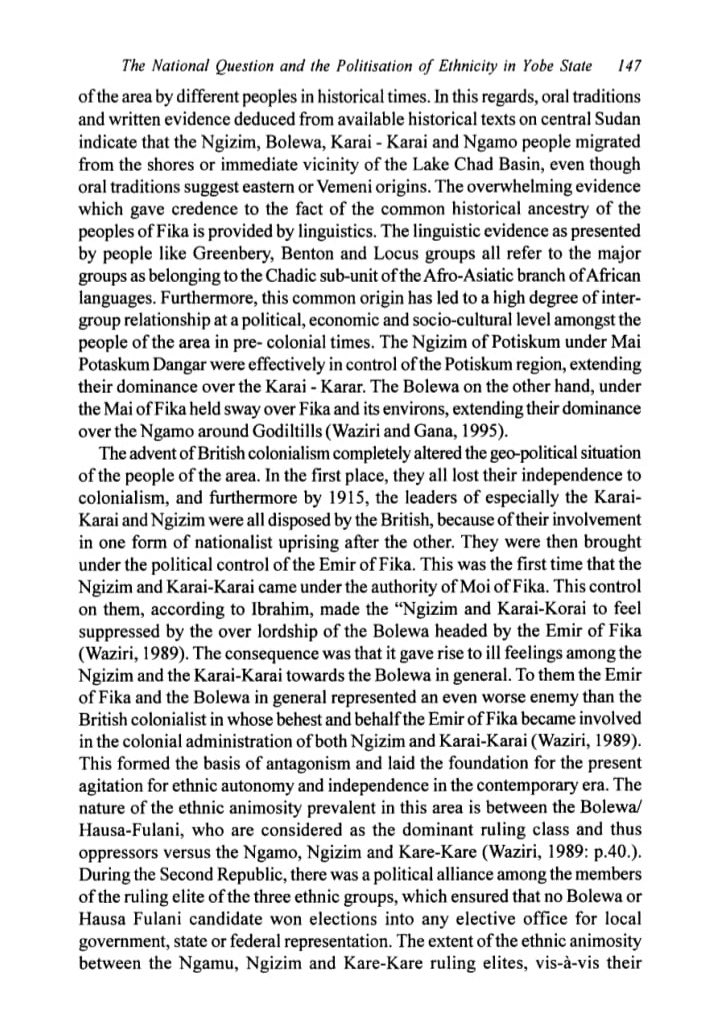
Instead of presenting a united front capable of negotiating a political structure that strengthened all non-Kanuri peoples, attention shifted to: - which emirate would dominate; - where the capital would be located; - who would control the civil service; - which traditional institution would enjoy precedence. The authors conclude that the struggle became primarily one over access to state power rather than collective minority advancement. The result was that the coalition fractured. The consequences proved profound. The exclusion of Biu from Yobe meant that: - Biu remained within Borno State. - Southern Yobe minorities remained separated from other non-Kanuri populations. - Minority populations became divided across two different states. Rather than producing a consolidated minority state, state creation left minority peoples politically dispersed. Meanwhile, the historic Kanuri heartland continued to exercise considerable influence across both Borno and Yobe. A Lesson in Minority Politics Perhaps the most enduring lesson from Southern Yobe’s history is that political fragmentation can weaken groups with shared interests. The conflict between the Fika and Biu elites became a turning point. Instead of producing a broad coalition of Southern Borno and Southern Yobe minorities capable of negotiating from a position of strength, the dispute contributed to a political settlement in which minority populations remained divided between two states. Whether one views this outcome as intentional, accidental, or simply the product of competing local interests, the episode demonstrates how intra-minority rivalry can reduce collective bargaining power. Conclusion The history of Southern Yobe illustrates a recurring theme in Nigerian politics: divisions among communities with overlapping interests can reshape political outcomes in ways that benefit others more than themselves. The debates surrounding the creation of Yobe State became focused on local contests over traditional authority, administrative boundaries and elite influence. The result was a settlement that left minority groups distributed across both Borno and Yobe, while the Kanuri homeland continued to be represented within two states.
Patrick Anum tweet mediaPatrick Anum tweet mediaPatrick Anum tweet mediaPatrick Anum tweet media
English
0
1
7
74
Patrick Anum
Patrick Anum@patrickanum·
Middle Belt People of Yobe State When Minorities Fight, Majorities Reap the Spoils: The Historical Tragedy of Southern Yobe “When brothers quarrel, strangers inherit the house.” Few historical episodes illustrate this proverb better than the political evolution of present-day Yobe State. The struggle between the ruling elites of the Fika Emirate and the Biu Emirate during the campaign for state creation ultimately produced a paradox: a state that was expected by many minority nationalities to strengthen their political voice instead became another arena of minority fragmentation, while the Kanuri political establishment retained dominance over two states, Borno and Yobe. This piece examines the history of Southern Yobe, the politics surrounding the creation of Yobe State, and how divisions among minority elites weakened their collective bargaining position. Southern Yobe occupies a unique historical and cultural position within the Middle Belt. One of the few areas to have a Muslim majority population in the region. Unlike northern Yobe, whose population is predominantly Kanuri, Southern Yobe is home to several indigenous Chadic-speaking peoples including: Ngizim Kare-Kare Ngamo Bolewa Bade (in adjoining areas) Karekare-related communities These peoples historically formed part of the old Fika Emirate and neighbouring political systems. Linguistically and culturally they differ significantly from the Kanuri populations centred around Maiduguri and the historic Kanem-Borno Empire. As discussed in The National Question in Nigeria: Comparative Perspectives (pp. 146–149), these communities share deep historical connections. Historical, linguistic and oral traditions indicate that many migrated from the Lake Chad Basin and gradually occupied the Fika-Nangere region over centuries. Before colonial rule, political authority shifted among various indigenous groups, with the Ngizim controlling Potiskum at one period and the Bolewa exercising authority through the Mai of Fika in another. British colonial rule fundamentally altered these indigenous relationships. According to the study, British indirect rule strengthened the authority of the Emir of Fika, a Bolewa ruler, over other ethnic communities. The authors argue that this created long-lasting resentment among groups such as the Ngizim and Kare-Kare, who increasingly viewed the colonial arrangement as one of political domination rather than traditional coexistence. By the Second Republic, politics in Southern Yobe had become deeply ethnicized. The book observes that alliances increasingly formed along ethnic lines, with political competition no longer based principally on ideology but on ethnic representation and access to government appointments. Thus, by the late twentieth century, Southern Yobe was already internally divided before the debate over creating Yobe State even began. The original plan was to create a state for all minorities while Borno would contain all Kanuri speaking peoples However, what should have been a united minority movement quickly descended into rivalry among local elites. The book documents how the Fika Emirate opposed the inclusion of Biu in the proposed Yobe State. So the Bolewa opposed the addition of the Bura people into Yobe State and they cited long standing differences A movement that was to unite all minorities ended with monitors being split with a half being in Yobe and the other in Borno. Their principal arguments included: - longstanding disputes over precedence between the Emirs of Fika and Biu; - concerns over where the state capital should be located; - fears regarding future dominance within the civil service. The people of Biu, on the other hand, challenged these claims, arguing that both emirates had extensive historical interaction and intermarriage and that the alleged incompatibility had been exaggerated.
Patrick Anum tweet mediaPatrick Anum tweet mediaPatrick Anum tweet mediaPatrick Anum tweet media
English
3
30
45
1.3K
Patrick Anum retweetledi
Masara Kim
Masara Kim@masskeemz·
Breaking: At least two killed in ongoing shootings south of Jos, Plateau State. Reports say two were killed & one injured in Daffo, Bokkos LGA while shooting persists in Dorowa, Barkin Ladi LGA
English
0
21
24
615
Patrick Anum
Patrick Anum@patrickanum·
The National Human Rights Commission has repeatedly expressed concern that parading suspects before the media before trial can violate: the presumption of innocence, the right to dignity, the right to privacy, and the right to a fair trial yet the police have maintained this practice. I’m not sure they inform these suspects that they have the option to opt out of these media interviews The police use this mostly on the poor
English
0
0
1
161
Patrick Anum retweetledi
Ndi Kato (Ungwan Masara's finest)
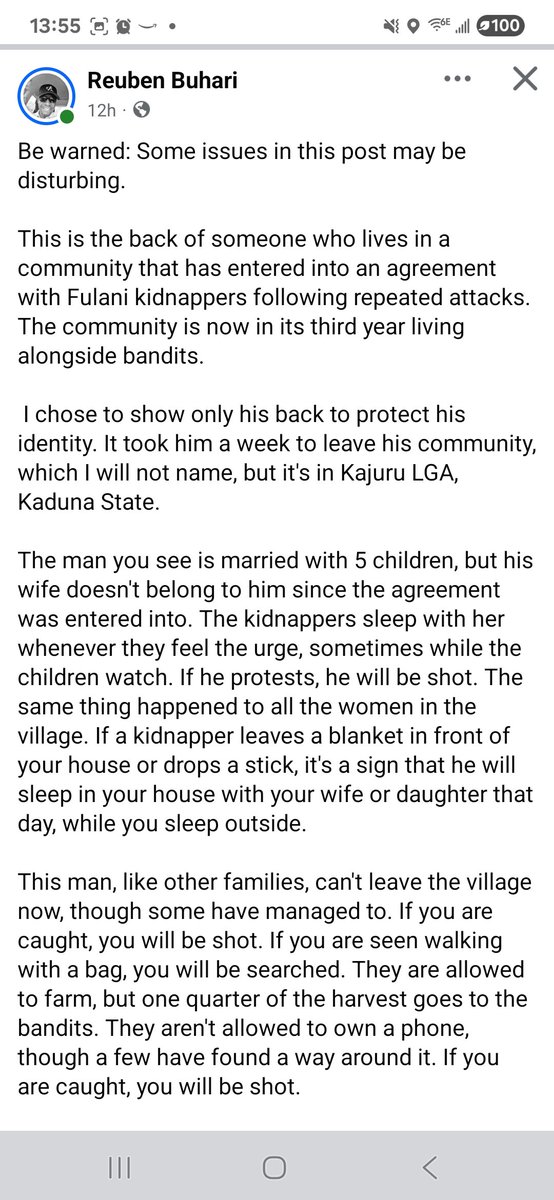
PLEASE READ THE WHOLE THING!!! This is currently happening in Kajuru in Kaduna State. Our people are now under bandit rule. If the rest of Nigeria refuses to pay attention, it will be all of you eventually. Our people do not deserve to live this kind of life.
Ndi Kato (Ungwan Masara's finest) tweet mediaNdi Kato (Ungwan Masara's finest) tweet mediaNdi Kato (Ungwan Masara's finest) tweet media
English
59
877
653
92.6K
Patrick Anum retweetledi
Jos girl
Jos girl@savage_being91·
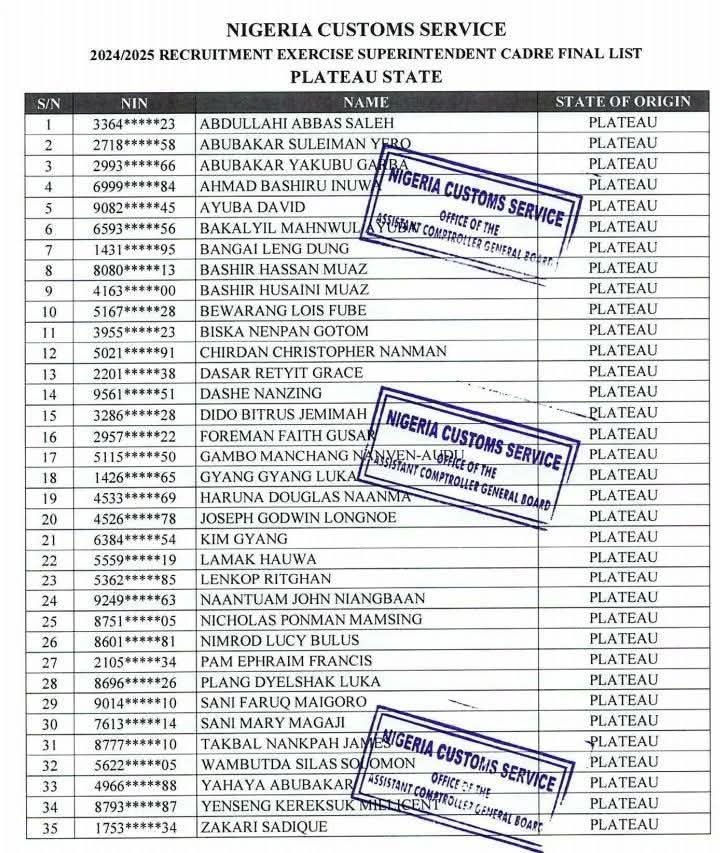
9 non indigenes get custom job using plateau indigene form! Number 1, 2, 3, 4, 8, 9, 29, 33, 35 #middlebelt issues These are the issues concerning indigene certificates. And this is just one agency!
Jos girl tweet media
English
84
11
48
152.1K
Patrick Anum retweetledi
Stephen OSEMWEGIE
Stephen OSEMWEGIE@StephenOSEMWEGI·
FOR IMMEDIATE RELEASE July 27, 2026 (Warning Graphic ⛔️) Another Night of Bloodshed in Southern Kaduna: Save Nigeria Group USA and U.S.–Nigeria Civil Society Coalition Condemn Mass Killing of Civilians, Demand Urgent International Action _Coalition calls on the Nigerian Government, the United States, and the international community to protect vulnerable communities, ensure accountability, and provide immediate humanitarian assistance following the deadly attack in Kauru Local Government Area._ WASHINGTON, D.C. — The Save Nigeria Group USA and the U.S.–Nigeria Civil Society Coalition issue this joint statement to condemn, in the strongest possible terms, the brutal late-night attack on the defenceless community of Naridon, Kamaru Ward, located in the Kauru Local Government Area of Kaduna State. Occurring in the late hours of Sunday, July 26, into the early morning of July 27, 2026, the attack resulted in the death of at least 30 civilians—predominantly women and children—the destruction of residential homes, and the burning of vital local businesses. According to initial field reports, armed assailants identified as suspected Fulani ethnic militants struck the village at approximately 11:55 PM, opening fire on residents in their sleep and burning homes. The assault highlights a persistent pattern of targeted violence against agrarian and minority Christian communities in Southern Kaduna, where systemic security lapses continue to leave rural populations unprotected. The tragic loss of life includes dozens of victims spanning several generations within single households: •The Monday Family: Geoffrey Monday, Ladi Monday, Tabawa Monday, and infant Saviour Monday. •The Emmanuel Family: Deborah Emmanuel, Friday Emmanuel, Yusuf Emmanuel, Yunana Emmanuel, and Irimiya Emmanuel. •Additional Deceased: Maria Pius, Guntu Balla, Enock Balla, Markus Gashi, Mariyamu Joseph, Maria Istifanus, Nuhu Bulus, Bulus Markus, Ayalla Markus, Monday Danladi, Kaka Umaru, Gundumi Umaru, Joy Ali, Dominion Danladi, Danladi Ibrahim, Mama Ibrahim, Pheobe Markus, Audi Musa, and Sunday Yakubu. •Critically Injured: Comfort Monday, Success Monday, and James Emmanuel. Beyond the loss of life, the attackers razed the residence of Mr. Hosea Garba and completely destroyed key commercial provisions shops belonging to local business owners Mr. Emmanuel Garba, Mr. Luka Ahmadu, Mr. Monday Markus, and Mr. Dogo Rana, destabilizing the economic foundation of the community. _"This is not a casual local dispute; it is a coordinated assault on unarmed civilians in their homes," said *Mr. Stephen Osemwegie* the coalition spokesperson. "The persistent impunity enjoyed by these armed groups only invites further devastation. We call on Nigerian security authorities to fulfill their constitutional mandate to protect all citizens, regardless of ethnicity or religious affiliation."_ Calls to Action The Coalition urges swift, decisive international and domestic intervention through the following actions: 1Accountability and Legal Action by the Nigerian Government: Security forces must immediately track down, arrest, and prosecute the perpetrators of the Kauru LGA massacre to restore faith in the rule of law. 2U.S. Government and Congressional Intervention: We urge the U.S. Congress and the Trump Administration to exert diplomatic pressure on Nigerian authorities to guarantee safety for vulnerable religious and ethnic minority communities in Northern Nigeria. 3International Media Coverage: Global news organizations are requested to increase reporting on the crisis in Southern Kaduna to elevate visibility and ensure global accountability. 4Immediate Emergency Humanitarian Relief: Aid organizations and the government must urgently deploy medical, shelter, and food aid to displaced families in Kauru Local Government Area. The tragic events in Naridon serve as a stark reminder of the urgent need for structural security reforms, equal protection.
Stephen OSEMWEGIE tweet mediaStephen OSEMWEGIE tweet mediaStephen OSEMWEGIE tweet media
English
12
157
111
8.5K
Patrick Anum retweetledi
Zariyi Yusuf Madaki
Zariyi Yusuf Madaki@ZariyiYusufu·
“Be warned: Some issues in this post may be disturbing. This is the back of someone who lives in a community that has entered into an agreement with Fulani kidnappers following repeated attacks. The community is now in its third year living alongside bandits. I chose to show only his back to protect his identity. It took him a week to leave his community, which I will not name, but it's in Kajuru LGA, Kaduna State. The man you see is married with 5 children, but his wife doesn't belong to him since the agreement was entered into. The kidnappers sleep with her whenever they feel the urge, sometimes while the children watch. If he protests, he will be shot. The same thing happened to all the women in the village. If a kidnapper leaves a blanket in front of your house or drops a stick, it's a sign that he will sleep in your house with your wife or daughter that day, while you sleep outside. This man, like other families, can't leave the village now, though some have managed to. If you are caught, you will be shot. If you are seen walking with a bag, you will be searched. They are allowed to farm, but one quarter of the harvest goes to the bandits. They aren't allowed to own a phone, though a few have found a way around it. If you are caught, you will be shot. You can’t wear any new clothes. A bandit will simply tell you he needs them. They aren't allowed to own torchlights. Only bandits can own torchlights in the village. You can only own an old motorcycle. They take any new one they see. It's the bandits who buy petrol and sell it to those with motorcycles in the village. They aren't allowed to own a machete; only hoes and diggers are permitted for farming. They can visit villages that have also entered into an agreement with the bandits. If they want to buy anything from a village that hasn't entered into an agreement, it’s their wives who are allowed to go. If the wives don’t return, the husbands and children will be shot. If the men want to go to an outside market to buy anything or sell grain, their wives and children stay behind. Youths in the community are forced to accompany the bandits to steal or kidnap. They are forced to ride the motorcycle while the bandits sit behind with guns. If you refuse to go, you are shot. They can't hold any church service on Sunday unless the bandits are not around. Schools in those communities do not function because teachers have abandoned them. Likewise, PHCs do not function. Everything is controlled by the kidnappers. Sometimes they pick people from the community and shoot them to show what will happen to anyone who disobeys them. This is just a summary of the chilling things this man said. There are more than 20 communities in Kajuru LGA, about 30 in Kachia LGA, and dozens in Chikun LGA that have entered into such agreements with these kidnappers and are living under harsh conditions. Though the conditions vary, but most have no freedom at all.” - Rueben Buhari
Zariyi Yusuf Madaki tweet media
English
35
179
114
7.1K
Patrick Anum
Patrick Anum@patrickanum·
@ugxmxz “Your people are being used as target practice for Fulani” It only takes a historical disagreement for u guys to show your true colours 😅 Till now u hvnt been able to show me where I justified the killing of millions only to widen the insult to my people Funny girl
English
0
0
0
19
Cryptic Realism
Cryptic Realism@ugxmxz·
@patrickanum Keep wishing evil for Igbos but 1 thing is sure for them. They are multiplying and doing better while your people are being used as practice target by terrorists, bandits and Fulani
English
1
0
0
12
Patrick Anum
Patrick Anum@patrickanum·
Your father is the idiot. Middle Belt people have not denied their role in the Murtala coup, only yours have in theirs. And besides Middle Belters paid for it. Many of the plotters were executed and others retired from the army Others were tortured. It is a Nigerian Army way of handling these issues. Discussing it doesn’t mean support for it. It explains how they handled issues at the time Only a riffraff like you misinterprets it to mean justification
Zik of Africa (Nnamdi Azikiwe)@_SonofZik

Didn’t Dimka head the coup that took out Murtala, does it mean that the Ngas people should be made to suffer because of the sins of Dimka. You’re just an idiot.

English
9
10
44
3.5K
Patrick Anum retweetledi
Zariyi Yusuf Madaki
Zariyi Yusuf Madaki@ZariyiYusufu·
I believe, in all sincerity, that the internal infractions or otherwise of any political platform, especially first timers like the @NigeriaNDCHQ, is reflective, at least 90%, of its outing and performance in the 2027 general elections. The means alone justifies the end, not the other way round.
Zariyi Yusuf Madaki tweet mediaZariyi Yusuf Madaki tweet mediaZariyi Yusuf Madaki tweet mediaZariyi Yusuf Madaki tweet media
English
8
19
39
3.9K
Patrick Anum retweetledi
Masara Kim
Masara Kim@masskeemz·
In recent months, communities in Plateau, Kaduna and surrounding States have reported sighting unidentified drones and helicopters prior to, during or after armed attacks. The question is: who owns them?
English
3
137
156
2.9K
Patrick Anum retweetledi
Zariyi Yusuf Madaki
Zariyi Yusuf Madaki@ZariyiYusufu·
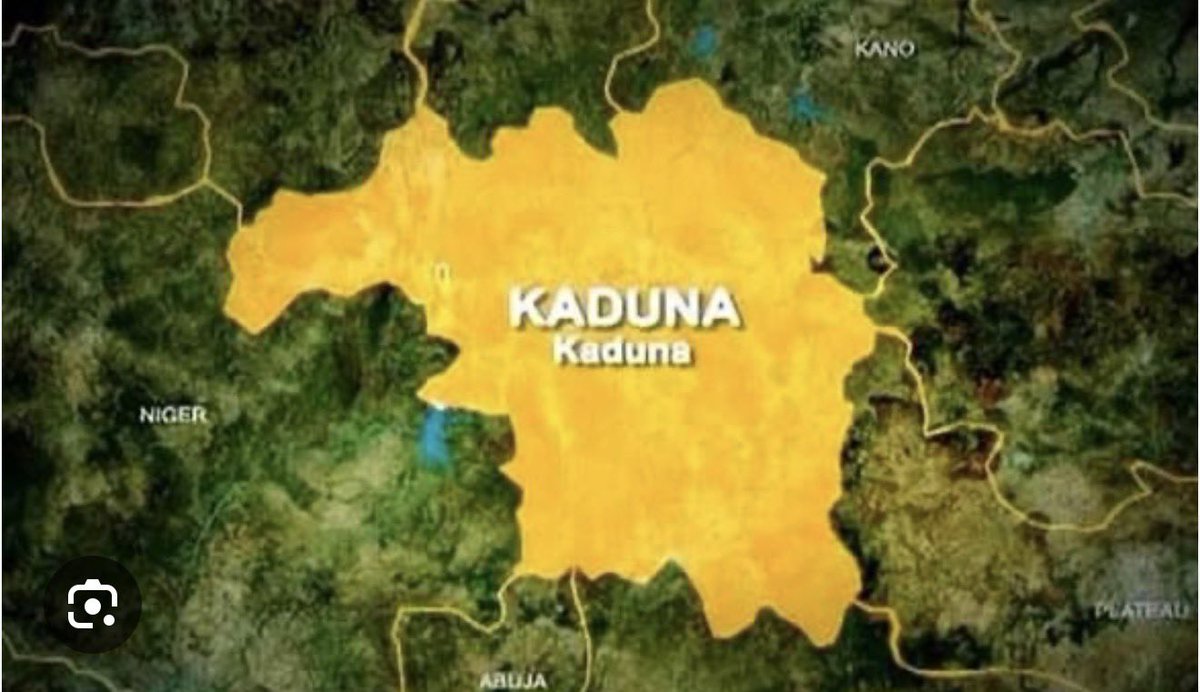
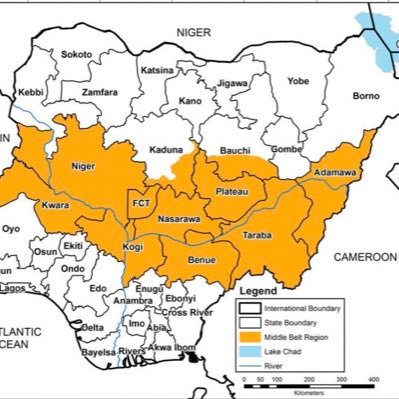
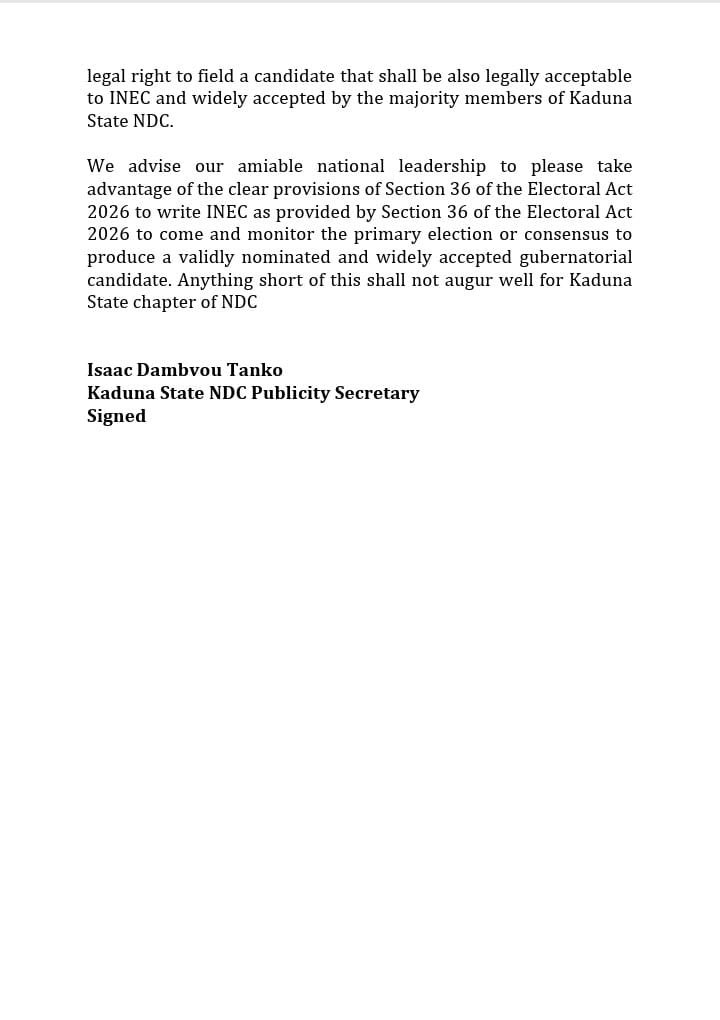
An update from the Kaduna State Chapter of the @NigeriaNDCHQ regarding the state’s gubernatorial primaries.
Zariyi Yusuf Madaki tweet mediaZariyi Yusuf Madaki tweet mediaZariyi Yusuf Madaki tweet mediaZariyi Yusuf Madaki tweet media
English
10
17
52
5.9K