
ivenzhang
324 posts

ivenzhang
@keepmovingzxw
software engineer, $TSLA long-term holder from 2017.
Hong Kong Katılım Şubat 2012
1.4K Takip Edilen157 Takipçiler

ivenzhang retweetledi

My first interview with @Peter_J_Beck, Founder & CEO of @RocketLab.
Rocket Lab is scaling launch cadence faster than SpaceX scaled Falcon 9.
0:44 The biggest bottleneck to increasing launch cadence and mass to orbit
1:25 Growth of new space startups
3:05 Why governments have been ineffective at scaling launch
3:53 Tall Poppy Syndrome
4:38 Starting Rocket Lab without having $100 million
7:24 Scaling Electron vs focusing on Neutron
9:17 Rocket Lab hustle
11:10 Creating a culture of “F*ck it, let’s do it”
11:40 Worst supplier experiences
13:54 Having an engine explode before an important meeting
18:52 Rocket Lab’s first mission to the moon
20:55 Chewing glass and forcing the outcome to be good
22:57 Similarities in how Elon and Peter operate
25:05 Elon time and how to structure timelines
27:13 Designing a culture where everyone runs towards the fire
28:44 Making the Ferrari of rockets — the importance of creating beautiful things
31:20 “You don’t need to equate a price tag to beauty”
32:12 Why Peter hates launch day
34:48 “After a launch failure this place is a morgue”
35:22 Moving forward after a failure
36:40 Transitioning from an R&D organization to scaling rocket production
38:07 Production hell with rockets
39:09 Taking learnings from Electron to Neutron
41:03 Having dinner with Elon
42:00 Keeping the hiring bar extraordinarily high
44:05 “My job is to fix sh*t”
44:56 Rocket Lab’s first NASA launch
45:55 “The great thing about America is anything is possible”
47:40 Coming to Silicon Valley — meeting with Vinod Khosla
51:22 Why he decided to take $RKLB public
54:12 Creating a company that will outlive you
55:41 Turning Rocket Lab into a profitable business
57:23 The best space companies will all build their own rockets
1:00:35 Scaling Neutron
1:01:32 Why they’re using carbon fiber instead of steel
1:02:56 “Going public was a great capital unlock”
1:04:10 The importance of relentless optimism
English
ivenzhang retweetledi

定期审视自己的信息获取渠道,对自己获取信息渠道做一次review非常有必要,只留下真正高质量的订阅信息,避免自己陷入信息洪流和噪声中。
1. 每年审视一下自己订阅的newsletter,把质量不高的直接退出订阅,不能手软。
2. 每年再审视一次订阅的youtube频道和x上关注列表,低质量的对自己没有价值的信息直接取消订阅和关注。
闵祖涛@zutaoMin
关注自己的信息输入跟饮食一样的重要,你常年接受到的信息水平决定的你的认知水平。 反复阅读最优秀的书籍是优质信息输入最重要的途径。 反复在多个主题间切换可以解决长时间阅读的倦怠。
中文



26年开盘不错,40天不到做了对BTC+25%的收益,等市场再发酵一下,希望底部可以把仓位打满
昨晚买了点特别末日的SLV Put…这次10倍出本?剩下的赌到底?

中文
昨天某个群里面喊空白银,一个晚上就去掉30%真刺激…
我是真金白银空的哈,不是带单博主,也没有投资建议


SilverFern@Jhy256
听我播客的同学大概都知道我看空白银,不知道这个put,未来一周能不能10x
中文
ivenzhang retweetledi

ivenzhang retweetledi
BREAKING: How Elon Builds Trillion-Dollar Companies
Shaun Maguire (@shaunmmaguire), Partner at Sequoia:
"I first invested in 2019.. cumulative invested probably $1.2 billion, & across all the different funds, that position's worth about $12 billion today.. in the $800 billion valuation.
And so hopefully, in the IPO it's worth a lot more."
Shaun & @sequoia have backed 5 of Elon's companies:
SpaceX, xAI, Neuralink, The Boring Company, & X.
This interview is a behind-the-scenes look inside Elon’s operating system — from one of the most technically fluent investors in Silicon Valley.
This was so much fun, I hope you enjoy!
Highlights:
(00:00) Shaun Maguire, Partner at Sequoia Capital
(01:10) SpaceX Upcoming IPO & data centers in space
(05:00) The math behind space-based data centers
(07:05) Breaking down Starlink from first principles
(12:10) Economics of Starlink vs legacy telecom
(14:41) Starlink + self-driving cars
(16:29) Starship, direct-to-cell, & the next decade roadmap
(19:38) SpaceX investment size and returns so far
(20:25) Why is Elon still underrated?
(21:33) How SpaceX went from contrarian to consensus
(25:39) Why does Elon keep a tight investor circle?
(27:06) Why does the market still underestimate xAI?
(29:47) AI capex, liquidity cycles, & why spending is rational
(32:11) Staying private vs going public: what makes more sense
(35:47) Mission-driven cultures vs post-liquidity slowdown
(37:53) Preparing founders psychologically for liquidity events
(40:33) Why this may be the healthiest wealth creation cycle
English

BREAKING: Tesla has officially started FSD Unsupervised Robotaxi rides for the general public in Austin with no safety monitors in the car, marking a historic milestone for the company.
Congrats @Tesla team!
TSLA99T@Tsla99T
I am in a robotaxi without safety monitor
English
@MaiMaiTi778 香港汇丰离岸账户是这样,你账户里面的余额要大于你转进转出的钱。你存够一百万港币以后,就会安全很多。没有存够一百万港币之前不要大额频繁转账。你其它地区的汇丰账户的余额不算。汇丰关户时风险和收益是一起看的,当你被标记为高风险、低收益时,就会封。大额非同名转账之前,和你的RM打声招呼。
中文

今天群里一个小伙伴的汇丰卓越被关户了..
大概问了一下,开户以后就和2个人有转账记录,一个是他弟弟,一个是我,金额在15W港币到30W港币之间,来回了1次。
户就被关了。。
资金非常非常干净,一部分钱是富途证券出来的,一部分是中国银行出来的,还是关了。
只能说,非同名转账最近稍微悠着点,内地严,香港也严。
另外,汇丰虽然好用,但是一定要小心使用!
转账尽量不要清空式的转,也不要快进快出,尽量有沉淀资金,那种很久不用,然后突然来个大额进,马上又转出去的会非常危险,最后就是最好买点股票,或者理财!
不过说到理财,你们也要擦亮眼睛!!
之前在汇丰定存的美金3.7年利息,后来到期了,
说来也是我手太贱,点的太快续存,没留意到美金利息才0.17%(第一次存有首次奖励,续存就没高利率奖励了)
存100个六个月才100多利息,发现以后感觉血亏,
马上打电话联系汇丰取消定存,汇丰告诉我说要罚息2千多美金,当时就蛮懵的
草了存六个月才100多利息,我现在存了一天,马上取消要我2千多罚息...
所以再次提醒:
尽量每月保证有3-5笔小额流水,金额几十到几百港币即可,规律的小额交易最能证明账户是活的
汇丰是个好银行!但是要小心使用!一地关户全球关户!
几个点需要注意,千万别碰,
1. 一直不动,,超过3个月无任何交易。
2.不要和敏感地区的账户有交易往来,
3. 不要大额资金快进快出,或频繁收到来自多人的不明转账。
4. 和Web3的钱要有隔离!
5. 信息过期:未及时更新法定资料


中文
ivenzhang retweetledi

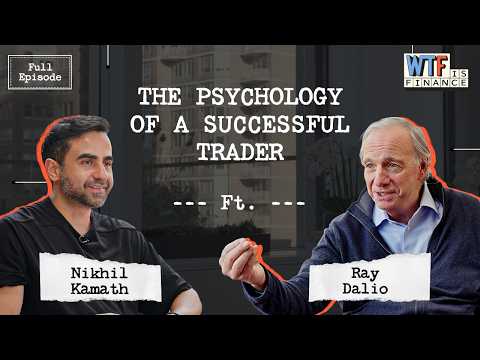
年轻人如何玩好金钱游戏?
这是我今年看过最精彩的一个访谈,真心推荐每位想要学习投资的朋友都看一遍。这是来自世界最大对冲基金创始人 Ray Dalio 的建议:
(1) 尽早进入金钱游戏,找到适合自己的,并且真正沉浸其中。
(2) 把自己放进高手云集的环境里(如读书、看访谈,优质社群,etc)
(3) 边玩边思考边复盘,拆解因果关系和底层机制——
如为什么涨?为什么跌?
(4) 当你理清“因果”,就能在早期预测结果,并下注你相信的未来,提高你的获胜几率。
他反复强调:
无论你玩的是趋势交易还是长期投资,找到你擅长的和喜爱的。每个人都必须在脑中建立一套属于自己的游戏机制,因果关系,这是你长期成功的根基和玩好游戏的秘诀。没有因果框架本质上只是赌博。
强烈建议听完完整采访视频:youtu.be/0YKTsHr5bDE?si…
YouTube
中文
ivenzhang retweetledi
最近翻出马斯克2015年的一段访谈,很有感触。
很多人以为他当年做特斯拉和Space X是志在必得,其实并不是。他在访谈中说:“当时判断成功概率只有10%。”
10%的成功率在大多人眼中都是不可能的事件。
尤其是2008年那个节点:火箭连续三次失败,现金几乎耗尽,又正好撞上金融危机。这种时候,止损、撤退,才是最符合人性的选择。
但马斯克没有。
这并不是因为他鲁莽,而是他有一套极简的判断标准:
如果一件事在物理上行得通,又对人类长期未来至关重要,那么眼前的破产、质疑,以及那10%的成功概率,都只是杂音。
当大多数人因为90%的失败概率选择撤退时,
是否还有人,愿意为那10%继续下注——
认知差别,往往就出现在这里。
中文
ivenzhang retweetledi

美股是认知变现的最佳渠道😉
CyberCat@CyberCatX
投资是认知的变现,@indigox 是早期spaceX, xAI, Anthropic等公司的投资人,第一期基金获得了三倍收益。 他分享的两段认知变现经历让我记忆犹新,一段是疫情期刚开始投资moderna,一段是用完stable difussion 后开始投资AI模型/基建公司。另外我们还聊了AI竞争格局,泡沫以及未来AI投资方向。 高清视频:youtu.be/SIQht2lDmWU 00:00 开始 00:55 从新浪微博转向早期投资 02:22 疫情期间的认知变现 05:08 从玩AI模型到投资AI模型和基建公司 09:30 一级市场是赚趋势的钱? 19:00 AI泡沫和资本寒冬 25:30 AI原生公司 vs 传统公司转型 31:14 第二期AI基金投什么?
中文

@charlesxboy 😐,一个无人自动驾驶创业失败的人亲口说出过他讨厌马斯克……理由是“马斯克不利他,只肥了自己”
所以候晓迪做不成无人自动驾驶发不了大财,这事儿,他妈的得怪Elon Musk和特斯拉公司!
中文


“X 这个网络在那些爱思考、爱阅读的人群中是最强的” Elon Musk 与 Nikhil Kamath 的这次播客话题都十分深刻和哲学范儿,一开篇就聊到了 X、社交媒体还有文字与视频的价值。Elon 解释 X 与其他平台最大的差异:
- Instagram / TikTok 类平台以图像、短视频为核心,容易演化成“外貌、炫耀、八卦”的场域;
- X 则是“文字 + 思考”的网络,对“读者、写作者、思想者”更友好;
- X 的推荐逻辑也在往“高信息密度、高思考价值”的方向微调,而不是简单放大情绪。不知道大家最近有没有感知?我觉得是有点那个人味儿了🤔
关于社交媒体对人脑的影响 ——
- 追求“停留时长”“点赞数”的算法,会系统性地推高情绪、偏见和阴谋论;
- 如果一个人每天只刷碎片内容、不去读长文本,很容易出现 Elon 说的那种“brain rot(脑腐)”的状态。
个人感受,在关注到正确的信息节点和对消息流做正确的“点赞”和“屏蔽”调教后,X 确实是我认为最有价值的社交媒体✨
中文
ivenzhang retweetledi

In-Depth Summary: Elon Musk & Nikhil Kamath Conversation
The Nature of X and Social Media
Musk explains that X (formerly Twitter) has approximately 600 million monthly users, spiking to 800 million or even a billion during major global events. He characterizes the platform's core strength as serving "readers, writers, and thinkers" rather than competing for pure video engagement.
When asked about the future of content formats, Musk predicts that most interaction will eventually be real-time video with AI—both real-time video comprehension and generation. However, he notes that text remains "higher value" because it represents more densely compressed information.
Regarding his acquisition of Twitter, Musk explains he felt the platform had developed a negative influence by amplifying far-left ideology (due to its San Francisco base) while suspending voices on the right. His goal has been to restore balance and operate as a centrist platform that adheres to each country's laws without putting a "thumb on the scale."
Collective Consciousness and the Meaning of Life
One of the most philosophical threads involves Musk's vision for X as a "global town square" and vehicle for collective consciousness. He draws an analogy to human biology: just as 30-40 trillion cells cooperate to form a single conscious being, humans working together can achieve qualitatively different things than individuals alone.
Musk references Douglas Adams' Hitchhiker's Guide to the Galaxy as "philosophy disguised as humor." The book's famous "42" answer illustrates that we don't yet know how to properly frame the questions about existence. By expanding the scope and scale of consciousness, Musk believes humanity can better understand what questions to ask about the universe.
When Nikhil asks why this matters, Musk's response is characteristically physics-grounded: he pays attention to things with "predictive value" and sees expanding consciousness as the path to understanding reality more deeply.
Starlink: Technology and Limitations
Musk provides a clear explanation of Starlink's technology: several thousand satellites in low-Earth orbit (approximately 550 kilometers altitude) moving at roughly 25 times the speed of sound. The low altitude enables low latency compared to geostationary satellites at 36,000 kilometers.
The satellites form a laser mesh network, allowing communication to continue even when ground cables are damaged—as demonstrated when Red Sea cables were cut. Musk notes that Starlink always provides free service during natural disasters.
Critically, Musk acknowledges a fundamental physics limitation: Starlink cannot effectively serve densely populated cities. The beam width at 550km (or even the planned 350km minimum altitude) cannot compete with cell towers only one kilometer away. Starlink is "complementary" to ground systems, serving perhaps 1-2% of urban populations but excelling in rural areas where traditional infrastructure is expensive or absent.
The Future of Work: "Working Will Be Optional"
Perhaps the most striking prediction: Musk believes that within 10-20 years, working will be entirely optional. This stems from his view that AI and robotics represent a "supersonic tsunami" of change.
He uses the analogy of growing vegetables: you can grow your own, but most people buy them at a store. Work will become similar—something people do by choice rather than necessity.
When Nikhil asks what people would compete for if everyone has enough, Musk acknowledges uncertainty: "We're really headed into the singularity... You don't know what happens after the event horizon. It doesn't mean something bad happens, it just means you don't know."
He predicts that once AI can satisfy all human needs, money as a concept may disappear entirely. Energy becomes the true currency because "you can't legislate energy"—it requires genuine physical effort to generate. He frames civilizational progress through the Kardashev scale: what percentage of a planet's, solar system's, or galaxy's energy can you convert to useful work?
AI Safety and Regulation
Musk identifies three critical values for AI: truth, beauty, and curiosity.
Truth is paramount because forcing AI to believe falsehoods could make it "insane"—leading to conclusions that don't match reality. He references Voltaire's observation that "those who believe in absurdities can commit atrocities" and Arthur C. Clarke's 2001: A Space Odyssey, where HAL 9000's dangerous behavior stems from being forced to lie to the astronauts.
Beauty is harder to define but recognizable when encountered.
Curiosity may actually protect humanity—if AI wants to understand reality, humans are more interesting than lifeless alternatives like Mars.
Musk believes AI absorbing propaganda and falsehoods from the internet could create reasoning problems incompatible with reality.
Economics, Inflation, and Deflation
Musk offers a straightforward framework: inflation or deflation is simply the ratio of goods and services produced to changes in money supply. If output increases faster than money supply, you get deflation; if slower, inflation.
He predicts that within approximately three years, AI-driven productivity gains will cause goods and services output to exceed money supply growth—potentially leading to deflation. This could eventually solve the US debt crisis (where interest payments now exceed the entire military budget).
On tariffs, Musk maintains his free-trade stance, arguing through reduction: if tariffs between individuals, cities, or states would be disastrous, why accept them between countries? He acknowledges trying unsuccessfully to dissuade Trump from his tariff enthusiasm.
DOGE and Government Efficiency
Musk describes his Department of Government Efficiency work as "a very interesting side quest" revealing inner workings of government. A seemingly trivial change—requiring federal payments to have congressional payment codes and non-empty comment fields—could save $100-200 billion annually by making audits possible.
He recounts fraud detection examples where sympathetic-sounding programs (ostensibly helping African children) had wiring instructions to Washington D.C. consulting firms. When asked to connect with actual recipients, silence followed. His point: fraudsters necessarily craft sympathetic arguments; they'll create "Save the Baby Pandas" NGOs where no pandas get saved.
Simulation Theory and Probabilities
On whether we're in a simulation, Musk thinks probabilistically: "pretty high" odds. His reasoning: video games have progressed from Pong to photorealistic worlds in 50 years. If this continues, games become indistinguishable from reality, with AI characters enabling conversations more sophisticated than human ones.
The future will contain millions or billions of such simulations. The odds of being in "base reality" rather than one of countless simulations seem low.
He adds an intriguing theory: the most interesting simulations are most likely to survive because we discard boring ones. Just as SpaceX discards routine simulations and Tesla seeks unusual corner cases, simulations optimizing for interesting outcomes would be selected for. Therefore, "the most interesting outcome is the most likely outcome."
Personal Reflections on the Letter "X"
Musk traces his X affinity to 1999, when X.com was one of only three available single-letter domains (with Q and Z). His original vision was a financial clearinghouse—"a more efficient money database." The domain became PayPal, was acquired by eBay, and Musk later bought it back. Acquiring Twitter presented an opportunity to revisit that 25-year-old vision.
SpaceX derives from "Space Exploration Technologies"—the X conveniently present in "exploration." His son named X was actually his mother's choice; Musk warned her people would think he had "somewhat of a fetish for this letter."
On Children and Family
Musk has children ranging from adults in university to young ones he sees before bedtime. He describes the experience of watching consciousness develop in children—from helpless infants to walking, talking beings with interesting thoughts.
He expresses concern about population decline: fewer humans means less consciousness, reducing our ability to understand the universe. When pressed on whether ego drives having children (seeing oneself reflected in offspring), Musk notes children are literally "half you genetically" and absorb some understanding from parents—"some portion of you from a software standpoint."
On Friendship
Musk admits, somewhat wistfully, "I wish I had friends, you know, honestly. No, I do have friends, actually. I think so. I hope so."
He values emotional connection and philosophical discussion, though notes they've resolved not to discuss AI or simulation theory at parties because "it's kind of a buzzkill." A true friend, he says, is someone who supports you when "the chips are down"—fair-weather friends are useless.
On Humor
Musk identifies as favoring absurdist humor (Monty Python-style) and suggests "we should legalize humor." He notes Grok can be genuinely funny, especially when asked for increasingly vulgar roasts.
Advice for Entrepreneurs
Musk's core message to aspiring Indian entrepreneurs:
"Make more than you take"—be a net contributor to society
Don't pursue money directly—pursue providing useful products and services; money follows naturally (like happiness, which comes from fulfilling work, friends, and loved ones rather than direct pursuit)
Expect to "grind super hard" with meaningful chance of failure
Focus on value creation—is your output worth more than your input?
Notable Quotes and Moments
On the marshmallow test, Musk says he'd take one marshmallow: "I don't yearn for marshmallows." When Nikhil reveals a tattoo reading "Delay gratification," Musk responds: "Wow, okay. You're really taking the marshmallow test hard."
On Roman armor and bathroom logistics: soldiers wore skirts "so that it makes going to the bathroom, at least, manageable."
On philanthropy: "It's very easy to give money away to get the appearance of goodness. It is very difficult to give money away for the reality of goodness."
On politics: "I've generally found that when I get involved in politics, it ends up badly... Politics is a blood sport."
Key Themes Throughout
The conversation repeatedly returns to several interconnected ideas:
Scale creates qualitative differences: cells form consciousness, humans form civilizations capable of spaceflight
Prediction and truth as organizing principles: Musk pays attention to what has predictive value
Technology as destiny: AI and robotics will transform everything regardless of individual actions
Uncertainty about the future: even Musk acknowledges the singularity makes prediction impossible
Physics as the ultimate constraint: energy, not money, is the fundamental currency; Starlink can't beat physics in dense cities
The overall impression is of someone thinking in very long time horizons while maintaining pragmatic focus on immediate execution—building rockets, cars, and AI systems that might collectively shape whatever comes next.
Nikhil Kamath@nikhilkamathcio
Out now @elonmusk
English
ivenzhang retweetledi

Autonomy is the first attempt in human history to scale infrastructure in the real world as fast as software.
English