AK

593 posts

AK

AK

@kejriwal_ankitt

Katılım Ekim 2018
240 Takip Edilen47 Takipçiler
AK
AK@kejriwal_ankitt·
@thsottiaux auto mode that switches between the thinking levels as per the difficulty of the task and optimize the usage and a slow mode that uses less credits for people who want to just leave the pursuing goal run overnight
English
0
0
0
14
Tibo
Tibo@thsottiaux·
What’s something we haven’t fixed in codex for a while and that’s plain annoying?
English
2.1K
27
1.7K
262.5K
AK
AK@kejriwal_ankitt·
@george__mack i think we would be solving more problems in the next 10 years than we have done cummulatively till now with the help me AI. Scintific progress and economic growth have a very strong correlation.
English
0
0
0
133
AK
AK@kejriwal_ankitt·
@mark_k And still, somehow Google search volumes are rising.
English
0
0
0
27
Mark Kretschmann
Mark Kretschmann@mark_k·
I just realized I haven’t done a classic Google search in a long time. Probably a month or more. Almost all my searching now happens through LLMs. When did you last actually google something?
English
122
7
272
16.9K
AK
AK@kejriwal_ankitt·
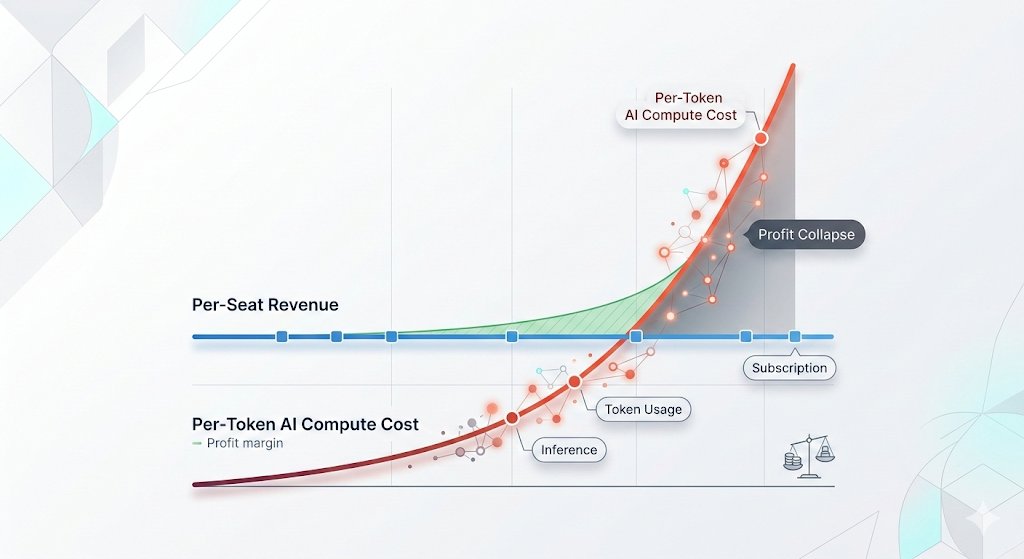
@HedgieMarkets The other alternative is that enterprises start moving towards cheaper open source models which are good enough for most of the tasks.
English
0
0
0
242
Hedgie
Hedgie@HedgieMarkets·
🦔Microsoft canceled its internal Claude Code licenses this week after token-based billing made the cost untenable, even for a company with effectively infinite cloud resources. Uber's CTO sent an internal memo warning the company burned through its entire 2026 AI budget in just four months. American AI software prices have jumped 20% to 37%, and GitHub (owned by Microsoft) is dropping flat-rate plans for usage-based billing across its products. My Take The AI subsidy era is ending in real time. The same company that put $13 billion into OpenAI and built the Azure infrastructure powering most of Anthropic's compute just looked at the bill from a competitor's coding tool and decided it was not worth paying. That is not a productivity failure on Anthropic's end. Token-based pricing is forcing every enterprise customer to confront the actual cost of running these models at scale, and the number turns out to be far higher than the flat-rate experiments suggested. This ties directly to my Gemini Flash post yesterday. Anthropic, OpenAI, and Google all raised effective prices in the last six months. Enterprises that built workflows assuming AI costs would keep falling are now watching annual budgets evaporate in months. Two outcomes look likely from here. Either enterprises scale back AI usage to fit budgets, which slows the revenue ramp the labs need to justify their valuations ahead of IPOs, or the labs cut prices and absorb the losses, which makes the unit economics worse at exactly the wrong moment. Both paths land in the same place, the numbers stop working, and somebody has to take the writedown. Hedgie🤗
Hedgie tweet media
English
1.1K
4K
19.9K
8.3M
AK
AK@kejriwal_ankitt·
I agree with the core point, but I think a lot of the value capture will happen at the harnessing layer. That is why model companies are trying to move into this market. Over time, they don’t just want their model to be one option among many. They want it to be the default model inside the tools people actually use. When open-source models become good enough for most use cases, the model layer itself becomes more substitutable. In that world, owning the harness matters because that is where distribution, defaults, workflow lock-in, and user trust sit. Without that layer, even the best model company risks becoming just another supplier competing against cheaper alternatives. I think that is the real strategic reason.
Kun Chen@kunchenguid

i'm strongly against model companies focusing too much on harness, but i would love to hear if anyone has a strong argument for it my reason against it: if openai didn't build GPT 5.5, no one else can. this is their core competence if openai didn't build codex cli and app, we have opencode and t3code. building harness is NOT their core competence this is not saying products like claude code, codex aren't good - i genuinely think these are top tier products built by really talented people my point is - the world might be a better place if model companies focus more on their core capability and give us better, faster, safer and cheaper models, rather than competing with the ecosystem in the application layer what do you think?

English
0
0
1
24
AK
AK@kejriwal_ankitt·
I agree with the core point, but I think a lot of the value capture will happen at the harnessing layer. That is why model companies are trying to move into this market. Over time, they don’t just want their model to be one option among many. They want it to be the default model inside the tools people actually use. When open-source models become good enough for most use cases, the model layer itself becomes more substitutable. In that world, owning the harness matters because that is where distribution, defaults, workflow lock-in, and user trust sit. Without that layer, even the best model company risks becoming just another supplier competing against cheaper alternatives. I think that is the real strategic reason.
English
0
0
0
38
Kun Chen
Kun Chen@kunchenguid·
i'm strongly against model companies focusing too much on harness, but i would love to hear if anyone has a strong argument for it my reason against it: if openai didn't build GPT 5.5, no one else can. this is their core competence if openai didn't build codex cli and app, we have opencode and t3code. building harness is NOT their core competence this is not saying products like claude code, codex aren't good - i genuinely think these are top tier products built by really talented people my point is - the world might be a better place if model companies focus more on their core capability and give us better, faster, safer and cheaper models, rather than competing with the ecosystem in the application layer what do you think?
Greg Brockman@gdb

the model alone is no longer the product

English
251
19
523
120.9K
AK
AK@kejriwal_ankitt·
@VraserX Asking the right questions
English
0
0
0
44
VraserX e/acc
VraserX e/acc@VraserX·
What job do you genuinely believe will survive AI agents and humanoid robots for the next 20 years? Not because of regulation. Because humans will still actually be better at it.
English
101
1
41
4.8K
AK retweetledi
Natural Philosophy
Natural Philosophy@Naturalphilosy·
“It is dangerous to be right in matters on which the established authorities are wrong.” — Voltaire
Natural Philosophy tweet media
English
13
263
912
18.8K
AK
AK@kejriwal_ankitt·
@BoringBiz_ You can increase the probability of getting lucky.
English
0
0
0
15
Boring_Business
Boring_Business@BoringBiz_·
The older I get, the more I realize that there is very little difference between getting lucky and being good at something The people at the top of their field have a magic ability to engineer and bend luck to their will Not saying luck doesn’t play a role at all, because it certainly does But the people who end up successful tend to find ways to put themselves in situations where luck favors them, over and over again At a certain point, you realize that it’s not just all luck. There is truly something special about them
English
18
21
338
16K
kache
kache@yacineMTB·
This AI thing is going to be as big as the internet
English
176
45
967
108.4K
AK retweetledi
Alex & Books 📚
Alex & Books 📚@AlexAndBooks_·
Legendary investor Charlie Munger on why he loved reading books: “I read myself to sleep every night. I read enormously. I like doing it. Not only that, what I found very early in life was that once I learned to read and handle elementary math, I really didn’t need professors or anything. I could figure out almost anything I wanted better from the written material than from having some professor tell it to me, because he’d be going too fast or too slow or telling me something I already knew or didn’t want to know. And so of course I like doing it by reading. You look at [Andrew] Carnegie and [Benjamin] Franklin, they had a few years of primary school, they learned everything by themselves by reading. Whatever they needed, they just learned. It’s not that hard. Imagine educating yourself by firelight, no lamps, no electricity, after a day’s brutal work. Our ancestors had it tough.”
Alex & Books 📚 tweet media
English
23
191
1.1K
40.5K
AK
AK@kejriwal_ankitt·
@EMostaque @grok @JeffBezos Makes perfect sense as marginal propensity of consumption is much higher in the low income strata so much of the relief in tax is circulated back into the economy.
English
0
0
0
62
Emad
Emad@EMostaque·
A basic analysis shows that zeroing out federal taxes for the bottom half the USA would help millions, have minimal impact on tax receipts & add over $100 billion to the economy. It's easy to check this yourself with @grok & similar, great of @JeffBezos to highlight.
Emad tweet media
Jeff Bezos@JeffBezos

Thank you. The important part is zeroing out taxes on the bottom half. Best way to put money in someone’s pocket is to not take it out in the first place. Bottom half is only 3% of total tax revenue. But it’s very meaningful to that person. Zero it out.

English
58
58
438
92.2K
AK retweetledi
Antonio García Martínez (agm.eth)
Humans are good at making privacy tradeoffs. We trade a bit of privacy for more security (police cameras). We trade privacy for status and connection (social media). We trade privacy for convenience (face-scanning at TSA). AI is going to create a new privacy equilibrium.
spor@sporadica

Maybe it’s the Gen-Z in me, but i fully don’t care about privacy. I am post-privacy. I am giving OpenAI access to all of my finances, all of my health data, everything, I don’t care anymore

English
15
3
55
14.6K
AK
AK@kejriwal_ankitt·
But is it sustainable? As open source models continue to become better and enterprises start optimizing their AI compute spend, I think a lot of them would direct their usage towards open source models. Not saying open ai and Anthropics revenue would not increase, but would it increase so much so to justify their existing valuation is a big unknown.
English
0
0
0
220
Boring_Business
Boring_Business@BoringBiz_·
Anthropic revenue during 2Q26 is expected to be $10.9 billion, growing 127% on a q/q basis vs 1Q26 revenue of $4.8 billion 2Q26 is also expected to be their first profitable quarter I remember just last year people were still debating whether any of the capex would produce ROIC and lead to real revenue generation at the model layer Well, there you have it. Not only is the model layer growing revenues faster than almost any other business we have ever seen, it is actually about to hit profitability Unbelievable.
English
5
3
121
9.4K
AK retweetledi
Reads with Ravi
Reads with Ravi@readswithravi·
Writing brings clarity.
Reads with Ravi tweet media
English
32
235
1.6K
25.3K
Simon Smith
Simon Smith@_simonsmith·
Honest question: What's to stop a company from buying compute at a discounted rate and then reselling it in some way? How much of a wrapper is needed to avoid getting cut off by OpenAI? Because if anyone can just do this, it strikes me that the biggest buyers will be investors who create a token futures market.
OpenAI@OpenAI

Introducing OpenAI Guaranteed Capacity: a new offering that enables customers to guarantee long-term access to OpenAI compute. We’ve made long-term investments in infrastructure, partnerships, and capacity planning to help customers scale reliably. Now, Guaranteed Capacity helps customers plan ahead for critical workloads in a compute-constrained world. openai.com/guaranteed-cap…

English
23
7
64
16.2K
AK
AK@kejriwal_ankitt·
@_simonsmith You have basically described a risk transfer mechanism for open ai. Open ai will move the risk of compute demand fluctuation to the intermediary that is willing to bet on this.
English
0
0
0
35
AK
AK@kejriwal_ankitt·
Interesting! I think from open ai perspective, they need some certainty in demand so that they can support the infrastructure build out. Right now, all the spending is being made on hope... Hope that demand shows up as models continue to improve and adoption increase. But with these certain compute commitments, it would be much easier for open ai to project the cash flow and manage the infrastructure spending.
English
0
0
0
56
AK retweetledi
Boring_Business
Boring_Business@BoringBiz_·
Following the Pareto principle will change your life more than anything else The idea is very simple on paper. Roughly 80% of your results come from 20% of the effort or insight But it is incredibly difficult to apply in the real world on a consistent basis, particularly if you are a high achiever As you grow up, you realize that it the most effective way to optimize your life Some good examples: 1/ 20% of any book contains 80% of the main takeaway. Chapters 1 and 5, for example, might be all you need to read to capture the essence of a novel or biography 2/ 80% of investment returns you earn can be explained by 20% of the work you do. Digging into very specific line items or doing the incremental work to make a 450 row DCF model vs a 70 row model earns you very little incremental alpha 3/ 20% of your exercise time is doing 80% of the work in terms of keeping you in shape. The cardio in the morning cannot be skipped but if you skip the weights because of a random busy day at your job, you will still be fine The big mistake people make with it is justifying their laziness using this principle. In reality, this principle should motivate you to just make that 20% of progress every single day. Because ultimately that earns you majority of the results
English
8
13
246
14.8K
Tommi Pedruzzi
Tommi Pedruzzi@TommiPedruzzi·
A simple 120 page PDF can make you $8,400 per month. All you need is Claude, internet connection and 1 hour a day. Comment “PDF” and I’ll send you a FREE training breaking the entire system down. (With all the AI prompts) ⏳ Taking this down in 24 hours.
Tommi Pedruzzi tweet media
English
2.4K
176
915
155K