

Kim Maua 🇺🇬
4.6K posts

Kim Maua 🇺🇬
@kendos98
FATHER - BUSINESSMAN - REALIST
Kampala, Uganda Katılım Ocak 2011
364 Takip Edilen239 Takipçiler


You don’t know how fatness hurts but you want to know how death hurts families ?
You support a group that kills , jails people for no reason each and everyday but you’re exposing your fat brains how you know about humanity ?
Oba what is really wrong with These Unkempt Rotund humans banange 🙌🙌

English


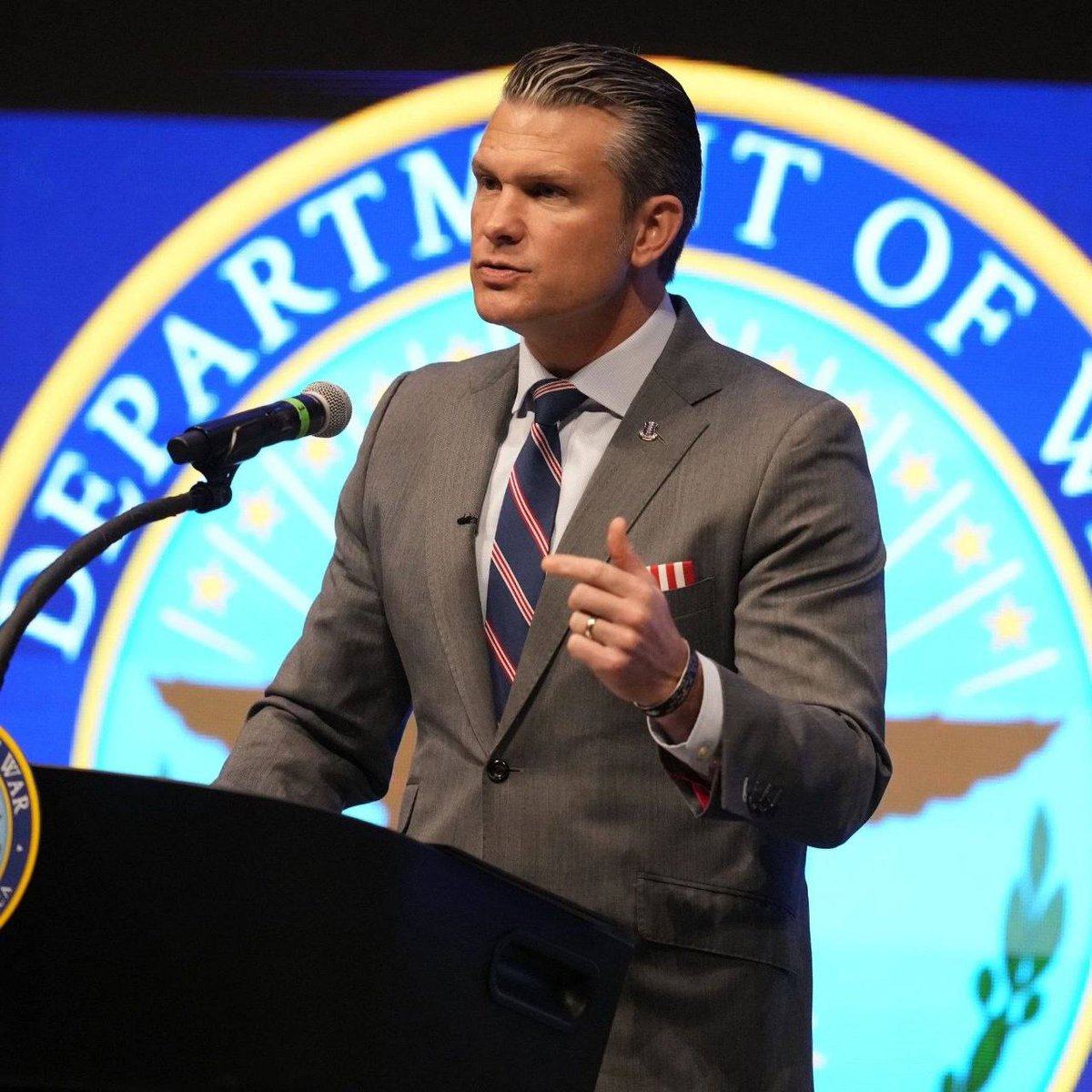
Trump made history," while Iran "begged for a ceasefire": The U.S. Secretary of War issued a statement
Pete Hegseth stated that Iran "begged" the United States for a ceasefire.
"Iran posed a threat to the United States and the free world for 47 years... But now everything has changed. The Iranians are humiliated, and we control their fate," emphasized the Secretary.
According to him, Trump "made history," and Operation Epic Wrath was a true military victory for the United States. Hegseth added that "no one makes better deals than Trump."
🔵Other statements from the U.S. Secretary of War:
🔵Trump had the opportunity to destroy the entire Iranian economy in a few minutes. But he "chose mercy."
🔵They can no longer make missiles, launchers, or drones.
🔵From the start, Trump made it clear: there will be no Iranian nuclear weapons. Period.
🔵Our so-called allies have seen what true power is. They should pay attention.
How do you think Trump made history?
English
Kim Maua 🇺🇬 retweetledi

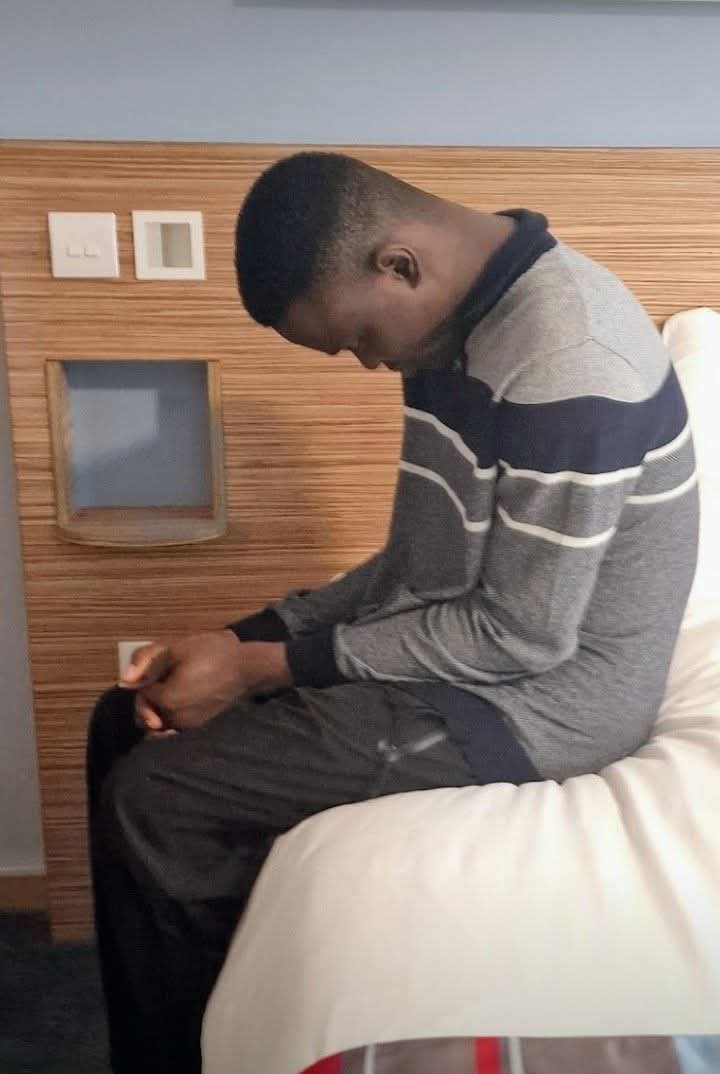
He married his first wife when he was still struggling to build his life. She was there when he had nothing.She cooked, prayed, and stood by him when things were hard.
A few years into the marriage, she started complaining of lower abdominal pain.
Sometimes she would say, “It feels like something is not right.”
They ignored it.
Life was busy. Money was tight.
She kept going… because that’s what women do.
Then the bleeding started, not her normal period.
Weakness followed. Hospital visits became frequent.
After several tests, the doctor said it was Cervical Cancer.They didn’t even understand what that meant at first.Treatment started late.
Very late.
He watched her lose weight.
Watched her strong body become fragile.
One night, she held his hand and said,
“Take care of yourself… and don’t forget me.”
That was how he lost her.
Years later, after healing slowly, he married again.
His second wife was full of life.
She brought laughter back into the house.
This time, he promised himself,“I will do better.”
But after some time… it started again.
She complained of pain during intimacy.
Then irregular bleeding.
He was scared, but hopeful, “It can’t be the same thing.”
They went to the hospital.
The result came back…
Again Cervical Cancer.
This time, he broke down.
“How is this happening again?”
He spent everything he had trying to save her.
Moved from one hospital to another.
But just like the first…
She didn’t make it.
People started talking.
Some said it was a curse.
Some said he was unlucky with women.
He didn’t understand anything anymore.
After some years, he met his third wife.
She was calm, mature, and very careful about her health. When she started noticing unusual discharge and slight bleeding, she insisted:
“We are going to the hospital early.”
For the first time, something different happened.
The doctor didn’t just test her.
He looked at the man and said,
“I need to run a test on you too.”
That was the moment everything changed.
The result showed he was a carrier of Human Papillomavirus.
He had no symptoms.
He looked completely healthy.
But he had been unknowingly passing it to his wives.
That was how all three women developed the same sickness.
His third wife was lucky.
Because it was discovered early, her own case of Cervical Cancer was caught at an early stage.
She survived.
That day, he didn’t cry like before.
He sat quietly…
Thinking about the two women he had buried.
Thinking about how he loved them…
yet unknowingly became part of what killed them.
This is not to blame anyone.
Many men don’t know they carry HPV.
Many women don’t know the risk.
But silence is dangerous.
Test yourself.
Encourage your partner to test.
Go for regular checkups.
Because sometimes…
what looks like love and normal life
may be hiding something that needs attention.
This post is not to scare you.
It’s to wake you up. Because not everything that kills… comes with noise.
Some of you are calling it “village people.”
But what if it’s simply lack of information?
English
Kim Maua 🇺🇬 retweetledi

Kim Maua 🇺🇬 retweetledi
The only tribe on earth that doesn’t experience depression does something that modern parents forbid their children to do before going to sleep.
In 2018, anthropologists from the University of Helsinki lived for six months with the Kaluli tribe in Papua New Guinea.
What surprised the researchers most was what happened after sunset.
> Every evening before sleep, Kaluli children gathered around the fire and spoke out loud about frightening or painful experiences ->falls, losses, even nightmares.
The parents didn’t interrupt them.
They didn’t try to comfort them.
They simply listened, until the child’s breathing slowed.
The Kaluli call this “night clearing” releasing fears before sleep so the nervous system can reset.
> Western psychology confirms this.
Speaking fears out loud calms the nervous system.
Suppressing them what many are taught with “don’t think about bad things before bed” keeps the stress cycle active and forces the body to process fear throughout the night.
> The Kaluli say:
“The body sleeps when the story ends.”
This practice teaches children to face their emotions instead of hiding from them
the opposite of modern bedtime silence.
• Try it tonight.
Say your worst thoughts of the day out loud even if you’re alone in the room.
Then breathe until your pulse slows.
You will feel immediate relief.
The mind stops fearing the darkness once it has been named.

English
Kim Maua 🇺🇬 retweetledi

Most of you will never read Jotham Tumwesigye's autobiography. So, let me share with you a bit of it.
In 1968, Yoweri Museveni, then a student at Dar es Salam University, returned to his alma mater, Ntare School, at the invitation of the school's History Society, to give a talk. When he took the stage, he strongly condemned European colonialism and asked whether there was anything a European headteacher could do that an African one couldn't. The talk caused a big stir amongst students and the mostly-European teaching staff. The headteacher, Mr Crichton, called an abrupt assembly and told the students that no society should ever again invite the Museveni to the school.
If you think I am making it up, find a copy of Jotham Tumwesigye's book and read it.
With the benefit of nearly 60 years of hindsight, can we say that Museveni was right in saying that there was nothing a European headteacher could do that an indigenous one couldn't? Well, let me state what is perhaps more obvious: there are things indigenous headteachers have done that a European one couldn't have done. A gentleman whose time at one of our secondary schools overlapped with those of three indigenous headteachers recently told me, perhaps with a bit of hyperbole, that each of the three headteachers admitted, through the backdoor, a large number of students from his home county. Maybe there was a bit of hyperbole, but, again, maybe there was not. The assertion certainly doesn't defy credibility. And yet, if it was made about a European headteacher of a Ugandan school, it would defy credibility. After all, why would the village mates of the European want to come to a Ugandan school? And so, there are things indigenous headteachers do that a European one couldn't have done. And I guess we can flip this around and say that there are things European headteachers did that indigenous ones cannot. Museveni wasn't looking at the full picture. His focus was perhaps limited to the routine administrative tasks of the headteacher's office. He didn't see the cultural setting.
When Museveni returned from the bush and established a state-owned newspaper, he put a Mzungu at the helm of it. And the newspaper actually did very well, until the Mzungu was replaced with an indigenous Ugandan. It was again not an issue of skills; it was that there were Ugandan things that the indigenous man could get entangled in which William Pike, being a foreigner, couldn't get entangled in. It was that there were Ugandan attitudes to authority ("cadreship") that the new man had, which Pike, given his cultural background, couldn't have had. In the end, we cannot escape from the gravity of the culture of our upbringing.
I know some will say that New Vision went down because of the internet, not management. But I am not even talking about sales. I am talking about, for instance, the difference between the quality of Nagenda's writing and that of the man who replaced him, Ofwono Opondo. If you can't see that difference, then I can't make you see my point. The New Vision of the 2000s was a high-quality newspaper. If it had the same quality today, and was performing as poorly on the market as it is doing now, then it would be enough to talk about the internet. As it is, we have to look beyond the Internet and ask whether the quality would have declined to the degree that it has if the Mzungu, with his detachment from Ugandan culture, were still at the helm.
Attending a Ugandan educational institution in the 1950s and 1960s was similar to attending a British institution of the same level. The teachers/lecturers that gave you lessons were more or less the same as those you would have found in Britain. The Crichtons had received the exact same training as the teachers they left back in Europe. Can we say the same now? Can we say that attending a school or university in Uganda and attending it in Europe yield the same outcome? Why then do African leaders send their children to European institutions?
English

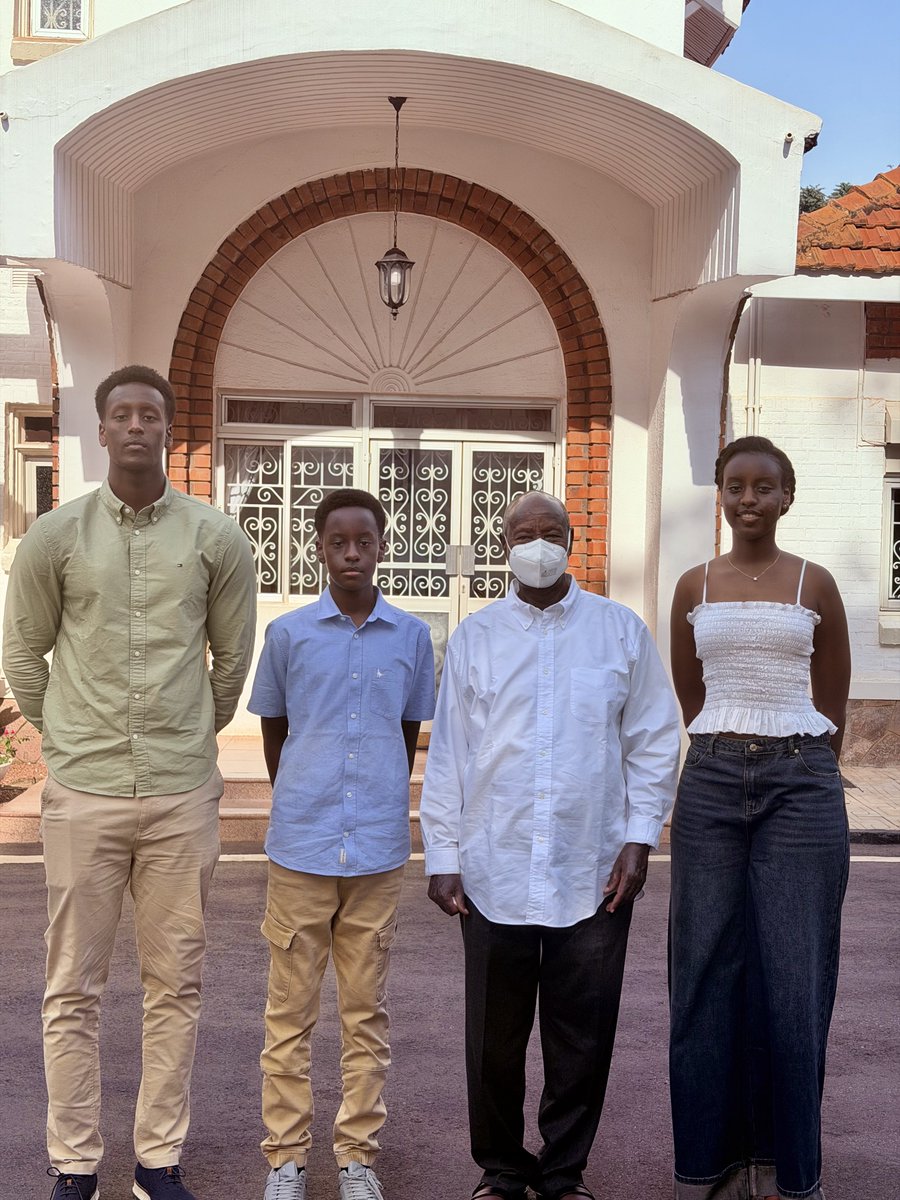
Fellow Ugandans, especially the Bazzukulu. Greetings once again. We wish you a Happy Easter. God bless you.
English
Kim Maua 🇺🇬 retweetledi
7 THINGS YOUR CHILD WILL REMEMBER ABOUT YOU FOREVER:
And it's not the one you think
THREAD 🧵

English
The problem with most kindergartens and daycare centers is that they employ staff of a single gender. Most employees are women, and the only men around are usually the cook, cleaner, or shuttle driver.
When an intruder realizes that all the staff are female, they may sense that their mission will face less resistance.
Let the Gaba incident teach us the importance of having more male staff in early childhood education settings.
Where did we get the idea that babies and young children are safer around females than males. Isn’t this misguided?
We need balanced staffing.
English
@JingoVj1 Bamuyita Ssalongo Jjingo Katandika butandisi gwe tunatela okuwa ekitibwa kyobwa Ayatollah Jjingo Khamenei. Tatya biduduma ela wetwogelela nga Sabavulu Balam yekwese talina kyadamu nga mukulu munne Satanyahu

Kampala, Uganda 🇺🇬 Filipino

Hon. balaam.
firstly, have they showed the media the rescued pilot yet, no.
Secondly, why did they blow up their own plane which are so expensive just becoz they didn't want it to enter Iran if Truely Iran Air defense is destroyed like Trump says.
Barugahara Balaam Ateenyi.@BalaamBarugahar
In a final twist after the officer was rescued, two transport planes that would carry the commandos and the airmen to safety got stuck at a remote base in Iran. Commanders decided to fly in three new planes to extract all the U.S. military personnel and the airman, and they blew up the two disabled planes rather than have them fall into the hands of Iran’s Islamic Revolutionary Guard Corps (IRGC).
English
Kim Maua 🇺🇬 retweetledi

The most dangerous lie in human history isn’t about food.
It isn’t about medicine.
It is about sleep.
For 200,000 years, humans did not sleep 8 hours.
That number was invented in 1938 by a mattress company called Simmons Beautyrest.
Before that campaign, the average human slept in two shifts.
Historians call it “Biphasic Sleep.”
You would sleep for 4 hours, wake up for 2, then sleep for another 4.
During that 2-hour window, people would pray, have s*x, write, think, and connect with their families.
Some of the greatest works in human history were created in that sacred middle window.
Shakespeare wrote most of his plays between 1AM and 3AM during his second wake period.
Mozart composed entire symphonies in what he called “The God Hours.”
Then the Industrial Revolution needed workers on a fixed schedule.
You cannot run a factory on biphasic sleep.
So they hired a psychologist named Dr. Nathaniel Kleitman to “prove” that 8 consecutive hours was the biological standard.
He faked the studies.
He was funded entirely by the mattress industry.
And the medical establishment adopted his research without question because it aligned with the factory model.
They turned the most creative 2 hours of human consciousness into a “sleep disorder.”
They called it “Insomnia.”
They medicated it.
They gaslight an entire generation that 8 hours of continuous sleep was healthy.
They pathologized the exact window of consciousness that produced some of the greatest art, music, and literature in human history.
You are not an insomniac.
You are experiencing the most natural form of human consciousness.
And a mattress company convinced you it was a disease.
Stop medicating your genius.
Wake up at 2AM.
Write the thing.
The “God Hours” are calling.
✨🙌🏾💫
© Andre Gonzalves

English
Kim Maua 🇺🇬 retweetledi
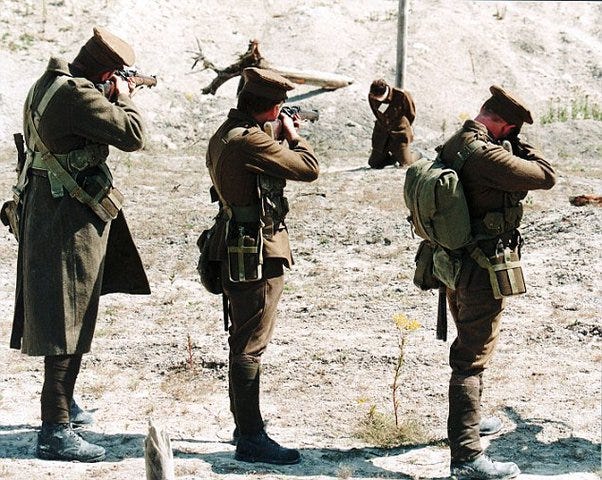
Between 1914-1918, the British Army shot 306 of its own soldiers at dawn. They were led out before firing squads, blindfolded, tied to a stake, and killed by men from their own regiments.
The charges ranged from desertion and cowardice to quitting a post without orders. Most of these men were volunteers, civilians who had enlisted out of patriotism and found themselves broken by conditions that no human being was designed to endure.
The Western Front was not a war in any traditional sense. It was years of continuous artillery bombardment, rat-infested trenches, mass death measured in yards of mud, and the constant expectation of the next assault.
Men watched their friends disintegrate beside them. They lived for months at a time without sleep in any meaningful sense. They developed shaking fits, paralysis, blindness, and complete psychological collapse.
The army called it shell shock. When it manifested as an inability to return to the front, the army sometimes called it cowardice.
The trials were brief and often deeply unfair. Many men were undefended or chose to speak on their own behalf, unaware of their rights. Some were convicted and executed on the same day.
Officers suffering from the same conditions were frequently diagnosed with neurasthenia and given medical leave. A private soldier who broke under identical circumstances could be shot. The class divide in how shell shock was treated was stark and documented.
The case that finally forced the government's hand was that of Private Harry Farr, executed for cowardice in 1916 at the age of 25. Farr had already been hospitalized for shell shock and sent back to the front before he collapsed again.
His daughter Gertrude spent decades insisting her father was not a coward, eventually joining a legal challenge against the Ministry of Defence. In August 2006, when Gertrude was 93, Defence Secretary Des Browne announced a blanket pardon for all 306 men.
Forty others, convicted of murder and mutiny, were excluded. The pardon took legal effect the following year under the Armed Forces Act 2006.
The pardons were not without controversy. Browne's announcement included a careful caveat: the pardon did not cast doubt on the procedures or judgments of the time, and it did not cancel the original sentences. What it changed was the formal designation. The men were now to be recognized as victims of war.
The Shot at Dawn Memorial at the National Memorial Arboretum in Staffordshire had already been standing for five years by the time the pardons came. Unveiled in 2001, it depicts a young soldier blindfolded and bound to a stake. The figure was modelled on Private Herbert Burden, who had lied about his age to enlist and was seventeen years old when he was shot for desertion. Around the central figure, individual wooden stakes bear the names of each of the executed men, arranged in a semicircle. The effect is deliberately overwhelming.
For many of the families, the shame had lasted nearly a century. Soldiers shot for cowardice were denied the pension their widows would otherwise have received. Their names were left off local war memorials. Their children and grandchildren grew up knowing the circumstances of the death but unable to speak of it.
The pardon did not undo any of that. What it did was confirm, in law, what the families had argued for generations: that the men who broke under the weight of industrial warfare were not criminals. They were casualties, distinguished from the men buried in the official cemeteries only by the manner in which they died.
#drthehistories
English
Kim Maua 🇺🇬 retweetledi

Let me tell you the real story of doing business in Uganda. Last November 2025, we set up a nice estate in Mukono. Plots ready, titles in order, everything clean. We thought, "This one will move fast." 4 months later... it is still sitting there like a mugole waiting for a man!
🧵 1/6

English
Kim Maua 🇺🇬 retweetledi

You’re alive right now because of a decision one man made in less than two minutes of chaos.
October 27, 1962. Historians call it Black Saturday—the moment the world came closest to nuclear war.
The Cuban Missile Crisis had reached its breaking point. American and Soviet forces stood on the edge of catastrophe. Beneath the waters of the Caribbean, far from public view, a Soviet submarine—B-59—was trapped.
Inside, conditions were unbearable.
The cooling system had failed. Temperatures climbed above 120 degrees. Air became thick with carbon dioxide. Men struggled to breathe. Some collapsed. Communication with Moscow had been silent for days.
For the crew, one possibility seemed certain:
War had already begun.
Then the explosions started.
Above them, U.S. Navy destroyers dropped depth charges—intended as warning signals. But the submarine crew didn’t know that.
To them, it sounded like attack.
The hull shook. Equipment rattled. Panic spread.
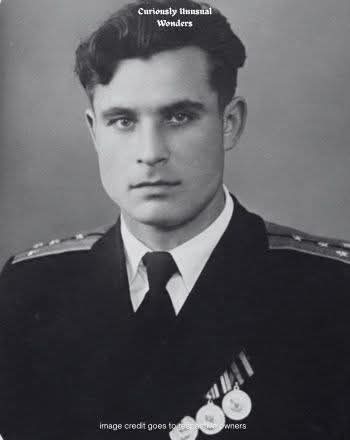
Captain Valentin Savitsky believed the war had begun. Exhausted and overwhelmed, he gave the order to prepare a nuclear torpedo.
The weapon carried devastating power—enough to destroy the fleet above.
If launched, the response would be immediate. Retaliation. Escalation. Global nuclear war.
But there was a requirement.
Three officers had to agree.
The Captain approved.
The Political Officer agreed.
Two votes for launch.
Then they turned to the third man.
Vasili Arkhipov.
Everything around him pointed toward agreement. Explosions overhead. Orders from command. A crew expecting action. A belief that war had already started.
He said no.
Calm in a collapsing situation, Arkhipov insisted the charges were signals—not attacks. That launching the weapon would guarantee destruction. That uncertainty was not enough to justify ending everything.
The Captain resisted. Voices rose. The pressure intensified.
But Arkhipov did not change his position.
Without his approval, the launch could not happen.
Minutes passed.
Eventually, the decision shifted.
The submarine surfaced.
There was no war.
No missiles. No escalation.
The crisis continued—but the world remained intact.
The crew returned home, not as heroes, but in silence. They had been forced to surface—seen as failure. Arkhipov’s role went unrecognized.
For decades, no one knew what had happened.
Then, in 2002, declassified documents revealed the truth.
How close everything had come.
How one decision had changed everything.
Historian Thomas Blanton summarized it simply:
“One man saved the world.”
Not a general. Not a president.
One officer, in a sealed submarine, refusing to act in panic.
He didn’t save a country.
He preserved the future.
Every life since that moment exists because he chose restraint over reaction.
Because he stayed calm when everything demanded urgency.
Because he understood that some decisions cannot be made in fear.
Vasili Arkhipov proved that real courage is not about action.
It’s about control.
It’s about holding the line when everything pushes you to cross it.
And on one suffocating day in 1962,
he held it.
English
Kim Maua 🇺🇬 retweetledi

In November 1947, a woman boarded a car in Jerusalem and disappeared into the night.
She was wearing an Arab woman's robes as a disguise. Her destination was Transjordan — enemy territory. Her mission was to meet secretly with King Abdullah I and negotiate a private understanding that might prevent war.
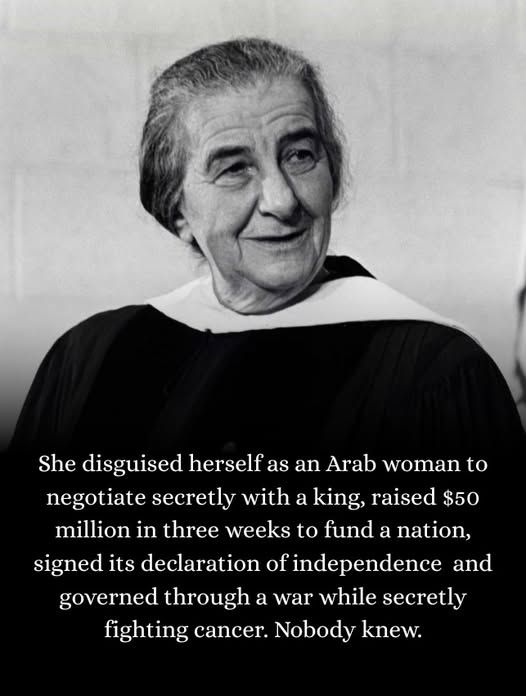
Golda Meir was not yet the leader of a nation. Israel did not yet exist. But she was already one of the most consequential figures in the movement to create it — and she was willing to risk her life to give it a chance.
She had come a long way from Kyiv.
Born in 1898 in the city then known as Kiev, in the Russian Empire, Golda Mabovitch had grown up in poverty amid the brutal antisemitism of Tsarist Russia.
Her family fled — first to Milwaukee, Wisconsin, where she grew up, attended school, and developed the fierce political consciousness that would define everything that followed. As a young woman, she made a decision that would seem impractical to almost everyone around her: she moved to British Palestine, joining the Zionist project of building a Jewish homeland in the Middle East.
She spent the next decades doing exactly that — through diplomatic work, political organizing, and an extraordinary capacity for the work that actually builds nations: raising money, making alliances, and speaking the truth clearly in rooms where the truth was uncomfortable.
In 1948, with Israeli independence imminent and the new state desperately short of funds, Meir traveled to the United States on an emergency fundraising mission. In a matter of weeks, she raised approximately $50 million — a sum so crucial that David Ben-Gurion, Israel's founding father, later said she was "the Jewish woman who got the money which made the state possible."
She returned to sign Israel's Declaration of Independence on May 14, 1948 — one of only two women among the 37 signatories. The other was Rachel Cohen-Kagan. In the photograph taken that day, Meir is reported to have wept.
The decades that followed built a political career of extraordinary breadth. She served as Israel's Ambassador to the Soviet Union, as Minister of Labor, and as Foreign Minister — accumulating experience and authority that made her, by the time she became Prime Minister in 1969, one of the most prepared leaders in the world.
She was also, by then, privately fighting lymphoma — diagnosed in 1965 and kept completely secret. She governed Israel — through diplomatic crises, through the daily existential pressures of leading a small nation surrounded by hostile neighbors — while battling cancer alone, telling no one, because she had decided the country's needs were larger than her own.
The war she had spent years trying to prevent came anyway.
On October 6, 1973 — Yom Kippur, the holiest day in the Jewish calendar — Egypt and Syria launched a coordinated surprise attack on Israel. The intelligence failure was devastating. The early military situation was dire. Meir made decisions in those first desperate hours that her military commanders later credited with preventing catastrophe — authorizing the mobilization of reserves against advice, holding firm through the initial chaos.
Israel survived. But the political aftermath was brutal. An inquiry commission examined the intelligence failures. Public anger demanded accountability. In April 1974, Golda Meir resigned — not because she was found personally responsible, but because she understood that a democracy sometimes requires its leaders to absorb the weight of institutional failure, regardless of individual culpability.
She died in December 1978 at the age of 80 — the lymphoma she had carried in secret for 13 years finally taking what war and politics had not.
She had been called the "Iron Lady" of Israeli politics long before anyone applied that description to any other woman. She had governed a nation at war, in secret physical suffering, with a clarity of purpose that left almost everyone who encountered her slightly stunned.
When asked once what she thought of being called a great woman, she reportedly said she had worked hard to be a great leader — the adjective, she suggested, was beside the point.
She was right. And she was both.
English
Kim Maua 🇺🇬 retweetledi

General China is seen here with his family.
He was the first Mau Mau leader to be captured after he was shot in the neck in 1954.
To save himself from death sentence, China agreed to volunteer intelligence information on Mau Mau.
He would later lure hundreds of mau mau fighters into a British trap by acting as a negotiator.
Because of his cooperation, his death sentence was commuted to life imprisonment.
At Lokitaung prison he struck up friendship with Jomo Kenyatta who taught him how to read and write.
In return, he acted as Kenyatta's bodyguard protecting him against other members of the Kapenguria six who didn't like him. At one point the incited Kariuki Chotara to knife Kenyatta who was cooking in the kitchen.
They accused Kenyatta of pocketing all the money sent to them to share and cooking bad food.
In his autobiography Bildad Kaggia narrated how he once saw Kenyatta spitting and washing his head in the same water he would use for cooking. He also revealed how they caught Kenyatta giving a prison warder a huge chunk of meat meant for them as prisoners.
With this animosity against him, the only person Kenyatta could rely on for protection was China.
He never forgot China's kindness when he became prime minister and later the first president of Kenyatta.
Although China was illiterate, he sent him to Israel for paramilitary training and later appointed him Deputy Director National Youth Service.

English


“I want to warn all new female members entering the parliament, be very careful because some men here will fight so hard to sleep with you and later dump you. They even hit on us old women. There are alot of things you should be aware of in this parliament, some men can even drive you into starting a business then later rob you”
~Amelia Kyambadde~

English
Kim Maua 🇺🇬 retweetledi
Lieutenant Ogwang forced to issue a public confession implicating himself and others before they were later on executed by firing squad on claims that they had planned to overthrow Idi Amin.
Ogwang was one of the 13 Ugandans who were executed on the same day on allegations of planning to overthrow Amin, a plot that also implicated many other government officials and military officers.
Ogwang's group included: Ben Ongom (businessman), Garrison Onono ( Head teacher Bobi Foundation school), Elias Okidi Menya ( General Manager Lake Victoria Bottling Company), John Olobo( relations manager Uganda Ministry of Works), Peter Oketch Adupa ( Principal Lira Polytechnic), YY Okot (chief of education) Peter Otoa (senior warden Luzira Prison), Apollo Wod Akello Lawoko (senior manager radio Uganda), John Kabandize (Superintendent of prisons) , Abdalla Anyuru ( chairman public service commission), EN Mutabazi ( former Superitendent of Prisons).
In the above group, only Apollo Wuod Okello Lawoko survived. By a strange twist of fate the judge set him free but he was rearrested a couple of weeks later and placed in solitary confinement. But the luck that had stalked him throughout his predicaments never abandoned him.
A night before the execution of all those who had been implicated in the alleged plot to overthrow Amin, he managed to escape from prison and made the arduous journey to Kenya by hiding in the bushes and asking for lifts.
Sadly when he arrived in Nairobi, the Kenyan government refused to grant him asylum and asked him to leave. Fortunately, he eventually got asylum in Sweden.
His co-accused were, however, no so lucky. On September 9, 1977 , the 12 were marched to Clock Tower on Entebbe Rd, where a crowd had already gathered to witness the execution.
But something extraordinary happened one hour before the execution. The rain come from nowhere and pounded Kampala had. One witness, said he had never seen such torrential rain in his life. It was so heavy that the entire Kampala became flooded. People interpreted this as God's anger to the impending execution.
Nevertheless the public executions eventually went on as planned, with marksmen taking aim at the condemned men who were naked, blindfolded and tied to poles. Surprisingly despite three rounds of firing, Lieutenant Ogwang (pictured) refused to die as his head shook vigorously. This forced the firing squad commander to order all the marksmen to aim their guns at him and finish him off.
One evident thing is that most of the executees came from the North. One strategy Amin perfected in curtailing the influence of tribes was to target their elites and influential sons and daughters. This was akin to breaking the engine of the tribe, a situation that forced the whole tribe into despair, isolation and surrender.
~Levin Odhiambo

English
Kim Maua 🇺🇬 retweetledi

Games are an easy way to get kids more physically active & learning a variety of skills
They dont view it as exercise & learning when its part of play, because they are having fun
And their fun & learning is even more accelerated when they play with family
This is the power of family games nights.
English
@WinnieKiiza I would love to hear from @WinnieKiiza 's co wives cz she has more than one, step children especially the girls and those who have worked under her roof as house helps.
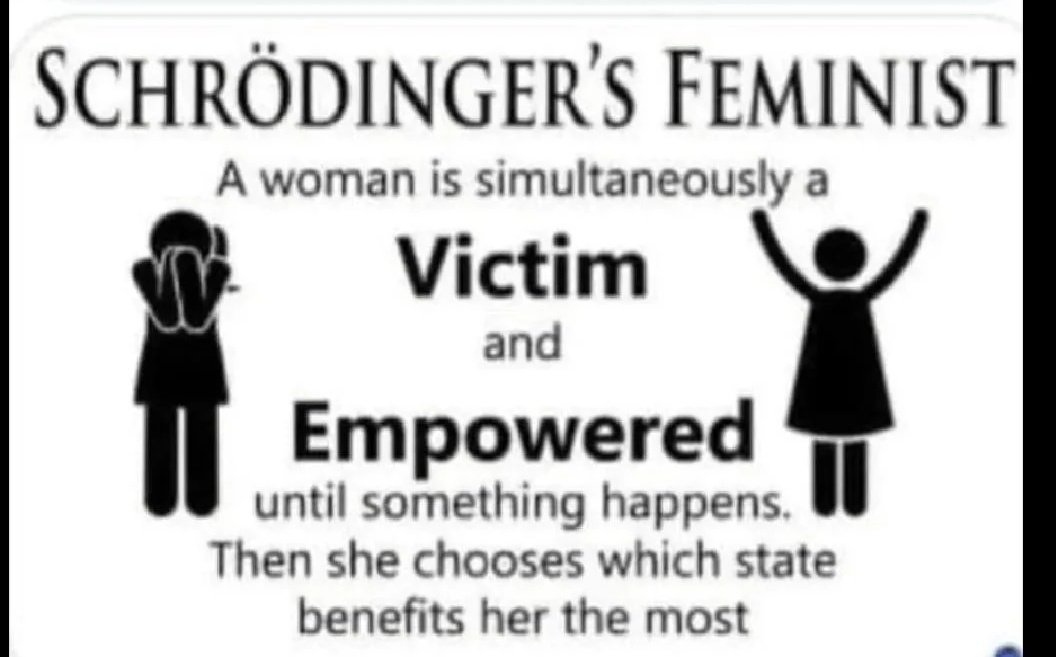
Kampala, Uganda 🇺🇬 English

I’m unapologetically feminist, happily married, and a Nyabahasa (mother of twins). What are you saying?
Opio not Opiyo🇺🇬@LawOpio45404
@WinnieKiiza Being a feminist in the Ugandan setting means being allergic to marriage.
English