Kenneth Lee

18.1K posts

Kenneth Lee banner
Kenneth Lee

Kenneth Lee

@KennyPharmPhD

Educator | Clinician | Health Services Researcher | Biostatistician #geriatrics #medicinesmanagement #pharmacy #healthliteracy #eHealth #informationoverload #R

Perth, Western Australia Katılım Ağustos 2012
522 Takip Edilen860 Takipçiler
Kenneth Lee retweetledi
Georgie Lee
Georgie Lee@georgieblee·
How do you define polypharmacy? Prevalence among older adults varied by 27% depending on the counting method and the types of medicines included. New research here: doi.org/10.1007/s11096…
Georgie Lee tweet media
English
0
4
6
101
Kenneth Lee retweetledi
CADeN
CADeN@DeprescribeNet·
Update to a 2016 systematic review & meta-analysis: the impact of #deprescribing on mortality and health outcomes in older adults 153 new studies were added to the analysis (259 studies total), which found that: - Deprescribing interventions did not significantly reduce mortality in older adults in both randomized & non-randomized studies, - Subgroup analysis of randomized studies found interventions significantly reduced mortality in patients aged 65-79yrs - Consistent with the 2016 analysis, patient-specific interventions also significantly reduced mortality. Importantly, deprescribing was once again shown to be feasible & safe to reduce older adults’ exposure to polypharmacy! tinyurl.com/y9hv8khk @BritJClinPharm @AmyTPage @KennyPharmPhD @drhurwitz87
CADeN tweet media
English
2
18
40
9.8K
Kenneth Lee retweetledi
Eyob Alemayehu Gebreyohannes
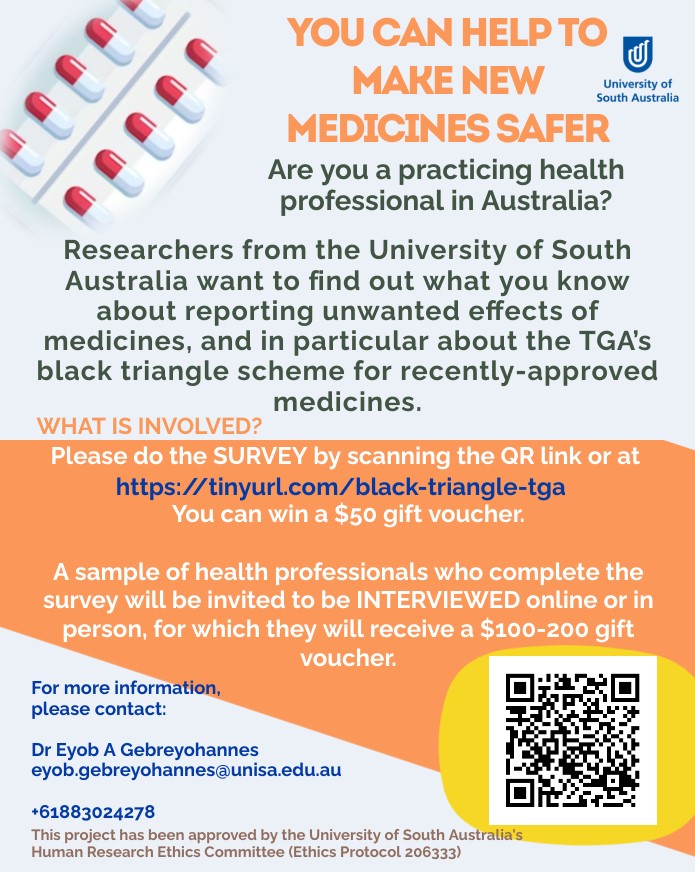
Participants needed! You can help make new medicines safer! 💊We, researchers from the University of South Australia, want to know what you know about reporting unwanted medicine effects, especially with the Therapeutic Goods Administration's Black Triangle Scheme. We are interested in both consumers & healthcare professionals. You can take our survey and win a $50 gift voucher! 🎁 💡Take our survey👉 tinyurl.com/black-triangle… @DrRenly
Eyob Alemayehu Gebreyohannes tweet mediaEyob Alemayehu Gebreyohannes tweet media
English
0
6
4
621
Kenneth Lee
Kenneth Lee@KennyPharmPhD·
So privileged to be part of this mammoth review led by Hui Wen Quek. An additional 153 studies identified in this updated review hints at the staggering growth in the field of Deprescribing. @AmyTPage @drhurwitz87
Australian Deprescribing Network (ADeN)@DeprescribeAU

A new systematic review includes 286 papers that evaluate the impact of #deprescribing in older people, focusing on the outcomes of discontinuing unnecessary medications. bpspubs.onlinelibrary.wiley.com/doi/full/10.11… @KennyPharmPhD @cdbeer Amanda Quek @drhurwitz87 @AmyTPage


English
1
2
5
328
Kenneth Lee retweetledi
Timmy Crowe
Timmy Crowe@timmy400h·
If you have a few moments to listen to this interview as a parent with your child. Possible one of the best post race interviews I have ever watched #PlayOn
English
308
5.4K
27.7K
3.4M
Kenneth Lee retweetledi
JAMA
JAMA@JAMA_current·
Narrative review explores how to manage use of DOACs—apixaban, rivaroxaban, edoxaban, and dabigatran—in patients undergoing surgical and nonsurgical procedures to decrease risks of bleeding and thromboembolism. ja.ma/4fIm1hL
JAMA tweet media
English
4
338
917
206K
Kenneth Lee retweetledi
NEJM
NEJM@NEJM·
In the TRACE-III trial, researchers investigated the efficacy and safety of intravenous tenecteplase administered 4.5–24 hours after the onset of stroke in patients who had had ischemic stroke and did not have access to thrombectomy. Full trial results: nej.md/4bZ0peT
NEJM tweet media
English
1
91
221
39.9K
Kenneth Lee retweetledi
Ed Livingston
Ed Livingston@ehlJAMA·
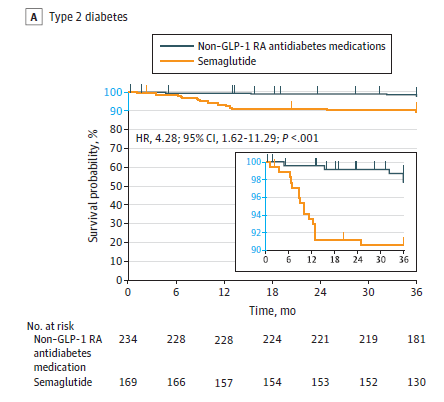
DO GLP-1 Agonists Really Cause Eye Disease There has been a huge amount of press about a report showing an association between the use of GLP-1 agonists and Nonarteritic anterior ischemic optic neuropathy (NAION) jamanetwork.com/journals/jamao… Because of it being heavily promoted by JAMA, the article has an Altmetric score of 1982. However, despite wide dissemination of the study's conclusions, very few people actually read the article (only 3,918 downloads-consider the denominator here: 1 million physicians in the US and 10 million healthcare providers). The conclusions should not be accepted without critical analysis of the study itself. There are limitations: 1) This disease occurs in patients with diabetes. GLP-1 drugs are generally used for more advanced cases of DM. There was no control for diabetes severity in the study. It is likely that the NAION was more likely to occur in patients with more severe DM - the same population more likely to be prescribed GLP-1 agonists. The lack of control for DM severity is a major limitation and probably should negate any conclusion about the relationship between GLP-1 agonists and eye disease. Note form the limitations section: "our study also is limited in that the severity of confounding factors could not be adequately assessed," At a minimum, this analysis should have controlled for HgA1c levels. 2) The study had an extremely small number of patients and the population was not representative of the average patient with DM. Of 979 eligible patients, only 32 had NAION. Of these 27 were treated with semaglutide and 5 with other drugs. Semaglutide is not a 1rst line treatment for DM. That the majority of patients in this study were being treated with this drug suggests that the patients had severe, probably poorly controlled DM. Note #1 above- the statistical analysis for this study did not include control for DM severity. See: DM Standards of Care from the ADA: professional.diabetes.org/standards-of-c… The first line treatment for DM is diet control, weight loss and metformin. GLP-1 agonist drugs are advised when these fails or if treating patients with a high risk for DM complications. 2) From the methods: Propensity matching was used to assess whether prescribed semaglutide was associated with NAION in patients with type 2 diabetes (T2D) or overweight/obesity. Propensity methods do not balance unmeasured risk variables or confounders. They also result in loss of information and power by excluding patients who cannot be matched. In the study, there were 32 patients with a NAION event. Of these only 23 were studied after a propensity score match and 18 after propensity score and exact matching. How the excluded patients might affect the results is unknown. 3) As mentioned in a previous tweet (X?), the confidence intervals for the study results were huge. This happens when there are too few events to reliably analyze. From the abstract: "A Cox proportional hazards regression model showed higher risk of NAION for patients receiving semaglutide (hazard ratio [HR], 4.28; 95%CI, 1.62-11.29); P < .001)." "A Cox proportional hazards regression model showed a higher risk of NAION for patients prescribed semaglutide (HR, 7.64; 95%CI, 2.21-26.36; P < .001)." As a general rule, findings with very large confidence intervals should be considered suspect-In other words, there is not a lot of confidence in the results. The figure got a lot of attention. Note that the effect was magnified by an insert showing survival probabilities between 90 and 100. the figure looks dramatic because of this. this got the public's attention but is misleading. There are no confidence intervals in this graph to show how well separated the groups survival really was. Given the very small numbers of patients, the CIs probably showed significant overlap. The major problem here is that this research really does not show an association between NAION and GLP-1 drugs-Yet, it was widely summarized by the press and made its rounds through social media. It came to my attention when someone sent e the article suggesting that our group look at this problem in more detail. It would be nice if there was more critical review of findings like these before the public absorbed the conclusions. I am sure there is more to this article than I picked up on and look forward to more discussion about it. Social media is probably a better venue for peer review for scientific findings than journals-This comes from someone who was a JAMA editor for many years. SM enables broader audience to draw upon for comment and facilitates expression of a diversity of views.
Ed Livingston tweet media
English
20
152
424
197.5K
Kenneth Lee retweetledi
Valerio Capraro
Valerio Capraro@ValerioCapraro·
Just finished reviewing several hundred applications for a very selective PhD program (3% acceptance rate). I’d like to share a few tips on how to write a strong research statement and avoid common mistakes. First, the sad reality: we receive many statements that seem to be written by ChatGPT. Using ChatGPT to refine your writing is fine, but overrelying on it is a recipe for failure, because ChatGPT produces just average outputs. If you’re applying for a selective program, you don’t want to be average, you want to stand out. So: Tip 1: Be unique, show what unique contribution you can bring. Many candidates focus solely on how a PhD would advance their career. This is a mistake. You don’t have to talk only about your interests but also about ours. The trick is to align your interests with those of the institution. You have to argue why you would be an added value for the institution. Tip 2: Show how you would benefit from the program AND how the institution would benefit from you. Many applicants write impersonal statements that could be (and probably are) submitted to many institutions. This is another common mistake. If you want to work with us, show us why. Name specific faculty members you wish to collaborate with and reach out to them before applying. But don’t send impersonal emails to dozens of professors: we appreciate genuine interest from prospective students, but we don’t like to be spammed. Tip 3: Explicitly name potential supervisors and contact them beforehand. But don’t spam Many candidates write super long and detailed research projects, while others write just a few vague lines about their research interests. Neither is optimal. Your project is likely to change a lot during your PhD, so there’s no point in writing a detailed research project. On the other hand, we’d like to see that you have an idea of the open problems in the field and that you have a strategy to address them. Tip 4: Focus on one important research question and give us an idea of how you plan to address it. I hope this is useful. Feel free to ask questions. Good luck with your application!
English
71
579
2.8K
802.1K
Kenneth Lee retweetledi