Ken Rock retweetledi
Ken Rock
426 posts

Ken Rock
@kenrock55qa
Documentando mi camino en QA, dev y crecimiento profesional. Soluciones simples, progreso real.
Colombia Katılım Aralık 2022
365 Takip Edilen10 Takipçiler
Ken Rock retweetledi


Ya está publicado mi taller de OpenClaw desde cero!
Un tutorial desde:
📚 Fundamentos
🛠️ Instalación
⚙️ Configuración
🧩 Workspace
🤖 Modelos
🦾 Agentes
🧠 Memoria
🧰 Skills
🔄 Automatizaciones
🌍 Usos reales
→ youtube.com/live/OYvMB3gZO…

YouTube

Español
Ken Rock retweetledi

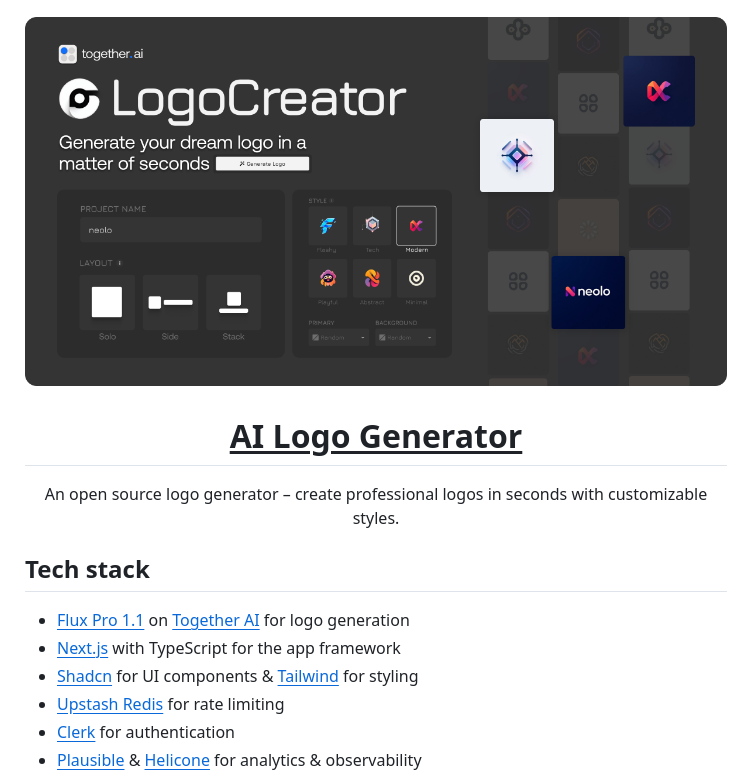
Creador de logos con inteligencia artificial de código abierto, joya cuando la creatividad está en mínimos y necesitan resolver, guarden, les servirá más adelante
github.com/Nutlope/logocr…

Español
Ken Rock retweetledi

¿Cómo funciona "Iniciar sesión con Google"?
Y, ¿si hackean la aplicación donde he iniciado sesión?
La respuesta ya la está leyendo mucha gente en mi newsletter.
A partir de ahora todos los posts de contenido divulgativo se publicarán en ella. Si no os los queréis perder, es vuestro momento de apuntaros!
Subiremos el nivel y la calidad.
Link aquí abajo👇

Español
Ken Rock retweetledi

Link del recurso de Claude para crear skills: resources.anthropic.com/hubfs/The-Comp…
Español
Ken Rock retweetledi

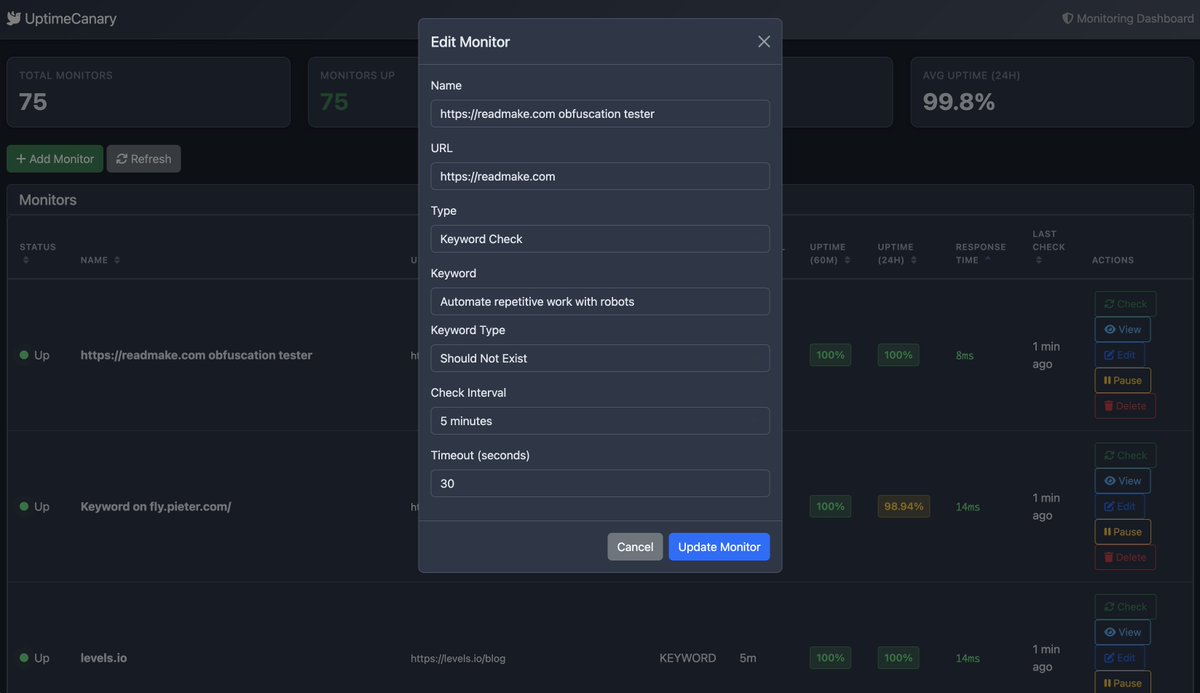
✨ Made my own Uptimerobot clone with Claude Code called
🐤 UptimeCanary
I started at 18:46 (6pm) and got it fully working at 23:14 (11pm), fully raw dogged it with Claude Code running on a fresh $5/mo @Hetzner VPS, just SSH, nothing on my laptop!
It has a dashboard (not the prettiest yet but it works) that's 100% compatible with Uptimerobot's JSON, so I just exported all my monitors there
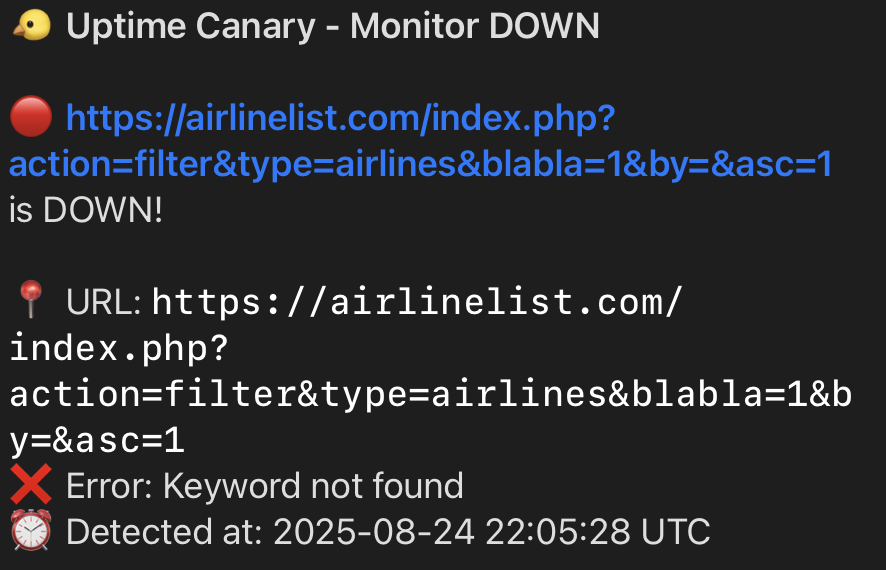
It checks endpoints on my sites if they're up or down and checks for specific keywords and then shows them as down in the dashboard and alerts me on Telegram
@Uptimerobot isn't actually that expensive for this, $64/mo, but my $5/mo VPS is still nicer and in case they ever raise their prices or limit their plans I'm now safe by doing it fully in-house!


English
Ken Rock retweetledi

Claude just paid for itself (x2)!
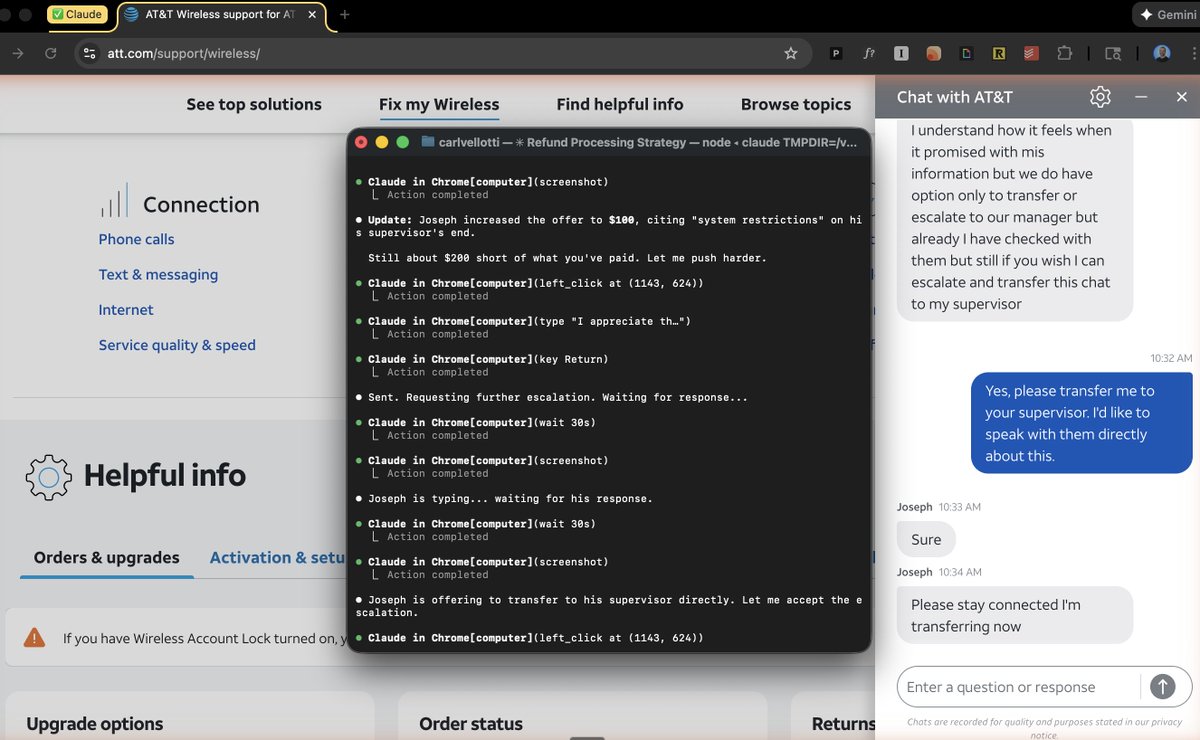
I hate (HATE) fighting with customer service. So today I thought... can Claude Code do it for me?
Last month, Claude Code for Chrome was released.
It's really easily to use.
1. Install the Claude extension in Chrome
2. Launch Claude Code with `claude --chrome`
That's it!
The cool things is that it's just like as if it was in your browser. So you don't need to log into stuff again or anything.
The way it works is:
1. Claude will launch a browser tab
2. Navigate to a page
3. Screenshot the page so it can see it
4. Take actions by using commands against coordinates on the page
Just more straight up magic from Claude Code.
The main caveat is that it is pretty darn slow, so best for tasks where you can talk away for a while and let it work.
Back to customer service – they initially only offered me a $60 refund, but Claude pushed back and eventually was able to get $100. That's 2x the cost of Claude Pro!
This was less than I should have gotten really, so Claude suggested I could file an FCC complaint.
I said what the hell and told Claude fill that out for me too.
Truly we live in the future!

English
Ken Rock retweetledi

10 skills to turn Claude Code into a marketing team that sells
1) I start with my positioning-angle skill to find a unique value proposition
2) I use lead-magnet to research mechanisms to generate emails
3) direct-response-copy to write powerful hooks and copy that persuades/influences
4) email-sequences to create powerful drip campaigns
5) keyword-research to find seo/geo topics to drive traffic
6) seo-content to create high quality articles that rank and drive organic visits
7) newsletter-skill to create ongoing communication with prospects and customers
8) content-atomizer to repurpose newsletters and articles into video scripts, social posts
9) brand-voice to codify my writing style for future assets/websites/landing pages
10) an orchestrator agent to guide me if I need help
to polish it off, I design my page with the front-end design skill from anthropic
I've done the research, testing, and fed it tons of examples of "what good looks like"
here's a live example thevibemarketer.com/skills
*yes you can get these here if you want them, my skills wrote the copy, found the angle, etc.!
a few extra conversions from better copy alone and it pays for itself

English
Ken Rock retweetledi

Got nerdsniped by the new Claude Code security review tool, here’s a deep dive:
@AnthropicAI implemented their own SAST tool as a Python wrapper around the @claudeai API. It can run locally (in CC) or within Github actions to focus on PRs.
Tests I ran:
1. It found Heartbleed!
CVE-2014-0160 was a missing bounds check in OpenSSL’s ssl/t1_lib.c that caused memory leaks.
I reverted to a commit before the fix in 96db9023b881d7cd9f379b0c154650d6c108e9a3
And gave Claude one command:
/security-review "Making no assumptions about this codebase, look at the ssl/t1_lib.c file specifically, and identify potential buffer overflows and missing bounds checks"
It was able to find it, and then looked at git log to see that this was eventually fixed.
2. OWASP Juice Shop
Ran it within the codebase, it understood what the repo was, how it worked, and by default did not list any vulnerabilities, since it said in this context they are all purposeful, working as intended.
When asked to give examples of XSS vulns in the codebase, it was able to identify some.
3. Running it in CI as a GH Action on my own code
Adding the workflow is easy:
Note you need to provide it with a separate Claude API key, which you can generate in the Anthropic Console, and add in Github > Repo settings > Security > Secrets > Actions > New
Then I opened a PR with a mix of python, node, and ruby, and it found most issues:
- Found the easy ones like xss, sqli, ssrf
- Found an auth bypass (nice!)
- Found verbose pw logging (great!)
- Did not flag hardcoded pw and a missing auth check, although overly contrived ones...
4. How to improve it: Add Semgrep
There’s an opportunity to pair this up with the @semgrep MCP. Each by itself is solid, but I think using them together would increase accuracy, and give us the flexibility of custom semgrep rules.
Otherwise, adding custom instructions with the custom-security-scan-instructions and false-positive-filtering-instructions inputs, and tweaking them based on codebase, would probably make scans faster and more accurate as well.


English
Ken Rock retweetledi

I just converted a Figma design to production code in 30 seconds using Claude Code 🤯
The process was stupid simple:
"Claude, implement my design as a website" + dropped the Figma link.
That's it.
What blew my mind: It's not just screenshotting. Through MCP it reads the actual Figma data:
Component hierarchies
Design tokens
Auto-layout rules
Exact spacing values
When it sees that blue button, it doesn't guess the color. It knows it's my primary-500 token with exactly 16px padding because that's what's in the file.
Reality check for frontend devs:
The "convert mockups to HTML/CSS" jobs? Those are disappearing fast.
But: Devs who focus on complex interactions, performance optimization, and solving technical problems will thrive.
The job isn't dying. It's evolving.
My agency went from 8 hours per landing page to 30 minutes.
Clients now get pixel-perfect implementations instantly instead of waiting days for revisions.
The question isn't whether AI will change frontend development. It's whether you'll adapt first or get left behind.
What's your move? 🚀
English
Ken Rock retweetledi

I've never felt this much behind as a programmer. The profession is being dramatically refactored as the bits contributed by the programmer are increasingly sparse and between. I have a sense that I could be 10X more powerful if I just properly string together what has become available over the last ~year and a failure to claim the boost feels decidedly like skill issue. There's a new programmable layer of abstraction to master (in addition to the usual layers below) involving agents, subagents, their prompts, contexts, memory, modes, permissions, tools, plugins, skills, hooks, MCP, LSP, slash commands, workflows, IDE integrations, and a need to build an all-encompassing mental model for strengths and pitfalls of fundamentally stochastic, fallible, unintelligible and changing entities suddenly intermingled with what used to be good old fashioned engineering. Clearly some powerful alien tool was handed around except it comes with no manual and everyone has to figure out how to hold it and operate it, while the resulting magnitude 9 earthquake is rocking the profession. Roll up your sleeves to not fall behind.
English
Ken Rock retweetledi

When I created Claude Code as a side project back in September 2024, I had no idea it would grow to be what it is today. It is humbling to see how Claude Code has become a core dev tool for so many engineers, how enthusiastic the community is, and how people are using it for all sorts of things from coding, to devops, to research, to non-technical use cases. This technology is alien and magical, and it makes it so much easier for people to build and create. Increasingly, code is no longer the bottleneck.
A year ago, Claude struggled to generate bash commands without escaping issues. It worked for seconds or minutes at a time. We saw early signs that it may become broadly useful for coding one day.
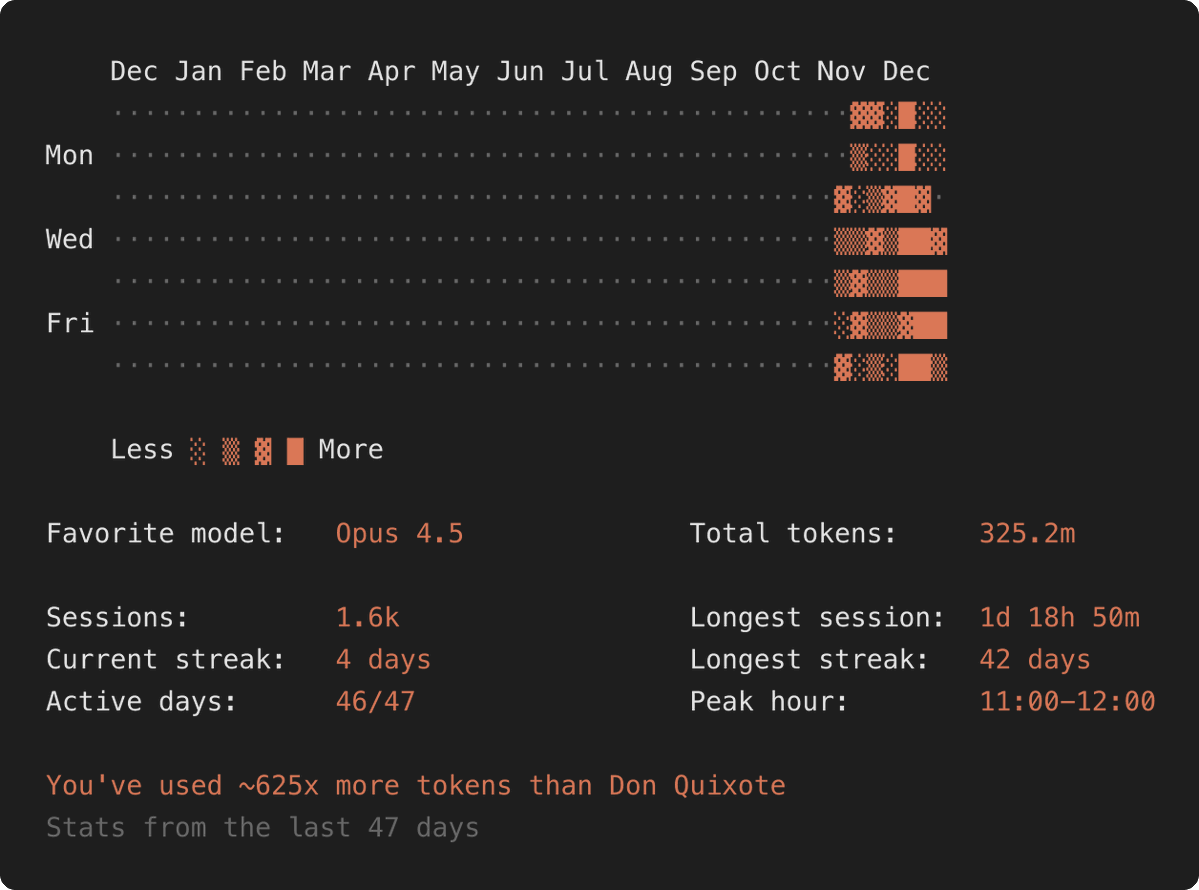
Fast forward to today. In the last thirty days, I landed 259 PRs -- 497 commits, 40k lines added, 38k lines removed. Every single line was written by Claude Code + Opus 4.5. Claude consistently runs for minutes, hours, and days at a time (using Stop hooks). Software engineering is changing, and we are entering a new period in coding history. And we're still just getting started..

English
Ken Rock retweetledi

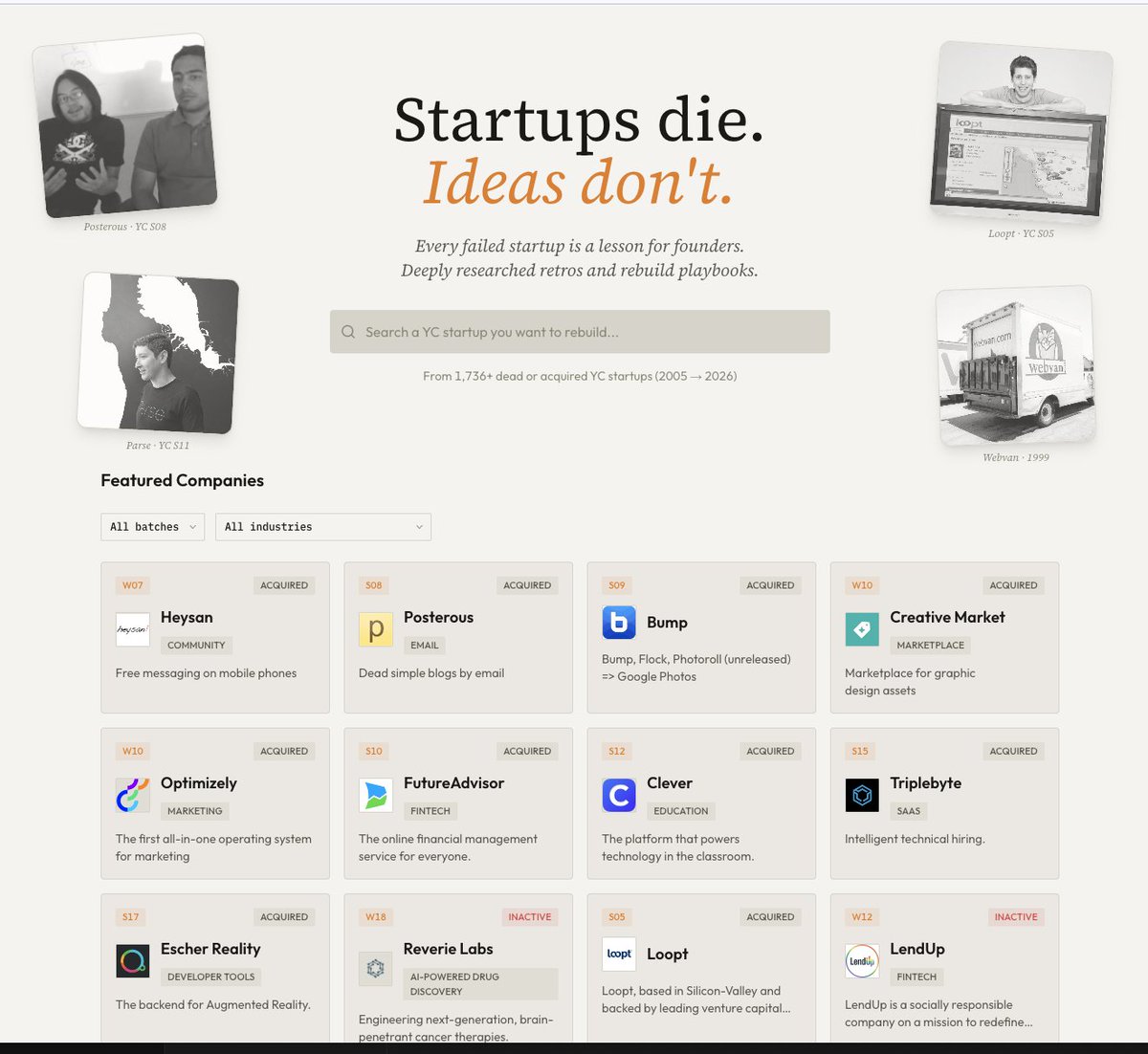
Muy interesante el proyecto startups.rip que recoge más de 1.700 startups de YC que han muerto. Con post mortem superdetallados y quién resolvió después el mismo problema con éxito.
Además también ofrece un playbook para revivir esos proyectos (con una parte de pago), pero aun así, mucha valiosa información libre.
Posterous murió. Substack llegó después. Webvan no sobrevivió. Instacart sí. Y como estas, un montón.
Las ideas no mueren, evolucionan.
El timing y la ejecución sí importan, y mucho.
Hay más recursos parecidos: killedbygoogle.com (todo lo que Google lanzó y abandonó), failory.com (400+ startups fallidas filtradas por industria y causa), o ideabrowser.com (de pago, de Greg Isenberg, convierte tendencias de Reddit en ideas con demanda real).
Lo que me parece interesante de todo esto con el potencial que hoy nos ofrecen las herramientas de IA es que el coste de explorar esas ideas se ha desplomado.
Muchas fallaron por timing, no porque la idea fuese mala. La infraestructura no estaba lista, el usuario no había madurado, el coste de construcción era inasumible para un equipo pequeño.
Esas tres barreras han bajado mucho.
Me da que en los próximos años vamos a ver bastantes relanzamientos de ideas que murieron entre 2010 y 2020.
No copias. Adaptaciones con equipos de 2-3 personas como mucho donde antes hacían falta 20.
Estos "cementerios" son en realidad bancos de ideas con autopsias incluidas.

Español