Kiah

9.4K posts

Kiah banner
Kiah

Kiah

@kiahloha

Admirer of the sky. Optimist. Runner. Tweeting abt art, nature, human rights, spirituality, self love, women’s sports & life etc. Beauty is all around 🏀🏂🏡🌈

Twin Cities, MN Katılım Mart 2012
822 Takip Edilen275 Takipçiler
Sabitlenmiş Tweet
Kiah
Kiah@kiahloha·
Night swimming in Lake Superior is *divine*
English
16
11
239
0
Kiah
Kiah@kiahloha·
P.s. I hope you’re able to see how significant all these moments we share together are. Seeing healing in a moment like that collectively; there is great power in that! Things shift energetically around the Globe
English
0
0
1
13
Kiah
Kiah@kiahloha·
Forget your birth sign, I wanna know if you saw Justin’s Coachella set as some of the most beautiful ART you’ve ever seen or just as a fluke? Because the difference says everything &
English
1
0
1
33
Kiah retweetledi
Stefan Burns
Stefan Burns@StefanBurnsGeo·
A lot of people haven't realized yet that the art of creating conspiracies is open source and many groups and people outside the big ones create conspiracies for their own benefit/engagement/etc. A LOT OF THEM ARE HERE ON X
💥 Nurse D, RN/1L@TakeThatNurses

Listen, I know I’m not a physicist, but there is no fucking way I believe that this exists. There is no detector that, surrounded by all the electrical fields generated by a helicopter, can isolate a specific heartbeat from 40 fucking miles away. Ain’t no way

English
18
8
90
9.7K
Kiah
Kiah@kiahloha·
This is good
Ihtesham Ali@ihtesham2005

A community college professor taught the same study skills lecture for 30 years, and the video quietly became one of the most watched educational recordings on the internet. His name is Marty Lobdell. He spent his career as a psychology professor watching students fail not because they were lazy, but because nobody had ever taught them how their brain actually works under the pressure of learning something hard. The lecture is called "Study Less Study Smart." Over 10 million views. Passed around in Reddit threads, Discord servers, and university study groups for over a decade. And the core insight buried inside it has been sitting in cognitive psychology research for years, waiting for someone to explain it in plain language. Here is the framework that completely changed how I think about effort. Your brain does not sustain focus the way you think it does. Studies tracking real students found that the average learner hits a wall somewhere between 25 and 30 minutes. After that, efficiency doesn't just decline. It collapses. You're still sitting at your desk, still looking at the page, but almost nothing is going in. Lobdell illustrated this with a student he knew personally. She set a goal of studying 6 hours a night, 5 nights a week, to pull herself out of academic probation. Thirty hours of studying per week. She failed every single class that quarter. She wasn't failing because she lacked effort. She was failing because she had confused time spent near books with time spent actually learning. The 25-minute crash hit her at 6:30pm every night. She spent the next five and a half hours sitting in the wreckage of her own focus and calling it studying. The fix sounds almost too simple. The moment you feel the slide, stop. Take five minutes. Do something that actually gives you a small reward. Then go back. That five-minute reset returns you to near full efficiency. Across a six-hour window, the difference is not marginal. It is the difference between thirty minutes of real learning and five and a half hours of it. The second thing he taught destroyed something I had believed about how memory actually works. Highlighting feels productive. Going back over your notes and recognizing everything feels like knowing. But recognition and recollection are two completely different cognitive processes, and your brain is very good at making you confuse them. You can see something you've read before and feel completely certain you understand it, even when you couldn't reconstruct a single sentence from memory if the page were blank. He proved this live in the room. He read 13 random letters to his audience. Almost nobody could recall them. Then he rearranged the same 13 letters into two words: Happy Thursday. The whole room got all 13 without effort. Same letters. Same count. The only thing that changed was meaning. The brain stores meaning. Not repetition. The moment new information connects to something you already understand, the retention changes entirely. This is what the cognitive psychology literature calls elaborative encoding, and it is the mechanism underneath every effective study technique. The third principle was the one that hit me hardest, and the one almost nobody applies. Lobdell cited research showing that 80 percent of your study time should be spent in active recitation, not passive reading. Close the material. Say it back in your own words. Teach it to someone else, or to an empty chair if no one is around. The struggle of retrieval is where the actual learning happens. Reading your notes again is watching someone else do the work. His parting line has stayed with me longer than almost anything else I have read about learning. He told the room that if what he shared didn't change their behavior, they hadn't actually learned it. It would just live in their heads as something they had heard once and felt good about. He was right. And most people leave every lecture exactly like that. The students who remember everything aren't putting in more hours. They stopped confusing the feeling of studying with the fact of it.

English
0
0
0
11
Kiah retweetledi
Science girl
Science girl@sciencegirl·
Researchers have found that mushrooms produce electrical signals in their mycelium networks, and scientists have converted these signals into sound using synthesizers for experimental music.
English
58
224
1K
69.1K
Kiah
Kiah@kiahloha·
PROUD MOM MOMENT: Was watching Unrivaled basketball and My 4 year old son asks me “mommy, do boys play basketball too?” We’re doing something right. The world is shifting ya’ll!!! @Unrivaledwbb
English
0
0
1
26
Kiah retweetledi
Tracy Beanz
Tracy Beanz@tracybeanz·
@JIMMYEDGAR Energy can neither be created nor destroyed. Consciousness is infinite. There is literally no “dead.” There’s just expansion.
English
12
7
340
118.5K
Kiah retweetledi
Saganism
Saganism@Saganismm·
“We are the only species on the planet, so far as we know, to have invented a communal memory stored neither in our genes nor in our brains. The warehouse of this memory is called the library.” — Carl Sagan
Saganism tweet media
English
57
976
4.1K
65.8K
Kiah retweetledi
Growth Labs
Growth Labs@growthhub_·
She literally tells how to create a frequency so magnetic your desires chase you.
English
213
4.6K
45.3K
2.5M
Kiah retweetledi
Jimmy Corsetti
Jimmy Corsetti@BrightInsight6·
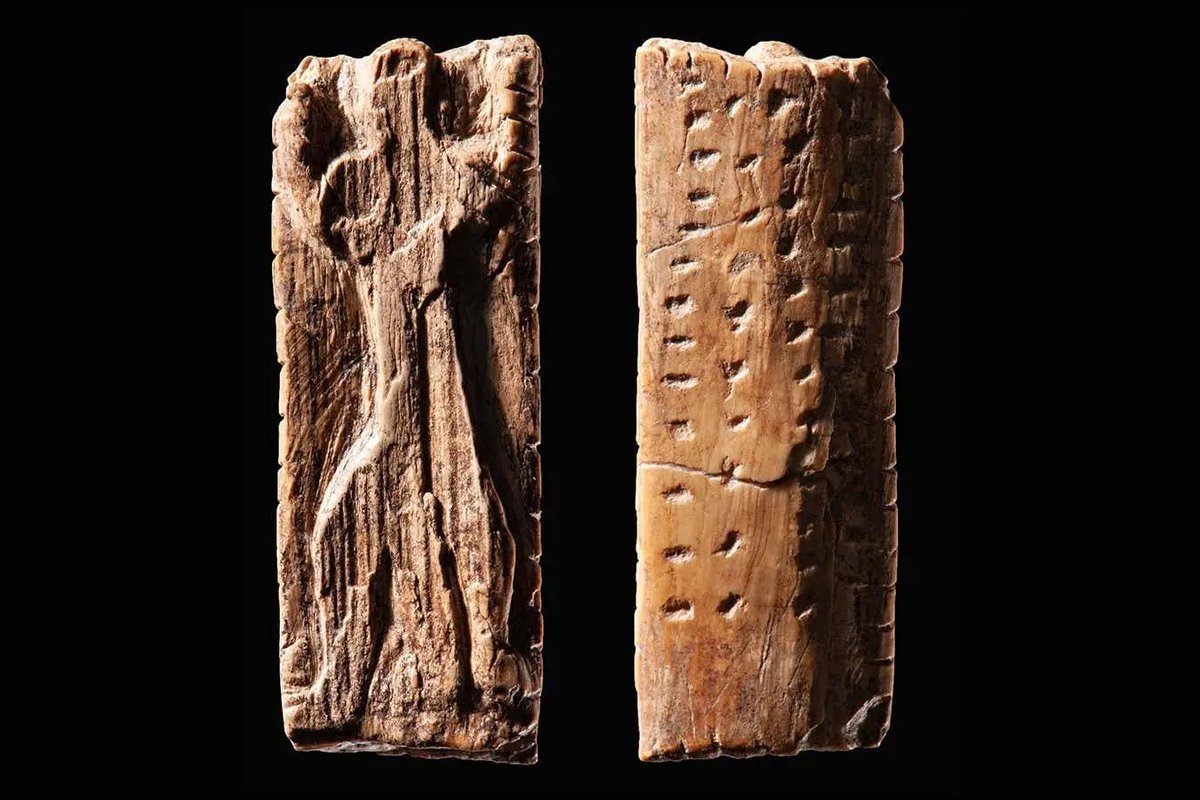
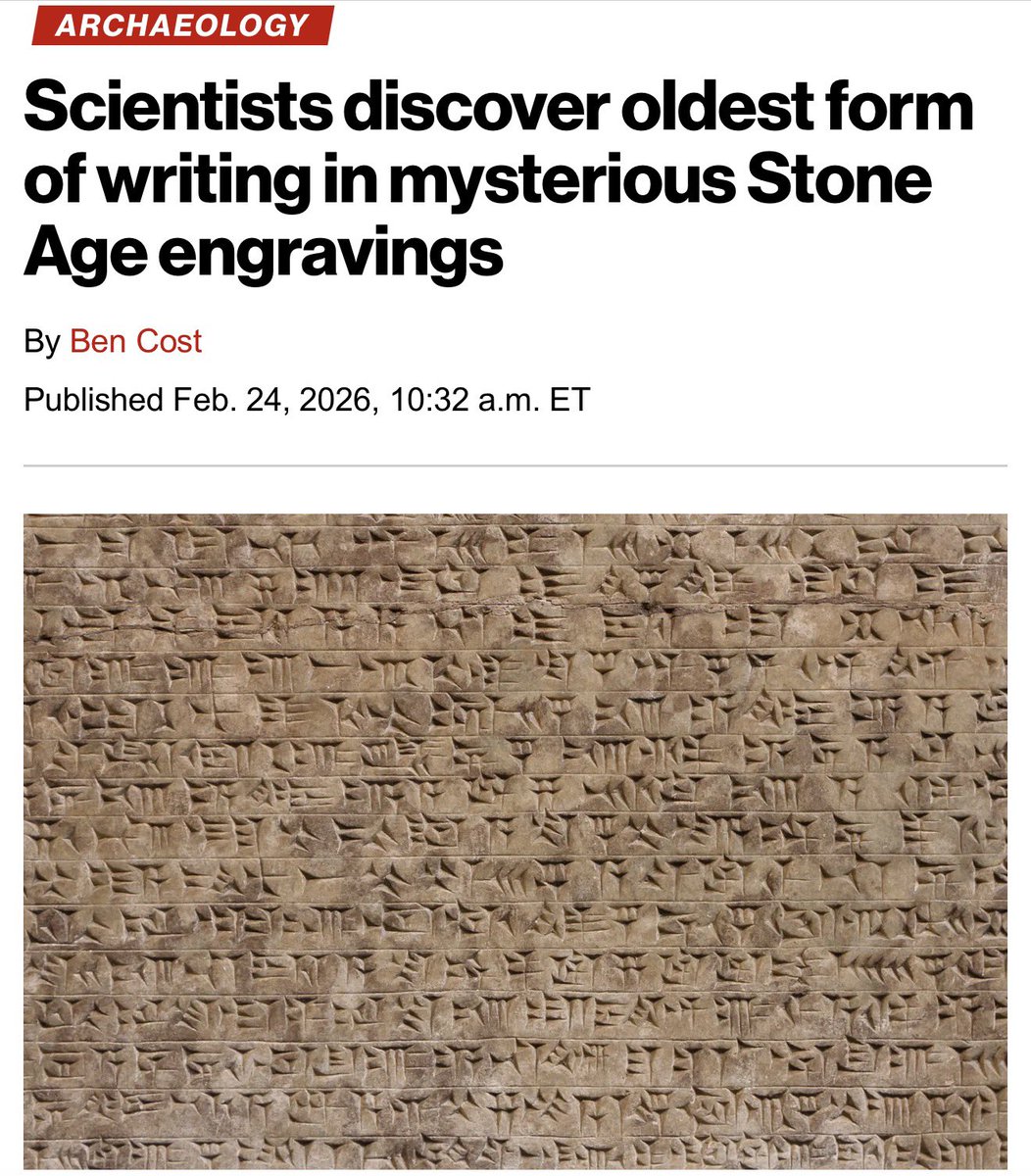
🚨MASSIVE DISCOVERY rewrites Human History: The world’s oldest form of writing has been found in a cave in Germany, dating 38,000 years 📍This is well over 30,000 YEARS OLDER than Sumerian Cuneiform from ancient Mesopotamia, which was long thought to be the oldest 🤯
Jimmy Corsetti tweet mediaJimmy Corsetti tweet media
English
1.1K
3.5K
23.4K
3.9M
Kiah retweetledi
Into The Forest Dark
Into The Forest Dark@ElliottBlackwe3·
Mary Oliver had a ritual, “Find a poem by a poet you love, read it every morning for a month." She said if one did this, one would have the poem memorized. I also think it would slowly transform you by submersing yourself in its beauty.
English
34
1K
8.4K
146.9K
Kiah retweetledi
love drops
love drops@lovedropx·
love drops tweet media
ZXX
29
1.8K
8.8K
123.2K
Kiah retweetledi
Night Sky Now
Night Sky Now@NightSkyNow·
🚨 CERN Just Opened a Door to a Hidden World of Matter 🚨 Deep beneath the Swiss–French border, something strange just revealed itself. Physicists at CERN have taken their most detailed look ever at some of the rarest particles in the universe — and what they found is shaking our understanding of matter itself. Using the powerful CMS detector, scientists studied tetraquarks made entirely of charm quarks — particles so exotic they don’t exist anywhere in everyday matter. Three of them, known as X(6600), X(6900), and X(7100), were examined closely for the first time. By watching how these particles fall apart in tiny bursts of energy, researchers uncovered their hidden quantum identities — their spin, behavior, and inner structure. Here’s the twist: these aren’t loose, fragile combinations. They are compact, tightly bound objects, held together by the strong nuclear force in a way never clearly confirmed before. This means nature can build matter in forms far stranger than we once believed — completely new states that challenge old theories. Why should this stop you mid-scroll? Because this discovery gives scientists a brand-new window into the strong force, the powerful glue that holds atomic nuclei together and shapes everything we see. Tetraquarks were once just a theory. Now, they are real — and they’re teaching us that the universe still has secrets hiding in plain sight. We’re not just discovering particles anymore. We’re discovering new ways matter can exist. And this… might only be the beginning. ✨

Night Sky Now tweet media
English
46
202
725
31.7K
Kiah retweetledi
Night Sky Today
Night Sky Today@NightSkyToday·
The storm was already swallowing the ground… but the sky was still alive ❄️🌌 Heavy snowfall and strong winds covered everything below, while above it all, green and rare red auroras glowed at different heights in Earth’s atmosphere — shining through the chaos of the storm. Moments like this are rare, raw, and unforgettable. 📍 United States, Alaska
English
7
286
1.2K
19.7K
Kiah retweetledi
The woman
The woman@Tarmeim·
The woman tweet media
ZXX
1
570
3.2K
64.5K