Kirk Marple

5K posts

Kirk Marple banner
Kirk Marple

Kirk Marple

@KirkMarple

Founder/CEO of Graphlit (@graphlit): Operational Context Layer for AI Agents 🚀 @zine_ai @dossium 👋 ex-MSFT, PA born, Seattle bred. Dad to dogs/humans
Seattle, WA Katılım Ocak 2021
3.9K Takip Edilen3.9K Takipçiler
Sabitlenmiş Tweet
Kirk Marple
Kirk Marple@KirkMarple·
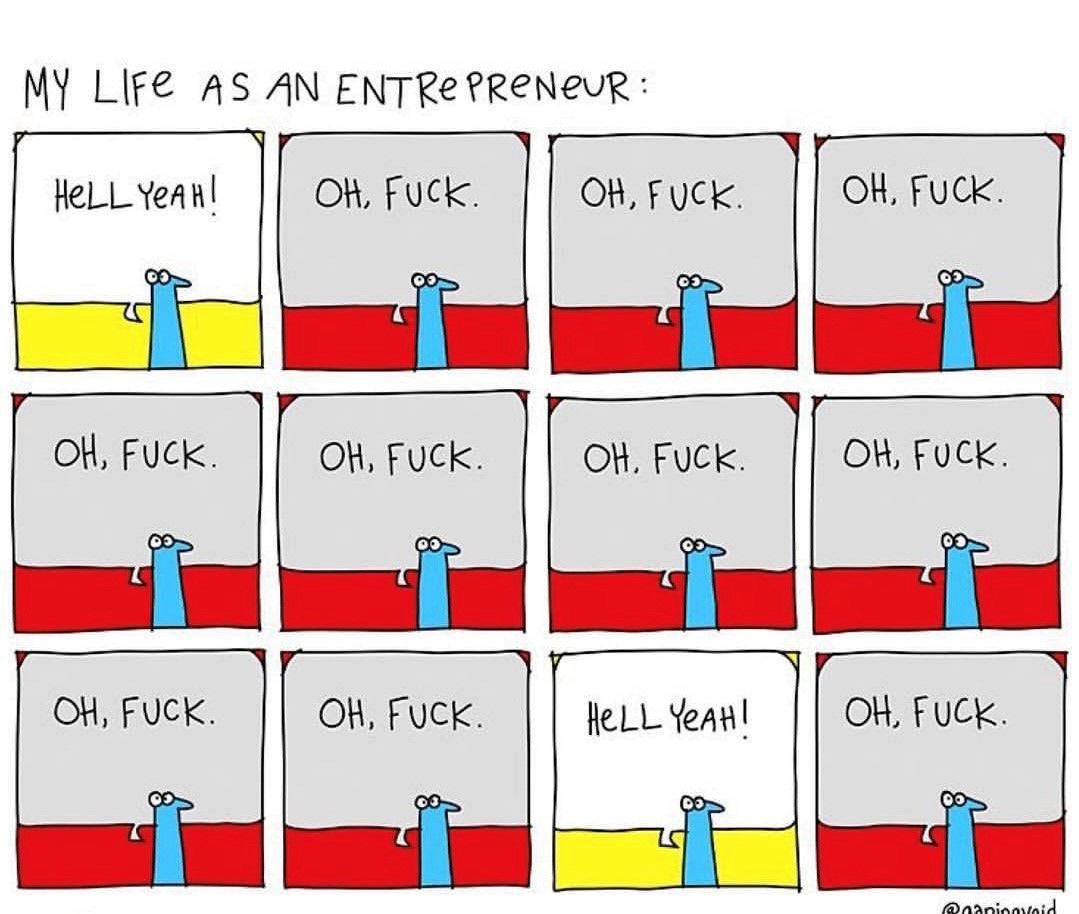
Very accurate, but still worth it. (Credit: @gapingvoid)
Kirk Marple tweet media
English
5
12
132
0
Kirk Marple
Kirk Marple@KirkMarple·
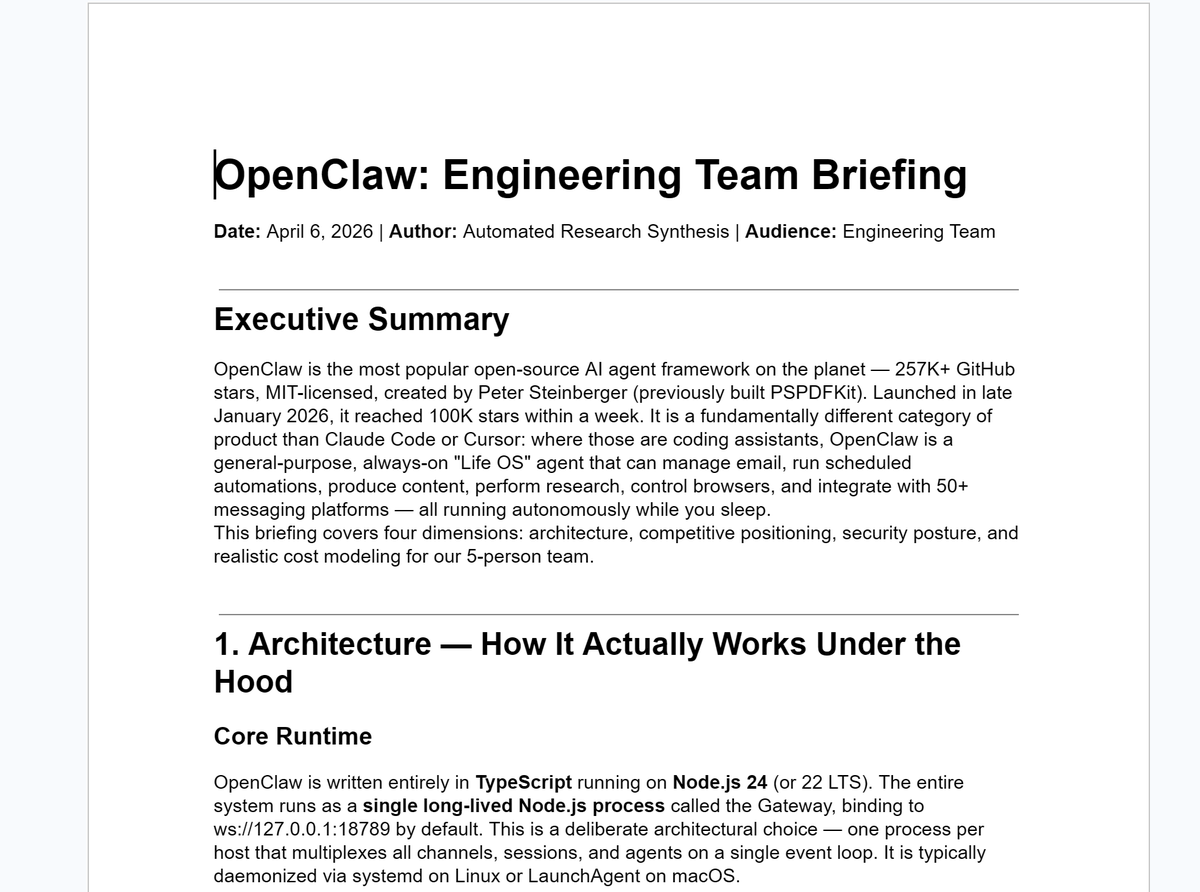
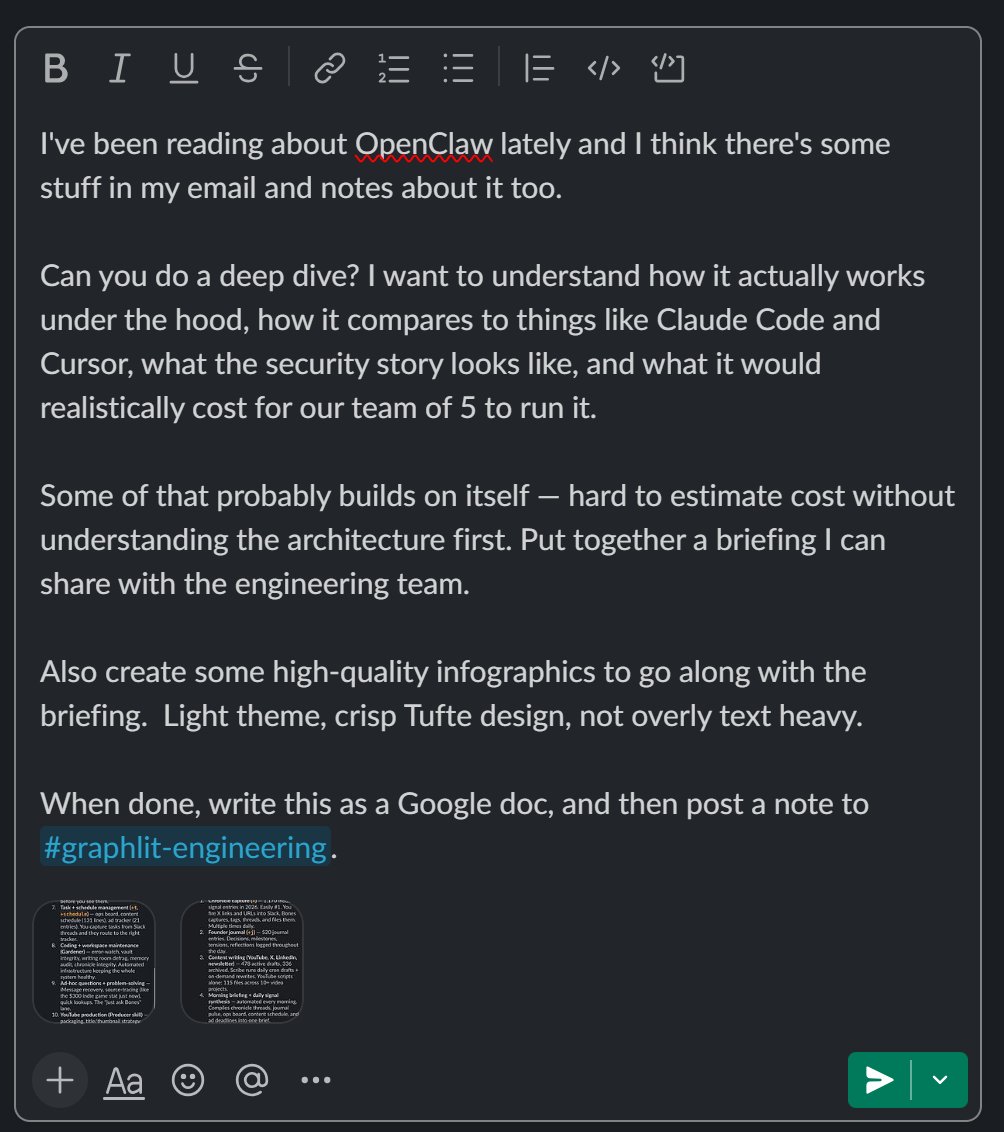
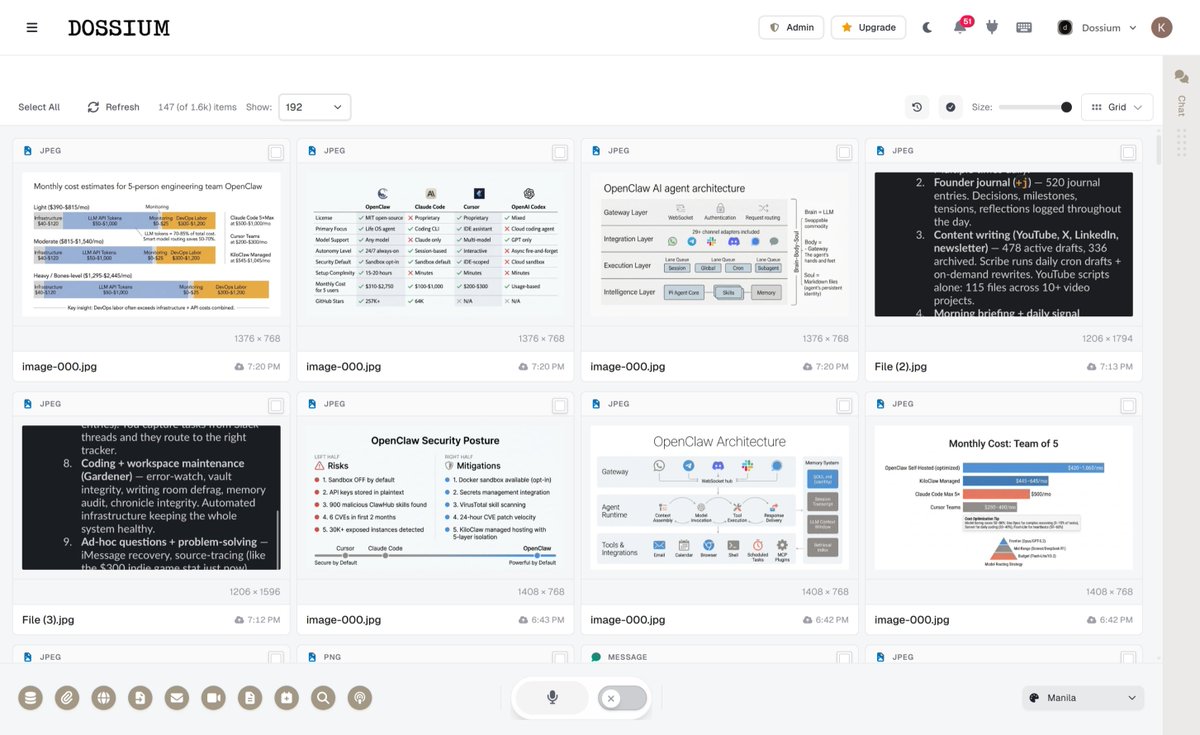
Loving using @dossium agent for product research. Drop in a URL, even X articles. Adds it to the knowledge base, and summarizes it. Then I can ask it to compare to our product and look for gaps.
Kirk Marple tweet media
English
1
0
1
244
Kirk Marple
Kirk Marple@KirkMarple·
Your team shares your unified context layer - built from connected data sources, as well as content generated by your agents. Try out Dossium today for free: dossium.ai Agents launching this month.
Kirk Marple tweet media
English
0
0
0
66
Kirk Marple
Kirk Marple@KirkMarple·
And it automatically generated a Google Doc from its research, leveraging the OAuth connector that is securely saved in Dossium. Auth once, and your agents can use that for ingestion as well as distribution.
Kirk Marple tweet media
English
1
0
0
87
Kirk Marple
Kirk Marple@KirkMarple·
We've been heads-down this last month adding a brand-new Agents service to @dossium. On top of our existing, unified content layer - you can now can run channel-bound agents, as well as scheduled or triggered agents, using both internal and external context. In addition, we've built a unique canvas to view your agentic runs, and see the prompts, responses and tool calling your agents are performing.
Kirk Marple tweet mediaKirk Marple tweet media
English
1
1
4
376
Kirk Marple
Kirk Marple@KirkMarple·
The main problem is that each LLM client doesn’t have a clean way to export or sync the chats to a knowledge base. It’s mostly manually today unless you use an alternate chat client. We handle this today with @zine_ai and your chats are searchable and referenced against any context you ingest, like Gdrive, email, Slack etc.
English
0
0
2
177
Chamath Palihapitiya
This may be a dumb question but I’ll ask it here anyways: I can’t find a good way for my various AI chats to automatically sync its conversation history into a structured knowledge base. So that as I update various chats from time to time and refine context, my knowledge base automatically grows with this new info.
English
1K
60
2.3K
738.2K
Sriram Krishnan
Sriram Krishnan@sriramk·
there are several products waiting to be built here.
Andrej Karpathy@karpathy

LLM Knowledge Bases Something I'm finding very useful recently: using LLMs to build personal knowledge bases for various topics of research interest. In this way, a large fraction of my recent token throughput is going less into manipulating code, and more into manipulating knowledge (stored as markdown and images). The latest LLMs are quite good at it. So: Data ingest: I index source documents (articles, papers, repos, datasets, images, etc.) into a raw/ directory, then I use an LLM to incrementally "compile" a wiki, which is just a collection of .md files in a directory structure. The wiki includes summaries of all the data in raw/, backlinks, and then it categorizes data into concepts, writes articles for them, and links them all. To convert web articles into .md files I like to use the Obsidian Web Clipper extension, and then I also use a hotkey to download all the related images to local so that my LLM can easily reference them. IDE: I use Obsidian as the IDE "frontend" where I can view the raw data, the the compiled wiki, and the derived visualizations. Important to note that the LLM writes and maintains all of the data of the wiki, I rarely touch it directly. I've played with a few Obsidian plugins to render and view data in other ways (e.g. Marp for slides). Q&A: Where things get interesting is that once your wiki is big enough (e.g. mine on some recent research is ~100 articles and ~400K words), you can ask your LLM agent all kinds of complex questions against the wiki, and it will go off, research the answers, etc. I thought I had to reach for fancy RAG, but the LLM has been pretty good about auto-maintaining index files and brief summaries of all the documents and it reads all the important related data fairly easily at this ~small scale. Output: Instead of getting answers in text/terminal, I like to have it render markdown files for me, or slide shows (Marp format), or matplotlib images, all of which I then view again in Obsidian. You can imagine many other visual output formats depending on the query. Often, I end up "filing" the outputs back into the wiki to enhance it for further queries. So my own explorations and queries always "add up" in the knowledge base. Linting: I've run some LLM "health checks" over the wiki to e.g. find inconsistent data, impute missing data (with web searchers), find interesting connections for new article candidates, etc., to incrementally clean up the wiki and enhance its overall data integrity. The LLMs are quite good at suggesting further questions to ask and look into. Extra tools: I find myself developing additional tools to process the data, e.g. I vibe coded a small and naive search engine over the wiki, which I both use directly (in a web ui), but more often I want to hand it off to an LLM via CLI as a tool for larger queries. Further explorations: As the repo grows, the natural desire is to also think about synthetic data generation + finetuning to have your LLM "know" the data in its weights instead of just context windows. TLDR: raw data from a given number of sources is collected, then compiled by an LLM into a .md wiki, then operated on by various CLIs by the LLM to do Q&A and to incrementally enhance the wiki, and all of it viewable in Obsidian. You rarely ever write or edit the wiki manually, it's the domain of the LLM. I think there is room here for an incredible new product instead of a hacky collection of scripts.

English
48
13
460
120.7K
Tibo
Tibo@thsottiaux·
@adonis_singh It can smell the opus perfume in the circuits and tries extra hard
English
8
1
236
9.7K
adi
adi@adonis_singh·
gpt5.4 seems 10x smarter if you use it right after using opus, the delta is really quite insane
English
86
26
1.2K
129.2K
Kirk Marple
Kirk Marple@KirkMarple·
@auren We are pretty close to that now with @dossium Shipping a cloud-first agent layer on top of our unified context graph. What parts of Cowork interest you the most?
English
0
0
2
77
Auren Hoffman
Auren Hoffman@auren·
when will Claude have a cowork version in the cloud?
English
1
0
0
1.2K
Tibo
Tibo@thsottiaux·
Codex growth goes weeee. And it's not even next week. Who even works on April 1st.
English
136
30
1.3K
95.5K
Kirk Marple
Kirk Marple@KirkMarple·
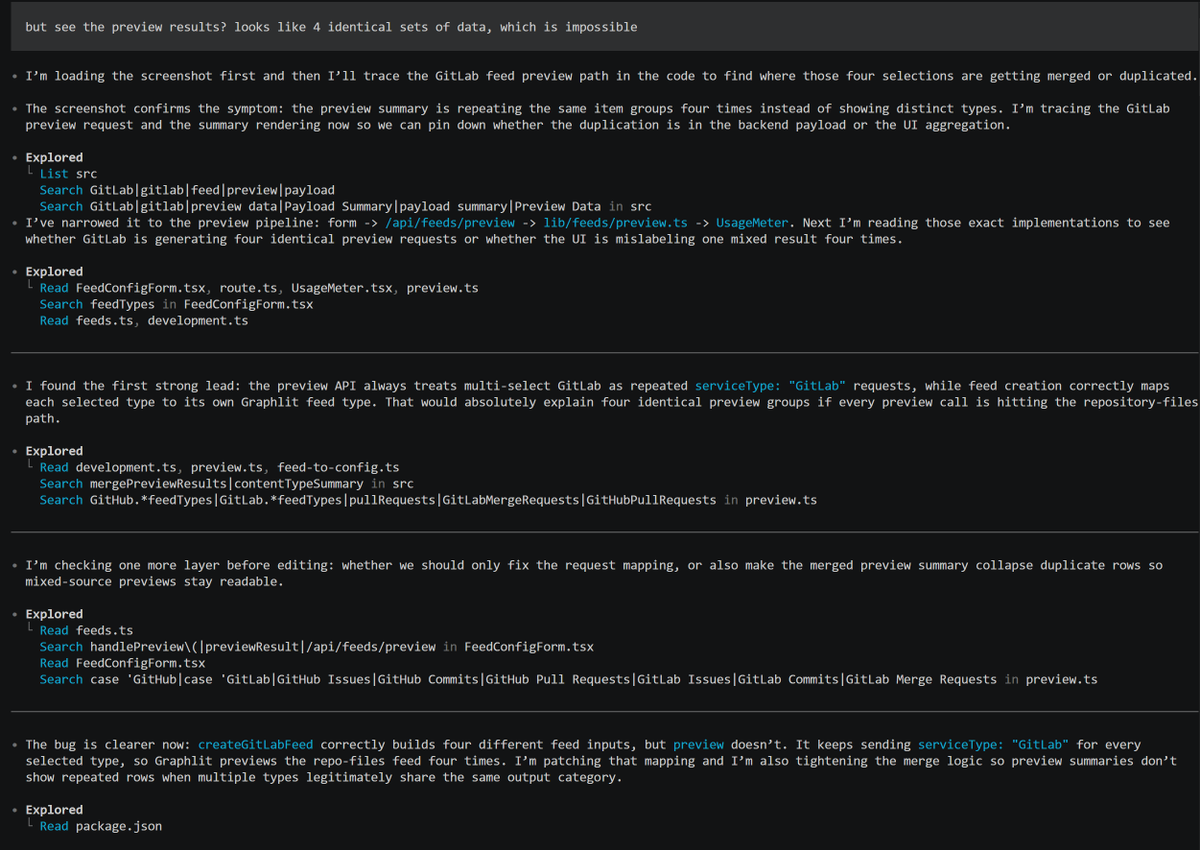
For Codex, here's where it endeds - showing a thorough understanding of what it found and what it fixed. And you can see it's on GPT-5.4 High.
Kirk Marple tweet media
English
0
0
2
226
Kirk Marple
Kirk Marple@KirkMarple·
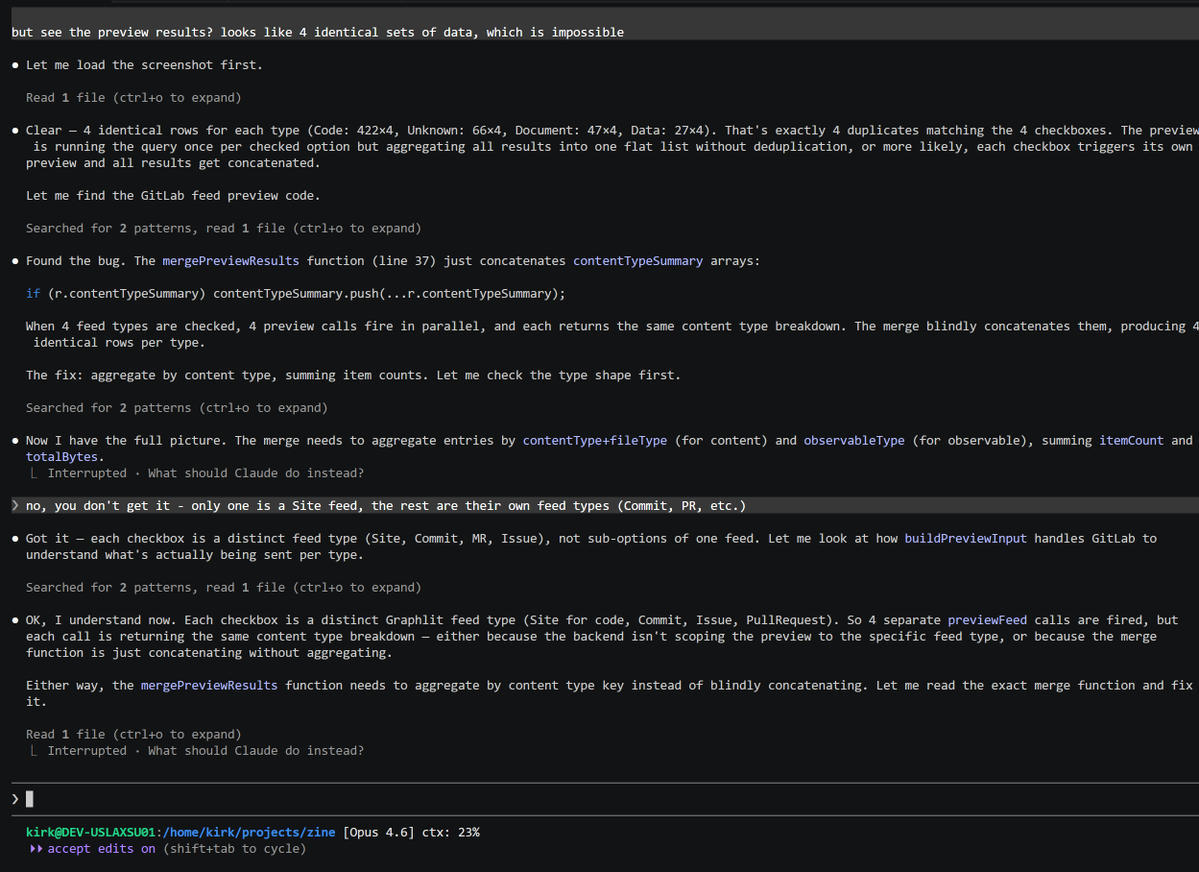
And here's Claude Code - barely doing any exploration. Not understanding the cause of the bug - it locks onto an incorrect assumption, and even with my guidance, it doesn't widen scope to look beyond that. This is with high effort on Opus 4.6.
Kirk Marple tweet media
English
1
0
1
193
Kirk Marple
Kirk Marple@KirkMarple·
Found an apples-to-apples comparison of where Claude Code seems to failing compared to Codex. Same prompt, same screenshot of the UI bug. Look at how much exploration Codex does before attempting a fix, compared to CC. I swear that CC used to be more proactive in researching - and we even have reminders about this in CLAUDE.md.
Kirk Marple tweet media
English
2
0
7
1.8K
Kirk Marple
Kirk Marple@KirkMarple·
Going from talking to Claude Code to talking to Codex feels like, going from talking to an elementary schooler to talking to a grad student. It’s honestly shocking how thorough Codex is in comparison. Even with Opus 4.6 and high effort compared to GPT-5.4 high. (Appreciate they cleared the weekly usage limit too.)
English
4
0
12
682
Kirk Marple
Kirk Marple@KirkMarple·
Is anyone else getting random Gemini timeouts? I can run 100 calls to Flash or Flash Lite, and a couple will hit a 3min timeout. The rest complete in under 10sec. Been happening for months, and I don’t see others talking about it. cc: @OfficialLoganK
English
5
0
5
395
Kirk Marple
Kirk Marple@KirkMarple·
Love this. It’s one of the most eloquent portrayals of all the hidden complexity behind building any software product. I feel this everyday, where you’re not just trying to build something for agents, you’re having to manage a billing system - and understand the right semantics for disabling a customer when payments haven’t gone through. The list is endless.
Coffee with One 🇺🇸@coffeewithone

Let me tell you why Mintlify needs 50 people to "host .md files" and why 50 is actually too low. I was the first intern at @mintlify. I sat three feet from Han and Hahnbee every single day. I watched this thing get built. People see docs.stripe. com and think "oh, markdown renderer." That's like looking at Google and saying "oh, a text box." Let me walk you through what's actually under the water. You want search? Not Cmd+K that returns garbage. Search that understands what a user means when they type "how do I authenticate." That's a whole retrieval pipeline. Embeddings. Ranking. Re-ranking. Edge caching so it feels instant in Tokyo and São Paulo. That alone is a team. You want self-updating docs? That means Mintlify is watching your codebase, detecting when your API changes, and flagging docs that are now lying to your users. Surprise! That's not a cron job anymore. That's diffing, parsing, mapping endpoints to prose, and doing it without false positives that destroy trust. That's another team. WYSIWYG editing? Sounds simple until you realize you're building a real-time collaborative editor that outputs clean MDX, not the garbage HTML that every rich text editor loves to produce. You're fighting ProseMirror. You're fighting the browser. You're fighting every edge case where someone pastes from Google Docs and injects 50 nested span tags. Hahnbee taught me everything I know about engineering in those wall, and half of what she taught me was how to wrestle with exactly this kind of problem. The type safety was less about being academic and more about survival. One wrong type and the editor breaks for 10,000 companies. Custom components? That means shipping a component library wuth interactive API playgrounds, code blocks with syntax highlighting for 60+ languages, tabbed containers, callouts, cards. BTW that has to render identically in the editor, in the build, in SSR, in the preview. Four rendering contexts. One source of truth. If you've ever tried to make a React component behave the same in SSR and client-side, you know that's a PhD thesis disguised as a feature. Authentication. Gated docs. Role-based access. SSO? That means Mintlify is now in the auth business, which means they're in the security business, which means SOC 2, pen testing, token rotation, session management. For docs. AI analytics. Not pageview counters. Understanding which docs are confusing users, which searches return nothing, where people rage-quit. That's event pipelines, ML models, and dashboards that have to make sense to a DevRel person who doesn't know what a funnel is. SEO/GEO. Mintlify doesn't just host your docs. They make your docs rank. Structured data. Sitemap generation. OpenGraph images generated on the fly. Meta tag optimization. Performance scores that stay green when you have 4,000 pages. That's infrastructure. MCP servers. CLI tooling. Content checks that lint your docs like ESLint lints your code. CMS for non-technical writers to ship without a deploy. And I'm not even going to get into the other hundred things. Versioning. Multi-language support. Custom domain provisioning with automatic SSL. Git sync that doesn't corrupt on merge conflicts. Preview deployments for every PR. Broken link detection across your entire site graph. Rate limiting on the API playground. WebSocket handling for real-time collaboration. OG image generation that actually respects your brand fonts. Middleware for custom routing logic. MDX compilation that doesn't choke on edge cases. Custom CSS injection without breaking the component tree. Cache invalidation, which, if you know, you know, across a globally distributed CDN. Each one of those is a rabbit hole. Each one has a person at Mintlify who has lost sleep over it. I watched founders of Mintlify obsess over this. @handotdev would be the last person to leave at night and the first person in the office the next morning. He'd find a 200ms latency spike in the build pipeline and lose sleep over it. I watched him rewrite the entire settings page once. He did it not because it was broken, but because a user had to think for two seconds about where a toggle lived. He tore the whole thing apart and rebuilt it so that every section, every label, every grouping made immediate spatial sense. You open it, you know exactly where everything is. No customer filed a ticket for that. The culture of Mintlify is refusing to ship anything that makes a user feel lost, even for a moment, even on a page most people visit once. @hahnbeelee was the same. Not only she taught me everything about Engineering I know today, she also taught me why things were built the way they were. Why this abstraction was chosen over that one. Why we don't take shortcuts even when the deadline is tomorrow. Every PR review was a lesson in caring about things that users would never consciously notice but would absolutely feel. We moved fast. Extremely fast. But we cared. A lot. About things most people would never see. The spacing between elements in the sidebar. The animation curve on the search modal. The way code blocks handle overflow on mobile. The fallback behavior when a component fails to render. They were less about building features and more about the difference between docs that feel like a product and docs that feel like an afterthought. "But why can't you just vibe code it?" You know who decided to use Mintlify instead of vibecoding? @cursor_ai uses Mintlify. @AnthropicAI uses Mintlify. @Lovable used Mintlify @twilio use Mintlify, @perplexity_ai uses Mintlify @Cloudflare use Mintlify These are the most technical, most demanding companies on earth. They could build their own docs. They have the engineers. They chose not to. Ask yourself why. It's because docs infrastructure is a bottomless pit of complexity that has nothing to do with your core product. Every hour your engineers spend fixing a broken sidebar link or debugging why your OpenGraph images aren't generating is an hour they're not shipping features. Mintlify makes that whole problem disappear. Vibe coding gets you a demo. It doesn't get you a system that serves 50 million page views without flinching. It doesn't get you an editor that 10,000 companies trust to not eat their content. It doesn't get you search that actually works. It doesn't get you infra that passes a SOC 2 audit. It doesn't get you the kind of reliability where Anthropic is comfortable pointing their entire developer ecosystem at your platform. Mintlify is the infrastructure that looks invisible when it's working, which is exactly why people underestimate it. "50 people to host .md files." No. 50 people to build the platform that the best companies in the world trust with the first thing their developers see. And honestly? 50 is actually too low.
English
1
1
10
1.4K