K. K. 💫

6.7K posts

K. K. 💫 banner
K. K. 💫

K. K. 💫

@kkworld

Tech Lead building AI systems that actually scale 🤖 Backend architecture | Flutter apps | Real-world dev stories Building at @RoastMyProd

localhost Katılım Haziran 2020
580 Takip Edilen1.4K Takipçiler
Aryan
Aryan@aryanlabde·
Stop building more features. Start marketing them. Only way to make money.
English
94
6
154
3.3K
Aryan
Aryan@Aryan_2190·
@TTrimoreau Well I did it on some product hunt websites but yet had go no response
English
1
0
1
3
Thomas Trimoreau
Thomas Trimoreau@TTrimoreau·
Is Product Hunt still worth launching on?
English
69
1
63
7.1K
Sonnyvanwiele
Sonnyvanwiele@sonnyvanwiele·
@TTrimoreau Not really. Sign ups on the day of launch to upvote your product are not treated fairly by the algorithm.
English
0
0
2
25
Craig Short
Craig Short@Craig_Gigged·
@TTrimoreau Didn’t help me much. Really need to drive your upvotes and get eyes on your product yourself anyway
English
1
0
0
10
Giwon Ryu
Giwon Ryu@GiwonRyu·
@TTrimoreau product hunt doesn't hunt products anymore.They hunt Ads.
English
4
0
3
280
KorayAskin
KorayAskin@buildwithkoray·
@TTrimoreau we’ve launched on uneed, tinylaunch, devhunt, fazier and others none really worked still waiting on product hunt, but starting to feel like it’s all a bit overrated
English
3
0
6
373
Niz
Niz@nizbuilds·
@TTrimoreau I recently tried - they deleted my entry because it didn’t meet their quality standards 🤡
English
5
0
5
337
K. K. 💫 retweetledi
Hasan Toor
Hasan Toor@hasantoxr·
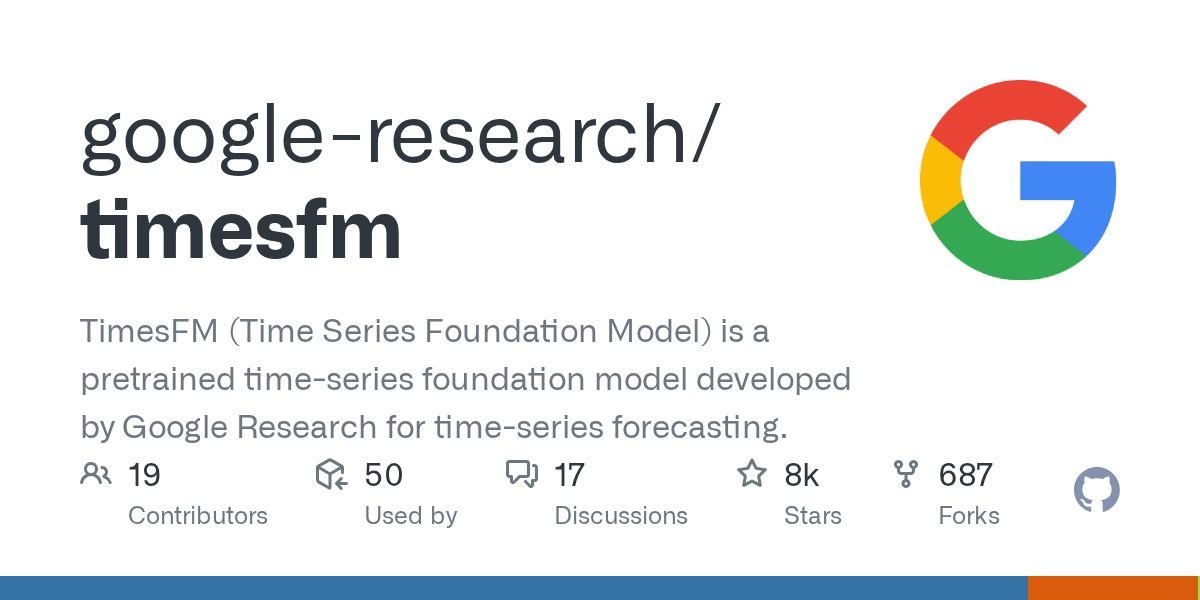
🚨 Google open-sourced a time series foundation model that works on any data, zero training required. It's called TimesFM and it forecasts out of the box. → No dataset-specific training needed → Trained on 100B real-world time-points → Works across traffic, weather, and demand forecasting → Drop in your data and get predictions instantly 100% Opensource.
Hasan Toor tweet media
English
11
106
570
35.8K
Tarang Agarwal
Tarang Agarwal@tarang8811·
Tuesday builder roll call 🛠️ If you're: → Writing code today → Building a SaaS → Shipping something this week Drop what you're working on. I'll check out every reply. Let's connect with real builders 👇
English
24
0
20
734
(Oma)devuae
(Oma)devuae@delveroin·
Happy new month builders & founders Drop your URL lets send some traffic there
English
107
0
64
2.8K
Ardent_Dev
Ardent_Dev@ardent__dev·
Your product isn't bad. It just needs the right marketing boost to get seen. Drop your product below 👇 The best ones will get featured on EverFeatured, among quality products 🚀
English
6
0
4
83
Giyu
Giyu@rutu_3·
Drop some good project ideas Let's see who is still GOAT!!
English
19
1
21
911
Paul Mit
Paul Mit@pmitu·
Marketing campaigns don't work. Marketing is an open conversation.
English
50
4
71
2.5K
K. K. 💫
K. K. 💫@kkworld·
🧐
Tech with Mak@techNmak

Someone removed the vector database from RAG and got better results. Much better. Here's what traditional RAG actually does under the hood: it chunks your document into pieces, embeds those pieces into vectors, and retrieves based on semantic similarity. The assumption is that similar text = relevant text. That assumption breaks completely for professional documents. When you ask "what were the debt trends in Q3?", vector search returns chunks that look similar to that question. But the actual answer might be buried in an appendix, referenced across three sections, in a part of the document that shares zero semantic overlap with your query. Traditional RAG never finds it. Similarity ≠ relevance. PageIndex was built around that insight. Inspired by AlphaGo, it builds a hierarchical tree index from your document - an intelligent table of contents optimized for LLM reasoning. Then it navigates that tree the way a human expert would. Not pattern matching. Reasoning. "Debt trends are usually in the financial summary or Appendix G, let's look there." What disappears: → No vector DB to build or maintain → No arbitrary chunking that breaks cross-section context → No opaque retrieval you can't explain or trace What you get: → Retrieval traceable to exact page and section references → Multi-step reasoning across document structure → Works on financial reports, legal filings, regulatory documents The benchmark: → PageIndex: 98.7% on FinanceBench → Perplexity: 45% → GPT-4o: 31% Open source.

ART
0
0
2
9