Kléber Cabral

2K posts

Kléber Cabral banner
Kléber Cabral

Kléber Cabral

@kleber_mc

New is always better.

Katılım Ocak 2010
290 Takip Edilen130 Takipçiler
Kléber Cabral retweetledi
Cássio Oliveira
Cássio Oliveira@cassioolivveira·
🚨COMPARTILHE: Esses são os Parlamentares que votaram CONTRA o Desenrola Brasil e CONTRA O NOSSO DIREITO DE RENEGOCIAR DÍVIDAS! 🥇Abílio Brunini (PL-MT) 🥈Adriana Ventura (NOVO-SP) 🥉Bibo Nunes (PL-RS) 🥇Daniel Freitas (PL-SC) 🥈Alexandre Ramagem (PL-RJ) 🥉Filipe Barros (PL-PR) 🥇Gilson Marques (NOVO-SC) 🥈Gustavo Gayer (PL-GO) 🥉Júlia Zanatta (PL-SC) 🥇Junio Amaral (PL-MG) 🥈Luiz Philippe de Orleans (PL-SP) 🥉Marcel Van Hattem (NOVO-RS) 🥇Márcio Alvino (PL-SP) 🥈Maurício Marcon (PODEMOS-RS) 🥉Nikolas Ferreira (PL-MG) 🥇Ricardo Salles (PL-SP) 🥈Sóstenes Cavalcante (PL-RJ) 🥉Coronel Zucco (REP-RS)
Cássio Oliveira tweet mediaCássio Oliveira tweet media
Português
219
1.9K
7.4K
426.7K
Kléber Cabral
Kléber Cabral@kleber_mc·
Ops
The Cultural Tutor@culturaltutor

A wise man is warned about a divine flood that will destroy the world, so he builds a boat for his family and all the animals. They survive and humanity starts again. This is NOT the story of Noah's Ark. It's the Akkadian story of Atrahasis, written 1,000 years before Genesis. There are several Ancient Mesopotamian flood myths dating back to at least 2,000 BC. The Sumerians, Akkadians, and Babylonians all told slightly different versions of the same story, in which the protagonist was called Ziusudra, Atrahasis, or Utnapishtim (who also features in the Epic of Gilgamesh!) In all cases its basic narrative is the same. This is the Akkadian story of Atrahasis: The Annunaki (major gods) create the Igigi to dig canals for them. But eventually the Igigi grow tired of this manual labour and rebel, so the Annunaki create humanity to do labour instead, as suggested by Enki, god of water and wisdom. But the humans become too numerous; the gods are annoyed by how loud they are and how rarely they pray. Plus Ellil, god of the earth and air, can't sleep because of the noise humanity makes. So he sends plagues and famines to reduce overpopulation. The humans endure, however, and he decides to end them once and for all with a catastrophic flood. Enki is supposed to keep this plan secret. But he tells a man called Atrahasis (whose name means "very wise") about the flood and advises him to build a boat. Atrahasis builds the boat exactly as told, puts his family and wild animals on board, and survives the flood. Ellil is angry with Enki, but he agrees to find other ways of controlling human population, such as cursing them with miscarriages. One important difference between the story of Atrahasis and those of Ziusudra and Utnapishtim is that, in the latter two, they are rewarded for surviving the flood with immortality. Hence why Gilgamesh searches out Utnapishtim in order to learn the secret of living forever. It became clear in the 19th century that the story of Noah's Ark as told in the Book of Genesis was derived from these much older Mesopotamian flood myths. The broad story is the same and so are many of the minor details, especially from the Utnapishtim version: sending out birds to see if the waters have receded, the goddess Ishtar creating a rainbow to show that the divine anger has ceased, and the boat coming to rest on a mountain. But that isn't surprising. Mesopotamia had a huge influence on the religions of surrounding regions. Many (but not all) of the Greek gods were directly descended, via the Phoenicians and other Eastern Mediterranean cultures, from the Mesopotamian gods. There's even a flood in Ancient Greek mythology. Deucalion, the son of Prometheus, is aided by his father in building a boat to survive the flood sent by Zeus to destroy humanity. So why all these flood myths? No doubt there is rich symbolic depth to the story, hence its survival for centuries and its changing interpretations by different cultures and religions. But it may have historical origins too. When excavating the Sumerian city of Ur in the 1920s, Sir Leonard Woolley found a huge layer of sand and clay separating two different eras of construction. It was four hundred miles long and one hundred miles wide; this could only have been left by a catastrophic flood dated to around 2,900 BC — which fits with the chronology established in Mesopotamian mythology. So was this the "original" flood? Woolley thought so, but the myth could go back even further. Some theorists argue that stories about floods might date back to the end of the last Ice Age 12,000 years ago. Sea levels rose as the glaciers melted, with catastrophic consequences for prehistoric humanity for the following six thousand years. It seems reasonable to assume that cataclysmic events of such magnitude would have loomed large in our cultural memory, passed on from one generation to the next. Or not! We don't know for sure — and perhaps we never will — but these many versions of the flood myth are a wonderful example of how events and the stories we tell about them echo through history. There was evidently something about this myth, whatever its historical truth, that captivated people time and time again. And even though most people today wouldn't say they believe in "mythology", we haven't changed the way we tell, understand, reshape, and interpret stories. How many different versions of Batman and Spiderman are there, for example, and how long will we go on retelling their stories? Who knows what future historians will make of our modern fascination with superheroes...


QST
0
0
0
32
Kléber Cabral retweetledi
OpenAI
OpenAI@OpenAI·
ChatGPT can now see, hear, and speak. Rolling out over next two weeks, Plus users will be able to have voice conversations with ChatGPT (iOS & Android) and to include images in conversations (all platforms). openai.com/blog/chatgpt-c…
English
1.7K
8.6K
38K
10.7M
Kléber Cabral retweetledi
Robert Scoble
Robert Scoble@Scobleizer·
Want GPT to hallucinate less? I learned tonight that if you add “if you don’t know, say you don’t know” to your prompt that it will generate far fewer incorrect answers. AI pioneer @AdrianKaehler1 told me that at dinner. So I asked GPT why that worked. Here is its answer. Aren’t large language models fun to try to figure out?
Robert Scoble tweet media
English
109
242
1.6K
489.9K
Kléber Cabral retweetledi
NASA
NASA@NASA·
Your package has been delivered. The #OSIRISREx sample return capsule containing rock and dust collected in space from asteroid Bennu has arrived at temporary clean room in Utah. The 4.5-billion-year-old sample will soon head to @NASA_Johnson for curation and analysis.
English
482
2.1K
10.7K
2.1M
Kléber Cabral retweetledi
g1
g1@g1·
Mulher relata discriminação em entrevista de emprego e conversa com recrutador repercute na web: 'Difícil contratar quem tem filhos' glo.bo/3PzWdJQ #g1
g1 tweet media
Português
479
559
9.9K
1.3M
Kléber Cabral retweetledi
Physics In History
Physics In History@PhysInHistory·
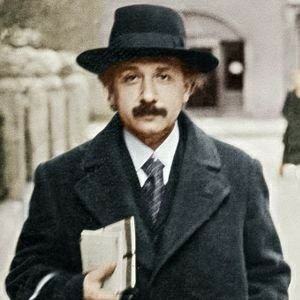
The meeting of A. Einstein and Rabindranath Tagore was a remarkable encounter between two of the most influential thinkers of the 20th century. They discussed various topics related to physics, philosophy, religion, art, and human nature. Their conversation revealed the differences and similarities between their worldviews, as well as their mutual respect and admiration. Einstein and Tagore met through a common friend, Dr. Mendel, who was a Jewish physician and a fan of Tagore's poetry. Tagore visited Einstein at his residence at Caputh in the suburbs of Berlin on July 14, 1930, and Einstein returned the call and visited Tagore at the Mendel home. Both conversations were recorded. One of the main themes of their dialogue was the nature of reality and truth. Einstein believed that there was a reality independent of human perception, and that truth was objective and universal. He cited the example of the Pythagorean theorem, which he claimed was true regardless of the existence of man. Tagore, on the other hand, argued that truth was essentially human, and that it was realized through our emotions and activities. He said that the world was a human world, and that science and religion were both expressions of human truth. Another topic they discussed was the concept of beauty. Einstein asked Tagore if beauty was independent of man, and if the Apollo of Belvedere would no longer be beautiful if there were no human beings. Tagore replied that beauty was not independent of man, but rather a harmony between man and the universe. He said that when our universe was in harmony with man, we knew it as truth and felt it as beauty. They also talked about their personal tastes in music. Einstein confessed that he did not appreciate Indian music, because he could not follow its rhythm and melody. He said that he preferred music that had clear structure and logic, such as Mozart's. Tagore explained that Indian music was based on improvisation and emotion, rather than on fixed rules and forms. He said that Indian music expressed the infinite personality of man, which comprehended the universe. 📷 photographed by photographer Martin Vos, ca. 1930
Physics In History tweet media
English
77
628
3.2K
408.2K
Kléber Cabral retweetledi
Physics In History
Physics In History@PhysInHistory·
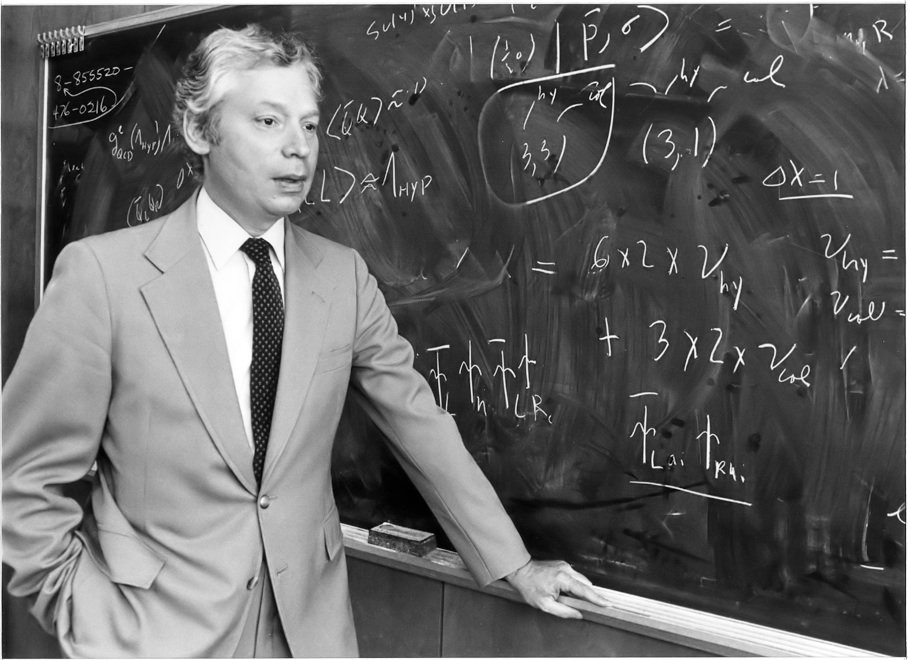
Steven Weinberg on 'God' 💭 Either by God you mean something definite or you don't mean something definite. If by God you mean a personality who is concerned about human beings, who did all this out of love for human beings, who watches us and who intervenes, then I would have to say in the first place how do you know, what makes you think so? And in the second place, is that really an explanation? If that's true, what explains that? Why is there such a God? It isn't the end of the chain of whys, it just is another step, and you have to take the step beyond that. -- in a 1998 PBS interview 📷Steve Hsu
Physics In History tweet media
English
67
188
1.1K
128.1K
Kléber Cabral retweetledi
O Criador
O Criador@OCriador·
Olá, você que se diz cristão: Jesus nunca disse a frase “pecador bom é pecador morto”. Tá ok?
Português
6
49
521
28.6K
Kléber Cabral retweetledi
Antonio Tabet
Antonio Tabet@antoniotabet·
Gabarito! Direita, conservadorismo e neoliberalismo não são bolsonarismo. Bolsonarismo é outra coisa. Bolsonarismo é isso aqui:
Português
442
3.4K
20.2K
869.4K
Kléber Cabral retweetledi
Physics In History
Physics In History@PhysInHistory·
The science of global warming beautifully and simply explained by Dr. Carl Sagan, ca. 1985.
English
396
6.2K
22.1K
3.3M
Kléber Cabral retweetledi
The Cultural Tutor
The Cultural Tutor@culturaltutor·
We're so used to seeing and hearing about the pyramids that it's easy to forget how strange and extraordinary they really are. So, just to remind you: When woolly mammoths went extinct the Pyramids of Giza were already more than 500 years old. Cleopatra and Julius Caesar are closer in time to the present day — to the Burj Khalifa — than to the construction of the Pyramids of Giza. Where are they and who built them? There are three pyramids on the Giza Plateau, which is on the west bank of the River Nile, in northern Egypt. They aren't far from Memphis, which was the capital of Ancient Egypt when they were constructed. The largest and oldest was built in less than thirty years around 2570 BC for the Pharaoh Khufu. The second was built for Khufu's son, Khafre, and is only a few metres shorter. The third and smallest was then built for Menkaure, Khafre's son. Three monumental tombs for three generations of the same family. Nearby are many more tombs for various members of the royal court, the Sphinx, several more temples, and the remains of a sort of workers' town including houses, workshops, bakeries, kitchens, breweries, a hospital, and a necropolis. Khufu's Pyramid, known as the Great Pyramid, was the tallest building in the world for over 3,800 years — that is, until the spire of Lincoln Cathedral in England was constructed in 1311. And at more than 6 million tonnes it was the heaviest manmade structure ever built, and is still third behind only the Great Wall of China and the Three Gorges Dam. The mortar used in constructing the Great Pyramid alone weighs over half a million tons, which is more than the total weight of the Burj Khalifa. See, the Great Pyramid is almost entirely solid — there are only a few narrow shafts and three small chambers inside. It was largely built from huge blocks of local Giza limestone, although its exterior was once covered in polished white limestone transported there from nearby Tura, and its interior includes blocks of granite weighing up to 80 tonnes transported from Aswan, over 500 miles away. The *precision* of the pyramids is also remarkable. On a technical level their masonry is astonishingly accurate, but even more amazing is that the four sides of the Great Pyramid are all almost exactly the same length — they have a variation of no more than 60 millimetres. Not to forget that all three pyramids are aligned according to the points of the compass — within one tenth of a degree of perfect geographical accuracy. And if these facts weren't impressive enough, the actual construction of the pyramids — the specifics of how the blocks were quarried, transported, and lifted into place — remains a marvel we have yet to fully understand. But those are merely the facts of the Pyramids of Giza; perhaps more interesting is what they really mean. After all, you can learn a lot about any society from its architecture. What we say about ourselves can rarely be trusted — but what we do and what we leave behind is always truthful. In other words, that which we build expresses our priorities, how our society works, and who has the most power. Think of it this way: what are the biggest buildings in the modern world? By volume it is factories (the Boeing Everett Factory is number one right now) and distribution centres. By total floor space it is airports and malls. By height it is mixed-used skyscrapers, though they are usually dominated by offices, especially relating to finance. The Pentagon was the world's largest office building until this year; it has been overtaken by the Surat Diamond Bourse in India. By capacity? Well, there are sports stadiums, the biggest of which is the Narendra Modi Stadium in India, with an official capacity of 132,000. That being said, no single complex can hold a greater number of people than the Masjid al-Haram in Mecca, which has a capacity of 4 million. So the largest buildings in the 21st century are almost all related to industry, finance, retail, transport, and leisure — with religious worship something of an outlier. This is a technologically advanced, industrial, highly consumerist society in which businesses hold a great deal of power, and in which the wants and demands of the public are very important. For comparison, during the Middle Ages nothing came remotely close to cathedrals in size or complexity, though castles and fortresses were also far bigger than everything else. We can draw the basic conclusion that religion was of immense and central importance, that the church as an institution was very wealthy, and that power was actually spread out among the hereditary nobility rather than being entirely concentrated in the monarch alone, not to mention the political and spiritual power also held by the church. So, what about the Pyramids? The Ancient Greek historian Herodotus remarked that the Pyramids of Giza were proof of how tyrannical a ruler Khufu — or Cheops, as the Greeks called him — must have been. In his native Greece the largest buildings were temples for public worship; the Great Pyramid was a monument to but one man alone, and this shocked Herodotus. The biggest buildings of the 21st century are all useful. They have a clear and immediate purpose, and usually one which benefits — in some sense — lots of people. A factory produces things we all use, a distribution centre organises our online shopping, an office is a place of work, and a stadium is where we go for entertainment. Our largest buildings are intimately and inseparably related to employment and consumption. What about the Pyramids? They were tombs for the Pharaohs and they were supposed to last forever. In other words, they had no immediate use or purpose, at least for the living. They served only one person: the Pharaoh — plus his family and closest supporters, though they were buried nearby rather than inside — in his journey through the Afterlife. So this is not the same as a large and lavish royal or presidential palace; such buildings are designed to be used as a seat of power and administration — by several succeeding generations or leaders. Meanwhile, all the resources and labour that went into building the Pyramids, which were literally manmade mountains, were for the benefit of one Pharaoh alone, after his life had ended — and, to a lesser extent, those lucky enough to have been buried nearby at the time. Does that mean Khufu and his descendants were tyrants? In some sense, yes. But there is evidence that those who built the Pyramids were not, as Herodotus thought, slaves, and were instead closer to conscripted workers and freely employed craftsmen who were fairly remunerated for their labour. See, it wasn't just that Khufu held total political power; he was also the spiritual leader of his subjects, such that their work was fundamentally religious in nature — it might have even helped them achieve a better afterlife. There was nobody who could refuse Khufu's desire to build the largest tomb in human history, because he was a divinely appointed intermediary between gods and humans; no regulation to stop him, because his will was the law; no limits to his expenditure, because he collected the taxes and owned all the land in the kingdom. However powerful the world's richest and most influential people might now seem, none of it compares to the power wielded by Pharaohs like Khufu; a power that was political, financial, legal, military, and spiritual — absolute. And so the Pyramids are a glimpse into a society fundamentally and almost irreconcilably different from that in which we now live, to the earliest epochs of human civilisation, long before democracy and the rule of law, when one man could rule as a god and have mountains built to serve as his personal, eternal monument on earth.
The Cultural Tutor tweet media
English
814
6.5K
46.5K
9M
Kléber Cabral retweetledi
Fascinating
Fascinating@fasc1nate·
After the Nazis took Adolfo Kaminsky's mother's life in 1941, he became a part of the French resistance when he was 17. Throughout World War 2, he spent most of his time creating fake passports in a hidden lab in Paris. It's believed that he helped save around 14,000 French Jews. “I’ll always remember our biggest request for documents. 300 children in 3 days. It wasn’t possible. I had to stay awake as long as possible. Fight against sleep. The math was simple. In one hour, I made 30 fake documents. If I slept for one hour, 30 people would die. My biggest fear was making a technical mistake, any little detail that might escape me. On every document rests the life or death of a human being. So I worked, worked, worked until I passed out. When I woke up, I kept working. We couldn’t stop."
Fascinating tweet media
English
211
2.9K
27.8K
2.4M
Kléber Cabral retweetledi
Joana Darc
Joana Darc@joanadarc_am·
A gente só sai da frente do IBAMA com a Filó livre! #filólivre
Manaus, Brazil 🇧🇷 Português
532
253
2.2K
786.8K
Kléber Cabral retweetledi
Ivan Baron ⭐️🦯
Ivan Baron ⭐️🦯@ivanbaron·
O PLOT TWIST DESSE VÍDEO
Português
2.4K
19.2K
123.3K
5.5M
Kléber Cabral retweetledi
Augusto de Arruda Botelho
Augusto de Arruda Botelho@augustodeAB·
O Ministério da Justiça criou um canal para denúncias. Se você tiver informações sobre os terroristas que atentaram contra a democracia faça contato com: denuncia@mj.gov.br
Português
606
7.6K
23.9K
1M