Kuna Lakshmi Vara Prasad

664 posts

Kuna Lakshmi Vara Prasad banner
Kuna Lakshmi Vara Prasad

Kuna Lakshmi Vara Prasad

@klvp5

🦊 🦅

Earth Katılım Mart 2018
141 Takip Edilen9 Takipçiler
Kuna Lakshmi Vara Prasad retweetledi
Miguel Ángel Durán
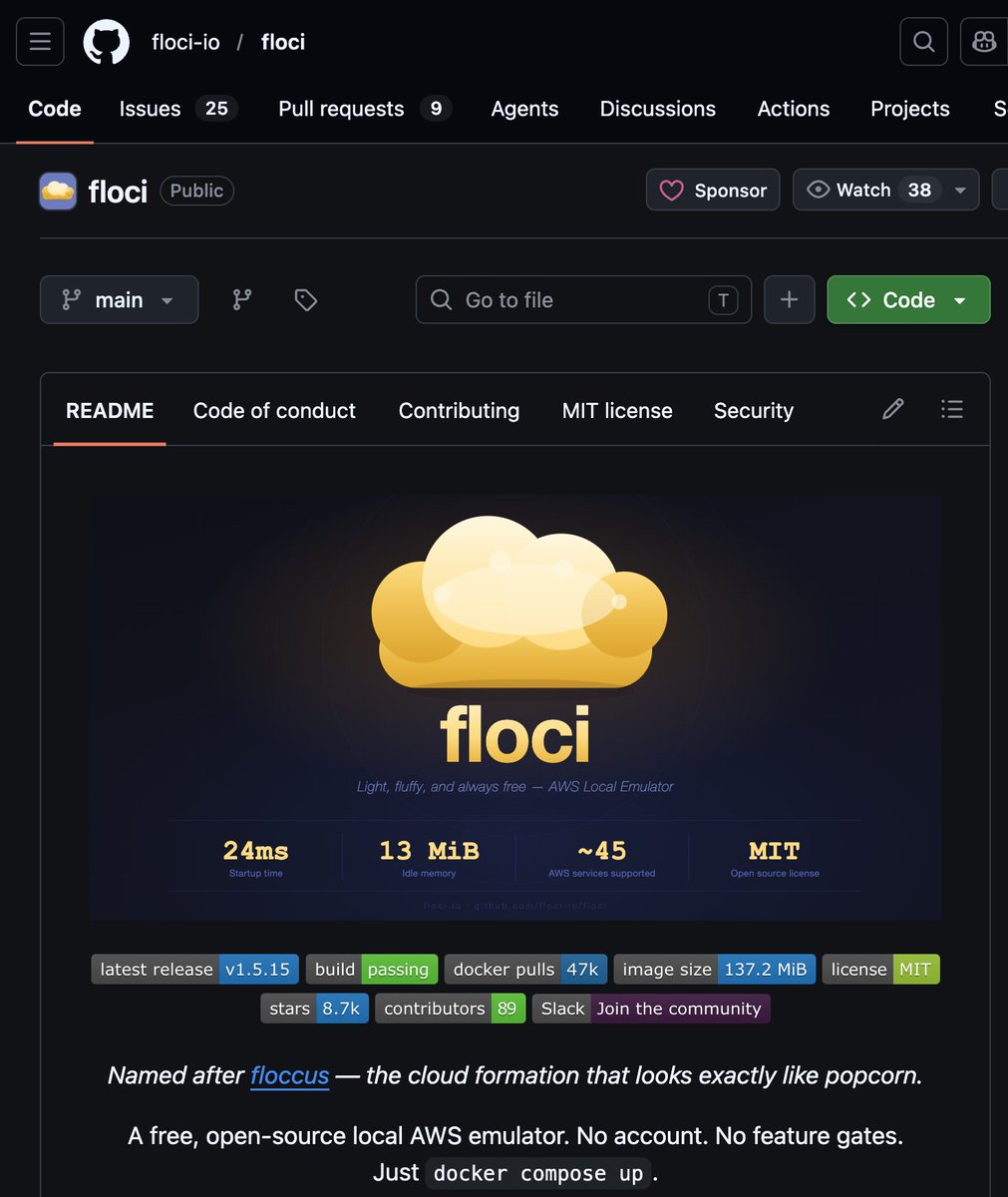
Este proyecto te permite tener AWS en local y gratis. Sin cuentas ni trucos. Perfecto para practicar. Se llama Floci y tiene 47 servicios: S3, SQS, Lambda, DynamoDB, RDS... github.com/floci-io/floci
Miguel Ángel Durán tweet media
Español
20
446
3.3K
117.4K
Kuna Lakshmi Vara Prasad retweetledi
Saurabh Dubey
Saurabh Dubey@SaurabhDub28465·
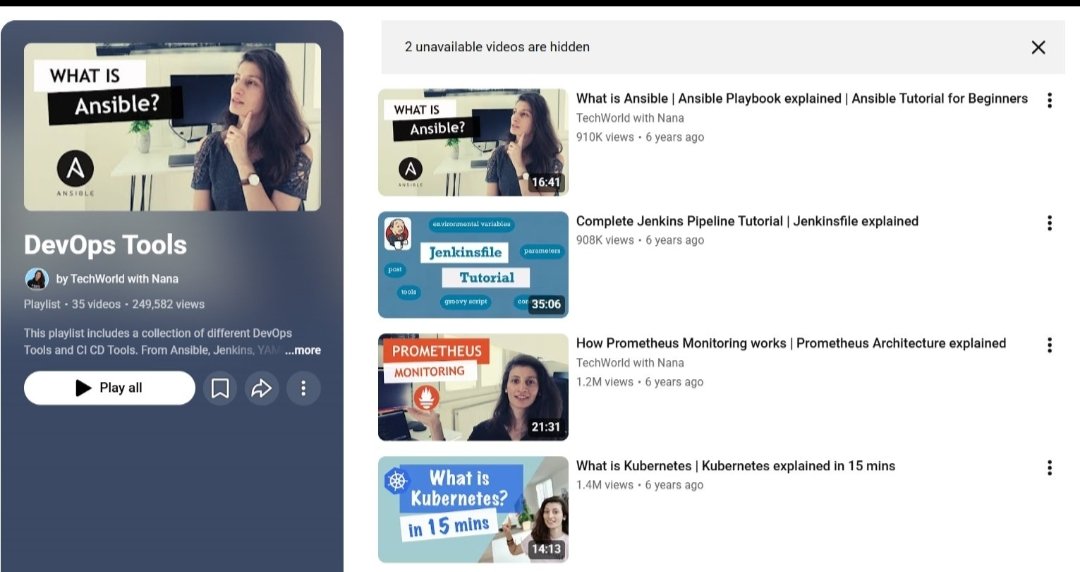
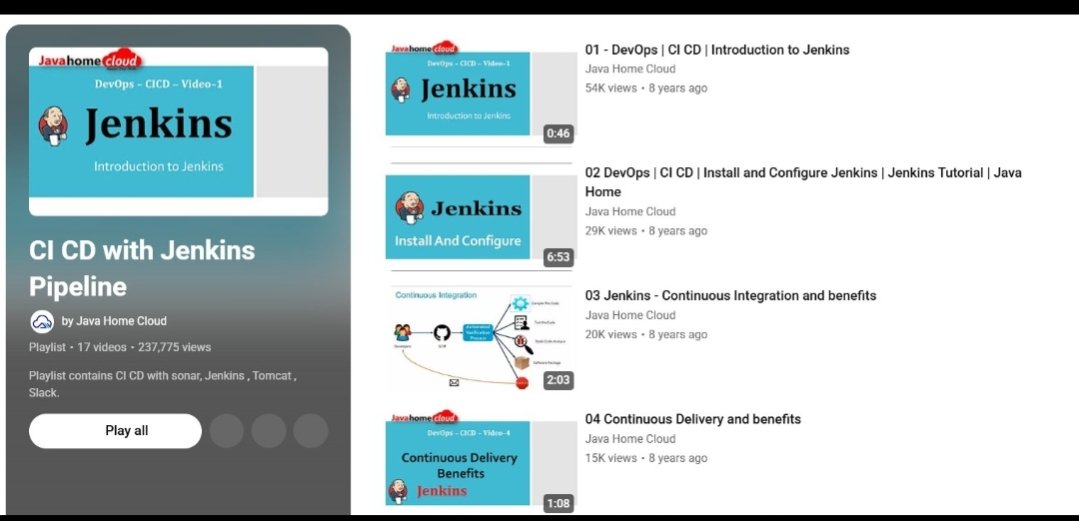
12 Completely FREE DevOps Courses for 2026: DevOps MasterClass - Git, Docker, Jenkins, Kubernetes, Terraform t.co/7107ydZK02 DevOps Projects CI/CD with Jenkins, Ansible, Docker and Kubernetes t.co/f2EDSWftfB DevOps Tools t.co/Lz2Ry4z33C DevOps Micro Internship t.co/FknZ3LFYV5 DevOps Projects t.co/QbUBJm78e2 CI/CD Pipeline using Jenkins t.co/NC8JvWEHXY CI/CD with Jenkins Pipeline t.co/Q6xenu2BPW Complete DevOps Course 2026 t.co/uyDaUHFqKb Shell Scripting for DevOps t.co/zbi22sUHES Bash Scripting on Linux t.co/symOMSqApw Shell Scripting Tutorial for Beginners t.co/yyzjhh7Oyz Azure DevOps Tutorial t.co/eCXJzE5qf0 ❤️ Like 🔁 Repost 🔖 Bookmark Follow me @SaurabhDub28465 for more such youtube playlists & productivity content. #free #courses #resources
Saurabh Dubey tweet mediaSaurabh Dubey tweet mediaSaurabh Dubey tweet mediaSaurabh Dubey tweet media
English
15
58
197
5.5K
Kuna Lakshmi Vara Prasad retweetledi
Level Up Coding
Level Up Coding@LevelUpCoding_·
Git Branching Strategies (explained in under 2 mins): 𝗙𝗲𝗮𝘁𝘂𝗿𝗲 𝗯𝗿𝗮𝗻𝗰𝗵𝗶𝗻𝗴 keeps each feature in its own branch, isolated from the main branch; making pull requests easier to review. Once complete, the feature is merged back into main. 𝗚𝗶𝘁𝗳𝗹𝗼𝘄 uses two long-lived branches: dev for development and main for production. Features are built in separate branches, then merged into dev. Releases are prepared in dedicated branches before merging into production. 𝗚𝗶𝘁𝗟𝗮𝗯 𝗳𝗹𝗼𝘄 combines feature branching with environment-based deployment workflows. Changes move through environments like staging before reaching production, making it well-suited for CI/CD and staged releases. 𝗚𝗶𝘁𝗛𝘂𝗯 𝗳𝗹𝗼𝘄 simplifies things. The main branch is always deployable. Developers create short-lived branches, open pull requests, and merge once approved, often triggering deployment. 𝗧𝗿𝘂𝗻𝗸-𝗯𝗮𝘀𝗲𝗱 𝗱𝗲𝘃𝗲𝗹𝗼𝗽𝗺𝗲𝗻𝘁 minimizes branching. Changes are merged into main frequently, supported by strong automated testing, CI pipelines, and feature flags to maintain stability. Each strategy solves the same core problem: How do teams move fast without breaking the system? But most issues don’t come from the branching model, they come from inside the branches: unclear changes, weak reviews, missing context. That’s what CodeRabbit Agent helps solve. A single agent inside your workflow that follows work end-to-end. It pulls your org’s context into one place and helps teams investigate, plan, and execute work directly from Slack. So instead of losing context between branches, your work stays connected as it evolves. 𝗧𝗿𝘆 𝗖𝗼𝗱𝗲𝗥𝗮𝗯𝗯𝗶𝘁 𝗔𝗴𝗲𝗻𝘁 𝗳𝗼𝗿 𝗳𝗿𝗲𝗲 → lucode.co/coderabbit-age… What else would you add? —— ♻️ Repost to help others learn and grow. 🙏 Thanks to @coderabbitai for sponsoring this post.
Level Up Coding tweet media
Nikki Siapno@NikkiSiapno

Git branching strategies: Do you know the differences? 𝗙𝗲𝗮𝘁𝘂𝗿𝗲 𝗯𝗿𝗮𝗻𝗰𝗵𝗶𝗻𝗴 keeps each feature in its own branch, isolated from the main branch; making pull requests easier to review. Once complete, the feature is merged back into main. 𝗚𝗶𝘁𝗳𝗹𝗼𝘄 uses two long-lived branches: dev for development and main for production. Features are built in separate branches, then merged into dev. Releases are prepared in dedicated branches before merging into production. 𝗚𝗶𝘁𝗟𝗮𝗯 𝗳𝗹𝗼𝘄 combines feature branching with environment-based deployment workflows. Changes move through environments like staging before reaching production, making it well-suited for CI/CD and staged releases. 𝗚𝗶𝘁𝗛𝘂𝗯 𝗳𝗹𝗼𝘄 simplifies things. The main branch is always deployable. Developers create short-lived branches, open pull requests, and merge once approved, often triggering deployment. 𝗧𝗿𝘂𝗻𝗸-𝗯𝗮𝘀𝗲𝗱 𝗱𝗲𝘃𝗲𝗹𝗼𝗽𝗺𝗲𝗻𝘁 minimizes branching. Changes are merged into main frequently, supported by strong automated testing, CI pipelines, and feature flags to maintain stability. Each strategy solves the same core problem: How do teams move fast without breaking the system? But most issues don’t come from the branching model, they come from inside the branches: unclear changes, weak reviews, missing context. That’s what CodeRabbit Agent helps solve. A single agent inside your workflow that follows work end-to-end. It pulls your org’s context into one place and helps teams investigate, plan, and execute work directly from Slack. So instead of losing context between branches, your work stays connected as it evolves. 𝗧𝗿𝘆 𝗖𝗼𝗱𝗲𝗥𝗮𝗯𝗯𝗶𝘁 𝗔𝗴𝗲𝗻𝘁 𝗳𝗼𝗿 𝗳𝗿𝗲𝗲 → lucode.co/coderabbit-age… What else would you add? —— ♻️ Repost to help others learn and grow. 🙏 Thanks to @coderabbitai for sponsoring this post. ➕ Follow me ( Nikki Siapno ) to improve at system design.

English
2
11
46
3.8K
Kuna Lakshmi Vara Prasad retweetledi
Dhanian 🗯️
Dhanian 🗯️@e_opore·
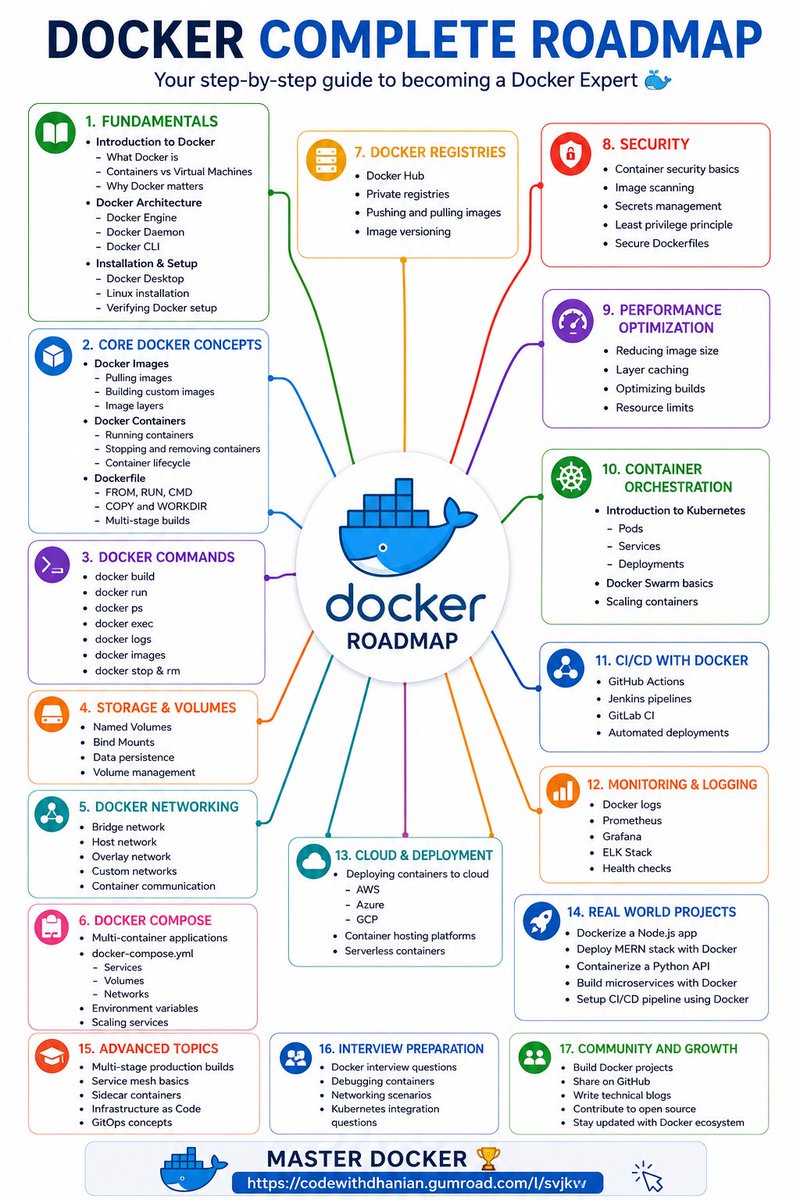
Docker Complete Roadmap | | | |-- Fundamentals | |-- Introduction to Docker | | |-- What Docker is | | |-- Containers vs Virtual Machines | | |-- Why Docker matters | |-- Docker Architecture | | |-- Docker Engine | | |-- Docker Daemon | | |-- Docker CLI | |-- Installation & Setup | | |-- Docker Desktop | | |-- Linux installation | | |-- Verifying Docker setup | | |-- Core Docker Concepts | |-- Docker Images | | |-- Pulling images | | |-- Building custom images | | |-- Image layers | |-- Docker Containers | | |-- Running containers | | |-- Stopping and removing containers | | |-- Container lifecycle | |-- Dockerfile | | |-- FROM, RUN, CMD | | |-- COPY and WORKDIR | | |-- Multi-stage builds | | |-- Docker Commands | |-- docker build | |-- docker run | |-- docker ps | |-- docker exec | |-- docker logs | |-- docker images | |-- docker stop & rm | | |-- Storage & Volumes | |-- Named Volumes | |-- Bind Mounts | |-- Data persistence | |-- Volume management | | |-- Docker Networking | |-- Bridge network | |-- Host network | |-- Overlay network | |-- Custom networks | |-- Container communication | | |-- Docker Compose | |-- Multi-container applications | |-- docker-compose.yml | | |-- Services | | |-- Volumes | | |-- Networks | |-- Environment variables | |-- Scaling services | | |-- Docker Registries | |-- Docker Hub | |-- Private registries | |-- Pushing and pulling images | |-- Image versioning | | |-- Security | |-- Container security basics | |-- Image scanning | |-- Secrets management | |-- Least privilege principle | |-- Secure Dockerfiles | | |-- Performance Optimization | |-- Reducing image size | |-- Layer caching | |-- Optimizing builds | |-- Resource limits | | |-- Container Orchestration | |-- Introduction to Kubernetes | | |-- Pods | | |-- Services | | |-- Deployments | |-- Docker Swarm basics | |-- Scaling containers | | |-- CI/CD with Docker | |-- GitHub Actions | |-- Jenkins pipelines | |-- GitLab CI | |-- Automated deployments | | |-- Monitoring & Logging | |-- Docker logs | |-- Prometheus | |-- Grafana | |-- ELK Stack | |-- Health checks | | |-- Cloud & Deployment | |-- Deploying containers to cloud | | |-- AWS | | |-- Azure | | |-- GCP | |-- Container hosting platforms | |-- Serverless containers | | |-- Real World Projects | |-- Dockerize a Node.js app | |-- Deploy MERN stack with Docker | |-- Containerize a Python API | |-- Build microservices with Docker | |-- Setup CI/CD pipeline using Docker | | |-- Advanced Topics | |-- Multi-stage production builds | |-- Service mesh basics | |-- Sidecar containers | |-- Infrastructure as Code | |-- GitOps concepts | | |-- Interview Preparation | |-- Docker interview questions | |-- Debugging containers | |-- Networking scenarios | |-- Kubernetes integration questions | | |-- Community and Growth | |-- Build Docker projects | |-- Share on GitHub | |-- Write technical blogs | |-- Contribute to open source | |-- Stay updated with Docker ecosystem Grab this ebook to Master Docker codewithdhanian.gumroad.com/l/svjkv
Dhanian 🗯️ tweet media
English
7
98
482
10.4K
Kuna Lakshmi Vara Prasad retweetledi
Dhanian 🗯️
Dhanian 🗯️@e_opore·
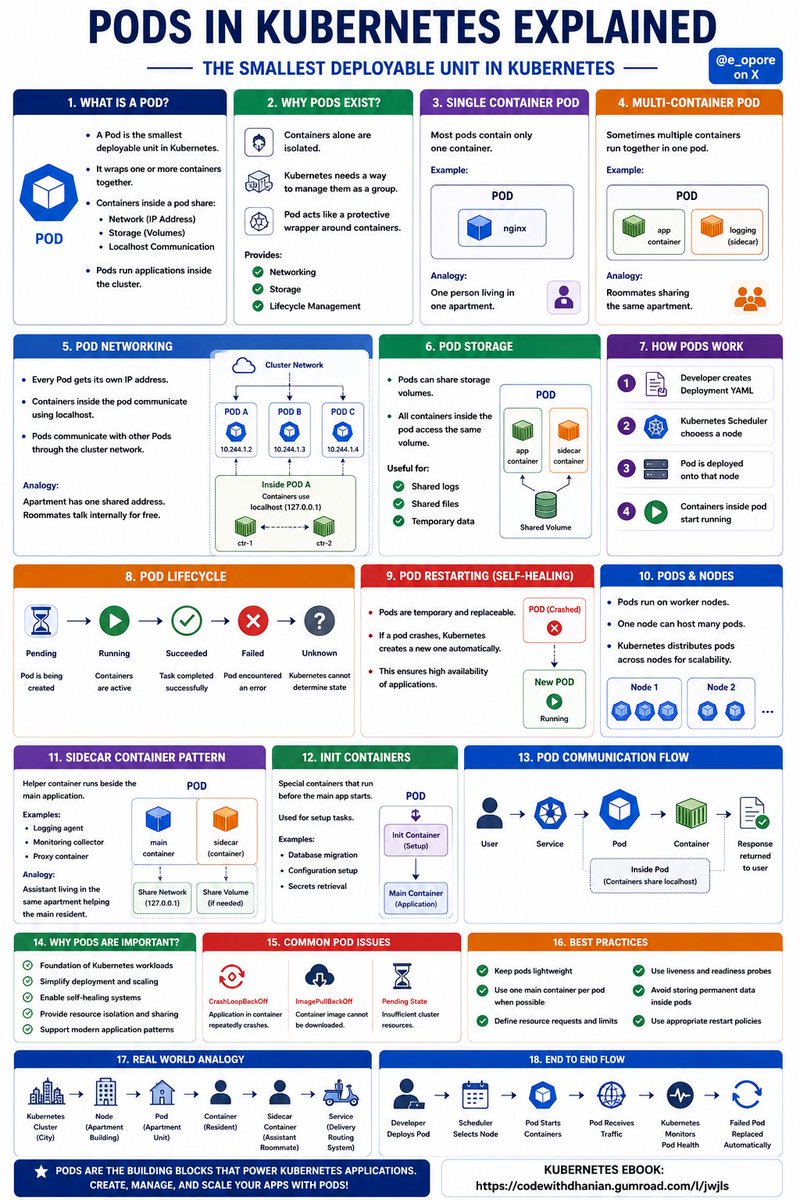
PODS IN KUBERNETES EXPLAINED Think of a Pod like a small apartment unit inside a huge Kubernetes city. Inside the apartment, containers live together, share resources, and work as a team. WHAT IS A POD → a Pod is the smallest deployable unit in Kubernetes → it wraps one or more containers together → containers inside a pod share: → network → storage → localhost communication → Pods run applications inside the cluster WHY PODS EXIST → containers alone are isolated → Kubernetes needs a way to manage them as a group → Pod acts like a protective wrapper around containers → provides: → networking → storage → lifecycle management SINGLE CONTAINER POD → most pods contain only one container → example → nginx web server inside one pod → analogy → one person living in one apartment MULTI-CONTAINER POD → sometimes multiple containers run together in one pod → containers cooperate closely → example → main app container → logging sidecar container → analogy → roommates sharing the same apartment POD NETWORKING → every Pod gets its own IP address → containers inside the pod communicate using localhost → Pods communicate with other Pods through the cluster network → analogy → apartment has one shared address → roommates talk internally for free POD STORAGE → Pods can share storage volumes → all containers inside the pod access the same volume → useful for: → shared logs → shared files → temporary data HOW PODS WORK → developer creates deployment YAML → Kubernetes scheduler chooses a node → Pod is deployed onto that node → containers inside pod start running POD LIFECYCLE → Pending → pod is being created → Running → containers are active → Succeeded → task completed successfully → Failed → pod encountered an error → Unknown → Kubernetes cannot determine state POD RESTARTING → Pods are temporary and replaceable → if a pod crashes → Kubernetes creates a new one automatically → this ensures high availability PODS & NODES → Pods run on worker nodes → one node can host many pods → Kubernetes distributes pods across nodes for scalability SIDECAR CONTAINER PATTERN → helper container runs beside the main application → examples → logging agent → monitoring collector → proxy container → analogy → assistant living in the same apartment helping the main resident INIT CONTAINERS → special containers that run before the main app starts → used for setup tasks → examples → database migration → configuration setup POD COMMUNICATION FLOW → user sends request → service routes traffic → pod receives request → container processes request → response returned to user WHY PODS ARE IMPORTANT → foundation of Kubernetes workloads → simplify deployment and scaling → enable self-healing systems → provide resource isolation and sharing COMMON POD ISSUES → CrashLoopBackOff → app repeatedly crashes → ImagePullBackOff → container image cannot be downloaded → Pending state → insufficient cluster resources BEST PRACTICES → keep pods lightweight → use one main container per pod when possible → define resource limits → use health probes → avoid storing permanent data inside pods REAL WORLD ANALOGY → Kubernetes cluster = city → node = apartment building → pod = apartment unit → container = resident inside apartment → sidecar container = assistant roommate → service = delivery routing system END TO END FLOW → developer deploys pod → scheduler selects node → pod starts containers → pod receives traffic → Kubernetes monitors pod health → failed pod replaced automatically Grab the KUBERNETES EBOOK: codewithdhanian.gumroad.com/l/jwjls
Dhanian 🗯️ tweet media
English
9
67
323
9K
Kuna Lakshmi Vara Prasad retweetledi
Dhanian 🗯️
Dhanian 🗯️@e_opore·
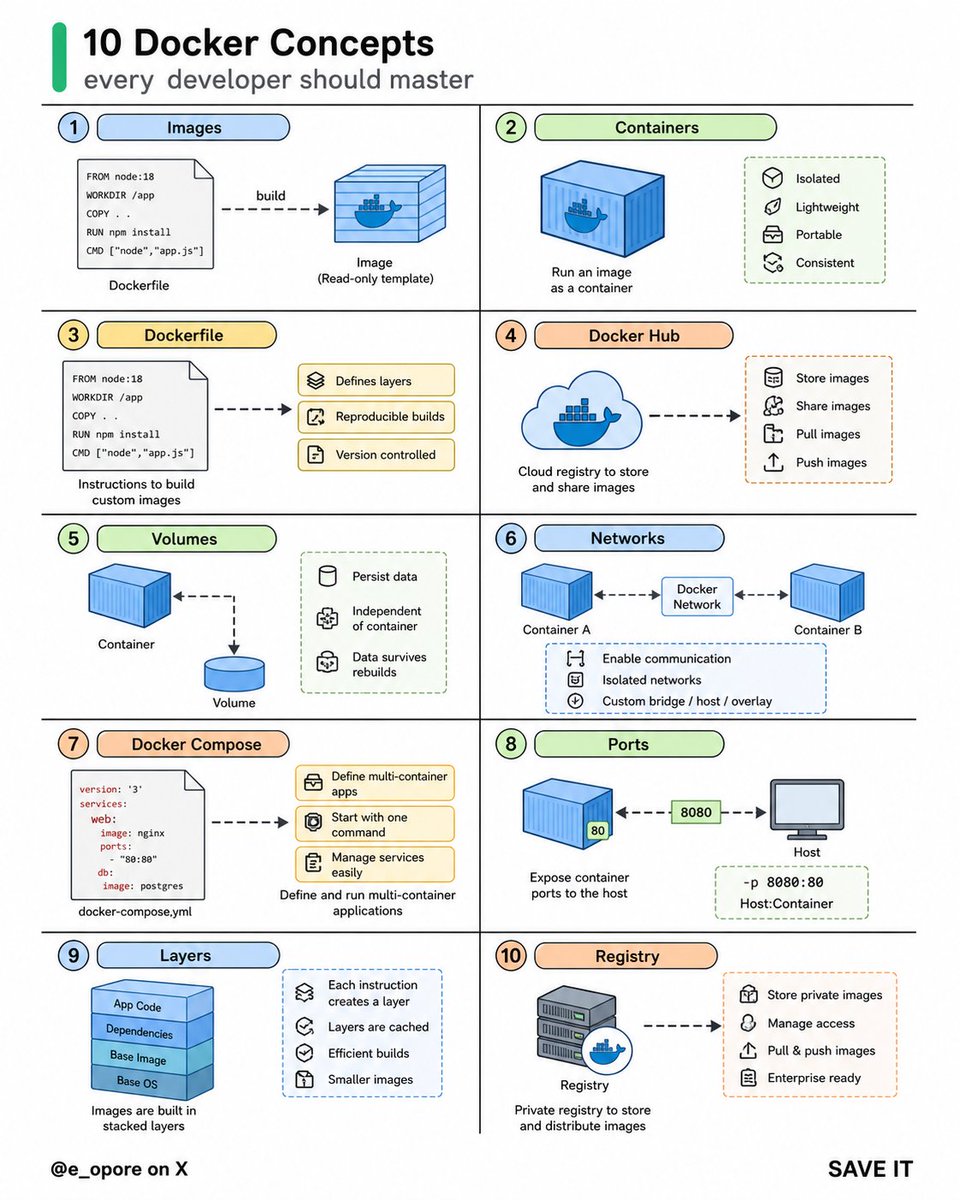
10 Docker concepts every developer should master: 1. Images — read-only templates used to create containers 2. Containers — lightweight, isolated environments to run applications 3. Dockerfile — instructions to build custom images 4. Docker Hub — registry to store and share images 5. Volumes — persist data outside containers 6. Networks — enable communication between containers 7. Docker Compose — define and run multi-container applications 8. Ports — expose container services to the host 9. Layers — optimize image build and caching 10. Registry — manage and distribute container images Grab the Docker Ebook: codewithdhanian.gumroad.com/l/ekrhhc
Dhanian 🗯️ tweet media
English
8
139
556
13.1K
Kuna Lakshmi Vara Prasad retweetledi
Cyber_Racheal
Cyber_Racheal@CyberRacheal·
Linux doesn't have to cost a dime. Here are the best free resources to level up your skills in 2026: 1. Linux Foundation Training – Professional-grade introductory courses.
training.linuxfoundation.org/training/intro… 2. Linux Journey – A beautifully organized, beginner-friendly learning path.
linuxjourney.com 3. Ubuntu Tutorials – Step-by-step guides for the world’s most popular distro.
ubuntu.com/tutorials 4. Red Hat Training Resources – Enterprise-level learning for developers.
developers.redhat.com/learn 5. GNU Documentation – The "source of truth" for core Linux utilities.
gnu.org/manual 6. OverTheWire Bandit – Learn through "wargames" that make the CLI feel like a puzzle.
overthewire.org/wargames 7. The Linux Command Line Book – A legendary, comprehensive guide for terminal mastery.
linuxcommand.org/tlcl.php 8. MIT Missing Semester – Essential tools and CLI techniques they don't always teach in college.
missing.csail.mit.edu 9. DigitalOcean Linux Tutorials – Practical, hands-on guides for server management.
digitalocean.com/community/tuto… 10. Linux From Scratch – The ultimate deep dive: build your own OS from the ground up.
linuxfromscratch.org 11. Arch Linux Wiki – Widely considered the best technical documentation in the Linux world.
wiki.archlinux.org 12. freeCodeCamp Linux Course – High-quality, project-based tutorials.
freecodecamp.org/news/tag/linux 13. Linux Survival – An interactive browser-based terminal for safe practicing.
linuxsurvival.com Courtesy of : @twtayaan
Cyber_Racheal tweet media
English
8
348
1.4K
43.7K
Kuna Lakshmi Vara Prasad retweetledi
Swapna Kumar Panda
Swapna Kumar Panda@swapnakpanda·
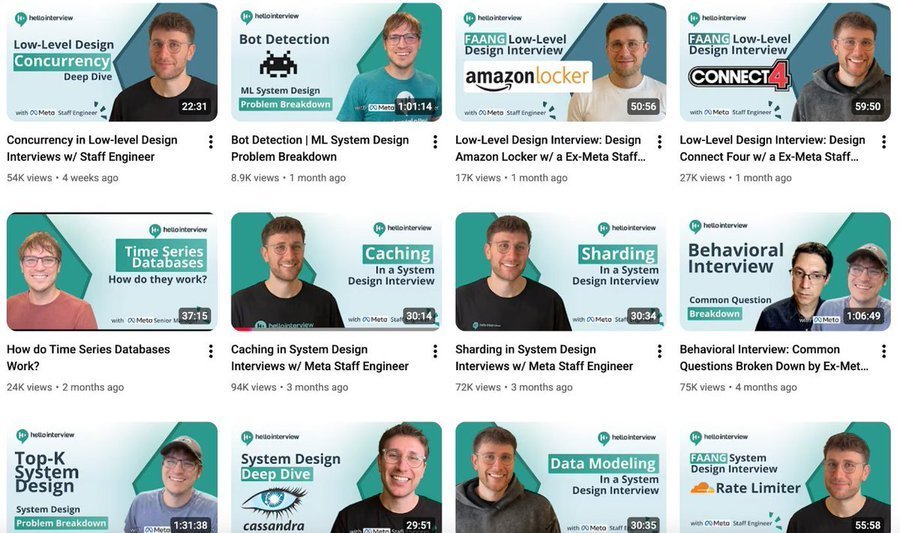
One of the BEST channels for System Design: → @_hellointerview" target="_blank" rel="nofollow noopener">youtube.com/@_hellointervi… 1. API Design youtube.com/watch?v=DQ57zY… 2. Sharding youtube.com/watch?v=L521gi… 3. Caching youtube.com/watch?v=1NngTU… 4. Concurrency youtube.com/watch?v=d8rmos… 5. Data Modeling youtube.com/watch?v=TUcPS6… 6. Rate Limitter youtube.com/watch?v=TUcPS6…
YouTube video
YouTube
YouTube video
YouTube
YouTube video
YouTube
YouTube video
YouTube
YouTube video
YouTube
Swapna Kumar Panda tweet media
Swapna Kumar Panda@swapnakpanda

DeepSeek V4 isn’t a Claude-killer; it’s a Claude-bill-killer. V4-Pro output is 7x cheaper than Opus. V4-Flash is 90x cheaper. Now we can try these for free on ZenMux. It's a limited time offer. Sign up and start building instantly. V4 Pro → zenmux.ai/deepseek/deeps… V4 Flash → zenmux.ai/deepseek/deeps… About ZenMux: - ZenMux is an OpenRouter Alternative. - Use one API Key for 200+ LLMs. - Fully compatible with OpenAI/Anthropic protocols. - Integrate into any dev tool in under 3 minutes.

English
20
186
789
51.5K
Kuna Lakshmi Vara Prasad retweetledi
Saurav Chaudhary
Saurav Chaudhary@sauravstwt·
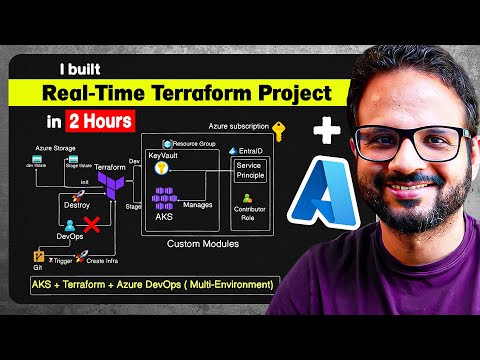
6 FREE Cloud Projects that can literally change your DevOps game Stop scrolling. Save this. Everyone talks about “learning DevOps” Very few actually build something real. If you’re serious about AWS, Azure, or GCP… these projects are your shortcut from theory → real skills → job-ready. 🟥 Amazon Web Services (AWS) Projects - Deploy a containerized web app on ECS with CI/CD (Beginner) - Go from code → Docker → pipeline → production - Watch tutorial: youtube.com/watch?v=4xd1eM… - Build an EKS cluster with Terraform (Intermediate) - Kubernetes + Infrastructure as Code = 🔥 📘 Lab guide: youtube.com/watch?v=LZssMf… 🟥 Azure Projects - End-to-end infra with Terraform & Azure DevOps (Intermediate) - This is what real enterprise setups look like 📘 Lab guide: youtube.com/watch?v=hj5gbh… - Real-time DevOps with Azure DevOps & GitOps (Beginner → Advanced) - Understand GitOps the way companies actually use it 📘 Lab guide: youtube.com/watch?v=dmGW22… 💾 Repo: github.com/iam-veeramalla… 🟥 Google Cloud Projects - CI/CD with Cloud Build & Cloud Deploy for GKE (Beginner) - Build → Test → Release like a pro 📘 Lab guide: youtube.com/watch?v=L_1qbt… - GitHub Actions + Terraform CI/CD on GCP (Intermediate) - Full automation. Zero excuses. 📘 Lab guide: youtube.com/watch?v=0PwvhW… 💡 Real Talk: If your resume only has courses… you’re already behind. Projects like these are what get you shortlisted. 👉 Build 👉 Document on GitHub 👉 Post your learnings Consistency > Talent Feel free to share this post with your network or tag someone who might be interested!
YouTube video
YouTube
YouTube video
YouTube
YouTube video
YouTube
YouTube video
YouTube
YouTube video
YouTube
YouTube video
YouTube
GIF
English
3
50
254
7.4K
Kuna Lakshmi Vara Prasad retweetledi
Shraddha Bharuka
Shraddha Bharuka@BharukaShraddha·
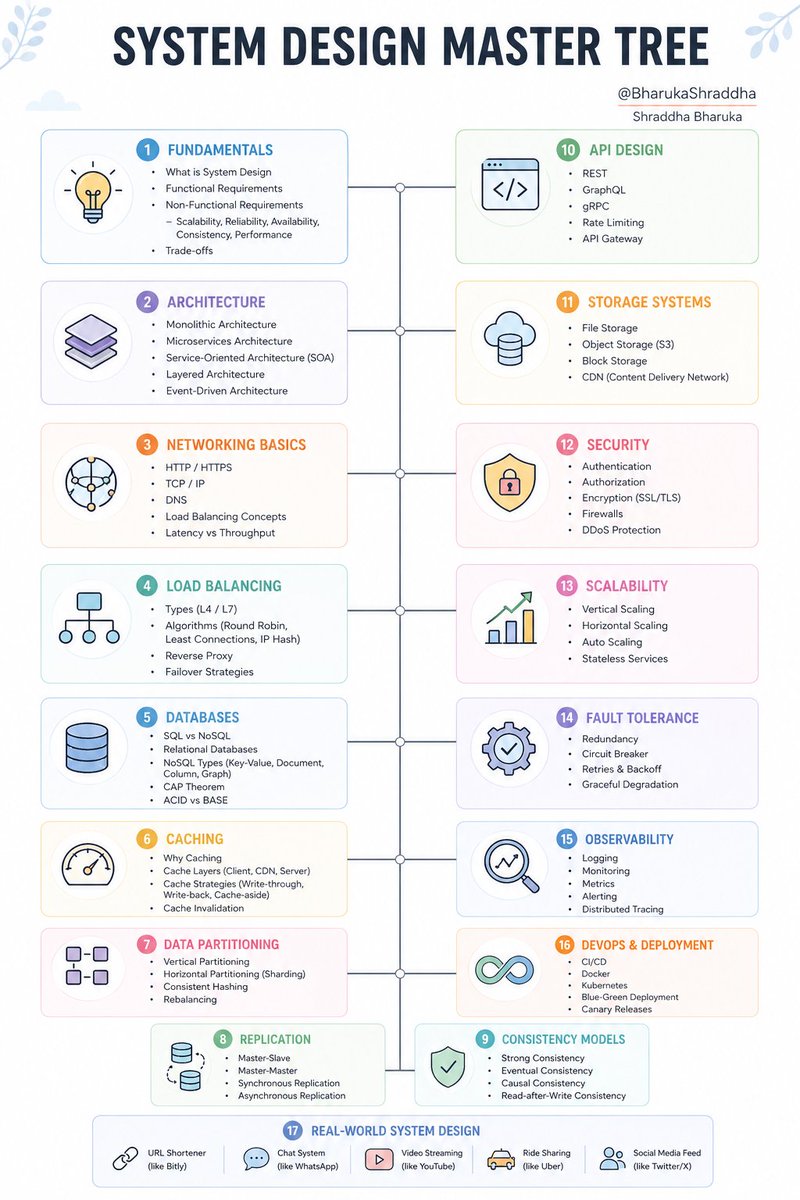
MASTER SYSTEM DESIGN SYSTEM DESIGN MASTER TREE │ ├── 1. Fundamentals │ ├── What is System Design │ ├── Functional Requirements │ ├── Non-Functional Requirements │ │ ├── Scalability │ │ ├── Reliability │ │ ├── Availability │ │ ├── Consistency │ │ └── Performance │ └── Trade-offs │ ├── 2. Architecture Basics │ ├── Monolithic Architecture │ ├── Microservices Architecture │ ├── Service-Oriented Architecture (SOA) │ ├── Layered Architecture │ └── Event-Driven Architecture │ ├── 3. Networking Basics │ ├── HTTP / HTTPS │ ├── TCP / IP │ ├── DNS │ ├── Load Balancing Concepts │ └── Latency vs Throughput │ ├── 4. Load Balancing │ ├── Types (L4 / L7) │ ├── Algorithms │ │ ├── Round Robin │ │ ├── Least Connections │ │ └── IP Hash │ ├── Reverse Proxy │ └── Failover Strategies │ ├── 5. Databases │ ├── SQL vs NoSQL │ ├── Relational Databases │ ├── NoSQL Types │ │ ├── Key-Value │ │ ├── Document │ │ ├── Column │ │ └── Graph │ ├── CAP Theorem │ └── ACID vs BASE │ ├── 6. Caching │ ├── Why Caching │ ├── Cache Layers │ │ ├── Client-side │ │ ├── CDN │ │ ├── Server-side │ ├── Cache Strategies │ │ ├── Write-through │ │ ├── Write-back │ │ └── Cache-aside │ └── Cache Invalidation │ ├── 7. Data Partitioning │ ├── Vertical Partitioning │ ├── Horizontal Partitioning (Sharding) │ ├── Consistent Hashing │ └── Rebalancing │ ├── 8. Replication │ ├── Master-Slave │ ├── Master-Master │ ├── Synchronous Replication │ └── Asynchronous Replication │ ├── 9. Consistency Models │ ├── Strong Consistency │ ├── Eventual Consistency │ ├── Causal Consistency │ └── Read-after-Write Consistency │ ├── 10. Messaging Systems │ ├── Message Queues │ ├── Pub/Sub Systems │ ├── Kafka / RabbitMQ │ ├── Event Streaming │ └── Exactly-once / At-least-once Delivery │ ├── 11. API Design │ ├── REST │ ├── GraphQL │ ├── gRPC │ ├── Rate Limiting │ └── API Gateway │ ├── 12. Storage Systems │ ├── File Storage │ ├── Object Storage (S3) │ ├── Block Storage │ └── CDN (Content Delivery Network) │ ├── 13. Security │ ├── Authentication │ ├── Authorization │ ├── Encryption (SSL/TLS) │ ├── Firewalls │ └── DDoS Protection │ ├── 14. Scalability │ ├── Vertical Scaling │ ├── Horizontal Scaling │ ├── Auto Scaling │ └── Stateless Services │ ├── 15. Fault Tolerance │ ├── Redundancy │ ├── Circuit Breaker │ ├── Retries & Backoff │ └── Graceful Degradation │ ├── 16. Observability │ ├── Logging │ ├── Monitoring │ ├── Metrics │ ├── Alerting │ └── Distributed Tracing │ ├── 17. Deployment & DevOps │ ├── CI/CD │ ├── Docker │ ├── Kubernetes │ ├── Blue-Green Deployment │ └── Canary Releases │ └── 18. Real-World System Design ├── URL Shortener (like Bitly) ├── Chat System (like WhatsApp) ├── Video Streaming (like YouTube) ├── Ride Sharing (like Uber) └── Social Media Feed (like Twitter/X)
Shraddha Bharuka tweet media
English
12
240
1K
35.6K
Kuna Lakshmi Vara Prasad retweetledi
Vaishnavi
Vaishnavi@_vmlops·
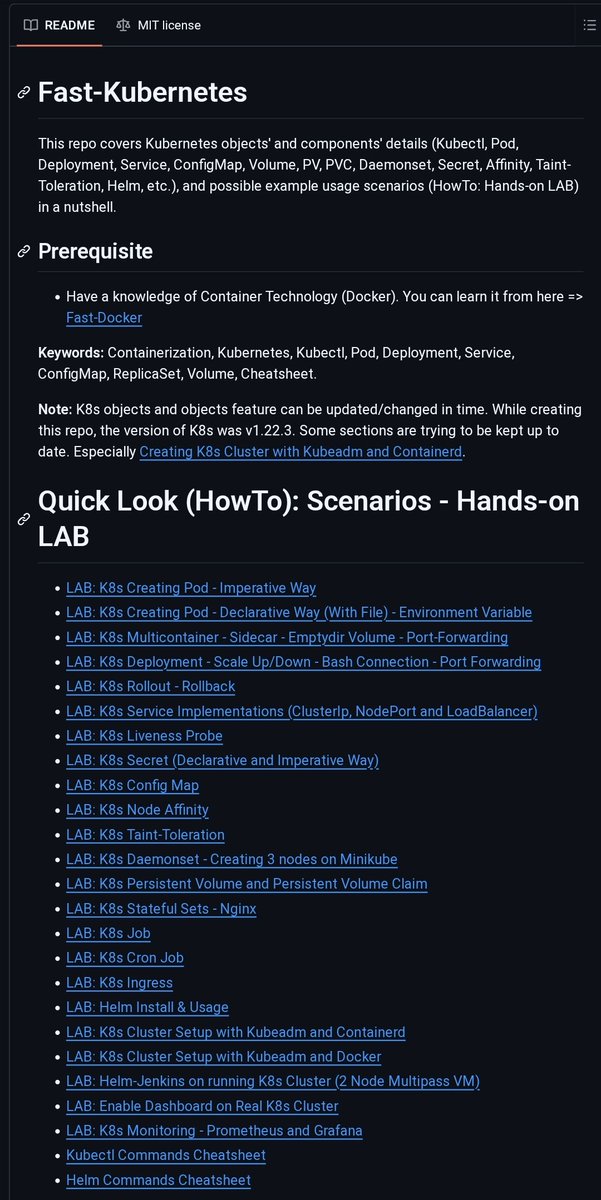
KUBERNETES ALWAYS LOOKED OVERWHELMING UNTIL I FOUND THIS REPO I remember staring at my first kubectl command like it was written in a different language pods, deployments, services, ingress, PVCs everyone kept throwing terms around like they were obvious they weren't obvious I spent weeks watching tutorials that explained concepts but never made me actually build anything then i found Fast-Kubernetes no fluff...no 10-hour courses... just here's the concept, here's the lab, go run it yourself you learn pods by creating them you learn rollouts by breaking them and rolling back you learn persistent volumes by setting up a real mysql pod with storage that survives restarts that's how it clicked for me the repo covers everything ▫️ pods, deployments, services, configmaps, secrets ▫️ daemonsets, stateful sets, persistent volumes ▫️ ingress, RBAC, taint-toleration, node affinity ▫️ prometheus + grafana monitoring setup ▫️ full kubeadm cluster from scratch ▫️ helm with jenkins, kubectl cheatsheet included every single topic has a hands-on lab attached if you've been putting off learning kubernetes because it felt too big this is where you start → github.com/omerbsezer/Fas…
Vaishnavi tweet media
English
5
154
973
50.3K
Kuna Lakshmi Vara Prasad retweetledi
Elora khatun
Elora khatun@elora_khatun·
15 blogs that will help you become a better engineer: 1. Uber Engineering: uber.com/blog/engineeri… 2. Airbnb Tech Blog: airbnb.tech/blog 3. OpenAI Engineering: openai.com/news/engineeri… 4. AWS Architecture: aws.amazon.com/blogs/architec… 5. Netflix TechBlog: netflixtechblog.com 6. Discord Engineering: discord.com/category/engin… 7. Anthropic Engineering: anthropic.com/engineering 8. NVIDIA Developer: developer.nvidia.com/blog 9. Slack Engineering: slack.engineering 10. Cloudflare Blog: blog.cloudflare.com/tag/engineering 11. Figma Tech Blog: figma.com/blog/engineeri… 12. Shopify Engineering: shopify.engineering 13. Stripe Engineering: stripe.com/blog/engineeri… 14. Microsoft Engineering: devblogs.microsoft.com/engineering-at… 15. GitHub Engineering: github.blog/engineering Bonus (system design deep dives) Level Up Coding: lucode.co/luc-system-des… What other blogs should be on this list? 🔖 Save for later. 🤝Follow me @elora_khatun for more resources 📷 Repost to help other engineers learn and grow.
Elora khatun tweet media
English
57
82
244
10.4K
Kuna Lakshmi Vara Prasad retweetledi
Swapna Kumar Panda
Swapna Kumar Panda@swapnakpanda·
SOFTWARE ENGINEERS, This 24 minutes video will teach you how to actually prompt Claude. Not only Claude, basically any LLM. Anthropic's own team leading this workshop. Worth more than thousand bucks, Available FREE. Watch NOW. Bookmark for LATER.
English
20
220
932
85.7K
Kuna Lakshmi Vara Prasad retweetledi
Nandini
Nandini@N_and_ni·
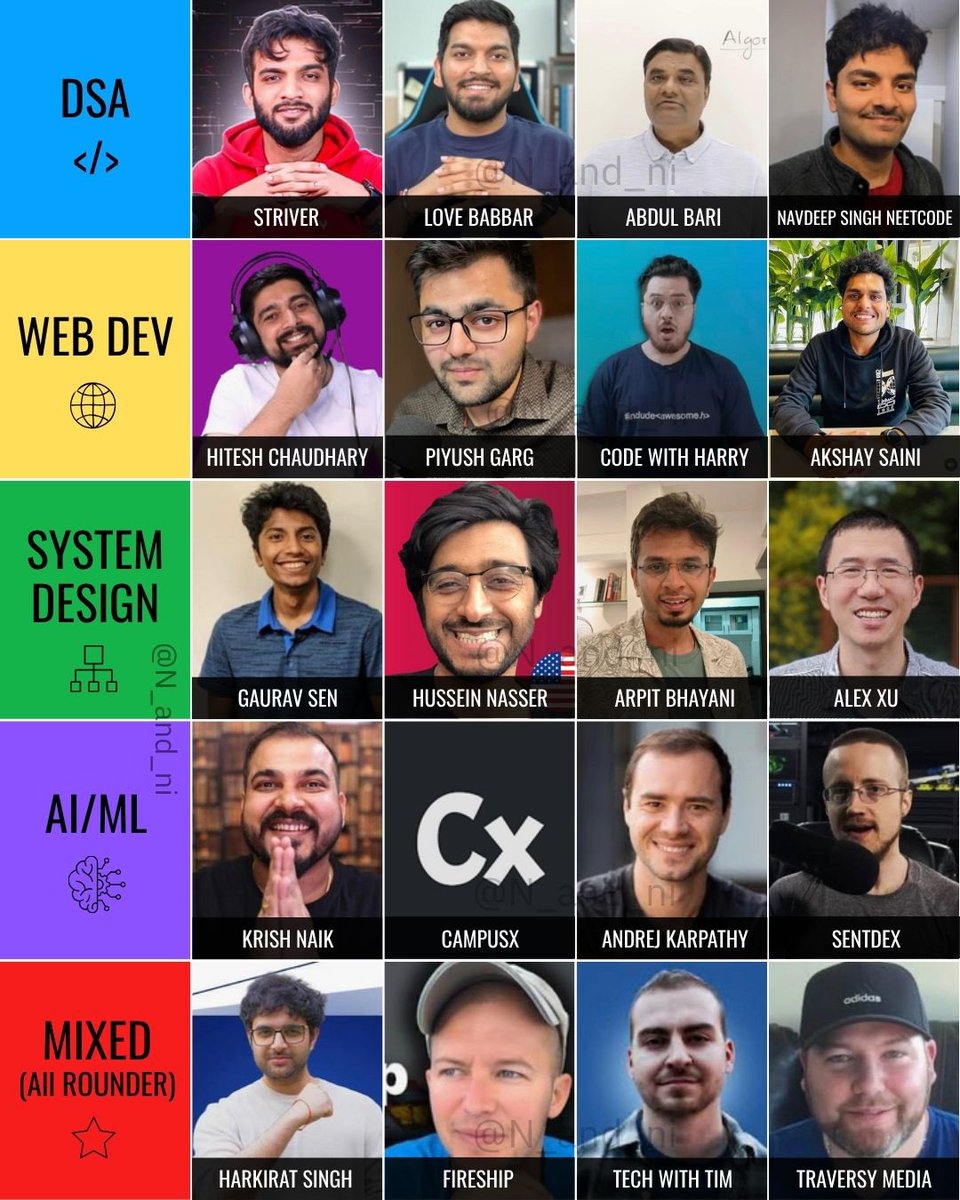
I have ranked tech influencers …. Do you guys agree ?
Nandini tweet media
English
121
301
2.6K
86.2K
Kuna Lakshmi Vara Prasad retweetledi
Ayaan 🐧
Ayaan 🐧@twtayaan·
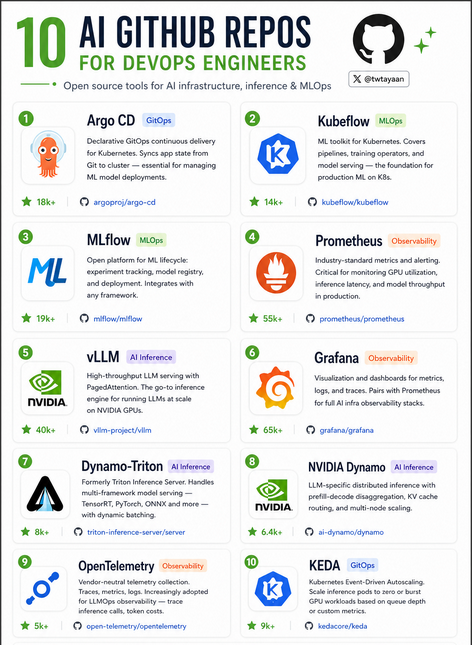
10 AI GitHub Repos Every DevOps Engineer Should Know 🤖 1⃣ Argo CD → github.com/argoproj/argo-… 2⃣ Kubeflow → github.com/kubeflow/kubef… 3⃣ MLflow → github.com/mlflow/mlflow 4⃣ Prometheus → github.com/prometheus/pro… 5⃣ vLLM → github.com/vllm-project/v… 6⃣ Grafana → github.com/grafana/grafana 7⃣ Dynamo-Triton → github.com/triton-inferen… 8⃣ NVIDIA Dynamo → github.com/ai-dynamo/dyna… 9⃣ OpenTelemetry → github.com/open-telemetry… 🔟 KEDA → github.com/kedacore/keda Star these now, thank yourself later.
Ayaan 🐧 tweet media
English
8
104
510
20K
Kuna Lakshmi Vara Prasad retweetledi
freeCodeCamp.org
freeCodeCamp.org@freeCodeCamp·
Secure networking starts with understanding how traffic is managed. In this article, @manishmshiva explains what proxies and reverse proxies do and when to use each one. He covers privacy, caching, load balancing, and protection against common threats. freecodecamp.org/news/understan…
freeCodeCamp.org tweet media
English
2
71
431
12.6K
Kuna Lakshmi Vara Prasad retweetledi
Sumit Mittal
Sumit Mittal@bigdatasumit·
50 Days of SQL (Complete End to End Course - Free) Day 1 - youtube.com/watch?v=GlCcM4… Day 2 - youtube.com/watch?v=XBVM-N… Day 3 - lnkd.in/gZJf9GwQ Day 4 - lnkd.in/guUygU_Y Day 5 - lnkd.in/gQYxpSVE Day 6 - lnkd.in/ggVny4dp Day 7 - lnkd.in/gkPD9cyi Day 8 - lnkd.in/g5YQqu5P Day 9 - lnkd.in/g7dwKZRt Day 10 - lnkd.in/gus2WAUy Day 11 - lnkd.in/g4jng5SS Day 12 - lnkd.in/ghB6A2dN Day 13 - lnkd.in/gvw2qavY Day 14 - lnkd.in/g3azGpZy Day 15 - lnkd.in/gnT_dmT9 Day 16 - lnkd.in/geHtefpe Day 17 - lnkd.in/gVm9nAVu Day 18 - lnkd.in/g3WtXUy8 Day 19 - lnkd.in/gjriAcHu Day 20 - lnkd.in/gm9NaZ_k Day 21 - lnkd.in/gbM6zbas Day 22 - lnkd.in/gpdgbYud Day 23 - lnkd.in/g_uNcBUd Day 24 - lnkd.in/g49nF4P7 Day 25 - lnkd.in/gEGvyUZm Day 26 - lnkd.in/g9-Ea8Ga Day 27 - lnkd.in/gfve_Fwn Day 28 - lnkd.in/gYyndx-j Day 29 - lnkd.in/gVMSAvwM Day 30 - lnkd.in/g3qhn5Nc Day 31 - lnkd.in/gqH8Yqyz Day 32 - lnkd.in/gVyB5skH Day 33 - lnkd.in/gs5-fipa Day 34 - lnkd.in/gaj-PP-Y Day 35 - lnkd.in/gNbZGSgn Day 36 - lnkd.in/gj3i7i_B Day 37 - lnkd.in/gZV49caT Day 38 - lnkd.in/gfzYtNrs Day 39 - lnkd.in/gemfx3Ss Day 40 - lnkd.in/gpQCdcF7 Day 41 - lnkd.in/g_5QipCN Day 42 - lnkd.in/gwuBVysy Day 43 - lnkd.in/geVyeBF3 Day 44 - lnkd.in/gkJue4GB Day 45 - lnkd.in/geTKfRCi Day 46 - lnkd.in/g6EgyafR Day 47 - lnkd.in/g_m6J4gi Day 48 - lnkd.in/gDcHz7Xe Day 49 - lnkd.in/gXuKNjG7 Day 50 - youtube.com/watch?v=umstHO… I you do practise along with these 50 videos, I am sure you can crack the hardest of SQL Interview. Who all are watching these sessions, do mention in comments!
YouTube video
YouTube
YouTube video
YouTube
YouTube video
YouTube
Sumit Mittal tweet media
English
9
168
743
31.6K