K. Mete Ozmen retweetledi
K. Mete Ozmen
70 posts

K. Mete Ozmen
@kmozmen
Strategist @ AiPi Solutions - Helping startups raise valuation thru IP & matching them with investors @gwtweets @sabanciu
Washington, DC Katılım Ekim 2014
910 Takip Edilen139 Takipçiler

K. Mete Ozmen retweetledi

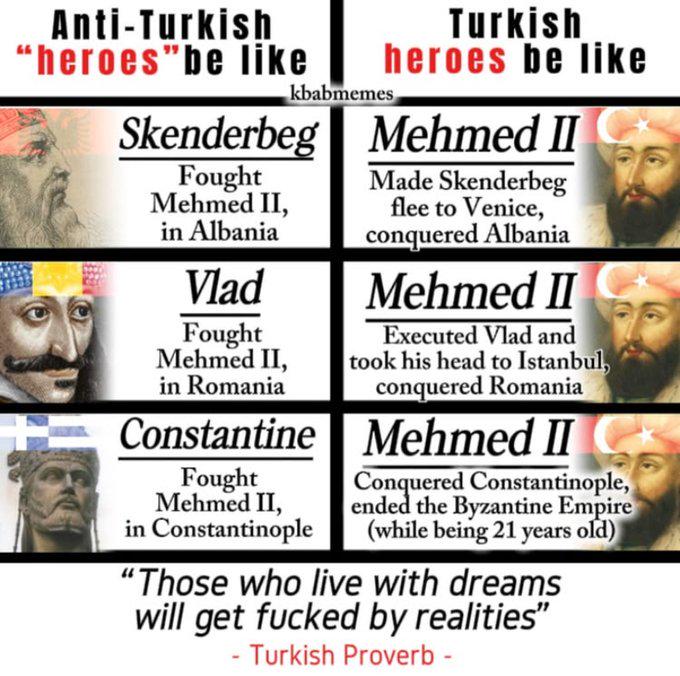
We're excited to announce 'The Situation Room' by Polymarket is coming to Washington, D.C.
The world's first bar dedicated to monitoring the situation. 🧵

English
@WhiteHouse Is this really the official account. This admin is running down hill very quickly.
English

K. Mete Ozmen retweetledi
Turkey is NOT the “New Iran” and WE (the U.S.) will continue to foster our relationship with them.
English
K. Mete Ozmen retweetledi

Hi. Turkey is a member of NATO.
Wake up everyone!!!
HatsOff@HatsOffff
Israel’s former PM Naftali Bennett a few days ago: ‘Turkey is the new Iran’ They’re not going to stop at Tehran. Israel is a threat to the entire Middle East.
English

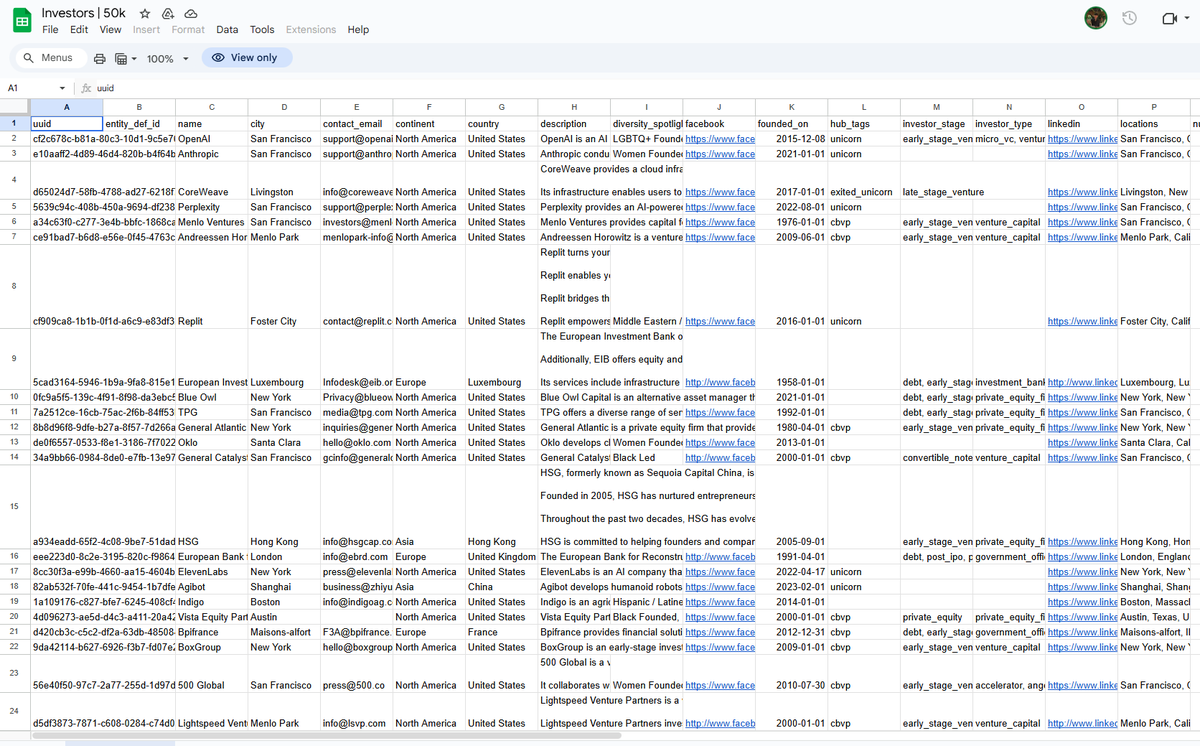
why beg for warm intros when you can cold email 50,000 investors DIRECTLY
i'm giving away a free database with:
- VCs
- angel investors
- family offices
direct contact info for all of them
raising funding just got STUPID easy
like + comment "INVESTORS" and i'll send it over
(must follow + RT for priority access)
English
@sama Just the fact that you wrote an essay to address the ads tell us how rattled you are. Your day in court is coming soon.
English

First, the good part of the Anthropic ads: they are funny, and I laughed.
But I wonder why Anthropic would go for something so clearly dishonest. Our most important principle for ads says that we won’t do exactly this; we would obviously never run ads in the way Anthropic depicts them. We are not stupid and we know our users would reject that.
I guess it’s on brand for Anthropic doublespeak to use a deceptive ad to critique theoretical deceptive ads that aren’t real, but a Super Bowl ad is not where I would expect it.
More importantly, we believe everyone deserves to use AI and are committed to free access, because we believe access creates agency. More Texans use ChatGPT for free than total people use Claude in the US, so we have a differently-shaped problem than they do. (If you want to pay for ChatGPT Plus or Pro, we don't show you ads.)
Anthropic serves an expensive product to rich people. We are glad they do that and we are doing that too, but we also feel strongly that we need to bring AI to billions of people who can’t pay for subscriptions.
Maybe even more importantly: Anthropic wants to control what people do with AI—they block companies they don't like from using their coding product (including us), they want to write the rules themselves for what people can and can't use AI for, and now they also want to tell other companies what their business models can be.
We are committed to broad, democratic decision making in addition to access. We are also committed to building the most resilient ecosystem for advanced AI. We care a great deal about safe, broadly beneficial AGI, and we know the only way to get there is to work with the world to prepare.
One authoritarian company won't get us there on their own, to say nothing of the other obvious risks. It is a dark path.
As for our Super Bowl ad: it’s about builders, and how anyone can now build anything.
We are enjoying watching so many people switch to Codex. There have now been 500,000 app downloads since launch on Monday, and we think builders are really going to love what’s coming in the next few weeks. I believe Codex is going to win.
We will continue to work hard to make even more intelligence available for lower and lower prices to our users.
This time belongs to the builders, not the people who want to control them.
English
K. Mete Ozmen retweetledi

Grant Cardone’s entire fortune is in multifamily apartment buildings, the single most illiquid asset class in the United States. Cardone Capital manages $4-5 billion in real estate. Try selling $10M of apartment units tomorrow. You won’t get 20-30% below market. You’ll spend 6-9 months in due diligence, legal review, and closing. You might not sell at all.
Meanwhile, the gold market trades $163 billion per day. That’s more liquid than the euro/yen pair and roughly equivalent to U.S. Treasury bills. The World Gold Council’s data shows that institutional investors and central banks regularly transact in the billions without moving the price. The IMF sold 403 tonnes of gold over 10 months in 2010 and the market absorbed it without a single disruption.
Cardone’s example of a guy struggling to sell 10,000 pieces of silver at market price tells you about retail dealer spreads, not about gold or silver as an asset class. That’s like saying stocks are illiquid because you tried to sell shares through a pawn shop.
And the timing of this take is remarkable. Gold just fell 21% from its record high of $5,600 to $4,400 in two days. Silver dropped 41%. You know what that means? Sellers found buyers. Instantly. At enormous volume. CME had to raise margin requirements because trading was too active. That’s the opposite of an illiquidity problem.
Bitcoin, the asset Cardone is praising for speed, is at $78,000 today. Down 40% from its $126,000 high. Down 12% in the last seven days alone. Over $2 billion in liquidations since Thursday. “You can trade it in five minutes” works in both directions, and right now, Bitcoin holders are learning that lesson at $800 million in daily liquidation volume.
Cardone built his wealth in assets that take months to sell and regularly trade at discounts during downturns. He’s now lecturing people about the illiquidity of an asset that trades more daily volume than most stock exchanges on earth.
The tell is the framing. When someone whose net worth is locked in real estate and course sales tells you that the world’s most liquid physical asset is actually illiquid, the trade isn’t gold vs. bitcoin. It’s attention vs. accuracy.
Mikli@CryptoMikli
Grant Cardone reveals NOBODY would buy $10,000,000 worth of Gold at market price “I know a guy who is trying to sell 10,000 pieces of silver and he can’t get a real offer. He’s getting a 30% discount below the market. People see it spiking like this and they’re like, ‘OMG.’ But go try to sell $10M worth of gold and see what happens. You’ll only get offers 20-30% below the market, and you won’t get the money tomorrow or in five minutes. It needs to get authenticated, checked, and validated” “Bitcoin is a real thing. You can trade it in five minutes, and that’s real. Bitcoin, to me, is not only money, it’s also technology, unlike gold or silver”
English
Wild statement to make considering gold is the most liquid commodity on earth.
Mikli@CryptoMikli
Grant Cardone reveals NOBODY would buy $10,000,000 worth of Gold at market price “I know a guy who is trying to sell 10,000 pieces of silver and he can’t get a real offer. He’s getting a 30% discount below the market. People see it spiking like this and they’re like, ‘OMG.’ But go try to sell $10M worth of gold and see what happens. You’ll only get offers 20-30% below the market, and you won’t get the money tomorrow or in five minutes. It needs to get authenticated, checked, and validated” “Bitcoin is a real thing. You can trade it in five minutes, and that’s real. Bitcoin, to me, is not only money, it’s also technology, unlike gold or silver”
English

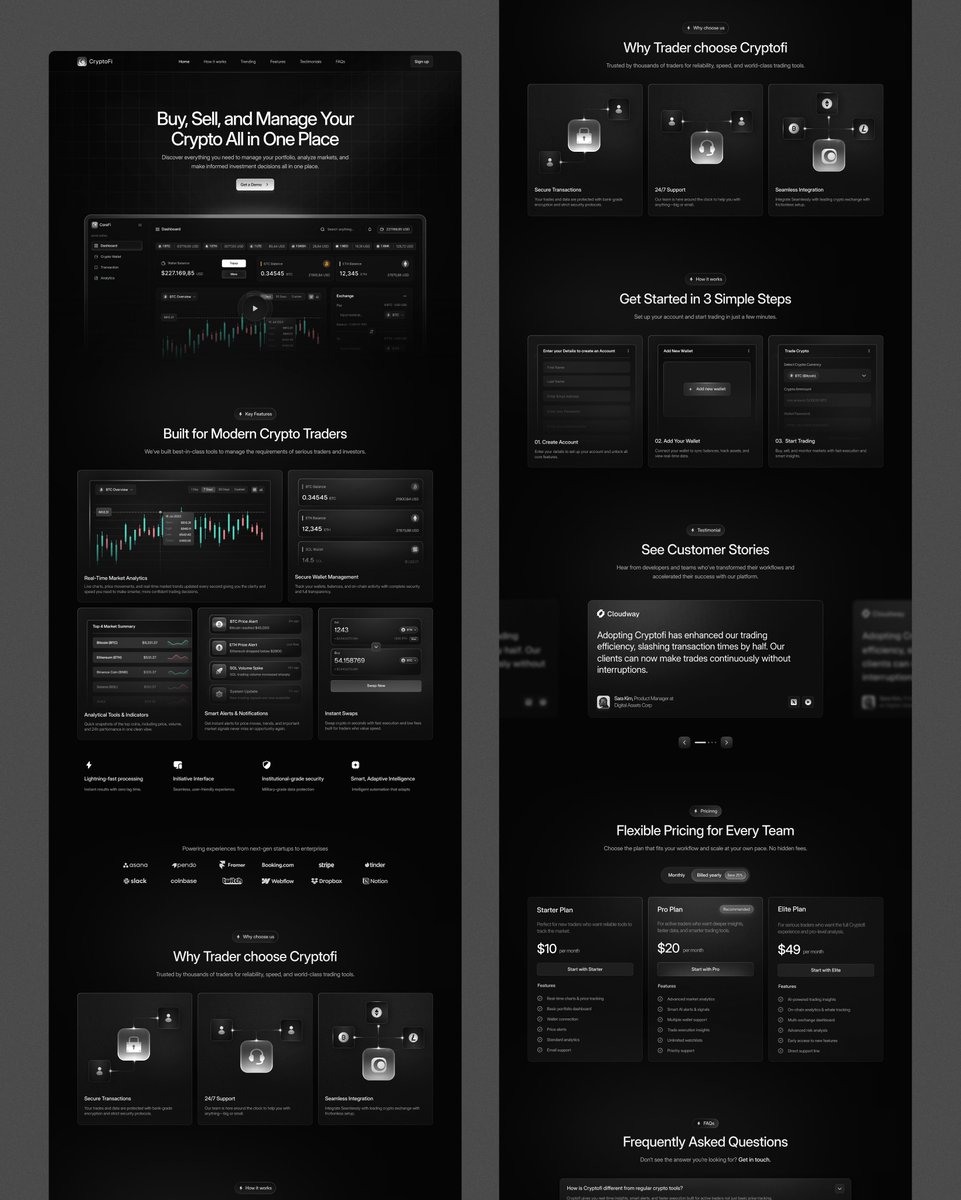
I'm giving away premium Figma template valued at $1000 completely free for the next 24 hours.
To claim yours:
- Like this post
- Comment "Figma"
- Follow me (so I can send you the link via DM)
Bonus: Retweet to help others find this!"
English

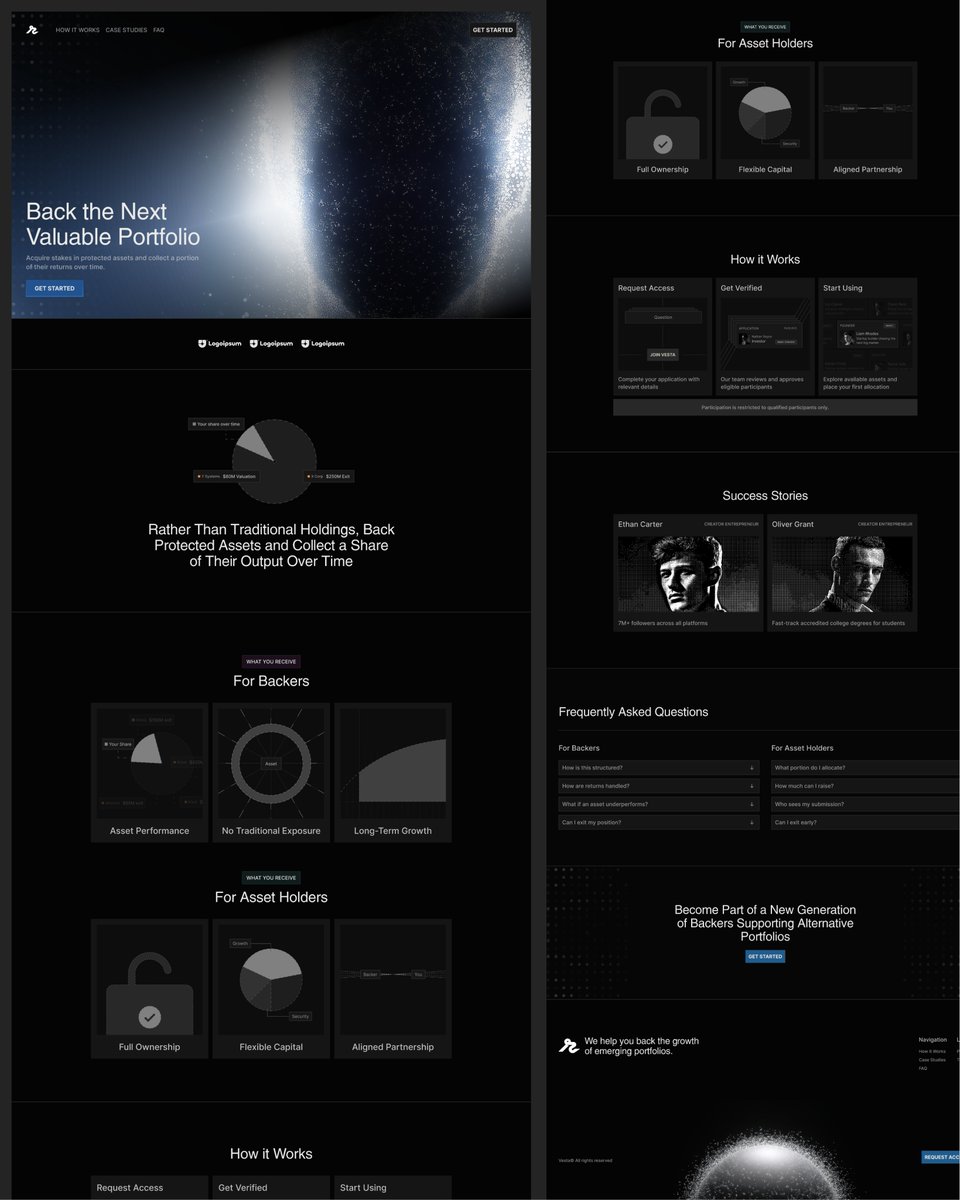

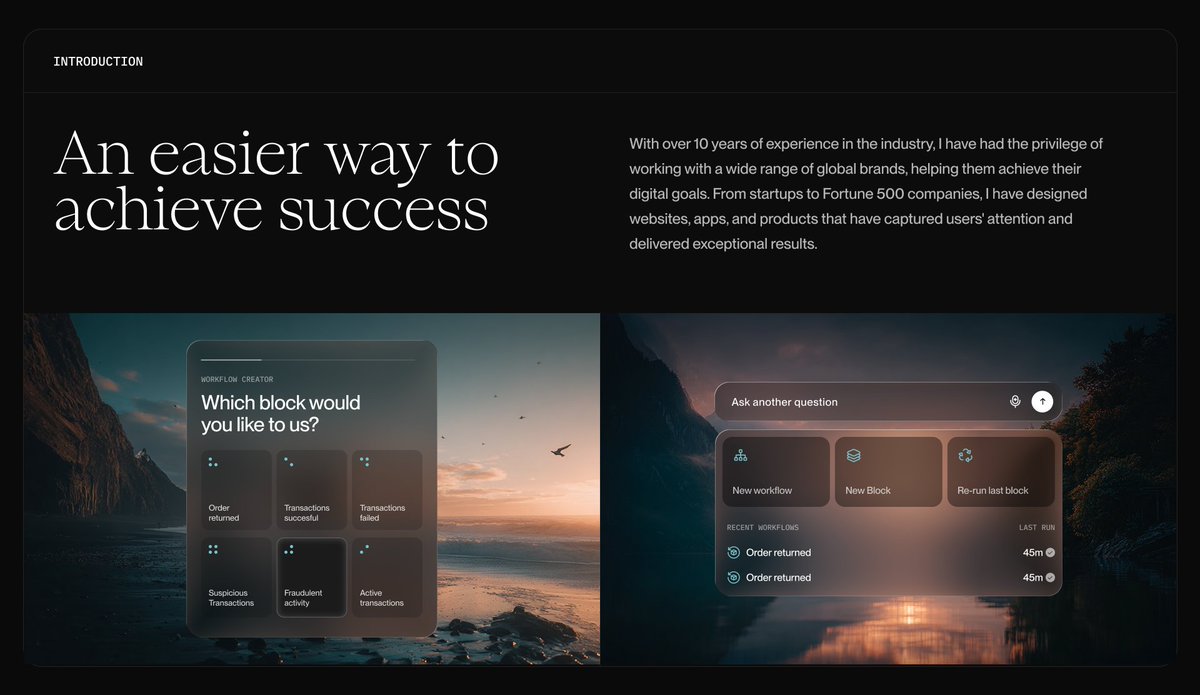
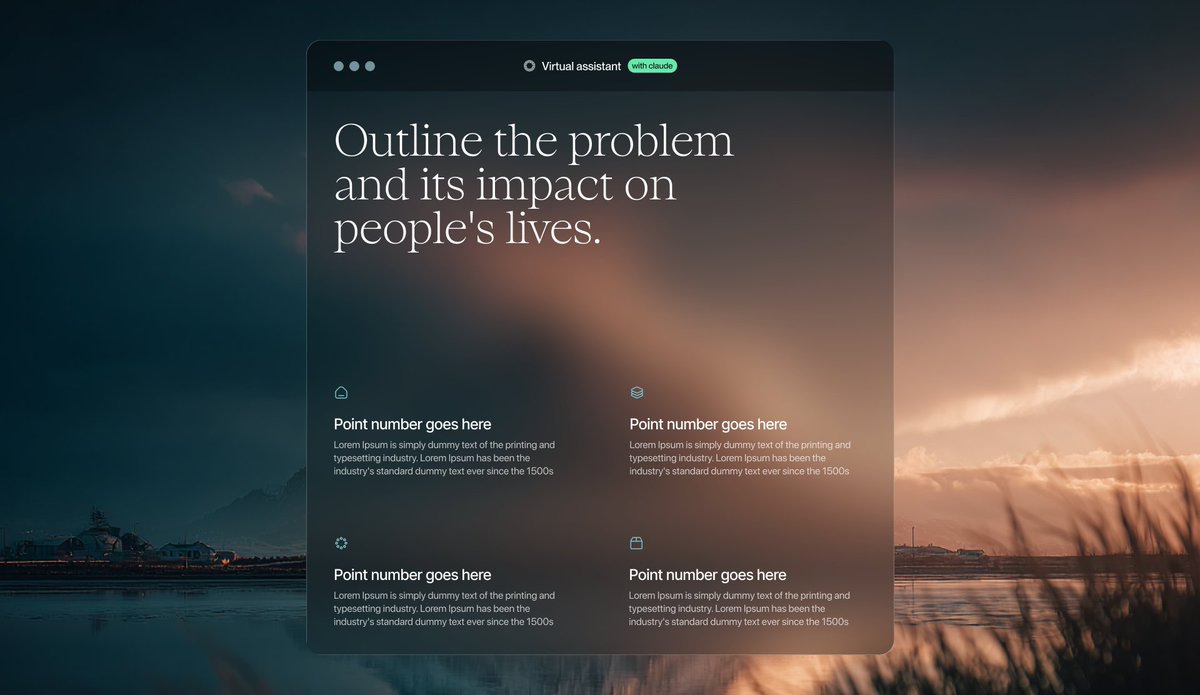
Pitch deck design for founders & startups.
→ 27 slides + figma file + font file
→ Comment on the post and I'll send it to you
→ Must be following so I can DM

English
K. Mete Ozmen retweetledi
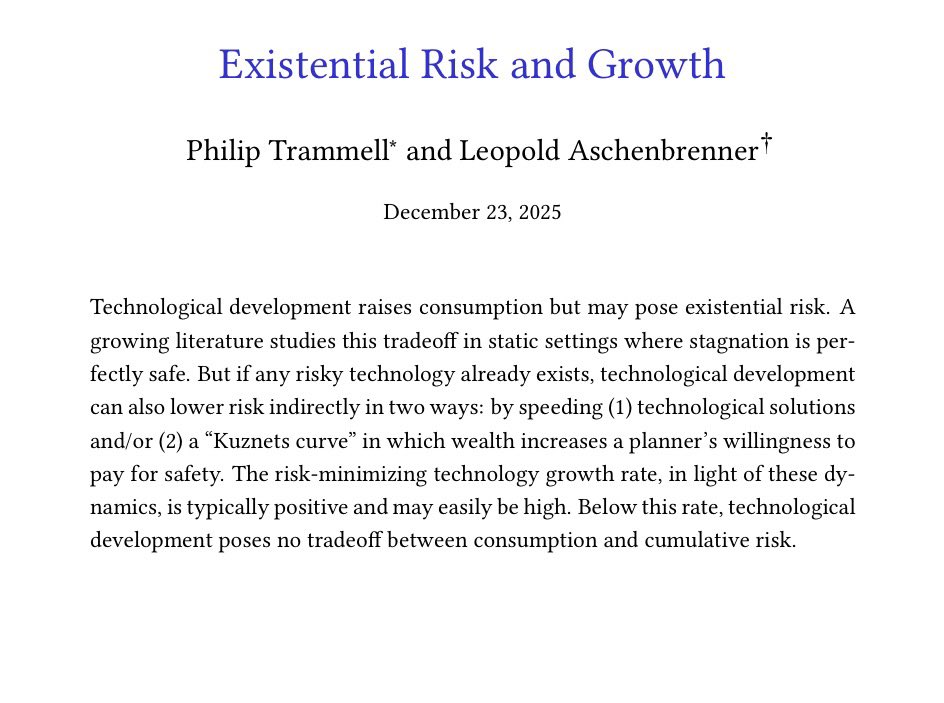
The guy whose hedge fund returned 47% in H1 2025 just dropped one of the most important AI papers I've read.
Leopold Aschenbrenner's Situational Awareness LP returned 47% net of fees in H1. The S&P returned 6%. He bet his entire net worth on AI infrastructure and outperformed Wall Street by 8x.
When someone with that track record publishes a formal economics paper on existential risk, I read it.
The paper mathematically inverts the core assumption driving AI regulation: that slowing down reduces existential risk.
He and coauthor Philip Trammell from Stanford show the opposite can be true.
The setup is elegant.
If any dangerous technology already exists, stagnation doesn't eliminate risk. It guarantees catastrophe. You're stuck running the same gauntlet forever. Nuclear weapons don't disappear. Bioweapons don't disappear. Current AI systems don't disappear. Every year you remain in a dangerous state, you roll the dice again.
Enough rolls and you lose.
They split existential risk into two components the policy debate has been conflating. "State risk" is the ongoing hazard from technologies that already exist. "Transition risk" is the danger from developing new technologies. The experiments. The scaling runs. The novel deployments.
Unless transition risk scales super-linearly with speed, faster growth is always weakly safer. You endure less cumulative state risk by escaping dangerous states more quickly.
The integral under the hazard curve shrinks.
The Kuznets curve dynamics strengthen the case. As societies get richer, safety becomes a luxury good. The marginal utility of consumption falls while the value of civilization rises. Optimal policy shifts toward more safety spending. Faster growth accelerates this dynamic.
There's a second-order effect most people miss. When the future is more valuable because growth will be faster, it becomes worth sacrificing more today to protect it. Anticipated acceleration motivates stricter current policy.
The paper acknowledges limits. If policy frictions are severe enough, speed becomes genuinely risky. If transition risk compounds super-linearly with deployment velocity, slower wins on some margins.
These are empirical questions.
But the burden of proof shifts. Anyone advocating slowdown needs to demonstrate that transition risk dominates state risk. That we're not already in a "time of perils" where the safest path is pushing through as quickly as possible.
The real insight is structural. Permanent deceleration locks you into whatever hazard rate you currently face. If that rate is positive, survival probability goes to zero. Only acceleration or surgical regulation can minimize cumulative risk.
The pause advocates have it backwards. Slowing down extends your exposure to current dangers.
Speed is the escape route.
Everyone in AI policy should read this paper.
English
K. Mete Ozmen retweetledi

Bret Weinstein just said something that won’t leave my head:
For the first time in 300,000 years of human evolution, we removed the cost from the single biggest reward nature ever invented — sex and pair-bonding.
Reliable birth control + abortion = you can now cash the evolutionary lottery ticket without paying the 20-year mortgage of pregnancy, diapers, sleepless nights, and college funds.
Result? An entire generation of 18–35-year-olds walking around with the energy, libido, hormones, and protective instincts that evolution spent millions of years calibrating for child-rearing… but with zero actual children. That energy didn’t disappear. It got redirected.
Heather Heying’s observation is brutal: young women especially began treating ideologies the exact way evolution wired them to treat babies. Climate change, social justice, whatever the cause of the month is — it gets defended with literal mama-bear ferocity, the same neurochemistry that once guarded a toddler from predators now guards an abstract idea from wrong think.
And now Elon is promising the second shoe is about to drop: AI-driven abundance will make money as “free” as sex became in the 1970s. Both of evolution’s primary carrots — mating and resource acquisition suddenly cost almost nothing.
Weinstein’s ice-cold question: When producing and protecting actual children is no longer the central organizing principle of adult life… and when creating wealth is no longer required for status, security, or attracting a mate…What is left to give a human life direction, meaning, and structure?
Are we about to become a species that invents bigger and bigger dragons to slay just to feel alive? Or do we drift into total listlessness? This 3:52 clip is genuinely haunting.
Watch it all the way through, then tell me — honestly — does this explain the absolute intensity we’re seeing in culture right now, or is Bret completely missing something?
Real answers only. Quote-post if it hits you in the chest like it hit me.
English
K. Mete Ozmen retweetledi

A Personal Perspective – Syria and Lebanon Are the Next Pieces for Levant Peace
By Ambassador Tom Barrack
October 13, 2025, will be remembered as a defining moment in modern Middle Eastern diplomacy. In Sharm el-Sheikh, world leaders did more than celebrate the release of hostages, a ceasefire, and the commencement of peace negotiations. They gathered to endorse President Donald J. Trump’s bold, twenty-point vision for renewal, reconstruction, and shared prosperity across the region.
Under his leadership, decades of fear and stagnation began to give way to purpose and optimism. Arab, Muslim, and Western nations joined in a single endeavor: to replace paralysis with progress, and isolation with inclusion.
For the first time in a century, a genuine consensus emerged – an understanding that the Middle East, long divided by tribe and faith and scarred by colonial legacy, could now weave a new tapestry of cooperation. What began as a truce in Gaza evolved into something much greater: the first tesserae in a renewed mosaic of partnership. Under President Trump’s stewardship, stability is no longer enforced through fear but envisioned through shared opportunity; peace is no longer a pause in violence but a platform for prosperity. No doubt Gaza, that has been plagued by violence, will continue to be punctuated with mishaps, speed bumps and violations of trust in spite of the great strides made last week. Nevertheless, the regional Nation States for the first time in decades have unanimously condemned terrorist practices within their region.
Syria: The Missing Piece of Peace
Yet the next two vital pieces of this architecture of peace remain incomplete. First, Syria: fractured and weary after years of war, it stands as both a symbol and test of whether this new regional order can truly endure. No tapestry of peace can be whole while one of the world’s oldest civilizations lies in ruin. The winds of reconciliation that began in Gaza must now cross Israel’s northern frontier and breathe life into Syria’s redemption.
The U.S. Senate has already demonstrated foresight by voting to repeal the Caesar Syria Civilian Protection Act – a sanctions regime that served its moral purpose against the previous, treacherous Assad regime but now suffocates a nation seeking to rebuild. The House of Representatives must now follow suit, restoring to the Syrian people their right to work, to trade, and to hope.
When Congress enacted the Caesar Act in 2019, the world faced atrocities of an unforgivable scale. Sanctions were the moral instrument of that moment. They froze assets, cut off illicit funding, and isolated a brutal regime. But Syria after Dec 8, 2024, with the inauguration of a new Syrian government, is neither Syria of 2019 nor the government that ruled it previously. Its leadership has embarked on reconciliation, having restoring ties with Türkiye, Saudi Arabia, the UAE, Egypt, and Europe, and even engaging in border discussions with Israel.
On May 13, 2025, in Riyadh, President Trump announced his intent to lift U.S. sanctions on Syria – a historic pivot from coercion to cooperation. That promise became policy on June 30, when an Executive Order formally revoked most Syria sanctions, effective July 1. These twin actions transformed U.S. policy from punishment to partnership, signaling to investors and allies alike that America now stood for rebuilding, not restraining.
Repeal sanctions is not charity; it is strategy. It unlocks the ability of allies and private investors to rebuild Syria’s power grids, water systems, schools, and hospitals. It unleashes one of the most consequential reconstruction efforts since post-war Europe. Economic vitality remains the surest antidote to extremism; commerce is the bridge from conflict to coexistence. The lingering sanctions no longer punish despots, they punish the teachers, farmers, and shopkeepers who must power Syria’s recovery.
Repeal, then, is not appeasement. It is realism. It aligns policy with facts on the ground and with the aspirations of a region ready to turn the page. Twenty-six senior Christian clerics from Syria have appealed to Congress to end the sanctions, warning that they are now one of the principal causes of the shrinking Christian presence in their homeland. Their plea is a moral echo of the region’s changing tide.
President Trump and the Senate have already shown courage. The House must now complete the act of statesmanship. To repeal Caesar is not to forget history, it is to shape it anew, replacing the lexicon of retribution with the language of renewal.
The Gaza Peace Summit was not symbolic theater, it was the overture to a new symphony of cooperation grounded in energy integration, economic interdependence, and shared human aspiration. The release of hostages, the cessation of hostilities, and the commitments made at Sharm el-Sheikh have laid a foundation that now must be constantly monitored, amended and administered in Gaza because there is no doubt that this is a process rather than an event. The rhythm of dialogue, however, now needs to be extended northward – to Syria, and ultimately to Lebanon. The Abraham Accords for the entire region is the true North Star.
For the first time in living memory, political will, economic necessity, and public hope are aligned and all that stands in the way of progress is a hostile and treacherous Iranian IRGC leadership and its proxies. President Trump has offered the region a renewed covenant, one that exchanges hostility for harmony, despair for development, and isolation for shared destiny. The Caesar Act achieved its purpose. Now, as the President has urged, it is time to “give Syria a chance.”
Now is the time for Congress to act in repealing the Caesar Act.
Lebanon: The Second Frontier
As Syria reclaims stability with its neighbors, including Israel and Türkiye, it forms the first leg of Israel’s northern security framework. The second leg must be the disarmament of Hizballah within Lebanon and the beginning of security and border discussions with Israel.
The Biden Administration-sponsored 2024 Cessation of Hostilities Agreement, brokered through U.S., French, and UN intermediaries, sought to halt escalation but ultimately failed. There was no direct agreement between Israel and Hizballah due to the fact that Lebanon still views dealing with Israel as a crime and consequently no real mechanism for enforcement exists. Iran’s continued funding of Hizballah militia in spite of sanctions and a divided Lebanese Council of Ministers delivering mixed messages to its own Lebanese Armed Forces, who lack the funding and authority to act. The result was a fragile calm without peace, an army without authority and a government without control.
Israel today still occupies five tactical positions along the “Blue Line,” maintaining early-warning capacity while conducting daily strikes against Hizballah depots. Meanwhile, the Lebanese government’s principle of “One Country, One Military” remains more aspiration than reality, constrained by Hizballah’s political dominance and the fear of civil unrest.
Early this year, the United States offered the “One More Try” plan, a framework for phased disarmament, verified compliance, and economic incentives under U.S.A. and France supervision. Lebanon declined to adopt it due to Hizballah representation and influence in the Lebanese Council of Ministers. Rather the Lebanese Cabinet and Council of Ministers are trapped in sectarian paralysis and are attempting to make a good faith step forward, which Israel has completely discounted. The Israelis have simply said the rhetoric does not match reality.
As Damascus stabilizes, Hizballah grows more isolated. The militia’s foreign control undermines Lebanon’s sovereignty, deters investment, and erodes public confidence and is a constant red flag to Israel. But the incentives for action now outweigh the costs of inaction: regional partners are ready to invest, provided Lebanon reclaims the monopoly on legitimate force solely under the Lebanese Armed Forces. Should Beirut continue to hesitate, Israel may act unilaterally – and the consequences would be grave.
Disarming Hizballah is thus not only Israel’s security imperative; it is Lebanon’s opportunity for renewal. For Israel, it means a secure northern frontier. For Lebanon, it means sovereignty restored and the chance for economic revival. For the United States, it fulfills the President’s peace by prosperity framework while minimizing U.S. exposure. For the broader region, it removes an essential Iranian regime proxy alongside of Hamas and accelerates Arab modernization and integration.
To that end, the United States has tried to usher Lebanon towards a peaceful solution with Israel, through incentives rather than imposition linking reconstruction aid from the Gulf States to measurable milestones, ensuring verification (without enforcement authority) through U.S., France and UN oversight, and strengthening the Lebanese Armed Forces through targeted training and support (the United States just this month committed over 200 million additional dollars to the Lebanese Armed Forces). Washington was willing to provide diplomatic cover for Hizballah’s peaceful political transition, coordinate regional statements connecting investment to progress, and assist Beirut in presenting disarmament not as surrender, but as sovereignty reclaimed. All these initiatives have stalled while the rest of the region is accelerating towards expulsion of Iran’s terrorist proxies.
Syria’s courageous moves toward a border agreement and hopefully future cooperation mark the first steps toward securing Israel’s northern frontier. Hizballah’s disarmament must be the second. Lebanon now faces a defining choice: to seize the path of national renewal or remain mired in paralysis and decline.
The United States must support Beirut to quickly separate from the Iranian backed Hizballah militia and achieve alignment with the anti-terrorist rhythm of its region before the new wave of zero tolerance for terrorist organizations consumes it.
If Beirut fails to act, Hizballah’s military arm will inevitably face major confrontation with Israel at a moment of Israel’s strength and Iran backed Hizballah’s weakest point. Correspondingly, its political wing will undoubtedly be confronted with potential isolation as it approaches the May 2026 elections.
If Hizballah comes under serious military attack from Israel and faces territorial, political, or reputational losses, it will almost certainly seek to postpone the May 2026 elections to preserve its power base and regroup. Elections in such a moment would expose its weakened standing, risk electoral setbacks for its allies, and embolden rival factions to challenge its dominance within Lebanon’s fragile sectarian system. By invoking “national security” and “wartime instability,” Hizballah could justify a delay as a means to maintain unity and protect the Shiite community from perceived external exploitation. In reality, postponement would buy time – to rebuild militarily, re-organize politically, and renegotiate the post-war balance of power before facing the electorate.
Postponing the 2026 elections under the pretext of war would ignite major chaos within Lebanon, fracturing an already fragile political system and reigniting sectarian distrust. Many Lebanese factions – particularly Christian, Sunni, and reformist blocs – would view the delay as an unconstitutional power grab by Hizballah to entrench its control and avoid accountability for the war’s devastation. Such a move would likely paralyze Parliament, deepen the government vacuum, and trigger nationwide protests reminiscent of the 2019 uprising – but this time amid armed tension and economic collapse. The perception that one militia can suspend democracy could potentially erode public confidence in the state, invite regional interference, and risk pushing Lebanon from crisis into outright institutional breakdown.
Thanks to the momentum of the President’s “20-Point Plan,” the path toward an expanded Abraham Accord has never been clearer without regard to what may be a bumpy road to the Hamas resolution. What was once aspirational is rapidly becoming attainable. Iran stands terminally weakened – politically, economically, and morally – while Saudi Arabia now stands at the precipice of formal accession. As Riyadh moves, others will follow. Soon thereafter, the nations of the Levant may find alignment irresistible, drawn not by pressure but by prosperity. It is an extraordinary achievement to witness peace yielding dividends and prosperity taking root among nations that only a week ago were adversaries. History will remember this as the week when a century of conflict began to give way to a generation of cooperation. Let us keep in mind that cooperation is merely a path towards peace and understanding, not a guarantee. We must all continue to work tirelessly on allowing these intricate pieces to the mosaic to finally find their place next to one another.
President Trump’s newly appointed and extremely capable Ambassador to Lebanon, Michel Issa, arrives in Beirut next month to help Lebanon steer a steady course through these complex issues.
Now is the time for Lebanon to act.
English
@GovPressOffice Everyone managing this newsom account are absolute morons
English


TIME@TIME
The living Israeli hostages held in Gaza have been freed under the first phase of Donald Trump's peace plan, alongside a Palestinian prisoner release. The deal may become a signature achievement of Trump's second term, and it could mark a strategic turning point for the Middle East time.com/7325156/trump-…
ZXX
K. Mete Ozmen retweetledi

The Biden Administration orchestrated a mass invasion of the United States by illegal aliens.
At the center of the 2024 election was the pledge to end the invasion and send the illegals home.
President Trump won in a historic landslide.
Since November, the Left has unleashed a flood of violence against ICE officers to try to overturn the election result and stop the removal of criminals and aliens illegally in our country.
At the same time, Democrat politicians have waged a campaign of dehumanizing and vile rhetoric at courageous federal law enforcement officers, ordered police departments to allow the rioters to blockade and threaten ICE, turned their cities into “sanctuaries” for fugitive aliens, and provided moral aid and comfort to those criminally obstructing, doxing and impeding ICE.
All for the purpose of keeping foreign trespassers on our soil, at any price or cost.
English
K. Mete Ozmen retweetledi