Kevin Heider retweetledi
Kevin Heider
2.4K posts

Kevin Heider
@kpheider
Astronomy (Henry Grieb Observatory, SVAS, Unistellar), Chess, Wikipedia, West Coast Swing Dancing.
Sacramento, CA Katılım Eylül 2009
153 Takip Edilen307 Takipçiler

@drew4worldruler @UAPWatchers Loeb is addicted to the attention more than the science.
English

@UAPWatchers I’m convinced that Avi Loeb just wakes up every day and tries to figure out a way to be on the news. Integrity be damned.
I do agree with him on this, I just don’t think he did any actual work on it.
English

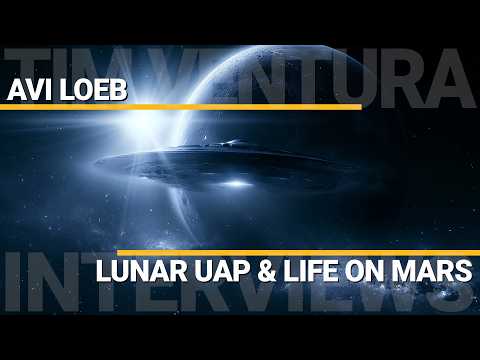
🚨Avi Loeb thinks that photos taken by the astronauts on the Apollo missions from the moon of UFOs likely camera artifacts
In a recent interview with Tim Ventura Dr. Avi Loeb stated "to me that illustrates the fact that presumably the Apollo mission images that we see in the released files um you know the the lights in them are either uh a result of reflection from the optics within the camera.
Sometimes you get those flashes of light from impact of of rocks on the surface of the moon that somehow shattered the moon's surface."
#ufotwitter #uapX #UAPFILES
Source:
youtube.com/watch?v=iUMbxA…

YouTube
English
Kevin Heider retweetledi

Spiralling global temperatures (1850-2026)
It is exactly 10 years since I first put this animated graphic of changes in global temperature online. #ClimateSpiral
It instantly went viral.
People watched it over and over again.
It still offers the power to shock a decade on.
GIF
English

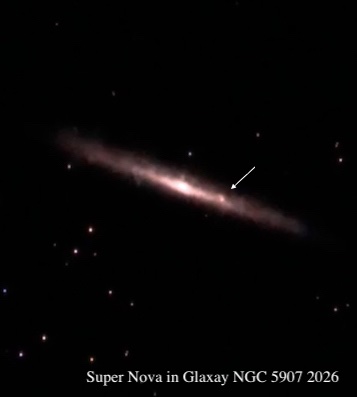
@drew4worldruler I take pictures of faint+distant supernovae more exciting than that.
English

This is pretty much exactly what I expected to be released. A big, juicy nothingburger 😔
#uapx #ufotwitter #disclosure
Peter Doocy@pdoocy
FOX FIRST: foxnews.com/politics/trump…
English
Kevin Heider retweetledi

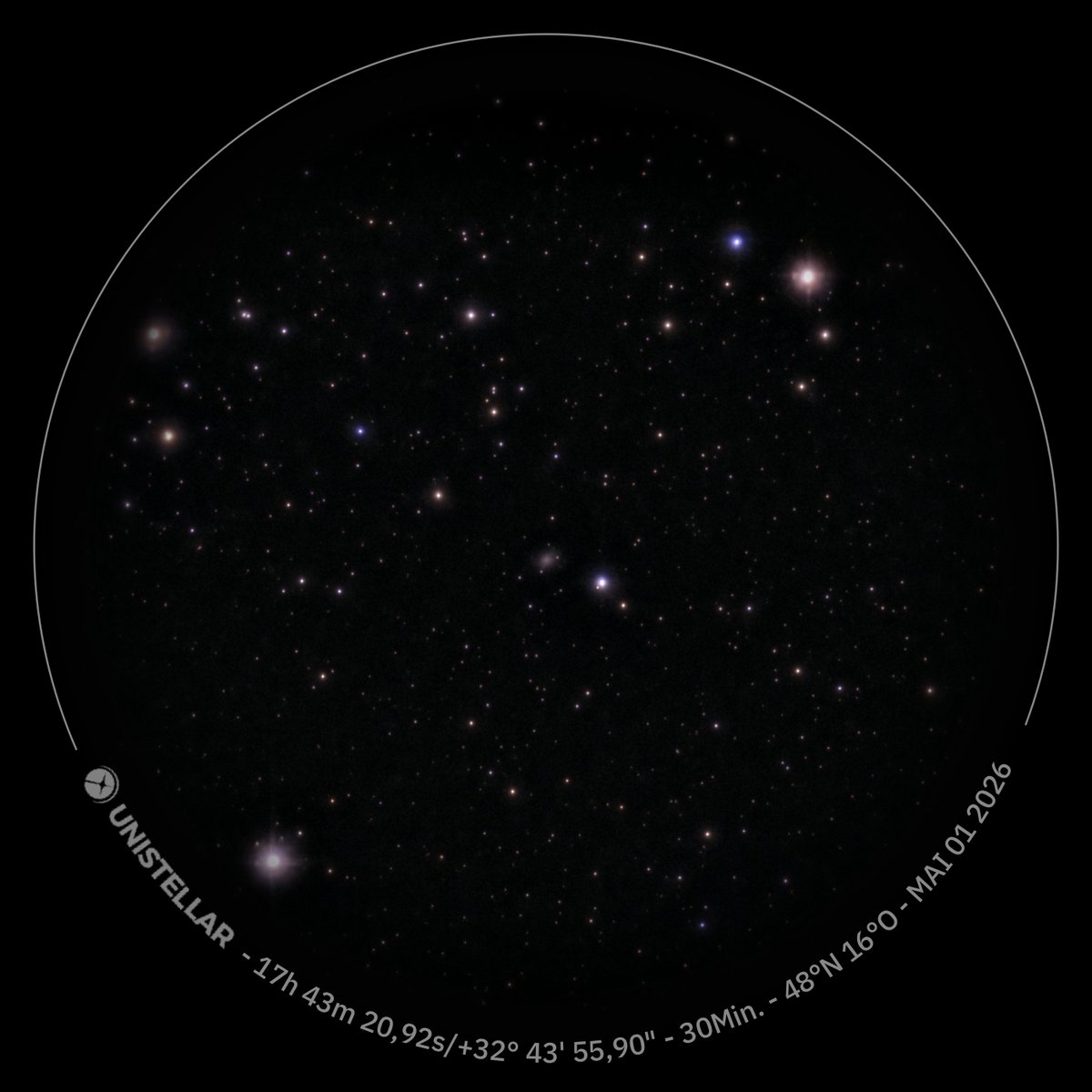
@Unistellar #SN2026ewd is again of the Type Ia. This exploded #WhiteDwarf shines at 14.9 mag in galaxy #UGC11508, which is located in the constellation of Cygnus.


English

Large 10km comet to approach Earth in August :)
#2026" target="_blank" rel="nofollow noopener">en.wikipedia.org/wiki/10P/Tempe…
English
Kevin Heider retweetledi

Ever seen a piece of 1960s space hardware still haunting Earth's neighborhood decades later? 🚀
This NASA JPL animation shows J002E3 - the spent S-IVB third stage from Apollo 12's Saturn V (launched November 1969).
In 2002, amateur astronomer Bill Yeung spotted it and logged it as a near-Earth asteroid. Turned out to be a 33-year-old rocket stage.
Watch the cyan path trace its journey from May 23, 2002 to June 17, 2003. It drifts in from the left, loops and twists around Earth and the Moon in wild, non-repeating arcs, threading past the L1 point - the gravitational gateway between Earth's and the Sun's sphere of influence - while the Moon tugs it back and forth in a chaotic, unpredictable dance.
No neat ellipses. No tidy repeating orbits. Just a 50-year-old rocket stage being slowly torn between three gravitational masters.
No trajectory predictor in 1969 could have told you where this thing would be in 2002. Chaos saw to that.
🧵 Part 2: the full orbital mechanics breakdown ↓
English

@drew4worldruler @StefanBurnsGeo It is not the asteriods+comets we know that we need to fear... it is the one we discover 6-24 months before impact.
English

@StefanBurnsGeo The Planetary Society has independently reviewed the radar evidence from 2021 and publicly confirmed there is no impact risk. Just in case that gives you any peace of mind.
English

Umm all I keep thinking is, can someone else besides the government confirm that Apophis will miss hitting Earth in 2029? Like an independent astronomical organization??
NewsNation@NewsNation
It will be a close call, but scientists are assuring people Earth will avoid contact with an asteroid nicknamed “God of Chaos” in 2029. The skyscraper-sized object will be so close — within 20,000 miles of the surface of the planet, nearer than some satellites — it will be visible to the naked eye during its Friday, April 13, 2029 flyby. More: newsnationnow.com/space/god-of-c…
English

@RichardFaulkne3 @earthcurated Radio telescopes are not useful unless the pointing is very precise. Looking for long-period comets with such a device is probably a worthless endeavor.
Discovering a new meteor shower is a better way to predict a possible coming of a long-period comet.
English

@earthcurated Long-period comets 🦕 🦖 💫
We need a 1 kilometre wide radio telescope, which can be built into a crater, similar to the Arecibo dish 📡 on the lunar far side, to detect these threats to Earth way soon, to be able to alter their trajectory in ample time🙏🏻🌍🖖🏻
Radio quiet zone
English
Kevin Heider retweetledi

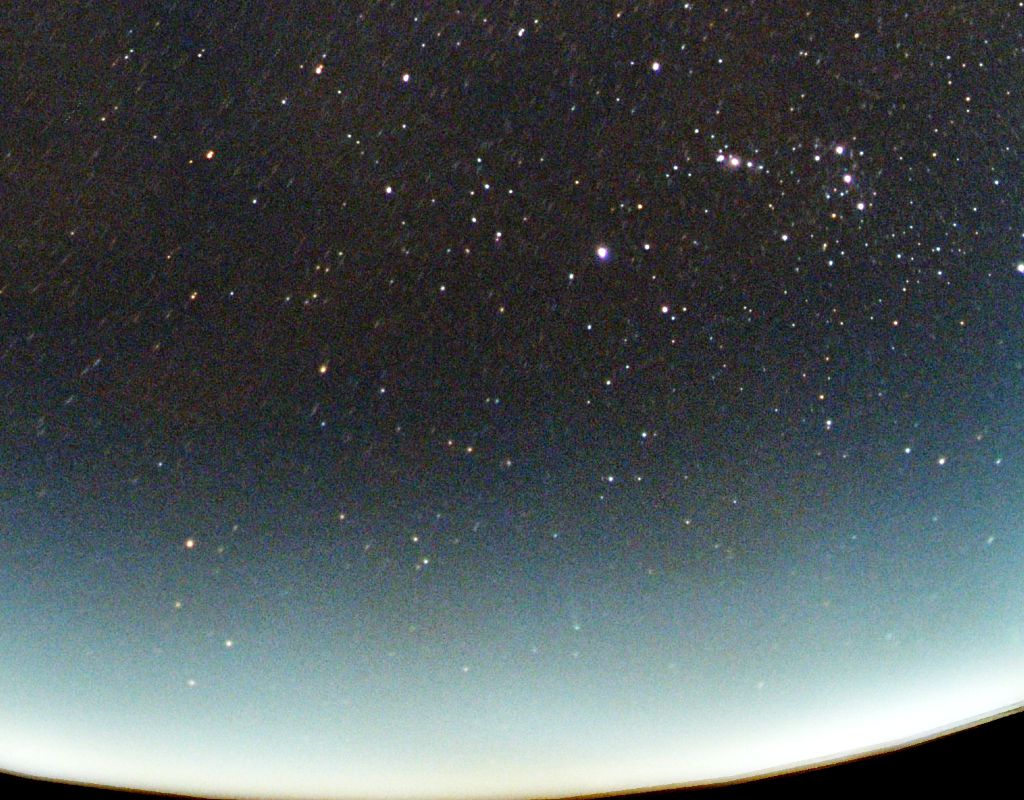
The comet C/2025 R3 (PANSTARRS) is now also in the field of view of the coronagraph CCOR-1: ccor.nrl.navy.mil/ccor_realtime/… = the latest image (the one here is from 14:00 UTC), ccor.nrl.navy.mil/realtime-movie = an animation up to now (and see soho.nascom.nasa.gov/data/realtime/… for the LASCO C3 view).

English
Kevin Heider retweetledi

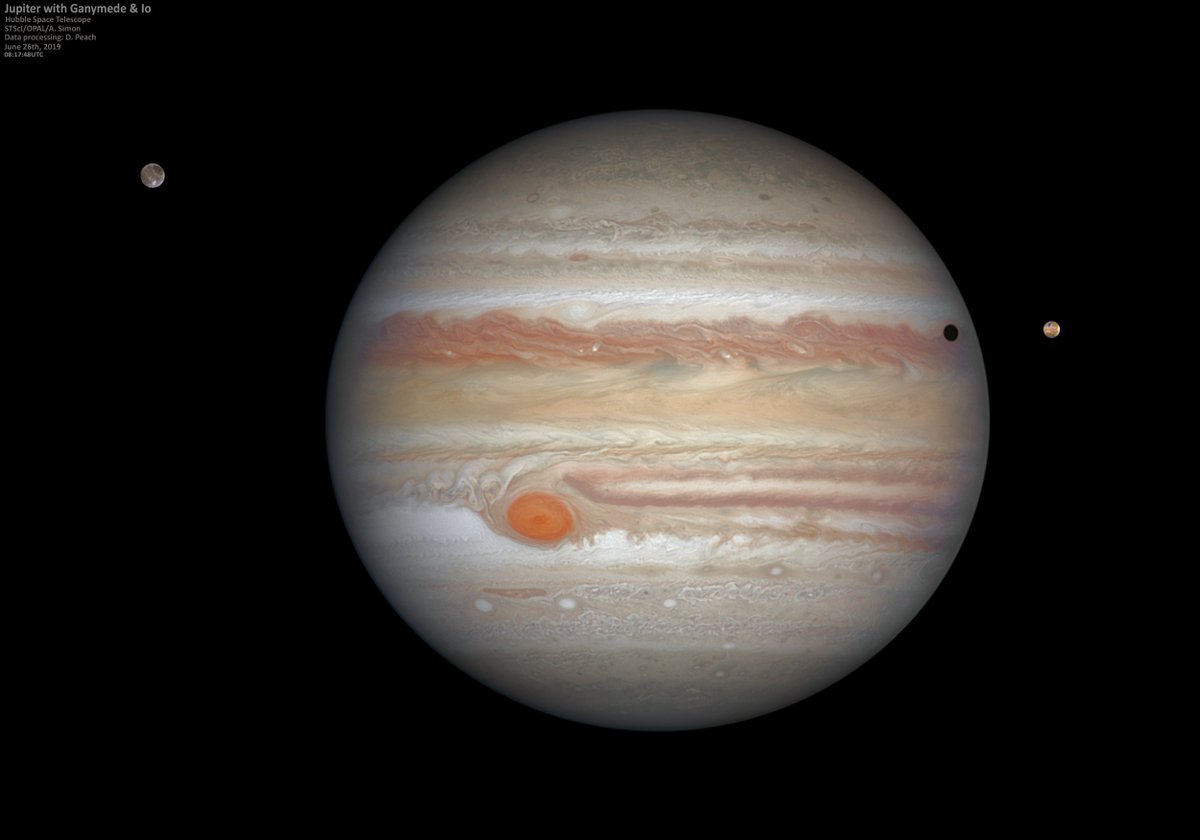
Happy 36th Anniversary to the greatest telescope of all time!
Here is a Jupiter image i processed from the HST raw data archive some time back. It shows Jupiter with two of its moons, Ganymede (left) and Io (right.) You can see some of the volcanic spots on Io, while Ganymede's icy surface shows plenty of detail.
The image is near to true colour but not perfect as a near UV filter was used for the B channel which skews contrasts/colour somewhat.
There is a vast amount of raw data from the scope available in the archives, a good amount of which has never been processed for public release - worth looking at for those interested in processing data sets from Hubble. #HubbleSpaceTelescope

English

@drew4worldruler Looking at short period comet 10P, between April 12-13, estimates varied from 17.0-18.9.
cobs.si/obs_list?id=53
English

@drew4worldruler It is not uncommon for comet estimates to vary by 2-3 magnitudes on a given day. Different telescopes, software, elevation in the sky, seeing conditions, etc.
English

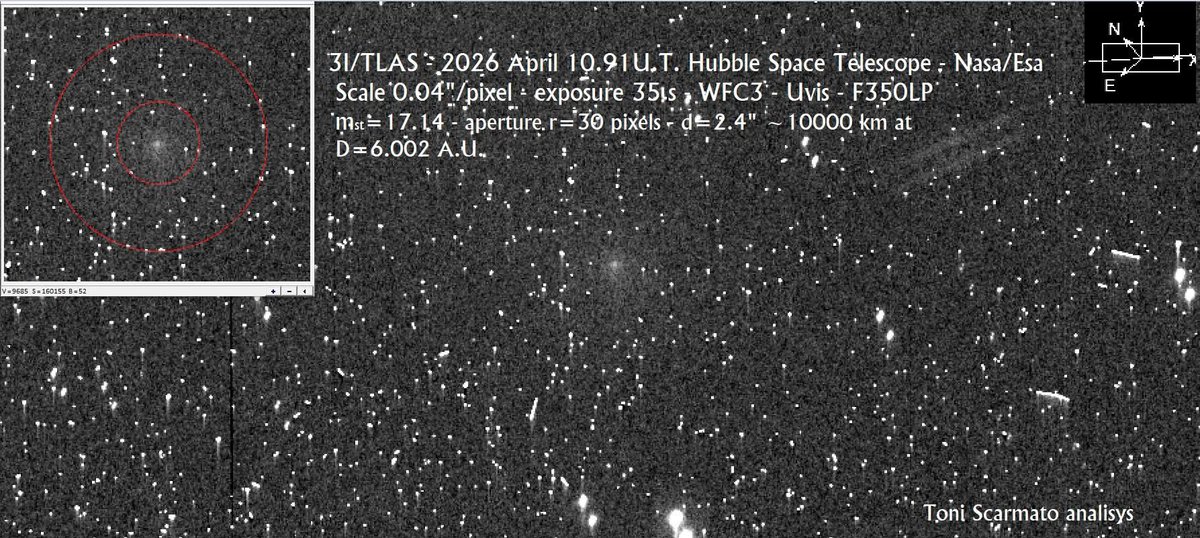
🔭 HUBBLE OBSERVES 3I/ATLAS ANOMALY
The Hubble telescope observed 3I/ATLAS recently on April 10th and found that it is far brighter than predicted by JPL54 and seems to be more active than stands to reason at this distance from the Sun.
The data was processed and released just minutes ago by astronomer Toni Scarmato.
Observing it at this distance is obviously quite difficult and he commented that the short exposure time creates a low signal-to-noise ratio which muddies the waters somewhat.
All that said, if this data is confirmed to be correct, this level of activity at a distance of nearly 1 billion kilometers from the Sun would be a true anomaly.
Stay curious.
📸 Toni Scarmato
#3IATLAS #3IATLAScomet #Comet

English