krinza
4.1K posts

krinza
@krinza
@zksync / prev. alt vm @fluentxyz, infra @ankr
dubai Katılım Haziran 2017
1K Takip Edilen7K Takipçiler


This weekend, my 8 yr old daughter and I made a boogie robot with our Reachy Mini.
We used Claude, Suno and Reachy Mini's SDK to wire together:
- Ask Reachy what song you want him to dance to
- Reachy generatively creates music using @suno or through other open-source music AI models
- Reachy streams music through its speaker and dances based on an algo Claude helped fine-tune to the vibe/pace of what's being played.
We'll publish this to the Reachy App Store after a bit more polish, but its incredible what's possible to wire together over a few hours thanks to the amazing work @ClementDelangue and the @huggingface team have done with Reachy, open source software and AI.
lfg
English

What a way to kick off my first week with @the_matter_labs as their Head of Product Marketing!
@carinetwork shows how regulated institutions can bring deposits onchain while preserving privacy, compliance, and trust. @zksync Prividium powers that.
ZKsync@zksync
Today marks a new chapter for U.S. banking. The Cari Network, developed alongside five regional banks, is building a new platform to bring tokenized deposits onchain. Secure. Private. Within the regulatory perimeter. Powered by ZKsync’s Prividium.
English
krinza retweetledi

There was a thesis that all banks are ledgers and will inevitably become chains connected to the global Ethereum superchain.
Over $8 trillion in deposits at regional U.S. banks to bring onchain.
Just getting started.
ZKsync@zksync
Today marks a new chapter for U.S. banking. The Cari Network, developed alongside five regional banks, is building a new platform to bring tokenized deposits onchain. Secure. Private. Within the regulatory perimeter. Powered by ZKsync’s Prividium.
English

Today we're introducing the world's first AI CMO.
Enter your website and it deploys a team of agents to help you get traffic and users.
Try it now at okara.ai/cmo
English
krinza retweetledi

dubai is being bombed and somehow the timeline is using it as a chance to dunk on people who moved here
twitter is a weird place
English
krinza retweetledi


Introducing EVMbench—a new benchmark that measures how well AI agents can detect, exploit, and patch high-severity smart contract vulnerabilities. openai.com/index/introduc…
English

Personal update: This was my last week as Head of DeFi at the Monad Foundation
I joined Monad two and a half years ago when it was a small team of 15 people with a powerful vision to build a high-performance EVM chain to scale crypto.
I feel incredibly fortunate to have had a front row seat in this journey, and helping build the ecosystem from scratch.
From working closely with the biggest defi protocols in the space and support their launches on Monad to closing monad-native teams and supporting their growth from their earliest days when building on Monad was not a popular choice.
I am proud of how the defi ecosystem looks today on Monad.
We've brought 100+ protocols live in the ecosystem, with $500m+ in deposits, $250m+ in TVL, and $7b+ in cumulative DEX volume - in under 3 months since launch.
More than the headline numbers, what stands out is the depth of the ecosystem. Over 30 protocols each have more than $1m in deposits.
The growth of the ecosystem has come from a wide base of strong builders, not just a single king-made project.
Every ecosystem metric is on track to grow and many exciting protocols will launch in the coming months, so I'm excited to see the young and flourishing defi ecosystem go to new heights.
Working alongside Keone, Eunice, James, and the rest of the team has been a privilege. Their ambition and long-term thinking is rare in this industry, and I remain a strong believer in Monad.
Whats next for me:
I have been in crypto for 10 years now (unc status), and my conviction in this space has only strengthened over time.
However, I have not taken a proper break in 4 years, so I will be taking some time to reset and explore new ideas before starting my next chapter.
I firmly believe that we're still very early stages in crypto adoption. The next breakout app will come out crypto, and the future of all speculative markets also lies onchain. There's a lot of opportunity.
I am excited to stay close to this space and see what comes next.

English
such a breathtaking writinggg
mrinank@MrinankSharma
Today is my last day at Anthropic. I resigned. Here is the letter I shared with my colleagues, explaining my decision.
English
building the bank stack of Ethereum.
ALEX | ZK@gluk64
On @VitalikButerin's latest L2 post: he's absolutely right. L2s must specialize to be valuable. We've been talking about this for over a year (see QT). For @zksync, the focus is PRIVACY -- for enterprises and financial institutions. We are the Bank Stack of Ethereum.
English
krinza retweetledi

L2s are for products & enterprises that require control over their chain’s UX
The winning model:
- A chain for each purpose
- Use Ethereum as economic and trust hub
- Inherit Ethereum’s security as frequently as possible
- Balance how much security is inherited according to each chain’s needs: some will allow forced withdrawals, some won’t. Users will know what freedoms they’re getting
vitalik.eth@VitalikButerin
There have recently been some discussions on the ongoing role of L2s in the Ethereum ecosystem, especially in the face of two facts: * L2s' progress to stage 2 (and, secondarily, on interop) has been far slower and more difficult than originally expected * L1 itself is scaling, fees are very low, and gaslimits are projected to increase greatly in 2026 Both of these facts, for their own separate reasons, mean that the original vision of L2s and their role in Ethereum no longer makes sense, and we need a new path. First, let us recap the original vision. Ethereum needs to scale. The definition of "Ethereum scaling" is the existence of large quantities of block space that is backed by the full faith and credit of Ethereum - that is, block space where, if you do things (including with ETH) inside that block space, your activities are guaranteed to be valid, uncensored, unreverted, untouched, as long as Ethereum itself functions. If you create a 10000 TPS EVM where its connection to L1 is mediated by a multisig bridge, then you are not scaling Ethereum. This vision no longer makes sense. L1 does not need L2s to be "branded shards", because L1 is itself scaling. And L2s are not able or willing to satisfy the properties that a true "branded shard" would require. I've even seen at least one explicitly saying that they may never want to go beyond stage 1, not just for technical reasons around ZK-EVM safety, but also because their customers' regulatory needs require them to have ultimate control. This may be doing the right thing for your customers. But it should be obvious that if you are doing this, then you are not "scaling Ethereum" in the sense meant by the rollup-centric roadmap. But that's fine! it's fine because Ethereum itself is now scaling directly on L1, with large planned increases to its gas limit this year and the years ahead. We should stop thinking about L2s as literally being "branded shards" of Ethereum, with the social status and responsibilities that this entails. Instead, we can think of L2s as being a full spectrum, which includes both chains backed by the full faith and credit of Ethereum with various unique properties (eg. not just EVM), as well as a whole array of options at different levels of connection to Ethereum, that each person (or bot) is free to care about or not care about depending on their needs. What would I do today if I were an L2? * Identify a value add other than "scaling". Examples: (i) non-EVM specialized features/VMs around privacy, (ii) efficiency specialized around a particular application, (iii) truly extreme levels of scaling that even a greatly expanded L1 will not do, (iv) a totally different design for non-financial applications, eg. social, identity, AI, (v) ultra-low-latency and other sequencing properties, (vi) maybe built-in oracles or decentralized dispute resolution or other "non-computationally-verifiable" features * Be stage 1 at the minimum (otherwise you really are just a separate L1 with a bridge, and you should just call yourself that) if you're doing things with ETH or other ethereum-issued assets * Support maximum interoperability with Ethereum, though this will differ for each one (eg. what if you're not EVM, or even not financial?) From Ethereum's side, over the past few months I've become more convinced of the value of the native rollup precompile, particuarly once we have enshrined ZK-EVM proofs that we need anyway to scale L1. This is a precompile that verifies a ZK-EVM proof, and it's "part of Ethereum", so (i) it auto-upgrades along with Ethereum, and (ii) if the precompile has a bug, Ethereum will hard-fork to fix the bug. The native rollup precompile would make full, security-council-free, EVM verification accessible. We should spend much more time working out how to design it in such a way that if your L2 is "EVM plus other stuff", then the native rollup precompile would verify the EVM, and you only have to bring your own prover for the "other stuff" (eg. Stylus). This might involve a canonical way of exposing a lookup table between contract call inputs and outputs, and letting you provide your own values to the lookup table (that you would prove separately). This would make it easy to have safe, strong, trustless interoperability with Ethereum. It also enables synchronous composability (see: ethresear.ch/t/combining-pr… and ethresear.ch/t/synchronous-… ). And from there, it's each L2's choice exactly what they want to build. Don't just "extend L1", figure out something new to add. This of course means that some will add things that are trust-dependent, or backdoored, or otherwise insecure; this is unavoidable in a permissionless ecosystem where developers have freedom. Our job should make to make it clear to users what guarantees they have, and to build up the strongest Ethereum that we can.
English


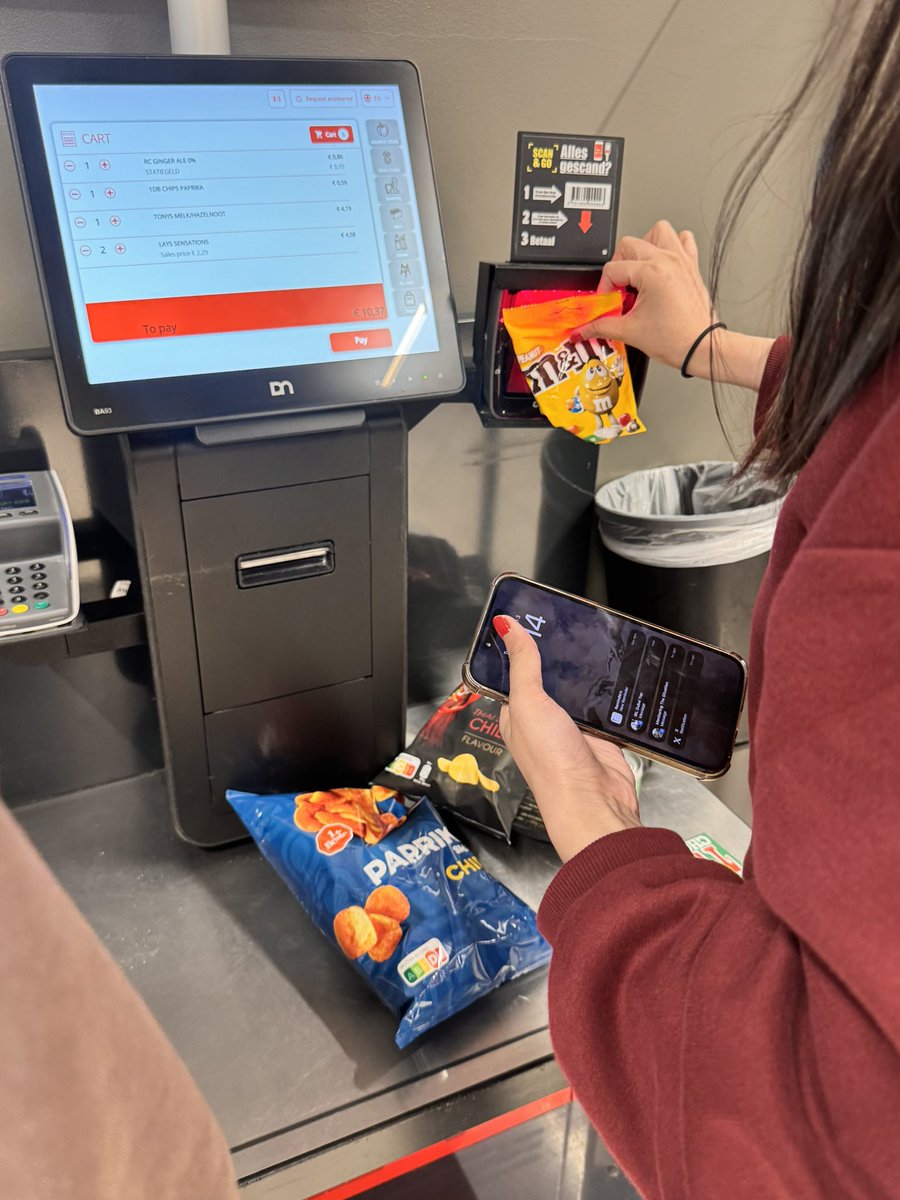
@krinza it should do it automatically but whenever you're dealing with numbers say "use code" in your prompt
English