Adam Kroetsch

25 posts

Adam Kroetsch

Adam Kroetsch

@kroetscha

Former FDAer. @Rootsofprogress fellow. I write about the policies, institutions, and incentives that drive innovation in health.

San Francisco Bay Area Katılım Mart 2010
159 Takip Edilen241 Takipçiler
Adam Kroetsch
Adam Kroetsch@kroetscha·
@otis_reid Also, a CRO probably would need to vertically integrate or partner closely with sites to drive down costs. That's hard and expensive (some are trying, though!).
English
1
0
1
24
Adam Kroetsch
Adam Kroetsch@kroetscha·
@otis_reid It's a good question! Risk aversion is part of it: the safest CRO will get picked over the cheapest CRO. But there's a few other factors hold back competition: The industry is consolidated and entry is hard. Switching costs are high.
English
1
0
1
25
Otis Reid
Otis Reid@otis_reid·
Good post by @kroetscha on rapidly rising clinical trial costs (link in next post) but I still am confused why competitive pressures among CROs don’t drive costs down more / encourage reforms like electronic record keeping. Risk aversion doesn’t seem like enough to explain it
Otis Reid tweet mediaOtis Reid tweet media
English
2
2
2
554
Adam Kroetsch retweetledi
Saloni
Saloni@salonium·
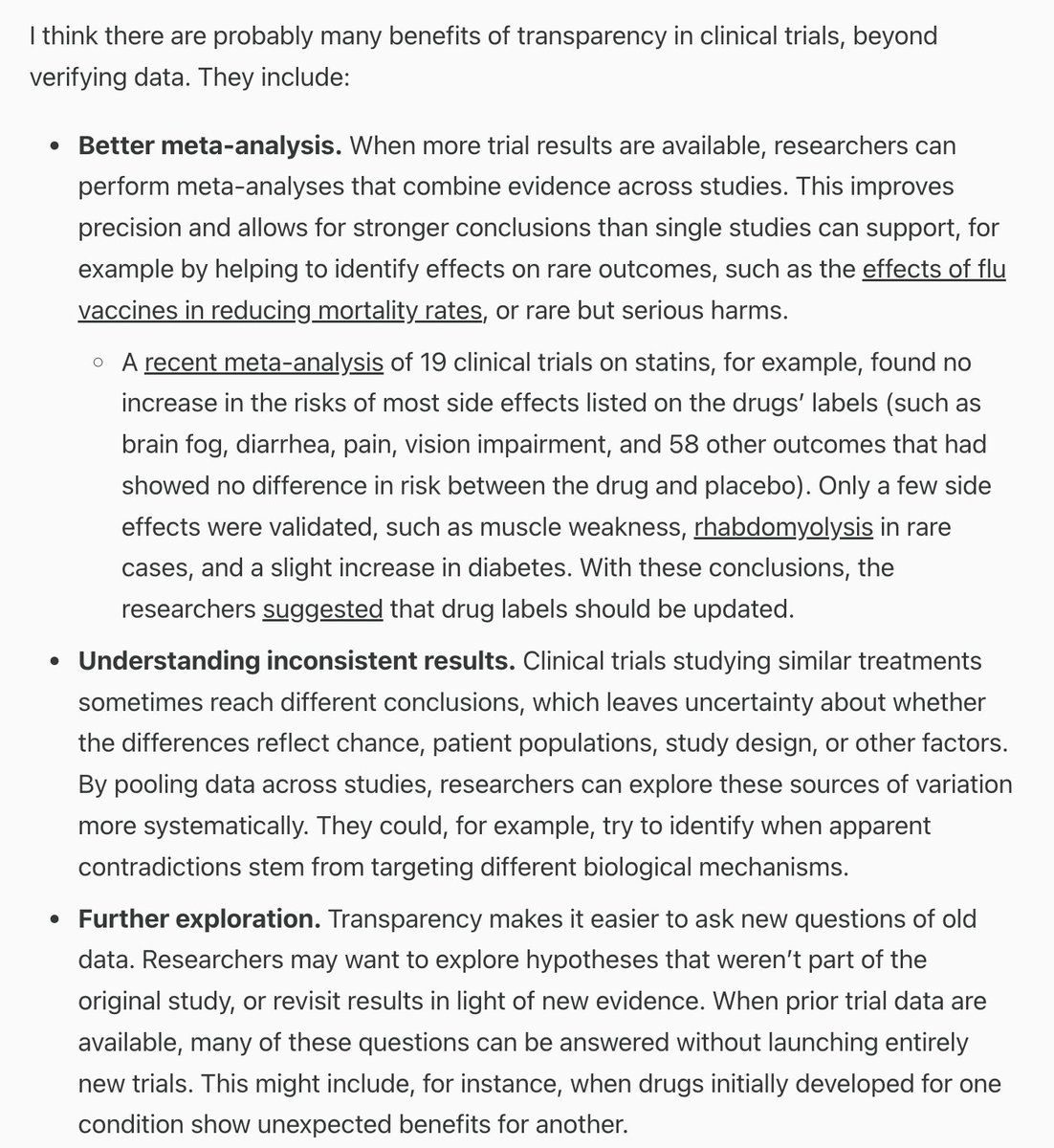
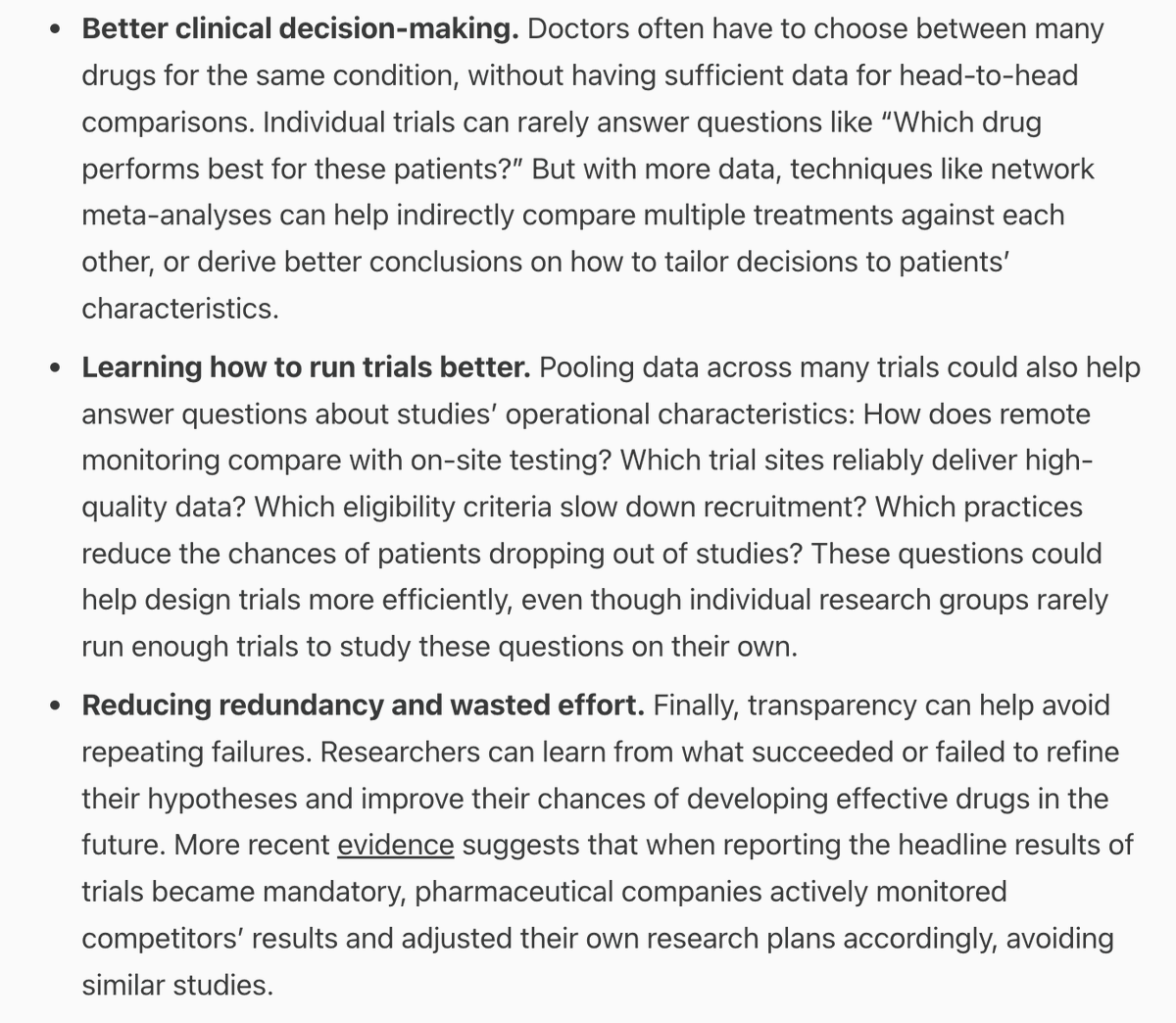
First post! The case for sharing clinical trial data, by me. Sharing individual patient data from clinical trials can make a lot of further research possible – including better meta-analyses and learning how to run trials more efficiently in the future. clinicaltrialsabundance.blog/p/the-case-for…
Saloni tweet mediaSaloni tweet media
Saloni@salonium

NEW BLOG! @RuxandraTeslo, @kroetscha, @vientsek, @NeuroStats, and I have started a joint blog on Clinical Trials Abundance! We'll aim to publish weekly thoughts, commentary and ideas on how to make clinical trials more efficient & abundant. Subscribe: clinicaltrialsabundance.blog

English
4
19
73
11.2K
Adam Kroetsch
Adam Kroetsch@kroetscha·
@doc_BLocke @varma_ashwin97 @calebwatney Agree. What looks like flexibility in the regulations can turn into ambiguity on the ground. We would benefit from more certainty - like safe harbors - so sponsors know what “good enough” looks like.
English
1
0
3
38
Brian Locke, MD MSCI
Brian Locke, MD MSCI@doc_BLocke·
@varma_ashwin97 @calebwatney Not the aggressiveness of the regulators… the ambiguity. Sponsors are optimizing around uncertainty in how the FDA will ultimately appraise. If things were more certain- even if more aggressive- the system could be a lot more efficient.
English
1
0
1
150
Adam Kroetsch retweetledi
Caleb Watney
Caleb Watney@calebwatney·
25-40% of clinical trial costs come from an excessive quality-check process that the FDA itself has recommended against for over a decade. Great piece from a former FDA official on why the whole system is stuck in a "too big to fail" loop. learninghealthadam.substack.com/p/why-clinical…
Caleb Watney tweet mediaCaleb Watney tweet media
English
12
94
510
50.1K
Adam Kroetsch
Adam Kroetsch@kroetscha·
High clinical trial costs limit what we can study and limit the availability of new treatments for patients. To make trials cheaper and faster, we need systemic reforms to the policy, incentives, and infrastructure that underlie our clinical trials system.
English
1
0
11
493
Adam Kroetsch
Adam Kroetsch@kroetscha·
I'm very excited to announce a new research project: the Clinical Trials Efficiency Project. Through this work, funded by Coefficient Giving, we will be advancing systemic reforms to reduce clinical trial costs.
English
1
10
49
15.7K
Adam Kroetsch
Adam Kroetsch@kroetscha·
So what do we do? ✔️ Clearer, more specific rules (safe harbors, measurable standards) ✔️ Proportionate penalties (to avoid overcompliance) ✔️ Strong, competent bureaucrats (yes, really) to keep cascades in check
English
1
0
2
108
Adam Kroetsch
Adam Kroetsch@kroetscha·
Why do rules and regulations so often mushroom into binders of procedures, audits, and checklists—far beyond what government actually requires? I call this the regulatory cascade. 🧵
English
1
2
7
1.6K
Adam Kroetsch
Adam Kroetsch@kroetscha·
The danger isn’t just inefficiency. A culture of zero tolerance for “badness” can distort decision-making and stifle innovation. More process ≠ more safety. Sometimes it just means more clutter.
English
1
0
0
97
Adam Kroetsch
Adam Kroetsch@kroetscha·
Key insight: the cascade doesn’t only come from government. Private actors—firms, insurers, auditors, standards bodies—become rulemakers too. And their rules can be stricter, costlier, and harder to escape.
English
1
0
0
98
Adam Kroetsch
Adam Kroetsch@kroetscha·
Each layer adds more rules than the last. The result: an entrenched bureaucracy of risk aversion and procedural clutter. Once in place, almost impossible to unwind. This is the regulatory cascade.
English
1
0
0
85
Adam Kroetsch
Adam Kroetsch@kroetscha·
➡️ Courts add factors and case law. ➡️ Agencies issue guidance, FAQs, webinars. ➡️ Companies hire Chief Badness Officers, write internal policies. ➡️ Insurers, auditors, consultants pile on. ➡️ Vendors and partners pass rules down the chain.
English
1
0
0
85
Adam Kroetsch
Adam Kroetsch@kroetscha·
Imagine Congress passed just one law: “Don’t be bad.” They empower the Badness Police to enforce it. One page of rules, no more. Sounds simple… until the cascade begins.
English
1
0
0
80