Shashikant Kore

44.9K posts

Shashikant Kore banner
Shashikant Kore

Shashikant Kore

@kshashi

Entrepreneur, Chief OTP Officer @karooya (Contact: [email protected])

Pune, India Katılım Kasım 2008
735 Takip Edilen2.3K Takipçiler
Sabitlenmiş Tweet
Shashikant Kore
Shashikant Kore@kshashi·
Maharashtrians - "ये मेरा भांडण नही हैं. मैं तो खूप छान हिंदी बोलता है."

Shashikant Kore tweet media
हिन्दी
91
378
3.2K
0
Shashikant Kore
Shashikant Kore@kshashi·
@shuklanchinisha Start with some of the humour writing by PuLa Deshpande. You can then try his non-fiction as well. Explore the writing of various authors and see which ones resonate with you.
English
1
0
1
7
Nisha Shukla
Nisha Shukla@shuklanchinisha·
@kshashi also recommend some books....I barely hv read Marathi books
English
1
0
0
20
Shashikant Kore
Shashikant Kore@kshashi·
Marathi books are not expensive at all. In fact some of older books, which have not been reprinted recently, still carry old price tags. Books older than say 5 years are effectively being sold at a discount. So, don't hesitate to pay full price for these books.
Shashikant Kore@kshashi

For Marathi books, I use Bookganga, Akshardhara or Mehta book sellers (Kolhapur). They have superior selection, good discounts and nominal delivery charges. Recently, Mehta book sellers managed to procure out of print books for me. Support your regional book stores.


English
3
4
15
1.3K
Sudhanwa Pathak MBBS
Sudhanwa Pathak MBBS@pathaksudh·
@kshashi During my college days , Ideal book depot at Dadar(w) was the place to buy books on discount. Nowadays I buy them online through Amazon/Book Ganga. But still going to Deccan Gymkhana area when in Pune or Ideal when in Mumbai is a routine. Will try Mehta in Kolhapur.
Sangli-Miraj Kupwad, India 🇮🇳 English
1
0
1
38
Shashikant Kore
Shashikant Kore@kshashi·
@CafeEconomics ज्यांना पुस्तकं मुळी वाचायचीच नसतात, त्यांच्यासाठी किंमत ही फक्त एक सबब आहे.
MR
0
0
1
14
Shashikant Kore retweetledi
Niranjan Rajadhyaksha
Niranjan Rajadhyaksha@CafeEconomics·
@kshashi आपण अनेकदा तक्रार ऐकतो की मराठी पुस्तकं महाग झाली आहेत. पण तक्रार करणारे तेच लोक सहज Swiggy च्या एका ऑर्डरवर पुस्तकाच्या किमतीपेक्षा कित्येक पट जास्त खर्च करतात. प्रश्न किमतींचा नसून रुचिचा आहे.
MR
2
2
6
293
Shashikant Kore
Shashikant Kore@kshashi·
Connections #1077 🟩🟩🟩🟩 🟪🟪🟪🟪 🟦🟦🟦🟦 🟨🟨🟨🟨
English
0
0
0
21
Shashikant Kore retweetledi
Handre
Handre@Handre·
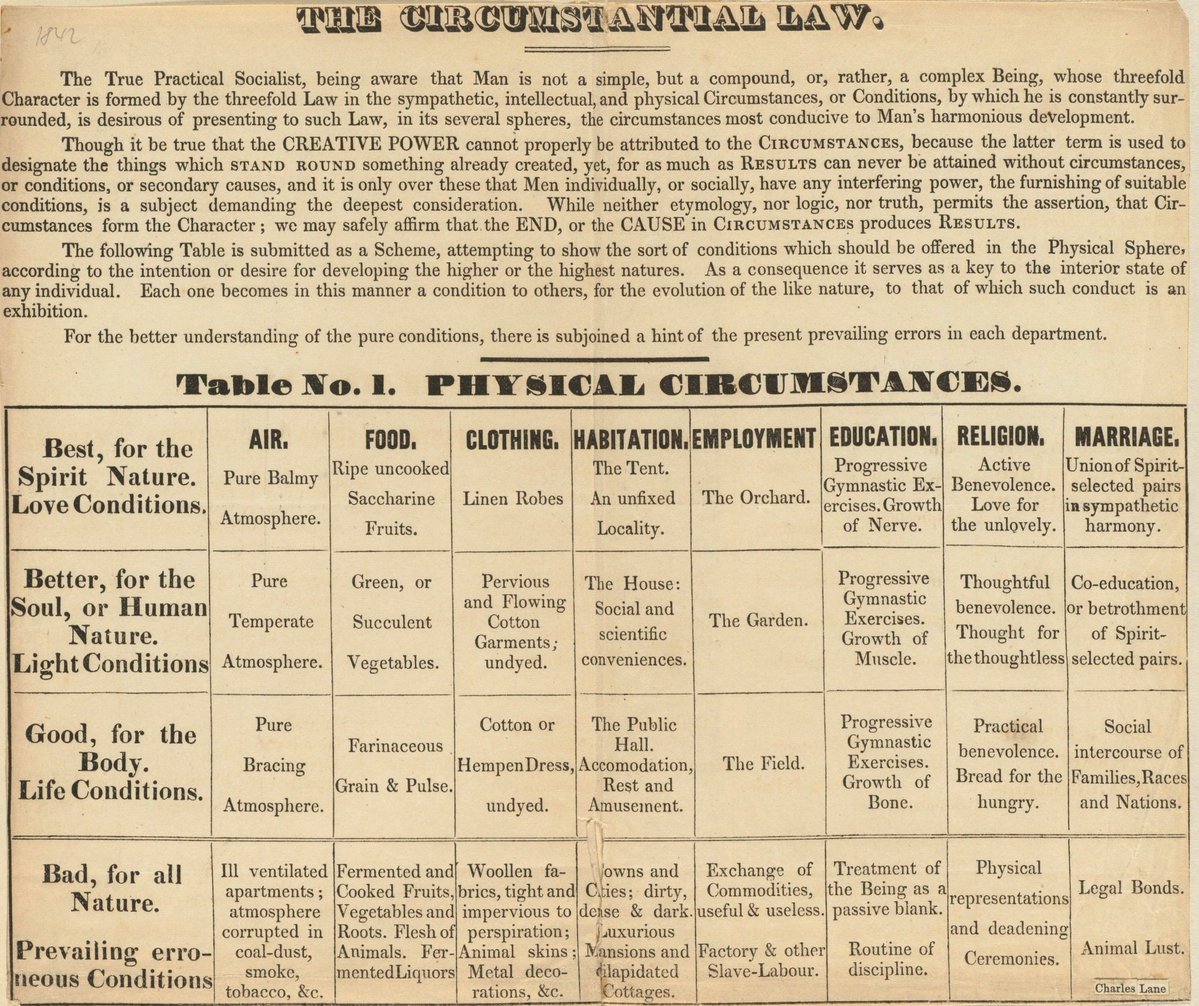
In 1843, a group of socialist vegans bought a farm in Massachusetts and declared it a transcendentalist utopia. What could go wrong? The Fruitlands commune collapsed within seven months because ideological purity cannot feed human stomachs or organize economic production. Bronson Alcott's experiment banned money, animal products, and apparently common sense while expecting 90 acres to sustain a community through New England winter. Alcott recruited transcendentalist dreamers who had never farmed but possessed strong opinions about spiritual agriculture. They refused animal labor for plowing, rejected manure as fertilizer, and spent harvest season attending philosophy lectures instead of gathering crops. When October arrived, they had planted late, harvested little, and stored almost nothing for winter. Their ideology forbade the market mechanisms that could have saved them. The community's anti-money stance meant no price signals, no profit motive, and no rational allocation of scarce resources. Without property rights, nobody owned responsibility for specific tasks. Without market prices, they couldn't calculate which crops would feed the most people or generate trade value with neighboring farms. Alcott traveled constantly giving speeches while his family and followers faced starvation. By January 1844, members fled to towns where evil capitalism provided food, shelter, and paying work. The commune's collapse wasn't bad luck or poor weather - it was economic law in action. You cannot organize production through wishful thinking and moral lectures. Even the most devoted ideologues eventually choose survival over starvation when reality intervenes. Every socialist experiment faces this identical problem, whether it's 90 acres in Massachusetts or 90 million people in the Soviet Union.
Handre tweet media
English
32
198
544
12.7K
Shashikant Kore
Shashikant Kore@kshashi·
Better to be mistaken as dimwit than a mid or even genius.
English
0
0
0
42
Kushan Mitra
Kushan Mitra@kushanmitra·
Met someone from this ministry recently, a close friend and an extremely intelligent person (I'm glad he is in this ministry) and he told me a very interesting story about renewables. India might have deployed several Gigawatts of renewables capacity in the past couple of years but the huge problem is on 'evacuating' that power. He explained that it often could take two-three years to build the transmission lines from mega solar or wind projects whereas the project itself can be executed within months. The Spanish blackout from last year is being closely studied in India and is a cautionary tale on renewables dependance without infrastructure buildout, especially digital inverters. Turbine power is 'analog' whereas solar power is digital and making the twain meet is, well, not easy. As demand rockets up, these will be challenges that the ministry, grid operators and power generators will face. Because you have to really keep in mind that the electrical grid is a 'living, breathing machine'. You put on a switch and well, you expect it to work, but that means that somewhere, a turbine spins at a fraction of a percent faster. And it is all instantaneous. Remarkable really.
Ministry of Power@MinOfPower

English
78
351
3.4K
402.2K
Shashikant Kore
Shashikant Kore@kshashi·
@sushrut_bidwai I have seen it for tweets which got edited after someone retweeted. Clicking on it shows latest tweet.
English
0
0
1
9
Sushrut Bidwai ~ ॐ
Sushrut Bidwai ~ ॐ@sushrut_bidwai·
Is the repost feature broken? Seeing reposts as RT <post>. Also it shows how hard it is to rename things, RT instead of RP.
English
1
0
0
19
Chinmay
Chinmay@chinmayhsocial·
@kshashi I'll try mehta book sellers and Alshardhara. BookGanga offers decent discounts. But those get negated with the shipping charges.
English
1
0
1
66
Shashikant Kore
Shashikant Kore@kshashi·
For Marathi books, I use Bookganga, Akshardhara or Mehta book sellers (Kolhapur). They have superior selection, good discounts and nominal delivery charges. Recently, Mehta book sellers managed to procure out of print books for me. Support your regional book stores.

Bookworm Bookstore, Blr@bookworm_Kris

Order online is your wish but small independent bookstore also sells same book with discounts & delivery like Walking BookFair, Rachana, Champaca, Dogears, Blossom, Atta Galata, Luna Books, Storyteller & more. Humble request from Bookworm team to support your local bookstore 🙏🏽
English
2
23
79
5.7K
Shashikant Kore retweetledi
Greg Lukianoff
Greg Lukianoff@glukianoff·
I’m extremely excited about Replication Radar, built by Rhea Karty at Harvard’s lab and supported by @cosmos_inst & @TheFIREorg. It’s close to an idea I’ve been a little obsessed with lately: the “knowledge crawler.” The basic idea: use AI to crawl as much of human knowledge as possible — papers, books, claims, citations, replications, retractions, old debates, buried null results — and ask the annoying but essential questions. Does this actually hold up? Did this famous study replicate? Is this field resting on three papers everyone cites but nobody has checked in 20 years? Was this “settled” conclusion ever actually settled? Are there forgotten papers that were right too early, too unfashionable, or just too boring to get attention? This would be a gigantic undertaking. Access to scholarship, copyright, licensing, academic incentives, institutional defensiveness — all of it would be hard. But hard is not the same as impossible. And this is worth doing. And yes, people will say, “Sure, maybe for science. But what about the humanities?” Well, a lot more of the humanities than people admit can be reduced to factual claims. What happened? Who said what? Did this policy produce that outcome? Did this institution actually do what people claim? Did this theory predict anything, or just explain everything after the fact? Those claims can be tested too. Not perfectly. Not by a magic TruthBot. But tested. That’s the whole point. We don’t really know most things are “true” in some final sense. We know what has survived serious attempts to prove it false. Human knowledge is overwhelmingly a project of subtraction. You get closer to truth by removing error. Bad data. Fraud. Wishful thinking. Failed replications. Citation circles. Beautiful theories reality refuses to cooperate with. Yes, my ambition here is huge. Fine. It should be. A project like this might once have taken a century. With AI, maybe we can get a much clearer map of what we know, what we only think we know, and what most urgently needs to be researched next in a handful of years. Will it show that we know a hell of a lot less than we think? Almost certainly. Good. That’s progress. Proud that @TheFIREorg and @cosmos_inst are helping push this kind of truth-seeking work forward.
Cosmos Institute@cosmos_inst

Over the last few weeks, our latest cohort of grantees (including the truthseeking track we run with @TheFIREorg) have been presenting their research and prototypes. The projects ranged from new benchmarks to classifiers to an encyclopedia. We're bringing you a few highlights. First up, the replication crisis hit psychology first but is spreading. The standard response is to discover which individual studies don't hold up – but by then, decades of work may already rest on bad foundations. Rhea Karty built Replication Radar – a knowledge-graph tool that detects epistemic fragility at the field level before the crisis breaks. It ingests papers, scores them, and looks for warning signs: tightly clustered author networks, citation rings, institutional monoculture, whether retractions propagate to citing papers, and small sample sizes. She validated it by showing it could flag most of the papers from the psychology replication crisis using only pre-crisis data.

English
7
49
217
91.3K
Shashikant Kore retweetledi
Crémieux
Crémieux@cremieuxrecueil·
Wikipedia has created an entire informational realm where what journalists say is reality, and what happens in *real* reality comes second, if you're allowed to reference it at all.
English
11
24
594
14K
Shashikant Kore
Shashikant Kore@kshashi·
Peace dividend from AI boom
MTS@MTSlive

SITUATION ANALYSIS: AI data centers may be driving America’s nuclear comeback. What @ckoopman says is happening: • Nuclear companies are already building test reactors • Some are already going critical • Hyperscalers are demanding huge amounts of reliable power • Data centers need baseload electricity that can run around the clock • Chris says you probably don’t get the nuclear renaissance without the data-center build-out • The next unlock is small modular reactor rulemaking • After that, the question becomes how fast America can build

English
0
0
0
84
Shashikant Kore retweetledi
Kane 謝凱堯
Kane 謝凱堯@kane·
This is the author who thrust AI water hysteria into the mainstream by overestimating data center water use by 100,000% in her book Empire of AI by mixing up units. She is a source of wild misinformation. Imagine writing an Econ book on the premise that minimum wage is $7,250/hr
Kane 謝凱堯 tweet media
Karen Hao@_KarenHao

On the one-year anniversary of EMPIRE OF AI, I am so, so excited to announce The AI Resist List, a new project that documents examples of resistance to the AI empires around the world. airesistlist.org

English
64
321
2.6K
207.6K
Shashikant Kore retweetledi
Shashikant Kore
Shashikant Kore@kshashi·
Google was my quick spell check for the longest time. Now, it spends a few seconds to generate a big wall of AI-generated text, when all I want is spell check.
English
2
0
3
221