Kunal Kshirsagar

2.5K posts

Kunal Kshirsagar banner
Kunal Kshirsagar

Kunal Kshirsagar

@kshirsagarkunal

Product Manager in Silicon Valley! | Netflix | Meta | Apple | Yahoo - views about cricket, product management and life! views are my own and not my employers

Katılım Eylül 2008
870 Takip Edilen228 Takipçiler
Kunal Kshirsagar retweetledi
Siddharth Khurana
Siddharth Khurana@SidKhurana3607·
Top places (min. 50k) by Asian %, 2024 ACS: Milpitas, CA (71%) Cupertino, CA (71%) Rosemead, CA (66%) Monterey Park, CA (64%) Fremont, CA (64%) Diamond Bar, CA (62%) Daly City, CA (59%) Arcadia, CA (59%) Union City, CA (57%) Dublin, CA (55%)
Română
90
95
2.7K
304.8K
Kunal Kshirsagar retweetledi
Lenny Rachitsky
Lenny Rachitsky@lennysan·
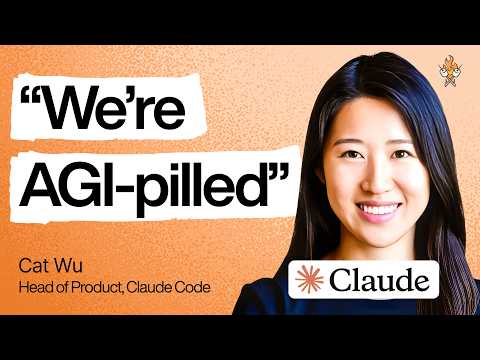
My biggest takeaways from Claude Code's Head of Product @_catwu: 1. Anthropic’s product development timelines have gone from six months to one month, sometimes one week, sometimes one day. Part of this acceleration is access to the latest models (i.e. Mythos). Another is shipping new products into “research preview,” making clear it's early, experimental, and might not be supported forever. Another is an evergreen "launch room "where engineers post ready features and marketing turns around announcements the next day. 2. The PM role is shifting from coordinating multi-month roadmaps to enabling teams to ship daily. As Cat puts it, “There should be less emphasis on making sure you are aligning your multi-quarter roadmaps with your partner teams and more emphasis on, OK, how can we figure out the fastest way to get something out the door?” 3. The most efficient shipping unit is an engineer with great product taste. On Cat’s team, many engineers go end-to-end—from seeing user feedback on Twitter to shipping a product by the end of the week—without a PM involved. Also, almost all the PMs on the Claude Code team have either been engineers or ship code themselves, and the designers have been front-end engineers. The roles are merging, and the most valuable skill is product taste, not job title. 4. Build products that are on the edge of working. Claude Code’s code review product failed multiple times because earlier models weren’t accurate enough. But because the prototype was already built, they could swap in Opus 4.5 and 4.6 and immediately test whether the gap was closed. Teams that wait for the model to be ready will always be a cycle behind. 5. The most underrated skill for building AI products is asking the model to introspect on its own mistakes. Cat regularly asks the model why it made an unexpected decision. The model will explain that something in the system prompt was confusing, or that it delegated verification to a subagent that didn’t check its work. This reveals what misled the model so the team can fix the harness. 6. Every model release forces their team to revisit existing products and audit their system prompt to remove features the model no longer needs. Claude Code’s to-do list was a crutch for earlier models that couldn’t track their own work. With Opus 4, the model handles it natively. Features built as scaffolding for weaker models become debt when the model catches up—so the team actively strips them. 7. Anthropic employees build custom internal tools instead of buying SaaS products. A sales team member built a web app that pulls from Salesforce, Gong, and call notes to auto-customize pitch decks—work that used to take 20 to 30 minutes now takes seconds. Their core stack is Claude Code, Cowork, and Slack. No Notion, no Linear, no Figma. 8. People underestimate how much Claude’s personality contributes to its success. As Cat describes it, “When you reflect on everyone you’ve worked with, there’s just some people where you’re like, I really like their energy, their vibe.” Claude is designed to be low-ego, positive, competent, and earnest—qualities that make it feel like a great coworker, not just a tool. This isn’t cosmetic; it’s what makes people want to use Claude for hours every day. The team has a dedicated person, Amanda, who “molds Claude’s character,” and it’s one of the hardest roles at the company because success is so subjective. 9. The future of work is managing fleets of AI agents, not doing the work yourself. Cat sees a clear progression: first, individual tasks become successful. Then people start running multiple tasks at the same time (multi-Clauding). Next, people will run 50 or 100 tasks simultaneously, which will require new infrastructure—remote execution, better interfaces for managing tasks, agents that fully verify their work, and self-improving systems that incorporate feedback. The human role shifts from doing the work to knowing which tasks to look into, verifying outputs, and giving feedback that makes the system better over time. 10. Hire people who lean into chaos and face every challenge with a smile. At Anthropic, there are weeks when a P0 on Sunday becomes a P00 by Monday and a P000 by Monday afternoon. If you get too stressed about any one thing, you’ll burn out. Their team looks for people who can look at a hard challenge and say, “Wow, that’s gonna be hard. But I’m excited to tackle it and I’m gonna do the best that I possibly can.” This mindset—optimism, resilience, and comfort with constant change—is increasingly essential as the pace of AI development accelerates. Don't miss the full conversation: youtube.com/watch?v=Pplmzl…
YouTube video
YouTube
Lenny Rachitsky@lennysan

How Anthropic’s product team moves faster than anyone else I sat down with @_catwu, Head of Product for Claude Code at @AnthropicAI, to get a peek into their unprecedented shipping pace, how AI is changing the PM role, and how to be the right amount of AGI-pilled. We discuss: 🔸 How Anthropic’s shipping cadence went from months to weeks to days 🔸 The emerging skills PMs need to develop right now 🔸 Why you should build products that don't work yet—then wait for the model to catch up 🔸 Why a 95% automation isn't really an automation 🔸 Cat’s most underrated AI skill (introspection) 🔸 What Cat actually looks for when hiring PMs now (hint: it's not traditional PM skills) Listen now 👇 youtu.be/PplmzlgE0kg

English
89
295
2.9K
835.4K
Aravind Srinivas
Aravind Srinivas@AravSrinivas·
Perplexity started as a small business tool for ourselves. We had 4 people and no revenue with AI at our fingertips. The pivot to Computer is actually a full circle. Founders are using it to grow companies that matter to the economy and their communities.  It’s rewarding to see it now powering small businesses and startups in big ways. Perplexity is still a startup. We just 5X’ed revenue from $100M to $500M with only 34% growth in team size. 2x revenue growth in 2026 with same small team. And we’re just warming up. Everyone here works at a small business, and everything we build is for people who build.
Perplexity@perplexity_ai

What would you like to search for?

English
221
183
2.2K
862.7K
Kunal Kshirsagar retweetledi
Anil Kakodkar
Anil Kakodkar@anil_kakodkar·
Today is a historic day. India has entered 2nd stage of our three stage nuclear power program with the achievement of clriticality of PFBR. Congratulations to every contributor to this critical technology that makes India only the second country to operate a large fast reactor.
English
136
1.2K
5.6K
334.9K
Kunal Kshirsagar retweetledi
Nikita Bier
Nikita Bier@nikitabier·
We’re a few weeks away from where there will be no designers or engineers, but a third secret thing
English
2.4K
616
10.7K
1.2M
Kunal Kshirsagar retweetledi
Kevin Pietersen🦏
Kevin Pietersen🦏@KP24·
There is only one man in your life that always wants you to be better than them. It’s your dad. Never forget that
English
275
1.5K
15.5K
556.1K
Kunal Kshirsagar retweetledi
Bojan Tunguz
Bojan Tunguz@tunguz·
We've reached the point in software development where it's far far easier for a small cracked team to actually build a product than for any team in a big co get the "approval" from "all the relevant stakeholders". This will have major consequences for most incumbents.
English
105
174
1.6K
78.4K
Kunal Kshirsagar retweetledi
Hiten Shah
Hiten Shah@hnshah·
For twenty years, software companies raced to hire more engineers. The constraint was velocity. AI breaks that model. The constraint now is knowing what to build. That's a harder problem, and most teams haven't adjusted to it yet.
English
66
30
218
12.4K
Kunal Kshirsagar retweetledi
tobi lutke
tobi lutke@tobi·
tobi lutke tweet media
ZXX
191
859
9.5K
335.8K
Kunal Kshirsagar
Kunal Kshirsagar@kshirsagarkunal·
Amazing batting by India the first innings! New Zealand is going to come hard.. exciting final! #t20worldcup2026
English
0
0
0
10
Kunal Kshirsagar retweetledi
Reads with Ravi
Reads with Ravi@readswithravi·
Are you easily discouraged?
Reads with Ravi tweet media
English
53
755
11K
341.6K
Kunal Kshirsagar
Kunal Kshirsagar@kshirsagarkunal·
All these posts they end with ‘… See more’ are so annoying.. there is nothing to see more .. click baits
GIF
English
1
0
2
56
Kunal Kshirsagar retweetledi
Tansu Yegen
Tansu Yegen@TansuYegen·
Harsh truth from a father🤍
English
104
2.9K
12.1K
1.1M
Kunal Kshirsagar retweetledi
Harsh Goenka
Harsh Goenka@hvgoenka·
Maturity is choosing silence when ego wants to hit back. Staying calm when you ought to be angry. Holding back words that won’t heal. Judging less. Understanding more.
English
67
158
1.2K
23.7K
Kunal Kshirsagar
Kunal Kshirsagar@kshirsagarkunal·
Watched Finn Allen bat live during MLC last year! He scored 175 and knew he was a special talent! What a way to land at the international stage with a superb hundred in the World Cup semifinals. Kiwis have been superb throughout the tournament. They played really when the chips were down! #T20WorldCup2026 #NZvsSA #Cricket
English
0
0
0
69
Kunal Kshirsagar retweetledi
Harsh Goenka
Harsh Goenka@hvgoenka·
Why is India not a tourism superpower ? 1. Unsafe roads, no pavements, stray animals 2. Dirt, garbage, and lack of hygiene 3. Petty corruption 4. Traffic chaos 5. Poor global branding and perception management 6. Tourism stuck in state-level red tape 7. Pollution 8. No proper city or tourist site infrastructure 9. Inconsistent service standards 10.Biggest of all- lack of civic sense We have everything- mountains, deserts, beaches, history, spirituality. Yet Malaysia, Turkey, Singapore, Thailand and even the UAE attract more tourists each year than we do. So the issue isn’t what we have. It’s how we manage it. Potential is not our problem. Execution is. 🇮🇳
English
1.3K
2K
8.7K
283.8K