Kunal June

17.7K posts

Kunal June banner
Kunal June

Kunal June

@kunaljune

India First Alway(s) 🇮🇳🇮🇱🇷🇺🇯🇵- Dont EXPECT soft responses - Jai Hind Interested in Military Aviation, Geo-Politics & Eating Pork.

Katılım Temmuz 2009
1.7K Takip Edilen154 Takipçiler
Kunal June retweetledi
Hindu Voice
Hindu Voice@HinduVoice_in·
News coming in from #Murshidabad district of #WestBengal. A minor Hindu girl named Ishita Bhattacharya(16) became a victim of Love and died by suicide in #Hoglatair village under the jurisdiction of #Jalangi Police Station. She couldn't tolerate the continuous threat from her alleged lover Mubarak Sheikh. Her mother alleged that Mubarak Sheikh threatened her daughter to flee from home with him. Mubarak Sheikh also allegedly pressurized her daughter to bring money, gold jewellery from her home and to elope with him. But, she didn't agree. The victim minor Hindu girl was a student of Class-X.
English
23
432
634
13.1K
Kunal June retweetledi
Treeni
Treeni@treeni·
Tanvir and 3 Muslim youths gang-raped and murdered 22-year-old Hindu girl in Pheni, Bangladesh. They lured the B.Ed trainee teacher to a secluded spot, raped her and strangled her to death. Police arrested 2 accused; body recovered from the spot.
English
13
759
1.3K
10.5K
Paul Antonopoulos 🇬🇷🇨🇾
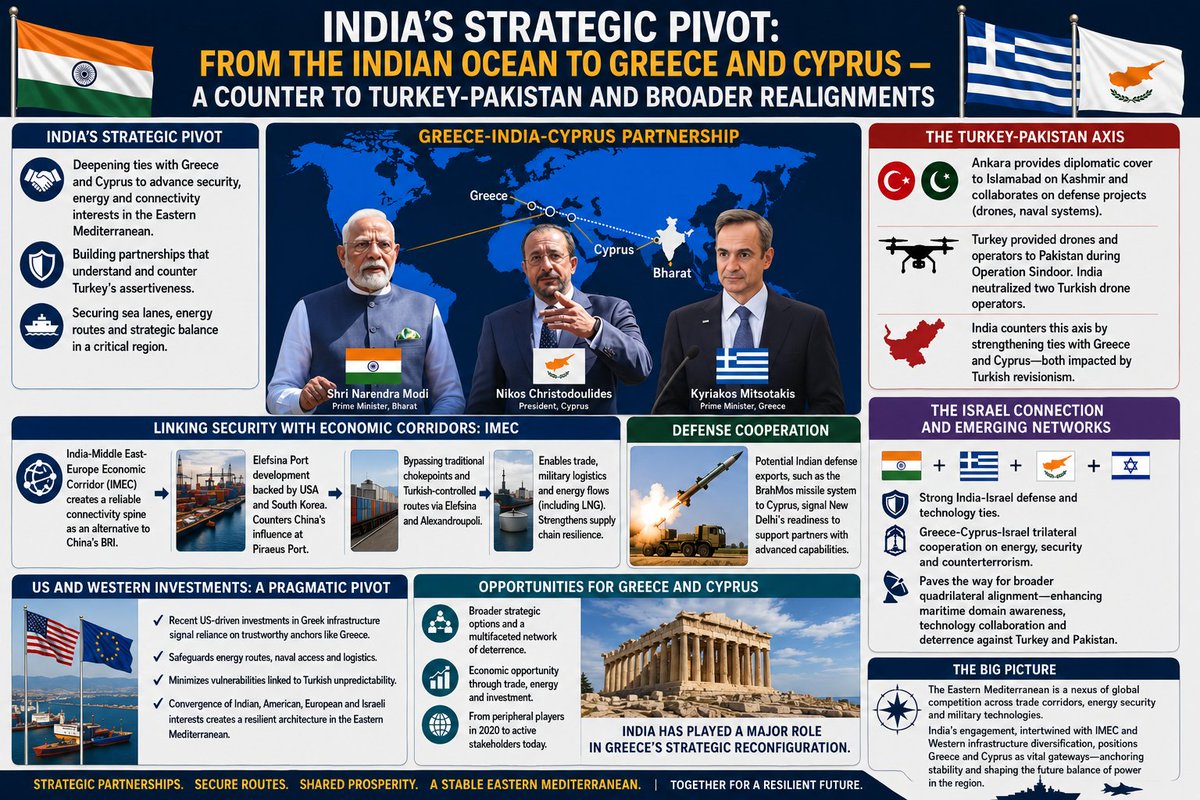
India’s Strategic Pivot: From the Indian Ocean to Greece and Cyprus — A Counter to Turkey-Pakistan and Broader Realignments India is actively expanding its footprint in the Eastern Mediterranean by deepening ties with Greece and Cyprus. This move is part of a broader geopolitical shift that extends beyond bilateral diplomacy, linking New Delhi’s security concerns with emerging Western infrastructure and energy strategies aimed at reducing dependence on unreliable actors — including Turkey. Recent developments underscore this momentum. India and Cyprus have formalized a strategic partnership, including a 2026–2031 defense cooperation roadmap that covers maritime security, technology, and counterterrorism. India and Greece, meanwhile, have deepened naval and air cooperation. For New Delhi, the region is a critical extension of its interests in secure sea lanes, energy connectivity, and balancing adversarial partnerships. India’s calculations take into account the Turkey-Pakistan axis. Ankara has long provided diplomatic cover for Islamabad on issues such as Kashmir while collaborating on defense projects, including drones and naval systems. This partnership has operational significance, as evidenced by Turkey’s unapologetic support for Pakistan during Operation Sindoor. In response, India is cultivating partners who share a clear understanding of Turkish assertiveness — Greece, which is resisting Turkey’s maximalist claims in the Aegean Sea, and Cyprus, which is affected by the enduring impacts of the 1974 Turkish invasion and division. Linking Security with Economic Corridors This outreach closely aligns with India’s investment in the India-Middle East-Europe Economic Corridor (IMEC). Projects such as the development of Greece’s Elefsina Port — backed by major trilateral investments involving the US and South Korea — are designed to create reliable, Western-aligned hubs. These efforts not only counter Chinese influence at ports like Piraeus but also position Greece as a key European terminus for IMEC, enhancing logistics, energy flows (including LNG), and supply chain resilience. By bypassing traditional chokepoints and Turkish-controlled routes via infrastructure at Elefsina and Alexandroupoli, these initiatives create parallel networks for trade, military logistics, and energy. This complements India’s broader IMEC vision as a strategic alternative to China’s Belt and Road Initiative, with Greece and Cyprus serving as vital gateways linking Asian connectivity goals to European stability. Discussions about potential Indian defense exports, such as the BrahMos missile system to Cyprus, add further weight. They signal New Delhi’s willingness to engage directly in the region with advanced capabilities and to support partners facing similar regional pressures. The Israel Connection and Emerging Networks Israel fits into this framework too. Strong India-Israel defense and technology ties, together with the established Greece-Cyprus-Israel trilateral cooperation on energy, security, and counterterrorism, pave the way for broader quadrilateral alignment. Such a grouping would enhance maritime domain awareness, technological collaboration, and deterrence against Turkey’s revisionist influences. On the opposing side, the Turkey-Pakistan partnership underscores the value of these counterbalancing efforts. Turkey’s regional interventions and defense industry expansion stand in contrast to the more predictable partnerships forming around Greece. Recent US-driven investments in Greek infrastructure signal a pragmatic pivot: prioritizing reliable anchors such as Greece to safeguard energy routes, naval access, and logistics while minimizing vulnerabilities linked to Turkish unpredictability. This convergence of Indian, American, European, and Israeli interests creates a more resilient architecture in the Eastern Mediterranean, in contrast to Turkey’s attempts to redraw maps. Opportunities for Greece and Cyprus For Greece and Cyprus, these developments offer an opportunity to broaden their strategic options. Strengthening ties with India builds a multifaceted network of deterrence and economic opportunity — one that moves beyond reactive postures. The Eastern Mediterranean is becoming a nexus of global competition across trade corridors, energy security, and military technologies. India’s engagement, intertwined with initiatives such as IMEC and Western infrastructure diversification, positions Greece and Cyprus as active stakeholders rather than the peripheral players they have traditionally been, even as recently as 2020. And India has played a major role in Greece’s strategic reconfiguration.
Paul Antonopoulos 🇬🇷🇨🇾 tweet media
Paul Antonopoulos 🇬🇷🇨🇾@oulosP

Bypassing Turkey: Washington’s Strategic Pivot to Greece as the New Anchor of the West Washington has shifted its Eastern Mediterranean strategy by deliberately reducing reliance on Turkey and elevating Greece as a stable, reliable partner for military logistics, energy security, and regional influence. This pivot addresses longstanding concerns about Turkish unpredictability—ranging from its transactional diplomacy and S-400 dealings with Russia to periodic strains over shared facilities—by diversifying access through Greek ports, bases, and energy corridors. The result is a more resilient architecture that strengthens NATO’s southern flank while minimizing vulnerabilities tied to Turkish territory and decision-making. Turkey remains a significant NATO member with substantial military capabilities and geographic relevance. However, its assertive policies in the Aegean, hedging with non-Western powers, and potential for friction in crises have prompted Washington to seek alternatives that offer greater consistency and alignment. This realignment emphasizes concrete investments in three key Greek locations: Souda Bay, Alexandroupoli, and Elefsina. Together, they form a network that enhances mobility, supports LNG imports, and provides north-south energy routes that effectively bypass traditional dependencies on the Turkish-controlled Straits. Souda Bay: The Enduring Naval Strongpoint On Crete, Souda Bay is one of NATO’s most valuable Mediterranean facilities. Its deep-water harbor and strategic location provide reliable access for U.S. and allied naval forces, with far less exposure to political disruptions than options in the Near East. Significant infrastructure upgrades, including multi-million-dollar maintenance and logistics contracts, have expanded its capacity for carrier support, training, and sustained operations. In recent regional crises, Souda has proven its worth as a dependable node when access elsewhere has been complicated. It anchors broader U.S.-Greek defense ties, providing predictability that allows Washington to maintain a robust presence without constant renegotiation. This reliability supports power projection across the eastern Mediterranean, North Africa and the Middle East while reducing single-point risks associated with more volatile partnerships. Alexandroupoli: The Northern Gateway and Bypass Hub In northeastern Greece, Alexandroupoli has become a vital logistics and energy hub. Situated near the Bulgarian border and with strong connectivity to the Balkans and the Black Sea region, it enables efficient movement of troops, equipment, and energy resources—bypassing the Turkish-controlled Straits and their associated chokepoints. U.S. investments have modernized the port to support brigade-scale deployments and sustainment. The addition of an LNG floating storage and regasification unit (FSRU) with substantial annual capacity feeds pipelines such as the Interconnector Greece-Bulgaria (IGB). This creates a “Vertical Corridor” that delivers American and other gas northward to Bulgaria, Romania, Ukraine, and Central Europe. Economically, it boosts Greek development and enhances allied energy security. Geopolitically, Alexandroupoli reduces any single actor’s leverage over transit routes. By routing logistics and energy through Greek territory, the U.S. and its partners gain resilience against potential disruptions or restrictions. Its performance during heightened tensions has validated its role as a cornerstone of Washington’s diversified approach. Elefsina: Countering Influence and Building Industrial Depth West of Athens, Elefsina’s port and historic shipyard are emerging as focal points for Western strategic investment. Once associated with Greece’s economic challenges, the site will support modernization efforts focused on naval repair, commercial logistics, and reducing the concentration of external influence in nearby facilities such as the Chinese-operated Port of Piraeus. Elefsina adds critical redundancy to the network—providing maintenance capacity near central Greece that complements Souda’s southern naval strength and Alexandroupoli's role as a northern gateway. This layered infrastructure spreads risk, protects against localized disruptions, and signals an enduring commitment to Greek territory as a platform aligned with transatlantic priorities. Energy Corridors: Redrawing the Map These military and port developments take on greater importance because of their ties to energy infrastructure. Greece serves as a primary entry point for U.S. LNG via terminals at Revythousa and Alexandroupoli, with pipelines that reduce European dependence on older, more contested routes. Offshore exploration in the Ionian Sea and south of Crete, through partnerships with companies such as ExxonMobil and Chevron, further embeds Western commercial interests in Greek waters. Forward-looking elements, such as hydrogen-ready infrastructure, prepare these corridors for future energy transitions. The Vertical Corridor model—gas arriving on Greek shores and flowing northward—offers a clear alternative to east-west dependencies that have historically been vulnerable to control via the Turkish-controlled Straits. This not only diversifies supplies but also fosters deeper economic integration with Balkan and Eastern European partners. France has reinforced the framework through defense agreements, joint exercises, and capability transfers (including Rafale aircraft), establishing complementary European support alongside the U.S. operational and energy focus. This synergy strengthens Greece’s anchoring role without forcing binary alignments. Why This Matters: Reliability in an Uncertain Region Washington’s emphasis on Greece stems from a pragmatic assessment of reliability. As a stable EU and NATO democracy with transparent governance, Greece offers a foundation less prone to abrupt policy shifts - like in Ankara. Investments in these sites yield compounded benefits: stronger deterrence, secure supply lines, reduced exposure to single points of failure, and greater influence in regional energy markets. While Turkey remains important in select areas, such as engagement in the Middle East, the Greek pivot serves as effective hedging against risks stemming from Ankara’s assertive and scheming posture. Washington's direction is clear - expanded U.S.-Greek cooperation across bases, ports, and energy corridors to forge a more robust regional framework. Alexandroupoli secures logistics flows that once carried higher risk; Souda ensures naval continuity; Elefsina contributes industrial resilience. Collectively, these elements position Greece as the functional anchor of Western strategy in the Eastern Mediterranean. As security requirements persist and energy landscapes shift, Greece’s geography and partnerships position it at the center of the updated strategic map.

English
6
96
295
40.6K
Kunal June retweetledi
Voice Of BD Hindus 🇧🇩
🚨 BREAKING: Hindu girl Shruti Pal physically assaulted and murdered in Bangladesh. She was actively involved with Hindu organizations and taught Gita at the temple. Her family claims she was called out by her Muslim friend and the friend’s lover Tanvir, after which the tragic incident occurred. Her family is demanding justice. Where is the outrage? #SaveBangladeshiHindus
Voice Of BD Hindus 🇧🇩 tweet media
English
84
2.5K
3.9K
68.1K
Kunal June
Kunal June@kunaljune·
@Delta_SquadAnex Didnt Happen when India was weakest. Specially during 1962. Why Now ? Their is NO Iota Gain to India. Dream On Pakistani....
English
0
0
0
1.5K
Kunal June
Kunal June@kunaljune·
@TheMilObserverr 1) Indian Navy frigates 6670 Tons made Tukie Navy frigates 3000 Tons run in Apr 2026 in Mediterranean sea. 2) India could have launched a Ballistic missile on tukie during Ops Sindoor to teach a lesson. Next, Turkey can come back to FATF Grey list ?
English
1
1
1
400
Military Observer
Military Observer@TheMilObserverr·
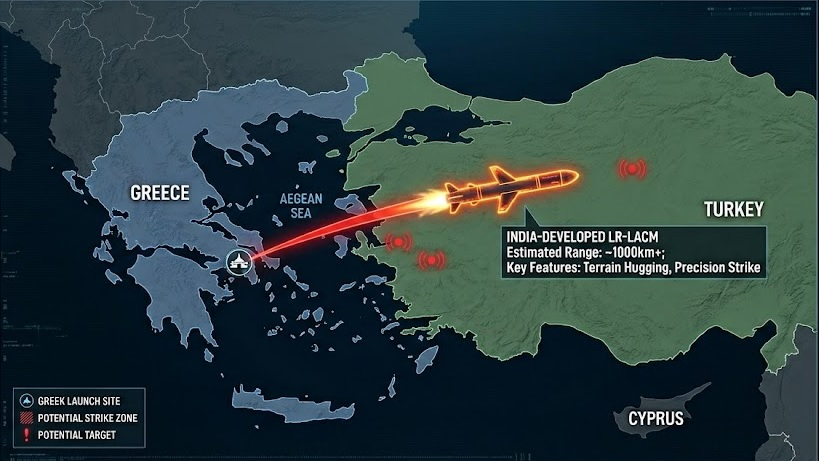
Turkey is worried that India could arm Greece with long-range missiles. 🇮🇳🇬🇷 Turkish media are suddenly alarmed by the possibility of deeper India-Greece defence cooperation. Interesting. Turkey spent years arming Pakistan and backing Islamabad whenever tensions with India escalated. When India raised concerns, Ankara did not seem particularly worried. Now the possibility of Indian weapons reaching Turkey's neighbourhood has changed the conversation. That is how geopolitics works. If Ankara can supply drones to Islamabad then New Delhi will also supply missiles to Greece, cyprus and Armenia. Simple as that. Just days ago, Turkey's Foreign Minister was talking about better relations with India. Perhaps that conversation should have happened before years of support for Pakistan. Turkey is discovering something many countries eventually learn. Strategic choices have consequences. Maybe it is time for Ankara to think about that while reading headlines about India, Greece and long-range missiles. 🇮🇳
Military Observer tweet media
English
28
159
753
26.4K
Kunal June retweetledi
Voice Of BD Hindus 🇧🇩
🚨 Another Hindu leader killed in Bangladesh. Bipul Chandra Pal, Union Parishad Member from Bogura, found dead. Two Hindus murdered in 24 hours. The BNP regime’s silent genocide against Hindus continues. How many more must die before the world reacts? #StopHinduGenocide #BangladeshHindus
English
44
1.1K
1.7K
24.4K
Kunal June retweetledi
thakur ajay
thakur ajay@Thakurajayy·
Hindu girls are being gang-raped, and not a single Islamic country criticizes it or protests; yet for Rabia, their eyes were waterfalls with tears...They have also gang-raped this poor little girl, what a pity — her health looks very bad.
English
266
3.6K
8.6K
767.1K
Kunal June retweetledi
Voice Of BD Hindus 🇧🇩
Voice Of BD Hindus 🇧🇩@BDHindus71·
🚨BREAKING : After 8 days missing, the body of poor carpenter Narayan Sarkar was recovered in Dhaka's Nawabganj. His family alleges he had been repeatedly threatened by local Jamaat activists demanding "jizya" payments.Police have taken the body for investigation #AllEyesOnBangladeshiHindus
English
41
1.3K
2.2K
55.8K
Kunal June
Kunal June@kunaljune·
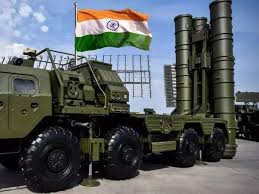
S400 4th Regiment Delivered. Now Pakistan has Zero Control on its ENTIRE Airspace.
Kunal June tweet media
English
0
0
0
13
Kunal June
Kunal June@kunaljune·
Greece & Cyprus should recover occupied land from Roasted Turkey. Gone are days of Bullying from Turkey.......
Kunal June tweet media
English
0
0
0
57
Kunal June
Kunal June@kunaljune·
@oulosP Tukish Navy was Taght a Serious Beating by Indian Navy in its Backyard.... Fee Cyprus.
English
0
0
0
189
Paul Antonopoulos 🇬🇷🇨🇾
These idiots never learn 🤣 India is potentially arming Greece & Cyprus because Turkey unnecessarily got involved in the Kashmir issue. Instead of deescalating, this moron wants to double down on support for Pakistan, meaning India will only triple down on its support for Greece & Cyprus. Every step Turkey takes to antagonize India will only lead to an even worse outcome for them in the long-run. Alliances are forging, cooperation is increasing, deals are being made, and Turkey is being left for dead grasping at a failing neo-Ottoman project.
Rauf Köse@Halkiyatcilik

Hindistan'ın, İsrail güdümünde Doğu Akdeniz'de uyguladığı Rumları silahlandırma görevi, Türkiye'nin dost, kardeş ülkemiz Pakistan'a çok daha fazla destek olmasını zorunlu hale getirmektedir. Yunanistan ve GKRY eksiklerini gidermeden, Dömeke'de olduğu gibi kuvvetlerini kırmalıyız.

English
376
1.6K
9.3K
437.4K
Kunal June
Kunal June@kunaljune·
The Level of Buffoonery by Pakistani cant be matched.... Np wonder it is called Lumber#1 Fauj !!
English
0
0
0
9