Kurukuu
12K posts

Kurukuu
@kurukuu
I follow lots of people, beware of +18 likes
Barcelona Katılım Haziran 2009
4.5K Takip Edilen264 Takipçiler

Quiero empezar una serie creando mi propio motor de juegos, al alcance de todos los públicos.
No será "Haciendo mi motor parte 1", "parte 2", "parte 3", pq quedaría un tutorial aburrido. Cada vídeo tratará una característica distinta: render, iluminación, colisiones, físicas...
Español
Kurukuu retweetledi

I'm afraid it's been... 9 years since very first Nerd and Jock comic
Marko (Nerd and Jock Comics)@MarkoRaassina
Nerd boy comic
English
Kurukuu retweetledi

March 11, 2011. 2:46 PM.
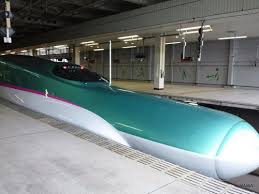
33 Shinkansen bullet trains were running through northern Japan.
Several were moving at 300 km/h.
Then the earthquake hit.
Magnitude 9.1. The 4th largest ever recorded.
Epicenter: off the Sanriku coast, 130 km ESE of the Oshika Peninsula.
Every single train stopped safely.
Zero passenger injuries.
Here's what happened.
12 to 22 seconds before the violent shaking reached the tracks,
a seismometer on Kinkazan — a small island off Japan's Pacific coast —
detected the quake and sent a signal inland.
The signal traveled faster than the earthquake itself.
Power to the tracks was cut.
Every train in the zone automatically braked.
By the time the ground started shaking violently,
the trains were already slowing down.
One empty test train derailed at Sendai Station.
Not a single train in service derailed.
The Shinkansen has been running since 1964.
In 60 years, it has killed zero passengers —
not in a collision, not in a derailment.
Zero.
Most people stop reading here.
The real story starts now.
Japan built this safety system in two layers, for two different problems.
First: UrEDAS — the Urgent Earthquake Detection and Alarm System.
Invented in the early 1980s, deployed on the Tokaido Shinkansen in 1992.
The world's first operational P-wave warning system for trains.
Its seismometers sit along the coast, listening for earthquakes out at sea.
When one hits, the system reads the first 3 seconds of P-wave motion,
estimates the magnitude and location,
and sends a warning inland to the tracks.
Second: Compact UrEDAS.
Built after the 1995 Kobe earthquake,
which struck directly beneath a city with almost no warning.
When the earthquake happens directly under the train,
there's no time to calculate anything.
So Compact UrEDAS asks one question:
"Is this shaking dangerous?"
It answers in about 1 second.
Both systems end the same way.
They cut the power.
The Shinkansen is built so that the moment it loses power,
emergency brakes engage automatically.
The driver makes no decision.
There's no time to.
A 300 km/h Shinkansen takes about 90 seconds to stop.
No warning system in the world buys you 90 seconds.
The goal isn't to stop the train before the earthquake arrives.
The goal is for the train to be slowing down when it does.
This is the part foreign coverage misses.
The goal isn't to prevent the accident.
The goal is to make the accident survivable.
In-service Shinkansen have derailed twice in 60 years.
2004. Niigata Chuetsu earthquake.
A trackside Compact UrEDAS detected the P-wave.
Power was cut one second later. Emergency brakes engaged 1.5 seconds after that.
But the earthquake was directly beneath the train,
which was moving at 204 km/h.
8 of 10 cars derailed.
The train skidded 1.6 km before stopping.
154 passengers on board.
Zero injuries.
2022. M7.4 off Fukushima.
A Shinkansen traveling at 320 km/h detected the first tremor and began braking.
As the train decelerated toward a stop,
a second, stronger quake (M7.4) hit.
16 of the 17 cars derailed.
75 passengers. 3 crew.
Zero deaths. No serious injuries.
Two other derailments involved empty trains.
2011, Sendai Station, a test train.
2016, Kumamoto earthquake, a transit train.
In every case, the warning system had already cut the power
before the shaking reached its peak.
The system does not stop earthquakes.
It does not always stop derailments.
It just makes sure the earthquake arrives after the train is already slow.
Japan's earthquakes and Japan's trains grew up in the same country,
watching the same ground.
Somewhere in Japan right now,
a Shinkansen is moving at 300 kilometers per hour.
Far away, on a quiet coast,
a sensor is listening to the rock beneath it.
It has been listening since 1992.
Every time it was needed, it worked.
English

the ADHD urge to use parentheses in every sentence (because every thought comes with bonus thoughts (and those have bonus thoughts too))
English
Hace unos Streams, Petii habló de su historia con 31 minutos, y esta escena se me apareció (puntos extra si reconoces la referencia)
gracias por la comisión @LexyartVT 🥰
#petiiart

Español
Kurukuu retweetledi


Kurukuu retweetledi

A parasite that has been eating people for 3,500 years is about to be wiped off the planet. It infected 3.5 million people in 1986. Last year, it infected 10. And I have not seen it make a single front page.
It is called Guinea worm. You drink contaminated water from a pond in a poor village. A year later, a worm up to three feet long starts coming out of your leg through a burning blister. There is no pill that stops it and no surgery that works. You wrap the worm around a stick and pull it out slowly, over days or weeks, inch by inch. If you rush, the worm breaks inside you and causes a fresh infection.
Guinea worm is ancient. Preserved worms have been pulled out of Egyptian mummies from around 1000 BCE. The Ebers Papyrus, an Egyptian medical scroll from 1550 BCE, describes pulling the worm out with a stick. For three and a half thousand years, that was the best humans could do.
Then in 1986, public health workers decided to kill the parasite off. They had no vaccine and no drug. What they had was cheap cloth water filters and a small army of volunteers willing to walk from village to village for decades.
The plan was simple. Give everyone who drinks from a pond a cloth filter to strain out the tiny water fleas that spread the parasite. Then send volunteers walking house to house, year after year, teaching people how to use the filters and keeping anyone with an emerging worm out of the water.
It worked. From 3.5 million cases a year to 10. Four were in Chad, four in Ethiopia, two in South Sudan. The other four countries where the worm used to be common, Angola, Cameroon, the Central African Republic, and Mali, had zero human cases for the second year in a row. The World Health Organization has already certified 200 countries as Guinea worm free. Six are left.
The last hurdle is dogs. Cameroon had 445 infected animals last year and Chad had 147, so a lot of the remaining work is on animals, not humans. Strays get leashed, and crews treat ponds to kill any remaining worms. The campaign keeps watching until the number hits zero.
When Guinea worm hits zero, it becomes the second human disease ever erased from the planet. The first was smallpox. It will also be the first parasite humans have ever wiped out, and the first disease ever ended without a single dose of medicine. Volunteers walked village to village with cloth filters for 40 years. Now a plague from the age of the pharaohs is about to be gone.
ً@prinkasusa
Give me the kind of good news from around the world that nobody ever talks about... but should.
English

@tsoding I was always under the impression you needed a modem, router or network switch at the very least, between the two for that to work. Am I wrong about that?
English


Kurukuu retweetledi

time is only 140 years old...
let me explain:
before 1884, every town had its own time. noon was just whenever the sun peaked where YOU were
the city 50 miles west? a few minutes behind
nobody cared because nobody needed to sync up across distances
then trains were invented and suddenly having 400 towns on 400 slightly different clocks was causing literal crashes
so we just… agreed on a universal time system. in 1884
the entire concept of "what time is it" globally is only ~140 years old
English


Kurukuu retweetledi

scrolling on april fools day?
take this, you've earned it

English


Kurukuu retweetledi

friendly reminder que, una vez más, llega el día en el que vuestros cron jobs que hacen de madrugada el backup de la base de datos no se van a ejecutar
EFE Noticias@EFEnoticias
Llega el horario de verano a la UE: este domingo de madrugada, a las 02.00 se adelanta el reloj una hora, hasta las 03.00. Se trata de un cambio cuestionado desde hace años pero que la Comisión Europea acaba de renovar automáticamente hasta 2031. efe.com/otras-noticias…
Español
Kurukuu retweetledi


Kurukuu retweetledi

Kurukuu retweetledi

the bilingual/trilingual brain:
no, you will not choose one language. you will reach for a word and pull from two/three languages at once. Your thoughts will immediately load all languages and you will pick one at random. Sentence structure is optional.
this is your burden now
English
Kurukuu retweetledi

El 16 de agosto de 1987, el vuelo 255 de Northwest Airlines despegó del aeropuerto de Detroit con 155 personas a bordo. Era un McDonnell Douglas MD-82. Segundos después del despegue, el avión comenzó a balancearse violentamente de lado a lado, sin poder ganar altura. Golpeó postes de luz, el techo de una agencia de renta de autos, y se estrelló invertido sobre una carretera. Murieron 154 personas. La única sobreviviente fue una niña de cuatro años, Cecelia Cichan.
¿Qué pasó? La tripulación no extendió los flaps ni los slats antes del despegue. Sin esas superficies de sustentación desplegadas, el ala no genera suficiente fuerza de levantamiento a velocidades normales de despegue. El avión entró en pérdida aerodinámica casi inmediatamente después de dejar la pista.
Ahora bien, los ingenieros de McDonnell Douglas habían previsto exactamente este tipo de error humano. El MD-82 tenía un sistema de alerta central auditiva — el CAWS — que generaba una advertencia sonora repetitiva: "Slats… Slats… Slats…" cada vez que los motores avanzaban a potencia de despegue sin la configuración correcta. Esa alarma existía precisamente para esto: para atrapar el error antes de que fuera irreversible.
Pero la alarma nunca sonó.
La investigación del NTSB determinó que el sistema de alerta había perdido alimentación eléctrica. La interrupción ocurrió en un circuit breaker específico — el P-40 — que alimentaba al CAWS. Y aquí es donde la historia se vuelve perturbadora: los investigadores descubrieron que muchos pilotos de MD-80 desconectaban rutinariamente ese circuit breaker porque la alarma de configuración les resultaba molesta durante el taxeo. Era tan frecuente que el área alrededor del P-40 estaba visiblemente manchada por la manipulación repetida. Los pilotos encontraban irritante la alarma, así que la silenciaban. Exactamente lo que hace el dispositivo de la foto con el cinturón de seguridad.
El NTSB no pudo determinar con certeza si el circuit breaker fue desconectado intencionalmente, se disparó por una sobrecarga, o falló mecánicamente — los restos estaban demasiado dañados. Pero la cultura de silenciar esa alarma estaba documentada y era ampliamente conocida entre los operadores del MD-80.
Y la historia no terminó ahí. Veintiún años después, en 2008, el vuelo 5022 de Spanair se estrelló en Madrid por la misma causa: flaps no extendidos y falla del sistema de alerta asociado. Ciento cincuenta y cuatro muertos. Mismo tipo de avión, mismo error, misma alarma que no cumplió su función.
Los sistemas de alerta no existen para molestar. Existen porque los seres humanos cometemos errores, y los cometemos con una regularidad predecible. Cada alarma en un avión, en un auto, en un monitor de signos vitales, representa una lección aprendida — casi siempre escrita con sangre. Cuando alguien diseña un dispositivo para silenciar una alarma de seguridad, cuando alguien lo compra, cuando alguien lo instala, está desmontando una barrera que existe entre un error humano y sus consecuencias.
El cinturón de seguridad no es una sugerencia. La alarma que te recuerda abrocharlo tampoco. Y si un producto se vende con el único propósito de anular esa advertencia, lo que realmente se está vendiendo es la ilusión de que las consecuencias no aplican para ti.
Ciento cincuenta y cuatro personas en Detroit podrían explicarlo mejor. Pero no pueden.
El Paido ®️@ElPaido
A veces así 👇 se mal utiliza el alprazolam.
Español
Kurukuu retweetledi