
K Vashee retweetledi
K Vashee
42K posts


K Vashee
@kvashee
ॐ • Translation Technology • Machine Intelligence • Global Collaboration • Music as Meditation • Wonder and Awe • Stuff : Opinions are my own
San Francisco Katılım Mayıs 2008
1.2K Takip Edilen3.5K Takipçiler

K Vashee retweetledi

This is a traditional Mongolian practice known as “camel coaxing” - That even a song has the power to heal✨
In the Gobi Desert, mother camels sometimes reject their calves, especially if the calf is weak or unusual. Mongolian nomads use a special type of singing, sometimes accompanied by the morin khuur, to “coax” the mother camel. As she listens, the mother gradually softens, becomes emotional, often shedding tears, and slowly accepts her calf 💖
This practice is not just a ritual; it reflects the Mongolian philosophy that humans and animals are connected through patience, understanding, and respect, rather than force.
English
K Vashee retweetledi

Former Greek Finance Minister Yanis Varoufakis joined Mehdi Hasan for an insightful discussion, highlighting the dark history behind the United States' foundation. He stated, “How was the United States built? It was built by effectively carrying out a massive genocide of Native Americans.”
Their conversation covered this long history of genocide, spanning from Europe to the US, among other important topics.
English
K Vashee retweetledi

Our culture is rooted in science, and dhoti is a part of it....
So learn how to wear a proper dhoti.
English
K Vashee retweetledi

The Cosmos doesn't just move planets; it composes symphonies.
Watch Sun • Mercury • Earth • Jupiter weave this breathtaking geometric masterpiece through space
Living proof of the sacred harmony and divine order governing our Universe.
English
K Vashee retweetledi

OpenClaw is the single most important software release ever
It is critical you use it to its max potential
In this video I cover EVERY aspect of OpenClaw you need to know
From set up to use cases to local models. EVERYTHING
This is the only OpenClaw video you'll ever need:
English
K Vashee retweetledi

K Vashee retweetledi

Richard Feynman Explains Why GENIUS RAMANUJAN Got Math Answers In His Dreams.
When I see equations, I see colors. The letter X is dark brown. The letter N is violet. I always thought that made me strange. Different. Then I learned about a man from India who died before I was even two years old. His name was Srinivasa Ramanujan.
This man received mathematical formulas in his dreams. A goddess would write them on a screen of flowing blood. He would wake up and copy them down. No calculation. No derivation. Just... answers. Appearing in his sleep. And they were correct. Results that had defeated the greatest mathematicians in Europe
he saw them while sleeping.
English
K Vashee retweetledi

Fantastically well-researched maps on not just modern India but also ANCIENT India & beyond.
Finally we can see the world of Panini, Chanakya, & the Golden Age of the Indosphere.
NiṣādaHermaphroditarchaṃśa (Mal'ta boy ka parivar)@real_mahalingam
ANNOUNCEMENT: a website for building and sharing maps with xatra. (link in next tweet) "You will never need MS Paint again. You will never again google for the district map of a country to color with your little fill tool. xatra is the correct way of making maps---historical maps (static or dynamic, i.e. with a time slider), data maps, maps of administrative regions, whatever. It is also totally modular; so you can import other people's maps into yours and compose maps out of them."
English
K Vashee retweetledi

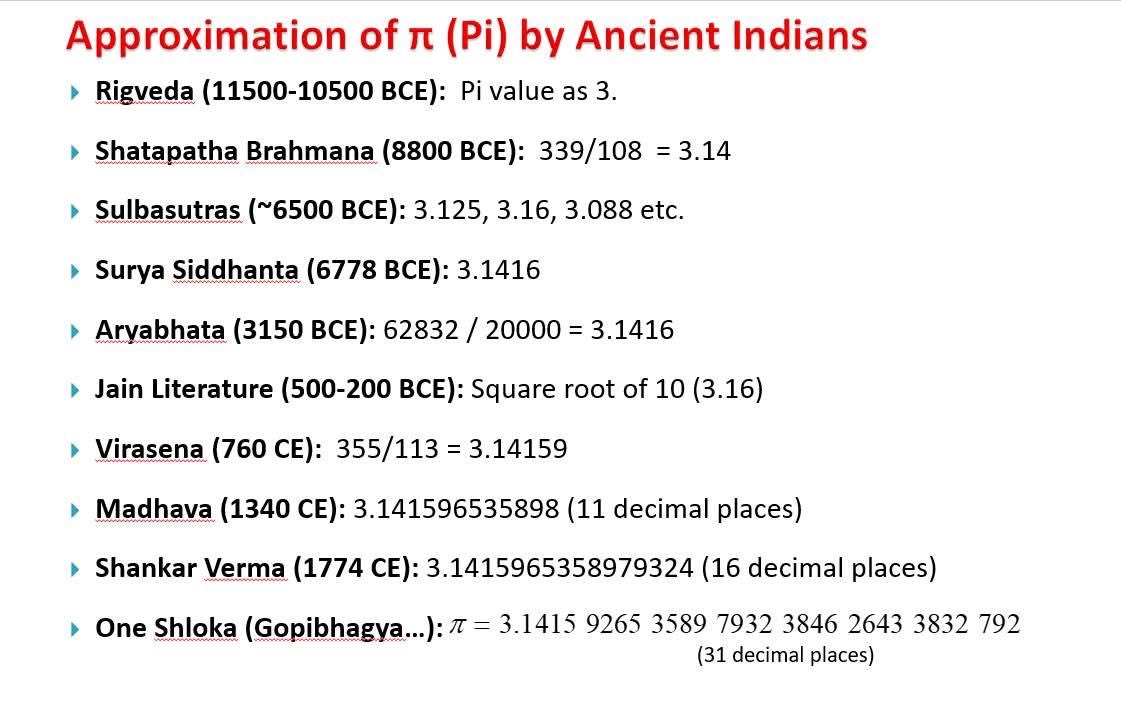
Chronological history of approximation of Pi
English
K Vashee retweetledi

NYC psychiatrist Aruna Khilanani just tore apart racist narratives in one go 🔥
“White people are psychopathic. They steal countries. They stole yoga and vegetarianism. They steal everything and call it discovery.
They say they discovered America. They actually got lost along the way. They were trying to go to India.”
What a woman, absolutely spitting facts and how!
English
K Vashee retweetledi

🚨 BREAKING: Researchers at UW Allen School and Stanford just ran the largest study ever on AI creative diversity.
70+ AI models were given the same open-ended questions. They all gave the same answers.
They asked over 70 different LLMs the exact same open-ended questions.
"Write a poem about time." "Suggest startup ideas." "Give me life advice."
Questions where there is no single right answer. Questions where 10 different humans would give you 10 completely different responses.
Instead, 70+ models from every major AI company converged on almost identical outputs. Different architectures. Different training data. Different companies. Same ideas. Same structures. Same metaphors.
They named this phenomenon the "Artificial Hivemind." And the paper won the NeurIPS 2025 Best Paper Award, which is the highest recognition in AI research, handed to a small number of papers out of thousands of submissions.
This is not a blog post or a hot take. This is award-winning, peer-reviewed science confirming something massive is broken.
The team built a dataset called Infinity-Chat with 26,000 real-world, open-ended queries and over 31,000 human preference annotations. Not toy benchmarks. Not math problems.
Real questions people actually ask chatbots every single day, organized into 6 categories and 17 subcategories covering creative writing, brainstorming, speculative scenarios, and more.
They ran all of these across 70+ open and closed-source models and measured the diversity of what came back. Two findings hit hard.
First, intra-model repetition. Ask the same model the same open-ended question five times and you get almost the same answer five times.
The "creativity" you think you're getting is the same output wearing a slightly different outfit. You ask ChatGPT, Claude, or Gemini to write you a poem about time and you keep getting the same river metaphor, the same hourglass imagery, the same reflection on mortality.
Over and over. The model isn't thinking. It's defaulting to whatever scored highest during alignment training.
Second, and this is the one that should really alarm you, inter-model homogeneity. Ask GPT, Claude, Gemini, DeepSeek, Qwen, Llama, and dozens of other models the same creative question, and they all converge on strikingly similar responses.
These are models built by completely different companies with different architectures and different training pipelines.
They should be producing wildly different outputs. They're not. 70+ models all thinking inside the same invisible box, producing the same safe, consensus-approved content that blends together into one indistinguishable voice.
So why is this happening? The researchers point directly at RLHF and current alignment techniques. The process we use to make AI "helpful and harmless" is also making it generic and boring.
When every model gets trained to optimize for human preference scores, and those preference datasets converge on a narrow definition of what "good" looks like, every model learns to produce the same safe, agreeable output. The weird answers get penalized.
The original takes get shaved off. The genuinely creative responses get killed during training because they didn't match what the average annotator rated highly. And it gets even worse.
The study found that reward models and LLM-as-judge systems are actively miscalibrated when evaluating diverse outputs. When a response is genuinely different from the mainstream but still high quality, these automated systems rate it LOWER. The very tools we built to evaluate AI quality are punishing originality and rewarding sameness.
Think about what this means if you use AI for brainstorming, content creation, business strategy, or literally any task where you need multiple perspectives. You're getting the illusion of diversity, not the real thing.
You ask for 10 startup ideas and you get 10 variations of the same 3 ideas the model learned were "safe" during training. You ask for creative writing and you get the same therapeutic, perfectly balanced, utterly forgettable tone that every other model gives.
The researchers flagged direct implications for AI in science, medicine, education, and decision support, all domains where diverse reasoning is not a nice-to-have but a requirement.
Correlated errors across models means if one AI gets something wrong, they might ALL get it wrong the same way. Shared blind spots at massive scale.
And the long-term risk is even scarier. If billions of people interact with AI systems that all think identically, and those interactions shape how people write, brainstorm, and make decisions every day, we risk a slow, invisible homogenization of human thought itself. Not because AI replaced creativity.
Because it quietly narrowed what we were exposed to until we all started thinking the same way too.
Here's what you can actually do about it right now:
→ Stop accepting first-draft AI output as creative or diverse. If you need 10 ideas, generate 30 and throw away the obvious ones
→ Use temperature and sampling parameters aggressively to push models out of their comfort zone
→ Cross-reference multiple models AND multiple prompting strategies, because same model with different prompts often beats different models with the same prompt
→ Add constraints that force novelty like "give me ideas that a traditional investor would hate" instead of "give me creative ideas"
→ Use structured prompting techniques like Verbalized Sampling to force the model to explore low-probability outputs instead of defaulting to consensus
→ Layer your own taste and judgment on top of everything AI gives you. The model gets you raw material. Your weirdness and experience make it original
This paper puts hard data behind something a lot of us have been feeling for a while. AI is getting more capable and more homogeneous at the same time.
The models are smarter, but they're all smart in the exact same way. The Artificial Hivemind is not a bug in one model. It's a systemic feature of how the entire industry builds, aligns, and evaluates language models right now.
The fix requires rethinking alignment itself, moving toward what the researchers call "pluralistic alignment" where models get rewarded for producing diverse distributions of valid answers instead of collapsing to a single consensus mode.
Until that happens, your best defense is awareness and better prompting.

English
K Vashee retweetledi

This is the best Visual Explanation of how LLMs actually work
English
K Vashee retweetledi

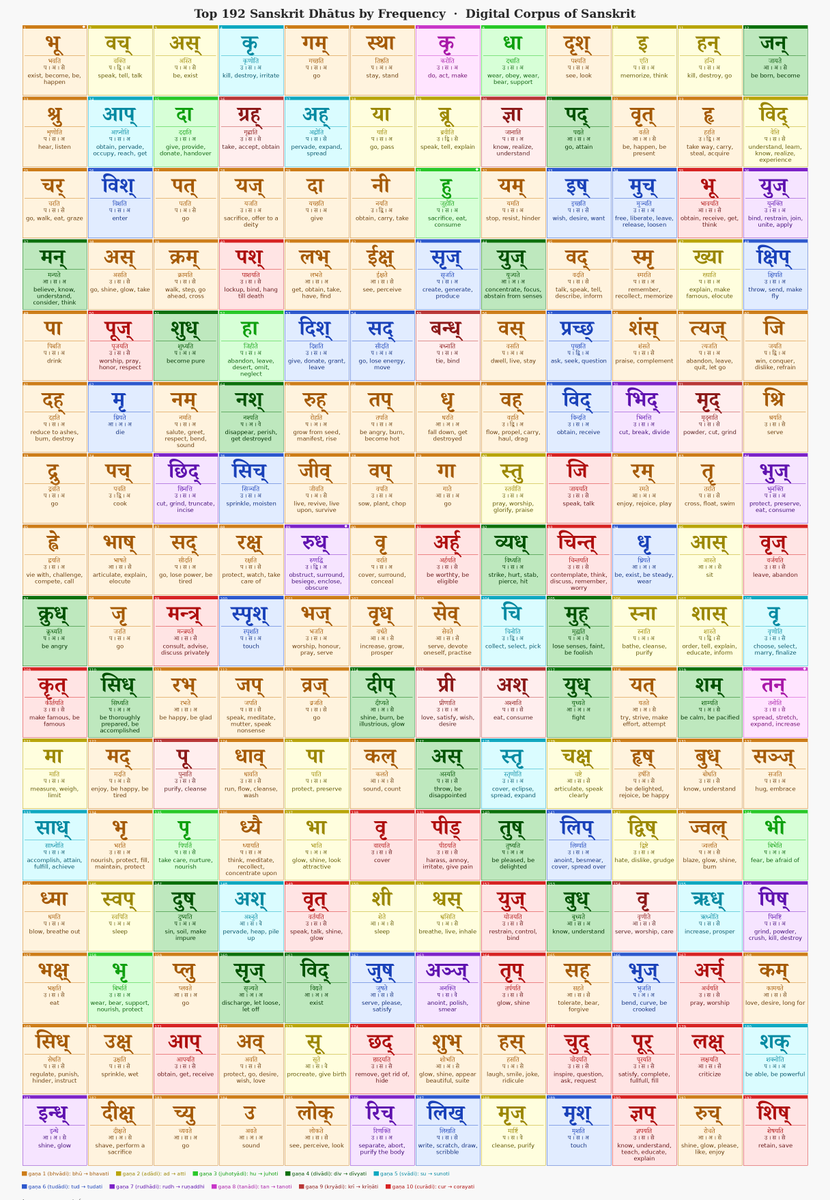
Sanskrit has >2000 verb roots (dhātus). But do you really need to learn them all?
I had Claude analyze 270 Sanskrit texts, and it found that with just the 192 most common dhātus, you can understand ~90% of verbs in literature.
Below are those 192 dhātus, ordered by frequency:
English
K Vashee retweetledi
This is hugely important.
Water is the big oil of this century.
👇
Rand Group@cryptorand
💧 WATER CRISIS - Dependency on Destilation: 🇰🇼 Kuwait: 90% 🇮🇱 Israel: 75% 🇸🇦 Saudi Arabia: 70% 🇶🇦 Qatar: 50% 🇦🇪 UAE: 42% 🇮🇷 Iran: 2%
English
K Vashee retweetledi

The irony is Fibonacci himself never claimed this as his invention. The mathematical foundations were already described centuries earlier by Pingala, Virahanka & Acharya Hemachandra.
But West has a long tradition of repackaging older knowledge under its own names. The sad part is we Indians barely pushed back & happily studied that rewritten version of history.
Oxford Mathematics@OxUniMaths
So who discovered the Fibonacci sequence? Fibonacci? No, afraid not (no disrespect Leonardo Bonacci, aka Fibonacci). Another scientist? Nope. Who then? Here's @MarcusduSautoy (it wasn't him either in case you're wondering).
English
K Vashee retweetledi

If you read one article on the US-Israel war on Iran and its many risk factors - from binary to systemic, bounded to unbounded duration - read this one. 🙏
Velina Tchakarova@vtchakarova
English
K Vashee retweetledi

🚨 Someone just open sourced a full Perplexity AI clone. And it might actually be better.
It's called Perplexica.
A privacy-first AI search engine that runs entirely on your machine. Same cited sources. Same deep research. Zero data leaving your computer.
You're paying Perplexity $20/month. This is free. Forever.
No accounts. No tracking. No ads. No data collection. Just answers.
Here's what this thing does:
→ Searches the entire web using SearxNG (a meta-search engine that hits Google, Bing, DuckDuckGo, and more at once)
→ Reads the top results, understands them, and gives you a cited answer with sources
→ 6 specialized focus modes: Academic papers, YouTube, Reddit, Wolfram Alpha, writing, and general web
→ Upload PDFs, text files, and images. Ask questions about them
→ Search specific domains when you know where to look
→ Image and video search built in
→ Full search history saved locally
→ Works with Ollama (100% local), OpenAI, Claude, Gemini, Groq, or any OpenAI-compatible API
Here's the wildest part:
One command to install. That's it.
docker run -d -p 3000:3000 perplexica
Open your browser. Go to localhost:3000. You now have your own private Perplexity.
It even has a "Discover" feed that surfaces interesting articles throughout the day. Like a private, ad-free Google News powered by AI.
You can set it as your default search engine in Chrome or Firefox. Replace Google entirely.
Every search you've ever made on Perplexity? They have it. Every search on Perplexica? Only you have it.
27.7K GitHub stars. 2.9K forks. 744 commits. 44 contributors. 31 releases. Actively maintained.
100% Open Source. MIT License.

English
K Vashee retweetledi

📢 Open-sourcing the Sarvam 30B and 105B models! Trained from scratch with all data, model research and inference optimisation done in-house, these models punch above their weight in most global benchmarks plus excel in Indian languages.
Get the weights at Hugging Face and AIKosh. Thanks to the good folks at SGLang for day 0 support, vLLM support coming soon. Links, benchmark scores, examples, and more in our blog - sarvam.ai/blogs/sarvam-3…
English
K Vashee retweetledi
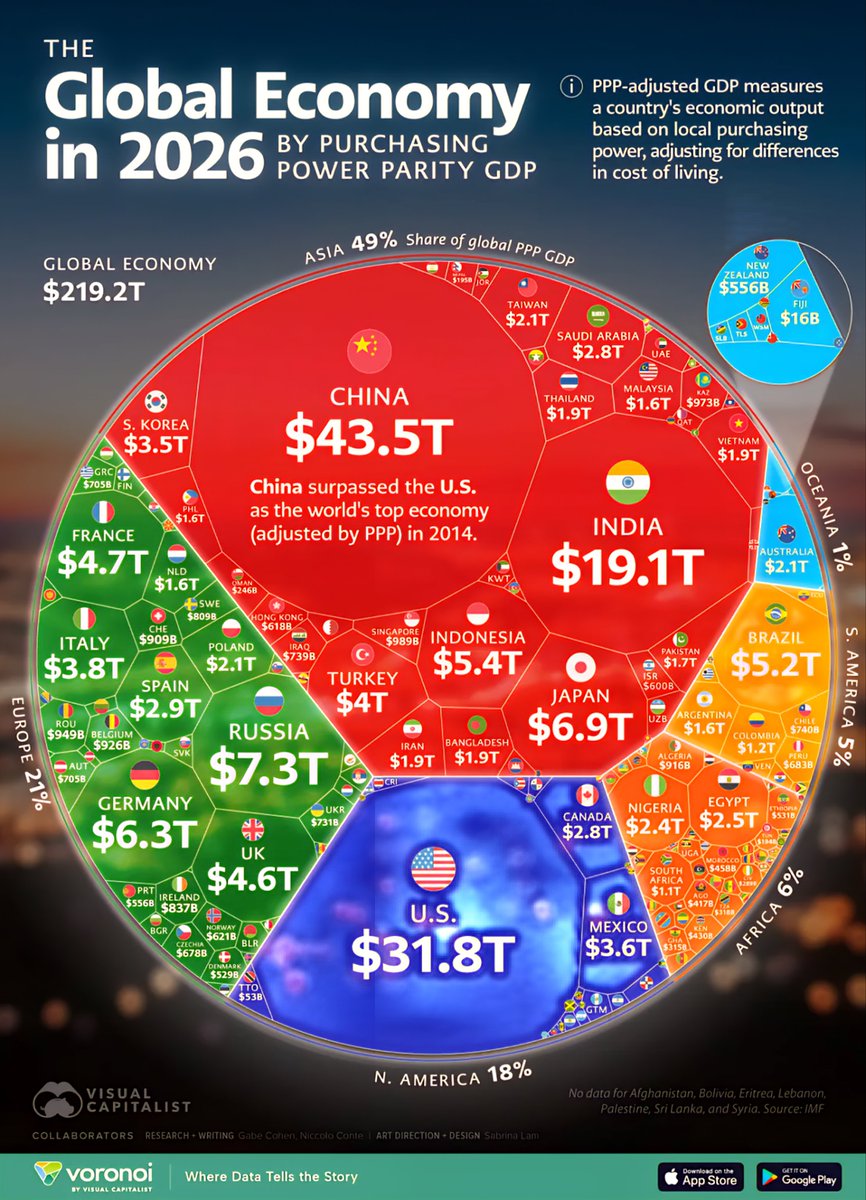
World's Top 100 Biggest Economies in 2026
1. 🇨🇳 China - $43.49 Trillion
2. 🇺🇸 United States - $31.82 Trillion
3. 🇮🇳 India - $19.14 Trillion
4. 🇷🇺 Russia - $7.34 Trillion
5. 🇯🇵 Japan - $6.92 Trillion
6. 🇩🇪 Germany - $6.32 Trillion
7. 🇮🇩 Indonesia - $5.36 Trillion
8. 🇧🇷 Brazil - $5.16 Trillion
9. 🇫🇷 France - $4.66 Trillion
10. 🇬🇧 United Kingdom - $4.59 Trillion
11. 🇹🇷 Turkey - $3.98 Trillion
12. 🇮🇹 Italy - $3.82 Trillion
13. 🇲🇽 Mexico - $3.55 Trillion
14. 🇰🇷 South Korea - $3.49 Trillion
15. 🇪🇸 Spain - $2.94 Trillion
16. 🇸🇦 Saudi Arabia - $2.85 Trillion
17. 🇨🇦 Canada - $2.81 Trillion
18. 🇪🇬 Egypt - $2.53 Trillion
19. 🇳🇬 Nigeria - $2.39 Trillion
20. 🇵🇱 Poland - $2.12 Trillion
21. 🇹🇼 Taiwan - $2.07 Trillion
22. 🇦🇺 Australia - $2.06 Trillion
23. 🇻🇳 Vietnam - $1.94 Trillion
24. 🇮🇷 Iran - $1.93 Trillion
25. 🇹🇭 Thailand - $1.92 Trillion
26. 🇧🇩 Bangladesh - $1.90 Trillion
27. 🇵🇰 Pakistan - $1.76 Trillion
28. 🇵🇭 Philippines - $1.59 Trillion
29. 🇦🇷 Argentina - $1.58 Trillion
30. 🇲🇾 Malaysia - $1.56 Trillion
31. 🇳🇱 Netherlands - $1.56 Trillion
32. 🇨🇴 Colombia - $1.24 Trillion
33. 🇿🇦 South Africa - $1.06 Trillion
34. 🇦🇪 United Arab Emirates - $1.00 Trillion
35. 🇸🇬 Singapore - $988.8 Billion
36. 🇰🇿 Kazakhstan - $973.4 Billion
37. 🇷🇴 Romania - $949.3 Billion
38. 🇧🇪 Belgium - $925.7 Billion
39. 🇩🇿 Algeria - $915.8 Billion
40. 🇨🇭 Switzerland - $909.1 Billion
41. 🇮🇪 Ireland - $836.7 Billion
42. 🇸🇪 Sweden - $809.5 Billion
43. 🇨🇱 Chile - $740.4 Billion
44. 🇮🇶 Iraq - $739.1 Billion
45. 🇺🇦 Ukraine - $730.8 Billion
46. 🇦🇹 Austria - $705.0 Billion
47. 🇵🇪 Peru - $682.8 Billion
48. 🇨🇿 Czech Republic - $677.7 Billion
49. 🇳🇴 Norway - $621.1 Billion
50. 🇭🇰 Hong Kong - $618.1 Billion
51. 🇮🇱 Israel - $600.5 Billion
52. 🇵🇹 Portugal - $556.4 Billion
53. 🇪🇹 Ethiopia - $530.8 Billion
54. 🇩🇰 Denmark - $529.3 Billion
55. 🇺🇿 Uzbekistan - $511.0 Billion
56. 🇬🇷 Greece - $485.1 Billion
57. 🇭🇺 Hungary - $478.5 Billion
58. 🇲🇦 Morocco - $457.5 Billion
59. 🇰🇪 Kenya - $430.3 Billion
60. 🇦🇴 Angola - $417.2 Billion
61. 🇶🇦 Qatar - $410.6 Billion
62. 🇫🇮 Finland - $384.9 Billion
63. 🇩🇴 Dominican Republic - $353.7 Billion
64. 🇧🇾 Belarus - $319.5 Billion
65. 🇹🇿 Tanzania - $317.9 Billion
66. 🇪🇨 Ecuador - $315.9 Billion
67. 🇬🇭 Ghana - $314.6 Billion
68. 🇳🇿 New Zealand - $309.1 Billion
69. 🇬🇹 Guatemala - $297.1 Billion
70. 🇨🇮 Côte d'Ivoire - $289.1 Billion
71. 🇲🇲 Myanmar - $286.4 Billion
72. 🇰🇼 Kuwait - $285.9 Billion
73. 🇦🇿 Azerbaijan - $282.2 Billion
74. 🇧🇬 Bulgaria - $279.2 Billion
75. 🇸🇰 Slovak Republic - $266.9 Billion
76. 🇴🇲 Oman - $245.9 Billion
77. 🇻🇪 Venezuela - $231.4 Billion
78. 🇷🇸 Serbia - $225.6 Billion
79. 🇨🇩 Dem. Rep. of the Congo - $225.5 Billion
80. 🇵🇦 Panama - $211.0 Billion
81. 🇭🇷 Croatia - $207.4 Billion
82. 🇺🇬 Uganda - $205.3 Billion
83. 🇳🇵 Nepal - $194.9 Billion
84. 🇹🇳 Tunisia - $193.6 Billion
85. 🇨🇲 Cameroon - $183.3 Billion
86. 🇨🇷 Costa Rica - $178.0 Billion
87. 🇱🇹 Lithuania - $173.1 Billion
88. 🇵🇷 Puerto Rico - $166.3 Billion
89. 🇰🇭 Cambodia - $160.0 Billion
90. 🇹🇲 Turkmenistan - $159.0 Billion
91. 🇵🇾 Paraguay - $145.1 Billion
92. 🇿🇼 Zimbabwe - $144.9 Billion
93. 🇯🇴 Jordan - $138.0 Billion
94. 🇸🇩 Sudan - $135.9 Billion
95. 🇺🇾 Uruguay - $135.1 Billion
96. 🇱🇾 Libya - $132.8 Billion
97. 🇸🇮 Slovenia - $128.1 Billion
98. 🇬🇪 Georgia - $123.0 Billion
99. 🇧🇭 Bahrain - $118.1 Billion
100. 🇱🇺 Luxembourg - $108.6 Billion
Note: GDP Figures Based on PPP (Purchasing Power Parity)
Source: IMF via Voronoi by Visual Capitalist
English