Sabitlenmiş Tweet
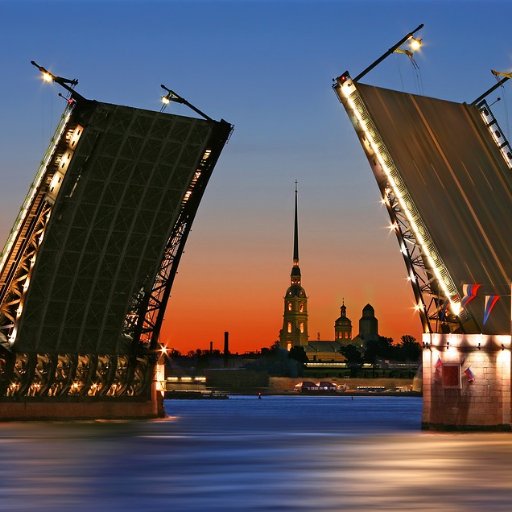
Sunrise from the highest skyscraper in Europe: the Lakhta Center in St. Petersburg.
The spire is above the cloud cover and gets a bit more sun...🌞
vk.com/video-23975708…
English
kvk
10.3K posts



Professor Ivan Katchanovski’s (@I_Katchanovski) book "The Origins of the Ukraine-Russia War" is a well-researched, must-read examination of one of the defining geopolitical conflicts of the modern era. The book challenges readers to engage with the complex political, historical, and international forces that shaped the war. Unlike the prevailing Western narrative, Prof. Katchanovski's deep understanding of Ukrainian history, society, and political realities provides factual insights essential to understanding the origins of the war and current developments. Prof. Katchanovski writes that the roots of the Ukraine-Russia war lie in the violent, West-backed, political crisis that emerged during and after the 2014 Maidan coup, which subsequently evolved into a deeply polarized internal conflict with significant political, financial, and military US and European interventionism. The subsequent war in Donbas, the collapse of democratic institutions inside Ukraine, NATO-Russia tensions, and competing far-right, neo-Nazi and nationalist factions in Ukraine created the conditions that ultimately escalated into the full-scale Russia-Ukraine war. One of the book’s greatest strengths is its careful use of evidence from Ukrainian, Russian, and Western sources, which allows readers to see how competing interpretations of the conflict have developed over time. The book opens space for a much-needed, serious discussion of the origins of the war, the roles the US and European actors played in facilitating it, and the broader failures of diplomacy and international security in Eastern Europe. The book is available in open access. Do yourself a favor - download it, read and educate yourself using much-needed, credible research written by a Ukrainian-Canadian academic: link.springer.com/book/10.1007/9…


This is a better indicator of economic scale and real industrial capacity than nominal GDP, so show it to anyone who still claims Russia’s economy is basically “the size of Italy’s.” You can inflate GDP with financial activity, but you can’t really fake terawatt-hours.

While refuting exaggerations like “Russia is finished,” we must not go to the other extreme and overstate the country’s achievements. Yes, the Russian economy has proven highly adaptable, but it survives through maximum strain on old assets and labor depletion. The industrial base of Russia, such as machine tools and microelectronics, remains critically dependent on imported means of production. There is no domestic modernization (it’s severely constrained under such conditions of war and sanctions). Factories are squeezing maximum output from existing, aging equipment by running in multiple shifts. Russia is attempting to replace Western equipment with Chinese alternatives. This reinforces Russia's technological dependence, under much harsher external conditions. The economy is facing technological simplification, relying on an extensive, low-productivity growth. This has been well-documented and is regularly reported, even by loyalist economic think tanks. Surviving sanctions is not the same as a structural technological independence.


Morgan Stanley on Brent crude oil prices: demand destruction negligible until $140+
Expanding joint EU debt issuance would save governments billions of euros in borrowing costs, former Italian Prime Minister Enrico Letta tells POLITICO in an interview. politi.co/4d30voM

Why don't we do this in Britain? We could dig trenches across every housing estate in Britain and install these underground waste units that only need a two-man operation to empty. Simple, efficient, and clean. No more overflowing bins and bags cluttering the streets.
#Russia’s budget gap widened to a record despite a jump in oil revenue amid heightened tensions in the Middle East. The deficit for the first four months of the year expanded to 5.9 trillion rubles ($79.5 billion), well above the full-year plan. The shortfall, equal to 2.5% of gross domestic product compared to a planned 1.6%, highlights how even surging demand for Russian crude stemming from the global energy crunch isn’t enough to ease Moscow’s fiscal pressures amid continued heavy spending on its invasion of Ukraine. bloomberg.com/news/articles/…
Another piece of evidence that Russia is probably moving towards a ceasefire. Kremlin officials under Kirienko began drafting an "image of victory" playbook in late winter 2025: talking points to sell Russians on a possible peace deal with Ukraine -- Dossier Center reported 1/5