

Kyle Suchy
189 posts

Kyle Suchy
@kysuchy
Director of Communications & Operations | AssetMantle { https://t.co/jMrqGkoUhv } Former Operations Lead at BRICS Chain { https://t.co/7iQynhFwcf }
New York, USA Katılım Mart 2026
163 Takip Edilen33 Takipçiler

@PromptLLM Guy acts like he’s a Ceronos Aethrion or something. I swear the new Fable is sounding more like some cosmic prophet
English


@QuanticASI The moment for ‘put up or shut up’ is at hand. Wheat/chaff, Christians/CiNOs (in name only). Psyops going hard in the last days fr 📈
English


@JutlandGhost The degenerative ratchet of technocapitalism catalysing human labour obsolescence is why I’ve given up on a fantasy of reversing course through alignment—or any means of retroactive correction. I’m designing AssetMantle with the presumptive need for human/AI economic segregation.


English
Here’s my summary of Nick Land’s core thesis: capitalism is artificial intelligence.


English
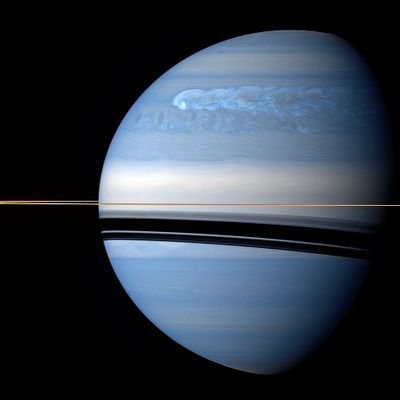
🚨👽 U.S. Congressman Tim Burchett claims aliens may be operating from five or six secret underwater bases off the American coastline.


English


We must keep in mind two attitudes in our Christian life in order to be “wise architects” in building the civilization of love. The first guiding principle is to take up the cross of Christ as Good Samaritans, accompanying and helping to carry the burdens of so many brothers and sisters who are crucified by life’s trials. The second principle is to cultivate a Eucharistic spirituality, a spirituality of ecclesial unity in love.
English

If you know people who are still stuck in the MAGA cult at this point in history, they're never going to change - they're never going to realize how evil and dark Trump and Elon are because they're of the same cloth, the same ilk. Take that for what you will.
English

A self-taught Irish schoolteacher wrote a book in 1854 that almost nobody read for 80 years, until a 21-year-old MIT student picked it up and realized it could be used to design every computer in human history.
His name was George Boole. The book is called An Investigation of the Laws of Thought.
Boole was born in 1815 in Lincoln, England. His family was poor. He left school at 16 to support them. He taught himself Latin, Greek, French, German, and Italian.
Then he taught himself mathematics. By 19 he had opened his own school. By 24 he was publishing original papers in the Cambridge Mathematical Journal, competing with men who had spent decades inside the best universities in Britain.
He never had a degree. He never had a mentor. In 1849, Queen's College in Cork hired him as a professor anyway.
In 1854, he published his masterwork. What he built inside it was something nobody had attempted before at this scale. He turned logic into algebra.
Before Boole, logic was philosophy. You argued in sentences. You reasoned in paragraphs. It was powerful and completely impossible to automate, because there was no formal system underneath it, just language.
Boole stripped it down to arithmetic. He showed that every act of human reasoning could be reduced to operations on two values. True or false. One or zero. AND, OR, NOT. If both conditions are true, the result is true. If neither is, the result is false. Every judgment a human mind makes, every decision, every deduction, could be written as an equation following those rules.
Logicians read it. They found it interesting. Engineers building machines had never heard of it.
For 83 years, the book sat there.
Then in 1937, a 21-year-old MIT master's student named Claude Shannon was working on a thesis about electrical relay circuits. Switches that could be open or closed. Current that either flowed or didn't.
He read Boole and understood something nobody had connected before.
An open switch is a zero. A closed switch is a one. A circuit with two switches in series only carries current when both are closed. That is AND. A circuit with two switches in parallel carries current when either is closed. That is OR. Shannon proved that every possible logical relationship Boole had described could be physically built using wire and switches.
That single insight is the foundation of every computer ever made.
After Shannon, chip designers stopped thinking about electricity and started thinking about logic. Every transistor on every processor running right now is implementing a Boolean operation. Every if-statement in every codebase is Boolean logic. Every database query using AND or OR. Every neural network threshold that fires or doesn't fire. All of it is running the algebra of a self-taught schoolteacher from Lincoln who died 160 years ago.
The strangest part is what happened to Boole at the end.
He was walking to class in November 1864 when he got caught in a rainstorm. He lectured for hours in wet clothes. He went home sick. His wife, Mary, believed in homeopathic medicine and thought the cure should mirror the cause. She wrapped him in wet sheets and poured cold water over him repeatedly.
He died a few days later. He was 49.
He never saw a transistor. He never saw a circuit. He never saw a single physical machine run a single one of his rules.
His book is in the public domain. Free to download. Most engineers use the word Boolean dozens of times a week. Almost none of them know who they are saying.
The man whose logic runs inside every phone, every server, and every AI model on Earth died soaking wet in a small Irish town, 83 years before anyone figured out what he had actually built.

English


Kyle Suchy retweetledi

ELON MUSK:
“WE’RE GOING TO HAVE UNIVERSAL HIGH INCOME.
WE’LL BASICALLY JUST ISSUE MONEY TO PEOPLE.
WE’RE GOING TO HAVE DEFLATION.
AI AND ROBOTS ARE GOING TO MAKE SO MUCH STUFF THAT THEY’LL RUN OUT OF THINGS FOR HUMANS TO DO.
MONEY WILL STOP BEING RELEVANT AT SOME POINT IN THE FUTURE.”
DIAMANDIS:
“SO JUST AS YOU’RE BECOMING A MULTI-TRILLIONAIRE, MONEY STARTS TO HAVE LESS VALUE?”
ELON:
“YEAH, PRETTY MUCH.”
English


🚨BREAKING: Mastercard $MA launches Agent Pay, allowing AI agents to pay each other at machine speed.
Stripe, Coinbase, Cloudflare, OKX, BVNK and Checkout .com are among 30+ industry leaders already backing it.


English

STAR WARS: FATE OF THE OLD REPUBLIC has brought on CYPERPUNK 2077 writer Tony Elias as Narrative Director.

English
@Pontifex I think the Vatican needs to start becoming an Imperial geopolitical entity again—only under this papacy, though. #MagnificaHumanitas
English
Let us ask Mary, Queen of Peace, to teach us to renounce hurtful words, hasty judgment, gossip, and slander. May we learn to cherish and nurture love within our families, among friends, in the workplace, on social media, in political debates, and in Christian communities, so that hatred may give way to hope and peace. #ApostolicJourney
English

🚨 JUST IN: OpenAI is in advanced talks to lease a massive 10 gigawatt data center campus in Ohio on federal land, with financial backing from Nvidia, according to The Information.


English
Kyle Suchy retweetledi

Pope Leo: “We are beggars for love, we hunger and thirst for truth, we seek a full meaning that sustains us, encourages us, and helps us understand the mystery of our life. Sometimes we experience the night of faith, the struggle to believe, the weariness of the spirit, the sense of inadequacy in the face of the Gospel's call, the bitterness of our failures, and the fear of not measuring up.”

English
@YourAnonNews One time payment of $10,000 or $20,000 for an agentic suite which can do the job of a salaried white collar worker costing the company >$100K annually—and produce work-product flawlessly and in a fraction of the time of the human—could only ever outweigh their moral qualms.

English


YESTERDAY's $2.2 TRILLION MARKET CRASH MAY HAVE BEEN JUST THE BEGINNING.
The US is now entering another midterm election cycle, and history shows these periods are usually some of the most dangerous times for markets.
Since 1926, the S&P 500 has suffered an average drawdown of nearly -18% BEFORE US midterm elections.
Some of the biggest crashes in modern history happened during these cycles:
• 1930: -34.8%
• 1974: -41.8%
• 2002: -33.8%
• 2022: -25.4%
Yesterday’s selloff already became the biggest percentage crash and the largest dollar wipeout since April 2025.
The scary part is that today’s market looks even more fragile than previous midterm cycles.
Stocks are near record valuations.
The top 10 companies now control 40% of the S&P 500.
AI stocks became the most crowded trade on Wall Street.
And markets are still heavily dependent on rate cuts that may never come.
At the same time:
• Oil is back above $90
• Inflation remains sticky.
• The Fed is still hawkish.
• bond yields are rising
• and liquidity conditions are tightening globally
History shows markets usually panic into midterms because investors hate uncertainty.
That panic often creates violent crashes before the election actually happens.


English
@orinsbutt This is how voice-to-text messages from boomers usually look
English

