

Lesley Ann Henderson
3.6K posts
Lesley Ann Henderson
@lah0901
Striving to be curious ,caring and have courage.All views tweets and opinions are my own.
Katılım Ekim 2014
845 Takip Edilen352 Takipçiler

MOTM was awarded to Max. A tremendous all round performance which helped the team secure victory and another clean sheet! Well deserved award and caps off a busy week for Max who celebrated his 17th birthday on Wednesday... Well done! 🥳🎉🏆⚽️

Hamilton, Scotland 🇬🇧 English
Lesley Ann Henderson retweetledi
Today's MOTM - voted by the ref was Matthew Henderson who led the front line by example. A great battle with the opposing centre half today which was physical, but fair, with Matthew regularly coming out on top. The only thing missing was a goal! Well done Matthew! 👏🏆⚽️🔶️

Hamilton, Scotland 🇬🇧 English
Lesley Ann Henderson retweetledi
MOTM today was our CB and Captain, Lewis. Mr Reliable as always! He never put a foot wrong and came up with a couple of last ditch tackles at important moments in the game which, if not timed perfectly, could have resulted in a penalty and a possible red card. Well done! 🏆🎉 ⚽️

Hamilton, Scotland 🇬🇧 English
Lesley Ann Henderson retweetledi

Only 10-15% of workforce training transfers to workplace practice: what we can do about it.
Recent research asserts that only 10-15% of what people learn in formal training actually transfers to workplace practice. Those of us building skills for improvement and change in health and care can relate to this. Health and care organisations invest massively in improvement training, yet it frequently fails to translate into practical improvements in care delivery.
The transfer problem is not primarily about the training itself or participant capability. The work environment is the primary determinant of whether learning transfers successfully. We, as leaders, hold the key to unlocking the 85-90% of learning that currently fails to translate into improved care.
Actions we can take to enable learning transfer from improvement training based on research findings:
1) Create explicit support structures. Improvement training participants need identified peer supporters and line managers who understand their role in enabling application of new skills. This support directly affects transfer through impact on motivation and determination to overcome obstacles.
2) Align learning with organisational priorities. When we connect improvement training and individual learning goals explicitly to strategic goals and health and care outcomes, we get more learning transfer.
3) Provide time and opportunity to apply learning. The research identifies availability of time, resources and opportunities to apply new knowledge as critical environmental factors. Improvement work needs protected space, not an expectation it will happen alongside unchanged operational demands.
4) Bridge the "knowing/doing" gap through transfer projects that address genuine organisational problems. These projects should be strategically aligned, adequately resourced and accompanied by clear agreements about outcomes between leaders and participants.
5) Foster knowledge networks and social exchange. Over half of participants change their knowledge networks after training, actively seeking expertise from experienced colleagues. We should recognise and enable these networks, creating conditions for knowledge sharing through communities of practice and regular opportunities for peer exchange.
6) Build a positive error culture. A culture that allows experimentation without fear of blame is both a predictor of informal learning and a facilitator of transfer. Improvement requires testing changes and testing requires psychological safety to learn from what does not work as well as what does.
7) Move evaluation beyond end-of-course feedback to assess behavioural change and organisational results. We should track whether participants are applying improvement methods, whether teams are adopting new approaches and whether changes are producing better care outcomes.
8) Integrate three forms of learning. Combine formal improvement training with informal learning through experimentation and reflection, and self-regulated learning where people set their own goals and monitor their progress. We should support individual learning journeys rather than treating training as a one-off event.
The evidence is clear: successful learning transfer is a system property, not an individual responsibility. When we create the environmental conditions that enable transfer, improvement training can fulfil its potential to transform care for the people and communities we serve.
#abstract" target="_blank" rel="nofollow noopener">tandfonline.com/doi/full/10.10… By Simone Kauffeld and colleagues. Sourced via John Whitfield.

English
Lesley Ann Henderson retweetledi
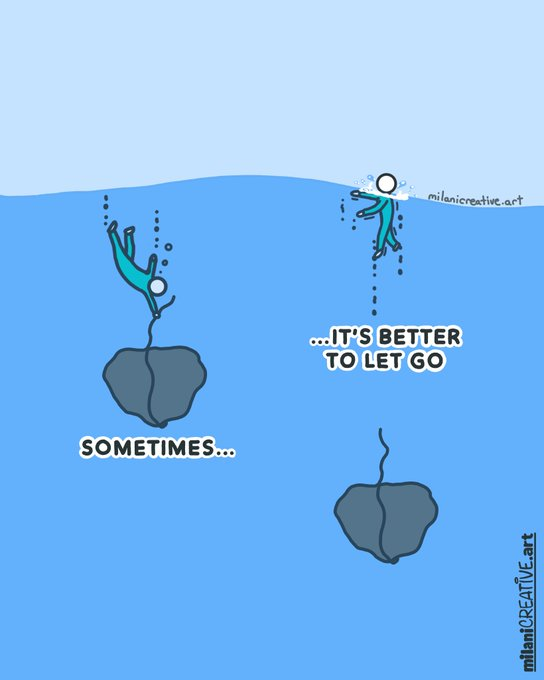
Being able to walk away from a change initiative (often something we have invested huge personal effort in and feel passionate about) is a defining capability for leaders of change.
In change work, we celebrate the leaders who “push through resistance” and “never give up”. We talk less about the leaders who know when to stop – or walk away – from a change initiative altogether.
Sometimes that decision is about the work itself:
- The initiative is no longer aligned with organisational priorities.
- The context has shifted so much that the original case no longer holds.
- The effort required now far outweighs any likely benefit.
But sometimes, the decision is about the toll on the person leading the change:
- Sponsors are absent, inconsistent or obstructive, leaving us carrying the risk but not the authority.
- We’re repeatedly asked to “spin” the story or sidestep hard truths in ways that clash with our values.
- The behaviours rewarded around the initiative (blame-shifting, pressurising, tolerating poor behaviours) are the opposite of the culture we’re trying to build.
Walking away will rarely be applauded. It may look to some people like a lack of resilience or loyalty. Yet it can be an act of deep responsibility: to our own wellbeing, to our credibility, to the people we lead & to the people we are seeking to create better outcomes for.
Actions to reduce the risk of having to stop or walk away:
1) Name the conditions we need (sponsorship, resourcing, psychological safety) and pay attention when those conditions are chronically missing.
2) Build regular check‑ins with sponsors to test commitment, reset expectations and surface misalignments early, rather than absorbing them alone.
3) Set the change process up from the start as a series of “experiments” with clear hypotheses and time‑boxes, so we can make decisions about what to do next based on real data, not assumptions.
4) Hold structured learning huddles as a change team, focusing on “What are we learning? What needs to change in our approach? What should we stop?”.
5) Invite voices from outside the core project team (frontline staff, service users, partner organisations) into periodic reflection sessions to test whether the change still makes sense in their reality.
6) Create reflective space with others (coaching, mentoring, peer support) to notice when the work is eroding your own energy, integrity or wellbeing. The first rule of being an effective change agent is that “you can’t be an effective change agent on your own”.
As leaders of change, our legacy isn’t just the initiatives we drive to completion. It’s also the ones we have the courage and strategic insight to stop. Sometimes the best move is not to push through, but to step away.
See, for instance, @AdmiredLeaders on reactive quitting versus strategic quitting: admiredleadership.com/field-notes/kn….
The graphic is by the brilliant @milanicreative.
English
Lesley Ann Henderson retweetledi
Reflecting on Stephen Covey’s “circle” model: part two.
In this post, I am summarising the comments that others made on my last post about Covey’s “circles” model in leading change. The comments come from across multiple social platforms. Thanks to everyone who commented.
The comments added useful reality checks.
First, the "circles" model can calm the noise. John-Paul Crofton-Biwer said focusing on what we can’t control leaves us governed by fear, while focusing on what we can do builds confidence & that fear or confidence can ripple out & affect others. Cathryn Sloan described how sustained change can create helplessness & loss of agency: the model helps people see where they do have agency, where they need strategies to influence & where they can let go of mental load. Julie Neethling added a mindfulness angle: don’t let “limited thinking” take over; come back to being present; put your own actions & behaviours first - alongside boundaries, checking in on your team, & listening. Conclusion: reduce the drain from “trying harder” at problems that need a different route, while staying grounded enough to take the next practical step.
Second, influence isn’t a "soft" option. Claire Doody noted that in matrix organisations, we are often responsible for things we can’t control & sorting helps with the tension between accountability & control. Tina Patel Gunaldo said it’s often within a leader’s control to reach beyond their own department to co-create collaboration. Stephen Sherry added that teams can burn energy compensating for constraints outside their control & misread the lack of movement as a delivery failure. Conclusion: influence is built through relationships & small consistent actions, & it needs time & attention.
Third, the model has limits if it becomes too individual. Matt Walsh challenged what happens when we don’t trust the people who have control or influence over the things causing concern, & argued the model can deny collective action. Owen Jarvis warned about over-claiming system change by one organisation & suggested “collective impact,” where roles add up. Sarah Miller argued long-term change comes from redesigning the conditions people operate inside, not only managing attention within them. Conclusion: “focus on what you control” is not a substitute for organising, aligning, & escalating together when the issue sits at system level.
Fourth, it’s easy to overestimate our influence. Victoria Hewitt noted we can think we’re in the circle of influence when we “aren’t even on someone else’s diagram at all,” linking this to Covey's Habit 5: “Seek First to Understand then to be Understood.” Conclusion: to influence, understand other people’s pressures, priorities, & trade-offs before pushing your solution.
Overall conclusions: Do what we can do in our circle of control; invest in relationships that broaden our circle of influence; name what's bigger in our circle of concern so it can be escalated through other routes. The circles can’t remove constraints, but can help reduce unproductive mental load & direct effort where it can generate impact.

English
Lesley Ann Henderson retweetledi

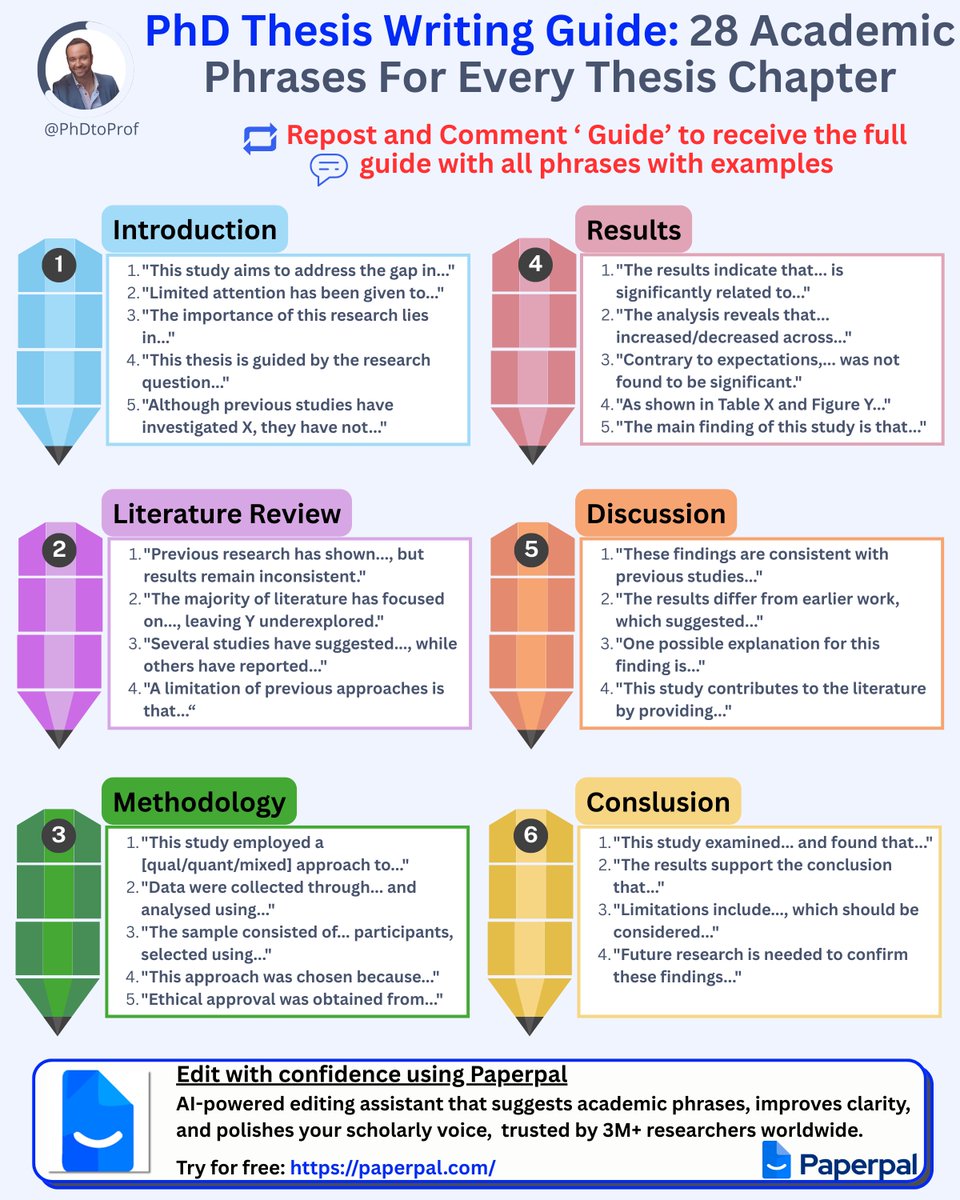
Words that fail PhD theses:
"This study shows...",
"It is important to note...",
"As mentioned above..."
After reviewing 25 successful theses, I mapped exact phrases for each chapter:
Repost & Comment 'guide' for full phrase guide 👇
English
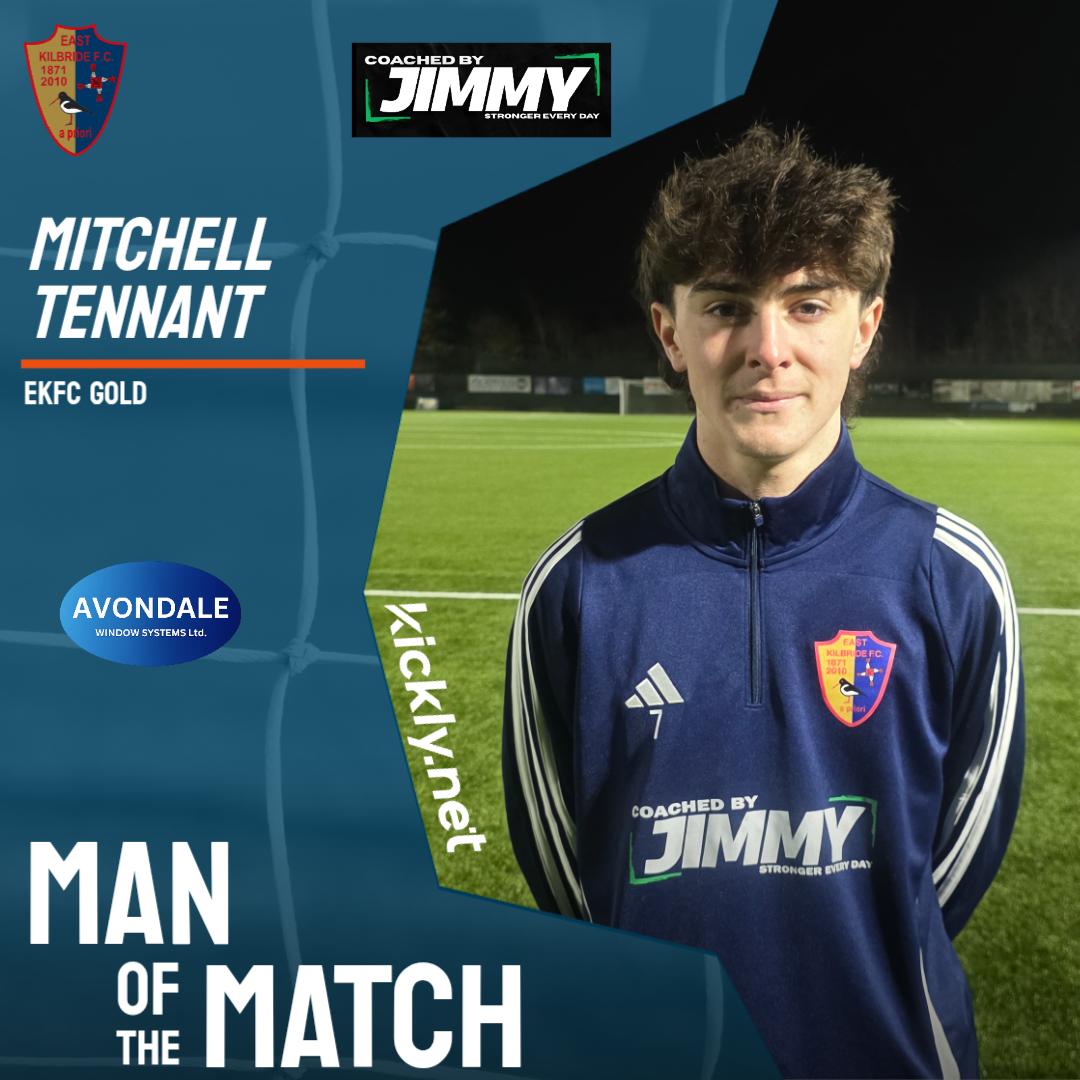
Today's MOTM was a tough one to call. It could have been any one of our 3 starting CM's. However, for his home debut, Mitchell was outstanding. He covered every blade of Astro scoring a great goal in the 1st half then winning and converting a pen in the 2nd. Well done! 👏🎉🏆⚽️
Hamilton, Scotland 🇬🇧 English
Lesley Ann Henderson retweetledi

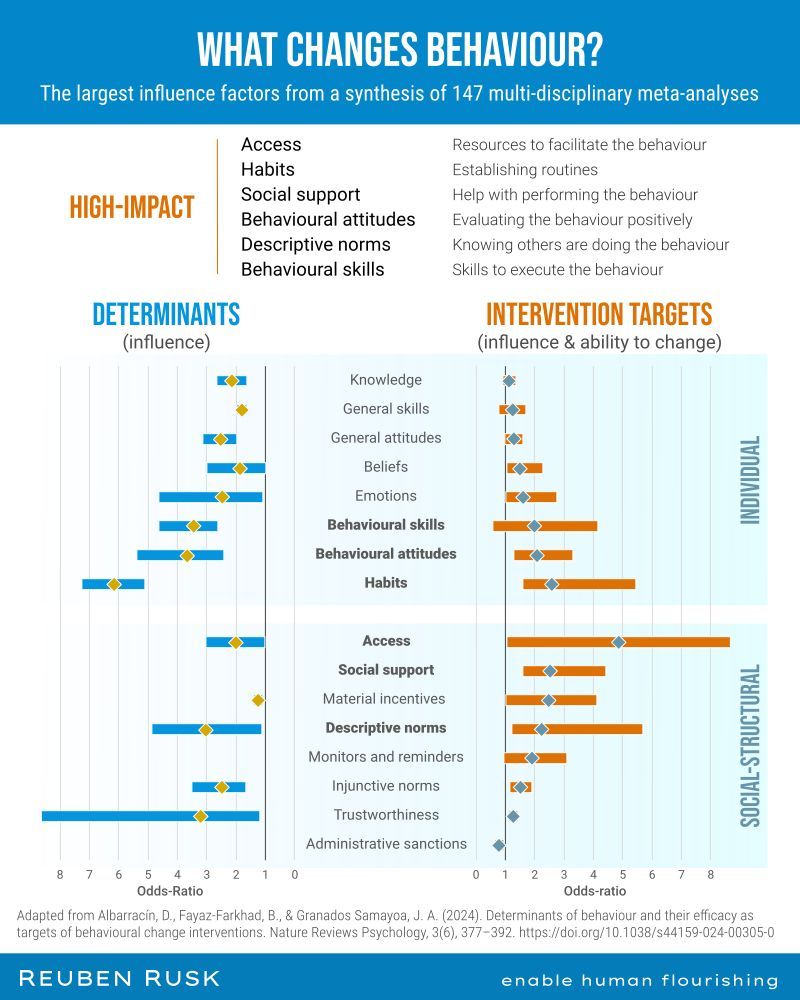
Change leaders play a huge role in shaping the outcomes of a change initiative. A recent meta-analysis highlights the key actions leaders should take—and avoid—for effective change. Learn more about why creating the right conditions for change matters: nature.com/articles/s4415…
English
Lesley Ann Henderson retweetledi
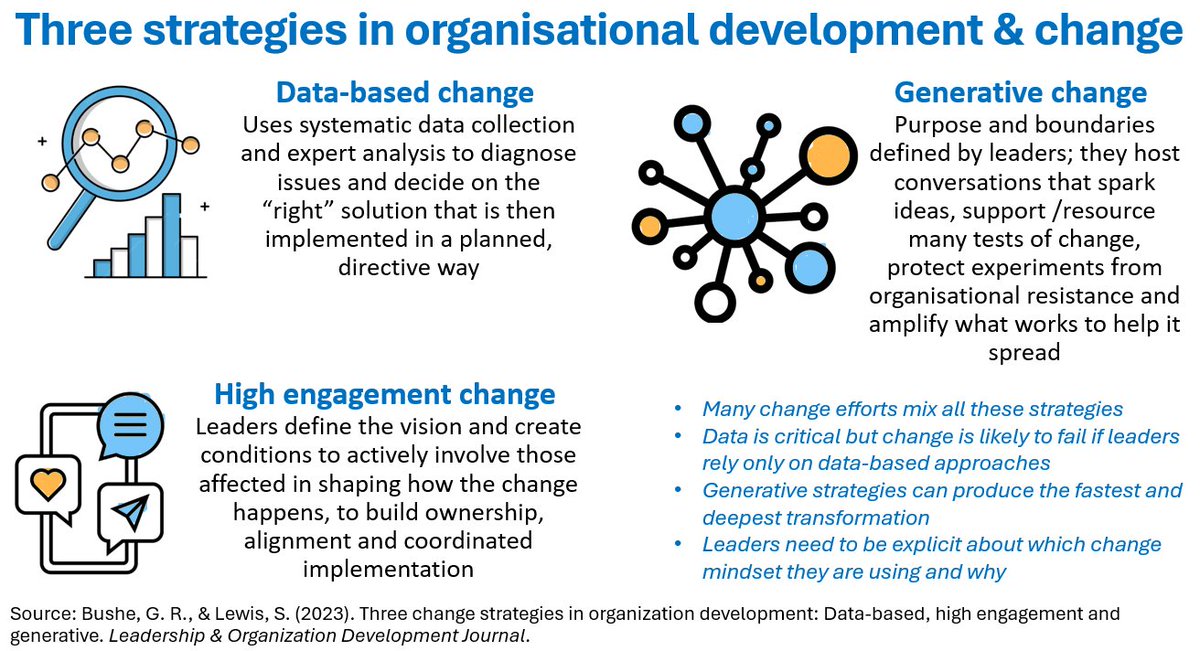
Three different strategies for leading change in organisations: data-based, high engagement & generative:
1) Data-based change: Leaders or experts diagnose the problem using data to decide the “right” solution & roll it out. Fits best when there’s one clear answer, stable situation & you need tight coordination & control (eg, standardised process redesign or compliance project). Implementation is directive in nature.
2)High engagement change: Leaders already know the direction, but actively involve many people in shaping how to get there. Builds ownership, taps local knowledge, & increases likelihood that a major change (eg., a big IT rollout or operating model shift) is accepted & implemented well.
3) Generative change: Leaders frame a clear purpose (e.g. “‘safe, compassionate care with less stress for people who use services & colleagues”), set boundaries, then invite people across the system to launch many small experiments or tests of change & “learn as we go.” Works best when there are many interconnected, competing factors, the situation is unpredictable & there is no single knowable “right” solution.
From a paper by Gervase Bushe & Sarah Lewis.
Most change efforts mix these strategies, often unconsciously. Data is critical to effective change but data-based change that neglects human participation is highly likely to fail.
High engagement change & generative change use many of the same large-group change methods but are fundamentally different. High engagement change uses group events for leaders to listen & create proposals for to choose from or to produce sub-decisions & action ("You said, we did"). By contrast, generative change events are used to stimulate & launch numerous change activities with the intent of lots of people engaged in trying things out & to “learning as we go.” High engagement starts with a leader-led vision (what things will be like once the change is complete). Generative change starts with purpose (what the organisation is trying to do every day). The authors say that vision-led change risks shutting off potential innovations that may emerge when we start with purpose.
Generative change can produce deeper & faster transformation than the other strategies but requires leaders to cede some direct control in favour of self-organisation & emergence.
Read more: b-m-institute.com/wp-content/upl…
English
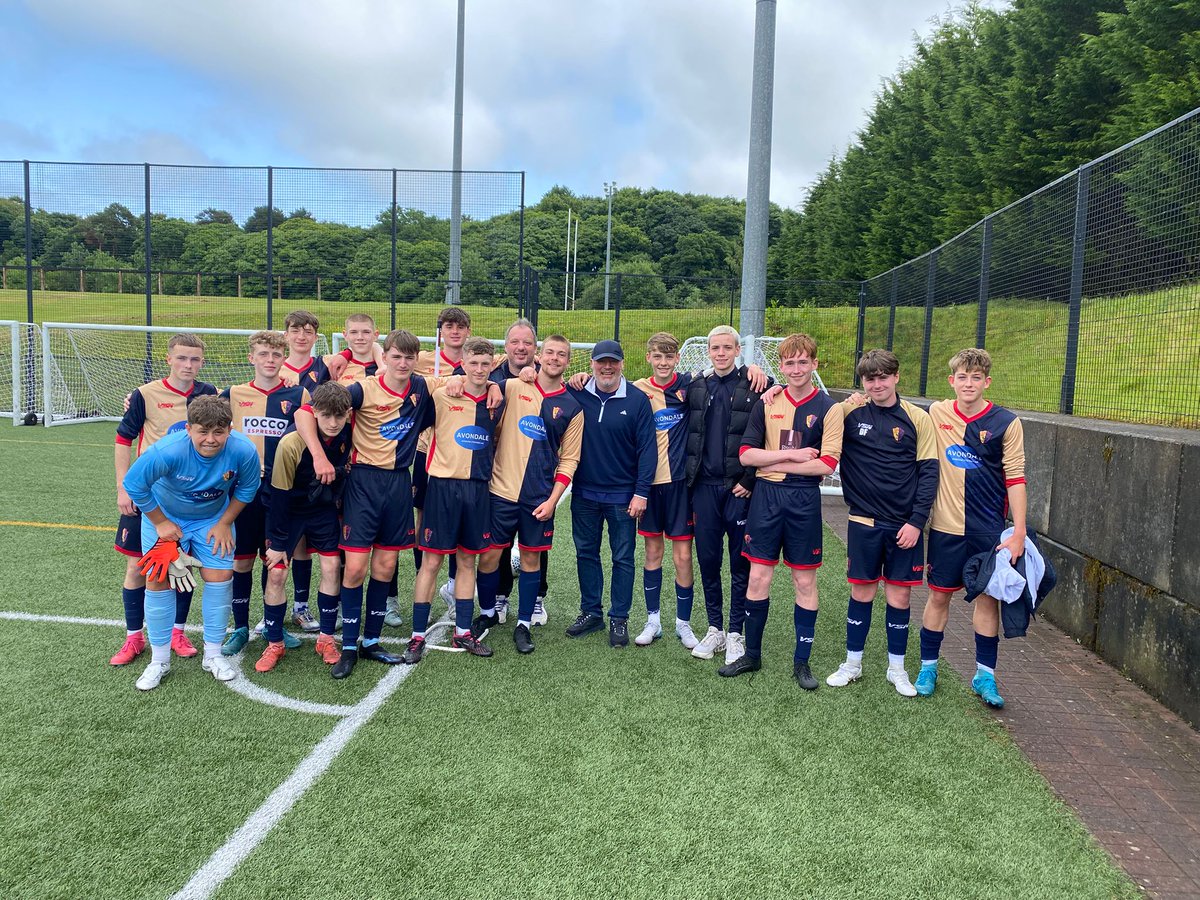
@EKFC2009s 🏆 OI, LOCAL LEGENDS! EK WE NEED YOU! EKFC Gold 2009 lads are running a raffle, and we’re on the liik out for some top-notch prizes for our race night on Friday 28th November .Got a voucher, a wee hamper, a free haircut , voucher.
#EKFC2009 # @talkSPORT @STVNews
English
@EKFC2009s And what a game it turned out to be . 100 % by everyone.
English
Our League campaign kicks off at home on Saturday morning with a match against Lenzie YC. The boys will be looking to replicate the performance from Thursday night and hopefully come away with all 3 points #Momentum #PositiveVibesOnly 🔴⚪️⚽️

Motherwell, Scotland 🇬🇧 English
Lesley Ann Henderson retweetledi

Introducing the new Speech, Language & Communication (SLC) Knowledge and Skills Matrix!
It's designed for the whole early years workforce to strengthen skills & support every child’s communication journey.
👉 ow.ly/WiSv50WzZvY
#beingme #everyinteractioncounts @ESTeamELC
English
Lesley Ann Henderson retweetledi
Morning followers!
The boys are doing a sponsored walk today to raise funds for our team. Unfortunately the cost of grassroots football continues to rise. Any donation, no matter the amount will make a massive difference. Thank you. 🌞🔶️🔷️⚽️
justgiving.com/crowdfunding/e…
Hamilton, Scotland 🇬🇧 English
Lesley Ann Henderson retweetledi

Lesley Ann Henderson retweetledi
Lesley Ann Henderson retweetledi

One more week to apply for CEO of SOSCN. Excellent opportunity for a strategic third sector lead to make a huge difference in this rapidly changing policy landscape. Get in touch with myself or any other board member for a chat if you’d like to know more. goodmoves.org/vacancy/a4sP10…
English