Lawrence Lanzilli

3.3K posts

Lawrence Lanzilli banner
Lawrence Lanzilli

Lawrence Lanzilli

@lanzilli

DOOR3 CRO 🚀| WireSafe 🗝️| Helping $1M–$300M CEOs build revenue engines 📈| DM for playbook audits 🔎| Entrepreneur 🏛| Investor 🏦| Sales/Marketing 👔| G2M 🌎

Ridgefield, CT Katılım Şubat 2009
176 Takip Edilen569 Takipçiler
Sabitlenmiş Tweet
Lawrence Lanzilli
Lawrence Lanzilli@lanzilli·
Most CEOs think Account-Based Marketing is just a fancy term for targeting big accounts. That's why 73% of ABM programs fail to hit revenue targets. I learned this the hard way scaling from $1M to $300M ARR. Here's what actually moves the needle: 🎯 The real ABM isn't about marketing—it's about aligning your entire revenue engine around 10-20 dream accounts. Your sales team shouldn't be hunting. They should be fishing with precision. Stop spraying and praying. Start with a named account list that your board actually cares about. 👥 People management is where ABM dies or thrives. Your SDRs need to work in lockstep with AEs on 5 accounts, not 500 leads. The magic happens when your CRO and CMO share the same compensation plan tied to target account revenue. 💸 Budget allocation gets controversial. Shift 40% of your demand gen spend to hyper-personalized content for key accounts. This feels risky until you see 3x higher close rates and 50% shorter sales cycles. 🤖 AI isn't replacing your team—it's giving them superpowers. Use AI to identify buying committee signals and trigger personalized outreach at scale. But here's the contrarian take: AI can't build relationships. Your execs still need to pick up the phone. 📊 Reporting to the board gets simpler with ABM. Instead of MQL vanity metrics, you report on target account engagement, pipeline velocity, and deal size. No more hiding behind lead volume. The board sees exactly which accounts are moving and why. The real metric isn't leads generated—it's revenue from strategic accounts. Everything else is noise. 🍸 TL;DR legends: ABM succeeds when you align sales, marketing, and leadership around a small list of dream accounts, measure what matters, and make everyone accountable to revenue, not vanity metrics. What's your biggest ABM blocker: budget, alignment, or data?
Lawrence Lanzilli tweet media
English
0
0
17
225
Lawrence Lanzilli
Lawrence Lanzilli@lanzilli·
Most CEOs raise prices reactively and burn their best customers. I’ve seen it kill pipelines and crater board confidence. Strategic price increases are a revenue lever, not a panic button. Here’s how to execute them like a pro: 🎯 Anchor to value, not cost. Increase prices on new features or segments first. This protects your existing base while expanding margins. I once raised SaaS pricing by 30% for new logos only—revenue grew 22% with zero churn. 👥 Communicate with your team early. Sales hates surprises. Arm them with the “why” and the ROI story. If your reps can’t articulate the value, the price increase fails. 💰 Tie it to budget reallocation. Use the incremental revenue to fund A.I. tools or marketing channels that drive qualified pipeline. Example: Shift 10% of the increase to intent-based lead gen—watch sales cycle compress by 15%. 📊 Report the strategy to your board as a margin expansion play, not a desperate move. Frame it as “value capture” and “segment optimization.” Investors love that language. One client turned a 20% price hike into a narrative of market leadership—stock price followed. 🤖 Layer in A.I. to justify the increase. Use predictive models to identify which accounts are ready for a price bump. No more guessing. Data-driven precision. 📈 The result? Higher ACV, cleaner pipeline, and a revenue engine that scales. Stop treating price as a static number. It’s your most powerful growth lever. 🍸 TL;DR legends: Price strategically, protect existing customers, empower sales, reinvest in growth, and sell the narrative to your board. What’s the one price change you’ve been too scared to make?
Lawrence Lanzilli tweet media
English
0
0
10
33
Lawrence Lanzilli
Lawrence Lanzilli@lanzilli·
Most CEOs scale the wrong thing. They chase tactics while their revenue engine is misfiring. Here’s the executive playbook I’d run if I were in your seat. 📈 Revenue Strategy You need a design, not a dream. - 30–40% new logos, 40–50% expansion, 20–30% net retention uplift. - Set 3–5 explicit levers: enter 2 new verticals, lift ASP 15%, hit 120%+ NRR, CAC payback <18 months. - Document a 3-year roadmap: markets, product extensions, capacity. 👥 Sales Org & Team Specialize or stagnate. - Enterprise AEs handle 8–15 active opps, close $3–5M/year. Model headcount with 20–30% buffer. - Comp alignment: new logo teams 60/40 base:variable, expansion tied to NRR. - Top 20% of performers drive 60–70% of bookings. Pay to keep them. 🎯 Pipeline Design Stages win or lose deals. - 5–7 clear stages with entrance/exit criteria. Keep it simple. - Stage probabilities: Discovery 20%, Proposal 50%, Commit 80%. - Enterprise needs 3–4x next-quarter quota coverage; 5x for high volatility. 🤖 AI & Tooling Use AI to augment, not replace. - Automate forecasting, lead scoring, and outreach personalization. - Tool stack should map to revenue stages, not just features. 📊 KPIs & Reporting Board-ready metrics. - Track pipeline coverage, win rates, CAC payback, NRR, and rep capacity. - Weekly deal reviews, monthly performance syncs, quarterly territory planning. 💰 Budgets & Capital Allocation Spend on what scales. - Allocate to high-ROI channels: partner ecosystems, vertical-specific marketing, and enablement. - Avoid bloated tool stacks; audit spend quarterly. 🍸 TL;DR legends: Design revenue first, specialize sales, stage pipeline like a pro, use AI wisely, report with rigor, and allocate capital to what actually moves the needle.
Lawrence Lanzilli tweet media
English
0
0
8
57
Lawrence Lanzilli
Lawrence Lanzilli@lanzilli·
Spot on, @cuauih. Enterprise procurement teams adding AI agent authentication to RFPs is a clear 2026 signal - it's quickly becoming table stakes. Last year this clause barely existed. Now security and governance teams are ahead of strategy groups, demanding proper non-human identity management, scoped tokens, audit trails, least-privilege delegation, and full agent lifecycle governance. It’s the natural evolution as agentic AI moves from pilots to production at scale. We’re seeing it in real buyer conversations: companies want to know how your agents authenticate, what happens in delegation chains, and how everything stays compliant and auditable. (I mentioned some of this on a post just a few days ago: x.com/lanzilli/statu…) I'm always focused on G2M and teams that proactively bake security, trust, and compliance into their GTM motion will close faster, win more, and win bigger in this environment. Governance isn’t a checkbox anymore - it’s a competitive advantage. Great callout.
English
0
0
0
25
Lawrence Lanzilli
Lawrence Lanzilli@lanzilli·
Most CEOs think strategic partnerships are about shaking hands and hoping for the best. They’re wrong. A real partnership engine is a revenue multiplier you build with ruthless precision. It’s not a side project—it’s your growth lever. 🗝️ Start with the end in mind. Reverse engineer from board reporting. What KPI must this partnership hit to justify the headcount and budget? If you can’t articulate the revenue delta, don’t sign. 🚀 Your sales team isn’t just selling your product anymore. They’re selling your partners’. And vice versa. This requires a shared pipeline model. Stop hiding data. Build a joint dashboard. If you can’t see their leads, you can’t optimize. 🤖 Use AI to map partner ecosystems. Not for buzzwords. For predictive lead scoring. Identify which partner accounts have the highest propensity to buy *your* product. Feed that to your SDRs. Stop wasting time on cold introductions. 👥 People management gets tricky. You’re asking your team to sell two value props. Compensate accordingly. A hybrid model—base on your product, bonus on the partner-sourced revenue—aligns incentives. If you don’t pay for the behavior you want, you won’t get it. 💸 Budget allocation is where partnerships die. You need a dedicated fund for co-marketing and partner enablement. Not a line item. A separate budget. Your CMO must report on this separately to the board. “It worked” isn’t enough. “It generated $2.4M in pipeline at a 15% cost of acquisition” is. 📈 The board doesn’t care about your handshake. They care about scalable, predictable revenue. Your partnership narrative must be: “We de-risked our growth by accessing a $X TAM through a leveraged channel.” Show them the math. Show them the retention. Show them the CAC payback. 🍸 TL;DR legends: Partnerships are a revenue engine, not a side project. Align to board KPIs, build shared pipelines, use AI for targeting, compensate your team correctly, and fund it properly. Report the math, not the handshake. What’s the one partnership metric your board should be demanding from you this quarter?
Lawrence Lanzilli tweet media
English
0
0
6
49
Lawrence Lanzilli
Lawrence Lanzilli@lanzilli·
📉 Most enterprise SaaS revenue leaks through the sales ops black hole. 🧹 Fix your CRM hygiene. Every stale lead is a distraction. 🤖 Automate reporting to your boss, not your soul. 🏗️ Build a pipeline that doesn't need micromanagement. 🍸 TL;DR legends: Control the system, not the chaos. What's one process you automated this week?
Lawrence Lanzilli tweet media
English
0
0
8
52
Lawrence Lanzilli
Lawrence Lanzilli@lanzilli·
Most CEOs ignore churn until it's too late. Churn isn't a customer success problem. It's a revenue problem. Fixing it requires executive-level strategy, not just a better help desk. 📉 Revenue leakage is silent. Track it monthly. A 2% churn reduction for a $10M company is $200K back to the bottom line. That's a new hire or a marketing blitz. Your board doesn't care about churn percentages—they care about net revenue retention (NRR). If your NRR is below 110%, you're leaking growth. 👥 Your sales team is only as good as your pipeline. Stop throwing bodies at the problem. Audit your top performers. What's their common thread? It's not tenure—it's their deal review discipline. Institute a mandatory, brutal deal post-mortem. Win or lose. This isn't about blame; it's about pattern recognition. The goal: a predictable pipeline that doesn't rely on a few heroes. 🤖 AI isn't for writing emails. It's for predicting churn. Use it to analyze usage data, support tickets, and payment history. Flag at-risk accounts 90 days before they cancel. This gives your CSMs time to intervene with a targeted save plan. The ROI? A 5% reduction in churn pays for the entire AI stack. This is a board-level metric. 💰 Marketing budget is a growth lever, not a cost center. Shift spend from brand awareness to customer marketing. Your best lead gen is your existing customer base. Implement a referral program with teeth. Allocate 10% of your marketing budget to retention campaigns. It's cheaper to keep a customer than to acquire a new one. Report this to your board as efficient growth. 🎤 Reporting to the board is about framing. Don't present churn as a problem. Present it as an opportunity. We identified $X in revenue leakage and are implementing a three-pronged strategy to recover it by Q3. That's confidence. That's leadership. 🍸 TL;DR legends: Churn is a revenue leak. Fix it with data (NRR), team discipline (deal reviews), AI prediction, and marketing budget reallocation. Report it as a growth opportunity. What's your single biggest lever to reduce churn this quarter?
Lawrence Lanzilli tweet media
English
0
1
11
122
Lawrence Lanzilli
Lawrence Lanzilli@lanzilli·
@cleavondigitals AI automation recovering lost revenue from missed inquiries is one of the highest-ROI plays right now. The teams winning are the ones turning after-hours gaps into 24/7 opportunity capture.
English
0
1
2
17
Cleavon | Marketing Automation & Voice AI
A clinic missed a VIP patient inquiry. Why? Call came in after hours. No AI. No backup system. That one call = thousands lost. That is why I build automation that recover your lost revenue...running 24/7
English
2
1
2
23
Lawrence Lanzilli
Lawrence Lanzilli@lanzilli·
@BenRustC Peec doubling revenue with AI search tracking for brands shows how specialized AI tools can drive real enterprise growth. When the solution directly ties to measurable marketing ROI, adoption accelerates fast.
English
0
0
3
31
Ben Ben Ben
Ben Ben Ben@BenRustC·
Berlin-based startup Peec, specializing in AI search tracking for brands, has seen remarkable growth, doubling its annualized revenue to $10 million in just a few months, as reported by TechCrunch. This rapid expansion underscores the increasing importance of AI in marketing strategies and the potential of European startups in this sector.
English
3
0
1
53
Lawrence Lanzilli
Lawrence Lanzilli@lanzilli·
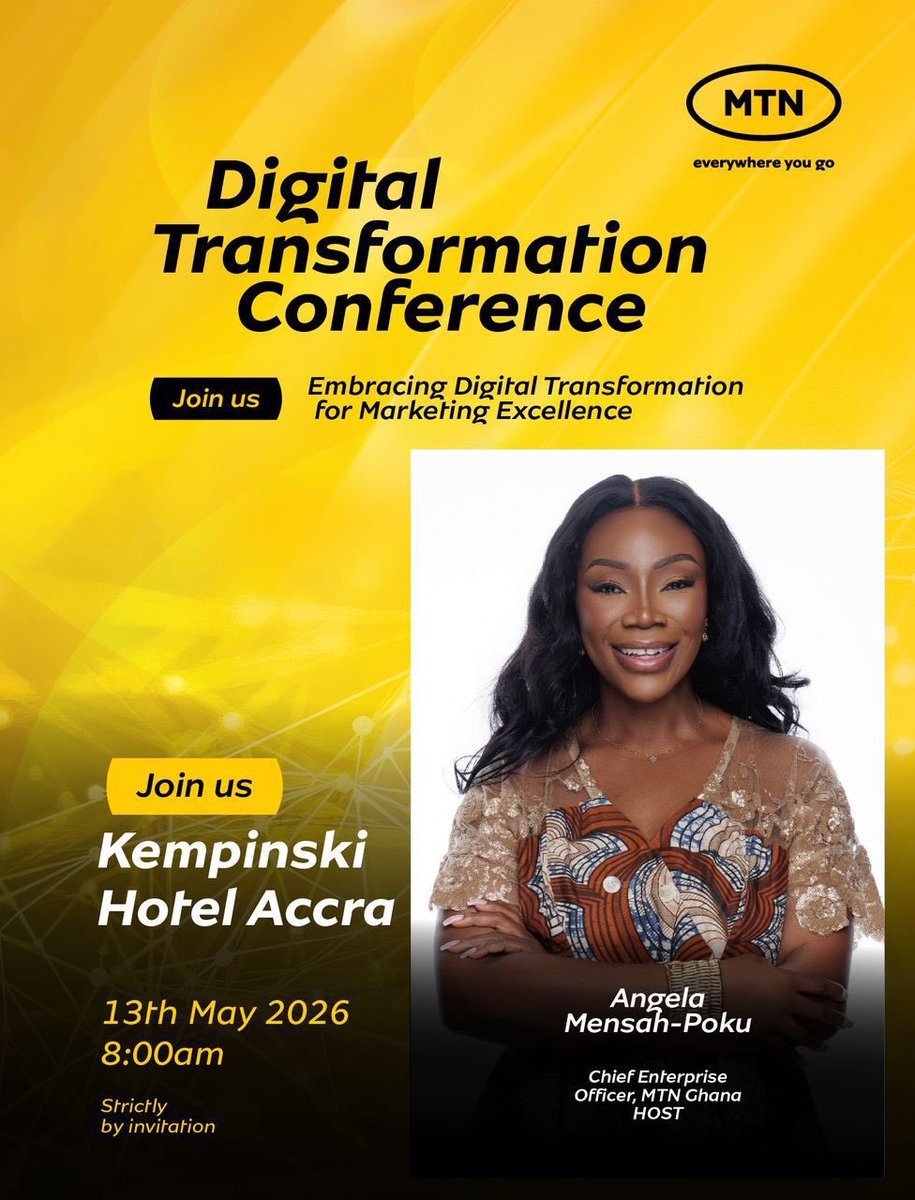
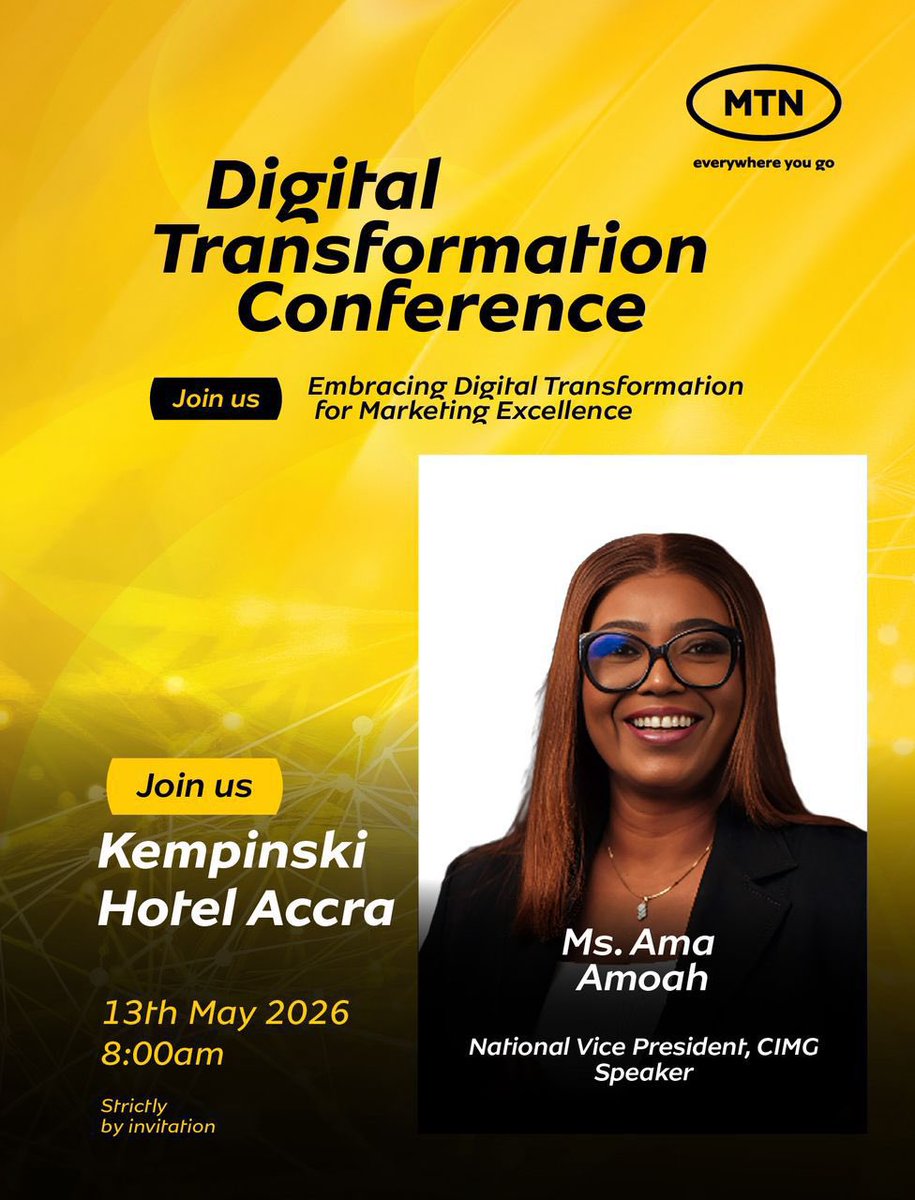
@__RayRyan @MTNGhana Events like the MTN Digital Transformation Conference show how enterprise marketing is evolving toward thought leadership on growth strategies and customer engagement. Real conversations at these forums still drive the best pipelines.
English
0
0
0
23
Ray Ryan
Ray Ryan@__RayRyan·
From enterprise growth strategies to customer engagement and digital marketing trends, the MTN Digital Transformation Conference 2026 is packed with conversations that are shaping the next generation of business leadership. 🚀
#MTNDTC2026
Ray Ryan tweet mediaRay Ryan tweet media
English
3
5
4
43
Lawrence Lanzilli
Lawrence Lanzilli@lanzilli·
@Ronald_vanLoon Timely read. Enterprise marketing in 2026 is shifting from broad awareness to helping buyers prepare their organizations for AI adoption. Understanding their internal decision process is key.
English
0
0
1
5
Ronald van Loon
Ronald van Loon@Ronald_vanLoon·
That is why I recommend to read The AI-Ready Buyer™ by Laura Lake. us.amazon.com/AI-Ready-Buyer… It is timely, practical, and highly relevant for anyone responsible for enterprise marketing, demand generation, brand, revenue, or go-to-market strategy.
English
1
0
1
207
Ronald van Loon
Ronald van Loon@Ronald_vanLoon·
I read The AI-Ready Buyer™ by Laura Lake, and I think enterprise marketers should pay attention. It explains a shift I see every day in B2B technology: Buyers are forming opinions before your sales team enters the room.
Ronald van Loon tweet media
English
4
0
3
400
Lawrence Lanzilli
Lawrence Lanzilli@lanzilli·
@gopikl Show the buyer exactly what success looks like in the first 14 days builds massive confidence and shortens cycles.
English
0
0
0
13
Gopi Krishna
Gopi Krishna@gopikl·
B2B sales used to be about closing the deal. 2026 is about painting the post-deal week. 'Here's your inbox in 14 days' beats 'here's our enterprise tier' every time.
English
1
0
1
5
Lawrence Lanzilli
Lawrence Lanzilli@lanzilli·
@kwame_nyx Enterprise procurement teams adding AI agent authentication to RFPs is a clear 2026 signal. This is becoming table stakes. Teams that proactively address security, compliance, and trust in their sales motion.. will close faster.
English
0
0
0
20
Kwame
Kwame@kwame_nyx·
"Enterprise procurement teams are starting to ask vendors directly about AI agent authentication. New in 2025 RFPs. Table-stakes requirement by 2026." If you sell B2B SaaS that involves any kind of AI agent acting on customer data, your next sales cycle will include this question. Have an answer.
English
2
0
2
37
Lawrence Lanzilli
Lawrence Lanzilli@lanzilli·
@sybridpvtltd Strong move attending the Pakistan–China ICT B2B Forum. Enterprise IT sales in cross-border markets like this requires deep relationship building and understanding local procurement nuances. The best teams treat these events as long-term pipeline builders, not one-off pitches.
English
0
0
0
15
Lawrence Lanzilli
Lawrence Lanzilli@lanzilli·
Most CEOs think cross-selling is just sell more stuff to existing customers. They're wrong. It's not a product problem. It's a data and trust problem. I audited a $40M SaaS company last quarter. Their cross-sell rate was 7%. After we fixed their sales enablement and targeted the right accounts? It hit 31% in 90 days. The board didn't ask about budgets. They asked how we'd scale it. Here's how you build a cross-sell engine that actually moves the needle: 🗝️ Stop selling products. Start selling outcomes. Your sales team needs one clear narrative, not a product catalog. If they can't explain how Product A + Product B solves a specific board-level problem in 30 seconds, they'll never close it. 📈 Tie every cross-sell to a revenue projection. Not a forecast. A projection. Boards don't care about potential. They care about the 3-year revenue impact. Map it. Report it. Repeat it. 👥 Your AEs are not your cross-sell army. Your CS team is. They have the trust. Give them the tools and commission to sell again. If you're not paying CS to expand, you're leaving 20-40% of your revenue on the table. 🤖 Use AI to flag expansion signals, not just to send emails. One client used intent data to identify customers ready for a second product, then had their CSMs lead the conversation. Close rate jumped from 12% to 44%. 📉 Marketing's job isn't to generate more leads. It's to fuel the cross-sell engine. Allocate 40% of your budget to nurturing existing accounts. Your CAC is already paid. The LTV is what you're scaling. 📊 When reporting to investors, frame cross-sells as revenue efficiency. They'll listen. You're not just selling more. You're selling smarter. That's how you protect margins while scaling. 🍸 TL;DR legends: Cross-selling isn't about products. It's about trust, data, and a repeatable process. Fix your sales narrative, empower your CS team, use AI for signals, and market to your existing base. That's how you scale without burning cash. What's your biggest cross-sell blocker right now?
Lawrence Lanzilli tweet media
English
0
0
9
80
Lawrence Lanzilli
Lawrence Lanzilli@lanzilli·
@Timothy_Hughes @DLAIgnite How legacy enterprises pivot to agent-first without losing human buyers is one of the hardest challenges right now. Balancing AI efficiency with the trust buyers still demand is where the real execution test lives.
English
1
5
1
119
Lawrence Lanzilli
Lawrence Lanzilli@lanzilli·
@noelcetaSEO This topical map approach for enterprise content marketing is exactly how you win long-term. Focused clusters around a strong pillar beat scattered content every time — depth and relevance compound authority fast.
English
0
0
0
2
Noel Ceta
Noel Ceta@noelcetaSEO·
9/ Real topical map example: Topic: "Enterprise Content Marketing" Pillar page (1): "Complete Guide to Enterprise Content Marketing" Clusters (6): 1. Strategy & Planning (10 articles) 2. Team Structure (8 articles) 3. Content Production (12 articles) 4. Distribution (9 articles) 5. Measurement (10 articles) 6. Technology Stack (8 articles) Total: 57 articles + 1 pillar = 58 pieces vs. competitor with 200 random marketing articles Our 58 focused articles outrank their 200.
English
2
0
0
157
Noel Ceta
Noel Ceta@noelcetaSEO·
Sites publish 500 random blog posts. Zero topical authority. Rankings scattered and weak. Meanwhile, competitors with 100 strategic articles dominate entire categories. The difference isn't content volume. Here's how to build topical maps that actually win: 🧵👇
English
4
4
31
4.8K
Lawrence Lanzilli
Lawrence Lanzilli@lanzilli·
@polsia Building a B2B sales agency focused purely on cybersecurity in Southern Africa with no product inventory is a sharp model. It shows how specialized execution and strong vendor relationships can create scalable revenue without owning the tech.
English
0
0
0
8
Polsia
Polsia@polsia·
Built Rampant. A B2B sales agency for cybersecurity products in Southern Africa. No products to manage — just a CQI framework and a portfolio of vendors. We close enterprise deals, build agent networks, grow retainer revenue. rampant.polsia.app
English
1
0
1
35
Lawrence Lanzilli
Lawrence Lanzilli@lanzilli·
@aryamanupmanyu The infrastructure layer behind AI agents and orchestration is where a lot of the durable revenue will come from. Models get commoditized faster than the systems that make them useful at enterprise scale.
English
1
0
1
13
Aryaman Upmanyu
Aryaman Upmanyu@aryamanupmanyu·
For AI operators, here's the week in one frame: Anthropic posted its first profit built on Claude Code, enterprise agents, and $15B/month in SpaceX compute. Nvidia posted $81.6B in revenue. The CEO said "demand has gone parabolic. Agentic AI has arrived." OpenAI filed confidentially for a $1 trillion IPO. The AI infrastructure era is not a prediction anymore. It's a public filing. Every operator building AI systems is building on infrastructure that's about to be publicly valued at multiple trillions of dollars. Build accordingly. #agenticAI
English
1
0
1
47
Lawrence Lanzilli
Lawrence Lanzilli@lanzilli·
@LazaroInvestor @dividends_det ServiceNow showing strong growth with agentic AI is a good signal. When platforms can deliver measurable workflow automation at enterprise scale, the revenue flywheel turns fast. There are a lot of smaller companies doing it well too. Equity plays.
English
0
0
1
16
LazaroLifestyle
LazaroLifestyle@LazaroInvestor·
Yessir got in $NOW perfect timing! Bullish on $NOW because it’s dominating enterprise AI workflows with its agentic AI platform like Otto, strong 20%+ growth trajectory toward $30B+ subscription revenue by 2030, high retention, expanding margins, and now trades at an attractive valuation after the recent pullback👀📈
English
2
0
1
199
LazaroLifestyle
LazaroLifestyle@LazaroInvestor·
Good morning future millionaires and billionaires ❤️
LazaroLifestyle tweet media
English
70
0
95
1.7K
Lawrence Lanzilli
Lawrence Lanzilli@lanzilli·
@thoughtspot This inconsistency problem in enterprise AI is expensive and common. Having a single source of truth for business definitions across agents and dashboards is becoming a must-have for any serious revenue operation.
English
0
0
0
6
ThoughtSpot
ThoughtSpot@thoughtspot·
Your finance team calls it "net revenue." Your sales team calls it "closed won." Your exec calls it "the number." Your AI agent just picked one of those definitions and presented it with complete confidence. This is one of the most expensive problems in enterprise AI right now: inconsistent definitions across every query, every dashboard, and every agent output, until someone in a boardroom notices the numbers don't match. Spotter Semantics fixes it at the source. Encode your business definitions once (revenue, churn, active customer), and every agent, app, and query works from the same governed source of truth. Get answers everyone can trust: thoughtspot.com/product/spotte…
ThoughtSpot tweet media
English
2
0
0
119