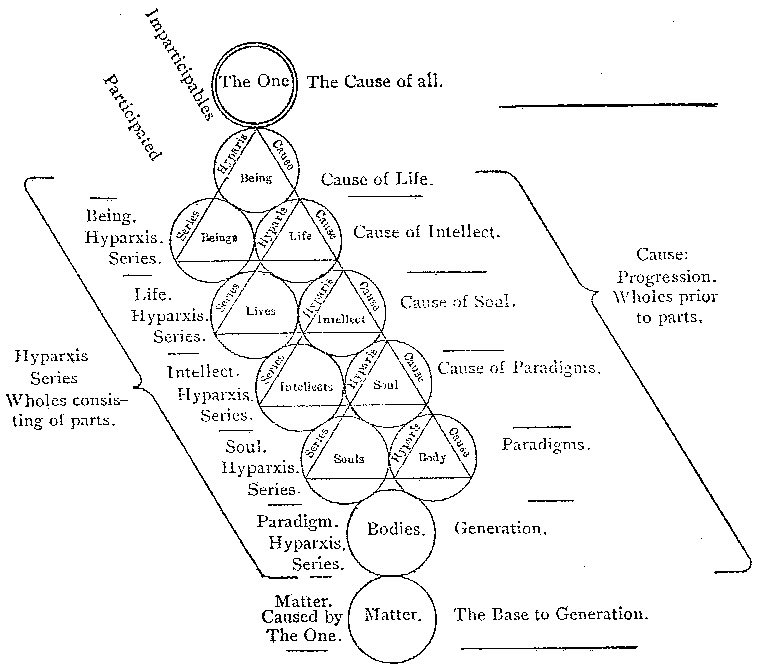
@pallakschh I’ve always liked this diagram. Although it does a poor job conveying the dynamism of the Neoplatonic metaphysics of flow it does communicate quite well the triadic structure of the manners of being according to Proclus’s cosmology.
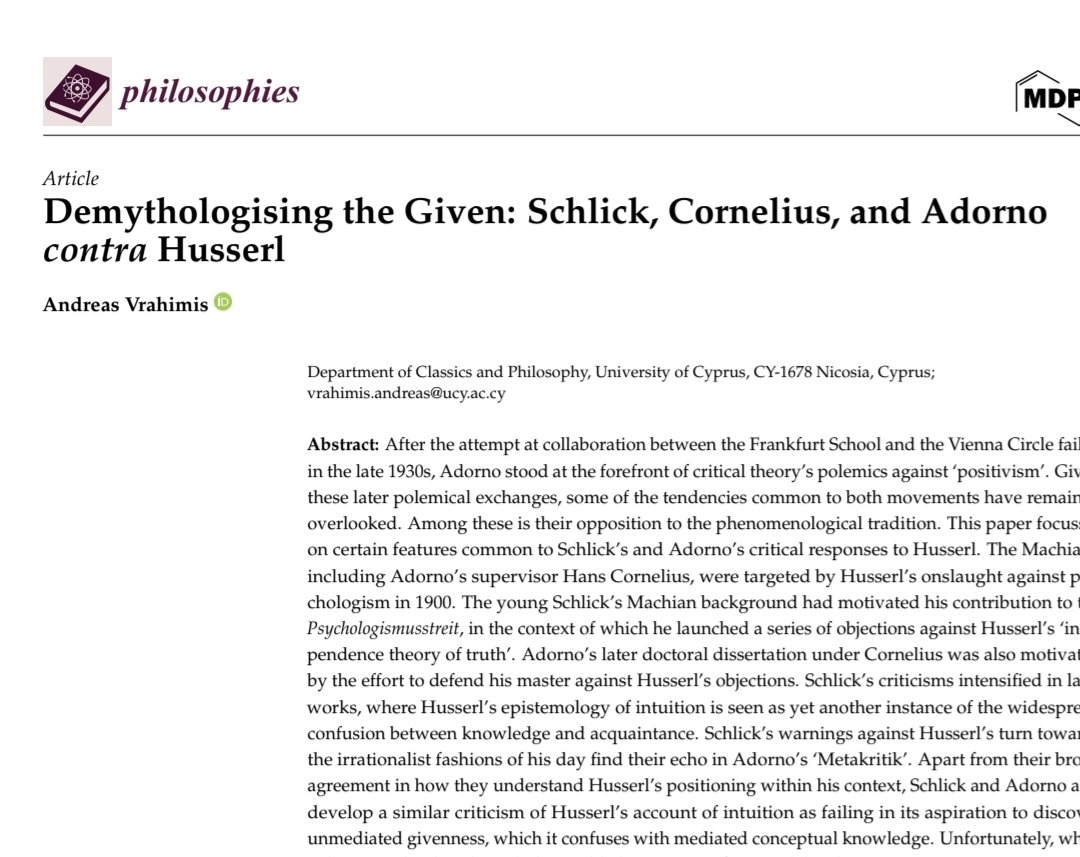
@peligrietzer They were both impregnated by the works of the Brentanian tradition (cf. Kevin Mulligan's book), and check Hintikka on Husserl and Wittgenstein. Interestingly, there are also works on James and pragmatism by Max Scheler, and Adolf Reinach.
Deus minimorum corde cupit sperare, quod efficit eosdem in propositum suum salutis compellens. Quanto pulchrius propositum tanto maior spes. Mundus sic procedit, spe multorum simplicium impulsus, qui ignoti sunt praeterquam Deo.
@aufgehenderRest The worry is much more about why he had such an impact on powerful followers in France (Deleuze, Derrida, Foucault, and minores), and in the US after WWII lol
It's one of those nights. I can't sleep. I have ambient music on and my mind is drifting endlessly. The first thought that comes to my mind is about Heidegger. How could one of the most brilliant thinkers of the 20th century align himself with the evil of National Socialism?
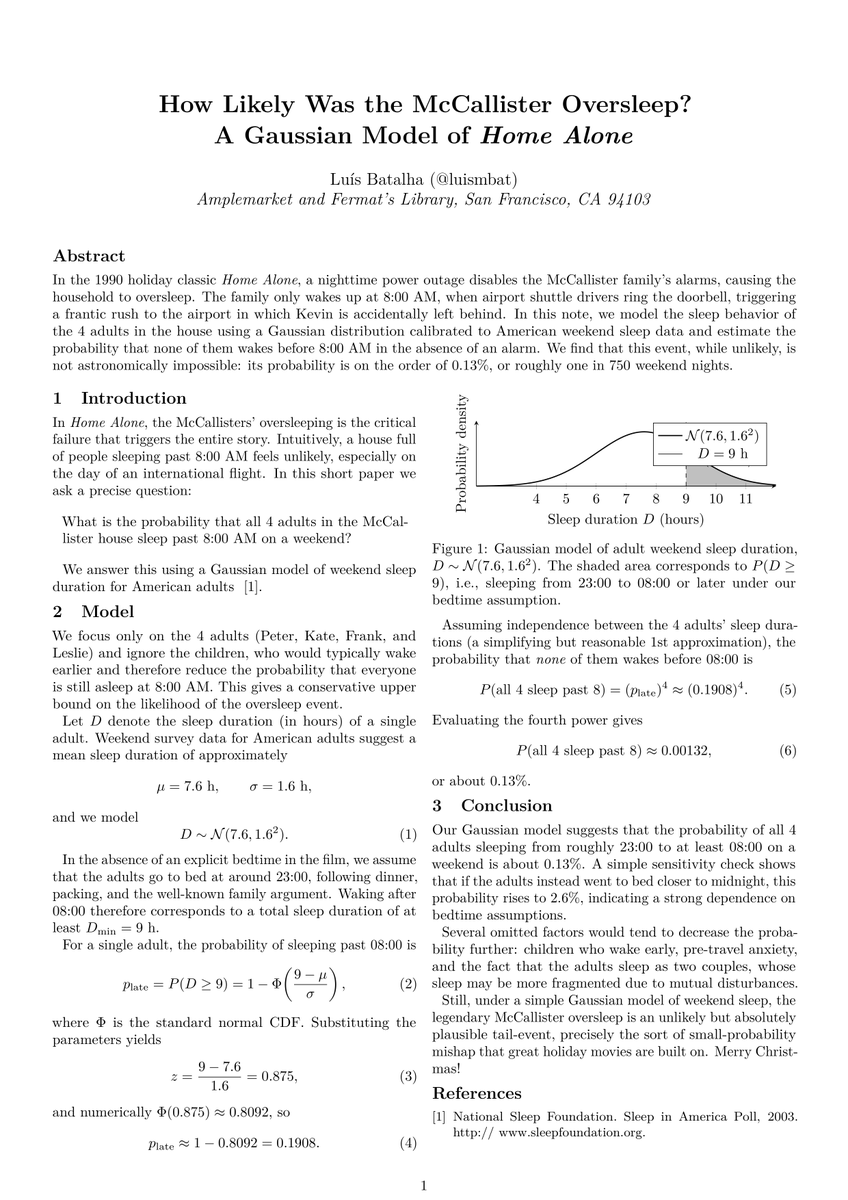
After rewatching Home Alone, I couldn’t stop wondering:
how plausible is the oversleep that leaves Kevin behind?
So I wrote a tiny paper and ran the numbers.
Merry Christmas! 🎄
@StarkConor Keep up the good work!
(Hegel, Lectures, p. 178: “We can call Plotinus a Neoplatonist and, with equal justification, call him a Neoaristotelian.”)
I am very grateful for the follows!
As thank you, here is my last Plotinus recommendation before I get to work on Proclus and Dionysius.
Christoph Horn’s Plotin über Sein, Zahl und Einheit (De Gruyter, 1995).
Building on Krämer and Szlezák’s work, Horn’s book is perhaps the most probing, coherent, and systematic account of Plotinus’s metaphysics that I’ve read.
I think the Number section has been surpassed by Slaveva-Griffin, but even this section rewards careful study.
As a harmonist, what I admired most about Horn’s book were his (largely successful, imo) attempts to show that, even at his most critical, Plotinus’s criticisms are only possible because of how thoroughly he has absorbed the Stagirite’s thought.
Everywhere, Plotinus methodically radicalizes and employs Aristotelian concepts against Aristotle (e.g. time as a measure of the counting soul — time as the life of the soul, analogy re. the categories, A’s rich notion of contrariety, act-potency, substance-accident, matter as potency, identity of intellect-intelligible, etc.).
@lasouda000 It’s thought to come from the Vesuvian area but from precisely where is unknown as it was stolen and sold to a collector. As for the date it seems to be very similar to architectural depictions dating to the mid first century BC - the so-called ‘Second Style’ decoration.
Possibly the most sublime Roman fresco of a temple.
The architectural detail of the spiky-topped wooden barrier, the painted relief in the pediment, & the offerings burning on the altar; it’s a symphony of observations.
Archaeological Museum of Capri (no provenance)
#FrescoFriday
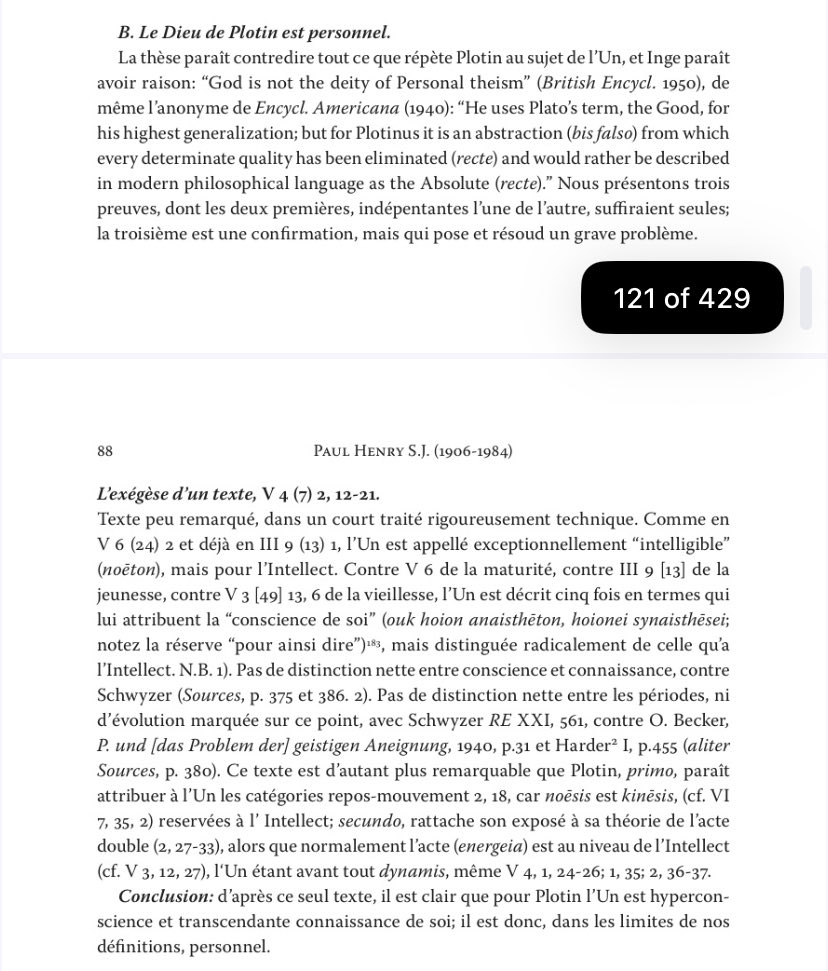
@StarkConor As a curious reader of litt. on Plotinus, have a look at "On the Logic of the Psyché in Plotinus" by R. M. Martin in 'Primordiality, Science, and Value' (SUNY 1980)
Just finished Lloyd's Anatomy of NeoPlatonism (Oxford: Clarendon Press, 1990).
For people with a more analytic background, this would be a solid introduction to later Platonism.
Particularly good were the following points:
(1) His discussion of Porphyrian semantics;
(2) Repudiation of "nominalism" as applicable to Plotinus et alii;
(3) Reconciliation of Plotinian analogical natures/concepts (P-series) with the requirements of syllogistic demonstration;
(4) Identification of Aristotle's Physics's discussion of causation as a source for the doctrine of double activity;
and (5) Claim that the "loving Intellect" of VI.7 is an antecedent to Proclus's Henads.
@Gattungswesen25 Newsflash: pre-1940 european philosophers knew about each other and were less sectarian people than nowadays, even if still critical. Nowadays almost everyone ignores the history of its own tradition and those complex relationships
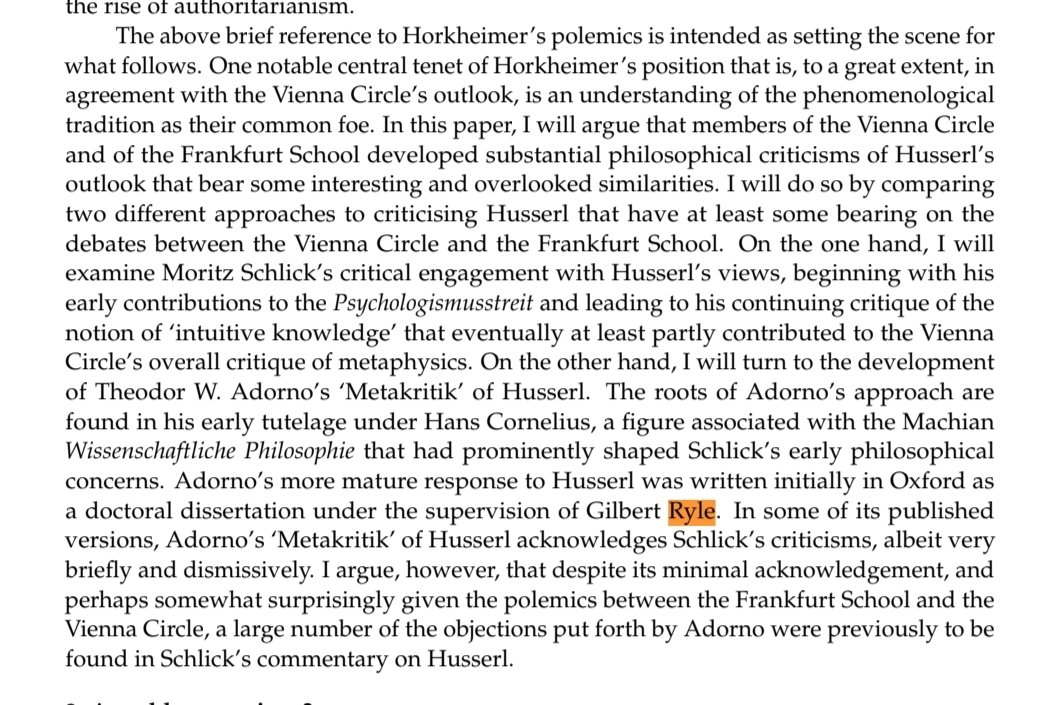
Wait, what?!?! Gilbert Ryle, a logical behaviorist and analytic philosopher, was Theodore Ardono's supervisor for Ardono's dissertation on Edmund Husserl's Phenomenology?!?!