

@sherwinwu Most of the world are great for kids when your default baseline is San Francisco man.
English
Lei Du
679 posts

@le1du
I build & help others build cool stuff.


Mistakes happen. As a team, the important thing is to recognize it’s never an individuals’s fault — it’s the process, the culture, or the infra. In this case, there was a manual deploy step that should have been better automated. Our team has made a few improvements to the automation for next time, a couple more on the way.
For everyone who’s ever looked at a private company and said “man that’s a zero I wish I could short it”, have you considered fake SPVs?

overheard in sf: “i’m too old for yc” (just turned 29)

Guy who ran a fake Mercor SPV and is extremely relieved they’re going to zero

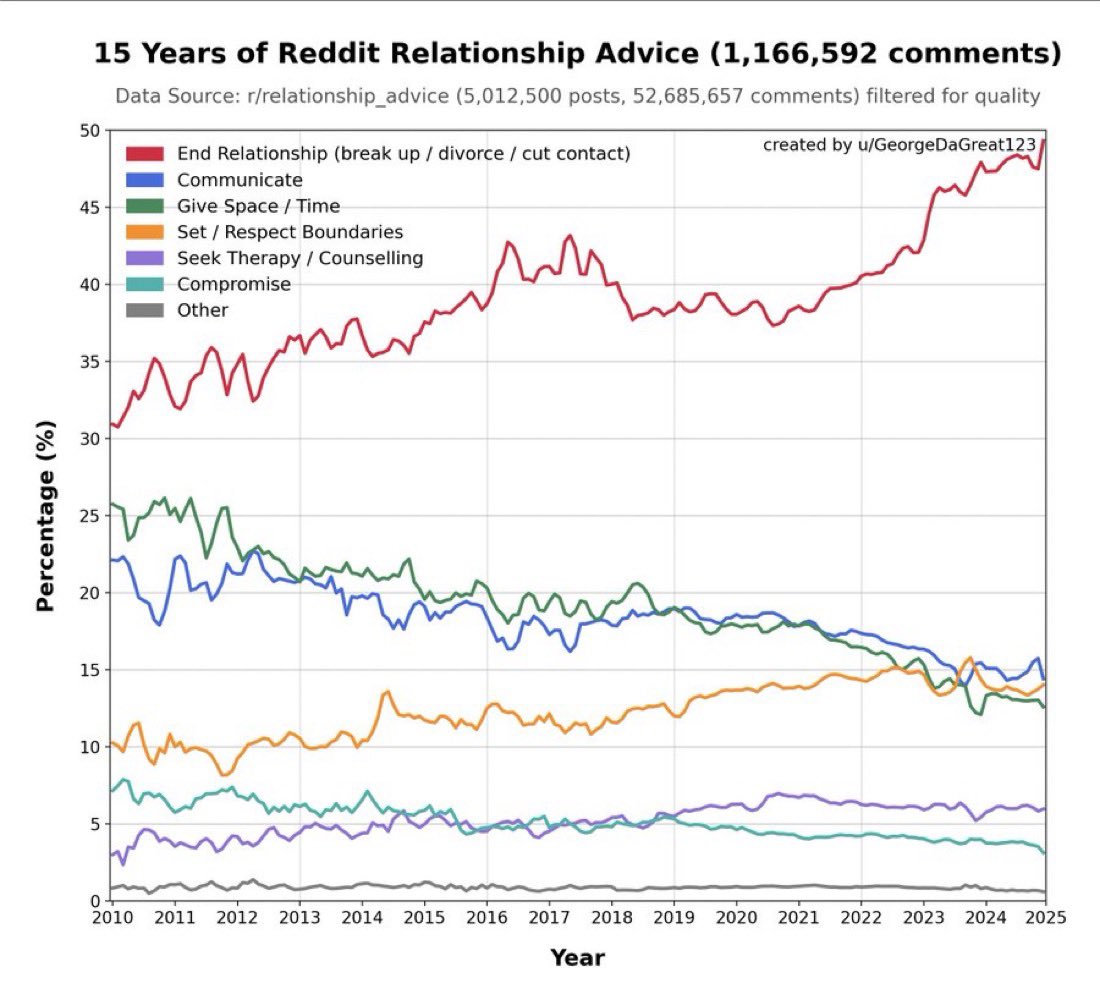
LLM that keeps telling people to break up because it’s been trained on relationship advice subreddits

This is actually what the future will look like. When wearable AR glasses saturate the market a whole generation will grow up only knowing reality through a mixed virtual/real spatial computing lens. It will be chaotic and stimulating. They will cherish their digital objects.

My biggest takeaways from @sherwinwu: 1. AI is writing virtually all code at OpenAI. 95% of the engineers use Codex, and engineers who embrace these tools open 70% more pull requests than their peers, and that gap is widening over time. 2. The role of a software engineer is shifting from writing code to managing fleets of AI agents. Many engineers now run 10 to 20 parallel Codex threads, steering and reviewing rather than writing code themselves. 3. The average PR code review time has dropped from 10-15 minutes per PR to 2-3 minutes. Every pull request at OpenAI is now reviewed by Codex before human eyes see it, and Codex surfaces suggestions and catches issues up front. This allows engineers to focus on more creative and strategic work while dramatically increasing productivity. 4. The models will eat your scaffolding for breakfast. When building AI products, don’t optimize for today’s model capabilities. The field is evolving so rapidly that the scaffolding (vector stores, agent frameworks, etc.) that seems essential today may be obsolete tomorrow as models improve. 5. Build for where the models are going, not where they are today. The most successful AI startups build products that work at 80% capability now, knowing the next model release will push them over the line. 6. Top performers become disproportionately more productive with AI tools. AI tools amplify the productivity of high-agency individuals, so the gap between top performers and everyone else is widening. The ROI on unblocking and empowering your best people compounds faster than ever in an AI-augmented environment. 7. Most enterprise AI deployments have negative ROI because they’re top-down mandates without bottom-up adoption. Success requires both executive buy-in and grassroots enthusiasm. Sherwin recommends creating a “tiger team” of technically-minded enthusiasts (often not engineers) who can explore capabilities, apply AI to specific workflows, and create excitement throughout the organization. 8. The one-person billion-dollar startup is coming, but with unexpected second-order effects. As AI makes individuals more productive, we’ll see not just billion-dollar solo founders but an explosion of small businesses: hundreds of $100M startups and tens of thousands of $10M startups. This will transform the startup ecosystem and venture capital landscape. 9. Business process automation is an underrated AI opportunity. While Silicon Valley focuses on knowledge work, most of the economy runs on repeatable business processes with standard operating procedures. There’s massive potential to apply AI to these workflows, which are often overlooked by the tech community. 10. The next two to three years will be the most exciting in tech history. After a relatively quiet period from 2015 to 2020, we’re now in an unprecedented era of innovation. Sherwin encourages everyone to engage with AI tools and not take this moment for granted, as the pace of change will eventually slow. 11. AI models will soon handle multi-hour tasks coherently. Today’s models are optimized for tasks that take minutes, but within 12 to 18 months we’ll see models that can work on complex tasks for upward of six hours. This will enable entirely new categories of products and workflows. 12. Audio is the next frontier for multimodal AI. While coding and text get most of the attention, audio is hugely underrated in business settings. Improvements in speech-to-speech models over the next 6 to 12 months will unlock significant new capabilities for business communication and operations.








非常喜欢你的心态,塞翁失马,焉知非福。这样的心态,一定有福。@onehopeA9 分享一个自己的小故事,与这周遭受损失的朋友共勉。 2018 年,我在家附近被开了一张罚单:红灯右拐,$650。Holly crap,从来没见过这么贵的罚单!我当时质问警察,信号提示不是白色的吗?(在我们那个小镇,人行道可以通行的提示字体都是白色的)警察平静地说:你看了字写的是什么吗?上面写着 "No Right Turn on Red"。你应该看到八个各式的标志提醒你红灯不能右转。而且,那是一个多叉路口,你右转时有两个方向的来车是你的盲点,你根本看不见。 我当时还将信将疑。第二天特意去看,果然有八个各种各样的的标志不能红灯右转,也确实有两个方向的来车在我视线盲区里,提示的文字确实说的是不能红灯右拐。那一刻除了骂设计灯的 WBD以外,也意识到问题不在警察,也不在标志,而在我自己。我太过依赖“经验”,以为白色就是安全信号,根本没看文字,也忽略了所有一切别的提示。那怕还有八百个别的提示,我依然会右拐! 如果不是那张罚单和警察的解释,我一定会继续在那里红灯右拐。并且是我接送小孩必经之路,保不齐哪天就出事故了。650 美元的罚单确实肉疼,但和一场车祸比,真不算什么。我到现在还真心感激那一个警察。 有时看似损失,不管有多大,其实是命运的一次温柔提醒💫 Onward and upward. 🌱
