Len Rubenstein @lenrubenstein.bsky.social

1.6K posts

Len Rubenstein @lenrubenstein.bsky.social

Len Rubenstein @lenrubenstein.bsky.social

@lenrubenstein

Professor, @johnshopkinsSPH, human rights and health advocate. Author of Perilous Medicine: The Struggle to Protect Health Care from the Violence of War.

Katılım Mart 2010
277 Takip Edilen1.6K Takipçiler
Len Rubenstein @lenrubenstein.bsky.social retweetledi
Victor Dzau
Victor Dzau@VictorDzau·
As health professionals, we insist that health personnel around the world be able to work in safety. Violence and threats against health care workers and facilities are devastating to the broader health system and worsen health outcomes. @TheLancet buff.ly/3CrInoB
English
0
3
13
690
Len Rubenstein @lenrubenstein.bsky.social retweetledi
Just Security
Just Security@just_security·
Evidence continues to emerge of alleged abuses of Gazan detainees at Israel’s Sde Teiman military detention facility, write @lenrubenstein and Matthew Wynia, highlighting need for accountability and the responsibilities of medical professionals. justsecurity.org/104150/physici…
English
1
15
19
3.1K
Len Rubenstein @lenrubenstein.bsky.social retweetledi
Physicians for Human Rights Israel (PHRI)
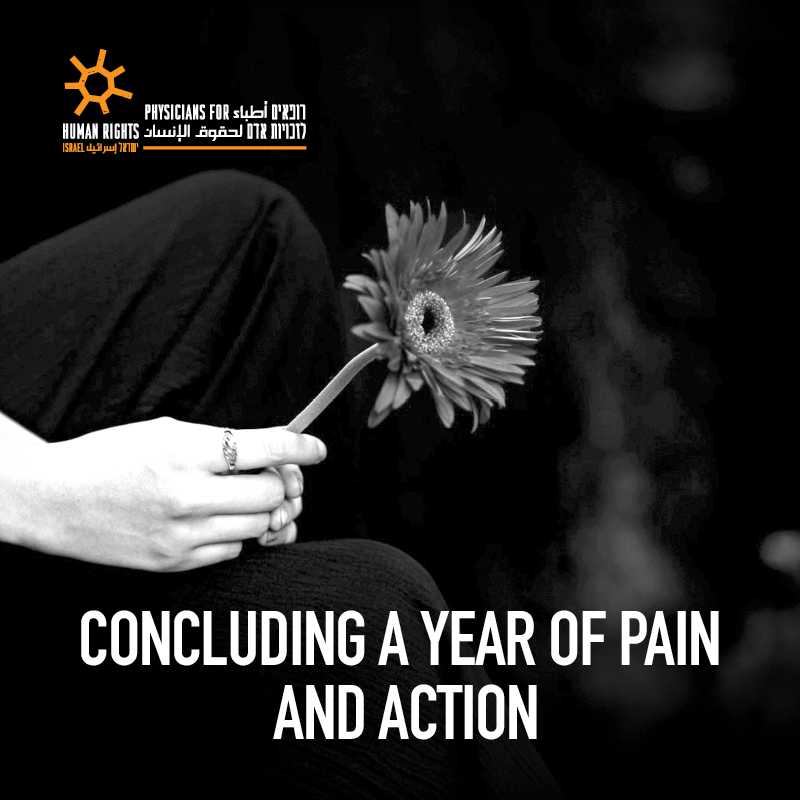
A year ago, we were jolted awake by the blare of sirens and chilling reports of a ruthless killing spree carried out by Hamas against the residents of the south. The murders, abductions, and horrific violence against men, women, and children, along with the devastation of entire communities, have deeply affected us all—both as residents of this land and as human beings. As an organization committed to defending health and human rights, it was clear from the start that this was a watershed moment—one where the pain we all felt carried the potential for even greater catastrophe. - The following day, we warned that “pain leads to pain leads to pain.” A year later, there is still no end in sight to Israel's assault on Gaza, which continues as indiscriminate and deadly as ever. Over 40,000 people have been killed, a third of them children, and more than 100,000 have been wounded. The more than two million residents of the Gaza Strip have endured a year of sheer terror, living in displaced persons camps and suffering from hunger and disease. This hellscape is the direct result of Israel’s military operations, sanctioned by its government and broadly supported by the Israeli Jewish public. - Amid the rampant violence and death, we decided to take action alongside our partners in the human rights and healthcare communities—placing the protection of human lives at the forefront of our mission. - As part of these efforts, we established a field hospital in the Dead Sea area to care for survivors of the massacre in Kibbutz Be’eri, which was fully operational by the Monday following that horrific Saturday. We relentlessly attempted to break through the walls of apathy to help deliver essential medication to hostages in Gaza. Through advocacy and legal work, we sought to end Israel's attacks on Gaza's healthcare system, blockade of humanitarian aid, and severe restrictions on the movement of the sick and wounded attempting to leave Gaza. Additionally, our mobile clinic expanded its operations, treating over 24,000 patients in the occupied West Bank, while our clinic in Jaffa remained open to residents without legal status and other underprivileged populations who have no other safety net during these times of crisis. We fought to protect the lives and rights of those detained and incarcerated in Israel during a time when revenge has become official policy. And we supported West Bank shepherding communities who, amid the smoke of war, have faced violent expulsion by Israeli settlers and military forces. - This past year has tested the strength of the PHRI community. While we did not always see eye to eye, and though some expressed criticism rooted in pain and disagreement, many also found in us a reliable anchor during a time when our society's moral compass appears to have wavered. This support enables us to continue our efforts to protect human life while upholding the ethical principles central to the healthcare professions—care, compassion, solidarity, and justice—while resisting the hatred and violence that has emerged across all aspects of life. - As this year of profound suffering and devastation draws to a close, we offer our deepest gratitude to those who have stood with us in this ongoing struggle. Together—staff, volunteers, and supporters—we remain steadfast in our call for an immediate ceasefire and the release of all hostages, in advocating for rehabilitation efforts, and in seeking truth and justice for the victims, all in pursuit of a more just and equitable future for all who call this land home.
Physicians for Human Rights Israel (PHRI) tweet media
English
0
8
12
1.2K
Len Rubenstein @lenrubenstein.bsky.social
Might want to check what I said and the facts. I said airstrikes or shelling, not bombing alone; per @WHO , 32 of 36 hospitals damaged. And some hospitals were bombed. CNN, using satellite imagery found 20 airstrikes on hospitals in the first two months, with 14 direct hits.
John Spencer@SpencerGuard

Johns Hopkins University Professor Leonard Rubenstein says 90% of hospitals in Gaza have been bombed by the IDF. There is no evidence of IDF bombing hospitals, not even Al Shifa when Hamas was firing out of it. No wonder college kids are so uninformed. npr.org/2024/05/14/125…

English
0
2
2
578
Len Rubenstein @lenrubenstein.bsky.social
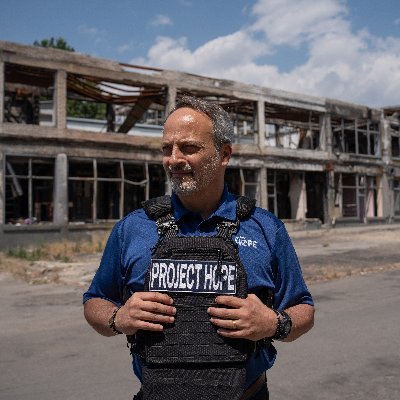
I discuss two unique features of attacks on health care in Gaza as compared to other wars -- the vastness of the destruction of health infrastructure and the many violent ground assaults on hospitals
Johns Hopkins Berman Institute of Bioethics@bermaninstitute

Hospitals in Gaza are near collapse despite protections under international law - NPR's Juana Summers talks with @lenrubenstein about the unprecedented Israeli attacks on hospitals in Gaza, and what international law could do to protect them. npr.org/2024/05/14/125…
English
2
17
12
3.8K
Len Rubenstein @lenrubenstein.bsky.social retweetledi
Rabih Torbay
Rabih Torbay@rtorbay·
Health workers and facilities around the globe are being targeted during war. While there have been grand commitments to protect health systems during conflict, there has been little action. My latest for @TheHillOpinion w/ @lenrubenstein: A 🧵 thehill.com/opinion/intern…
English
1
6
6
447