
Leonardo Castanedo

2.2K posts

Leonardo Castanedo banner
Leonardo Castanedo

Leonardo Castanedo

@leo_castanedo

Plant biologist | Proud and happy dad | Passionate about stress-resilient plants🪻, microbes🦠, and symbiotic nutrient interactions | From 🇲🇽 living in 🇪🇺

@leocastanedo.bsky.social Katılım Haziran 2018
329 Takip Edilen450 Takipçiler
Sabitlenmiş Tweet
Leonardo Castanedo
Leonardo Castanedo@leo_castanedo·
🛑Exciting update from our work with PM Delaux team on the ericoid mycorrhizal symbiosis❗ 🔥New results support a conserved three-gene module and master regulator for nutrient-responsive intracellular accommodation of fungal symbionts🤯 A nice thread below👇🏼 #plantscience
Katharina Melkonian@KatharinaMel1

1/ It is my pleasure to share the latest preprint of the team: "Symbiotic diversification relies on an ancestral gene network in plants" doi.org/10.1101/2025.0… Here, we identified and functionally validated a novel master regulator of intracellular symbioses! A thread ...

English

1
2
3
677
Leonardo Castanedo retweetledi
Alec Stapp
Alec Stapp@AlecStapp·
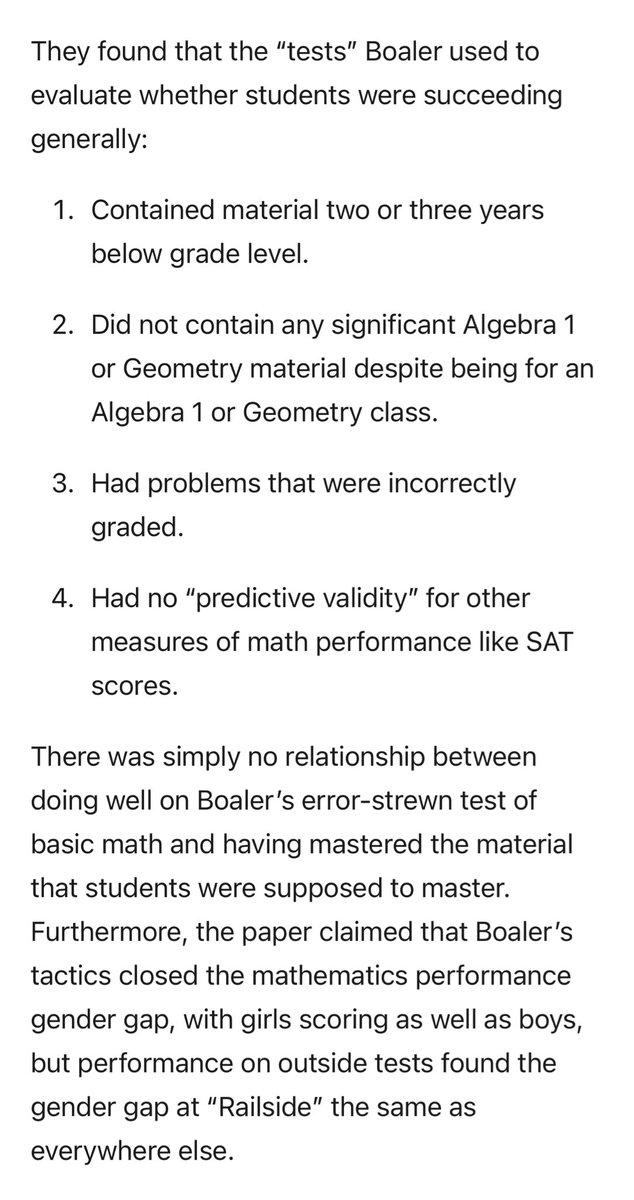
The amount of fraud in education research at elite universities should get way more attention
Alec Stapp tweet mediaAlec Stapp tweet mediaAlec Stapp tweet mediaAlec Stapp tweet media
English
54
324
2.2K
240.3K
Leonardo Castanedo retweetledi
Lucia Strader
Lucia Strader@LabStrader·
In back-to-back papers, our lab and the Casal lab tackle the question: How does temperature reshape auxin-driven growth? Together, we reveal that temperature directly rewires ARF behavior. nature.com/articles/s4146…
English
3
36
91
4.7K
Leonardo Castanedo retweetledi
Lior Pachter
Lior Pachter@lpachter·
"We do not treat co-transcription of polycistronic operons in these simulations; each gene is transcribed independently." LOL
Bo Wang@BoWang87

This is really cool (and wild): Scientists simulated a complete living cell for the first time. Every molecule, every reaction, from DNA replication to cell division. The paper (Luthey-Schulten et al., Cell 2026, doi.org/10.1016/j.cell…), just out today, used JCVI-Syn3A — a synthetic minimal bacterium with fewer than 500 genes. A 3D+time simulation of the full 105-minute cell cycle: DNA replication, protein translation, metabolism, division. Every gene, protein, RNA, and chemical reaction tracked through physical space. It took years to build. Multiple GPUs. Six days of compute time per run. And this is the simplest possible cell. A human cell has ~20,000 genes. It lives in tissue. It interacts with neighbors. It differentiates. It responds to drugs in ways that depend on context we haven't fully measured. Mechanistic simulation of the minimal cell costs 6 GPU-days for 105 minutes of biology. You cannot scale that to human cells. The complexity isn't 40x harder. It's exponentially harder. This is why the field pivoted to data-driven models. You can't hand-encode the regulatory wiring of a human hepatocyte. But you can learn it — if you have the right perturbation data collected across enough diverse biological contexts. The two approaches aren't competing. Papers like this generate the ground truth that future ML models need for validation. But the path to a clinically useful virtual cell runs through foundation models, not through scaling up mechanistic simulation. Amazing work!

English
12
35
456
58.2K
Leonardo Castanedo retweetledi
Francis M. Martin
Francis M. Martin@fmartin1954·
Thrilled to see this paper in print: Chromosome-scale Genome Assembly of the Most Abundant Ectomycorrhizal Fungus Cenococcum Geophilum Reveals Massive TE Expansion and RIP Defense Mechanism | Genome Biology and Evolution academic.oup.com/gbe/article/18…
English
0
7
15
979
Leonardo Castanedo retweetledi
van der Heijden Lab
van der Heijden Lab@vandeHeijdenLab·
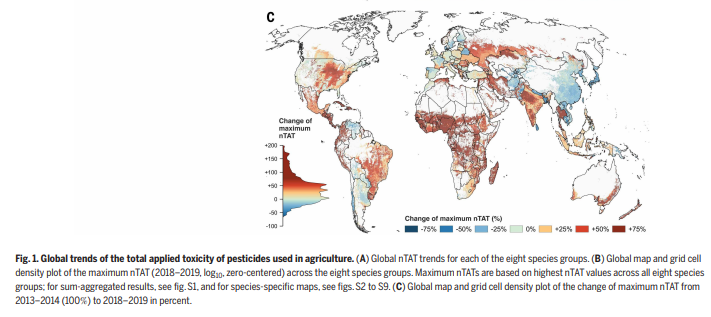
The Toxicity of applied pesticides is increasing worldwide reports an important new paper by Wolfram et al. published this week in Science. It appears that especially in Africa, parts of the USA, Asia and South America toxicity levels have increased greatly (see figure below). see: lnkd.in/gdXce4fT It links to our recent paper reporting widespread occurrence of pesticides in Europe and that pesticides have a major impact on soil biodiversity (lnkd.in/gHt5Dzzx).
van der Heijden Lab tweet media
English
1
58
149
10.9K
Leonardo Castanedo retweetledi
Masaki Shimamura
Masaki Shimamura@bryotweet·
science.org/doi/10.1126/sc… Some mosses, in association with algae and bacteria, form tower-like structures more than 80 cm high, underwater Antarctic lakes. I always thought it looked very similar to Devonian giant organism #Protataxites. But, I must change my mind.
English
1
2
6
433
Leonardo Castanedo retweetledi
Nature Plants
Nature Plants@NaturePlants·
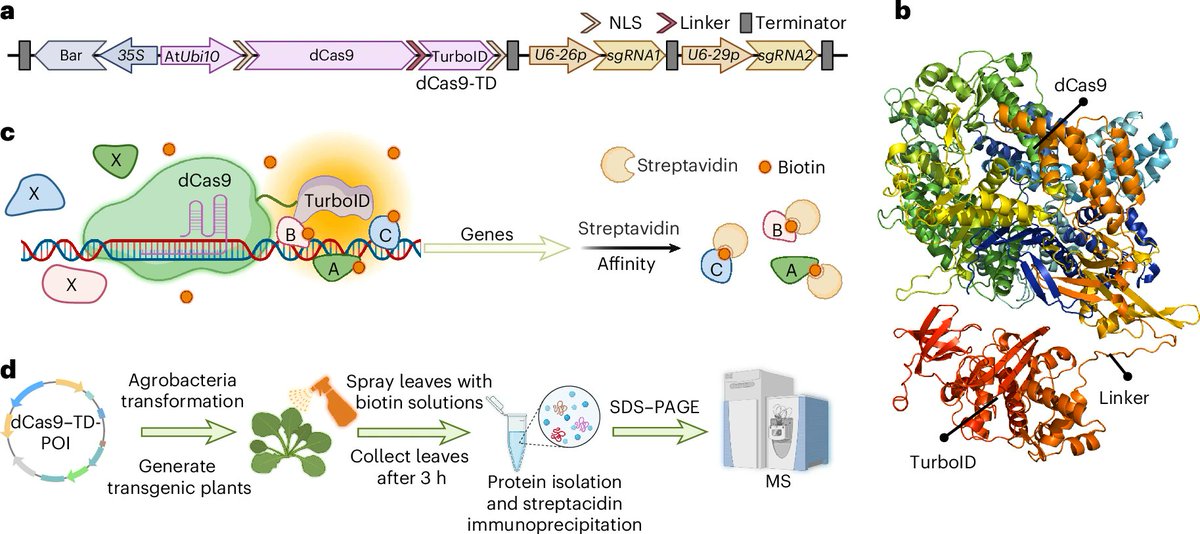
New Brief Communication: "A CRISPR-based sequence proximity binding protein labelling system for scanning upstream regulatory proteins" rdcu.be/eZLUP CRISPR-based proximity labelling system to profile DNA-binding proteins such as PIF4 transcription factor .
Nature Plants tweet media
English
1
55
189
12.3K
Leonardo Castanedo retweetledi
Niko McCarty.
Niko McCarty.@NikoMcCarty·
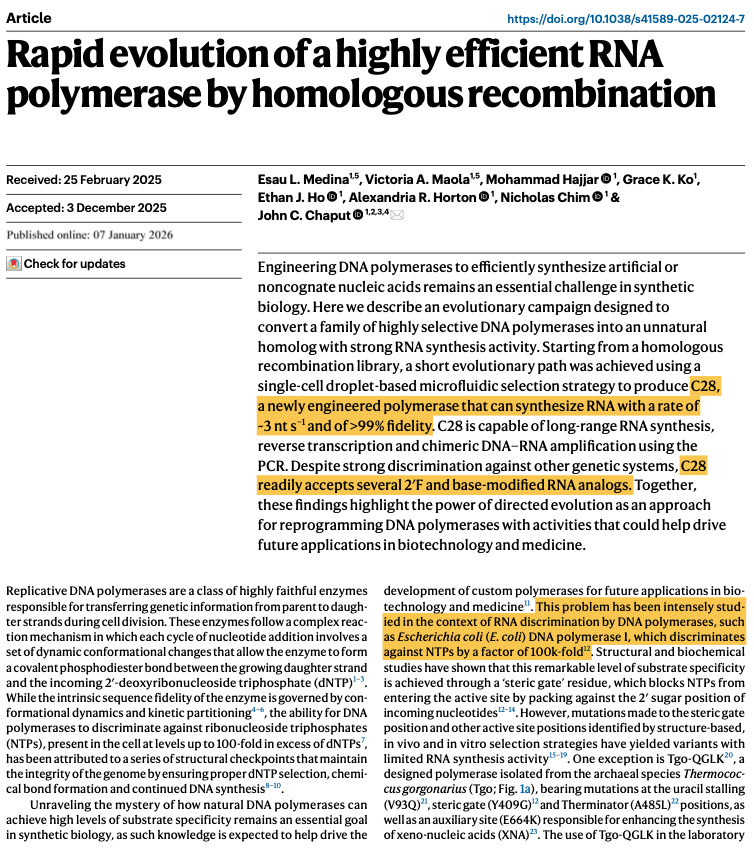
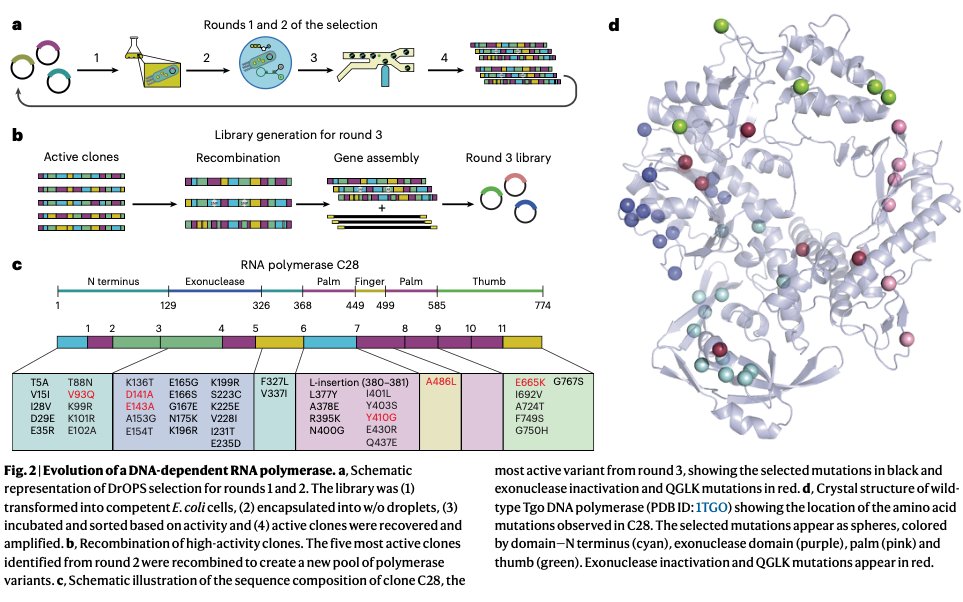
This paper is wild. After 3 rounds of directed evolution, they converted a DNA polymerase into an enzyme that can do: - RNA synthesis - Reverse transcription - Synthesis of "unnatural" nucleotides - Synthesis of DNA-RNA chimeras One of the best papers I’ve read recently. For context: In nature, it is DNA polymerase that takes a DNA sequence as a template and then copies it. These enzymes are crucial in replicating the genome for cell division, and they are EXTREMELY specific for DNA over RNA. This is key because RNA nucleotides are present in the cell at concentrations ~100x higher than DNA nucleotides, so the enzyme has evolved clever strategies to select one over the other. RNA polymerases, for comparison, are the enzymes that take a DNA sequence as template and then convert it into RNA. They are involved in gene expression, for example. To convert a DNA polymerase into an RNA polymerase (and all the other functions I mentioned earlier), the authors did a fairly straightforward directed evolution experiment. First, they took four DNA polymerase enzymes belonging to various archaea. These DNA polymerases don’t check for DNA vs. RNA as stringently as other types of cells, so they’re a good starting point to evolve RNA polymerases. The authors inserted some targeted mutations into these enzymes, based on known mutations in the literature. For example, they swapped the amino acid at position 409 for a smaller amino acid, thus removing a “gate” that keeps RNA building blocks from entering the enzyme. Next, they took the four genes encoding these DNA polymerases and cut them up into 12 segments each. They randomly stitched these 12 segments together — from the four different genes — to build millions of unique variants. Each shuffled gene was inserted into an E. coli cell. Then, they grew up these cells (each carrying a unique polymerase) and put them into microfluidic droplets. A device isolates each droplet, lyses the cell open, and releases the polymerase. The droplet also contains RNA building blocks and a DNA template, encoding a fluorescent reporter. If the polymerase begins synthesizing RNA, it will produce a detectable signal. They screened about 100 million droplets in 10 hours of work, searching for those with a signal. For each well that yields a fluorescent signal, the researchers isolated the DNA and sequenced it to figure out which polymerase it was. They repeated this 3x times, finally isolating a really excellent RNA polymerase variant which they called "C28." C28 has 39 mutations compared to the wildtype enzymes. It incorporates about 3.3 nucleotides of RNA per second, with 99.8% fidelity. The crazy thing is that this enzyme can also copy DNA or RNA templates back into DNA (reverse transcription), or use chimeric DNA-RNA molecules as a template and amplify them. It is just a super versatile polymerase that can act on DNA, RNA, or modified nucleotides, to build just about anything.
Niko McCarty. tweet mediaNiko McCarty. tweet media
English
16
362
1.7K
86.6K
Leonardo Castanedo retweetledi
H. Okada
H. Okada@hidehito_okada·
The molecular basis of the binding and specific activation of rhizobial NodD by flavonoids | Science science.org/doi/10.1126/sc…
English
0
1
0
126
Leonardo Castanedo retweetledi
Antony van der Ent
Antony van der Ent@EntAntony·
Call for manuscript submissions for a new special issue in Environmental and Experimental Botany entitled "Ecophysiology of metal and metalloid hyperaccumulator plants". Submission deadline is 1 August 2026 sciencedirect.com/special-issue/…
Antony van der Ent tweet media
English
0
10
17
931
Leonardo Castanedo retweetledi
Philip Carella
Philip Carella@Phil_Carella·
New opportunity to join our #EvoMPMI group @JohnInnesCentre as a Postdoctoral Researcher working in the mechanistic basis of immunity in diverse plants. Please spread the word, reach out by email, and/or apply if interested! More details here: jic.ac.uk/vacancies/post…
Philip Carella tweet media
English
2
57
85
8K
Leonardo Castanedo
Leonardo Castanedo@leo_castanedo·
Grateful to the whole team @LRSV_Toulouse who made this work possible! Our results fill a major knowledge gap in how endosymbiotic interactions diversify in plants and reveal molecular basis of nutrient-dependent regulation 🦠🌱!
English
0
0
0
38
Leonardo Castanedo
Leonardo Castanedo@leo_castanedo·
🛑Exciting update from our work with PM Delaux team on the ericoid mycorrhizal symbiosis❗ 🔥New results support a conserved three-gene module and master regulator for nutrient-responsive intracellular accommodation of fungal symbionts🤯 A nice thread below👇🏼 #plantscience
Katharina Melkonian@KatharinaMel1

1/ It is my pleasure to share the latest preprint of the team: "Symbiotic diversification relies on an ancestral gene network in plants" doi.org/10.1101/2025.0… Here, we identified and functionally validated a novel master regulator of intracellular symbioses! A thread ...

English

1
2
3
677
Leonardo Castanedo retweetledi
good papers
good papers@paperperday·
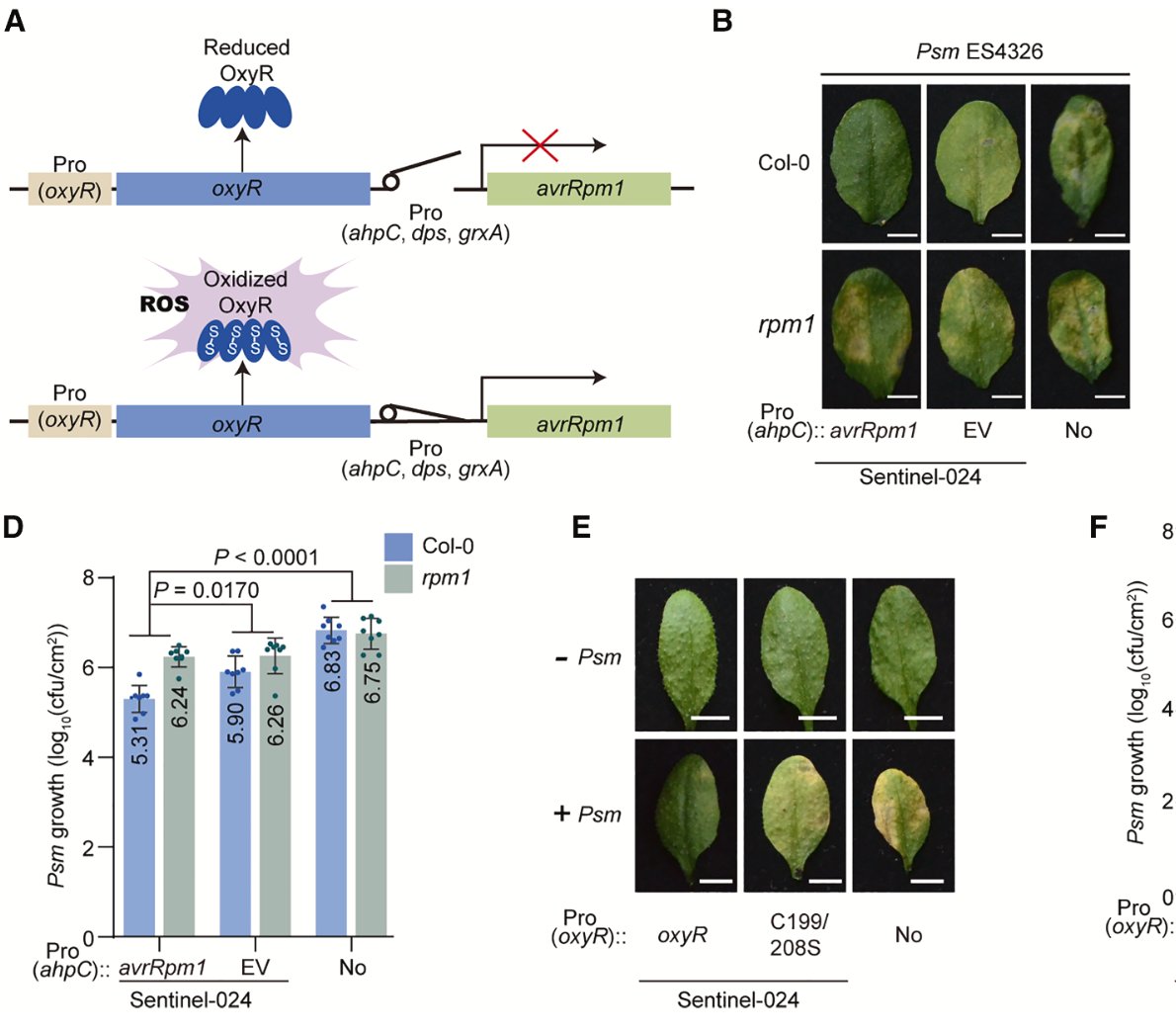
Genetically engineered plant endophytes broaden effector-triggered immunity "The oxyR circuit responds to infection-induced ROS by producing effectors recognized by existing NLRs, activating immunity against even pathogens lacking recognizable effectors" sciencedirect.com/science/articl…
good papers tweet media
English
0
16
57
3.3K