Mrunaλ

4.3K posts

Mrunaλ banner
Mrunaλ

Mrunaλ

@leoamsbb

| 🦁☕️ | Scala, Java | programming | all things backend | BTS V ♥️ | Haawww & Awwwww girl | Won’t F4F | 🤷🏻‍♀️

Katılım Mart 2010
248 Takip Edilen111 Takipçiler
Sharat Chander @sharatchander.bsky.social
I truly didn’t expect such an outpouring of empathy, support, and appreciation because of the #OracleLayoff that impacted me. Thank you! Interesting to see that the Hindustan Times made mention that I’m #OpenToWork because of this situation: hindustantimes.com/trending/us/wh…
Sharat Chander @sharatchander.bsky.social@Sharat_Chander

Well, my #Java journey has come to an end. Today my role at @Oracle has been terminated. I’m open to any job leads y’all may have.

English
12
18
177
21.7K
Arpit Bhayani
Arpit Bhayani@arpit_bhayani·
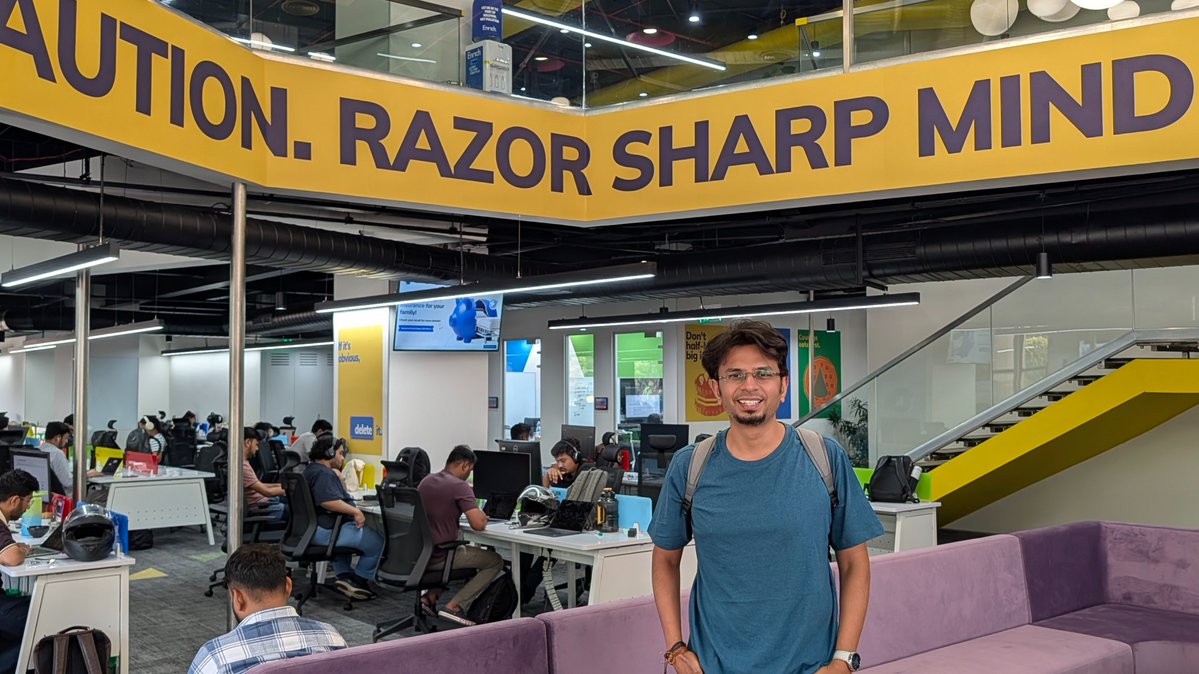
Joined Razorpay as Principal Engineer II :) From being a long-time customer to now building parts of the system - it's a full circle. Fintech is a new territory for me - time to get under the hood of how money actually moves. New domain, same guarantees - availability, correctness, performance - just with real money on the line.
Arpit Bhayani tweet media
English
547
64
7.1K
585.6K
Mrunaλ retweetledi
Arpit Bhayani
Arpit Bhayani@arpit_bhayani·
"Do fundamentals still matter?" The moral high ground says - they do, and I agree. But the motivation loop that made people great at fundamentals is broken. Fundamentals were rewarding because we immediately applied them to solve problems better and, more importantly, gave us an edge over others. Say we write a wire protocol - then concepts like endianness come in handy when we serialize the data and solve our problem. That tight feedback loop is what drove curiosity. But with AI handling the implementation, we skip from "I have a problem" straight to "it's solved," without the middle step where understanding actually forms. We can still force ourselves to study the output afterward, but reviewing someone else's (AI) solution is very different from building it ourselves. Honestly, some fundamentals will be valuable to understand conceptually, but rarely practiced. Others will become even more critical because they are what you need to evaluate AI output and catch what it gets wrong. The hard part is that we are living through the transition. Nobody knows which fundamentals will fade and which will become indispensable. But until that becomes clear, I would still bet on building strong fundamental muscles for problem-solving.
English
45
60
844
34.7K
Mrunaλ
Mrunaλ@leoamsbb·
@sesigl @SumitM_X One of my colleague once said they don’t exist in Java! 😅
English
0
0
0
5
Mrunaλ retweetledi
Sebastian Sigl
Sebastian Sigl@sesigl·
List lets you read as T but not write, List lets you write T but reading gives you Object. And no, List does not work where List is expected, generics are invariant in Java. The part that trips people up in practice is not the definition. It is that most teams avoid wildcards entirely because nobody on the team can review code that uses them confidently. So the feature exists, but the codebases that actually benefit from it are rare.
English
1
1
10
1.4K
SumitM
SumitM@SumitM_X·
2 common Java Generics interview questions - 1. What is the difference between List<? extends T>  and  List <? super T>? 2. Can you pass List<String> to a method which accepts List<Object>
English
3
6
90
13.5K
Mrunaλ retweetledi
Vlad Mihalcea
Vlad Mihalcea@vlad_mihalcea·
I can easily grasp the actual culture of a given company in the first hours of running one of my trainings. - the confidence of asking any question - the way the planned the goals of the training on their side - the discussions they have based on the tips I give them - the atmosphere during the breaks - the talks we have during lunch - the talks we have if we go out after a day of training
English
0
2
23
3.2K
Mrunaλ
Mrunaλ@leoamsbb·
@debasishg @TheOfficialSBI They ask you to change the internet banking password in middle of the transaction. You need to change password every 3 months even if you have not used their banking service even once! Not reliable at all.
English
1
0
0
33
Debasish (দেবাশিস্) Ghosh 🇮🇳
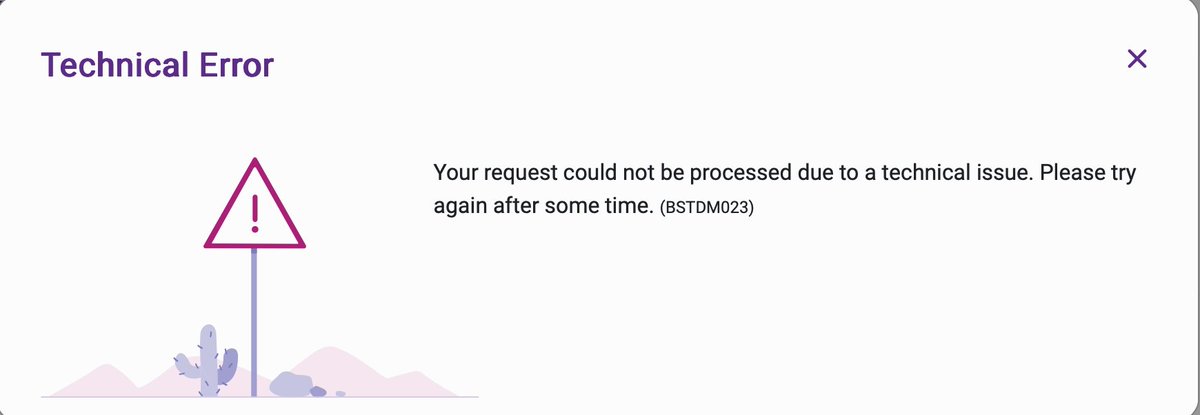
I am convinced that @TheOfficialSBI online is one of the most pathetically dysfunctional Ux of all online banking experiences. • I try to change the maturity instruction of 1 of my Deposit Accounts -> Get an error (attached image) • I try to lodge a complaint through the portal -> I get an Internal Server Error My branch is quite far from my home - it makes no sense to drive down to the branch for such a trivial activity. I guess I opened Deposit Accounts online only to avail of such facilities. The worst part is I complaint about this bug at least a month back .. @OfficialSBICare
Debasish (দেবাশিস্) Ghosh 🇮🇳 tweet media
English
4
2
15
1.3K
Mrunaλ
Mrunaλ@leoamsbb·
@gwenshap How do you generally do it? Vibe code or follow SDD or if there’s something else? I haven’t tried anything specific and am curious…
English
0
0
0
34
Gwen (Chen) Shapira
Gwen (Chen) Shapira@gwenshap·
I'm still on the fence on Codex vs Claude Code. But one thing Codex does significantly better is context compaction. With Codex, I can mostly continue working after compaction. With Claude Code, I often had to toss out the chat and start a new one.
English
14
2
32
4.4K
Mrunaλ
Mrunaλ@leoamsbb·
@sivalabs Your post nudged me to check it out! So far my understanding is (1) This gave me a pretty good overview.. youtube.com/watch?v=a9eR1x… If you have good resources, please do share!
YouTube video
YouTube
English
0
0
1
193
Siva
Siva@sivalabs·
In Spec Driven Development, how do you implement the specs? 1. Just save the spec in a file and reference it to implement it? 2. Create a GitHub issue with the spec and ask AI to implement and create a PR?
English
11
2
20
3.6K
Sergei Egorov
Sergei Egorov@bsideup·
Tattoos have entered the chat 🤓 Two armbands and my hometown's Coat of Arms 🦾 Some will say “this is AI!” I am saying “yes, it did start with AI (Nano Banana is awesome at applying tattoos!) for inspiration but now it all ink under skin 😀”
Sergei Egorov tweet mediaSergei Egorov tweet media
English
3
0
8
777
Mrunaλ retweetledi
Arpit Bhayani
Arpit Bhayani@arpit_bhayani·
Enrollments are now open for the System Design April Cohort. I have changed and, more importantly, added so many things in my cohort in the last 8 months that it is now deeper, crisper, and more fun than ever :) more patterns on high availability and hot shards. The course is not theoretical junk, but it is highly practical and filled with discussions, brainstorming, and questions. The sessions do not end until every single question is answered. Here are some key aspects of the course - Build 25+ systems in 8 weeks - 45+ hours of Live Classes on Weekends - Lifetime access to the recordings - Open forums where you discuss anything literally - A ton of brainstorming to make sure you build the intuition Given that we have a lot of experienced people (leads, staff, and even principal engineers) who join the course, they share stories and nuances about similar systems they worked on at their workplaces, and that's priceless :) We discuss all possible trade-offs and understand the right reasoning behind opting for a particular approach. We naturally evolve our solution and do not go straight from question to answer. Because there is no one way to design a system. So, if you are an SDE-2, SDE-3, staff, or even a principal engineer, and looking to build a rock-solid intuition to design any and every system, or just want to have some good technical discussions over the weekends, join the cohort. Go through other testimonials on the course page to understand what people feel about the course. The most common thing I get is how I sparked their engineering curiosity and helped them become better engineer :) April cohort starts March 28th :)
English
6
3
146
15.9K
Arpit Bhayani
Arpit Bhayani@arpit_bhayani·
One of the most important, and often overlooked, metrics to track in your career is "How much are people willing to bet on me?" This is certainly not about titles or how loud your voice is in meetings. It's about credibility, and that takes years to build by consistently delivering things. If you are known for owning outcomes and driving results, leadership will trust you with higher-stakes work because the most important projects go to those who get things done. But how do we measure your credibility? Here are a few proxies that indicate people are betting on you: - You are brought into critical meetings without asking - You are asked for input on decisions beyond your scope - You are given ambiguous, high-impact problems - Leadership asks you to mentor or guide others None of these happens by accident. So, how do you build this credibility? - Deliver results reliably, not once, but repeatedly - Share credit generously, but own responsibility fully - Communicate clearly and proactively, esp when the stakes are high - Stay calm under pressure and solve problems when things go off track If you do not yet have a proven track record, that's okay. People might still think that your idea is great and worth pursuing, but they would hesitate to hand it over to you for end-to-end execution. So ask yourself regularly: "Am I someone others are confident putting their chips on?" Because in the end, people bet on outcomes, not just opinions.
English
24
27
551
32K
Mrunaλ
Mrunaλ@leoamsbb·
@arpit_bhayani I struggle with keeping calm! How do you deal with people who reach out for smallest of problems that they could have solved themselves? Many times I feel as if I am not explaining clearly enough or they are being ignorant on purpose. 😞 I am just curious how others deal…
English
0
0
0
34
Mrunaλ retweetledi
Vala Afshar
Vala Afshar@ValaAfshar·
To find a good person, look for the one who generously holds doors open for others
English
298
3.1K
76.8K
3.8M