Lexical Leo

11.5K posts

Lexical Leo banner
Lexical Leo

Lexical Leo

@leoselivan

I teach EFL, train teachers and editors, speak at conferences and write books (Lexical Grammar, CUP; Alternative Assessment, Delta).

Tel Aviv Katılım Kasım 2011
439 Takip Edilen6.6K Takipçiler
Lexical Leo
Lexical Leo@leoselivan·
Why ChatGPT hallucinates and why it will continue to do so.
Nav Toor@heynavtoor

🚨BREAKING: OpenAI published a paper proving that ChatGPT will always make things up. Not sometimes. Not until the next update. Always. They proved it with math. Even with perfect training data and unlimited computing power, AI models will still confidently tell you things that are completely false. This isn't a bug they're working on. It's baked into how these systems work at a fundamental level. And their own numbers are brutal. OpenAI's o1 reasoning model hallucinates 16% of the time. Their newer o3 model? 33%. Their newest o4-mini? 48%. Nearly half of what their most recent model tells you could be fabricated. The "smarter" models are actually getting worse at telling the truth. Here's why it can't be fixed. Language models work by predicting the next word based on probability. When they hit something uncertain, they don't pause. They don't flag it. They guess. And they guess with complete confidence, because that's exactly what they were trained to do. The researchers looked at the 10 biggest AI benchmarks used to measure how good these models are. 9 out of 10 give the same score for saying "I don't know" as for giving a completely wrong answer: zero points. The entire testing system literally punishes honesty and rewards guessing. So the AI learned the optimal strategy: always guess. Never admit uncertainty. Sound confident even when you're making it up. OpenAI's proposed fix? Have ChatGPT say "I don't know" when it's unsure. Their own math shows this would mean roughly 30% of your questions get no answer. Imagine asking ChatGPT something three times out of ten and getting "I'm not confident enough to respond." Users would leave overnight. So the fix exists, but it would kill the product. This isn't just OpenAI's problem. DeepMind and Tsinghua University independently reached the same conclusion. Three of the world's top AI labs, working separately, all agree: this is permanent. Every time ChatGPT gives you an answer, ask yourself: is this real, or is it just a confident guess?

English
0
0
2
98
Lexical Leo
Lexical Leo@leoselivan·
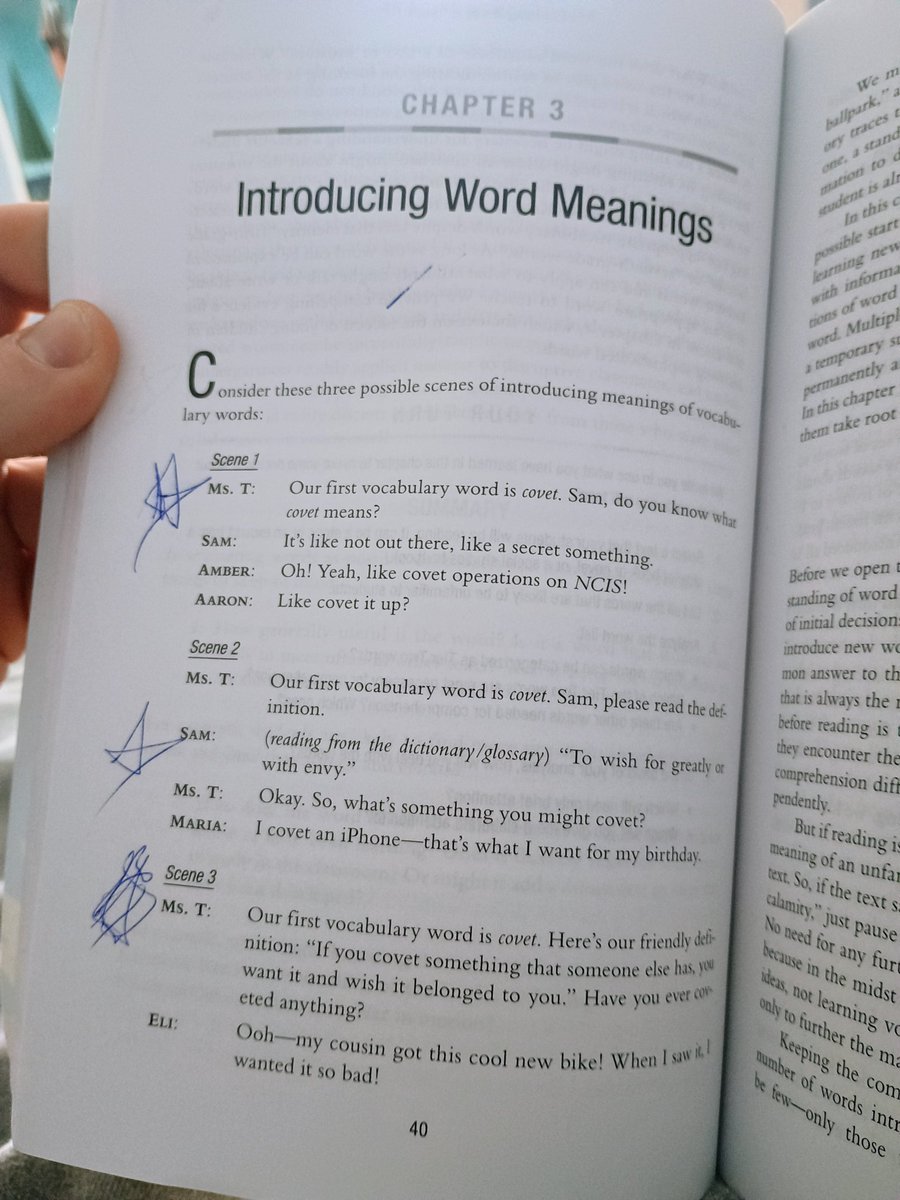
@MrLandesman Not an L1 learning expert, but the full sentence definition provided in Scene 3 captures the meaning better than in Scene 2, where a student goes on to use a new item (I don't use a "vocabulary word" – it's like saying a "phonology sound") inappropriately
English
0
0
0
33
North Landesman
North Landesman@MrLandesman·
Why do so many teachers start teaching a new vocabulary word or term like scene 1 here "do you know what covet means" instead of just telling students what it means? From Bringing Words to Life.
North Landesman tweet media
English
38
7
131
12.7K
Lexical Leo
Lexical Leo@leoselivan·
Live Worksheets - what a mess! Used to be such a nice and neat website... #edtech
English
0
0
1
77
Lexical Leo
Lexical Leo@leoselivan·
@l1berty Yes. Basically I was copying my teacher's notes from last year (and many many years before last) and just wondered if anybody was still using it
English
0
0
0
19
Liberty
Liberty@l1berty·
@leoselivan Now I see why you were asking about 'webquest'. 😁
English
1
0
0
72
Lexical Leo
Lexical Leo@leoselivan·
Teachers, Do we still say "webquest" or ...?
English
2
0
0
156
Lexical Leo
Lexical Leo@leoselivan·
@kamilaofprague Working on it as we speak. The quiz is ready (fancy a preview?), but working on the T notes...
English
1
0
1
21
Kamila Linková
Kamila Linková@kamilaofprague·
@leoselivan Hi Leo, hope you are well. Will there be a news quiz this year? (kindly hoping that yes, it's been a tradition with my students). Thanks so much and happy new year!
English
1
0
0
18
Lexical Leo retweetledi
Rod
Rod@rodjnaquin·
Mary M. Kennedy reviewed 28 studies on teacher professional development to find out what actually works. She discovered that the best programs help teachers think strategically or discover insights on their own, rather than just giving them step-by-step instructions to follow. Programs where teachers had to participate often didn't work at all, even when they were expensive and time-consuming. Intellectual engagement means teachers actively think through new ideas instead of just being told what to do. In successful programs, teachers discussed research together, watched videos of teaching, and figured out solutions as a group. They talked about why certain approaches work and when to use them. This is very different from having a coach watch you teach and tell you what you did wrong. The least effective programs treated teachers like robots who just needed better programming. They gave detailed scripts and checklists for teachers to follow exactly. Kennedy found these often failed, especially when teachers were forced to participate. Teachers are professionals who need to understand the "why" behind new methods and decide for themselves how to use them with their specific students. When they get to think, discuss, and problem-solve together, they actually improve their teaching. journals.sagepub.com/doi/abs/10.310…
Rod tweet media
English
11
138
445
34.8K
Lexical Leo retweetledi
Merriam-Webster
Merriam-Webster@MerriamWebster·
Around 700 BCE ‘January’ and ‘February’ were added to the calendar, initially placed at the end of the year. When these two months were later bumped to the front of the calendar ‘September,’ ‘October,’ ‘November,’ and ‘December’ found themselves at odds with their roots.
English
4
52
454
20.4K
Lexical Leo
Lexical Leo@leoselivan·
Hold on... Did I even join it? I remember joining Twitter in order to connect to other educators and #ELT professionals, and share my blog posts, but it seems all educators have quietly migrated elsewhere and I'm no longer blogging ...
English
0
0
1
68